

Anna Louizos is a Set Designer on Broadway for shows such as In The Heights, Cinderella, School of Rock, and so many more! Join us as we talk about her journey to Broadway and how she approaches a design!.. Read More
From the show: Real Talk with Mason Bray
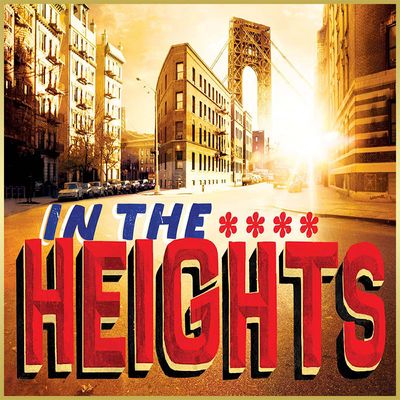
Featured Shows


About
Anna Louizos is a Set Designer on Broadway for shows such as In The Heights, Cinderella, School of Rock, and so many more! Join us as we talk about her journey to Broadway and how she approaches a design! Make sure to check out our website https://realtalkpodcast.weebly.com/ Or you can find ALL of my social media at my link tree! https://linktr.ee/realtalkpodcast
Transcript
This transcript was automatically generated and might contain errors.
[0:00] Anna Louizos: So we have Anna Louizos. She's a set designer on Broadway for shows such as In the Heights, Cinderella, School of Rock, and Avenue Q, just to name a few.
[0:09] Mason Bray: Hi, Anna.
[0:10] Anna Louizos: Hi, Mason.
[0:11] Mason Bray: How are you?
[0:13] Anna Louizos: I'm good. I'm good. I'm just out of the city at the moment.
[0:14] Mason Bray: Where are you?
[0:18] Anna Louizos: Um, we left New York mid-March to get away for an indefinite period of time, assuming it was gonna be maybe a couple of weeks. Well, now it is what is it, uh July and we're still here. Uh but we're up in the country, so it's nice. We are we're surrounded by nature and we have dogs and two cats and so they get to be outside and enjoy all the benefits of being in the country. So that's that's the plus side of this pandemic.
[0:49] Mason Bray: Do you want to talk about how you got to where you are as a set designer?
[0:54] Anna Louizos: Well, um I uh always loved theater and I think as as do you since you were and I think you've always been drawn to performance and theater and as I was when I was a kid. I was always loved being in plays. Um, you know, we would write plays and put on shows in grammar school and middle school and then um you know in high school I I I was in musicals because I love musicals especially. Um so I was always drawn to theater from a very young age, assuming that I would be uh performing. That was my first love, was just being able to perform and play characters and be on stage and sing, you know, use all the skills that I had acquired over time because I was also a musician. I could play music, played guitar, and was in this high school orchestra.
[1:53] Anna Louizos: Um and then when I went to college I I applied to uh to study acting first to uh a college in California. I grew up in California. I went to a small private women's college called Mills College for a first couple of years, and of course I was in all the plays and musicals that we performed there. But the um the talent pool was limited and the resources there were limited because it was a small women's liberal arts college, so um I decided to apply to NYU and transfer to New York University in the uh undergraduate acting program.
[2:33] Anna Louizos: So I I uh they had a whole series of um associations for undergraduate drama students to um work in various studios, professional studios, um uh Lee Strasberg, Stella Adler, um, Circle in the Square, all the various uh theater schools that were in New York City at the time. And um, so I got into the one that was affiliated with Circle in the Square Theater School and took all kinds of performance classes, acting, dance, movement, and uh really enjoyed it. But uh, you know, being in New York City, there's a lot of people who want to do the same thing.
[3:13] Anna Louizos: Um, so when I graduated, I wasn't sure if that was the only thing I wanted to do. And I'd always been interested in in what how scenery was built and how it was created, and always helped on the crew and helped build the sets when I was in college. And it wasn't until I came to New York I realized that that was actually a profession, you know. Like when you're growing up, you don't realize that there's so many other um skilled people that it takes to put on a show. There's lighting, there's sets, there's props, there's costumes, and so many other factors that contribute to putting on a show.
[3:51] Anna Louizos: And uh for me in particular, set design was intriguing to me. So I applied to NYU's graduate theater program and they had a design department there. And I got in because I did have skills to I could draw and I could I could visualize things. So I was accepted into the program. And uh because it was a you know a big expanse and a big commitment. The first year they allowed me to go part-time because I didn't have all the financial aid that I uh needed. So they took it, they made an exception for me and they actually let me go part-time, which was unusual at the time.
[4:32] Anna Louizos: But it was uh it afforded me a chance to really learn some basic skills for set designers, which is you know, drafting and model making and just practice my drawing. Um after that first year, I realized that it was a huge financial commitment and decided I didn't want to necessarily spend that kind of money just to learn basic skills. So I took a leave of absence and I got jobs working as an assistant to designers because then I could really see what the profession required, you know, like what does it take to be a set designer? I had no idea, I had never really done it before.
[5:06] Anna Louizos: So as I started assisting people, I could see from the ground up how how the profession worked and what it takes to visualize something and then execute it uh on paper and in model form so that people could understand what it would take to build the set. Because you know, you need to provide information for shops to build the scenery. You don't build it yourself when it comes to the professional level. So you need to basically function as an architect.
[5:40] Anna Louizos: You know, you have to provide them with round plans and sections and detailed drawings of every single surface that needs to get built. You have to specify what kind of paint treatment, what kind of wallpaper, um, all the kinds of things that you need to have something get built. So that's what I learned as an assistant. And I did that for five years. So I I worked for a number of designers and got to work on a professional level and meet people at scene shops that were building the scenery, and got to see something from concept to completion.
[6:13] Anna Louizos: Um, and that was that was great because you really got to see what it takes to do that um that kind of work. So after five years, I realized that I could just keep doing that and be a professional assistant, but also part of what uh what you can do as a designer is you can work in various echelons of the profession. There's you know, um local off-Broadway stuff, you don't necessarily have to be in the union, but if you want to work on Broadway, you have to be a member of the union, United Scenic Artists.
[6:48] Anna Louizos: So that was my goal was that I wanted to be able to work on Broadway as even as an assistant, you have to be in the union. So um I reapplied to NYU and into their graduate design program because I wanted to also uh create a portfolio for myself and to see what I was capable of doing. You know, if you're working for other people, you're basically executing their vision.
[7:11] Anna Louizos: So for me, it was like, well, what am I capable of doing? I wasn't sure. So by applying to NYU or reapplying, I got in, of course, and I completed the graduate program, which got me a master's degree. And um also I applied to get into the scenic designers union. I took the exam and I got accepted, and um I was on my way. Uh so that's the that's the short version.
[7:42] Anna Louizos: Um, and then of course having all the qualifications and being uh you know on a professional level doesn't necessarily get you the jobs. That's the next step in your on your career path.
[7:59] Mason Bray: During production, how many models do you usually draft before rehearsals even start?
[8:06] Anna Louizos: Well, you have you spend a lot of time talking to the director because um what as a designer, what you end up putting on stage is the result of many conversations with um the director, and if it's a musical, sometimes the choreographer, so that and the costume designer eventually and lighting designer, um because you're creating a world in which this story is told, and um before we even begin putting any pencil to paper, um, we sit with the director and have conversations about how she or he sees the play, what if they had any thoughts about how they envision um the world of this particular piece.
[8:06] Anna Louizos: Um, and often what we do is we bring visual material to each other to show what you know, like this is my impression when I read the play after I've read the script several times and listened to the music. There's music. I'll say, you know, I pull a lot of research and I'll show you know visual things, and often the director has uh a strong sense of how they respond to the play.
[9:21] Anna Louizos: And it may not even be something specific like this room, it more it more could be something like, you know, this painter speaks to me. There's something about the style of this artist that feels appropriate for this production, or um, there's something it feels like it should be very stark. I don't want to see a lot of furniture, I don't want it to be realistic, I'll be more conceptual. So there are a number of approaches you can take when you work on a play or musical. There's no there's no single way to do something.
[9:50] Anna Louizos: So first you have to have a meeting of the minds between the designer and the director. And once you do that, then um I will do some maybe some rough sketches to kind of get a sense of what I think the stage picture might look like, or if it's if it has space is very important and spatial relationships becomes very important.
[10:12] Anna Louizos: We will first build a replica of what the theater space would be in scale. And um, do you understand what uh scale represents?
[10:26] Mason Bray: Yeah.
[10:27] Anna Louizos: Okay, so so say, for example, you have a you know, 50 foot by 25 foot space to to play with. I will replicate that in scale. So I will take um, I'll use say if it's half-inch scale, I will use half-inch scale. So a half inch represents a foot. So if I have a 50-foot space, half inch scale would make it a 25-inch wide piece of model, you know, model space.
[10:56] Anna Louizos: And then it allows us to represent accurately how things would fit in that space. And I may start with a very rough version of a set. If I've come up with like a ground plan where I think we want walls or doorways, if it's a play, um, and I'll just mock up something and you know, white paper, crystal board paper, like rigid white paper, and we'll set up walls and we'll sit there with the director and we'll say, how does this feel?
[11:27] Anna Louizos: Maybe the door should be on this side, maybe the door should be on that side. But what we'll do it out of paper first so that we can just cut it up and move things around. And um gradually as we start to settle on where the things would be located, I will do a more permanent representation of those walls.
[11:46] Anna Louizos: I'll make them out of mat board and start adding details like moldings and where the light fixtures would go and all that kind of stuff. We do it gradually. By the time they're in rehearsal, though, we've done a lot of our homework so that when we're our goal is usually on the first day of rehearsal to have a finished model so that when the actors come in and they're all about to read the script, they can see the space that they're going to be performing in, and the stage managers will have a chance to actually tape it out on the floor in the rehearsal space, and they can actually feel what it's like to walk across the room and walk through the doorways, that kind of thing. So that's that pretty much answers your question, I think.
[12:30] Mason Bray: Yes.
[12:31] Anna Louizos: Yeah. Where do you like when you're reading the script? What jumps out to you to give you concepts and ideas to bring to that first meeting?
[12:40] Anna Louizos: You know, it varies. It really does. Some stories really speak to you very clearly. Some maybe you don't necessarily have a strong sense. Um, for example, let's see. Well, In the Heights was a musical that I saw in a workshop first up at the O'Neill Center in Connecticut. It was there's the summer program they have up in Connecticut by the Eugene O'Neill Foundation, where they allow creative writers and composers to develop their pieces. And In the Heights was one of those shows that was accepted at the time. And Lynn and Tommy and I guess I don't know if Andy was involved at the time. No, it was Lynn mainly, had created this musical, and they had a cast of actors that played the roles, and then there were several performances that they invite audiences to.
So when I saw that and I heard the music, I got very excited and wanted to be involved in any way I possibly could, because it was about Washington Heights, it was about a neighborhood and a community, and the music just was fantastic. So eventually the producers offered me the job. I met with the director, and Tommy and I started talking. Tommy's a director. We started talking about ways we could render this neighborhood. And you know, when I first heard it, it sounded to me like you know, the actors travel from place to place, and it just seemed like the whole set should move, you know, like things should be fluid. Um, but then the producers gave me a directive which was we don't want any scenery to move.
So that's a problem because when you see something in your mind, you picture something, but then you're told you can't do that. You have to come up with something else. So we began to reconceptualize how we might create this neighborhood so that it still feels like a place that has lots of locations, but you know, the stage is a limited space, you know, there's only so many feet across the stage that you can fit a lot of buildings. So ultimately, we ended up coming up with this idea that you could see through the buildings and see other buildings through the buildings because what really mattered was seeing the people and filling the neighborhood with bodies, and so by seeing through the buildings you could see more people, and that seemed to have solved the problem for us, and also allowed space for dancing too, which was also a critical component to the show.
[15:35] Anna Louizos: So, how do you maximize the space and bring the story to life with just about 40 feet in stage width? Um, well, because I couldn't just run the building straight across, even with the proscenium. I angled them back in kind of a V shape, and I exaggerated the perspective of the buildings so that the lines weren't straight across horizontally they actually were angled towards a vanishing point so it appeared as though there was more depth than there actually was on stage so it was by creating the illusion of depth and there were steps that led up to a level across the back where there was a stone wall and the view of the bridge the George Washington bridge all of that was very very flattened the bridge itself was an inch and a half thick all the way across and it was all like a laser cut image of a bridge in perspective that was just reinforced with steel and was hanging from a line up in the grid and then upstage of that was a translucent drop which is painted by scenic artists and it was painted with translucent dyes so that when they backlit it it looked like the sky could change you know you could change from daytime to nighttime to sunset with the changing of the lights the colors of the lights.
[17:08] Anna Louizos: Do you have any tips for starting out set designers that's a tough question. I mean it's like how do you give tips to somebody who wants to be an actor you know it has to be something you really want to do because it's a very competitive field and not everyone can do it. But if you really have a love for it, if you love to create the illusion of places and create worlds, then I would say do it as much as you possibly can. Practice rendering. Now that people can render on computers, if you learn those skills, it's very helpful because it helps other people see your vision. Because what a big part of what we have to do as designers, we have to communicate our vision to people. You can't just explain it.
You have to really show people because there's a lot of people, you know, who can't visualize things. Even directors. There's directors who you can't, they cannot understand what you're trying to tell them unless they see it in front of themselves, you know, it's in a model form or if it's in a rendering of some sort. So the more you can hone your skills to communicate visually, the better.
[18:29] Mason Bray: So I saw you that you've worked on a few TV shows. How do they line up with theater and which do you prefer?
[18:37] Anna Louizos: Um I would say TV is a it's very it's a much more lucrative profession. Working in television, definitely there's a lot more money in production and in salaries and how people are paid. It's just it's just a richer profession. Um that's what it boils down to. Um, but also I would say for television it's more compartmentalized in terms of the overall production, so that the designers complete the work long before any actors are on the sets. It and it's very separate. The you know, the art department is separate from the production department. They realize all the work. And often what the difference is it's also based on reality, most of it. Like, you know, you have to create these real-looking spaces, it's real living rooms, real offices, hallways, um most TVs, you know, based on real places.
Um so there's there's less fantasy, there's less whimsy to a lot of the design that you have to do for television. Um, so and you have to accommodate where the cameras can shoot. So often the walls have to be removable. Once you're finished as the design team on a specific set, you're already going to the next set. You're already working on the next set. The camera crew comes in, the DP comes in, they're lighting everything, the actors are there, and you're gone. So there's that sense of community that doesn't really exist in the same way that it does for theater, in my view, my personal opinion. And what I love about theater is that we're all in the room together. When we're in tech, everybody's there, everybody's solving problems, no one's off to the next thing.
We're all sitting there trying to figure out how to make this work. And I love the fantasy of and the challenge of creating worlds on stage that invite the audience to imagine that this is real. In other words, it's not we know it's not real, but there's something that draws you into these live people on stage and this illusion of a space that we all agree, we're gonna go on this ride together. And that's what I love about theater. So that is my preference, my personal preference, even though it's not as lucrative as television or film. It's just what I love to do.
[21:12] Mason Bray: So, do you think education or experience has been more beneficial in your career path?
[21:19] Anna Louizos: Oh, I think experience. Experience wins out for sure. The thing about education though is it lays a foundation for you and it helps you hone the skills that you will ultimately need for the experience. And so I think it's very helpful to have a good foundation. Um also, you know, being in college or in high school, you're studying literature and you're reading plays, it's a great foundation. You know, reading a whole range of plays is very, very helpful because a lot of plays reference old plays, you know. There's Shakespeare's referred to constantly and modeled new plays and stories are modeled after old stories constantly. So it's very helpful to have those references, I think, in the back of your mind. But ultimately, I think experience is what you really learn how it's when you really learn how to solve problems because you're in a real in a real situation.
[22:25] Mason Bray: So my final question is what are you doing during quarantine?
[22:29] Anna Louizos: Well, I'm growing vegetables. Um I've done some repairs to my house up here. I've expanded some places. I have a barn, so I've been able to enclose part of the barn, and I'm gonna turn that into a workshop and a garden shed. And um I'm trying to just be healthy, you know, take care of myself, and just enjoy the freedom of the time that I have because normally I'm busy and you know for the last couple of years I've been out of the country a lot doing other shows in Japan and Australia and it's nice to be home for a change.
[23:12] Mason Bray: Well thank you so much for being here.
[23:14] Anna Louizos: You're welcome.
[23:15] Anna Louizos: I hope I helped answer some questions for you and give you an idea of what it is that we do.
© Broadway Podcast Network, All Rights Reserved