

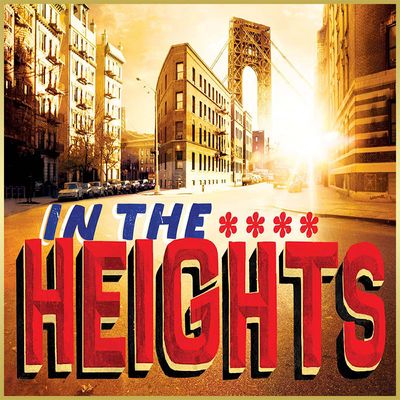
Alice Brooks is the genius cinematographer behind the films “In The Heights” and “tick, tick…BOOM” and the Apple TV series “Home Before Dark”! But that’s not all! She is also the Director of Photography for the upcoming “WICKED” movie starring Cynthia Erivo and Ariana Grande, directed by Jon Chu!.. Read More
From the show: Real Talk with Mason Bray
Featured Shows

About
Alice Brooks is the genius cinematographer behind the films “In The Heights” and “tick, tick…BOOM” and the Apple TV series “Home Before Dark”! But that’s not all! She is also the Director of Photography for the upcoming “WICKED” movie starring Cynthia Erivo and Ariana Grande, directed by Jon Chu!
I sat down with her earlier this week and we discussed how she got into the industry and working with Lin-Manuel Miranda and Jon Chu on so many amazing projects, what advice she would give on getting into the world of cinematography, and as much as we could about the “WICKED” film!
This season I want to highlight the people that can and should be the mentors for people of all ages wanting to get into the industry! Join me in connecting to Broadway and figuring our way into the industry!
Instagram - @_RealTalk_Pod
Twitter - @_RealTalk_Pod
TikTok - @RealTalkPodcast
Website - realtalkmasonbray.com
Facebook - Real Talk with Mason Bray
Thank you so much for your support!
Transcript
This transcript was automatically generated and might contain errors.
[0:00] Mason Bray: So we have Alice Brooks, who is an amazing cinematographer. Her resume includes *In the Heights* with Jon Chu that was released this past summer, *Tick Tick Boom*, which is in select theaters this week and on Netflix starting November 19th. And she is the cinematographer for the upcoming film version of *Wicked*, starring Cynthia Erivo and Ariana Grande. I have been so excited to talk with her for so long, and I can't wait to have this interview. Hi, Alice.
[0:26] Alice Brooks: Hi, Mason. Thank you so much for having me today.
[0:29] Mason Bray: Thank you so much for being here. I'm so excited to get to chat with you about films. So can you walk me through how you got to where you are working on such huge film and TV shows like *Home Before Dark*?
[0:40] Alice Brooks: So when I was, um, I grew up a child actor. I lived in New York. I did lots of television commercials, only four almost 40 national television commercials between the ages of five and ten. And when I was 15, I went on my last interview for a movie called *While You Were Sleeping* with Sandra Bullock. And I interviewed for the part seven times. And, um, the audition was in Santa Monica, and we lived in the Valley in Los Angeles, and it was rush hour. So my mom and I went for a walk on the beach in Santa Monica, and in my heart, I knew I didn't get the part. And I said to my mom, "Mom, I don't want to be an actress. That's your dream for me. I want to be a cinematographer." And I looked down and I saw this feather.
It was gray and white, and I picked it up, and I carry it with me all the time. It's in this broken frame, but it's just the reminder of the start of this dream that I have been living. And I, um, when I focused on still photography in high school, I lived in the darkroom, I went to USC to film school, and where I met Jon Chu. And Jon and I made a short film while we were in college called *When the Kids Are Away*. And it is a musical, and Jon and I bonded over our love of musicals. It was 2002 when we made it, and it was, um, before *Chicago* had come out or *Moulin Rouge*. So it was before the renaissance of the movie musical, and I was so excited that Jon wanted to make musical movies too.
And, um, so then over the years, we've done a ton of projects together. We did a series for Hulu called *The Legion of Extraordinary Dancers*, which we did in 2009, and it was one of the first web series. Now you don't call them web series; they're just series. But, um, it was a show about these dancers, and their superheroes, and their powers were their dance moves. And we met, we started working with Christopher Scott, the choreographer from *In the Heights*, at that time too, and the three of us really started developing a language and a flow and a collaboration to the way we worked. And we did 30 episodes of it over three years, and we really learned how to tell a story through music and dance. And then, um, we kept making movies either together or apart, and Jon asked me to do *Home Before Dark*, and I did that, and then *In the Heights*.
[3:23] Mason Bray: Yeah.
[3:23] Alice Brooks: And in *In the Heights*, one of the most popular shots is it was Navi in the window in the dance scene going on in the street. And that I wanted to ask you a question about that. Um, what's your process of creating these iconic complex shots to fit into the movie?
[3:38] Alice Brooks: You know, I, I, this, it's interesting because I, I don't, while we're doing them, I don't think of them as complex shots, but, um, as I'm asked questions and, uh, it becomes, it's clear like they are complex. And what we learned on *The Legion of Extraordinary Dancers* is that we, um, we learned to be fearless. We learned to try anything and take risks, um, not in terms of safety, but in terms of, uh, creative risks and try new things. And we had nothing to lose on the LXD. We got to invent our own rules, and if we messed up, that was totally fine. And we learned a lot then. And so I think, I think I learned on that show that creative risks are the things that end up being the most rewarding. And so be fearless in the face of material that comes up and figure out how to tell the best story possible. And sometimes those are tricky shots.
[4:44] Mason Bray: Yeah.
[4:45] Alice Brooks: Um, and there's several of those that are throughout the film. Like there's one at the salon where you zoom in but then flip around, and it's in the mirror. And there's several of those throughout all of the films that you've done, and I haven't seen *Tick Tick Boom* yet, but I'm so excited to see what you've done with that film. Um, but there was also a few hidden cuts where most people wouldn't notice them. And I just wanted to see how much you are involved with the editing and cutting together of those shots.
[5:12] Alice Brooks: I have been very fortunate enough to be able to work with this wonderful editor. The last, um, we've done three projects together so far. We did *Home Before Dark*, *In the Heights*, and, um, and his name's Myron Kirsten, and we have this really wonderful collaborative relationship. Jon instills in his collaborators just this wonderful sense of, uh, of being a team, and, um, then Lynn did as well. And, uh, there are, for the transitions, absolutely things were designed. So places we did hide cuts, um, were intentional, were designed, and, um, there are really long takes in *In the Heights*. There's a single one called *Champagne*, where we're in one apartment, and we didn't do it, we didn't hide any cuts.
It was all one take. And so there are things that, um, you know, working with Myron, he trusts his directors, he trusts me, and so we don't, we don't necessarily need to shoot a lot of extra shots just so he has material because he, you know, he understood like *Champagne*, there was no way to cut out of that; that was it. We either got it or we didn't, and there was no, we couldn't hide anywhere. So that was pretty exciting.
[6:30] Mason Bray: Yeah.
[6:31] Alice Brooks: And not on the editing side, but with that scene, um, *Champagne*, you had the actor singing live. So what was it like working with the Agners and Alex Lacamoire to create that song to make it flow into one take?
[6:43] Alice Brooks: Um, so we had a pre-record, which is when you go into the studio and record the song before. So we had been listening, I had been listening to that. So I would, uh, the music supervisor, Steve Gazicki, he did both *Tick Tick Boom* and *In the Heights*, was wonderful at getting me music as soon as they had finished the pre-record so that I could really learn the song. And so when we went, um, Jon and I and Chris Scott, on the day before we were shooting *Champagne*, we went to the location, the real location of a whale's apartment in Isnabi's apartment, and we had the pre-recording, we walked through the whole shot. But then suddenly they are now live singing. I mean, not suddenly; we knew they were gonna live sing, but now you're in the reality of them live singing, and our Steadicam operator had to improvise because there's this moment where, um, Melissa, who plays Vanessa, took this pause when they're in the bedroom, and we've been going around them in 360s, and then suddenly the Steadicam operator, his name's Mark Schmidt, amazing, amazing.
He was able just to like pause and listen. He had an earwig in so he could hear the music too, and he was obviously a few feet away from the actors as well. But he just intuitively watched and was able to draw out that shot as long as possible until she, until Melissa felt like she was able to deliver her next singing line.
[8:09] Mason Bray: Um, moving on to, um, *Tick Tick Boom* and what we can see from that. Um, what was your favorite part of working on that film?
[8:17] Alice Brooks: *Tick Tick Boom* was this very special magical film from the very beginning. I met Lynn on *In the Heights*, but we didn't have a, we didn't, we've actually spoke only one or two times, uh, during that whole process. But, um, on the last day, my agent called me at lunch and said, uh, Lynn would like you to read his script. He's gonna direct a movie. It's called *Tick Tick Boom*, it's about Jonathan Larson who wrote *Rent*. And, and I didn't, besides being the writer of *Rent*, I didn't know anything about Jonathan. And so we wrapped *In the Heights*, and I spent the next three days immersing myself in the script. And as I was reading *Tick Tick Boom*, I turned page after page after page, and each scene felt like it could have been a scene from my childhood.
I grew up in New York City in the 80s, and I moved from New York a few months before this movie starts when I was 10 years old. And just like Jonathan Larson, we lived in a tenement apartment, 300 square feet, a bathtub in the kitchen. It was my parents and my sister and me and our pets. And just like Jonathan, my dad was this struggling playwright trying to break into theater. And just like Jonathan, we had our community filled our tiny apartment. We had all my dad's wonderful artist friends around us at all the time. And I think back to that time and just completely amazed that I got to be around all these artistic people at such a young age. And just like Jonathan, we lost friends to AIDS, and it was a really scary moment in time where we were in the middle of this crisis, um, quite, you know, similar to what crisis we're dealing with now with COVID.
And so I left New York in a few months, as I said before this movie begins, and so New York to me will always be that. This exact time period of this vision of New York that's edged in my memory. It's that of a child of a 10-year-old, where color and light and emotions are heightened, and where there's this blurred line between dreams and reality. And that's what Jonathan, how Jonathan Larson is. That's what we became the jumping-off point for the creativity for Lynn and I to create from because the opening number's called *3090*, and it talked, Jonathan sings about being Peter Pan. He's this childlike human who does not want to grow up because he feels like if he grows up, he will have to give up his dream.
He will have to get a real job and get married and move to the suburbs and not no longer pursue his dream. So, and Lynn and I are the same age. And so Lynn also has that memory of New York City at the same time. And that's what he wanted, he wanted *Tick Tick Boom* to look like.
[11:50] Mason Bray: Yeah. Um, so having that vision in your brain, did it make it easier once you went in and you had all these ideas already in your head to, and how was that communicating that to the team?
[12:01] Alice Brooks: It was, uh, so then I started to find, look at pictures and different artists and a lot of street photographers from that era. Nan Goldin is one of the biggest inspirations for the look of *Tick Tick Boom*.
[12:17] Alice Brooks: But we also had this amazing other resource, which is, you know, you, me, everyone now lives in a world where we're constantly photographed. Cameras are on us constantly, whether we like it or not. And in 1990, that just wasn't true. Except it was true for Jonathan Larson. His best friend had a camera and was filming him all the time. And we have eight years of Betacam footage of Jonathan Larson in that apartment, in the Moondance Diner, on the New York Theater Workshop doing his one-man show, Tick, Tick... Boom. We had this huge reference. And that 1990s sort of video quality, we wanted to immerse in the project. But I also had this video that I could show my team. And so I brought a group of the team members from camera, lighting, and grip to our offices, and I showed them the videos, and I talked about Jonathan Larson, and we looked at all these photographs our department had, and I started to get them really engaged in Jonathan.
And when I was making In the Heights, I knew I needed to fall in love with Washington Heights. I knew that was my job. And there's a moment during Tick, Tick... Boom, I realized my job was to fall in love with Jonathan Larson and to honor this magnificently wonderful human being, joyous, so many, so full of life and so many questions, and someone who has these huge dreams and doesn't let go of them, no matter how much he's pushed down, he always gets up the next day. Absolutely. So, and there's a picture in the trailer of Andrew at the phone at the Moondance Diner that perfectly resembles a picture of Jonathan during his lifetime. And I thought that was a beautiful recreation of that moment.
[14:13] Alice Brooks: But you also had your process during COVID and you were filming the movie in the height of the pandemic. So what were the measures that were taken and how did you guys approach coming back to creating while everything else was shut down? So we started this movie in 2019. We started prepping this movie in December 2019, almost two years ago exactly, and then we shot for two weeks and then we got shut down. And in those two weeks, it was clear the crew was completely in sync with each other. We had this amazing group of people we were working with. It was one of the best days of my life filming two days before we were shut down. It was just like this incredibly fluid, amazing collaboration with Lynn and all my departments, and then we were shut down and were ripped away from this thing that we were so in love with making and a story we all want to tell and share with the world, and we don't know if we'll ever get to finish it.
And after a few weeks, we started doing something that we called tick tick Zooms, where everyone from the cast and crew was invited to, you know, 500 people on the call sheet were invited to jump on Zoom for a couple of hours. And at first, it was sort of like a therapy session. It's like, oh, how are you doing not leaving your house? How are you getting groceries? How are you getting toilet paper? And then it turned into trivia. We started doing trivia. And then after it, it just gave us all like this insight into each other's lives, right? Like we're now seeing each other's home spaces, and Zoom was nothing that existed before. I mean, it did exist, but it wasn't to the degree it is. And then somewhere in May or June, it was like, well, I think we're gonna start to try to come back.
And then in July, we started prepping the movie again and filming by the end of September, and we were all very bonded by this six-month tick tick Zoom period and being ripped apart from each other, and then we came back and it was amazing. Almost every single person came back to the movie, and we all had to trust each other that we were gonna take care of each other and be safe and take all the precautions necessary in our lives. We were one of the first full movies to shoot, and we shot for 42 days without any shutdowns, and it was a remarkable team effort.
[16:47] Mason Bray: That's amazing. So you said that you filmed for two weeks before the movie. Are those still in or before the shutdown? Are those still in the movie? And at what point can we see the cut between March and June?
[16:59] Alice Brooks: So, we didn't start filming until September. So it was over six months that we hadn't filmed for. There's only one complete number that we filmed pre-COVID, and that was the Delacourt Theater for the number "Y." And then everything else we had shot parts of, but not full scenes. So there are really like sometimes I look at the footage and I go, that's pre-COVID, that's post-COVID, but I mean you can't tell.
[17:29] Mason Bray: And the biggest question that everyone listening wants to know. What's it like to work with Lynn Manuel Miranda?
[17:34] Alice Brooks: So Lynn's an incredible collaborator. He comes from a theater world where the people you work with become your family, and he workshopped In the Heights for years and years and years before there was ever a performance. And he brought that workshop mentality to Tick, Tick... Boom. So during prep, we would storyboard with a huge group of people. It was the production designer, me, the storyboard artist, the AD, and the writer were all around a table, and we'd read the scenes out loud, and then we'd start to storyboard and design shots. The production designer was there, and he was able to hear our ideas and change some set design based on our ideas, or he was able to have models with us or photographs so that we could understand what the space was going to be like.
And then the writer was there. I've never had a writer so available during prep where if Lynn came up with an idea, or I came up with an idea, or the AD came up with an idea, Steven was able to incorporate that into the script. And it was this really fluid process that I believe evolves from Lynn's experience working in the theater. It's not at all a film way of approaching prep. And it was the most collaborative, wonderful, generous experience I've had.
[18:53] Mason Bray: Yeah. And then moving on to Wicked, how much has already been planned? And where are you guys at in the Wicked process?
[19:01] Alice Brooks: I cannot answer any questions about Wicked, except for I thought I was gonna get it out of you. No, sorry. All I get to know is that Cynthia is Elphaba and Ariana is Glinda. Yes, you'll have to wait for more information to come.
[19:21] Mason Bray: Okay. So I had a question. You talked about interviewing for a movie at the beginning, but how do you, how would people start to get into the cinematography world? How would they get their first interview without experience?
[19:35] Alice Brooks: Well, you need experience. You have to have experience. So I mean my path was I went to film school. I went to USC film school. And I got out of film school and you get out of film school and are like, oh great, I'm gonna start making movies right away. And I got out and I realized my reel wasn't, I didn't have enough material on my reel to get any work. And so I spent the following year in what I call my graduate year where I hung out around USC, you know, and I wasn't enrolled there. I just hung out and I offered all the graduate students, I said, I'd love to shoot your thesis film. And I shot something like 20 to 30 movies that year. And actually John's was one of them. And it was so I got out so after that year I had like a pretty decent reel.
And then from there I was able to get an agent, although I had only done shorts, so there wasn't much to work from for my agent, but I had an agent on my resume at least. And I just shot and shot and shot anything, anything anyone would hire me for or ask me to do for free, or even like, oh, can you come over for an hour and help me film this? I would just get all the experience and learning that I could. So you can't get a job interview unless you have experience. Filmmaking is challenging and it is a hard career path. And if you don't want it more than anything, then it's just not worth it. It has to be the thing you want to do with your life and you can't see yourself doing anything else.
[21:17] Mason Bray: Absolutely. And one of my last questions. So a big point that I want to hit on this season is the education of people to get into the industry and how to get your foot in the door. Is there anything that you would like to add to the conversation of getting into the industry?
[21:32] Alice Brooks: Yeah. When I was, I had I needed one more class when I was at film school and I took this producing class and even though I knew I didn't want to be a producer and I actually learned probably the most valuable lesson in that class. The professor said Hollywood is like a brick wall and your job is to get to the other side and you'll spend years, decades throwing rocks at the wall trying to find trying to break through to the other side. And at one moment you will, the rock will break through but it will be this tiny hole and but you'll see the light on the other side and that's the moment you're going to want to quit. That's the moment you're going to want to give up but that is the moment you must endure. You must keep going and he said it's in that moment that you are so much closer than you think you are.
[22:19] Mason Bray: And do you have a moment that sticks out to you when you think about that? Is there a moment that you felt like that?
[22:24] Alice Brooks: Yeah, I mean many moments, but the biggest one was about six months before Jon Chu asked me to do In the Heights to shoot In the Heights, I said to my husband I'm just done I cannot do this anymore. I don't want to be a DP anymore. I don't want to be a cinematographer anymore. I want to figure out something else to do with my life and my husband said I don't believe that, but if you feel that way in six months, fine, then we'll figure out something else you want to do with your life. He said that you have to hold on for six more months and six months to the day Jon asked me to do In the Heights.
[23:00] Mason Bray: That's amazing. So you were filming during the pandemic, but what was your first piece of theater back after the pandemic lifted, either Broadway or off-Broadway?
[23:11] Alice Brooks: I have not seen a show. I have a six-year-old who just got her first vaccination last week. And so we've been very isolated. So in terms of doing fun things, but that's changing very quickly. So I got to bring her to the premiere of Tick, Tick... Boom, and she went to the premiere of In the Heights as well. And so both, I mean, that's the closest to theater, but while we were making Tick, Tick... Boom, while we were doing the New York Theater Workshop section, we were sitting there and no one had seen live theater in we shot that in November, I think. No one had seen live theater in eight months or something at that point, and we all were like, wow, we missed sitting in the dark in those chairs and watching things. And so I am hoping to go to New York right after Thanksgiving and get to see something.
[24:06] Mason Bray: Yeah. So this has been an amazing interview, but is there anything else that you want to add up before we wrap up?
[24:13] Alice Brooks: No, Mason, this has been amazing. I love all your questions. They're so thoughtful. Thank you so much.
[24:18] Mason Bray: Thank you so much for saying that. And thank you so much for being here. I will definitely talk to you soon.
[24:23] Alice Brooks: Okay, thank you.
© Broadway Podcast Network, All Rights Reserved