

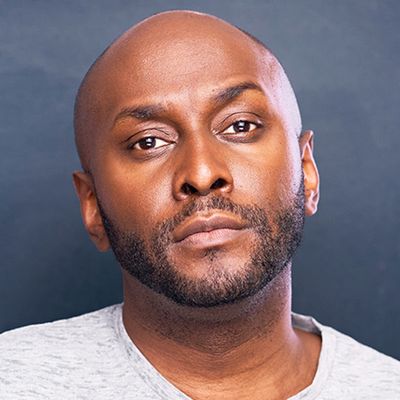
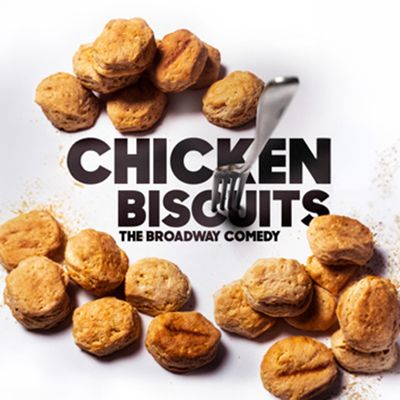
Douglas Lyons is the phenomenal Broadway playwright behind “Chicken & Biscuits”! Not only did he write that show, he also worked on the musical “Breathe” virtually during the pandemic!.. Read More
From the show: Real Talk with Mason Bray
Guests
Featured Shows
About
Douglas Lyons is the phenomenal Broadway playwright behind “Chicken & Biscuits”! Not only did he write that show, he also worked on the musical “Breathe” virtually during the pandemic!
His play opened at the Circle in the Square Theatre on October 10th and it was just announced it will be closing early on November 29th due to the loss of ticket sales while there was a breakthrough case of COVID-19 in the cast!
But, Douglas has since said that there will still be a life for the show after Broadway…
In this episode, we discuss his road to Broadway, how he reacted when he saw that Lin-Manuel Miranda saw (and loved) his play, handling the rave reviews from acclaimed critics like Ayanna Prescod and so many more, and his process to being grateful for his life!
This season I want to highlight the people that can and should be the mentors for people of all ages wanting to get into the industry! Join me in connecting to Broadway and figuring our way into the industry!
Follow Douglas on social media:
Instagram - @chocolatehipster
Twitter - @DouglasSings
Check out his shows on social media, too:
Instagram - @chickenandbiscuitsbway, @breatheonstage, @polkadotsmusical
Twitter - @ChickenBway, @BreatheMusical, @polkadotsmusical
Facebook - Chicken and Biscuits
While I have you, please check out my socials to keep up to date on all things Broadway:
Instagram - @_RealTalk_Pod
Twitter - @_RealTalk_Pod
TikTok - @RealTalkPodcast
Website - realtalkmasonbray.com
Facebook - Real Talk with Mason Bray
Thank you so much for your support!
Transcript
This transcript was automatically generated and might contain errors.
[0:00] Mason Bray: So we have Douglas Lyons. He is an amazing playwright, but also an actor, director, composer, and so much more. His play Chicken and Biscuits opened this past month at the Circle in the Square Theater on Broadway, starring Norm Lewis. He also worked on the Breathe Musical on the music team. He has also done several projects with Bo and several other amazing productions. I am so excited to finally get to sit down and talk with him. Hi, Douglas. How are you?
[0:25] Douglas Lyons: I'm doing good. How are you?
[0:27] Mason Bray: I'm well. I'm alive. I'm breathing. I'm not wearing a mask because I'm in my apartment. So that's very nice. I've been wearing a mask for like the past eight hours because I want to stay safe, but I'm feeling good.
[0:39] Douglas Lyons: Yeah, it's always a good feeling to take off your mask.
[0:42] Mason Bray: Yes. But keep wearing your mask and get vaccinated. So yeah.
[0:46] Douglas Lyons: Please do. Please stay vaccinated, please.
[0:50] Mason Bray: So to start off, can you walk me through how you got to this point in your career of being on Broadway?
[0:57] Douglas Lyons: Wow. Um, lots of perseverance. I was an actor first. I went to the Hartt School BFA musical theater at the Hartt School, took off a year to tour with the Rent National Tour, came back, graduated in 2009, went on the Dreamgirls National Tour, moved back to New York City. I was here for a short term while we were at the Apollo Theater. Um, very early on in 2011, somehow got into the Broadway company of the Book of Mormon as the Tony nominations were happening, and so I took that ride and did that for a year as a swing and then went on the first national, and I met Ethan Pakchar, my musical writing partner. He was the guitarist on the tour, and that started this musical career. Um, we put out an album in 2013 called Hashtag Love that we recorded one night in front of a bunch of Broadway friends, and then started working on musicals.
And I did that backstage as I was working on Beautiful, the Carol King musical, and I wrote Polkadots, uh, Pete Herpan, Bow, Five Points, which we're workshopping right now, um, had started back in like 2014, and then Chicken and Biscuits was also written backstage. And so writing arrived in my life as a means to heal from a heartbreak, but then it turned into a new path. And I'm so very glad it did.
[2:16] Mason Bray: Yeah, that's amazing. Um, so for those who don't know, what is the premise of your play, Chicken and Biscuits?
[2:23] Douglas Lyons: It is a family comedy set at a funeral where these two sisters, Benita and Beverly, are burying their father Bernard, and Benita knows a family secret um that she has hidden from the rest of the family, and that secret shows up at the funeral right at the altar, and it cannot be ignored. And so it's a play of black joy and healing and laughter and a hug to remind us all that times may be tough and we may have some difficult times, but we can work and talk through them, heal and hopefully press forward.
[2:58] Mason Bray: Yeah, and you mentioned the feelings of black joy. You got an amazing review from my friend Ayanna Prescod, um, Laugh Out Loud, Funny, a feast of black joy, love, and laughter. So I wanted to ask you how you got to that point of getting these rave rave reviews, getting up on Broadway, getting Nick Jonas as a producer, and having amazing audiences, like you had Lynn there last night.
[3:21] Douglas Lyons: I didn't know the funny thing is I didn't know Lynn was there. He came to the matinee with his family, had no idea, and got a text message from a friend with his tweet, and I for a good 30 minutes, I like I I freaked out.
[3:32] Mason Bray: As you should.
[3:33] Douglas Lyons: I really did freak out. I was like, what is happening right now? Because I think Lynn, being a theater kid at heart, like understands the craft, and he also like brought his family, like his parents, his father tweeted about the show, which was just very kind. I think it's a difficult time right now for theater coming back. People don't necessarily feel safe or they don't have the funds to get to the theater. And so, you know, word of mouth is our best friend. And to read that tweet was really, really moving. Um, when it comes to black joy, um, which has been uh interesting topic of late, I think entertainment specifically is sort of obsessed with these portrayals of blackness that are often oppressed.
And in the environment I grew up with, the family I grew up with, black joy was sort of the center. Laughter was the center of the household. Being foolish and also disciplined was the center of the household. And so my only entry point into writing is the liberation of laughter. Like the world can be so heavy when we live it every day. I personally don't want to use my artistry to mirror that. Um, because that doesn't make me feel lighter. I like writing things across the board that make people feel a little bit more encouraged. And so I was very flattered and honored when I read, you know, that review about people really understanding, you know, I understand what I was trying to say about our community and how it may not be understood. Like what our joy looks like may not be comprehended, but it doesn't mean it doesn't deserve space.
[5:12] Mason Bray: Yeah, absolutely. And I think stories like that of Black Joy, we see coming up on Broadway more and more this season. Um, and I think that's really important after the last year and a half that we've had with all of the issues in the world.
[5:24] Douglas Lyons: Mm-hmm.
[5:26] Mason Bray: Um, so something that always fascinates me with writers and just Broadway in general is the ideas behind the shows. So, where did you get the idea to write all of your shows? Like um to work on Breathe and work on all of these different shows that you've worked on.
[5:41] Douglas Lyons: So Breathe was brought to me because a friend in Vermont, um, Jarvis Green is a friend of Jody Pico, and she was looking for an additional writing team for Breathe. They had already sort of started the process. He had politely put my name in the hat, and I got an email being like, Would you like to meet with us? Uh, we have this project we're working on, and this was during COVID, and I, you know, had the meeting, and I reached out to Ethan and was like, There's this thing, how do you feel about it? And we had some trunk songs from another commission we had written that just were very fitting for the topic at hand. And so a lot of that show was written virtually, and I did not meet Jody in person until the night of the premiere. Uh, and we had been working together, I don't know, three or four or five months or something like that. So that's how that came about.
[6:31] Douglas Lyons: Polkadots was inspired from a Felicia Rashad interview I saw on YouTube where she talked about growing up in the Jim Crow South and being a little black girl who tasted a white only water fountain, and that in itself felt like a really ripe in to discuss race relations. And so Polkadots became this little girl, Lily Polkadot, who's the first polka dot of her kind being integrated into a school of all squares, a square town, uh a fictional town called Rockaway, and she tastes from the square sprinkler. She's only supposed to drink from the polka dot pump, right? So I take very life inspired situations and turn them into art to reflect the times that we're living in. Chicken and Biscuits. Um, I grew up in the black church on what they called a PK, which is a preacher's kid, and so I'm very well versed on the personalities and the worship and the laughter and the joy and the shade of what happens in a black church.
And it felt like a great backdrop to discuss these very difficult family issues. And so, yeah, that you know, it was really an experiment because I had never written a play, musicals I've been working on for years, but a true play where it was just words, and it's just ironic that that was the first thing to actually make it to Broadway.
[7:45] Mason Bray: Yeah, and just a general wondering how long did um Chicken and Biscuits take you to write?
[7:52] Douglas Lyons: I started writing Chicken and Biscuits, I want to say early spring of 2018. The first draft was completed August 2018, because I have an email I sent to the director Jalen, and our first reading was November of 2018. We had three readings in 2019, a world premiere production at the Queen's Theater in February, March 2020 when the world shut down, a virtual reading in 2021 that Michael Urie was in and Janet Hubert, and then we were on Broadway in September. It's it's crazy. I mean, it's I I just talking about it is ridiculous, but I'm so grateful that it happened, and I think it's opening doors for the 30 Broadway debuts in the company and the fabulous artists on stage and off.
[8:35] Mason Bray: Yeah. Um, and you mentioned the virtual process that you went through for Breathe and you hadn't met her. What was that like for you to write virtually not seeing your team?
[8:44] Douglas Lyons: Well, what's interesting, as we're doing right now, I am completely comfortable with zooming and you know, stream yarding and meeting people. Like it's it feels normal in this weird way, and so I felt like I knew Jody and Tim when I met them in person. Like we had spent enough time together. I worked on a television show last year and wrote for 20 weeks in a writer's room. And when I flew to LA and met my showrunners and my other writers, I was like, Yeah, you're kind of like I thought you know, so I it it's it's very, you know, strange initially, but now it's the way of the world, and honestly, it allows me to, as a writer, to work from home, hop on, you know, I had a full day of rehearsal, I went by the theater, got home, did an errand, and now I get to hop on and chat with you because of this virtual thing. So I've kind of embraced it.
[9:34] Mason Bray: Yeah. Um, so my next question is, um, in the process of writing a show, do you have different ideas running through your mind for future shows that you want to work on, or do you try to focus on one at that time?
[9:47] Douglas Lyons: I will only write typically one project at a time. Um, max two at a time. But I have been raised to finish what I start, and so I'm very passionate about finishing. Like I have a new play Invisible that I'm flying to Los Angeles to do a reading of in a couple of weeks. And I was writing Invisible start, it was a commission with the Queen's Theater. I started last November during the pandemic. Um, but at that time it was sort of all I was writing. And it was in a pocket of which I had some downtime, right? And so I would then go back to it when I had more time and now it's finished. But I I I don't think I can do two things at once, like major projects. I I don't like doing that because I feel like I'm not focused. And when you dilute your focus, I feel like the material gets muddy.
[10:36] Mason Bray: Um, and you mentioned being commissioned by the Queen's Theater. What does that look like for you? Like, what is that process of do they give you an idea to write off of, or do they just give you money to write a show for them to produce? How does all that work?
[10:48] Douglas Lyons: So it ranges. I've gotten commissions. Uh I wrote a 10-minute play for the Flint Repertory Theater. They did these uh mural plays where they took 25 murals in Flint, Michigan and had them commissioned to become 10-minute plays. And so that was an idea given to me. Ethan and I worked on a commission that was given to us with an idea from the Fifth Avenue Theater. But then in the case of Invisible, I had this idea that sort of what I call the mosquito bites. It bit me, and I was like, huh, this is interesting. And I pitched the idea to Taryn Sacramone, the executive director of the Queen's Theater, because we have a working relationship with five points and polka dots and and chicken and biscuits. And she was like, huh, I like that. Let's see what we can do, you know. And so with her support and resources, I was able to write that play. Um, and now I have the play, and I'm gonna go to Los Angeles and hear it, you know, which is really cool.
[11:45] Mason Bray: Yeah, and with putting up shows, how much input do you have on casting, design and all those type of elements that goes into a production?
[11:53] Douglas Lyons: It ranges, it's all based on collaboration. I have like say, but I don't have control necessarily. Um, you know, I have learned like with the chicken and biscuits process, you know, the director really creates the design team, but we had to collaborate when it came to casting, you know, with the casting director. And what I love about theater and TV film, you know, as an art form as well, is like it's collaboration. You don't do it all on yourself, like by yourself. It's not just you. It takes a team of artists to make the hat come to life. And so I have a say in things. Um, nothing will be decided upon without me. But I also like to make space for people to feel like they're creating their part of the world as well.
[12:41] Mason Bray: Yeah. And a question that just came to mind. So other podcasts might go deeper into the mental health stuff, but do you ever feel like sort of an imposter syndrome when you're writing these shows and getting these amazing reviews? Are you ever like, okay, but is this real? Is this something that I did? Do you have those type of feelings? I know that I get self-conscious when I write projects.
[13:02] Douglas Lyons: You know, in the pandemic, because I'm, you know, I was an actor first. I've done a couple of Broadway shows and tours and things, and I didn't consider myself a writer. And I had a very important meeting for this TV show I worked on, where the showrunner said to me in my final meeting that my scripts were good. I had never heard that before. And it was a really important turning point for my writing career because I was like, Doug, this is no longer a hobby. Like you can do this. You have to believe that you belong and that you have some kind of understanding of what you're doing in this space. And so I now when people are like, 'How do you feel? ' I just say grateful. Like, I'm I'm just grateful that I have figured out a new path for myself that seems to be serving my community, right?
That in the cast there are nine Broadway debuts out of 13 cast members total. That is exciting to me. And so I'm no longer shocked. I'm more just like grateful and I'm an excited person to see what the future can bring.
[14:00] Mason Bray: And was it that moment when you got told that your writing was good? Is that when you switched your brain from actor mode to writer mode? Or do you still like to tap into that acting and performing side?
[14:10] Douglas Lyons: I will, I was just hanging out with my best friend and manager last night. I will be acting. There's still an offer on the table for a theater show next year. I I will be acting again. It's just after doing almost a decade plus of eight shows a week. You know? Um, and I kind of like the weekends, and I kind of like having a life. So when it comes to stage, I'm not looking to act right now, but I definitely am trying to be on television and film in 2022. That's a goal.
[14:46] Mason Bray: Um, so I've asked this in every single interview that I've ever done. But do you think that your education or your experience has played a bigger part in where you are now as a writer on Broadway?
[14:58] Douglas Lyons: Hearing you say that is crazy. Even hearing you say that I'm a writer on Broadway. What are you talking about? That's crazy. Um, yes, yes, an amazing writer on Broadway.
[15:07] Mason Bray: Oh, thank you.
[15:08] Douglas Lyons: Thank you, thank you, thank you. My um my training at the Hart School, I really do attribute to my understanding of craft and of character. Um, because I think as an actor, I learned to study what made a script good, which I think made me a better writer quicker because I know what like sort of crappy scripts look like, right? I've seen enough scripts and scores to be like, oh, this is not serving the story, or that doesn't pay off, or the audience is very confused at this moment. So I really do attribute a lot of my success to my training. I had a wonderful voice training at the Hart School and a lot of different acting techniques and character study, and I think that character study then turned into character creativity, you know? Um, and and I'm grateful for the training.
[16:00] Mason Bray: Yeah. I think like the church raised me as a musician, which really plays into my writing now, but my program gave me the skills and the toolbox to put all of them, like all the ingredients together.
[16:13] Douglas Lyons: Yeah, absolutely. So I used to ask, what have you been doing during quarantine? But we're obviously hopefully starting back up and getting back to the world of Broadway. So, what was your first show that you saw open on Broadway?
[16:27] Mason Bray: Open on Broadway, like reopen or like open in general?
[16:30] Douglas Lyons: Yeah, reopen.
[16:31] Mason Bray: Uh reopen Hades Town.
[16:37] Douglas Lyons: That's a good choice. Yeah. I have the same producer for chicken and biscuits. And so I've seen actually a lot. I saw Hades Town, I've seen Little Shop, I've seen I just got tickets and seeing Carolina Change on Saturday. I was at the opening of six. I've seen Is This a Room? I've seen Dana H. Um, yeah, I've seen Chicken and Biscuits. Um yeah, I've seen a lot actually.
[17:04] Mason Bray: How many times?
[17:06] Douglas Lyons: Oh my gosh. I mean, over 20 at this point, 20, 20, 25 times. I mean, because in previews you gotta watch it, you know, yeah to learn and change. Um, I haven't been back because we're working on this musical right now, so I haven't been back in a little bit, but I will go again. It's hard for me to watch the show now, like it just I'm just so it gives me so many feelings.
[17:26] Mason Bray: Yeah.
[17:27] Douglas Lyons: Um, but I'm just I'm just so grateful. I'm just so grateful.
[17:31] Mason Bray: And that brings to mind another question. Do you ever have a feeling of this is done, this is how it goes on stage, or is it always, oh, I could do that a little better. Do you ever consider that?
[17:43] Douglas Lyons: I think the work is always in process. You know, like nothing is ever perfect. Um, things can be darn good, but I don't know that anything is ever perfect. And also what is perfection, right? Like the other thing that I do like about being an artist is that what is trash to one is gold to another. And as a writer, you just learn, like some people see chicken and biscuits and are like, this is not funny. And some people are like, oh my god, I couldn't stop laughing. It's like, well, what does that tell you? You know. Um, so no, I'm constantly always listening to try to make the story clearer, more specific, and more relatable. And however I can do that, I will.
[18:23] Mason Bray: Yeah. Is there anything else that you want to add before we wrap up the episode?
[18:26] Douglas Lyons: Um, check out lines of pack char music on all the platforms. Um, don't be afraid to write your own story and to go for that idea that seems very stupid because I was till very early on when I was writing chicken and biscuits, like, we've seen this before. And really, and there are lots of doubters. And look at us now, right? Like if I had listened to all that, I may not have made it to where we are. So um every little silly idea could become a big moment. And so you should pursue it if it speaks to you.
[19:03] Mason Bray: Yeah. And if you didn't say look at us now, I was gonna chime in and say that. So yeah, that's amazing. Thank you so much for being here.
[19:11] Douglas Lyons: Absolutely. Thank you for having me, Mason.
© Broadway Podcast Network, All Rights Reserved