

Broadway Legend Jay Armstrong Johnson stops by to talk about the impact of the Tony Award-Winning Revival of Parade on the future of Broadway, his path into performing, and figuring out the journey of a character throughout a show... Read More
From the show: Real Talk with Mason Bray
Guests
Featured Shows

About
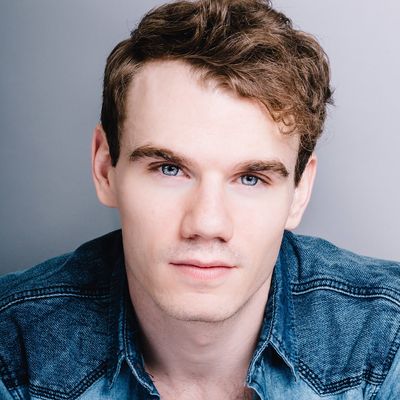
Broadway Legend Jay Armstrong Johnson stops by to talk about the impact of the Tony Award-Winning Revival of Parade on the future of Broadway, his path into performing, and figuring out the journey of a character throughout a show.
Jay has been a star throughout the theatre industry having performed in Phantom of the Opera, On The Town, Hair, Hands on a Hardbody, Catch Me If You Can, and in several regional theatre productions across the United States. With his stellar voice and natural instincts as a dancer, his performance as Britt Craig in the Tony Award-Winning Revival of Parade is breathtaking and hard to put into words.
Just announced (officially): Jay’s annual fundraiser “I Put A Spell On You” will continue in 2023 at Sony Hall on Monday, October 23rd. This year, the Sanderson Sisters are in their “Witch ERA”. Tickets are available NOW at https://ipasoy2023.cbo.io/. This event benefits the Ali Forney Center.
I am very honored to have Jay joining my show, especially for this episode as I celebrate both my 17th Birthday & my two-year anniversary on the Broadway Podcast Network!
Join our conversation as we discuss:
- Michael Arden’s beautiful, Tony Award-winning production of PARADE (closing August 6th, 2023) & the impact the story, inclusivity of the production process, and raw emotion will have on the future of Broadway
- Tips on how to go from a mover to a dancer (primarily for Mason’s benefit)
- In relation to his performance of The Seraph by Ryan Scott Oliver (Mason’s favorite song ever), how he creates a journey through song and through a character study
- His thoughts on the long-pawned question, education or experience!
- The annual Halloween party “I Put A Spell On You” he hosts, started with the help of Broadway Cares / Equity Fights AIDS
- & so much more!
Check out Jay on all the things!
Instagram – @jay_a_johnson
Website – Jay Armstrong Johnson
See PARADE while you still can:
Thank you so much for being here and for your support!!
I hope that this show continues to be a resource for artists of all interests to find the place they deserve in this wonderful industry…
Join me for future interviews and content below!
Instagram: @_RealTalk_Pod
Twitter: @_RealTalk_Pod
TikTok: @RealTalkPodcast
Facebook: Real Talk with Mason Bray
Transcript
This transcript was automatically generated and might contain errors.
[0:01] Mason Bray: Welcome back to Real Talk with me, Mason Bray. I am so grateful for you being here, and especially for this episode, where there is so much to celebrate. If you're listening to this on the day it comes out, July 27th, this is my 17th birthday episode. So happy birthday to me. I'm so glad I could celebrate this day with you and you are back and listening to my show. I know that it's been a while. The past few months have felt like a dumpster fire, but we're getting back in the swing of things and going into senior year of high school. And now I am turning 17. Also, today, and this month is my two-year anniversary on the Broadway Podcast Network. I want to thank Alan, Dory, Kim, Bia, and the entire BPN team for taking me in these past two years.
And I'm so excited to continue hosting a show on their wonderful network. To celebrate all of this, I have a very special interview with Jay Armstrong Johnson from the Tony Award-winning revival of Parade. If you're in New York City, go see this show. It is incredible. Now, in the interview, we talk about how the show will hopefully win the Tony Award, and that's because I recorded this in like March or April. And that's burnout slash exhaustion for you. If you want to learn more about me or my show, you can go to bpn.fm/real talk. Thank you so much for being here again and enjoy the episode. So we have the Broadway legend Jay Armstrong Johnson, who is currently Britt Craig in the revival of Parade, but he has also been in Phantom of the Opera, On The Town, Hands on a Hardbody, Catch Me If You Can, and so much more on Broadway and around the country.
I got the pleasure of seeing him in Parade just a few weeks ago, and I am so excited to talk to him about that. But also one of my favorite songs ever, The Seraph from 35mm. So I'm fangirling over here today. Hi Jay.
[1:58] Jay Armstrong Johnson: Hi, Mason. That was a very lovely intro. Thank you.
[2:02] Mason Bray: Yeah. So can you give a rundown on how you got to where you are in Parade, but also just in the industry in general?
[2:09] Jay Armstrong Johnson: Yeah, well, Parade kind of came about because of Michael Arden really. I've been friends with Michael for a really long time. I've known Michael's husband Andy Mantis since we were teenagers. We auditioned for the first national tour of a Spring Awakening together, like way, way back in the day. So that's how long I've known Andy. Then I met Michael a few years later. So I've been friends with Michael. And just recently, in the last few years or so, have I actually been able to work with Michael as a director and as a collaborator. So we actually ended up doing a concert together in Tokyo this past summer. And he asked me if I'd be interested in Parade. And of course I said yes. And he said he was thinking about me for a role, but that I'd have to still audition and that Jason Robert Brown was gonna have to okay me.
And so I did an audition. I submitted a self-tape, and thank God Jason liked my self-tape. And I think because I'd worked with Hal Prince and I'd met Jason through Hal, I think that also helped me. It was a feather in my cap. So that's kind of how at least I came to be in Parade at New York City Center before our Broadway transfer.
[3:15] Mason Bray: Yeah, that's incredible.
[3:17] Jay Armstrong Johnson: Legends in that legends.
[3:20] Mason Bray: I know. I know. I was at the Phantom of the Opera closing a couple of nights ago, and I was just overwhelmed with this sense of gratitude and just kind of like pinching myself, knowing that I've, you know, I've been in contact with the greats, you know. I've been collaborating with the people that I've studied and the people that I've been so inspired by my whole life. So I'm holding all of that very near and dear to my heart these days.
[3:48] Jay Armstrong Johnson: Yeah. And Phantom was such a big part of like musical theater history. And to see that chapter close is wild. I mean, I guess we never thought that it would go anywhere. It's always just been a staple of New York City. It's like there's the Statue of Liberty and there's the Phantom of the Opera. You know, it's like they'll be there forever. But I guess, you know, all good things must come to an end. I'm sure it'll be back in some other form very soon. Andrew Lloyd Webber is already hinting at it on Jimmy Fallon. I saw a clip a little bit ago.
[4:18] Mason Bray: He sure is.
[4:19] Jay Armstrong Johnson: Oh yeah. So for those who don't know, can you give a rundown on what Parade is about and the subject matter of the show?
[4:26] Jay Armstrong Johnson: Yeah, essentially it's based on a true story about a Jewish man who's living in the South in Georgia in 1913 when he's wrongfully accused of the murder of a little girl. And it's kind of, it's a really intense slice of history that really highlights kind of the worst parts of our country. You know, it's just post-Jim Crow, it's the Jim Crow South, and so the treatment of people of color and the treatment of Jewish people of faith was really kind of terrible. And so it's excavating that time in history. The fact that it's a true story is even more heartbreaking, but it's, you know, putting a mirror up to society and kind of showing us that we've not really come far since 1913, with, you know, the rise of anti-Semitism and racism again in our country. It's shockingly relevant.
[5:25] Mason Bray: And that's what makes it hurt even more is because like it's relatable now, which is a whole different topic.
[5:33] Jay Armstrong Johnson: It really is. And you know, we feel the weight of that as a company and the importance of that as theater makers. So we feel honored to tell the story and a sense of responsibility to tell it with truth and honesty, and it's just a really great, great group of brilliant, brilliant artists. And we've been supported so powerfully by our director, Michael, and by our producers to be able to tell the story in a safe and warm and correct way, I guess.
[6:04] Mason Bray: Absolutely.
[6:06] Jay Armstrong Johnson: Yeah. And for me as an audience member, it just like hit me so hard. So I can't even imagine as a performer. Can you talk about like the mental toll that telling the story has with it, but also could be rewarding as well?
[6:19] Jay Armstrong Johnson: Yeah, the hardest part of the process was the rehearsal process, really. We didn't have that long to rehearse it either at City Center or for Broadway. And it was the conversations around the tough subject matter. It was, you know, the kind of analytic of what we were doing and how we were doing it and what it means to be a terrible white person that's making terrible choices in the South that's affecting people of color and Jewish people of faith, and those kind of open conversations that we had to have as a company, they were tough. There were some really, really tough days in the rehearsal room as we were navigating this subject matter. But what our producers and what our directors did was kind of create this really safe environment to have those conversations.
We had a sensitivity coach there that was helping us navigate those conversations. Our associate director, Matthew Johnson Harris, also has a lot of training in DEI and helped us navigate a lot of the conversations around how the people of color are feeling in the room regards to this time and in this piece. And they brought in a rabbi and a Black Reverend. And we had really intense and exciting and new conversations around white supremacy and how it affects both Jewish people of faith and people of color and how we can kind of eradicate those systems. And it really was the toughest and most beautiful part of what we've gone through thus far. Now that we're in the run of the show, thanks to Ann James, our sensitivity coach, she gave us a lot of exercises to kind of deroll.
You know, you have to like enroll into a character, go out and play your part, and then once you step off stage, you deroll, right? You like do exercises to let that go. And thanks to Anne, the run of the show is actually really great because the second that we step off stage, we get goofy, we shake it off, and we try to keep as much levity and lightness backstage so that we can really do the hard work on stage.
[8:20] Mason Bray: Yeah. That warms my heart to hear about the sensitivity coach and all of that, because I think so often there's like so many important stories that we have to tell and like need to be seen by an audience, but like also as performers, we can't carry all of that. So it's wonderful to hear that that's happening.
[8:37] Jay Armstrong Johnson: Yeah, it's the way that theater, I think in my humble opinion, should be created, regardless of whether you're doing, you know, a slapstick comedy or whether you're doing the Scottish play, right? I think that the tools that we need as actors to have to be able to, okay, this is a character I'm playing. This is not my real life. Like this, you know, so that we can take care of these ourselves and take care of each other when we're doing these kinds of really intense things.
[9:06] Mason Bray: Yeah. And seeing the show firsthand, you are giving all that you can on that stage. And you can tell. Like you are jumping on that chair and giving everything to the performance. So can you talk about just the physical aspect of it of like getting yourself ready to do that and trust yourself on stage?
[9:26] Jay Armstrong Johnson: Yeah, I come from a dance background. I studied dance in high school. I was a dance major at my performing arts high school. It was really what I studied most growing up. So I approach a character with physicality first. And you know, Michael knows that, and Michael's seen me do A Chorus Line, and Michael's seen me do On The Town. And so he's seen me do these big dance roles. So he let our choreographers know, Lauren and Cree, that I did come from a dance background. So when we stepped into City Center, they were ready to kind of give me the physicalization of who Britt Craig is. And that excited me because I love Lauren and Cree and I love their work.
[10:03] Jay Armstrong Johnson: I think they're brilliant. So Lauren and Crete gave me like a really solid structure of what they wanted it to kind of look and feel like, and they gave me some inspirations, like even from oh, what's the movie? The Dark Knight when the Joker's like dancing on the stairs, like that was one of their inspirations for Brit, which I really enjoyed. So, you know, I'm a crazy clown in life and always have been, and I was always the class clown, and I was always the one with too much energy, and I have restless leg syndrome. You know, I make sure that I go to the gym every day or that I'm at least doing a little bit of yoga before every show to make sure that my body is warm to do what I want it to do on stage.
And real big news is like one of the biggest, like show busy numbers in the show. So it allows for that kind of physicality and that kind of like creepy showmanship. Since you know, Britt Craig is quite an anti-Semite in that song. I don't know. I'm having a lot of fun with it and watching Paul Alexander Nolan work as well. He's such a brilliant actor, and I call him Mr. Choices because he's always doing something new and exciting and different in every show that we do. And that's inspired me to kind of twist things up and you know, not because I'm usually pretty regimented in how I go through a show and how I perform a show. So I'm trying to like shake it up and be more like Paul these days.
[11:33] Mason Bray: Yeah, I love that. Now, did you come from any formal education in the arts with dancing? Like, did you go into musical theater in college?
[11:43] Jay Armstrong Johnson: Yeah, I started doing theater in general at KWC Performing Arts, which was like a children's theater company in my hometown. So that's where I found theater, and that's where I first started my like very first beginner dance classes and voice classes and acting classes, and then from there I went to a performing arts school and I studied ballet, tap, jazz, modern hip hop, you know, from the time I was 15 to the time I was 18. And that was, you know, I was dancing probably five hours a day, a couple of hours at school, and then a couple of hours after school at my dance studio. So yeah, I most of my formal training was in dance, which made me decide to go to college for a voice. So I ended up going to NYU in their music program at Steinhardt. And I was a vocal performance major with an emphasis in musical theater.
[12:33] Mason Bray: Lovely. Now a personal question that I have to ask every single person that talks about being a dancer.
[12:38] Jay Armstrong Johnson: Sure.
[12:39] Mason Bray: How does someone, say a redhead living in Indiana, go from a mover to a dancer?
[12:47] Jay Armstrong Johnson: You know, it's you gotta put in the work. My little cousin Michaela really wanted to be on her dance team in at school. And she showed me what the audition combination was, and it was really intense, really advanced stuff, and she really wanted it a lot. And I was looking at the routine and realizing how advanced it was and how most of the girls that are probably pulling this off have been studying this since a young age. She didn't end up making the team, but she worked really hard, but she's gonna try to make it the next year. But I told her that like if you really do want to become a part of this team, the work that you have to put in is intense and it's an every single day thing. Stretching and strengthening, ballet class, going to the gym, you know, working at it every single day is the only way to make it better, right?
Practice makes perfect, practice, practice, practice. That's the way you get to Carnegie Hall, right? And that's how I found that out about my voice as well in college. Like I didn't really start seeing a major transformation of vocal technique until I was in that practice room every single day working on my voice. So it really is a practice. And I'm still practicing, you know, that's why I still go to the gym. I push myself. I'm like, all right, how much weight can we push today? I still make sure I'm doing my warmups and my cooldowns. And, you know, it's being an artist, you are a student until the day you die, or at least I think you should be, because as you grow, you change, and you should be excavating that part of your life that has changed. And how does it feel now that you had that knee injury? How does it feel now that your voice has dropped into a lower register?
[14:33] Jay Armstrong Johnson: You're right. So it's just it's a constant education, I feel to be an artist and to continue to know yourself and how you move through the world. So long story short, work hard, go to class, do the work.
[14:48] Mason Bray: Yeah. I will keep you updated on my move from mover to dancer. I'm really excited to hear about it.
[14:53] Jay Armstrong Johnson: So continuing talking about that education side of things. I always ask people education versus experience. And most of the time people say that they go together. For you, do you think that being a student of like learning as you do things is more valuable, or do you think you need to go through those programs like NYU?
[15:12] Jay Armstrong Johnson: You know, I would say if I was looking at just my experience, most of my education came from doing. Because I started doing it at a really young age, right? So I lucked out because I was a boy in Texas, 12, 13, 14 years old that liked to dance, that wanted to dance. And there were institutions in my hometown, theater companies that were looking for boys to be in shows. And so, you know, not a lot of boys in Texas wanted to put on ballet tights and dance around on a stage. And I did. And so I got those opportunities to work with professionals at a really young age. And I would study those professionals, and I think that's how I figured out how to act. And I think that's how I figured out how to work hard.
But I was always, I was all and they really do go together, right? But I had a really kind of charmed early career as being able to go to school to study the thing at the same time as being able to do the thing while studying. So I always tell anyone that's aspiring to be an actor or an artist to like go find those opportunities where they might be in your hometown. If there's a show that's auditioning, go audition. Even if you don't get the show, the experience of going into the audition room and doing that audition is going to be a wealth of knowledge that you'll gain. Auditioning is a whole different technique that is separate from performing and it's separate from education. It's its own weird thing that you have to kind of like get good at, right?
So they really do go hand in hand. And I wish I could say that they were that they didn't, but for me, they absolutely did. But just thrusting yourself into those spaces is super important, you know. Take the risk.
[17:04] Mason Bray: And I love it when people say that they go hand in hand because for me, I am currently in the midst of like finding out do I want to go to college? Do I want to just like throw myself into the world and see what happens? So I like hearing all those different reasonings for everything.
[17:18] Jay Armstrong Johnson: Yeah, for sure. I mean, my plan, I only applied to NYU, by the way. I was like, I'm getting out of Texas and I'm going to New York City, and so I guess I need to go to NYU. And so that was at least my plan. And you know, the school is so expensive these days. I'm still paying off student loans for a degree that I don't have because I dropped out my junior year to go on a national tour, you know. So it's like it's funny that I'm six Broadway shows deep, a couple of TV shows, and I'm still in debt from school that and I don't even have like a diploma to like show for my debt, right? So it really is it's your choice. And to be in the arts, you don't technically need that degree. But some people, you know, I have a friend that's going back to school after having a really great career on Broadway because they really want to get into higher education, and so in order to be a teacher in higher education, you do have to have those degrees, right? So it really just depends on what your specific journey is.
[18:19] Mason Bray: Yeah. And now I mentioned this in the introduction, but "The Seraph" is one of my favorite songs ever. I just want to talk to you about creating like a journey of a song. Because like the emotional arc of that song is so beautiful. And I just want to hear like your process of like figuring out a song and dissecting it.
[18:38] Jay Armstrong Johnson: Yeah, that song and that album, that show in particular, really spoke to me in that time in my life. Ryan Scott Oliver, who's been a friend of mine since I was 19, 20, he used 35 Millimeter as like a meditation on what on religion and on spirituality. And in my early 20s, I was having a hard time with my religion and spirituality and kind of divorcing myself from what I had learned and known my whole life. So to be given "The Seraph" at a time where I was dating Adam Chandler Barat, by the way, at the time. So Adam was my seraph, and I was contemplating my religion. And so I was able to really kind of hone in very specifically what those things were in my life. So that's really lovely when a song can be so immediate in someone's life.
When a song isn't immediate, I really have to kind of do the work. I have to play the what-if games. And I have to be like, okay, so what if this was in my life? Who would the person I'm talking to be? How might I go about getting what I want? You know, all of the acting 101 stuff that you learn in school.
[19:55] Jay Armstrong Johnson: Yeah, it's the beginning, the middle, and the end. I don't know. Acting is so crazy. It's like we're little, we're tiny little brain surgeons. They're playing tricks on ourselves in order to tell a story.
[20:07] Jay Armstrong Johnson: But the seraph is one of those songs that will forever be a part of my chemical makeup, I feel. And Ryan did give me a lot of carte blanche on how I wanted to present it, which felt cool as well. Every single time that I listen to it, and it's like a been a day, when it gets to the I don't believe in God, I think Jesus was just a man. Oh, it hits so hard. Yeah, just hearing you say that made my eyes well up a bit. Yeah, it's intense. I had my mom listen to that song, and she loved it so much until we got to that part. And then she heard me sing, I don't believe in God. And you know, religion has been a whole journey with me. I consider myself very spiritual. I consider myself to believe in something, some higher power. But yeah, I do believe that Jesus was just a man.
[21:01] Mason Bray: That's wonderful. I don't even know how to follow that up in conversation.
[21:06] Jay Armstrong Johnson: It's a hey, you went straight to religion, huh? That's hard.
[21:10] Mason Bray: Oh.
[21:11] Jay Armstrong Johnson: Well, so on a sort of topic of community, I guess we'll go with that line. You are very big in the advocacy side of theater as well with Broadway Cares Equity Fights AIDS, which is a wonderful organization. And you do the I Put a Spell on You Live, which is such a wonderful thing, and I'm so glad you do that. Can you talk about why you want to use your spotlight for the better?
[21:38] Jay Armstrong Johnson: Yeah, I mean, I wouldn't have been able to find theater in the way that I did as a kid unless I had a KWC Performing Arts, which was a nonprofit children's theater that scholarshipped me all the way through my time with them. So those kinds of organizations that exist in the world that do give to the community are so important to me. I wanted to be an advocate for change and I wanted to be out in the world and using my voice and my art for good. So when I found Broadway Cares and started doing Broadway Bears and Broadway Backwards and going to the flea market and doing the Easter bonnets and doing the red bucket follies, I just found that their organization reminded me of KWC Performing Arts.
It reminded me of what Gavin was doing. And so I latched on to them. I begged them for a few years to be our benefactor for I Put a Spell on You after I realized it was something I wanted to do every year. And they finally joined us in our fourth year, I think. So it took a few years for them to sign on board because you know they're a busy organization. But yeah, the sense of community is the perfect word for it. I thought that Broadway Bears was just about showing off your body and getting naked for fun. And then when I did it for the first time, I realized just how impactful it was when I realized how much money we were raising and the community that I felt with those artists. That's what I want my life to be, right? That's what I want my mission to be to continue doing what I love, but always make it for in service of something or someone.
[23:44] Mason Bray: And you've been a part of so many Broadway shows where you tell such wonderful stories like Hair and Parade and Phantom of the Opera. It is all so incredible. Your career's great.
[23:55] Jay Armstrong Johnson: Yeah, I feel super lucky, you know. I'm just like riding the wave and then trying to stay as present in every moment as possible, and I'm having fun, you know. It's a lot of fun.
[24:09] Mason Bray: Yeah. You mentioned the flea market, and I just have to say this every time someone brings it up that I missed the flea market in last September by two days. Oh, I was in New York, and then like two days after I left, it was flea market day.
[24:24] Jay Armstrong Johnson: Dang.
[24:25] Mason Bray: Made me so mad.
[24:27] Jay Armstrong Johnson: You'll be back.
[24:28] Mason Bray: I'll get over it.
[24:29] Jay Armstrong Johnson: You'll be back, you'll be back.
[24:30] Mason Bray: Yeah, I found some cool stuff at that flea market, but I'm also a bit of a hoarder, so I have to be careful.
[24:37] Jay Armstrong Johnson: And you know what? That's okay. As long as you own up to it, it's okay.
[24:41] Mason Bray: That's right, Mason. That is exactly right. Be the true hoarder inside of you.
[24:46] Jay Armstrong Johnson: Here I am, the Broadway hoarder. So you went to see White Girl in Danger last week, and that just I wanted to talk about the future of Broadway. And since that could be a future of storytelling, I wanted to talk to you about the future of Broadway and what that means to you.
[25:09] Jay Armstrong Johnson: That really feels like the future to me. We were so supported by a sensitivity coach, by a wellness specialist, by two associate directors that had very different walks of life that came in with very different skill sets that helped tell our story. That's the future. Advocacy, representation. All of that is so freaking important, and what I think our industry has been begging of us for the last few years. So I continue to talk nothing but good things about Parade and the experience of Parade to everyone because I really hope and wish and feel like that is the best way to move forward as an industry. Telling stories like White Girl in Danger, yeah. It was so wild, it was so subversive, it was so hilarious to see a queer black man's take on the soap opera, which is absolutely not a black art form.
I mean, it was really stunning to watch. It was so, so fun. So, yeah, I think the Phantom of the Operas of the World are important. But I think Emily Cachou being the closing Christine is super important so that there is a little black girl out there that can see her represented on stage in a famously white show, right? So that's the future of Broadway. I don't know. I could go on and on and on about this. This is a good question, Mason. But yeah, I'm excited about it, and I see it happening in our industry currently, and I want to help usher it into a new era.
[27:02] Mason Bray: Yeah. And this entire interview is just gonna be like us talking good about Parade, but we love it.
[27:07] Jay Armstrong Johnson: Yeah, but even just like the design and execution of Parade allows itself to be storytelling enhanced by the projections on the back wall, seeing everything in the Jacobs to let it be transparent to the situation, which is so wonderful.
[27:26] Jay Armstrong Johnson: Yeah, it's a testament to Michael Arden. He's a visionary, he's a perfectionist, he takes a bit of a Hal Prince approach to simplicity, you know. Not that Phantom of the Opera is simple, but it kind of is if you really I mean it's just it's very expensive simplicity, yeah, but it's just a couple of curtains and a black box, right? You know, like it's yeah, I really am so impressed by everything that Michael does blows my mind from his revival of Spring Awakening to Once on This Island. I mean, he's two for two, he's won best revival both times. He's directed a revival, so maybe he'll be three for three this year.
[28:04] Mason Bray: Going for three.
[28:06] Jay Armstrong Johnson: Like I said, I cannot stop thinking about it, and I don't think I will.
[28:10] Mason Bray: Yeah, I've heard that from a lot of people, and I don't really stop thinking about it either, I guess because I can't because I'm doing it every night, but it does feel really lovely to be a part of a show that is creating such a wave culturally, not only in our industry but in just in the world. So again, it's nothing but feelings of gratitude and happiness amidst a really horrible, horrible story. But such a stacked cast telling it as well.
[28:41] Jay Armstrong Johnson: Oh god, I love them. Every single person on that stage is incredible. And like all the teenage girls that are in it are fabulous. Yeah, and like so smart. Jake Peterson's anger during the funeral. I love that kid. God, he's good.
[28:56] Mason Bray: Yeah, it was all so good. Is there anything else that you want to add about Parade or add about your career and any advice that you want to give before we wrap up?
[29:07] Jay Armstrong Johnson: Oh man. No, you've really covered it all. You really nailed it, Mason, which is wild. And thanks for bringing up I Put a Spell on You. We're excited to be in our eighth year.
[29:18] Mason Bray: Yeah.
[29:18] Jay Armstrong Johnson: It's gonna be on we haven't announced this officially, so hot off the presses, but it's gonna be October 23rd, I believe, at Sony Hall again, I believe. So, you know.
[29:29] Mason Bray: Hypothetically.
[29:30] Jay Armstrong Johnson: Hypothetically. So come on through and let's raise some more money for Broadway Cares.
[29:36] Mason Bray: Yes, I'll promote it as much as possible.
[29:38] Jay Armstrong Johnson: Thanks, Mason. I appreciate you being here. Thank you so much for taking time out of your day and talking to me.
[29:44] Mason Bray: Absolutely.
[29:45] Jay Armstrong Johnson: Anytime. And thank you so much for listening and continuing to support my show. If you want to learn more about me or connect with me on social media, feel free to go to bpn.fm/RealTalk.
© Broadway Podcast Network, All Rights Reserved