

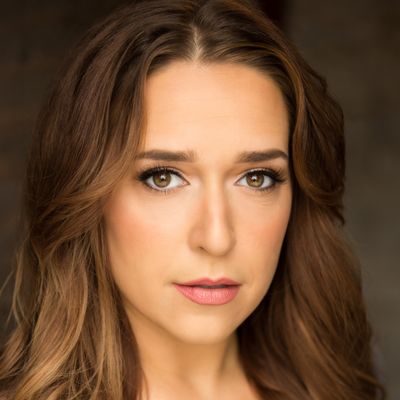
Not a day goes by when someone doesn’t ask us when we’re gonna have Jessica Vosk on the pod. Well, today’s the day! In this amazing conversation, Ms. Vosk tells us about the special relationship she has with her ENT, being a bit of a rebel inside a machine like Wicked, and whether or not the score was as easy for her as it sounded... Read More
From the show: Sentimental Men
Guests
Featured Shows
About
Not a day goes by when someone doesn’t ask us when we’re gonna have Jessica Vosk on the pod. Well, today’s the day! In this amazing conversation, Ms. Vosk tells us about the special relationship she has with her ENT, being a bit of a rebel inside a machine like Wicked, and whether or not the score was as easy for her as it sounded.
You can also support us by leaving a rating or a review on Apple Podcasts or following us on Twitter, Instagram and TikTok!
Transcript
This transcript was automatically generated and might contain errors.
[0:00] Quincy Brown: Yeah, because who the f-u-c-k sings an 11 o'clock number at the beginning of the show?
[0:06] Kevin Bianchi: Yeah. I'm sorry.
[0:07] Quincy Brown: Fanny Bryce and Elphaba.
[0:09] Kevin Bianchi: Right, and like, I'm totally fine with playing Fanny Bryce too, being the LBL alternate.
[0:16] Quincy Brown: My name's Quincy.
[0:17] Kevin Bianchi: My name's Kevin.
[0:18] Quincy Brown: And this is Sentimental Men.
[0:20] Kevin Bianchi: But keep your thumb away from that skip button.
[0:23] Quincy Brown: Because we're here to talk.
[0:24] Kevin Bianchi: And maybe scream.
[0:26] Quincy Brown: About our favorite women in musical theater.
[0:30] Kevin Bianchi: It's Tony Sunday, no school till tomorrow.
[0:36] Quincy Brown: It's Tony Sunday.
[0:39] Kevin Bianchi: Oh, I'm realizing you don't get this.
[0:41] Quincy Brown: No.
[0:43] Kevin Bianchi: There's a song in Hawaii, I guess, called, I don't know what it's called, but it's Aloha Friday, no work till Monday.
[0:51] Quincy Brown: It's Aloha Friday.
[0:52] Kevin Bianchi: So I was doing that. And then when I saw your confused face, I remembered that that's not like a universally known thing.
[0:58] Quincy Brown: No, no.
[0:59] Kevin Bianchi: But thank you for sharing that piece of your culture with me.
[1:04] Quincy Brown: Hi, Kevin.
[1:07] Kevin Bianchi: Guys, full disclosure, we've been podcasting all morning.
[1:11] Quincy Brown: Yeah, it's 2 p.m. We've been going since 11 a.m.
[1:15] Kevin Bianchi: Because it is what? Sentimental Men Press Week.
[1:20] Quincy Brown: So funny. But yeah, we just recorded a super fun episode with our friend Mikey at Backstage With Podcast, which should be out by the time you're listening to this. So go give it a listen. And now we're here.
[1:31] Kevin Bianchi: And now we're here with probably, I would say, one of our most anticipated episodes, Quincy.
[1:39] Quincy Brown: Genuinely, like our most requested guest, I can objectively say, I think, like without a doubt.
[1:46] Kevin Bianchi: I think by far. From the very beginning, we have been getting DMs, comments, messages. When are you going to have Jessica Vosk on?
[1:53] Quincy Brown: And the answer is today.
[1:59] Kevin Bianchi: And I think it's a great first interview episode for our Oztoberfest, as we just decided today to call it.
[2:04] Quincy Brown: Yes.
[2:06] Kevin Bianchi: Kevin, how was your week? Did you do anything?
[2:09] Quincy Brown: No, I just worked.
[2:11] Kevin Bianchi: Oh, well, since the last. Well, I guess since the summer, we didn't talk about it in the last episode, though. I have a new job now.
[2:18] Quincy Brown: Wait, did we not talk about that?
[2:19] Kevin Bianchi: No.
[2:20] Quincy Brown: Wait, I'm sorry, because I made a mental note to be like, we have to gas Kevin up over his new job. I didn't realize that we didn't do that. I'm sorry.
[2:26] Kevin Bianchi: My feelings aren't hurt. Guys, Kevin has a new job.
[2:29] Kevin Bianchi: I have a new job, which is so exciting because I really struggled with my old one. And it's great. I am also at an arts marketing agency now. So Quincy and I are working at very similar companies doing very different things.
[2:46] Quincy Brown: Oh, I saw Stephanie Torrens as Jenna in Waitress this past week.
[2:51] Kevin Bianchi: OK, and we actually have not talked about this yet. So tell me how she was.
[2:55] Quincy Brown: Well, firstly, Steph was on for Jenna and Emily Cook was on for Stephanie's track, which is the Women Ensemble slash Francine Pommeter track. So it was super exciting that they were both on in the same performance and I could hit two birds with one stone.
[3:11] Kevin Bianchi: Stephanie was actually so incredibly good. The friend that I went with were like, we were both like, I think she's the best song Jenna that we've seen.
[3:21] Quincy Brown: Wow.
[3:23] Kevin Bianchi: I don't know because I hadn't seen her live in a show before. So it was really cool to see her doing her thing. And it was and what I loved is because if you remember in her episode, she talked about how like going on for Sarah was always an ordeal because there was always such like disappointment and blah, blah, blah, blah, blah. It feels like the Waitress fan base is like established enough that when it was announced, my friend and I went to the theater because we were right our offices right around the corner and like there was a line of people waiting to buy tickets after it was announced to see Stephanie.
[3:52] Quincy Brown: That's so cool. Quincy, how many Jennas have you seen?
[3:56] Kevin Bianchi: I saw Jessie. I saw Betsy. I saw Catherine McPhee multiple times. I saw Alison Love. I saw Sarah. I've seen Stephanie. I think that's it.
[4:09] Quincy Brown: Six. That's a lot, Quincy.
[4:12] Kevin Bianchi: No, and now that I'm seeing it so much because I work on the show too. So like now I'm seeing it frequently. But yeah, it was really exciting to see Stephanie. Now I want to see Emily Cook go on for Jenna or Dawn.
[4:23] Quincy Brown: Me too. She did perform at Bryant Park. She did What Baking Can Do and it was phenomenal.
[4:28] Kevin Bianchi: I know I watched that. It was so good.
[4:30] Quincy Brown: Oh, wait, do we do resume or choices, options, bootlegs first? It's been so long since we've done one of these.
[4:35] Kevin Bianchi: I think we usually do res first.
[4:37] Quincy Brown: All right. Well, Kevin, do you want to read through Miss Vosk's resume?
[4:42] Kevin Bianchi: I feel like we're at the point where it can just be like a staple of the podcast that I do the resume. Because every time I'm like, oh, we'll switch off. But then when I look at it, I'm like, I don't want to read through all of that. Not that we're reading it where we haven't memorized. So if memory serves me, Miss Jessica Vosk famously and iconically left her career in the financial world to join us here on Broadway.
[5:09] Quincy Brown: On Sentimental Men.
[5:10] Kevin Bianchi: Yeah, this has been the long game the whole time. Her first gig was in 2009 as a vocalist for the live concert of Christina by Benny Anderson and Bjorn Ulvaeus of ABBA fame. And then in 2014, she made her Broadway debut in the Bridges of Madison County. Also in 2014, I think, was in the OBC of Finding Neverland. Missed that show.
[5:38] Kevin Bianchi: Then in 2015 and 16, she was in the Broadway revival of Fiddler on the Roof as Fruma Sarah with like that iconic.
[5:45] Quincy Brown: That's like her star.
[5:48] Kevin Bianchi: Crazy. That yeah, that was I feel like that was the debutante coming out moment. Like people were leaving that theater being like, who was that? You know?
[5:58] Quincy Brown: Incredible.
[5:59] Kevin Bianchi: And then in 2016, the moment that we collectively, the world, were waiting for. Jessica Vosk makes her Wicked debut on the second national tour straight to principal Elphaba and took over the role from Friend of the Pod, Emily Cook.
[6:18] Quincy Brown: She did the second national tour and in 2018 came back to Wicked as the principal Elphaba again on Broadway, taking over the role from Jackie Burns.
[6:29] Kevin Bianchi: And it is worth noting that Miss Jessica Vosk was an anniversary Elphaba. So she was the 15 year anniversary was her and Amanda Jean Cooper.
[6:41] Quincy Brown: Then in 2019 at the world premiere production of Becoming Nancy, she was Aunt Val. And then as a little kiss goodbye before everything changed and the world shut down in February 2020, Jessica Vosk was part of the iconic trio of narrator in the Lincoln Center Joseph concert.
[7:04] Kevin Bianchi: They should really one didn't realize that that truly happened like right before the world ended. Two, they should release a pro shot of that because they should mount a full scale production of it.
[7:14] Quincy Brown: I think the world is ready for like a hyper queer.
[7:16] Kevin Bianchi: Oh, yes. Like a hyper queer Joseph revival, I think could work well on Broadway.
[7:21] Quincy Brown: I would love that.
[7:23] Kevin Bianchi: What else has she done, Kevin?
[7:24] Quincy Brown: Well, she has also done Company at the New York Phil. She also did Merrily and Gentlemen Prefer Blondes at City Center. She has a solo album called Wild and Free. She has an EP called A Very Coco Christmas. Coco short for Corona. And not only is she a friend of our pod, but she is a podcaster herself because she has a podcast called Killing It on Broadway, which is a true crime podcast with Jennifer Simard.
[7:54] Kevin Bianchi: Which I think is so cool that these like two Broadway names got together to interview Broadway people, not about Broadway, only about like true crime.
[8:03] Quincy Brown: Yeah.
[8:05] Kevin Bianchi: Which is so fun.
[8:07] Quincy Brown: Yeah. She has done quite a bit since her breakaway from the finance business world. I would say she leapt and the net appeared. I'm excited to see like where her career goes post pandemic. Feels like she only has more and more momentum going for her.
[8:27] Kevin Bianchi: She's doing a concert at Carnegie Hall. She's making her solo debut.
[8:31] Quincy Brown: Yeah.
[8:32] Kevin Bianchi: At Carnegie Hall. Okay, choices, options and bootlegs. Is it time?
[8:35] Quincy Brown: I would love because you have such a plethora to choose from this week.
[8:40] Kevin Bianchi: Yeah.
[8:41] Quincy Brown: I'm itching to know what you picked.
[8:46] Kevin Bianchi: What I've chosen to discuss on this podcast is her performance of Sticking on the Waitress theme, What Baking Can Do, on the Seth Rudetsky live concert series that he was doing over quarantine. But yeah, so she sings that arrangement of What Baking Can Do, which is a beautiful arrangement. She, and this is going to be a theme of the episode, I'm sure, is such a clean, pristine vocalist. The riffs and runs are so clean. And I love, I'm not going to try and recreate it because it's just not going to happen. But the way she sings Every Door We Ever Made, we never once walked out, is so, so good.
[9:24] Quincy Brown: That was good.
[9:25] Kevin Bianchi: Thank you. Also, she, the sugar and butter flower, don't let me down. She gives a full belt on it. And here's the thing, I think the stage version of the show might be music directing the genus to mix that note, which is fine. I think it makes sense for the context of like the story and arc, whatever.
[9:44] Quincy Brown: Oh, sure.
[9:45] Kevin Bianchi: But it was thrilling to hear that note fully belted. And Jessica Vosk gives that to us in this performance. So I highly recommend, go give it a watch.
[9:55] Quincy Brown: All right, let's, do you have anything else?
[9:58] Kevin Bianchi: I don't think so. I'm ready to talk to her.
[10:00] Quincy Brown: All right, let's dive in.
[10:06] Kevin Bianchi: Jessica Vosk, thank you so much for joining us today.
[10:09] Jessica Vosk: I'm so happy to be here.
[10:11] Kevin Bianchi: We are so excited to have you. And I feel like you should know that since we started this podcast, you have been our most requested Elphaba.
[10:19] Jessica Vosk: Truly not a day goes by where someone isn't like, when are you having Jessica Vosk on the podcast?
[10:24] Kevin Bianchi: Stop asking, leave us alone, we're working on it.
[10:29] Jessica Vosk: So this is super exciting.
[10:31] Kevin Bianchi: Well, yay. We start every interview by asking, when did Wicked the musical come into your life?
[10:36] Jessica Vosk: Yeah. What's your first touch point with the musical?
[10:38] Jessica Vosk: Well, just that I used to sing it in my car. I mean, I was like a, you know, a musical theater kid. I did all of the shows in grade school and high school. And I used to drive down like Backwoods Road, New Jersey.
[10:55] Kevin Bianchi: I know it.
[10:55] Jessica Vosk: Like living the dream, top down. I had a convertible for a hot second, like a champion. And that's, you know, probably was on my playlist alongside like Thoroughly Modern Millie and The Secret Garden. So that's probably like where it was in the mix of like burnt CDs or original cast recording CDs for all of you Gen Zers out there who are like a CD, what is that?
[11:15] Kevin Bianchi: And I plugged that right into my car.
[11:21] Kevin Bianchi: Where in New Jersey are you from?
[11:22] Jessica Vosk: I'm from Clinton, or as I like to say, Clinton.
[11:25] Kevin Bianchi: Clinton, yeah.
[11:27] Jessica Vosk: Trenton, Clinton.
[11:28] Kevin Bianchi: Yeah, yeah, yeah. It's a glottal T, okay, everybody? But like for all intents and purposes, if I have to be classy, I'll say I'm from Clinton.
[11:37] Jessica Vosk: Yes, and I drink water.
[11:39] Kevin Bianchi: Yeah, and I love a bagel.
[11:41] Jessica Vosk: Yeah.
[11:43] Kevin Bianchi: So when was the first time that you saw Wicked?
[11:46] Jessica Vosk: Right when it opened is the only time I ever saw it with Adina and Kristen.
[11:50] Kevin Bianchi: That's it.
[11:51] Jessica Vosk: Really?
[11:51] Kevin Bianchi: Yeah.
[11:52] Jessica Vosk: So you didn't see it again until you were like going into the show?
[11:55] Kevin Bianchi: That is correct.
[11:56] Jessica Vosk: Yeah.
[11:56] Kevin Bianchi: So when everybody's like, oh my God, was that your dream of dreams? I was like, no. And I had seen it. I don't even remember the show really having. I mean, everybody knows the show, but having gone into it when I went into it, and they were like, well, how much of it do you know? I was like, oh, honey, she's going in blind. Because I remember seeing it with the OBC, and I'm sure it was when I was in college, and I'm sure I was like, you know, knocked on my ass. And, you know, but yeah, until I went into it in what, 2017, I had never sat through another performance of it.
[12:31] Kevin Bianchi: Wow.
[12:32] Jessica Vosk: So seeing that, because you were a theater kid. So seeing the original Broadway cast, was there a part of you that was like, oh, I would want to be in this? Or you were just seeing it as a Broadway musical and that was it?
[12:40] Jessica Vosk: I mean, I knew I always wanted to do Broadway. I knew I always wanted to have a chance to be able to be on a stage like that. I mean, doing community theater, you know, even when you're in college, you're like, I get it. I'm like, I understand the plight of what it is to be able to, like, I could definitely do this. And then, you know, now as an adult, you're like, oh, baby Jessica. But of course it's like, who doesn't want, who doesn't see that iconic show? I mean, I actually took more to the role of Glinda than I did Elphaba. And even when I was taking voice lessons, you know, throughout college, high school and college, I was always doing popular. And like, sometimes I would do Defying Gravity, but I was always like, oh, that's that comedic shit that I love.
[13:23] Kevin Bianchi: Yeah, yeah.
[13:24] Jessica Vosk: Because you are a funny actress.
[13:26] Kevin Bianchi: Well, thank you. I, you know, I try. I actually think there's a lot of Elphaba that is dry funny. And I mean, truly now I look back on playing it and go, God, I really love that role so much. That was that's exactly the one that I, in essence, would have loved to play if I had seen the show over and over again. I'm sure that that would have been the one I took the most liking to. But God, it's the show's a spectacle, you know.
[13:52] Kevin Bianchi: We're getting ahead of ourselves. But do you feel like Elphaba as a role kind of allowed you to show off all the things you're good at? Or was there something that the role that you feel like you could have showed that the role didn't allow for?
[14:04] Jessica Vosk: I mean, it's an interesting question because you don't really have that much creative liberty to take in the show. I mean, as much as I would want to take, it would be like, that was so great, but you can't do that. So it's sort of I sort of liken it to if you've ever worked at a corporate job, i.e. like I used to work at.
[14:24] Jessica Vosk: It's like when you go to a Chili's in New Jersey, it's going to be the same as the Chili's that you go to in Albuquerque. It's going to be the same as the one you go to in California. That being said, though, I do think I was able to bring parts of myself to the character and also learn a lot from the character, like her activism standpoint or the things that she was really, really passionate about that I was also passionate about. Or I could bring, you know, a different, you know, subtlety to the role all of those years later than what the original relevant points were in 2003 during that presidential administration. So it actually was oddly relevant when I picked it back up in 2016-2017 with that new election.
I was on tour during the election. So it was also wild, you know, saying the lines during that time. But there is there's a lot that I think I was able to learn from the experience and also bring, I mean, as much creative liberty as I could. Did I get in trouble sometimes? Yes. Do I regret it? No.
[15:32] Quincy Brown: Well, that's interesting, because like, Wicked is such a machine, and it has been around for so long. And it's such like an operation. But there is still a level of all the new alphabets need to on some level, make it their own, but also on some level, be kind of exactly the same. Difficult. How do you navigate that?
[15:52] Jessica Vosk: I'm a bit of a rebel, which is which can be hard in a machine like force. Because I do honestly feel that you have to show some kind of change that comes with the times you have to show some kind of new, fresh take on something. You know, I knew that I was the how umpteenth alphabet coming into it and knowing that the role had been played by so many amazing women beforehand. So there's this there's this thing that you want to step into and go, oh, I want to pay homage to all of these women that came before me and, you know, the ones who made it the role what it is. And then I also want to be able to take issues like bullying, which is a platform that I'm very passionate about, or LGBTQ plus issues or, you know, really what it's like in this day and age, something that I will never understand, which is having my skin be a different color than anyone else's and be and feel othered.
So it's this sort of those are the things that hit me of how can I how can I use these things that are so prevalent today? I mean, in 2003, what did we have? I mean, me, I'm old, probably I'm like 72 right now. But what did we have back in 2003 is I had the only thing I could have was a Facebook because I had an EDU, right? Right. That's it. So now when I'm playing the role, everybody has Twitter and Instagram and Snapchat and all of these different platforms where you can get what bullied from people behind a computer screen who have, you know, warrior fingers. And I thought in the midst of playing that role, that's what it was about to me. It's sort of how do you stand up for people who don't feel like they can stand up for themselves?
Or how do you help people realize that it's OK to be different or, you know, that it's it's OK to speak their mind and be an activist about certain things and not have to be apologetic about it? And that kind of opened a door, I think, in extra relevance when I got to play that role. And maybe that's timing, but it became super important to me from taking it to from tour to Broadway.
[17:54] Quincy Brown: What would you say you were getting slapped on the wrist for most?
[17:56] Jessica Vosk: Riffs, honey. Yeah. Riffs. I mean, staging, some staging or, you know, some acting beats. I mean, it's it is it's super meticulous. It's something that you don't really understand until you're you're put into a position where you have to replace in that way. I mean, I've I've done original Broadway shows and then I've done revivals, but it's always been with with whatever take it is that I'm bringing to the role or, you know, new musicals from scratch where you're actually in the room creating the role. So this was totally new to me because Wicked actually does a great thing where they kind of promote from within. But I came like fresh off the boat, honey. And so it was sort of like I was in Fiddler on the Roof, played my last Fiddler matinee on a Sunday, flew out on the Monday.
Wow. Start rehearsing. Wow. I mean, and then you get to the moment where you're like, what did I do to myself? Like I'm sitting here. I watched you have to watch the show the first day that you're there. They're like, OK, here's your ticket. And I just remember going, what? Like you are going to do this?
[19:03] Quincy Brown: Yeah. What? So that's interesting. Like going through the audition process, you really had no context beyond that alphabet packet of what you were getting yourself into.
[19:14] Jessica Vosk: That is correct. How do you build up to that when you weren't expecting it?
[19:18] Jessica Vosk: Yeah, it's it's wild because it's one thing to go into the audition room, which you which you do for Wicked. I can't remember. Maybe it was two or three times that I had to audition. And was auditioning for Wicked an intentional career move? Because that was kind of the first like leading, leading role you did.
[19:28] Jessica Vosk: It was. Yeah, I actually it was one of those things where, you know, my my life is just wackadoo, Mr. Toad's wild ride. And we don't want to make you do the Wall Street to Broadway thing. I feel like anyone listening to this podcast knows that story. Right. So so if you do if you know the story, which is like she did not go to theater school, she was like in a totally different career. It was a very fast moment of making my Broadway debut at age 30, doing Bridges of Madison County, going straight into Finding Neverland and straight into Fiddler on the Roof.
[20:05] Quincy Brown: Yeah, you were working kind of immediately.
[20:06] Jessica Vosk: Yeah, very lucky, very lucky once the door was opened. And and, you know, Bridges of Madison County was a swinging role, which I'm absolutely like nobody if anybody in any power position is listening to this, like never hire me to swing your show. I'm absolutely horrible at it. I swung that show. Finding Neverland was featured on Zombo Fiddler was a feature and principal cover. And then Wicked happened. And it was kind of I don't know if I manifested it by calling from a Sarah Dead Elphaba during my Fiddler run, because that's what I hash tagged, you know, the entire time. But it was it was intentional to I said to my representation who I had just changed over representation. And I they said, you know, what is it that you want to do?
And I said, I really want to be able to lead a company. I want to be able to not just, you know, for the fanfare of getting to star in a show. But that's that's been the pinnacle of what I've wanted to do when it comes to being a Broadway performer. I have looked up to so many women who have done it.
[21:01] Quincy Brown: And you felt like you were ready to do that.
[21:02] Jessica Vosk: Yeah, I really did. I mean, you know, something I tell any kids who I, you know, do chats with or Q&As or or teaching, I'm always like, you know, you have to do the shit that you're scared of, like really scared of or how are you gonna grow? How are you gonna know if you can do it? So if I couldn't take the advice myself, what type of help could I be to anybody else? And so it was it was truly blindly. I said, I think I said it as a joke. I was like, Yeah, sure. Get me on audition for Wicked. Let's see what happens. Yeah, he did. He was like, and here's your audition for Wicked. And I was like, I was half joking. And so like, subsequently, you know, two rounds later, I got a phone call from the casting director at the time.
And he's like, Oh, I'm down at your stage door with my new puppy. Do you want to meet my puppy? And I was like, at Fiddler at the time between shows, I was like, yo, Mika, I want to meet your puppy. I love dogs. And so I went down and he was like, Oh, this is my new dog. And so and so. Oh, by the way, you booked it. And I like, I, this is a true story. I was like, F you. Why are you like, why are you being rude? It's the last show of the week. Like, can't you see me like, my hair is slowly dying? Yeah. And he's like, No, you actually really booked it. Don't don't tell your agents that I'm the one who told you like act surprised when they tell you but and I was truly like knocked on my ass by it. And then my manager called and was like, Well, I just wanted to let you know you booked it. And I was like, what?
[22:42] Quincy Brown: And you initially auditioned for Elphaba Principal Tour?
[22:43] Jessica Vosk: Yes. Wow. Okay. So then did you go on and Fiddler that night and live your defying gravity dreams?
[22:46] Jessica Vosk: Oh, yeah. I mean, I was I mean, truly, your head spins when you find out things like this, because you don't know any of the logistics yet. And you're sitting there with this, what little secret that I can tell, you know, a handful of people and then I go, Wow, I I was in a whole other life before this. And now I get to do this one thing that I I've been pushing for to have happen.
[23:15] Quincy Brown: Had to feel pretty validating. I assume after because I'm sure you met some pushback when you announced your departure from the finance world.
[23:20] Jessica Vosk: I meet pushback to this day. Still? Yes. I mean, there's there's just I'm a hustler, right? I'm like the little I'm the scrappiest squirrel you're going to meet. And if I, I truly do believe that if you really have what it takes, as far as you know, working very hard, having the talent to back it up, being a kind human being, hustling your patootie off in every single way, if people only knew what it was like when I left that finance job until I booked my first Broadway show, you know, you can make it happen. And yes, it is super validating because there were people who were like, Oh, isn't bless your heart. You think you're going to be on Broadway or, um, you know, just the, the amount of nose that you get, the amount of this needs to change before this can happen or what, you know, we're not looking for this right now.
And you just, there, there's a part of you, there's one person who I still remain very close with, who was my boss in my old finance job. And she said to me the other day, when you left that job and you started to go to all these auditions and hear the word, no, or you can't do this or you're how old you didn't go to school. Um, you're not as good as this. It just like, she was like, how did you do that to this day? I don't know how, but to this day it still exists. I mean, you're still met with, uh, a million things that people want that you can only control yourself.
[25:04] Quincy Brown: Did you like internalize any of that?
[25:05] Jessica Vosk: No, I, I, I mean, I think, trust me, I'm insecure in so many ways. I think we all are and we all remain that way. I think there's no like amount of success that can take away your insecurities as a human being, but there, that was one thing that I knew I could do really well. And that was one thing that even during sitting in a finance job where I refused to watch any art, you shut that part down, you bet your bottom dollar. And I, and my body, my distress of shutting all that down manifested itself in like panic attacks and anxiety. And that's how, you know, something's wrong. And I just knew like, there are things that were that we are passionate about. Like, am I going to sit here and draw a photo and it's going to sell absolutely the F not, but am I, can I sing?
Can I, um, can I act? Can I like, can I be, you know, thank you, Jerry Mitchell, a singer who moves, um, you know, yeah, I can do that. And I, and I think there's an amount of, um, knowledge of knowing that about yourself, no matter where you are or, uh, in your particular journey of trying to get to where you're trying to go, no matter what career that if you have enough confidence in yourself, that doesn't present itself as just bitchy ego, then you can totally do it.
[26:20] Quincy Brown: And were you doing any sort of like vocal acting training before you came to Broadway?
[26:25] Jessica Vosk: I had studied. I mean, when I, that's my aunt's job. I was out was for like a good three years in that time. I did nothing really. Um, cause you did theater school before for a semester. Yeah. Right. I had, I had a semester of theater school, which is absolutely hysterical because people are like, Oh my God, you went to the heart school of music for how long? I was like, but, uh, but I, what I did when I knew I wanted to leave that finance job is I sort of double timed and I would go to open mic nights and I would wait around after I finished work for hours until open mic nights at Birdland would happen. And then I would take, uh, scene study class that, that I would get, you know, okay, do you have a recommendation?
And I would network my butt off. Um, and I believe that I went back to my vocal coach a couple of times, but no, I mean, and then he had, he moved and it's not until only maybe this past year that I like decided to go back to, cause I was classically trained as a kid to go back to a coach at the Met and be like, let's do some opera stuff.
[27:31] Quincy Brown: So your Elphaba run, you weren't doing vocal lessons or anything?
[27:32] Jessica Vosk: No. Jessica. That's wild. So where does that intersect with like the mental health toll of fans having something to say about you? How does that kind of intersect with, like you just said is like, I know I'm good at this and you can't, you can't take that from me.
[27:45] Jessica Vosk: I mean, I think the hard part and I mean, there's, there is a reason why all of us greenies, greenies, I love it. There's an unspoken understanding of what it's like to do the show and, and believe me, it's not just the fans who, who get into your head. I mean, it's a, it's a very difficult show on a lot of behind the scenes fronts, unless you've done it. And I know that sounds so cliche, but having done a decent amount of Broadway shows and working with a decent amount of, of directors and ADs and, you know, creatives, this is, this is a, in a league of its own as far as difficulty is concerned. Um, and that doesn't just mean the show proper the show. It actually was the easiest part, but as far as the fan stuff is concerned, it's hard because as a performer, it's like, you want to be everybody's cup of tea. Yeah. Some people don't like tea, you know, and some people don't like the specific tea that you're selling.
[28:48] Jessica Vosk: A thousand people could be like, you are so amazing. And then there's the one person who's like, but you also sound too nasal. And you're like, I sound too nasal. That will get into that little area of your brain. And it always does. And that's, that's where you, you know, why you hear don't read the comments or on the YouTube videos of your bootlegs. Like, just make sure that you don't read the comments. Don't read the comments. Like I said, I'm a rebel. I read the comments. Now, I stopped reading the comments probably like halfway into my Broadway run, just because it became too difficult anyway. But, but like anything else, it's like you feel this responsibility to make it your own and, and you're in competition, really only with yourself.
And you'll hear all the time, like, well, why didn't you do this riff? Or why didn't you do that riff? And oftentimes, like publicly, you'll want to be like, because I am not allowed. And, you know, but who's going to under, you know, the fan, it's not what fans care about. They don't give a shit. Right. It is a really, it's a tough place to be. But I will tell you that after the entire experience, you will never meet somebody with thicker skin than women who've played this role. I mean, you, you, it's titanium.
[30:00] Quincy Brown: Well, it's also interesting because you are a very online personality. And I think you were one of the early actor, actresses to kind of blend social media and their career. And I hope this isn't out of turn, but almost like you social media as a marketing tool for yourself.
[30:18] Jessica Vosk: Oh my gosh. Yes. I feel like the two of you are great at this too, but I oftentimes, maybe it's because I have a past in business and financial PR, but it's not the kind of stuff that they'll teach in a BFA program, which chaps my ass. Because I think that there are so many things that are integral to us surviving this business in the day and age of social media marketing. It just, it's the kind of thing where the amount of visibility that you can get for yourself just by singing something online or making a poster or talking with fans or doing Q and A's and keeping people, you know, kind of on their tippy toes about what's going on in your life is, is a way to really, truly be the CEO of your life and business, which is something that I also am really passionate about because it is lovely that we all get to act and sing and, you know, use a jazz hand from time to time and like go and audition and all that kind of stuff.
But there it's a business. I mean, it's called show business. So we are also responsible for visibility and in my opinion, transparency and authenticity. And, uh, and I think one of the things that I've always wanted to show is that like rainbows and butterflies don't exist a hundred percent of the time where you're allowed to feel insecure. If you've won a Tony award, if you're nominated for a Tony award, or if you just got your equity card, I mean, that's it. There's no difference in how that kind of stuff feels. Somebody who has body dysmorphia, who won a Tony can, somebody who just graduated their college program could have the same type of thing. So we're not, nobody's better than anybody else is also another one of my like major things.
Um, because look, our 15 minutes can be up at any time. Why aren't we enjoying it? And so I think a lot of social media, uh, I mean, we all know I'm a hoe for it. I, I just like, I, I think it's really important to have an online presence if this is what it is you want to do. But I also think it's important, like highlight reels don't exist. And if I could show you all of the wonderful things only, I would be lying to you. I would be lying to you. And I don't want to do that to people who think it's going to just be their BFA program. And then they're going to book a Broadway show. Like it's, it's tough out there kids. Um, and I feel like over the pandemic, social media has kind of shifted to being more raw and more organic and feel like more intimate. How do you navigate what you show people, how much you engage with people, what you keep to yourself, just being so online?
[32:41] Jessica Vosk: Oh, that's a great question. Um, I feel like all of us are still kind of, uh, getting our sea legs right now, because when we hear things are opening back up again, after, I mean, I, I lovingly refer to COVID as the Coco Roro, because how will we ever survive it? Um, but, uh, but there was this, for all of us who have gone through this, and that is all of us on this earth who have gone through this past 18 months, it's so traumatic. And it was very easy. There, there were waves of things that were happening on social media of trends of sort of things happening in our business. Like, okay, I'm going to be silent and okay. How do I stay relevant? Okay. Now I have to work from home. What do I need to learn?
I mean, it was so incredible to watch. And then it's like, okay, now we're oversharing our feelings. Now we're baking bread. Now we are, you know, we're starting our own companies. We're doing tech, you know, TikTok's becoming a thing. What's what is zoom? Why didn't I buy into it? What it was, uh, you know, why didn't I make money anyway? So it's been this, um, ebb and flow of things that are happening, but I do appreciate at least when things started to peter out people, uh, empathizing with each other about how difficult the situation has been during COVID times. Um, I've got to find a silver lining in everything. So it became a lot more about, you know, how can I help people? Can I do lives talking about topics like women's health or black lives matter?
Or how can I raise money for, um, female black owned companies? How can I, how can I do something? It was, it's easy for me to be like, let's talk about like a facial product. Like I don't, that's just not my jam. I want to, you know, enough shit happened this past 18 months for us to actually want change to occur on a grassroots level in our community to knock down the doors of those who are in power to actually make change happen. Like, and will it, I don't know. I really don't know. I wish that it would, I wish that I had more power and all of us had more power to really, you know, break down the doors of like true capitalism as it were, but like to bring it back, I, I wanted to do things that helped people, or, you know, I had to talk about mental health with a psychiatrist that I brought on, or I had to talk about COVID, you know, in its early stages when people were so scared with a doctor who came on with at least some knowledge that they got.
And it, it felt like actual proactive things that I was doing versus like, well, maybe there's a challenge I can do with my friend, Scott from Pentatonix. Um, and then it did become that, like, I like Carol Baskin the shit out of myself and did a tiger King parody, like, just because we have to do something.
[35:45] Quincy Brown: Yeah. But hearing you even talk about it, it's almost like an added job because it's a lot of work to be producing social content, especially with such like thought behind it on top of what you're already doing, you know?
[36:01] Jessica Vosk: Oh yeah. I mean, it's exhausting. Like anybody who sat around and like really looked at all of the content being produced on their phones or, you know, the fact that we have all of it. I mean, we're, I, I keep thinking about how, like, I'm the last generation who had both zero apps and now all of the apps I can, I can get any app for anything. It's, it's like being in New York. It's a 24/7 business of, of technology.
[36:26] Quincy Brown: Um, okay. Bringing it back to Wicked, walk us through, you start on the tour, you're doing it full time because here's the thing, Jessica, the, the lore of Jessica Vosk in Wicked as Elphaba is that it was a walk in the park for her. She's so vocally pristine. It was so easy for her. She's the easy Elphaba. Yes. And I'm not saying, I don't believe that's true, but I would love to speak candidly about like, if it was actually difficult for you or not.
[37:00] Jessica Vosk: I mean, here's the real, real, the singing of it was not the difficult part. Okay. Okay. I'm going to be honest with you. I had moments where, where yes, it was really difficult, especially on tour, because you're, you're changing locations, you're changing climates. I'm a vocal health, literal freak. I, if I was on a layover from tour, if I had a week in between, you would see me like, Hey guys, I'm headed to the ENT because I'm a nut job. Okay. That's just one thing that I can own. You know, the difficult thing about tour tour and Broadway, it's the same show, but it is not the same show. So when you're talking about difficulty on tour, I learned how to manage the role. Um, do I think it should be sung eight times a week? I don't. So I know I would put my standby on once a week. Cause it's just how I feel. I really feel strongly that Elphaba can absolutely be a six and two. Um, it feels like this reopening time would have been a time for them to reassess that.
[37:52] Quincy Brown: I actually must agree completely because it's a lot of pressure normally and reopening Broadway in such a way after a pandemic is extra added pressure that I, I can truly only understand from the lens of doing the 15th anniversary, but this kind of pressure and you're reopening right around what the Tony awards happening. It's just like, yeah. And the anniversary, come on you guys.
[38:19] Jessica Vosk: Um, but it's a really, it was a difficult thing for me because you're talking about like walking into different theaters. Some of them have mold. We had a water problem in Philadelphia, which then created extra mold and you're, and you're trying to figure out how to sing around it. And then you're also vocally exhausted and you're doing press. So no, it wasn't a walk in the park and the, and you're in rehearsals almost every day while you're doing the show at night. She's, that's some tough stuff. Um, and that happened. I was, I did the role for 13 months on tour. Very gladly got to see the, you know, the nation, um, and play some amazing, amazing venues like the Kennedy Center. I got to stay in Boston for eight weeks. I mean, it was so cool, but it was not a walk in the park. Um, I was so tired. I look back at photos of myself or videos of myself and I'm like, Oh honey, you were so tired.
[39:17] Quincy Brown: Yeah. Was there a section of that first tour run that was especially difficult for you?
[39:21] Jessica Vosk: Providence, Rhode Island. I will never forget doing a rehearsal while the show was opened. It might've been like my second or third city on tour. And I remember in rehearsal just being worked so hard that the stage manager had to be like, we need to stop. And I remember going back to my hotel room and like collapsing before I had to do the show that night. It was so taxing. Um, and, and quite frankly, I'm sure, and I'm sure a lot of girls would tell you the same thing. Like there are times when you're like, how am I going to do this?
[39:54] Quincy Brown: Yeah. Was there hesitancy then getting asked to go into the Broadway company? Was there a moment of like, do I want to sign up for this again?
[40:03] Jessica Vosk: Oh no. I knew I wanted to do the 15th anniversary. Okay. I was like, if there is something, right, let's talk business. Now my business brain was like 15th anniversary is like, this is a ribbon year. Right. It's like, cause that was like factored into the ask. I'm sure. Right.
[40:12] Quincy Brown: Oh yeah. And did you know you were coming back?
[40:16] Jessica Vosk: No. When I left, when I left tour, it was like a big question mark.
[40:21] Quincy Brown: Were you putting out feelers as you were finishing up on tour to join Broadway?
[40:25] Jessica Vosk: I mean, it was already kind of in the works, I think. Um, and then you're, you're just sort of waiting for the phone call of like, yes, it is happening, you know? And it was just kind of like, uh, but I was so glad to get to really take the leap from, from tour to Broadway because I knew what a huge deal it was. And I knew the 15th anniversary would be a huge deal. And I knew that, you know, tour is its own beast. And the chance to actually conquer that difficult Broadway role was, that was the dream of it. It was like, Oh my God, I get to this. This is where all the, you'll never get here's. And why did you think that you would ever lead a Broadway show or, you know, that kind of stuff where I was like, but, but like, but in a way where you're like, this is, this is so special. This is where I belong. I'm ready.
[41:22] Quincy Brown: And then the Broadway show a hundred percent harder than tour.
[41:28] Jessica Vosk: Sure. No question. The rake.
[41:34] Quincy Brown: Oh, the rake is like, Satan came out of nowhere.
[41:37] Jessica Vosk: It's like, what was like something you were telling yourself before you started Broadway, that you wanted to be different from your tour run?
[41:42] Jessica Vosk: Probably be so hard on myself. I'm really, really hard on myself, um, in a way like that. I'm never not hard on anyone else. Like, uh, and I'm sure a lot of people can relate to that. I sort of have these like tent poles of things that I want to achieve and doing tour for that long took a toll on me mentally because I want, I wanted to make so many people happy and I wanted to do the right job and not piss people off and not, you know, and it was so taxing that I didn't want to be the same person when it came to the Broadway run. And I would say I was successful with that for about a couple of months. And it just, it just comes back to you. You're kind of like, okay, well now I'm doing 15th anniversary, press on, press on, press and photo shoots and rehearsals and, and also the show. And when you're in Elphaba for a big anniversary like that, you become a staple Elphaba.
[42:38] Quincy Brown: I guess that's right. And like the canon.
[42:42] Jessica Vosk: Yeah. Yeah. Yeah. And it's such an honor. You know, you're, you're doing a show that's so beloved to so many people. It has stood the test of time, you know, even upon opening when they weren't so sure if it was going to succeed or not. And now, you know, as long as little girls are being born, that shit's going to succeed. And it really is an honor to be able to say like, oh gosh, I got to do that on the 15th anniversary and do all of the things that come along with that. And you're, you do, you feel a certain responsibility to, you know, the people who have loved Wicked for so long, who are seeing it.
[43:12] Jessica Vosk: For you know the 1500th time, um, and you want to make it different for them. You want to make it an experience that they won't forget. Did I do the sassy Eden riff on the 15th anniversary? Yes, you bet your ass I did. Yeah, was I told I couldn't do it again? Yes. So, I mean, you know, I wanted to, you know, you got to make it special and people remember you for that. And at the time, it might make a couple people mad, but you know, at the end of the day, I love what it is that I do and so be it. Right? That last Defying Gravity war cry, was there a slap on the wrist for that or was that like she's out the door, it's fine on tour? Or I think it was tour, yeah. No, I did not get a slap on the wrist because I was on a plane.
I did not, um, you know, it's different on tour. It's more, it is lax, it's more lax on tour. I remember being like, can I do something sassy? And they were like, yeah, you could use some sassy. And so, so I did something sassy. And I'm again, like I don't live with regrets, right? There's a lot of things that maybe I would change or do differently. Like on Broadway, if for my last show I was like truly allowed to give some fun stuff, I would have. Do I wish I did? Yeah, I do. I do. But I still had a ball finishing that, the very final show.
[44:35] Quincy Brown: Coming in new to the show, because something we hear from a lot of the ladies we talked to is like the Elphaba mentors they had and who kind of was like reaching out to them as they were taking on the role. Coming in new to the show and being relatively new to the industry at the time, did you have that for you?
[44:49] Jessica Vosk: Oh, I, yeah. You know, I reached out. I think at the time I had just begun a friendship with Julia Murney, and I would say both she and Eden were my like go-to, like, hey girl, um, SOS. And right, exactly. Like, like, is this dust or is it a polyp? Yeah, I mean, I, I'm sort of like, Julia, Julia for me was, and she knows this because I tell the story a decent amount in shows that I do, but Julia was kind of like my realist, like Debbie Downer Elphaba, and like Eden was my like, you know, like life and crystals and like healing energy. And that was the best thing to have for me because while Eden would be like, yes, and this is, this is going to happen and you can expect X, Y, and Z, but you're going to get through it and, and you know, it's going to be hard, but it's going to, you know, also push you to your limit and you're going to get it.
Julia was just like, don't die because you could die. Yeah. And, um, like just remember, like when you have to make that 15 second blast on Broadway down that big staircase, you know, just, just remember that other women have done it before you and it's, it's possible to do, but also you might hurt yourself. I mean, it was just like, she was such a realist about it all. And like, look, when you get onto the levitator, just remember the cupcake stand on the bottom is only big enough for your feet. So if you step to either side, you're gonna die. And I was like, um, mom, like I just, but it was super helpful because at least, you know, and even if you're not talking to any of the other women who had played the role before you, you know what they went through because it's a beast.
It's a beast. And, uh, and they were all right. Everybody was right. Like you do, you take with you so much strength because you are really responsible for telling the story of this show that happens to be about this green witch. And they were totally right. And that's why they call it the sisterhood because it's sort of, it is, it's like the sisterhood of the traveling pants hat. And everybody, you know, everybody has their own thing that they bring to it and their own issues that they went through doing it. But, and you do come out differently at the end. You, you really do. You're not the same person that you were when you went in.
[47:14] Quincy Brown: Well, something that you've been kind of open about is the mental health, panic attacks, anxiety that you experienced during your finance job. Yeah. But a lot of Elphabas have also talked about similar situations playing Elphaba. But did you recognize similarities or was it different because you were doing something you loved?
[47:28] Jessica Vosk: It's a twofold, and the answer is like yes to both. When I left finance, that was an anxiety that I was never prepared for that. And I just didn't love what it was that I was doing. So when I talk about being a Broadway performer, it's an anxiety I prefer, but it doesn't make it any easier to deal with sometimes. So, I mean, man, you have, there's an exhaustion that comes along with doing Wicked where you can only go so long without that exhaustion affecting your mental health and well-being. Yeah, because at the same time you've got the fans of the show, right? You've got social media now, you've got producers, you've got creatives, you've got note sessions, you've got rehearsals, you've got press.
On top of all of that, you've got to meet people at the stage door afterwards. You don't want to piss people off. It's like a laundry list of things that you have to feel responsible for. And I remember reaching out to people like Danny Burstein and Kelly O'Hara and being, you know, two people who I really looked up to as far as leading a show and watching them do it, um, for their advice. And they were both awesome about, you know, guiding me along what it was really like to lead a show because a lot of that mental health, panic attacky, anxiety attacky stuff is because everything does happen from the top down. So you're kind of, you set the tone as the leader of the show for the attitude. You know, I always made it a point to like leave my door open always because if you walk by, you're welcome to come in and like shitty chat about your day or, you know, if you're going through some shit, feel free to sit on the couch, like, yeah, and have a Jolly Rancher.
Like that's, that is important stuff to me because I don't want to feel like, I don't want people to feel like they're shut out because like it's my show. It's no, it takes a village to make that show happen. Without that ensemble who are just as important as the leading roles, the show wouldn't happen. I found myself coming home to my dog going, oh thank God, like I don't have to think about the show after leaving the show. Like now I have to be responsible to pick up this dog's shit. Yeah, that's all he cares about. All he cares about is like back down, feed me, love me. And I took him on tour and that was the saving grace for me. And it also took a lot of therapy, like any, I feel like anybody will tell you. And even if they don't feel comfortable telling you, I sure do, that it has taken a decent amount of therapy to get to where I am today from leaving the show almost two and a half years ago.
[50:06] Quincy Brown: Yeah. And do you think if you were to go back, you'd be able to handle it better mentally or does something about the role kind of revert you back to that negative headspace?
[50:10] Jessica Vosk: No, I actually think, uh, I think the Broadway run taught me a lot. It is a different beast all in itself because you're in New York, you're representing the, you know, company that has stayed put in New York and the flagship, right? Um, and everybody's there. I mean, it's easy for any one of the creatives to pop in and watch the show or see the show. So you, that constant pressure that I felt during the 15th anniversary for things to be the way that they needed them to be, um, understandably so, is something that now I feel I understand and have conquered in a way where I am now so authentically myself, which is something I love about Elphaba in general. I think she probably taught me that through my two years with the role anyway. I think it would be a better mental health experience for sure.
[51:13] Quincy Brown: I want to make sure we ask you our signature question here on Sentimental Men.
[51:20] Jessica Vosk: I love that.
[51:21] Quincy Brown: Which is, do you consider yourself a wizard and I Elphaba, a Defying Gravity Elphaba, or a No Good Deed Elphaba?
[51:26] Jessica Vosk: Oh honey, a No Good Deed Elphaba, immediate. Okay, please elaborate.
[51:30] Jessica Vosk: I think so. It's between No Good Deed and Defying Gravity. I actually think Wizard and I is the most difficult of the three, if I'm being real. Like that's the consensus. I think if you're singing Wizard and I and you don't have either a Sour Patch Kid or Grether's Pastel in your pocket to put into your cheek before you sing Loathing, you're not doing it right. I mean, you are singing Wizard and I and you and your hands are up in the air and you think, you really think like, thank you so much, I will be back in 20 minutes. No, no, no, no, no. Walk on over, you walk right on over to stage left and you're like, um, there's some confusion. I mean, you don't even have, it's like a moment to make sure you, okay, I still got it. I mean, that is wild. We need to do a compilation of Elphabas talking shit about the Wizard and I.
[52:11] Quincy Brown: I think you should do a compilation because you would find us all being like, you like, somebody's hand will be shaking like you're gonna, like that is a great Valium moment. Yeah, there's a eye twitch that happens and there's like, now you get dry throat. I mean, it's just, that's the hardest. I find Defying Gravity to be so badass. Um, it just is so badass. But there's something about No Good Deed where the, like, even if you take it out of the context of the show, there's this like ability to be passionate and pissed off at the same time and relevance to like, God, I try so hard, I work my ass off, when's it gonna be enough? And I feel like a lot of green girls will tell you this too, like you could bring a lot of your frustrations to that particular song at the time.
So like there are certain times somebody like will tag me and I'll listen to myself singing and I'm like, oh, I was pissed at somebody that night. Like I could tell, I could tell. Like there's something that happens where I'm like either I hold a note real long or I growl or something. And it happens during Defying Gravity too, but um, I just think No Good Deed is so fierce. It's so fierce. And I also like, wasn't, I put a, I put a special riff in there on tour that I was never allowed to do again, which like I think I brought back once or twice, like on Maybe That's the Reason Why. And I, and I, we know it, I still stand by it. I mean, we had a listener be like, make sure you talk to her about that riff. Dear listener, I love that riff so much. Um, did they tell you no?
[53:45] Jessica Vosk: Yes, on Broadway. Oh yeah, yeah, yeah, that was a no. That was a no. It seems like No Good Deed gets the most nos for riffs from what we've heard from Elphabas.
[53:57] Quincy Brown: Isn't that interesting? I wonder why.
[54:00] Jessica Vosk: I mean, I even feel like, well, I sang through it once and one of the creatives was like, that was really great, never do that again. And I was like, okay. Um, I mean, and that's what's so hard. It's like there was a time like in the iteration of, you know, Wicked's tenure where it was all about sort of the new, like what's the new riff gonna be, what's the new thing gonna be? And then it got back to, you know, what was on the page, which I can understand. I can absolutely understand the integrity of the show wanting to keep it again, chillies. And so, so I get it. But that, that is interesting. I feel like most of my riffs in No Good Deed are the ones that they were like, no, no, no, no, no, no. But I at least I got to do them a couple of times, so I take that, you know.
[54:47] Quincy Brown: And lucky for us, they are recorded for posterity. What do you hear is the majority of green girls' favorite song?
[54:54] Jessica Vosk: Everyone hates the Wizard and I. Most people love No Good Deed. That seems pretty across the board, yeah. I'm gonna say, and I don't know if other girls will tell you this, like I always knew if it was gonna be a good or shit show based on how the Wizard and I went. But then a lot of people say like from a text standpoint, the Wizard and I is their favorite song. They just hate having to perform it.
[55:14] Jessica Vosk: Oh yeah, I mean, it's a beautiful patter song. Like at the beginning when you're really like get to tell a story and it's that moment where you really feel. And honestly, I don't know if other girls have said this, but in my opinion, like you know that off stage you're all friends, like all of the cast are friends. But when you're, when you're a different color, and again, I can't understand this as Jessica, right? I have only seen things that are like me growing up. Every Disney princess, every story, every story arc that I think, oh my God, I could see myself in that. I don't know what it's like to have the opposite experience. Now that people are like, please get more representation in musicals.
And I think change needs to happen because like why, you know, we need to see a Black Elphaba. We need to see representation from every color of the rainbow in all shows because it's, it's so wildly important to know that people come to see the show for that reason. And even you talking about how you were able to empathize with that feeling by playing Elphaba. Imagine the power of when there is a Black Elphaba and she talks about relating to that experience, you know?
[56:23] Jessica Vosk: Exactly. And it's like, yes, we understand that everybody's gonna get painted green. However, the actual person stepping into those shoes when there is a Black Elphaba, it's like you just said, let's, this is the double whammy of having somebody who really knows what it's like. So the power of that, in my opinion, the depth that would bring, I think would be super interesting.
[56:45] Quincy Brown: Well, it's just massive and it needs to happen. There's no reason why it shouldn't.
[56:50] Jessica Vosk: Yeah. Oh, Jessica, this has been so fun. Before we go, we have to talk about your Carnegie Hall concert.
[56:56] Jessica Vosk: Oh my gosh, wait, how insane is that? Um, how did they, how did it come about?
[57:03] Jessica Vosk: Well, the crazy thing is that the people from Carnegie Hall came to see me in Wicked on Broadway. And really since, yeah, since they saw me in Wicked, they followed what I was doing. And then I, I was doing a little show at the Green Room 42, uh, and it was one of those moments where I, as you well know, like if you're like on the verge of allergies or getting sick, you're like, I can't go out, I'm sick. So it was two shows back to back and they were like, Jessica, somebody's here for you in between shows. And I was like, I can't, I'm protecting the gift. I can't.
[57:36] Jessica Vosk: And so, so stupid. What an idiot. And then they were like, Oh, well, um, they tried to say that they wanted to speak to you, but here's his business card and it was Carnegie Hall. And I'm not kidding you. The two of you have never seen somebody sprint faster. I went to the elevator. I went downstairs, I called his cell phone. He was like, I'm actually upstairs eating dinner. And I was like, so, so that was the first iteration of, you know, what, how would you feel? This is in 2019. How would you feel about maybe doing a show at Carnegie Hall? And I was like, like in New York, like, is there another Carnegie Hall? Like what are you talking about? And I had just finished Wicked at the time and I was about to head out to do a new show with Jerry Mitchell.
And he's like, well, let's just keep in touch and we would love to like make this a reality. And I heard back at the beginning of 2020 in January, I was teaching in California and I got an email that said, you're officially on the schedule for 2021-22 season playing Carnegie Hall. Jessica Vosk by herself. And what is that? Do you have full creative control of like what you do? I do. Yeah. So it's like, it's my show. It's a 12 piece orchestra. It's, you know, guests like Kristen Chenoweth and Scott Hoying and one other surprise that I can't tell you. But I, you know, Warren Carlisle's directing and Mary Mitchell Campbell, who's my, you know, I can't live without her as MDing. And I'm so nervous.
I'm so, so scared, uh, because it's so very full circle at the end of the day of getting to do this. And, and again, in talking about like things to prove, like I still always feel like I have things to prove. And, um, you know, and, and again, it still doesn't change all the insecurities I have about who I am and what I do. And, um, and I want it to be great. It's one night only. And it's really special. It is not lost on me how cool it is that I got asked to do this and it's not lost on me that, you know, only eight years ago I made my Broadway debut and now I get to headline Carnegie Hall and in such a special way after. Photos out on the wall. It's crazy. I mean, excuse, excuse. It's one night only on November 8th, November 8th, baby, 8 PM.
And I don't know if you know this, but we have two tickets to give away to our listeners. Hey, listeners, you're going to get two tickets. And you know, who knows what that's going to mean? Like by the time November 8th rolls around, like, could I have special photo booths set up? I could don't mess. Like I, I'm very excited about this time and I want it to be as exciting for anybody who decides to come and see the show and partake in this experience. Cause it's going to be one hell of an experience. Very fun. So check out our socials for giveaway info. It'll be super fun and super fresh. It is super fresh, fresh, fabulous. Jessica, this has been so fun. Thank you for joining us.
[1:00:01] Jessica Vosk: Thank you both so much for having me. I'm so happy that we got to do this.
[1:00:04] Quincy Brown: Us too. This is really actually one of the best talks I've had in a long time.
[1:00:08] Jessica Vosk: Thank you. Thank you very much.
[1:00:10] Kevin Bianchi: Us too. I think insightful and healing conversation we just had on it for real.
[1:00:14] Quincy Brown: Yeah.
[1:00:16] Kevin Bianchi: Kevin, that was such a good conversation.
[1:01:02] Quincy Brown: I agree Quincy. I'll say it now. I was like a little nervous to talk to her just because like this episode has been not nervous to talk to her as a person, but like this episode has been like hyped up for so long at this point that I was like, so many of you have wanted it that like it needed to be good, you know?
[1:01:18] Kevin Bianchi: Yeah. So I was like, I hope it's so good. And it was,
[1:01:22] Quincy Brown: well also what I thought was interesting is like the social media tangent we went on where I was like, it's very interesting because she has a business background. That's like an interesting dichotomy. I think to be like, okay, she's a business minded actor who is going to make sure that they are marketing themselves and their brand. Well,
[1:01:32] Kevin Bianchi: I think it was super interesting to pick her brain on all of that.
[1:01:35] Quincy Brown: It was interesting to hear how that kind of like business sense, business savvy, uh, like popped up throughout her career. Like the thing with the social media and the thing with like, yes, I absolutely will be the 15th anniversary Elphaba. But it's interesting because I feel like usually actors have a manager to think that way for them. Um, like you have somebody who kind of like thinks about your career as a business, but it's really interesting that she probably has that and is also that for herself.
[1:02:06] Kevin Bianchi: Quincy, you know, what sounds terrible to me is accepting the role of Elphaba and then realizing that you have to run a marathon eight times a week.
[1:02:12] Quincy Brown: I cannot imagine her sitting in that audience for the first time in 14 years and being like, I'm going to do what?
[1:02:18] Kevin Bianchi: Yeah. To like not have seen the show since it first opened and then just blindly audition for it and then sit down in the theater. Like that had to have been like, Oh, okay. And especially you were in another show 24 hours before.
[1:02:29] Quincy Brown: Yeah.
[1:02:30] Kevin Bianchi: That's, I mean, that's crazy. We've heard about quick turnarounds before, but like,
[1:02:34] Quincy Brown: but I think it's so interesting that she didn't do any vocal lessons during her run.
[1:02:38] Kevin Bianchi: Yeah. I, okay. So this kind of like, which I feel like we didn't dive into enough. I'll be honest.
[1:02:42] Quincy Brown: I know.
[1:02:43] Kevin Bianchi: But it's so interesting to me because it's like what sets her apart vocally, even though she was saying it was not a walk in the park for her, what sets her apart as an Elphaba is her vocals. And it's like to think that she was performing that show the way that we have heard her perform it in bootlegs with no like support from a vocal coach is mind blowing. Like that is, that's a woman who knows her voice inside and out and how to navigate it to a T. And if that's like self-taught,
[1:03:12] Quincy Brown: exactly like this wasn't like her career from the get go, you know?
[1:03:15] Kevin Bianchi: So it's so crazy to have that like skill and awareness in your transition career than the career that you like switched gears into, you know?
[1:03:22] Quincy Brown: Right, right. I also think it's interesting that like to this day she still has people being like, why did you leave your finance job to do this? Do you really think you can make it? Cause to me, I'm like it's pretty established at this point. Like she's Jessica Vosk, you know? She was Elphaba. Like what?
[1:03:36] Kevin Bianchi: Like when you meet somebody and you're like, I'm an actor and they're like, Oh, like cute. Like no motherfucker. I was Elphaba who could possibly be this mad that she's not like crunching numbers anymore.
[1:03:47] Quincy Brown: Cause I could totally understand like when you have a successful finance business job and then you're going to leave it to pursue a career in acting. I could totally see how in the beginning, parents especially would be like, okay, what are you doing? But like at this point, and I think it's a good case. She said she's a hustler, but it's like, it is really crazy. She entered the industry and then condensed the like working your way up the ladder. Cause she did do the like understudy swing to understudy principal to featured blah, blah, blah. But she did it in such a short period of time that I think is so commendable.
[1:04:25] Kevin Bianchi: And that's that business thinking. Like she knew, she was like, I got to hit ABC and D so that I can get to that leading a company moment and she fucking did it.
[1:04:31] Quincy Brown: That's the one thing I take away from this interview. I mean, there's many things I take away, but like the biggest, I think takeaway for me is like how strategic she was and how in like savvy and intelligent she is in that regard. And like really from the, I need to work my way up the ladder to, I need to market myself on social media and be good at it kind of a thing. It's just, she's so meticulously crafted this career for her.
[1:05:01] Kevin Bianchi: Like it's not by chance that she ended up where she is. She worked very hard to be here.
[1:05:06] Quincy Brown: Yeah. I mean it's her story truly is incredible like in and of itself. And it was so nice to hear, hear her speak so candidly about it because it's like we all know like the lore of Jessica Vosk.
[1:05:17] Kevin Bianchi: And so I'm really thankful that she came on and like dove a little deeper than that with us.
[1:05:22] Quincy Brown: Yeah. Thank you so much for coming on Jessica. This was a great, great time.
[1:05:27] Kevin Bianchi: Um, Kevin, it's been so long since I've asked you this. Do you have a stuck on SJB for me?
[1:05:32] Quincy Brown: Do I have one Quincy? Okay.
[1:05:34] Kevin Bianchi: So today I'm going to talk to you about Stephanie Jeanette Block singing what I did for love at the 2013 dessert AIDS project benefit. The first thing that I would like to point out, I have three things that I want to talk about. Number one is second verse of the song. It starts raining red confetti on her. It's giving Jennifer Hudson singing. I can't let go on smash. It's giving very that the second thing that I want to bring up is a real like surefire way to get me on board with something that you're singing is to go through a key change without taking a breath. And this is not a rarity for Stephanie J. Block, but boy does she do it in this video because she sings, uh, can't regret what I did for love gone.
Love is never gone. Like it is so powerful. And then what I love about this arrangement, it's another favorite musical theater trick of mine is at the end she sings the chorus three times through or like the end of the song three times through. So she sings it, then she key changes down so that then she key changes back up and it's like, yeah, she's singing so high. And it's like, no, she's back where she was. It's a great trick. And they use it very well in this arrangement. And it's such a good performance from her because she starts the song big, like not loud, but like at, at a heightened place. And, and then she just like keeps topping herself till the end when she is like wailing on, I think it's like a B like option up.
[1:07:12] Quincy Brown: I need to watch this.
[1:07:13] Kevin Bianchi: It's really good. You're going to love it. Little bonus thing I love about it. You know, I love a gesture. There was one point where she goes kiss today. Goodbye. And she goes, swats today. Goodbye.
[1:07:22] Quincy Brown: Do you think we're going to get a SJB moment word on the street? She's at the Tony awards tonight.
[1:07:27] Kevin Bianchi: So do you think we're going to get a call out to her for share? Cause she's our reigning leading actress. Do you think she's going to present something? Do you think she's performing? Like, do you think we're getting screen time from SJB?
[1:07:35] Quincy Brown: Well, I would cause normally she would present to Aaron today, tonight, right? Like the, they do the opposite.
[1:07:41] Kevin Bianchi: Oh really? I think, or is that, I know the Oscars do that. I'm pretty sure the Tony's do it too.
[1:07:46] Quincy Brown: I hope we get something. I hope we get some vocals from her.
[1:07:49] Kevin Bianchi: I hope because of Dina is going to be there too. And Lindsay, I hope we get an Adina SJB, Lindsay Pierce moment. Like the workshop alphabet, the Broadway alphabet, the revival alphabet.
[1:08:01] Quincy Brown: That is a sentiment specific curated act.
[1:08:05] Kevin Bianchi: Maybe the producers are listeners before we go, Kevin.
[1:08:09] Quincy Brown: Yeah.
[1:08:11] Kevin Bianchi: We did a super well, it was your idea. You did a super funny story on sentiment being one of your favorite, misheard lyrics from wicked. Oh my God. We had such good responses.
[1:08:20] Quincy Brown: So I feel like we should go to the archive and each pick like two of our favorites.
[1:08:24] Kevin Bianchi: Okay. Someone thought it was poor Galinda forced to reside with someone so disgusting and bye.
[1:08:30] Quincy Brown: One of my favorites, this person thought, and this gift or this curse that I have inside maybe at last I'll know why was, and this gift or this curse of high homicide, maybe at last I'll know why.
[1:08:41] Kevin Bianchi: And I'll walk up the aisles till I die is just a funny one for, and I'll want nothing else till I'll die.
[1:08:47] Quincy Brown: This whole idea came to me because Connor, my boyfriend told me recently that until like two or three years ago, he thought the lyric was I'll walk up the aisles till I die.
[1:08:56] Kevin Bianchi: Oh really? And that was like, no, we got like 25 people who submitted that, that lyric.
[1:09:01] Quincy Brown: So it must be very common.
[1:09:03] Kevin Bianchi: One that I really resonated with was thinking that alphabacy was like a descriptive word.
[1:09:09] Quincy Brown: Wait, give context for that lyric because I don't think it's, um, something I can do for her to repay her alphaba comma C we deserve each other.
[1:09:15] Kevin Bianchi: I thought it was something I can do to repay her alphabacy period like the alphabacy was like a descriptive quality of somebody.
[1:09:23] Quincy Brown: See that one's super. When I saw that, I was like, that is high intellect there.
[1:09:27] Kevin Bianchi: Well, and it's like so hard because there are so many like, like nonsensical real words and so many made up words in wicked that it's like, yeah, maybe the lyric is alphabacy.
[1:09:37] Quincy Brown: Yeah. Very Shakespeare. Guys. I hope you enjoyed this episode.
[1:09:41] Kevin Bianchi: I bet they did Quincy.
[1:09:44] Quincy Brown: See you next week.
[1:09:46] Kevin Bianchi: See you next week.
[1:09:48] Quincy Brown: Bye.
[1:09:52] Announcer: You've been listening to Sentimental Men. This episode was produced and edited by your hosts, Quincy Brown and Kevin Bianchi. You can reach us at sentimental men pod at gmail.com or on Instagram, Twitter, and Tik TOK at sent men pod. You can support the pod by leaving us a rating or review or by subscribing. Subscribers get early access to our regular episodes, monthly bonus episodes, and get added to the sent men green circle. Which is literally our close friends on Instagram. Thanks to Julia DeMarzo for our thrillifying artwork and thanks to you for tuning in till next time I'm Quincy and I'm Kevin.
[1:11:38] Quincy Brown: Now we're here.
[1:11:40] Kevin Bianchi: Now we're here. There's no telling what may ensue.
[1:11:43] Quincy Brown: Is that a seussical?
[1:11:46] Kevin Bianchi: Just making sure.
© Broadway Podcast Network, All Rights Reserved