

When a scaled down, revival production of Chicago launched a 4-day run at City Center Encores before transferring to Broadway in 1996, no one anticipated that the show would still be running on Broadway after 28 years and over 11,000 performances... Read More
From the show: Singular Sensation: The Podcast
Guests
Featured Shows
About
When a scaled down, revival production of Chicago launched a 4-day run at City Center Encores before transferring to Broadway in 1996, no one anticipated that the show would still be running on Broadway after 28 years and over 11,000 performances. It’s the second longest running Broadway show ever after Phantom of the Opera.
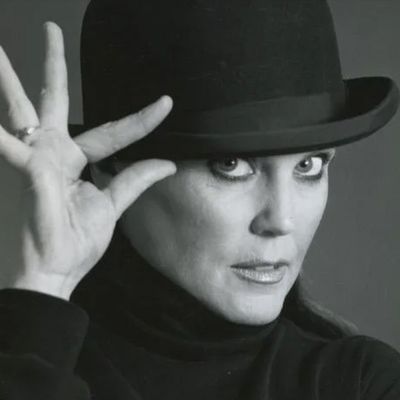
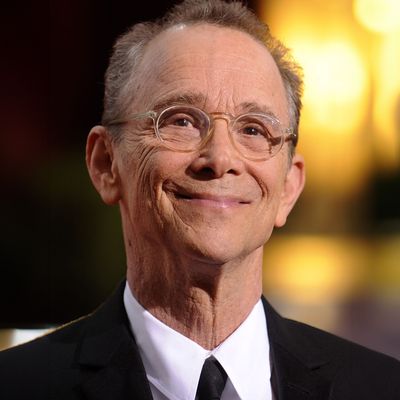
Producers Fran and Barry Weissler share insider stories with Michael Riedel about how many people in the Broadway community questioned the wisdom behind the launch. Michael also speaks with Joel Grey about playing Amos against normal type casting, and he talks with marketing superstar Drew Hodges about his steamy, minimalist ad campaign for the show. Plus Ann Reinking weighs in on the risky photo shoot.
This episode features never-before-heard excerpts from the interviews Michael Riedel recorded while writing his 2020 best-selling book Singular Sensation: The Triumph of Broadway.
Transcript
This transcript was automatically generated and might contain errors.
[0:00] Michael Riedel: Michael Riedel here with Singular Sensation based on my best selling book that pulls the curtain up on all the juicy gossip of Broadway in the 1990s. Now the interviews you will hear on this series are my personal recordings I made when I was reporting and writing the book Singular Sensation. They've never been heard by anyone but myself until now. These recordings were made at crowded New York cafes and restaurants, in theater offices, on the phone and so they have varying levels of quality but our great editor has digitally restored them to enhance clarity but you will still hear the occasional clinking of glasses, a few were raised during some of these interviews I can tell you that. Fuzziness of a phone call and voices and you will hear ambient sounds but it should give you a sense of what it was like when I was recording these interviews at places like Sardi's and Joe Allen. Gives you a little flavor of what Broadway is like. I hope you enjoy Singular Sensation.
[1:23] Michael Riedel: So two of my favorite and most colorful people on Broadway are Fran and Barry Weissler. They were scrappy producers. Barry came from absolutely nothing, no money whatsoever. Fran was a New Jersey housewife married to a man who owned a shoe store and one day she volunteered to work in the box office at the local high school and there was a little Shakespeare troupe that was performing that night and in that troupe was one Barry Weissler and Fran and Barry met and she remembered vividly that Barry was wearing his little tights from being in the Shakespeare play and there was a talk back afterward and Barry and Fran started talking, they became friends and then the upshot is they fell in love and Fran gave up her middle-class life in New Jersey to go into show business and that's how Fran and Barry became partners, husband and wife, and the producers of Chicago.
We heard it was at Encores! and a few people had spoken very highly of it and even a few people, I wish I could remember who they were, said you got to see this. So outsiders urged us to go see it and we heard good things about it and plopped in there on a Saturday afternoon and lo and behold it blew us away. From the moment it blew us away it was thrilling. This is Fran Weissler. I remember we went and we were like mesmerized. We thought what Walter Bobby and Anne Reinking did was spectacular. We loved the company. I mean Anne Reinking would be newer than James Norton, Joel Grey. It just knocked us out and the fact that it was staged with such simplicity. It was economic, it was lean, it was neat, it was everything.
Our problem was that everyone had seen it. We went the fourth night and every manager, every general manager, every producer, every actor, every agent. So you know we thought oh my god. When we got home like at 10 o'clock or so we called Fred Ebb and John Candy. We did two shows so we had their home number and it was easy to call them. So we called them and said we saw the last show. We know everyone in the world is doing it. We just want you to know even though you have a tiny part, anything, anything. We don't even care what our names are. It was our first live. There's a big pause and Fred said you got the whole show. I said what do you mean we have the whole show? And he said you have the whole show.
Nobody wants the show. Nobody wants the show. So Barry and I are on two cell phones walking back and forth looking at each other thinking what is wrong with us? Really thinking what don't we get? We thought we would not even have a little piece of it because we loved it that much. We loved it. We didn't like it. We just loved it. Chicago is performance driven. This is about the actors. There's one set. They wear one costume. The orchestra's on stage. It's all about the actors and I'm telling you Broadway's ready for that. Don't be nervous. So they said oh my god thank you, thank you, thank you. That's fabulous and you can have the rights and you're beside yourself and Fred started to cry because he's very emotional and I think Barry did. He's more emotional than I am sometimes. So anyway we were all very emotional and excited and this is all over the phone. They gave us the rights to Chicago.
[5:24] Michael Riedel: Fran and Barry loved the concert production and encores of Chicago but nobody else on Broadway did because you have to remember at this time Broadway was still in the world of Andrew Lloyd Webber and Cameron Macintosh. Big spectacles, falling chandeliers, flying helicopters, tires that go up to the heavyside lair. Nobody thought anybody would buy a ticket for the princely sum back then of $85 which was the top ticket price on Broadway to see a concert where people were just in tuxedos and black dresses with mic stands and microphones on the sets. So nobody had any conception that this could possibly work as a Broadway musical except for Fran and Barry. But one thing that kept it a concert and that didn't allow it to come right in the face of the audience which it was capable of doing is that Walter, dear Walter, wouldn't give up the mic stands that were lining the front of the stage and it was like a barbed wire fence.
They all had remotes. There was no reason to have standing mics but he didn't want to give up the encore style. The encore style of those days was you walk up to a microphone with your script and you spoke your lines into the microphone and he didn't want to give that up. It's as if you and I were talking through the door and you're on one side and I'm on the other and you know we're not in the same room. You just know it. And those silly little mic stands were hurting the show, stopping the duality of audience and actor. The cast at Encores! for Chicago was, I would have to say of all the casts I've seen over the years, the greatest cast I've ever come across. Bebe Neuwirth, Anne Rankine, Jimmy Naughton, the great great much-missed Marsha Lewis, and of course Joel Grey as Amos.
[7:30] Joel Grey: I got a call from my agent, would you like to play Amos? They're doing it at Encores! I said, I don't think so. I don't think so. No, I remembered seeing that opening night and I remember finding it dark, dark, dark, dark. And then my friend Charlie Repoli, who was directing at Encores! and he toured with me when I called back that friend of him did. He called me and he said, I was in a meeting the other day and I heard you said no. He says, I think you're making a mistake. So I looked at it again and I don't know whether I got on the phone with Anne and Walter, but I said I didn't feel that it was in my body. So we kind of talked about it and I said, I can only do that if I could figure out how to play it, not like a jerk or a dumb guy, but like a guy who was so in love with her that he could only see the best in her. It was enough for him to have that, his love. I started to believe in a new Amos. And they were okay with that? They liked it and that was really how it came to be.
[8:48] Michael Riedel: So now we're going to hear from Drew Hodges. You may remember from Rent, he was the brilliant marketing and advertising guy on Rent who really kind of reinvented Broadway advertising. And they brought him in to work on Chicago and he created, I would say, still to this day is the sexiest ad campaign for any Broadway show. So here's Drew.
[9:11] Drew Hodges: I'm probably proudest of Chicago in any of it because it's the first time I figure out that you actually can take something and look for the weakest points and support them early before the show goes out. If you can figure out, we got a weakness here, here and here. We're in debate season, right? If your candidate's up there, you know, you better be ready when this comes up and that comes up. But you can do the same thing with the show. You can see where it's going to fly and where it's going to be like, I don't know. And this is without seeing the show. You haven't seen Chicago?
[9:41] Michael Riedel: I haven't seen Chicago.
[9:44] Drew Hodges: So what are you identifying as weak?
[9:44] Drew Hodges: So I read Cyndi Adams' column and she says, the Weissers are moving the show from Encores. Who's going to pay $75, which is top ticket price then, for a glorified concert? She just calls it out. And I read it and I said, whoa, we got a problem. And I define for Barry, for the room, that what we, the problem is this sort of concert moving thing, that we've got helicopters landing and chandeliers flying and you've got a bandstand painted, you know, I mean, literally it's the Encores bandstand right on stage, right there. They didn't even change that. And I said, you know, so I put out that the problem was, or the solution was, we need to do something that showcases that if we had all the money in the world, the show works best, super minimalist.
And so this is why we're doing it this way, which is actually true. It may not have happened that way, but in the end, it ends up being so, that the show works best at this very minimalist way, which is interesting, how many other shows, you know, Color Purple most recently, they strip it back.
[10:52] Michael Riedel: Yeah.
[10:52] Drew Hodges: Suddenly there it is.
[10:53] Michael Riedel: Yeah. But we're still in the era of, you got to have a helicopter.
[10:56] Drew Hodges: Yeah.
[10:57] Michael Riedel: Got to have a chandelier.
[10:57] Drew Hodges: We're still there right now. Yeah. So Seussville, you know, they're going to do it in London. We'll see what happens when they strip it all back. I don't know. That's another one. But anyway, so um, everybody says, okay, that's interesting.
[11:11] Michael Riedel: Welcome back to Singular Sensation: The Podcast. Today, we’re diving into the incredible journey of Chicago, a show that has defied the odds and continues to captivate audiences after 28 years on Broadway.
[12:41] Fran Weissler: When we first launched the revival at City Center Encores, nobody expected it to become the phenomenon it is today. There were so many skeptics in the Broadway community.
[12:42] Barry Weissler: Absolutely. People were questioning whether a scaled-down version of Chicago could even work. It was a huge risk.
[12:43] Michael Riedel: And yet, here we are, over 11,000 performances later. What do you think made it resonate so deeply with audiences?
[12:44] Fran Weissler: I think it’s the timelessness of the story and the music. It speaks to people on so many levels.
[12:45] Barry Weissler: Plus, the choreography and the performances have always been top-notch. That’s what keeps people coming back.
[12:46] Michael Riedel: Speaking of performances, let’s talk about Joel Grey. He played Amos Hart, a role that’s often seen as a supporting character. Joel, how did you approach that role differently?
[12:47] Joel Grey: Well, I’ve always believed that every character has their own importance, no matter how small. Amos is the heart of the show, and I wanted to bring that to life.
[12:48] Michael Riedel: You definitely did. Your portrayal brought a unique depth to the character that audiences connected with.
[12:49] Joel Grey: Thank you, Michael. It was a joy to explore that character and find the humor and pathos in him.
[12:50] Michael Riedel: And Drew Hodges, your marketing campaign for Chicago was groundbreaking. Can you tell us about the thought process behind that minimalist approach?
[12:51] Drew Hodges: Sure! We wanted to create something that felt fresh and provocative. The idea was to capture the essence of the show without overloading the audience with information.
[12:52] Michael Riedel: It certainly worked. The ads were striking and memorable.
[12:53] Drew Hodges: Thank you! We aimed to evoke curiosity and excitement, and I think we achieved that.
[12:54] Michael Riedel: Ann Reinking, you were involved in a risky photo shoot for the show. What was that experience like?
[12:55] Ann Reinking: It was exhilarating but nerve-wracking. We wanted to push boundaries and create something that would stand out.
[12:56] Michael Riedel: And it did! The imagery was iconic and really captured the spirit of Chicago.
[12:57] Ann Reinking: I’m glad to hear that. It was a team effort, and everyone was on board to take those creative risks.
[12:58] Michael Riedel: It’s fascinating to hear all these behind-the-scenes stories. Chicago has truly become a part of Broadway history.
[12:59] Fran Weissler: And it’s still going strong, which is a testament to the hard work and passion of everyone involved.
[13:00] Barry Weissler: We’re incredibly proud of what Chicago has achieved and continues to achieve.
[13:01] Michael Riedel: Thank you all for sharing your insights today. It’s been a pleasure to explore the legacy of Chicago with you.
[13:02] Joel Grey: Thank you, Michael.
[13:03] Drew Hodges: Thanks for having us.
[13:04] Ann Reinking: It’s been wonderful.
[13:05] Fran Weissler: Thank you!
[13:06] Barry Weissler: Appreciate it!
© Broadway Podcast Network, All Rights Reserved