

Daphne Rubin-Vega brought such undeniable grit, free spirit, and Lower East Side authenticity to her Mimi audition that the Rent team knew they found their Cat Scratch Club dancer... Read More
From the show: Singular Sensation: The Podcast
Guests

Featured Shows
About
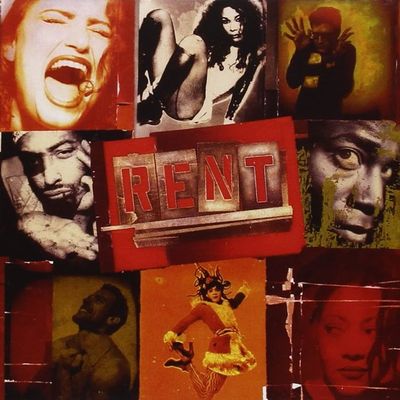
Daphne Rubin-Vega brought such undeniable grit, free spirit, and Lower East Side authenticity to her Mimi audition that the Rent team knew they found their Cat Scratch Club dancer. Listen to Michael Riedel's never before heard interview with Daphne as she reflects on scoring this life-changing role and the extraordinary Rent roller coaster that followed. Rent Producers Jeffrey Seller and Kevin McCollum, as well as New York Theatre Workshop Artistic Director Jim Nicola, also share their very vivid behind-the-curtain memories.
This episode features excerpts from Michael Riedel’s interviews for his 2020 best-selling book Singular Sensation: The Triumph of Broadway.
Transcript
This transcript was automatically generated and might contain errors.
[0:00] Michael Riedel: Singular Sensation is the triumph of Broadway based on my book that pulls the curtain up on all the great and juicy gossip from Broadway in the 1990s.
[0:21] Michael Riedel: It's hard to imagine what Rent was like, those early performances at the New York Theatre Workshop, but Jeffrey Seller and Kevin McCullum recognized the excitement, the energy, the sense that musical theatre was going to be changed.
[0:45] Michael Riedel: Jeffrey and Kevin pulled out their checkbooks and they got it, and they backed it, and they thought whatever happens here, we are behind this show, and we are behind Jonathan Larson. Here's Jeffrey Seller.
[1:02] Jeffrey Seller: I said to Kevin, come with me, we're going to go to a reading of my friend Jonathan's show Rent.
[1:16] Jeffrey Seller: Kevin had not met him.
[1:19] Jeffrey Seller: Never met him.
[1:20] Jeffrey Seller: Right. Because he told me he met him at this reading.
[1:23] Jeffrey Seller: So Kevin and I take the R train, we get off, we get a piece of pizza at the pizza place on 8th Street. We go in, we sit down in the front row. There are already two tables set up, and there's a band stage right. That's it. I said, well, this is either going to be brilliant or a piece of shit. I don't know. Because the last time I saw it, the guy left the room and the other one said, not this.
[1:49] Jeffrey Seller: So it starts, Daphne's now in it. I think Daphne was integral to the creation of that.
[1:54] Jeffrey Seller: Yes, but she came in and just shifted the sensibility of it to give it a little. She brought authenticity. So anyway, the show starts, we get Rent, a bunch of other shit happens, and then Daphne Rubin-Vega enters the stage and starts singing Light My Candle.
[2:10] Jeffrey Seller: And we were now in a new world of musical theater. Because there had never been a show that sounded like that, that could use, that could make a duet in that rock vernacular, that could be so powerful at both emotionally engaging us with music and telling the story of two disparate people falling in love.
[2:36] Jeffrey Seller: And the moment that song happened, then we knew.
[2:41] Jeffrey Seller: You and Kevin.
[2:42] Jeffrey Seller: Kevin. We knew. Kevin even said he remembered the stoop turning to you, which is like the two of you look and thought.
[2:48] Jeffrey Seller: No, it was done. At intermission, Kevin said to Jonathan, we are doing your show.
[2:52] Jeffrey Seller: Yes, he told me that. That is true.
[2:54] Michael Riedel: And what did you say?
[2:55] Jeffrey Seller: Yes.
[2:56] Kevin McCullum: I had a checkbook in my pocket, chemical bank. That's how long ago.
[3:04] Kevin McCullum: Here's the line he then said. I said, I've been on the checkbook. And he said, do you want to see the second act? And I went, oh, right, I said, how is it?
[3:15] Kevin McCullum: He goes, well, I'm pretty proud of it. The artistic director of the New York Theatre Workshop is a guy named Jim Nicola.
[3:21] Kevin McCullum: And so I started talking to Jim Nicola. Jim basically said it's going to cost $150,000 total cost for it to be. That's how much money they needed extra, extra if they were going to put it on their season.
[3:37] Michael Riedel: We'll be right back with Singular Sensation after this break.
[3:40] Michael Riedel: And we're back with the story of Rent. Here's Jeffrey Seller.
[3:41] Jeffrey Seller: October of ninety five. We do a reading for ourselves where at New York Theatre Workshop in the rehearsal room upstairs. Kevin can't be with us because he's at the Orgway.
[3:52] Jeffrey Seller: Right. And Jim and Michael. And we do a reading and they've restructured a lot of the show. And it is it almost has gone backwards. They like open with Halloween and I don't know, it's just it was backwards at that moment.
[4:07] Jeffrey Seller: We have a crisis because Jim says, I don't know if we should do the show. I think maybe we should cancel it. And Michael says, well, if you cancel it, you're going to have to get a new director because I got to go to La Jolla. You know, I got a new gig and I write a set of very tough notes that I sent to Jim.
[4:24] Jeffrey Seller: Jim shows them to Jonathan. Jonathan has a freak out called Sondheim and Sondheim says that's the process. If your producer is giving you input, you're going to have to have a dialogue whether they're right or wrong.
[4:40] Jeffrey Seller: And Jonathan and I go out again.
[4:41] Michael Riedel: Where did you go?
[4:43] Jeffrey Seller: We go to a restaurant that's no longer in existence, but it was on the corner of 84th and Broadway. And he has a car, so he drives me. He had some old car. He had some jalopy.
[4:53] Jeffrey Seller: Yeah. And we go to that restaurant. It was like some Italian restaurant that was still cheap on the corner of 84th and Broadway. And we have dinner and we talk it through and he says, I'm going to make this right. I'm going to do this.
[5:04] Jeffrey Seller: And lo and behold, out of that process, he writes the story, R-I-G-H-T-S, he writes the story and he writes the story and he solves the narrative problems in the beginning and straightens out the character of Benny and writes, you'll see, boys.
[5:23] Michael Riedel: And based on the notes?
[5:25] Jeffrey Seller: It's on the notes that you had given? I think I was the only one that wrote him down. Now, I'm not saying by any stretch that he didn't have extensive meetings with Jim and Michael as well. So everybody works with him and he goes and does a new rewrite.
[5:39] Jeffrey Seller: I knew that I think I was the only one that wrote it down. So I think Jim needed to show him something that was tough and says, this is wrong. This isn't right. And I think they just happen to be mine.
[5:54] Jeffrey Seller: So he goes to work and we start rehearsal in December. And I know that when I came on January 2nd or 3rd to see the first sing through, the show was there. And I remember saying to him after the read through, you did it. All the pieces are, he got the puzzle pieces were all in their right place.
[6:19] Jeffrey Seller: After that workshop, Jim Nicola says, we say to Jim, we'll partner with you, we'll take the contract, we'll get the commercial rights, and we'll pay the difference between what you can afford and how much it costs. They have never done anything of this scale before.
[6:36] Jeffrey Seller: Jim said it was a big risk for them. And he went to the board and they said, we don't want to put up any extra money. They basically turned him down. So he said he absolutely took our deal. So Jim said, yes, I'll partner with you guys.
[6:51] Jeffrey Seller: So they put up, how much did New York Theatre Workshop pay them? They put up probably 100 and we put up 100. If you give them 100, you need a little bit of money for extra stuff. So like one week after that workshop, Kevin said to Jonathan, what do you need? He said, I need to make a cassette of what we just did.
[7:04] Kevin McCullum: So Kevin and I gave him like six or $8,000 and in one weekend, they went in and recorded the whole thing. And they still have those tapes and they're good. They're really cool.
[7:19] Michael Riedel: Jonathan Larson had some hesitation about casting Daphne Rubin-Vega as Mimi, but when Kevin McCullum saw Daphne, he was knocked out.
[7:28] Kevin McCullum: Daphne is not only a great performance, but she was like an uncaged force of talent that moved with, you know, percussive clarity and passion and sang full throttled and broken at the same time that she could do that. And yet in real life, she was delightful in every way. But she like breathed life into this Mimi.
[7:57] Jim Nicola: Did Jonathan recognize Daphne eventually? When we came around to the production, Michael and I were ready to go. But at the end of the workshop, I think Jonathan had seen what she brought and kind of grudgingly acknowledged that that was very strong.
[8:20] Jim Nicola: But he still held on to the fact that she couldn't sing it as well as he wanted it to be sung. And they made a bargain that she would study voice for a year, you know, in that intervening time before we were going to produce it to see if she could make some progress with that.
[8:37] Jim Nicola: So she did it. And then she came and auditioned again for this role she'd already played for the production and totally convinced him. And so one of the high points of my life was we were auditioning upstairs, and she just left the room and went downstairs, was walking down the sidewalk, and I ran after her to tell her, to give her the good news that she had gotten the part.
[9:02] Jim Nicola: She told me that.
[9:03] Michael Riedel: Yeah. Confirmation.
[9:05] Jim Nicola: Yeah. It was about that she'd been auditioning a lot for it, and she was sort of like, is it going to happen or not?
[9:11] Jim Nicola: Yes. Because I'm sort of ready to try something else. Absolutely. Yes. And, you know, she did have, and Michael and I, she had real advocates and the one to persuade. She did finally, not only persuade, but made him very happy.
[9:27] Jim Nicola: He was very, I can still see that face lighting up with, because it was also an acknowledgement of the efforts she had made, you know, to really do what she, he felt she needed to do and that she did it so perfectly. So that was a, that was a very happy moment.
[9:47] Michael Riedel: We'll be right back. Rent was an untraditional musical. In fact, nobody had written a contemporary musical at the time. So you had to find young people, people who are not Broadway type people, kids from the nightclubs, rock and roll kids.
[10:01] Michael Riedel: And they went out and they found those kids. And one of those kids was Daphne Rubin-Vega.
[10:11] Daphne Rubin-Vega: I was doing this show at Caroline's, the comedy club called El Barrio USA. It was a Latino comedy troupe. And since I had been in a girl group, I was actually doing this parody of myself singing my pop song and it was sort of parodying the Latino comedy skit, like In Living Color or House of Bugging, which was what, House of Bugging, excuse me, which David Barcats was working, had worked on with John Leguizamo, Johnny Legs.
[10:46] Daphne Rubin-Vega: So that's, we were doing that. And my beeper, I had a purple beeper. I was an upwardly mobile, very, very tenacious, if nothing else, human being. It went off and I had an agent and she said, this is a, well, you know, you do sing and you want to act and you're working on your acting chops.
[11:04] Daphne Rubin-Vega: And I know that you don't want to do musical theater. It's not your thing. You're more of a rock person. But this is a rock opera based on level M. And my father, opera loving supporter, loved, he loved the opera. So I thought, wow, what an interesting thing, you know, and I loved Tommy.
[11:29] Daphne Rubin-Vega: Tommy was like, I used to play Barbies to Tommy. So when I heard rock opera, I thought Tommy. And Tommy had been on Broadway at that point, was like a new thing. I was asked to come in and sing a rock song, like, you know, a verse and a chorus or 16 bars. And I don't know how to read music to this day, really. I mean, you know, so I sang Roxanne by the police.
[11:53] Daphne Rubin-Vega: I guess the sheet music doesn't go like the record, so I just kept singing like the record, and, like, we just got all caught up, but we were having fun. One thing I, at that juncture of auditioning, I think it was like, wow, this is talking to me, you know? She's a Latina from, you know, the Lower East Side, which is, I was the Lower West Side, and, you know, she was a club kid, which is something I totally identified with, and it was like, these are my people, man, you know? So I went in there, like, me, you know, with my fishnets, like, all those clothes were out of my closet. Really? Yeah. The clothes that became the... Angela went, and I sat down in my... Angela was a costume. Yes. In my apartment on 9th Street and 5th Avenue, and the wig that I got, because the closet was so good, and, like, you and I, only we had different cups, we'd drink in the same coffee with milk, exactly like it is, from the Guineca, different Guineca, same style, and I pulled out all my shit, and I had, since I had been working at Patricia Field, I had, like, the blue pants, which instead of, like, having that thing on the bottom, they had, like, a black panel, they were high-waisted, and I was like, aren't these great?
But this high waist is so tiki, right? And she's like, oh, we could do this, and we could do that, so I was like, she was my new best friend, and we were having a blast, so... So you went to audition with Roxanne.
[13:20] Daphne Rubin-Vega: So, yeah, so I wore my... I remember wearing a Catholic schoolgirl skirt, a Catholic schoolgirl skirt, like a real one, there was very many, I mean, those things were easy to find on the street, you know? Remember when you could buy shit off the street, and all you had to do was wash it, and who cared if, like, it shrank? Anyway, so that's how that happened. T-shirt and ripped fishnets, and the Catholic girl skirt, and just... You were with Roxanne.
[13:52] Daphne Rubin-Vega: Roxanne, and just, like, when it went to, like, you don't have to put on a red line, like, I just kept going and going and going and doing this kind of... Something that I had imagined would be my version of Flashdance, when she's, like, you know, going to every audition or other thing, you know? So that's where I was going, because at that juncture, I had been rejected for so much that it was, like...
[14:17] Michael Riedel: In the theater?
[14:18] Daphne Rubin-Vega: Oh, yeah. Or, like, at any audition. I was, frankly, auditioning for... Well, I was going to just say things that I wasn't appropriate for, which is what I thought at the time. Certainly things that I wasn't prepared for, but the way things broke down in those days, like, somebody like this wasn't appropriate for anything.
[14:37] Michael Riedel: Correct, correct.
[14:38] Daphne Rubin-Vega: So I just said, if they... You know, if I suck, I suck strong. Like, make those choices, you know? So I went in there completely determined. He actually asked me to sing a song, and it had that... And I was kind of thinking, like, oh, my God, it's sort of like... Like the who, like Bob O'Reilly. Same chords, but inverted. I'm going to take this shit and own it, you know? She's like... No, no, no, no, no, no, no, no, no, no, no. So, you know, I was, like, just a puppy chomping at the bit, it seems like. The enthusiasm was a lot of mileage. At that point, I was 24, 20, yeah.
[15:33] Michael Riedel: So you go back with your version of Out Tonight.
[15:36] Daphne Rubin-Vega: Yes.
[15:37] Michael Riedel: You auditioned for him again.
[15:38] Daphne Rubin-Vega: Yes.
[15:39] Michael Riedel: And what happened with that?
[15:40] Daphne Rubin-Vega: They sat on it for a while, then they asked to see me, here we go, and maybe Jim entered the room, and now... I remember thinking, I can't tell whether he likes it or not, so I'm going to make him change his expression, because he can't change, he's just a stiff, smug face, in a suit, in a beige suit. I just remember, whatever the exchange was, was like... I just loved him. I just loved him.
[16:08] Michael Riedel: We'll be right back. And we're back with Daphne Rubin-Vega. Tell me about that first reading. What did you think of the show? Your first impressions of what you had to read the first time around?
[16:15] Daphne Rubin-Vega: I loved it. Yeah. Whatever it was, I was on board. I loved the idea of it. The shape was completely different. I wasn't clear all the time what was going on. I just knew that it was based on Level M, so that was good enough for me, and knowing that. And I loved my character. I felt indebted to represent. I truly felt like this is, at that point, that this is what I had waited my life to do. Something with that intensity. The vocational aspect of what we do. The actual service and the spiritual. I got locked into that. That gave me a lot of fuel.
[17:17] Michael Riedel: Were the big songs there in that first season of Love?
[17:23] Daphne Rubin-Vega: Seasons of Love was there. Take Me, Relieve Me was not.
[17:27] Michael Riedel: What was?
[17:27] Daphne Rubin-Vega: No. Take Me, Relieve Me was written for Idina and Freddie's voice.
[17:34] Michael Riedel: Fail it for them specifically.
[17:36] Daphne Rubin-Vega: Idina had auditioned. I know that she'd auditioned for Michael for something before, for this other piece. He had experienced her power, and I think that he thought of it. He made the connection for later. I think that Jonathan was like, okay, I can go to work on this. There were other songs. There was Valentine's Day. Do you remember that? Do you know that song?
[18:11] Michael Riedel: No.
[18:12] Daphne Rubin-Vega: Beat me till I'm black and blue and gray. Draw a little heart, draw a little blood, draw a little arrow for Valentine's Day. Then it would cut into Without You. It was mishmashy. He had an idea, but Without You was a song that Mark and Joanne sang about Maureen because she was out doing it. It wasn't what it is now, but it was on its way. He hadn't found the structure that was found at the end. I know that if he had continued to live, he would have found yet more structure.
[19:03] Michael Riedel: Yeah. When that first reading was over, what was your...
[19:07] Daphne Rubin-Vega: You know what? I have found my bliss. If nobody else likes this, I stand behind this. It was like this show was talking to me, man. I have never felt represented in the theater. To have that feeling of inclusion was special. Nothing that I had really been seeking. I wanted to be an actor and I wanted to be a singer, but I didn't want to be in musical theater, except that this was the perfect entree into that. It was ironic in a way. It wasn't that he was hands-off. He was like, take it and make it yours. I think that that was his best advice to me. It's easy, just make me cry. Own your voice. When people tell you you can't do something, do it. Just do it. Just play your feet and sing. I remember being concerned because I hadn't sung a ballad.
That was his thing. Everybody was concerned about that voice of mine. It was so weird and unusual. I think people just have a very strange voice. I remember going for the final callback, going up the stairs, wearing some vinyl pants and thinking, am I going to stand? Am I going to sit? Am I going to act? I got there and they were like, whatever you want. I thought, I don't know what I want. Somebody asked me what I want. I said, I guess I just want a chair. I sat there. I think it started like this. I remember I just had to sit up and sing the song and mean it. Maybe it was a place where I could stand up. It was on that top floor of the building on the side. I went back downstairs, same room where we rehearsed.
I had my head shot and resume. I remember putting it down and seeing someone I knew that was a girl group singer, somebody else's name. I thought, I was like, okay, no time for that. I sang the song and I went down the stairs and I walked down the street and I heard my name and I turned around and it was Jim Nicola who walked down the street and he said, look, just so you know, so you don't have to go home and wait, welcome, you got the part. He didn't walk down the street. It was like I was walking down and I was coming out of the building and he was walking down the stairs. I just walked back up the stairs and gave him a hug. It was like, I remember walking down the street and thinking, this is the best day of my life.
I will never forget this day as long as I live. I didn't know shit. I didn't know shit, Michael. I didn't know shit in terms of what happened after that. I couldn't have known, but I knew that this was like, I won the lottery.
[22:54] Michael Riedel: The costumes of Rent have now become iconic, but they were not back in the day. And Daphne Rubin-Vega and Angela Wendt, the costume designer, they were trying to find something for Daphne to wear and Angela found it in Daphne's closet. And we'll hear about that in the next episode of Singular Sensation. Thank you for listening to Singular Sensation. I'm your host, Michael Riedel. To find out more about Singular Sensation, the book and the podcast, visit bpn.fm slash Singular Sensation. This episode was edited by Sarah Goodman and produced by Dori Berenstein, Kimberly Garris and Alan Seals for the Broadway Podcast Network. Special thanks to Liz Armstrong and the entire BPN team.
© Broadway Podcast Network, All Rights Reserved