

Daphne Rubin-Vega, the original Mimi in Rent, and her personal wardrobe were invaluable resources for Rent costume designer Angela Wendt... Read More
From the show: Singular Sensation: The Podcast
Guests

Featured Shows
About
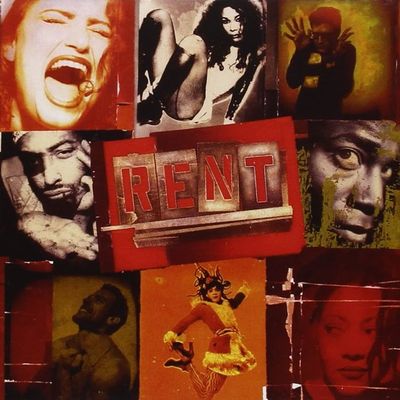
Daphne Rubin-Vega, the original Mimi in Rent, and her personal wardrobe were invaluable resources for Rent costume designer Angela Wendt. With only $500 to create the original Rent costumes and set design, Angela was able to bring creator Jonathan Larson's vision to life and to fulfill his dream of Rent becoming a powerful 90's fashion "influencer." Join Angela and Daphne as they reminisce about helping to shape one of the greatest musicals of all time.
This episode features never-before-heard excerpts from the interviews Michael Riedel recorded while writing his 2020 best-selling book Singular Sensation: The Triumph of Broadway.
Transcript
This transcript was automatically generated and might contain errors.
[0:18] Michael Riedel: Here and welcome to my podcast Singular Sensation, The Triumph of Broadway, based on my book that pulls the curtain up on all the great and juicy gossip from Broadway in the 1990s.
[0:46] Angela Wendt: And you should hear her beat.
[0:48] Angela Wendt: You earn this on the street.
[0:49] Angela Wendt: It was my lucky day today on Abbin UA when that's a good thing.
[0:53] Michael Riedel: One of the key members of the creative team of Rent was Angela Wendt, the costume designer.
[1:00] Michael Riedel: She was hired by Michael Grife, the director of the show, and Jim Nicola, the artistic director of the New York Theater Workshop.
[1:07] Michael Riedel: And Jonathan Larson wanted Rent to be some sort of iconic fashion statement.
[1:12] Michael Riedel: And they all thought that Angela could do that.
[1:15] Michael Riedel: And here is my interview with Angela in a rather noisy coffee shop as she remembers what it was like to work downtown in a very bohemian atmosphere.
[1:30] Angela Wendt: Fresh out of Germany.
[1:49] Angela Wendt: Wanted to be a performer, right? And um I really did my growing up in the East Village because I lived there from age 21 to 30 before I came across Rent.
[2:05] Angela Wendt: So a lot of these characters, like the ensemble, I really felt like I know this world very well. Like I didn't, of course, you do research again, right? But so many characters I just was so familiar with because I came to that world with very, very open eyes from Germany to come to another place like this.
[2:30] Michael Riedel: Where were you from in Germany?
[2:31] Angela Wendt: Munich, outside of Munich, really a small town. And just fell in love with New York and the whole estate. I mean, the 80s were great. They were dangerous. But also what happened in art and music and graffiti and hip hop, it just was very exciting.
[2:52] Angela Wendt: Yeah. The very first workshop had a few songs, like what was it called? Do you do you believe in real estate or will you ever make it in real estate?
[3:05] Angela Wendt: There were a couple of horrible situations.
[3:13] Angela Wendt: That was there from the beginning very much. From the beginning.
[3:17] Angela Wendt: And there was also a version of Take Me or Leave Me, not as strong as now, but there was a duet between the girls.
[3:24] Michael Riedel: Right. That I adored what we did with it because Michael and Michael said, let's just do a concert.
[3:37] Angela Wendt: Anyways, for the workshop, but let's not treat it as much as theater, much as a theater piece, but as a concert piece. It was a great experience to do it. There was just a week in New York Theater Workshop. There were hardly costumes.
[3:52] Angela Wendt: I mean I scrounged.
[3:53] Michael Riedel: Yeah, what did you do to get the...
[3:53] Angela Wendt: I had uh five hundred dollars combined for Saturday and concert.
[3:59] Michael Riedel: Oh, really?
[4:04] Angela Wendt: Yes, yes.
[4:04] Angela Wendt: So we got the scaffold somehow through because New York Theatre Workshop was doing some construction or renovation somewhere.
[4:12] Angela Wendt: So the scaffold was real scaffolding.
[4:14] Angela Wendt: Was a real scaffold, yeah.
[4:18] Angela Wendt: And um I actually had to do this like super low budget thing where I talked with people about their workshop and what they have and what I envisioned, and so we had to do that.
[4:31] Angela Wendt: It's almost like low budget film.
[4:33] Michael Riedel: Now was Daphne in at this time?
[4:36] Angela Wendt: So did you talk to her about um what she would wear? And did she collaborate a lot?
[4:46] Angela Wendt: Yeah, she seems very highly viewed.
[4:48] Angela Wendt: Yeah. Did you use her own clothes or did you...
[4:48] Angela Wendt: I had some of her own clothes. Yeah, I looked at some of her clothes and had something else made that was influenced by it, like the Cold Dominique.
[5:01] Michael Riedel: Right, right.
[5:01] Angela Wendt: She had something similar, but I like to think we made a better version of it.
[5:06] Angela Wendt: Well, kind of iconic now.
[5:08] Michael Riedel: Yeah. What was the reaction of people who saw the workshop?
[5:12] Angela Wendt: You know, and started getting notes and feedback. What did uh they liked it a lot. There was a lot of talk on what we could do different.
[5:20] Angela Wendt: Because Jonathan was around.
[5:21] Michael Riedel: Yeah, of course, yeah.
[5:22] Angela Wendt: It was the first time they get to see it on stage. A lot of producers came, that's when Jeffrey and uh Kevin said they want to do it.
[5:31] Michael Riedel: Right, right.
[5:32] Angela Wendt: At least shortly thereafter.
[5:34] Michael Riedel: Yeah.
[5:35] Angela Wendt: I mean, that production I couldn't really go for it that much. I just made sure it's like a good cohesive picture in the right direction, but was $500 for setting costumes.
[5:50] Michael Riedel: Right, right.
[5:50] Angela Wendt: It only went that far. But it also had its charm that it wasn't that costumey, which is the direction we stayed with.
[5:59] Angela Wendt: Right. And it wasn't polished.
[6:01] Michael Riedel: It wasn't uh...
[6:02] Angela Wendt: No. I liked Jonathan. I didn't have that much contact with him because I was in my costume world getting all of that together.
[6:13] Angela Wendt: We had a party at Gonzalez, Zico and Vale. Remember that big Mexican two-floor restaurant on Broadway? It was like a rent party, get to know each other and producers. And we chatted, and he said to me, so I really want Rent to also become the next fashion influencer.
[6:34] Michael Riedel: Really?
[6:34] Angela Wendt: I don't want it to be influenced by, but um, and I was like, sure, I'll get right on. He was thinking he was thinking of it in all those kind of levels, though.
[6:44] Angela Wendt: Yes, he was. That I really wanted to be to be uh um a fashion statement.
[6:53] Angela Wendt: Which was of course funny because Michael Grife was is always like no fashion, no fashion.
[6:59] Michael Riedel: Oh, Michael doesn't think about he he you know tends to like the no costume more, like not a costume.
[7:08] Angela Wendt: Right, right. Which I'm glad I had his guidance on the other side, because he would always pull it down a bit when I or we had places you know La Vie Boulem where why would you wear a fur bikini it's winter why would you wear a bikini to help it's winter and it's like it's fur like okay okay so it was a good ballet but really when Jonathan said that I was like you can't even go about that you know you just have to keep doing uh you know what you envision for it right and it was a really infinite fun time in fashion because this whole retro seventies so that's what happened happening right we'll be right back with Singular Sensation after this break.
[8:00] Michael Riedel: We're back with costume designer Angela Wendt.
[8:03] Michael Riedel: Where were you getting the costumes? Were you were you going to vintage stores?
[8:07] Angela Wendt: A lot of vintage a lot of vintage, at least for the for the first production.
[8:13] Michael Riedel: Yeah, not the workshop, but the first production.
[8:15] Angela Wendt: Right. A lot of vintage.
[8:16] Angela Wendt: Um we made um Angela Santa right off the bat, the Santa outfit.
[8:24] Michael Riedel: Oh you do.
[8:25] Angela Wendt: Yeah, yeah, I was like, what am I giving him? What will be fun and great? And I finally thought of of course it's Christmas, it's a cute Santa outfit. And everybody loved that, so I went for that.
[8:38] Angela Wendt: Then my thinking was angel was that a lot of things he'll find, as it says as well in the script. And so with the New Year's party, uh, and they said he'll walk around his apartment, and what could it possibly be? And I'm finally in my bathroom, I'm like a shower coat.
[8:59] Michael Riedel: Of course.
[9:00] Angela Wendt: So that's then we did uh actual real paper collage of photos of Daphne and like all his friends, you know, Laura, Mimi, and Champolfouti, like the fashion at the time that I thought influenced him.
[9:17] Angela Wendt: And uh that became the Pussy Valor. So that was really fun.
[9:24] Angela Wendt: And that one is at the Smithsonian in the Smithsonian Institute.
[9:27] Michael Riedel: It is now?
[9:29] Angela Wendt: Oh really?
[9:30] Angela Wendt: Really? Is that the only one or there are others?
[9:32] Angela Wendt: Um I had two of them. And that one is in the Smithsonian and one is with me.
[9:40] Angela Wendt: The coat was a uh fine, a uh vintage.
[9:46] Angela Wendt: Because that's like uh sort of late 70s car coat, yeah.
[9:50] Angela Wendt: That flat coat. Um the shirt was faced. I mean, uh, we had it knitted that his little shirt.
[9:59] Angela Wendt: But he had a waffle print shirt that I liked on his body because it was just very narrow, and I think there was a stripe or something.
[10:08] Angela Wendt: Was that the don't I designed, yeah. So I designed um the sweater with like a couple of stripes, you know, and the two good colors that went with the car coat, porteroist.
[10:21] Angela Wendt: Um and the scarf was something we had it like a bit later. Like, okay, let's finish it off with the scarf.
[10:32] Angela Wendt: He's hard because he never changes his mall costume.
[10:35] Michael Riedel: Yeah.
[10:36] Angela Wendt: So uh it has to be strong, but not too strong. It has to blend in and stand out.
[10:42] Michael Riedel: That's right, he doesn't change the other story.
[10:44] Angela Wendt: Because uh he tells the story.
[10:46] Michael Riedel: Yeah.
[10:47] Angela Wendt: So we said, okay, he's telling the story over one year, so as the narrator, I'm not having him take.
[10:55] Angela Wendt: And then Jim Nicola called me and said we're doing a full-on production. And we would I would like to ask you to do the costume.
[11:03] Angela Wendt: Great. Fantastic.
[11:04] Angela Wendt: And that was pretty much a year after. Not quite a year.
[11:08] Michael Riedel: And what was your budget now?
[11:11] Angela Wendt: Um the budget then was 8,000 for costumes.
[11:15] Angela Wendt: So that at the time. And you were you were not having the set anymore, though, right?
[11:18] Daphne Rubin-Vega: No, no, Paul Clay did that.
[11:20] Angela Wendt: Paul Clay, right, right. And why was that? If uh you you didn't keep doing the set.
[11:25] Daphne Rubin-Vega: Um, you know, I usually do not do set and costumes. Um I also think Michael wanted a dedicated set designer.
[11:35] Angela Wendt: He usually has two people.
[11:36] Daphne Rubin-Vega: Yeah. Because a lot of times if you do both, it ends up being a lot of assistance.
[11:43] Angela Wendt: Right, right, right, yeah, right, right, right. So with $8,000, what more can you do now with a costume?
[11:48] Daphne Rubin-Vega: Still not a huge Broadway budget.
[11:50] Angela Wendt: No, but I you know, uh, I that's what I did, like the angel coat, this was so this was. So let's be clear, the first workshop was that no production.
[12:03] Daphne Rubin-Vega: And then it's the first product at the wardrobe.
[12:07] Angela Wendt: That's right. Right, right. So um like I was able to have to the capsule made. I had to pick my things that I had arranged.
[12:21] Daphne Rubin-Vega: Right. Yeah. I also um uh found um I mean shopping was a different at that time too. It was before HM and none of that was around.
[12:36] Angela Wendt: We had Daffy's, remember Daffy's?
[12:38] Daphne Rubin-Vega: Yeah, yeah. That was really good. You have to go to Daffy's and buy things?
[12:43] Angela Wendt: I for you could have to any costume designer.
[12:47] Daphne Rubin-Vega: Daffy's was a huge huge.
[12:50] Angela Wendt: Really?
[12:51] Daphne Rubin-Vega: Yeah. I mean, you know what you could have made, but so many things you don't have to have made twice because they write that.
[13:00] Angela Wendt: Of course it makes it and Daffy's at Century 21 in a vintage shop.
[13:04] Daphne Rubin-Vega: Yeah, yeah. I mean you pick and shoes and then well, you buy things and then you take them apart and put them together differently or add something. So it was a combination of all of the above.
[13:15] Angela Wendt: It was also still in a sort of trying out mode for all of his songs would disappear. Songs would come back. The performance piece was a youth that I went through five versions. So I finally had the right outfit.
[13:36] Daphne Rubin-Vega: I love doing new work because you're not bound by something that somebody previously did. But you also have to be a good collaborator.
[13:47] Angela Wendt: Right. And look at how things are shifting and changing in yes, it's sometimes it's hard to find the right angel.
[13:57] Daphne Rubin-Vega: Angel was intense, was a lot of fun. But that was definitely a process, I would say, to get angel right.
[14:05] Angela Wendt: So you but you got him right off the bat with a Santa Claus of hot pot.
[14:08] Daphne Rubin-Vega: Yes. Yes. But then, you know, what does he look like as a boy?
[14:13] Angela Wendt: Yeah. To get that right. Um crossing Tom Collins. Maybe Mark, to really find that one costume that you can look at all the time and all the time.
[14:33] Daphne Rubin-Vega: Yeah. Yeah. Yeah. Because nobody else has tied down to just one outfit.
[14:39] Angela Wendt: Right, right. And what about Roger?
[14:42] Daphne Rubin-Vega: Roger's costume. Does he change costume on Roger?
[14:44] Angela Wendt: Oh, yeah. Yeah, yeah, yeah. I guess the one I remember. He has um always his leather jacket.
[14:50] Daphne Rubin-Vega: Right. Um, and I um actually found these great Champagne Gauth pants with a little iridescence to them at century.
[15:03] Angela Wendt: And because they're I didn't really have the money to think of making all these things. So the Sean Paul Gauthier pants were act one Roger, and they were great because they had a bit of color, they were a nice narrow cut.
[15:19] Daphne Rubin-Vega: It was all about him looking looking sexy, which it always is about that, I guess, but not over like still like this guy who hasn't left the house in half a year.
[15:31] Angela Wendt: Right. There was a lot of distressing and making things look aged without going over the top with that Eber.
[15:40] Daphne Rubin-Vega: One of the important things to understand about Jonathan Larson's was that he was creating his own family of artists. He did that for many years, and he did that for Rent. And he invited all of the cast of Rent, whom he had just adored: Adam Pascal, Anthony Rapp, Idina Menzel, Kevin McCullum, and Jeffrey Seller, who were gonna produce the show.
[16:03] Angela Wendt: He would invite them to his house to have what he called the Peasants' Feast that he used to do for all of his friends, sadly, many of whom did die of AIDS. And he wanted everybody to be part of a family, a feeder family.
[16:17] Daphne Rubin-Vega: And of course, Daphne Rubin-Vega, she was there at the peasant feast. Every Christmas he would have a peasants' feast at his house, and everyone would bring their own potluck. It was a potluck, and everyone would have to make a dish and bring it.
[16:31] Angela Wendt: Um to which I would always bring, or for two years I brought um uh green beans almondine, which became Green Beam's Mimi, because I burned the almonds.
[16:46] Daphne Rubin-Vega: I like glancing and roasting almonds. It was it so the last time it came out, I'll burn, but it was really good that way, so it was like Green Beans Mimi. The first one was all his friends. The second one, the last one was just the cast and company.
[17:04] Angela Wendt: Like I remember um getting into my first conversation with Kevin McCullum.
[17:12] Daphne Rubin-Vega: Yeah. We talked about the fountainhead and Ayn Rand.
[17:16] Angela Wendt: Oh.
[17:17] Daphne Rubin-Vega: Yeah. And um, and I remember thinking like, oh my god, all of a sudden, like I could see his like his face washed with, oh, she might be smart.
[17:35] Angela Wendt: It was it was very amusing. We'll be right back.
[17:40] Daphne Rubin-Vega: We're back in Jonathan Larson's's apartment, as told to me by Daphne Rubin-Vega. That was a walk up, Evil Oris up to the top.
[17:49] Angela Wendt: Um top floor?
[17:51] Daphne Rubin-Vega: Yeah, it was across from Don Hills.
[17:54] Angela Wendt: Remember Don Hills?
[17:55] Daphne Rubin-Vega: No, what was Don Hills?
[17:57] Angela Wendt: Don Hills was like a rock and roll club.
[17:59] Daphne Rubin-Vega: The ear bar.
[18:00] Angela Wendt: Ear bar what is that?
[18:03] Daphne Rubin-Vega: Spring?
[18:04] Angela Wendt: Spring.
[18:04] Daphne Rubin-Vega: Spring Street.
[18:07] Angela Wendt: The ear bar. Right around the corner from the ear bar was his apartment, his house.
[18:12] Daphne Rubin-Vega: And so he lived on the second or third floor of a walk-up that had like um a storefront in the first floor, I believe.
[18:20] Angela Wendt: Second floor, third floor, and it was a wooden stair situation that was like creaky wooden stairs.
[18:28] Daphne Rubin-Vega: Um no cast iron or marble or any of that, you know. Other stuff. Creaky old wooden stairs all the way to the top.
[18:37] Angela Wendt: The shower was the sink, one of those. It was a sink shower thing where you like put the thing over the tub, and it is where you your your countertop, your your countertop.
[18:51] Daphne Rubin-Vega: But he had he had another room, which was something I didn't have. You know? I mean, I had like my whole apartment was the size of my son's room.
[19:00] Angela Wendt: Um we still haven't gotten over that, you see. Diva piano, piano.
[19:08] Daphne Rubin-Vega: Yeah, he had an upright piano, he had spinster and Lucy, the two cat the two cats. He had another room. I want to say he had two rooms.
[19:17] Angela Wendt: He had like an ante-room, he had a roommate.
[19:20] Daphne Rubin-Vega: Right. Brian was his roommate. We had just begun rehearsal, and it was during the just beginnings of rehearsal. I remember um Adam having like wearing overalls and a pirate shirt underneath it.
[19:33] Angela Wendt: And I just thought like to because of these.
[19:38] Daphne Rubin-Vega: Said the chick wearing, like said the the I probably had hair not too dissimilar to what I have now. Actually, I yeah. I I was over the red at that point.
[19:49] Angela Wendt: Um but I remember wearing green green sequin pants.
[19:56] Daphne Rubin-Vega: I wore green sequin pants and sneakers. So yeah.
[20:04] Angela Wendt: Well, it was Christmas.
[20:07] Daphne Rubin-Vega: It was a Christmas party, so it was like, you know, elf. He said every year I have a fa uh a peasant's feast and my best friends, and my apartment isn't big enough to have my friends and the cast.
[20:18] Angela Wendt: And you guys are representing the cast are my friends who aren't here. Like my real friends, you each of you represents like a real human being who no longer walks the earth because of AIDS.
[20:31] Daphne Rubin-Vega: Because he says I should die three years ago.
[20:55] Angela Wendt: To really understand what Jonathan Larson's was going for in Rent, you have to go back to Puccini's La Bohem. Because in La Bohem, the people are dying of something called consumption.
[21:07] Daphne Rubin-Vega: But in Jonathan's world, they were dying of something called AIDS. And Jonathan saw that parallel for what Puccini had done and what he could do in the 1990s.
[21:22] Angela Wendt: Jonathan himself suddenly died at age 36, not of AIDS, but of a heart aneurysm, right before Rent went into preview at the New York Theater Workshop.
[21:34] Daphne Rubin-Vega: In the next episode, the story of Jonathan Larson's's last interview with the New York Times. Jonathan went home that night thrilled that he had just been interviewed by the New York Times and thrilled that after all the struggles, he finally had a musical that was going to open off Broadway.
[22:07] Angela Wendt: This episode was edited by Sarah Goodman and produced by Dory Berenstein, Kimberly Garris, Alan Seals, and Sarah Goodman for the Broadway Podcast Network. Special thanks to Liz Armstrong and the entire BPN team.
© Broadway Podcast Network, All Rights Reserved