

As we continue our deep dive into Sunset Boulevard, Andrew Lloyd Webber talks about Patti LuPone’s fierce competitiveness with Glenn Close…and how this sparked Patti’s infamous feud with Andrew - a painful experience for Andrew that took a significant toll on him personally... Read More
From the show: Singular Sensation: The Podcast
Guests
Featured Shows

About
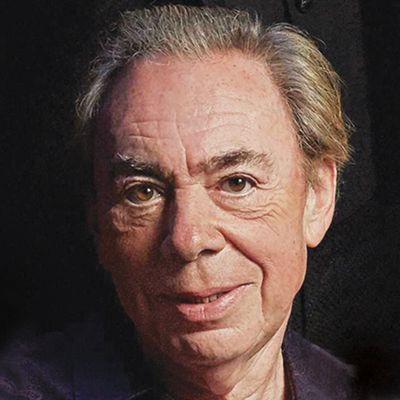
As we continue our deep dive into Sunset Boulevard, Andrew Lloyd Webber talks about Patti LuPone’s fierce competitiveness with Glenn Close…and how this sparked Patti’s infamous feud with Andrew - a painful experience for Andrew that took a significant toll on him personally.
This episode features never-before-heard excerpts from the interviews Michael Riedel recorded while writing his 2020 best-selling book Singular Sensation: The Triumph of Broadway.
Transcript
This transcript was automatically generated and might contain errors.
[0:00] Michael Riedel: Michael Riedel here, and welcome to my podcast, Singular Sensation, the triumph of Broadway, based on my book that pulls the curtain up on all the great and juicy gossip from Broadway in the 1990s. We're back with Part 2 of my conversation with Andrew Lloyd Webber about Sunset Boulevard. Now, when I interviewed him, we were sitting in his apartment in New York City discussing Patti's reaction to finding out Glenn would be playing Norma Desmond in the L.A. production, while Patti was originating the role in London. People said at the time who were close to her that there was some problem with her and Glenn Close, but I can't see what that would have been. I can't even see where they'd ever cross paths.
She's got London, Glenn's in L.A.? Well, the original, that was always the intention. That was the plan, right? To have London and then L.A.? But I mean, I can understand, I suppose, if she suddenly felt very insecure that somebody like that was playing it. Well, you have to remember that Glenn got fabulous reviews, too.
[1:27] Andrew Lloyd Webber: But that's after. Yeah, that's right. I mean, all I can say is that maybe she got very upset about the thought that she was coming to England and that a star was doing it in L.A., but I remember saying to her, you know, you shouldn't worry about that because, I mean, Glenn is a totally different animal. I mean, the singing is what you could do. I mean, just sing it. So anyway, I mean, that's really all there is to say. I mean, that's what happened. By the way, when she found out that Glenn Close was going to play Norma Desmond in L.A., and this is a true story confirmed by Patti and Edgar Noby, the limousine to take Patti to the airport to fly her to London to begin rehearsals for Sunset Boulevard was waiting in her driveway in Connecticut.
And when she got off the phone with Edgar, she had her first two first-class tickets to London and she went to the driver of the limo and she threw the tickets at them. She said, take these back to really useful Andrew's company and then ensued some pretty intense negotiations to get her on the plane to come to London to begin rehearsals for Sunset Boulevard in England.
[2:37] Andrew Lloyd Webber: And that I think that moment indelicately handled, I have to say, by Andrew and his company that poisoned the well between Andrew and Patti. And both of them said the rehearsals, even when they began, everybody was on edge and everybody was tense and nobody trusted anybody. And so I think the decision to cast Glenn in the production in L.A. just when you're about to go into rehearsal with Patti in London, just made an untenable situation that continued to become more and more difficult for all concerned. What happened was that when Glenn was announced, which was, I mean, it was always absolutely always that was what was going to happen. Patti decided that she wouldn't come to London and she refused to get on the plane and rehearsals got delayed.
And, you know, we had a company there with this and the other. And when finally she came, she made a whole lot of demands of which I really, to this day, I'm not privy to because I was in a very strange situation and because my company, you know, having gone public, which was the most terrible mistake, was then owned, really effectively owned by Polygram. And I, my name was there, but I effectively had no control, really, over the way the company was run at the time. And it was very, very difficult for me in some senses. But I was also, you know, not effectively the producer. I mean, I was the composer doing my job and she wouldn't come.
[4:12] Michael Riedel: She was mad that Glenn had been announced?
[4:14] Andrew Lloyd Webber: She was, she was, that's what she said. Anyway, when she finally arrived, of course, the, everybody was walking on eggshells. And, you know, I was, I was frankly, utterly shaken. And the, you know, none of the work that one would normally do, you know, in rehearsal period or this, that and the other, in fact, was done. So if you can put yourselves in the minds of these two titans of the theatre, you've got Patti, who's upset because, you know, there's a rivalry now with Glenn Close. So she's going into this rehearsal in London in the not, in the not best frame of mind. But also Andrew is not particularly happy at this point in his life. Andrew had created his empire, the Really Useful Company, based on Jesus Christ Superstar, Evita, Cats, Phantom of the Opera.
I mean, these enormous shows that made more money than any other kind of show. So Andrew was really for the first time in the history of Broadway, he was a mogul on the level of any Hollywood mogul because the money was just endless.
[5:16] Andrew Lloyd Webber: And I remember the president of his company at the time telling me that when they would have a board meeting, everybody would gather around the big table at the Really Useful Fancy Mansion in the West End. And the president would say, OK, we're all here, ladies and gentlemen. And the board was Lord so-and-so, Lady such-and-such, and they'd all, and then they'd say, oh, let's have the treasurer's report. And they'd say, oh, the company has taken 100 billion pounds in the last half hour. And they go, oh, bravo, let's have a drink at lunch, and that would be sort of the extent of it because the money was just endless. It was absolutely endless. But Andrew had this idea that to expand more and more, you had to bring on an even bigger player, a corporate partner, which would have really unlimited amounts of money to do whatever you wanted to do.
So Andrew sold his copyrights, much of his catalog, to Polygram, which was then a big German music company. And his, I think, financial advisors told him it was the right thing to do from a business point of view.
[6:28] Andrew Lloyd Webber: But as soon as the sale went through, Andrew was now struggling with two things going on inside his mind. One is he's a mogul and a businessman, but he is still fundamentally an artist, a composer. He's happiest at the piano. He's not so happy at a boardroom. He's not so happy, I think, doing deals. He's happiest when he's writing a beautiful new aria for Sarah Brightman or a great song for Norma Desmond returning to the studio after all these years. And as any artist will tell you, you reluctantly give up your copyrights because it means you have no control over your intellectual work anymore. You have no control over your songs. And I think the part of Andrew that is the real artist, that is the artist, regretted that he suddenly was in business with this big German corporation and he now had no real control over his songs.
[7:23] Andrew Lloyd Webber: And he was struggling with trying to be the head of an empire. And as the head of that empire, being the producer of Sunset Boulevard, while at the same time, he was the composer of Sunset Boulevard. And I think the big mistake he made, he no longer had in his life a Cameron Mackintosh, a genuine theater producer, not a corporation, but a theater producer, a powerful man in his own right. And Cameron and Andrew were equals who respected each other, but who certainly had disagreements. But Cameron was there as the producer of Phantom of the Opera to say, no, this is too long. The scene goes on too long. I'm not crazy about this song. And Andrew and Cameron as human beings could hash things out and came up with Cats and came up with Phantom of the Opera.
Cameron is no longer in Andrew's life when Andrew does Sunset Boulevard. So Andrew is now the composer of Sunset Boulevard, but he's also the producer of Sunset Boulevard. So he's missing that person like Cameron who's saying, no, this song isn't good enough. No, Patti's not right for this part. No, we've made a mistake here. We need to make these changes. Nobody is there to tell Andrew Lloyd Webber that because he's both the producer and the artist.
[8:41] Andrew Lloyd Webber: And he's also kicking himself because Polygram owns a huge part of his company. So he is completely torn between the boardroom and the piano. And I think that made for Andrew a very, very difficult time in his life. I was not the producer of Sunset Boulevard. I simply couldn't have been because if you're the composer of that sort of thing, what you really want is a clear head. Yeah. We had people who, you know, who obviously were there to get it on, but not in Patrick McKenna.
[9:11] Michael Riedel: Yeah. Well, Patrick McKenna, you see, is it was a finance guy. I mean, he's well, well out of his depth, you know. Yeah. But it was a very difficult situation because, you know, the again, I was not, you know, I was not effectively even able to really influence how my company ran at that time. And that's one of the reasons. Well, we you see, Polygram owned it effectively because they had a clause in that thing that had them moving to 51 percent control and blah, blah, blah. That's of course where everything went wrong when I stupidly allowed it to go public. The other issue is it's very hard. Listen, an artist wants everything. I want the biggest chandelier. I want the mansion that flies. I want a real Lashina Ferrati, whatever that Italian car is that Norman does.
The artist wants it all. It's the job of the producer to say you can't have it all because it's too damn expensive. And I'm here to make sure that we don't go over budget. So you can't have this. You can have that, but you can't have this. That's what a producer does. But if you're Andrew Lloyd Webber and you're the artist and the producer, how does Andrew Lloyd Webber say no to Andrew Lloyd Webber when Andrew Lloyd Webber, the artist really wants something who dominates Andrew Lloyd Webber, the bean counter or Andrew Lloyd Webber, one of the most successful composers in the history of music and nine times out of 10, it's Andrew Lloyd Webber, the successful composer who's going to be Andrew Lloyd Webber, the bean counter.
And so the result was that Sunset Boulevard's costs began to escalate and escalate and escalate. Now, this does not seem a problem at the time. All I really wanted to be was to get on and do my job as composer. But yes, of course, I mean, if for some reason everybody perceived that, you know, that I had this huge, overarching control, but I didn't.
[11:03] Michael Riedel: We'll be back with more Sunset Boulevard after this break. We're back with more of the juicy story of Sunset Boulevard. So we have these two giants of the musical theater, Andrew Lloyd Webber and Patti LuPone going into rehearsal.
[11:15] Andrew Lloyd Webber: I think the thing about Patti is that she is incredibly competitive. And I think that was one of the things that made her so extraordinary in the role of Norma Desmond. But it also meant that there was a certain tension between her and Glenn Close, who was also vying for the role.
[11:45] Andrew Lloyd Webber: I remember the first time I saw Patti perform, and she was just electric. But there was always this underlying competitiveness. It was almost like a rivalry, and it was something that I think fueled both of them in their performances.
[12:15] Andrew Lloyd Webber: The feud that developed between Patti and me was, in a way, a byproduct of that competitive spirit. It was painful for me personally, and it took a toll on our working relationship.
[12:45] Andrew Lloyd Webber: I think it’s important to understand that in the world of theater, emotions run high, and when you have two powerhouse performers like Patti and Glenn, it can create a lot of tension.
[13:15] Andrew Lloyd Webber: I remember one particular incident during rehearsals where things really came to a head. Patti was feeling very strongly about her interpretation of the character, and it clashed with what I was envisioning.
[13:45] Andrew Lloyd Webber: It was a difficult moment, and I think it’s something that many directors face when working with strong personalities. You have to find a way to navigate those waters without losing sight of the overall vision for the show.
[14:15] Andrew Lloyd Webber: Ultimately, I think both Patti and Glenn brought something unique to the role, and it was fascinating to see how their interpretations differed.
[14:21] Andrew Lloyd Webber: But the tension between them was palpable, and it was something that I had to manage throughout the process.
[14:27] Andrew Lloyd Webber: I think that’s part of what makes theater so compelling—the drama that unfolds both on and off the stage.
[14:33] Andrew Lloyd Webber: It’s a world filled with passion, and sometimes that passion can lead to conflict.
[14:39] Andrew Lloyd Webber: But at the end of the day, it’s all about creating something beautiful that resonates with the audience.
[14:45] Andrew Lloyd Webber: And despite the challenges, I wouldn’t trade those experiences for anything.
[15:01] Andrew Lloyd Webber: They shaped me as a composer and as a person, and they taught me valuable lessons about collaboration and creativity.
[15:09] Andrew Lloyd Webber: I think that’s what makes the theater such a unique and powerful art form.
[15:39] Andrew Lloyd Webber: It’s a place where emotions can run high, but it’s also a place where magic can happen.
[16:09] Andrew Lloyd Webber: And I believe that the tension between Patti and Glenn ultimately contributed to the success of Sunset Boulevard.
[16:39] Andrew Lloyd Webber: It pushed everyone involved to dig deeper and to strive for excellence.
[17:09] Andrew Lloyd Webber: And that’s something that I will always cherish about that experience.
[17:39] Andrew Lloyd Webber: It’s a reminder that even in the midst of conflict, there can be beauty and artistry.
[18:09] Andrew Lloyd Webber: And I think that’s what makes the world of theater so special.
[18:39] Andrew Lloyd Webber: It’s a place where we can explore the complexities of human relationships and emotions.
[19:09] Andrew Lloyd Webber: And even when things get tough, the show must go on.
[19:39] Andrew Lloyd Webber: That’s the essence of theater, and it’s something that I hold dear to my heart.
[20:10] Andrew Lloyd Webber: I think it’s important to remember that behind every great performance, there’s a story—a story of struggle, passion, and ultimately, triumph.
[20:18] Andrew Lloyd Webber: And that’s what I hope audiences take away from Sunset Boulevard.
[20:27] ♪ Musical number ♪
[20:32] ♪ Musical number ♪
[20:39] ♪ Musical number ♪
[21:09] ♪ Musical number ♪
[21:39] ♪ Musical number ♪
[21:49] ♪ Musical number ♪
[21:59] ♪ Musical number ♪
[22:29] ♪ Musical number ♪
[22:39] ♪ Musical number ♪
© Broadway Podcast Network, All Rights Reserved