

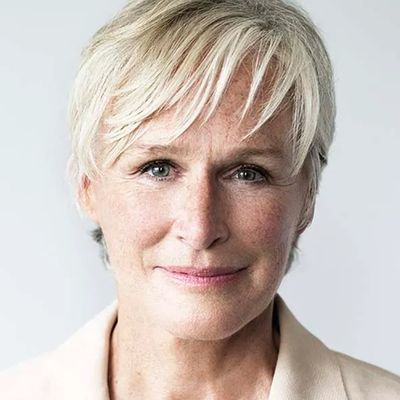
Tony-winning star Glenn Close shares her Norma Desmond memories - from her first Sunset Boulevard audition for Andrew Lloyd Webber, to her experience launching a show about a Hollywood star in Hollywood, to originating the role on Broadway... Read More
From the show: Singular Sensation: The Podcast
Guests
Featured Shows
About
Tony-winning star Glenn Close shares her Norma Desmond memories - from her first Sunset Boulevard audition for Andrew Lloyd Webber, to her experience launching a show about a Hollywood star in Hollywood, to originating the role on Broadway.
This episode features never-before-heard excerpts from the interviews Michael Riedel recorded while writing his 2020 best-selling book Singular Sensation: The Triumph of Broadway.
Transcript
This transcript was automatically generated and might contain errors.
[0:00] Michael Riedel: Here, and welcome to my podcast, Singular Sensation, the triumph of Broadway, based on my book that pulls the curtain up on all the great and juicy gossip from Broadway in the 1990s. Today, we talk about Glenn Close and her role as Norma Desmond in Sunset Boulevard.
[0:36] Michael Riedel: So Sunset Boulevard, the last of the big British Broadway spectaculars that kind of invaded Broadway in the 80s and 90s, had a dynamic, a gossipy dynamic, with Patti LuPone and Andrew Lloyd Webber. And Andrew had cast Patti LuPone for the London production and made a deal with her to go to Broadway. But between the London production and the Broadway production, Andrew had the idea that because Sunset Boulevard is about Hollywood, about a fated silent film star, it might be interesting to open the show in Los Angeles before New York. Now, Patti was going to be performing in London, so she could not be in Los Angeles. And it was Christopher Hampton who wrote the book to Sunset Boulevard. He had just done the movie Les Liaisons Dangereuses with Glenn Close. And it was Christopher Hampton who said to Andrew, why don't we get Glenn Close to play Norma Desmond in Los Angeles?
[2:03] Michael Riedel: I had no relationship with Glenn Close, although I did meet her once at Angus McIndoe, an old theater hangout long gone now. And I met her with a musical director, a friend of mine named Paul. And we just kind of fell into each other's tables and had a jolly time talking. And it turned out at that point, Glenn was living not too far from where I live in the West Village. And I shared a cab ride home with her. And I remember in the cab ride home, I said, I got to tell you, I thought your performance in Sunset Boulevard was just terrific. I remember it. I was there for the opening night. So that was my only connection with Glenn. And then, of course, when I was working on Singular Sensation and I knew I wanted to open the book with the saga, the drama of Sunset Boulevard, and Glenn was a big part of that drama, I had to reach out to her.
So I think it was just basically I emailed her publicist and I got an email back saying she'd be happy to talk to you. So she called me up on the phone and we had a pleasant, pleasant chat. Mind if I tape record our interview?
[3:04] Glenn Close: No.
[3:05] Michael Riedel: Okay. I was out with Andrew at dinner just the other day. And he remembered when you first met and he said, I wonder if you remember this, he said he knew you could sing because he had seen you in Rex and he could even sing one of the songs I think you had.
[3:20] Glenn Close: Oh, yeah. That was at Hampton Court.
[3:24] Michael Riedel: Oh, yeah. What was going on at Hampton Court then?
[3:28] Glenn Close: I played Mary, Mary Tudor, who became Bloody Mary. And it was a Christmas, it was a song Christmas at Hampton Court that the children sang, Elizabeth and Mary and little boys and I can't remember, Edward or Charles or one of those names.
[3:50] Michael Riedel: And Andrew remembered the song?
[3:55] Glenn Close: Oh, yeah. Because Andrew's a huge Rodgers and Hammerstein fan.
[3:56] Michael Riedel: Yeah. Richard Rodgers, so.
[3:59] Glenn Close: Yeah. Absolutely. How did you get involved in Sunset Boulevard? Who approached you and what was your initial thought about taking on this part?
[4:05] Glenn Close: I first received a letter from Christopher Hampton. I guess, I'm not good with dates, but it must have been after we did Dangerous Liaison.
[4:19] Glenn Close: Yes, I think, yeah, I think that's why.
[4:21] Michael Riedel: Yeah.
[4:21] Glenn Close: And he talked about the play and I mean, the musical and how they were putting it together in Los Angeles for the first American production and how he wanted me to look it over and listen to some of the music and whether I would want to audition for it.
[4:44] Glenn Close: So when she got the call to go up for the role of Norma Desmond, she had to audition for Andrew Lloyd Webber at his mansion in London.
[4:52] Glenn Close: Yeah, they brought me over to London and I remember sitting on the bed in my hotel and saying, well, my life will either go one way or it will go the other way. And I was then taken over to Andrew's house at that time on Eaton Square and ushered into the library where there's a piano and there was Andrew and I think Christopher and Trevor Nunn. And I sang the two big songs and I, you know, I sang them as best I could. And what I, I remember Andrew leaping up and saying, she has it in her voice, which meant she has the potential. And then that's when Andrew stood up and he said, you are fantastic. You have eclipsed your performance of Christmas at Hampton Court, which was a song she sang in the chorus of Rex, a musical long forgotten in the 1970s. And I remember Glenn said she smiled and she looked at Andrew. She said, Andrew Lloyd Webber, you bastard, because she knew that he knew that she could sing.
[6:06] Michael Riedel: We'll be back with Glenn Close after this break. I remember talking to Glenn about her original interpretation of her original performance of Norma Desmond. And she told me she modeled the character in the face on Walter Matthau's wife, Carol Matthau. Any, could you give me a sense of then how you went about to create Norma Desmond? Did you spend a lot of time watching the movie?
[6:30] Glenn Close: No.
[6:33] Michael Riedel: No. Okay.
[6:34] Glenn Close: Of course, watched it. But I was, the original was, was very different. My concept from the original was that she was caught in the 20s. So she had this makeup that had morphed into something that could be almost a grotesque mask. But, you know, the very, very dark eyes and the very thin eyebrows. So it was almost, it's like, you know, when you see people who, I was actually inspired by Carol Matthau.
[7:10] Michael Riedel: Oh, really?
[7:11] Glenn Close: Who, when she was young, had porcelain skin. But people told me that as she got older, she would apply this powder to her face. So she became, it became, you know, something different. And it would look a little strange to people. But I'm sure when she looked in the mirror, she saw that porcelain skin. So I think that's, you know, Norma was seeing something different in the mirror than people were seeing in life. So that's, that's, and then, and then, of course, she, she evolved into her, her madness. So that was, that was the, you know, what I was working from with the first one.
[7:59] Michael Riedel: Do you have any memories of any ideas or concepts that Trevor gave you, his approach to the role, how he helped you shape it?
[8:10] Glenn Close: Rehearsals were fantastic. We rehearsed in this church.
[8:15] Michael Riedel: Yeah, somebody told me, yeah.
[8:16] Glenn Close: On Highland. And I would actually drive down Sunset Boulevard to go to rehearsals every day.
[8:23] Michael Riedel: Seeing those big billboards advertising the production.
[8:27] Glenn Close: Yeah, a little daunting.
[8:30] Michael Riedel: Was Andrew around then? Was he quite involved in the L.A. production?
[8:34] Glenn Close: Yes, he was. Andrew, I, because they were, they kind of, it was different from London. I think they, they did things to the, to the stage design. I think it was actually, they made some changes.
[8:56] Glenn Close: I never saw the original in London, so I'm not absolutely sure. But I, I've always been told that they, that they made, they made some significant changes.
[9:02] Michael Riedel: So there was enormous excitement when it was announced that Andrew Lloyd Webber was going to open Sunset Boulevard in Los Angeles, it being, you know, the city of Sunset Boulevard. But what really put it over the top was when they announced that Glenn Close, who was a huge movie star. I mean, one of the biggest movie stars back in the 90s, was going to play Norma Desmond. And that became the hottest ticket in Los Angeles and the cause for tremendous excitement. And I have to say, a lot of fun for everybody involved in Sunset Boulevard. For all of the unhappiness and unpleasantness they had in London, the tension between Andrew and Patti and all the problems they had with the show there. In L.A., everything just went perfectly.
[9:44] Michael Riedel: One of the interesting things that the production team and the designers noticed, their image in London of Hollywood was of sort of David Hockney's Hollywood. Bright colors, bright swimming pools, bright green palm trees. So the London production, and maybe because they were all living in London where it was gloomy all the time and they thought, oh, let's do something that captures the brightness of L.A. But what they missed, and they realized when they moved to L.A., was that L.A., as bright as it is, it also has the very long shadows of all the tall trees when the sun goes down. And that was kind of a key to understanding Norma Desmond's world, that you have contrasted with the shininess, the brightness of a California sunshine, of a California afternoon.
You have Norma Desmond living in the shadows of her eerie mansion. And they did notice as the sun goes down in L.A., the shadows lengthen and lengthen. And I think it was kind of an important artistic realization that you can have this contrast of sunny, fun L.A. with the Norma Desmond world, which is the world where there are only shadows.
[10:59] Michael Riedel: And as they developed the show, when you look back at it now, all of the Norma Desmond scenes in the mansion are all eerie and dark. But whenever Joe Gillis leaves the mansion and sees his friends, the brightness of California comes on. So you have that wonderful contrast between the Hollywood of young people, which is bright and hopeful and fun and sunny, and the Hollywood of Norma Desmond, which is gloomy and old and decrepit and sad.
[11:30] Glenn Close: First of all, it was one of the most, I think it's the most magnificent set I will ever have worked in. I don't think, you know, I don't know if it's true that it was the most expensive set ever built at the time, but I think it must have been. It was glorious and very much part of my inspiration as I walked down those stairs every night. I would stand up there and just take in the set and take in that whole world that it so brilliantly evoked. But it was, you know, if you thought about it, a lot of steps. We had this spiral staircase that we had to climb up to get, you know, to that top, to the very top and the beginning of the show. And then there was a lot of steps up and down.
[12:19] Glenn Close: The thing about L.A. is that we went through the earthquake, the big earthquake of 94. And there were a lot of, and you always, I was always aware before that, that the, you were aware that the stage was suspended because you could feel it move a little bit. But, you know, you get, your system gets used to that. But after the earthquake, there were so many aftershocks that that was, this huge, terrible, you know, surge of adrenaline would go through your body every time it shivered because you thought that another earthquake was happening. And we were underground. I mean, you know, all the dressing rooms in that, in that building.
[13:01] Michael Riedel: At the Schubert Theater, right?
[13:03] Glenn Close: Yeah. They were basically underground. So that was, that was very hairy. Yeah. Went through a lot out there. We went through fire, mudslides, earthquakes. And, and Jackie Kennedy died. And then the, you know, near the end, it was waking up one morning to helicopters and it was.
[13:27] Michael Riedel: OJ, right?
[13:28] Glenn Close: OJ. Yeah.
[13:29] Michael Riedel: Oh, wow. And in the midst of it all, you're Norma Desmond living in the past.
[13:37] Michael Riedel: You know, Glenn Close is the first person to admit that she's not a singer on the level of Patti LuPone. I mean, Glenn is one of the greatest actresses of all time and she can sing. I actually have the original cast album of Barnum and she sings a beautiful colors of the colors of my life. She does beautifully on it, but she's not a big belter like Patti. So I think she was wary of that and insecure, but she was able to pull it off. And of course she won the Tony award to prove it.
[14:03] Glenn Close: Were you worried about your voice back in the, in the original production?
[14:07] Glenn Close: Yes, I was worried. I was, I was the worst singer of the whole ensemble. I, I, I, you know, those high notes, I'd go out every night, not knowing if I could do it. I, and I made a habit of working out with the conductor, Paul Vogaev for a half an hour before half hour every night.
[14:27] Glenn Close: I slowly learned how to sing and had several breakthroughs, but I learned how to sing. That is a very challenging score for a woman because so much of it is right in your break. And also, you have these high belting notes, and I didn't originally have that. I mean, Andrew, when he said she has it in her voice, I guess knew enough to know that I would grow into it. But that's what I had to do. I certainly had to grow into it.
[15:02] Michael Riedel: And so you felt you were the least of the singers of the ensemble?
[15:08] Glenn Close: Oh, absolutely. Without a doubt. I worked very hard.
[15:11] Michael Riedel: We'll be back with Glenn Close after this break.
[15:16] Michael Riedel: We're back with more of the juicy story behind the scenes of Sunset Boulevard. The death knell for Patti LuPone playing Norma Desmond on Broadway was really when Glenn opened in Los Angeles. And there was a new critic at the Times then, Vincent Canby, and he had replaced Frank Rich. And Vincent Canby went to L.A. to review Glenn Close in Sunset Boulevard, and he gave her an across-the-board rave. I mean, just one of the great reviews of your lifetime. And I remember a number of people, because there was a lot of speculation then about Andrew and Patti weren't getting along, and we knew there was tension. And I just remember everybody involved in Sunset Boulevard, when they picked up that New York Times review that morning, and they saw this rave for Glenn Close from Vincent Canby.
And remember, Patti had not gotten a good review from Frank Rich in the New York Times in London. Everybody in the theater world knew Patti was dead, Patti was doomed, and Glenn was going to be Norma Desmond on Broadway. It was obvious that morning when you read Vincent Canby's rave review. And I have to say, as brutal as it was, Patti's firing, as vicious, as wounding as it was for her, and as difficult as it was for Andrew, he probably made the right decision. Because if you have one Norma Desmond who's gotten not a very good review from the New York Times, and you've got another Norma Desmond who's gotten a rave from the New York Times, who are you going to go with? You're going to go with the one who has the critic on her side.
So it was a very logical, obvious decision to make. Expensive, because he had to pay them both, but it was in the end the right decision. They were able to shift that perception of Sunset Boulevard as being a troubled, flawed show in London to being a gigantic, major event with Glenn Close in Los Angeles. And it really created the excitement that then propelled Sunset Boulevard from L.A. to Broadway. Of course, there was the whole controversy with Patti LuPone. What did you make of that from afar?
[17:15] Glenn Close: Well, that kind of broke my heart.
[17:17] Michael Riedel: Really?
[17:18] Glenn Close: Yeah. I mean, I felt I was in a really unfortunate position, because I basically had nothing to do with that decision. And I know, I mean, I put myself in Patti's shoes, and I think that that was horrible for her. Yeah. So I've always been incredibly, felt very sympathetic to the position that she was put in. And then, of course, over the years, people have said that we've had some big feud, certainly not from my side. And I saw Patti a couple of years ago at the Kennedy Center Honors, and we just looked at each other. We're sitting at a show. He said, you know, past is past. But, you know, that was a very awkward, difficult time.
[18:07] Michael Riedel: One of the issues in Los Angeles was Glenn Close was contracted, I think, for six or seven months to Sunset Boulevard. And the production was very expensive, so they knew they would have to run it beyond Glenn. So the question became, who's going to replace Glenn Close in Sunset Boulevard? The team decided, well, we have, we can have months of speculation in the press as to who's going to replace Glenn Close. So they floated every name imaginable. I mean, most of these names, not a remote chance that they were going to go into Sunset Boulevard. And it was a way just to keep Sunset Boulevard in the press all the time. And eventually they picked Faye Dunaway, which on paper was a brilliant selection, because Faye Dunaway was a great movie star, had been a great movie star in the 70s, 60s and the 70s. But let's face it, in the 90s, she was no longer a box office draw anymore, still very famous and recognizable and beautiful.
But she really was what Norma Desmond had become. So it was a brilliant idea to cast Faye Dunaway. Fortunately, the execution, well, was another head roll down Sunset Boulevard. And this time it was Faye Dunaway. During rehearsals, it became apparent to everybody who was around, although it wasn't Andrew Lloyd Webber and Trevor Nunn, the director, they were not around in the rehearsals in L.A. because they were busy doing other things. But everybody else who was trying to put Faye Dunaway into the show realized that she was not going to be able to do it, that she could not really sing the role. And while her acting was quite good, her insecurity about her singing got in the way of the performance.
So it was a herky-jerky performance. She'd give a good scene and then she would come up to the song and she would lose the character and get frightened. She just couldn't do it. She was not up to the task of singing those songs. So they knew they would have to get rid of her. And indeed, they fired her before she even opened in Sunset Boulevard because they knew if she opened and got bad reviews, it would kill the show. So they just decided, pack her off and close the show. The L.A. production was very well received and by all intents and appearances, a big success. And then when they cast Faye Dunaway, somebody who was in the cast said there was a company meeting where they announced when Faye couldn't do it, they were going to close the show. And someone said you were upset because all these people you worked with were going to be out of jobs. Do you remember that meeting?
[20:35] Glenn Close: Yeah.
[20:36] Michael Riedel: What did they say? And what was your response at the time?
[20:41] Glenn Close: Again, an unfortunate situation. My response was exactly that. It was a great company. And it was a great show. And it was sad that it closed there. It should have run. But the wonderful thing is that whoever could come from that original company to New York, they came. So the preponderance of the company was the original company.
[21:12] Michael Riedel: It must have been a milestone in your career with the reviews you got here. Do you remember the opening night party and seeing those reviews for the first time? Any details about that?
[21:24] Glenn Close: No, it was just, I mean, having been in theater for a long time before that, you just, you know, a show like that, that's so expensive, you're made or broken by the reviews. And so when something like that comes out, it's, oh, it's just, it's, you know, wonderful. Everyone's walking on air. It, you know, it's just the most thrilling feeling.
[21:47] Michael Riedel: Yeah. So Glenn Close opens on Broadway. She gets rave reviews. She is the biggest star on Broadway. The show is the hottest thing on Broadway. And with Glenn in the lead, she is posting weekly record-breaking grosses. And she wins the Tony Award for best actress in a musical. And she has a vacation coming up, a two-week vacation, because she's been in the show now for a year or so. And she goes away and her understudy, Karen Mason, does the part for two weeks. And my friend, Jeremy Girard, who was then the theater reporter for Variety, he notices something that he thinks is a little odd, that the grosses that the producers of Sunset Boulevard are reporting to Variety, the grosses with Karen Mason in the lead are the same as when Glenn Close was in the lead, which is suspicious because you bought the ticket to see Glenn Close, and you have a right as a ticket holder to see the person whose name is above the title, and that was Glenn.
And if you get the understudy, you can ask for a refund or exchange your tickets for another date, right? So if the gross, let's say, was $650,000 a week back in those days when Glenn's there, with Karen Mason, it's also $650,000 a week. And Jeremy is a little suspicious about this because he knows how the business works. And he knows if you put the understudy and no one's ever heard of, the grosses are going to dip. I mean, this is just the natural course of things on Broadway. So Jeremy starts poking around, asking a few questions, but they say, no, this is the gross, this is the gross. And then one day, over the fax, back in those days, faxes, no email, over the fax, and he to this day will not reveal who the source was, but he got the real box office grosses for Karen Mason in two weeks in Sunset Boulevard.
And it turned out that the producers of Sunset Boulevard, the people who ran Andrew's Company in America, they did not want the show to look like it was totally dependent on Glenn Close. So they inflated the grosses when Karen Mason was in it, and they had lied to Jeremy at Variety about the grosses were. And now he was looking over the fax at the real grosses, and they were considerably lower when Karen Mason was in than when Glenn Close was in. And Jeremy reported that story, and man, that was a, that was an, it seems funny to talk about all these years from now. I mean, you lied to Variety, big deal, it's not a crime, but it was a huge story. It was on the front page of the Post, and I wrote the story in the Daily News, and Glenn was furious, furious that they had inflated the grosses. She wrote Andrew a blistering letter. Do you remember a letter that you wrote that got leaked to the press?
[24:40] Glenn Close: Yes, very unfortunate. Ah, yeah. Can you tell me, you wrote that letter yourself, right?
[24:47] Glenn Close: I absolutely did, I was furious. Yeah.
[24:55] Michael Riedel: But anyway, I don't really want to, yeah, no, I mean, it's a great, you know, never email something. Oh, we had, I guess we had email back in those days. We had email, oh yeah. Well, I interviewed. But the funny thing was, I knew, you know, all this hoo-ha came up in the press, and that night, I knew that there'd be a lot of press outside the theater, so I asked somebody to go down to the village to this magic shop that I knew had all kinds of, you know, those groucho masks, the dark, the black-rimmed glasses and the big nose and mustache? So we got one for every single member of the company. I know. When we all walked out of the theater, we all had groucho masks on, so nobody knew who anybody was.
[25:40] Glenn Close: I know, I was there, I was covering for the Daily News. You remember that? I was standing outside the stage door. I have the article with a picture of you walking out with a groucho mask. And listen, I understand her point of view, she definitely made Sunset Boulevard a hit. And for the company, really useful, Andrew's company, to pretend that, oh, it's fine without Glenn. What they were trying to do was, they were trying to set up the show as the title itself was the star, because they knew Glenn was going to be leaving, and they wanted the show to go on, so they were going to have to replace her. So they didn't want anyone to think that without Glenn Close, there's no reason to see Sunset Boulevard.
So that was the theory behind lying about the grosses. The fact of the matter is, the trajectory of Sunset Boulevard, and there were some terrific Norma Desmonds after Glenn, I mean, I think Betty Buckley was sensational in the role. I mean, she was just heartbreakingly beautiful and poignant in the role and sang the hell out of it. But the fact of the matter is, because of the trauma behind the show, Patti LuPone is out, Glenn has great reviews in LA, Faye Dunaway can't do it. The perception set in that Sunset Boulevard is really only 100% terrific show with Glenn Close in the lead. And their fear was when Glenn leaves, because she was signed up for a year, year and a half, whatever, when she leaves and they replace her, will people still want to see the show?
So they were trying to make the show the star, when in fact, it really was Glenn Close that people did want to see in this role in the show. And when she left and they replaced her with Betty, who was great, as I say, and some other people, that the grosses were never what they were with Glenn. She was the star of the show. She was Norma Desmond. That's the actor people wanted to see.
[27:26] ♪ Musical number: "As If We Never Said Goodbye" — performed by Glenn Close ♪
[28:03] Michael Riedel: Well, that wraps up part one of my conversation with Glenn Close. Tune into the next episode to hear her talk about her return to the role of Norma Desmond in 2017 at the Palace Theatre. I went to the opening night and she was as good as ever. And then we're going to hear Patti LuPone talk about Sunset Boulevard in her own words. And this is something you do not want to miss, because as you know, Patti's words can sting. Thank you for listening to Singular Sensation. I'm your host, Michael Riedel. To find out more about Singular Sensation, the book and the podcast, visit bpn.fm slash Singular Sensation. This episode was edited by Sarah Goodman and produced by Dori Berenstein, Kimberly Garris and Alan Seals for the Broadway Podcast Network. Special thanks to Liz Armstrong and the entire BPN team.
© Broadway Podcast Network, All Rights Reserved