

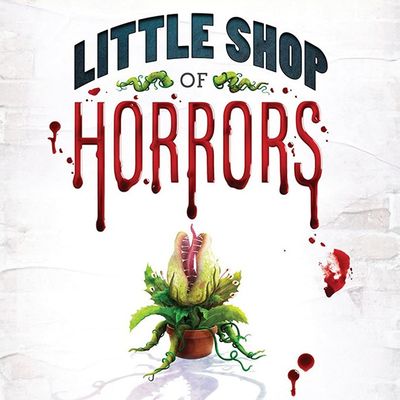
In this weeks episode Tori and Libby are talking all things Little Shop of Horrors in their first ever Deep Dive, joined by Heather Campbell! Discussing castings, prop choices and of course #JusticeForAudrey!.. Read More
From the show: Stage Door Podcast
Featured Shows
About
In this weeks episode Tori and Libby are talking all things Little Shop of Horrors in their first ever Deep Dive, joined by Heather Campbell! Discussing castings, prop choices and of course #JusticeForAudrey!
Leave us a rate and review, and let us know what you’d love to hear in our next episode on our Instagram @ps.stagedoorpod or via our email at ps.stagedoor.podcast@gmail.com
Created, Edited and Produced by Victoria Bullard & Elizabeth Gunther
Music by Catherine Gunther
Transcript
This transcript was automatically generated and might contain errors.
[0:04] Tori Bullard: Hi everyone and welcome back to PS Meet Me at Stage Door.
[0:09] Tori Bullard: So today we have a little bit of a different episode for you.
[0:13] Tori Bullard: We're going to be trying something new, something super exciting.
[0:17] Tori Bullard: But before we jump into it, I'm going to hand it off to Libby for our bulletin.
[0:23] Eliza Gunther: Before we get into the news of this week, both Tori and I would like to acknowledge the Black Lives Matter movement in America and around the world.
[0:32] Eliza Gunther: Following the tragic death of George Floyd, it is so important that we as a community listen and learn how to be better allies both in our home country and overseas.
[0:44] Eliza Gunther: Making sure to give our voices where it matters to help fight against systematic racism.
[0:49] Eliza Gunther: We will hold ourselves accountable to implement this into our daily lives now and for the future.
[0:56] Eliza Gunther: We understand that we can never fully understand, but we see you, we hear you, and we stand with you.
[1:04] Eliza Gunther: You can follow the links in our bio to see how you can help too.
[1:08] Eliza Gunther: In other news, we are excited to see some new productions and works coming out.
[1:35] Eliza Gunther: An exciting Australian musical currently in its workshopping phases is Valves A Song Cycle.
[1:41] Eliza Gunther: You can follow their journey to creating a show on Instagram at Nash Daily and Goldfinch and support them by donating to their GoFundMe page.
[1:49] Eliza Gunther: Also coming to a screen near you is Oliver Alcair's production of The Big One O, the online edition, who is actually going to be a guest on our podcast in an upcoming episode.
[2:01] Eliza Gunther: So make sure you keep your ears out.
[2:03] Eliza Gunther: Tickets will be on sale Friday with the shows on the 25th to the 27th of June.
[2:08] Eliza Gunther: Make sure you guys check out their Instagram at the Big One O A US for more information.
[2:14] Tori Bullard: Now back to you, Tori.
[2:16] Tori Bullard: So today we're gonna be doing something new, something a little bit different.
[2:21] Tori Bullard: We are gonna be doing a deep dive.
[2:23] Tori Bullard: This is gonna be the first time that we're doing a deep dive.
[2:26] Tori Bullard: Pretty much what it's gonna be is we are going to pretty much just be diving in deep to a discussion of a show of our choice.
[2:34] Tori Bullard: And today, that show is going to be Little Shop of Horrors, and we are joined by our amazing, amazing guest, Miss Heather Campbell.
[2:44] Tori Bullard: Say hi, Heather!
[2:45] Heather Campbell: Hello!
[2:47] Heather Campbell: Thank you so very much for having me on.
[2:49] Heather Campbell: This is very exciting and cool.
[2:51] Heather Campbell: I'm so excited.
[2:52] Tori Bullard: I know we are so excited to have you.
[2:54] Tori Bullard: So Heather is a colleague of ours who is a very active member of the theatre community, not only as a performer but as a director and a teacher as well.
[3:04] Tori Bullard: Making her the perfect person for us to bring in today.
[3:08] Tori Bullard: So before we get started, I'm gonna tell you guys a little bit about Little Shop, and we're gonna give you a little bit of an intro to what Little Shop is.
[3:15] Tori Bullard: If you're listening and you've never heard the musical before.
[3:17] Tori Bullard: So Little Shop of Horrors is a horror comedy rock musical with music by Alan Mencken and lyrics by Howard Ashman.
[3:25] Tori Bullard: The musical premiered off Off Broadway in 1982 before moving off Broadway to the Orphean Theatre, where it ran for five years.
[3:34] Tori Bullard: The original musical was loosely based on the low budget 1960s comedy film of the same title.
[3:41] Tori Bullard: Now, before we go any further, I will let you know that there is a spoiler warning.
[3:46] Tori Bullard: We will be talking about the plot of Little Shop.
[3:49] Tori Bullard: We will be talking about everything that happens.
[3:51] Tori Bullard: So if you have not seen Little Shop and you don't want spoilers, this is your spoiler warning.
[3:56] Tori Bullard: So, for those that aren't super familiar with Little Shop of Horrors, the show takes place in Skid Row, where poor orphan Seymour works at Mushnick's Skid Row Florist, a rundown flower shop owned and operated by cranky Mr. Mushnick, alongside Audrey, a tall, beautiful blonde who is in a relationship with the abusive evil dentist.
[4:19] Tori Bullard: While Seymour was browsing the wholesale flower district, a sudden eclipse of the sun occurred, and when the light returned, a mysterious plant that looked like a large Venus flytrap appeared.
[4:31] Tori Bullard: Seymour, who was secretly in love with Audrey, named the plant Audrey 2 after her.
[4:37] Tori Bullard: He bought it and took it back to the shop where it began to shrivel and die until Seymour discovered to make it grow, it needed blood.
[4:46] Tori Bullard: And hence the story truly begins.
[4:48] Tori Bullard: I think that's all we really need for now in terms of the synopsis because we will be going in much deeper into the plot throughout this episode.
[4:57] Tori Bullard: So to give you a bit of a context as to why we chose Little Shop of Horrors for today's and for our first deep dive, pretty much Heather is our old boss.
[5:07] Tori Bullard: And pretty much we would spend I don't even know how long in the box office chatting shit pretty much about Little Shop of Horrors.
[5:17] Heather Campbell: Exactly.
[5:18] Tori Bullard: So I guess we wanted to start off today by, you know, because you're so obsessed with Little Shop and you love it so much.
[5:26] Tori Bullard: So we've gotta know where did this start?
[5:35] Heather Campbell: Okay, so I first encountered Little Shop of Horrors when I think I was like maybe 12 or 13, and I was going to a performing arts school on the weekend, and I got given "Somewhere That's Green" to learn as a song.
[5:51] Heather Campbell: Ah, of course, all girls do.
[5:53] Heather Campbell: Yeah, so get given "Somewhere That's Green."
[5:57] Heather Campbell: And um I had never heard of the musical at the time.
[6:01] Heather Campbell: I thought I knew a lot about musicals, but I really only knew sort of like the big big ones.
[6:05] Heather Campbell: And I got handed this piece of music, and I thought that it was such beautiful imagery, and it inspired me to find out more about the show and about the context for the character and things like that.
[6:18] Heather Campbell: Um so then I think I first watched the movie, the non-musical movie, and was like, what is this weird thing?
[6:27] Heather Campbell: Like, I don't know how I would have signed up for here.
[6:30] Heather Campbell: Where did this beautiful song come into this completely horrific thing?
[6:34] Heather Campbell: Yeah, because the movie is quite strange.
[6:37] Heather Campbell: The non-musical movie is quite strange.
[6:39] Heather Campbell: Um I watched that and then sort of just went, okay, and forgot about it for a little while.
[6:45] Heather Campbell: And then when I was in high school, we were doing a production of Little Shop of Horrors.
[6:51] Tori Bullard: Ah, okay.
[6:52] Tori Bullard: I thought you were in it.
[6:53] Heather Campbell: So then we do a production of Little Shop of Horrors, and it really comes back into my life, and I'm like, isn't that that weird movie that I watched?
[7:00] Heather Campbell: Anyway, at this point, um, we all get handed the CD to have a listen to it and uh, you know, decide if you want to audition or not.
[7:09] Heather Campbell: And I took it home, listened to the CD, and I just became obsessed.
[7:13] Heather Campbell: Like, listened to it over and over and over and over and over again.
[7:16] Heather Campbell: Like I had it loaded on my iPod, and I remember like one of my friends looking over my shoulder being like, what is "Do Do" by Alan Mencken?
[7:23] Heather Campbell: I've never heard of this song.
[7:25] Heather Campbell: And I'm like, you don't even know, it's so good.
[7:28] Heather Campbell: Um, so yes, and I was in a production, um, which was amazing, but also terrible because I was one of the Greek chorus members.
[7:37] Heather Campbell: Um, I was Chiffon, which is an incredibly racially inappropriate thing for me to be cast as.
[7:44] Heather Campbell: Um, so for your listeners' clarification, I am a Caucasian red-headed woman uh who cannot even slightly pass for being African American.
[7:53] Heather Campbell: So not at all.
[7:54] Heather Campbell: It was one of those great things that high schools do where they're like, yeah, yeah, ignore the racial questions, just throw the students at it.
[8:03] Heather Campbell: And yeah, and then just from then onwards, I was like, it had a special place in my heart, and so I've been really invested in listening to every recording that comes out.
[8:12] Heather Campbell: I've been to see a few productions.
[8:14] Tori Bullard: Um, face you're pulling right now.
[8:19] Heather Campbell: I have thoughts about I saw the production at The Haze and loved it, and it then transferred to Sydney Theatre, and it was glorious and loved it.
[8:28] Heather Campbell: Um yeah, I just think it's a really special show.
[8:31] Heather Campbell: It is such a fun musical, and it's something that's done by so many uh, especially like community theater, high school theater, because it's a small cast and it is really fun.
[8:43] Heather Campbell: Like, I was listening to it today, driving to the glorious IKEA for the first time in probably months that I've listened to it, and it just came back.
[8:52] Heather Campbell: I was like, oh, I just I just want to do this.
[8:54] Heather Campbell: Like, I don't even care.
[8:56] Heather Campbell: I will I will be a storyline.
[8:58] Heather Campbell: I just love the music in this show.
[9:00] Heather Campbell: I do, and I think people um mistake it for being an easy show.
[9:05] Heather Campbell: It's not an easy one.
[9:06] Heather Campbell: Because it is quite funny, and people go, oh yeah, that's that's achievable thing we can do.
[9:11] Heather Campbell: Like we'll we'll we'll definitely do that.
[9:12] Heather Campbell: And I think people put a lot of thought into like, oh, what will we do about the puppets?
[9:16] Heather Campbell: And you can you can hire the puppets quite readily, like the three Audrey 2 puppets.
[9:21] Heather Campbell: And I think people think that's the thing that you need to make it a good show.
[9:25] Heather Campbell: Um and I think it's got a lot of other things going for it, and a lot more depth that it gets kind of overlooked for, but it does.
[9:33] Heather Campbell: It gets put on a lot, so you get to see it in many iterations, and it kind of seeing each one you go, ah, I'll take something from that, and I really like that element, and and I I don't know, I put it together in the super production.
[9:45] Heather Campbell: Exactly that one day I hope I'll see.
[9:47] Heather Campbell: I was really hoping to see the off-Broadway one that's currently.
[9:54] Heather Campbell: I was so excited.
[9:55] Tori Bullard: The one with Jeremy Jordan?
[9:58] Heather Campbell: Yes, the one that uh well is it him yet?
[10:01] Heather Campbell: I thought it was um, I think he's coming.
[10:03] Heather Campbell: He's coming, which we'll which we will get into later because we have so much to say about that.
[10:08] Tori Bullard: Is it is that that's the production that had um Jonathan Groff in it?
[10:12] Heather Campbell: Yes, so the new Probre um production was Jonathan Groff being Seymour, Tammy Blanchard as Audrey, and um Christian Ball being Orin Scrivello, the dentist.
[10:25] Tori Bullard: One of the things we kind of thought would be kind of fun to discuss is if you could, what would you change about the storyline or the characters?
[10:36] Heather Campbell: I don't know that I would really change anything about it, which is funny because I have a big history of going to see shows and being like, well, if you just change this element of the plot, wouldn't it be better?
[10:36] Tori Bullard: Yes.
[10:36] Heather Campbell: Wouldn't it be better?
[10:48] Heather Campbell: I really agree, right?
[10:50] Heather Campbell: I'm like, wouldn't it just be better if Act Two never happened?
[10:54] Heather Campbell: Like it's just But Little Shop is one of those shows that I actually don't do that about.
[10:59] Heather Campbell: I really like the story, the progression.
[11:02] Heather Campbell: I think it makes sense to me.
[11:03] Heather Campbell: There's nothing about it that I go, well, that's odd, and why would anybody make that choice?
[11:09] Heather Campbell: I think um I agree.
[11:11] Heather Campbell: In terms of sometimes production choices, there are things that if I ever get my hands on directing it, as is one of my life goals, there are things that I'm perhaps interested in doing a little differently to the standard production.
[11:24] Heather Campbell: Yeah.
[11:25] Heather Campbell: Um so things like one of the things that we have talked about previously is um when the new recording came out uh with Jonathan Groff and Tammy Blanchard and um Christian Ball, it's quite different.
[11:41] Heather Campbell: Yeah. Um, but Tammy Blanchard, as much as I adore her, I feel like she's giving a very classic Audrey, and I don't know that the two of those sink. So I'm like, does Audrey have to be played that way?
[11:52] Tori Bullard: Well, I actually think that she almost does.
[11:57] Heather Campbell: Oh.
[11:58] Tori Bullard: Because she's a represent I know, I know going against it. I originally, you know, uh asked me a couple days ago, and I totally wouldn't have to be able to do that. I was waiting for the I was waiting for the.
[12:15] Heather Campbell: It is almost parallels. The story parallels like Nixon and his like presidency. And it was really interesting looking at it because it's it's paralleled. And so Audrey's really just a metaphor for like America. You know how she at the end she's like she wants him to feed, like she wants to be fed to the plant. She's like, no, I want you the best for you. So feed me to the plant. That's like the blindness of the mass of America. So I think that's what she is. So I don't know. For me, I think that she almost does need to be that really stupid, blind, like it's it's um a character chore, it's a hundred percent a character chore. And I would love to see her done.
[12:51] Tori Bullard: Yeah.
[12:53] Heather Campbell: If it wasn't that, I think I would love to see it done a bit, you know, differently. But I think a person can't play a metaphor, right? You can't play I'm a metaphor for the loss of the American people's faith in their president. That's not a playable action.
[13:09] Tori Bullard: No, it's not playable action. I kind of I feel like I kind of fall in the middle of these two because I think that the way that she's portrayed is kind of a representation of where she's from.
[13:25] Heather Campbell: So she's from Skid Row. She's from like if you kind of if you don't know what Skid Row is, it's not necessarily a particular place. It's pretty much an impoverished urban area in like North America. And so when I hear her, that's exactly what I picture. I picture where she's from, I know what she is, but it makes me feel like she's got so much more.
[13:46] Tori Bullard: But here's the thing they're they're all from there.
[13:49] Heather Campbell: That's true. They are all from there.
[13:51] Tori Bullard: They're all from there, and she's the only one with that accent.
[13:54] Heather Campbell: Like, why is she always the only one with the accent? But I do feel like it does dumb her down more than she is. Like I feel like her action in the show. She knows what's happening. She knows what the dentist is doing, but it's the fear of it. So many people have said to me before, I'm like, well, she doesn't like, she doesn't realize what the dentist is doing because she's dumb. I'm like, no, she knows what she's doing, but she's scared and she's also in love. She sings a whole song about it. She sings a whole song about how she's only ever had bad relationships. Like that she's a she's aware of that. But I think it's just I think it's actually for me, it's not that the character can't be innocent or has to be played like a super savvy woman, but it's that um people seem to be really stuck with the voice.
[14:40] Heather Campbell: Like that voice is always the same. Any production you go and see of Little Shop, everybody does the Audrey voice in quote unquote air quotes, which don't really work over the meaning of a podcast. But mayor quoting the Audrey voice. When I was trying to find clips of people singing somewhere that's green, I think I only found one or two that didn't use that voice, and it kind of just makes you go, Oh, it makes it feel quite different, but not bad.
[15:07] Tori Bullard: No, it's not bad. I don't I think that it would be so amazing to see Audrey in a different light, as in not done with the voice, but it is also a very camp show, and that almost brings an element to it as well. It's not, it's it's got kind of I don't know about anyone else, but when I was watching it, you know the way that the set is and everything, it's so bright and vibrant in your face. And it kind of reminds me of like Sesame Street on steroids, just like there's some plant, there's like puppetry, it does match it, but I I definitely think it would be an interesting to see a completely different Audrey. I think it would just depend on how the production was done.
[15:42] Heather Campbell: And I don't know if it'll work because I've never seen it, but it's just when I see it, and particularly when I listen to the new recording, one of the questions I asked was, does she have to speak that way? Does she have to have that accent? Because it's it's uh a character trope that is really ingrained with the show, but I'm like, I you know, I've not seen the libretto for years. And I'm like, is it is it like a scripted thing? Is it strictly thing? Uh is it a choice that you have to make? Can it be made?
[16:09] Tori Bullard: Yeah.
[16:10] Heather Campbell: I just I wonder, and maybe it wouldn't work. Maybe it wouldn't work, but it's one of those things that I'm I'm interested that I never see anyone stray from it. And people's depiction of the dentist changes and Seymour changes, and why is Audrey deprived of the ability to be seen differently, or for an actress to put a different spin on it?
[16:32] Tori Bullard: And I think it depends on what you're going for in the show, right? But I think the relationship between Audrey and Seymour is often the real crux of the show, and that's why they changed the movie ending, because they were like, Oh, it's right, yeah.
[16:45] Heather Campbell: So, like when they changed the movie ending and they didn't die, it was because film audiences were so invested in these two people that they were absolutely horrified that they got fed to the planet, and that was the end. I didn't even connect for the longest time, literally until researching. I have seen musical productions in theaters, and I've seen the movie. And I didn't connect the dots of the fact that they had changed the ending, and I was like, because when they did the first test of it to an audience with the movie, they were like, No, they were like, This is so upsetting, and it's so dark, and it's so horrific that it needed that happier ending of she goes in, but Seymour saves her, rather than the absolutely horrific but amazing ending of the musical where they all die and plants take over the world, or at least they take over Skid Row.
[17:38] Tori Bullard: Yeah, but I think the theater, uh, the the difference is also like a theater is uh even with a super tragic ending, you've got that upswing of like, but they come out to bow and there's a reprise, and you you get that kind of upswing in a movie, you're just left with like then that's the end, the credits.
[17:56] Heather Campbell: But also, like Seymour wasn't left with like if they do that ending, the whole thing is that you know it's almost that fame thing and the greed that is there, and that there's there's no consequence.
[18:09] Tori Bullard: Yeah, there's no consequence to his actions.
[18:12] Heather Campbell: Audrey deserves better!
[18:13] Tori Bullard: Justice for Audrey!
[18:15] Heather Campbell: Justice for Audrey.
[18:17] Tori Bullard: And it can be on many layers. She deserves Benaman, she deserves her own voice, like hashtag Justice for Audrey. And look how long we've spent talking about.
[18:25] Heather Campbell: I know. She's great, she's a great character with like many nuanced points to her. But another thing that I would love to talk about that I know Heather, we've spoken about before, is that a lot of the productions in Sydney use the same puppet for every show.
[18:43] Tori Bullard: But something that I love and I think is amazing. Like the photos that I saw from production of Little Shop of Horrors um in Pennsylvania at the Fulton Theatre back, I think it was in 2018, where Patrice Covington actually played Audrey 2. I love the idea of actually them not being a puppet and being like the way that like looking at the photos, the way that Patrice got to portray that, it she almost looks like this version of like poison ivy on dragon. Like it was amazing. And I found so many versions. Like, I even found a version with a drag queen called Vicky Vox Slay.
[19:27] Heather Campbell: That's Audrey 2. And she's this like retro, she's got pin curls happening. She's like psychedelic colours. I love it. And like it's like, it brings this entirely different personality because it's like you know that they're the plant. Like, you know that. You know that. You you would have to be quite literally blind to know that she that these people are not being the plant. Just it, just in general, guy or girl, whoever, I think you just gotta cast whoever suits the role best.
[19:59] Tori Bullard: But I saw one um today which was amazing, and I watched a video of it. It was from a high school production in um America, and we're pretty much so she was playing Audrey 2, and when she becomes full size, you can't see what I'm doing physically right now, but she was pretty much in the pod, and when she started singing Feed Me, she opened up the pod, and she was just there in this like gorgeous purple.
[20:23] Heather Campbell: I love that, and every time she ate someone, she would swallow them in and the doors would close of the pod. And I was like, Yes, I love this, and I love Audrey 2 is such a sassy character.
[20:38] Tori Bullard: So sassy, and I love being able to see, like, whilst I've seen a few different iterations of the puppet, you just get so much more expression than having a person there because you're like, the puppet is great and it's funny, and it's a good little like joke with it, and I think that if it's what you're going down the path of, do it. But having that person there to be like, like literal the physical representation of this sassy otherworldly plant is just it's a completely different story.
[21:11] Heather Campbell: A hundred percent. And I think also um they're such a key player in the story, right? And the whole thing is that Audrey 2, it's all a manipulation so that to make him famous, not for him and not so he'll give him blood, but so that they can get the plant to spread and take over the world, right? It's this alien plant that wants to take over. So it it the character is playing a long game of wanting something, and I think if you let the audience see the person playing it, and that it could still be incorporated within a puppet, you get that push and that back and forth between Seymour and the plant.
[21:50] Tori Bullard: And also the the Chiffon uh Renette and Crystal, they are part of the plant at different parts. Like during supper time, they're also singing, like you know, and encouraging him to feed things to it. And I think if you you could find a way to work them into it as well, like it's um it's that would be so cool. It's a growing entity that would be cool to play with.
[22:13] Heather Campbell: It'd be cool to have like the villain, but then like a pussy. It's almost like you could do a cool, like dancy kind of like you could have like a really cool vibe.
[22:23] Tori Bullard: Yeah, it's like Ursula and her eels, like that class.
[22:27] Heather Campbell: Yeah, that vibe.
[22:28] Tori Bullard: That's the exact kind of vibe that I get. Like, I've seen pictures of various different productions and like where they are in almost like where the little gospel girls are in almost mini Audrey.
[22:43] Heather Campbell: Oh yeah, totally.
[22:44] Tori Bullard: Like, and I think that it's I love that. Great, and I I love it so much, and I think it's such a good option to yeah, have that physicality of it and the way that people play with it. And and someone's working so hard at that puppetry, too. I wanna like too many puppets on on stage, you get to see the puppeteer and the puppet.
[23:03] Heather Campbell: So you think of like Timon in Lion King or Olaf, um, or if you go see Fool Horse, you can see people. Yes, Avenue Q, you can see people and the puppets, and it gives you that connection of the human emoting and also gives the puppet more life.
[23:18] Heather Campbell: I think I would love to see Little Shop have more of that. Because the person who was the poor person who's operating that Audrey 2, they're working so hard, and I know they get to come out for a bail. But seeing that symbiosis of the voice and the physicality, I think would be a real it would only be a plus to me. And I think what you were saying before about the reveal, like when Audrey starts to talk, I think it makes total sense that it's a puppet in the first couple of stages, that there be a puppet around them, but when or when it starts when the plant starts to talk, there being that revelation of being able to see the human voice. Although one of the things that I really loved about the production that was at the Hayes and then went on to the Rosin Packer was that the guy who played Seymour was also Audrey 2's voice.
[24:04] Tori Bullard: Oh.
[24:05] Heather Campbell: So he was doing both.
[24:07] Eliza Gunther: Oh, I didn't see that production.
[24:09] Heather Campbell: Yeah, oh, it was mind-blowing. So he was How would they do Feed Me?
[24:15] Tori Bullard: Yeah, so he was like, I believe that they had done some pre-recording stuff. You can see him, and it made it gave it this really interesting twist of like was the plant ever really talking, or his own desires, like and I actually didn't notice because it was so subtle, because he'd like be looking at the plant and singing, and so you couldn't really see. And someone else in the audience who'd already seen the show pointed out to me that he was singing both, and I was like, my mind was exploding. So that was a really cool twist on it as well.
[24:46] Heather Campbell: I love that. On the note of explosiveness, we're going to shift it now.
[24:52] Tori Bullard: Explosions.
[24:53] Heather Campbell: We're gonna shift it now to um a little, I guess you could call it game. Not really a game. We're gonna do two truths and a lie. So what happens is there are gonna be two truths to what I say, and there's gonna be one lie. Now, these are all about Little Shop of Horrors, so it'll be really interesting. I did find some really interesting fun facts. So I hope you guys enjoy this. So you're gonna get one- Are we gonna like buzz in for this?
[25:22] Eliza Gunther: I think you can both say which one you think is the truth and which one you think is the lie.
[25:26] Heather Campbell: Oh, okay. Yep, I think I get what you mean now. Alrighty, so this is the first one. Number one, Little Shop of Horrors is the only movie that stars both comedy legends Steve Martin and Bill Murray. Two. Ariel's I Want song was used as inspiration by the writers who often jokingly called it Somewhere that's wet. Three, the movie inspired a board game by Milton Bradley called Feed Me, in which players had to drop marbles in the giant flytrap's mouth. Which one do you think is incorrect?
[25:56] Eliza Gunther: Can I just ask a quick question? Bill Murray was in Little Shop of Horrors.
[26:01] Heather Campbell: Well.
[26:02] Eliza Gunther: Oh wait, I got my question.
[26:04] Heather Campbell: Yeah, I can't I can't answer.
[26:05] Eliza Gunther: What is what is the two truths and what is the lie?
[26:08] Heather Campbell: So you just tell me what you think the lie is. I'm now trying to think who I I reckon one is the lie. I I reckon Bill Murray and Steve Martin must be in another movie together.
[26:18] Eliza Gunther: Yeah, I also I I've got to agree.
[26:20] Tori Bullard: I feel like I've seen them a lot together. Unless Little Mermaid, yeah, Little Mermaid was written after it, so uh that's fine. I I know I feel like that makes sense. I feel like the game could exist. I mean, a board game is nutty, but sure.
[26:35] Heather Campbell: Yeah, go with the one.
[26:36] Eliza Gunther: I'm oh gosh, I'm gonna go with one too, actually.
[26:39] Tori Bullard: Oh guys, they're all true.
[26:45] Heather Campbell: Oh wait a second. I love I love Libby now trying to figure out what she's done. So basically, the Little Mermaid came after Little Shop, and they I switched it. It's actually that Little Shop became was first, and so they used Somewhere that's green to inspire part of your world. But basically, number two was the lie.
[27:10] Heather Campbell: Okay, number two. This is the second one. This is the last one. Um, okay, number one. The filmmakers originally offered the role of Audrey to Madonna before casting original stage star Ellen Green. Madonna wanted the part but couldn't commit due to her recording tour and touring. Two, the film costs nearly $30 million, and at the time it was Warner Brothers' most expensive movie. Number three, Ellen Green originated the role off Broadway and was then cast in the film adaptation.
[27:40] Eliza Gunther: The third is false. I feel like someone's screaming at me right now that I'm so wrong. I can see them offering it to Madonna. I can I can see it being uh a choice. And I thought it was the most expensive movie, so then I would have to lean towards the third one as well, but uh I thought that Ellen Green lost it off Broadway, but maybe there's someone who should be. I'm so confused. I'm just gonna diversify because um Victory said three, so I'm going with one just to like, you know, shake it up.
[28:09] Heather Campbell: Okay, guys, the lie was it's number one.
[28:13] Eliza Gunther: Yeah, that's just a lie, but it's not a complete lie. So they actually originally offered it to Cindy Lauper.
[28:20] Heather Campbell: Oh, I just changed it to Madonna. So Madonna was in consideration. Like, um, it was kind of gossip that Madonna was in consideration for the role, but they actually offered it to Cindy Lauper. Guys, I've just confused everyone with this game. They should just not do two truths. We are just not the game for us. Um, but good job, guys. Actually, Heather won that.
[28:43] Tori Bullard: Yes, Heather.
[28:45] Heather Campbell: There's a winner, and it is Heather. Something that I think I would just love to deep dive into because I am a very, very big Jeremy Jordan stan. And when it was announced that he was being cast as in the um new production in New York that he was gonna be um taking over as Seymour, people freaked out. And the main response he got was Jeremy Jordan is too hot. He's meant to be like ugly and meant to be like a geek. And Jeremy Jordan's response was literally taking photos of himself in glasses, being like, what do you want?
[29:26] Eliza Gunther: Well, I love that people exploded over it, but like Jim Gillenhall has played Seymour, and that man is like probably the best looking human alive. So if people can let it slide that Jake Gillenhall played it and is just a total babe, then maybe Jeremy Jordan should be extended the same courtesy. I don't think Seymour's meant to be ugly. I don't think he's meant to be like the hunchback and just totally unlovable. I think he's meant to be kind of meek and a little bit meager and a little bit unsure of himself, but I don't think he's meant to be like this horrifically unattractive person.
[30:01] Heather Campbell: I think also it's um, you know, if you were right for the role and you just happen to be attractive, like that go with who's right for the role. But then also the opposite goes for that. Are they just okay? This is the opposite end of that, which I understand why there was a little bit of backlash. Are they just casting Jeremy Jordan because it's Jeremy Jordan and he can get bums in seats? Or are they casting Jeremy Jordan because he's necessarily the best for the part and was the best at audition? So I feel that's a more interesting argument, right? Is I don't have a problem with Jeremy Jordan's level of attractive. Because like Jonathan is no toad either. Like he's he's perfectly uh pleasant to look at.
[30:39] Tori Bullard: Um, but I guess for me, I think Jeremy Jordan reads as someone who knows they're attractive.
[30:48] Heather Campbell: Yes.
[30:48] Tori Bullard: Uh-huh. So I when I think of him and his general go-to character, he's usually a little bit smarmy, quite cocky, super confident. These are the roles that he's known for playing. So I think that's why people go, Oh, do I see you as a Seymour? Like a guy who's got no game and a crippling crush on a woman that he can't possibly tell her about, like, that can be easily manipulated by a plant with this like, I'll help you be cooler. I think he reads as quite cool naturally.
[31:19] Heather Campbell: Like everyone has a natural kind of vibe that you give off.
[31:23] Tori Bullard: And people can definitely work against that and transform themselves in character.
[31:27] Heather Campbell: But I've not seen him do anything and maybe I'm not as familiar with his work, but I've not seen anything where I'm like, oh yes, he's very vulnerable and insecure.
[31:36] Eliza Gunther: To contradict to that, okay. Okay, I don't know if either of you have seen the TV show, the CW show Supergirl.
[31:43] Heather Campbell: No, I haven't actually.
[31:44] Eliza Gunther: He plays a character called Quinn.
[31:47] Heather Campbell: And he is, whilst I think a slightly a slightly cockier version of Seymour. So I have seen that side where I can see him. I wouldn't necessarily be the of all the actors in the world, he wouldn't necessarily be like my first pick, going like, yes, that is Seymour. That is the perfect Seymour. But I'm like, I can see it. But was he the best? Was he the best choice? That is the question, though. And we don't know that. We're not the director.
[32:19] Heather Campbell: I mean, so like we start with like our ideal choice is up here, and then from there we find out. I think it's always great for actors to push themselves and try new and try new characters, and you don't always want to be playing the same character. So I think it's good for him to stretch, and I hope he pulls it off.
[32:40] Tori Bullard: I hope I get to see it is what I really want. Is I want to see the show.
[32:44] Eliza Gunther: Well, we did want to also touch on um some of your favorite songs from the show. So what are you guys, you know, what are your favorite songs? I mean, I straight up the bat know what my favorite song is, but I didn't know. Heather, you go first, you tell us your favorite song.
[32:52] Heather Campbell: My favorite song is my favorite song is Skid Row. If I really had to pick one, I think my favorite song is Skid Row. Because um, whilst it's not the very first song in the show, because there's the prologue, I feel like it is just sets the tone phenomenally. It's these introductions to the characters. I particularly like I feel like my solidification of that being my favorite has come from listening to the new Broadway cast recording. I literally just downloaded it. I die for when Jay Groff sings poor on my life. Poor. Like I'm just like, yes! Literally.
[33:39] Eliza Gunther: Downloading as we speak.
[33:41] Heather Campbell: Oh my god. It's so good. Um, and I have this, I have this playlist called Banging Broadway, where I put like my favorite sort of go to listen to on repeat songs in. And Skid Row is the one from Little Shop of Horrors this year.
[33:53] Eliza Gunther: Yeah, yeah.
[33:53] Heather Campbell: So um, I do also love like Feed Me and Suppertime, and just there's so many, but if I really had to pick, I'd go, I'd go Skid Row because you get a little bit of almost everything except Audrey Two.
[34:08] Eliza Gunther: Yeah, that's so true. I was literally about to say Feed Me is I think I think my two I love Somewhere that's green, and I love the imagery that you get with Somewhere that's green, but Feed Me is that one that I always along with I would have to probably say Skid Row as well, but Feed Me is the one that I always go back to, like the comedy in it, and just like the sound, the R and B argument. I can't, I can't get the image now that you've put it in there, Heather, of Seymour singing both Seymour's part and Audrey 2's part.
[34:39] Heather Campbell: It was incredible, like honestly. Um it was just it was it was oh, it was crazy. Just like the the vibe of that song, and just it's like the first time Audrey 2 speaks, and as soon as you hear it, every time I hear I'm like, it's just right. It's like that's the voice that you want to hear coming out of Audrey, no matter who it is, you just want this like overpowered, like the food moves.
[35:06] Heather Campbell: Like that moves. It just draws you in, right? Like the writing is incredibly charismatic. The way that character is written and the lyrics, the melody, it is just like it's be it's like being seduced. Whether that whether it's you know a male plant or a female plant, you're being seduced by the way this song is written, and I I mean I feel like I would feed something to it because it's like I I just mmm it almost it gives me this vibe of like Hades.
[35:38] Tori Bullard: Oh, yeah, definitely that power kind of thing, how it's how he's like fit. It's definitely well the way that they write this, all the songs in the show are very much to the character, they're all completely different, but they're so written for that character. They're all good. I mean, I like I like pretty much all the songs. There's not I don't really have a skipper in there. But I think a great way to bring this discussion to a bit of a close. Have you seen any, and obviously you don't have the name names. Have you seen any Little Shop of Horrors production fail?
[36:11] Heather Campbell: Oh mate, yes. So one of my old time all the time. I love that. You were just stretching, you were like, oh, get ready. Yeah, okay. So, like, in terms of it's not even just a little shop of horrors production fail. It is one of probably the most horrifying for me choices I've ever seen on stage. Was I saw a production of Little Shop of Horrors where during Somewhere That's Green, there was a PowerPoint presentation behind the girl playing Audrey, illustrating the imagery that she was singing.
[36:48] Heather Campbell: So they used a projection screen for a lot of the set, so that it was, you know, Skid Row, then it turned into the dentist's office. And this girl comes front of stage to sing somewhere that's green, and then she sort of moved off to stage left. And I was like, oh, yeah, cool, I love it. You don't have to stand in the middle. And then I realized that she's standing in the middle because behind her the screen is turning into a matchbox house. Um so it's illustrating the house as she sings a match bar. Then she sings Fence of Real Chain Link, a fence slides across the screen in front of it. Then it turns into a picture of a barbecue for a grill out on the panel, and that barbecue then morphs into the circle of a disposal in the sink. And this continued for the whole song. The whole song, all of the imagery of what she was singing was behind on this PowerPoint. And I just so wrong.
[37:48] Heather Campbell: I mean, I feel like she's already script down. It's very descriptive. And I I didn't like it because, whilst I guess it's kind of funny, uh, it highlighted that some of the imagery is quite funny. That's the screen of the television is actually really small because of the time period it's set in like a big, enormous 12-inch screen. Yes, it highlighted the comedy of that. But I disliked it because it was not trusting the girl playing Audrey to carry the imagery to take us to that place. Um carry the song. Yes, it was it's her big standalone moment, and as we talked about quite at length, she deserves so much more. It's still hashtag Justice for Audrey, in my opinion. Justice for Audrey PowerPoint was happening while she was singing somewhere that's green, and it's her moment for us to be taken on a journey with her. And it was just it's beyond Little Trip of Horrors. It's just not trusting your actor to communicate with your audience.
[38:48] Heather Campbell: It's like it's not trusting your audience either to be engaged with what someone's saying. Like I don't need visual aids, I don't need it spelt out to me in cartoon form. Person, uh really committed and and thinking about what they're singing and telling the story is the most engaging thing on stage. And the real moment that you get to connect with an actor when, and that's what's so great about musicals in particular, is it's so vulnerable when someone is on stage just them singing their true heart's desire. Oh, that's such an important moment to connect with a character, and for me that was so important. There was uh there was a big no from me. It was a no from me, but it happened during a little shop of horrors, but it probably would have been a no from me if it had been like bring him home with uh illustrations behind it.
[39:40] Tori Bullard: Well, thank you so much, Heather, for discussing all things little shop today. It was so amazing.
[39:48] Heather Campbell: Well, it's so exciting because you know I'm very known for standing in a car park for several hours after a show to talk about it. So this is like an official official debrief on on it, and I like it.
[39:59] Heather Campbell: No, I was just gonna say that you guys are doing such an amazing job, and I have I was never listening to a podcast before I listened to yours. You were my very first podcast, and I am absolutely loving it. So it has been a real pleasure to come on and be part of it.
[40:14] Eliza Gunther: Oh, we really appreciate you so much, and thank you so much for coming. We did want to um ask you before you left, as most of our audience know that we do, and as you know, because you listen, um we do a bedtime story, and we would love to hear a little bedtime story from you. Is it directing, is it acting? It can be anything. Go for it.
[40:35] Heather Campbell: It's so funny when you think about it because it makes me realize how many mishaps I've had on stage. Like I've fallen, I've fallen off the stage, I've fallen down, and bled on a wedding dress, uh, and been in trouble over that. I was in a show once, and I had to faint, and someone was meant to catch me, and one night they didn't because they were over the other side of the stage, and I just fell like flooding my dad. But there's some I, as you mentioned, um when you were first generously introducing me, I teach drama, and so this is the story that I love to tell uh all the kids I teach, because I'm like, this is just uh sometimes on stage you get thrown a real curve ball. So I was in a production of Into the Woods, and the director's concept for Into the Woods was that all of the animals would be played by humans.
[41:25] Heather Campbell: So um Milky White the Cow was played by this adorable woman who was like in the 70s. Oh, and she was the cow. And I it and it was like the audience loved it. All she would do would be like sit on a stool holding a handbag that looked like others and pretending to chew, and the audience would be just hysterical laughter. Every night I can see every night she got the biggest applause, and I totally see why she deserved it. It was so cute. But as part of this, it meant that um, you know how there's the cow that's brown that gets the flower on it to be white. So the girl who played uh one of the stepsisters uh played that, and I was also, as well as being Lucinda, one of Cinderella's stepsisters, I was Jack's giant hen that he brings back from the giant house.
[42:18] Eliza Gunther: You are the hen!
[42:20] Heather Campbell: So I was Jack's giant hen. Yeah, so it's great. So I it was the coolest costume. I had this like brightly coloured t-shirt on and these red shorts and suspenders and like red shoes, yellow socks, this ridiculous like beanie hat with a feather in. It was so um and I literally had to be a chicken. So um the whole scene is like me going back bank and like Jack's talking to me and little red, and it's the scene where he uh he and little uh Jack and Little Red have the conversation where she comes in with her wolf coat, and he basically she doesn't believe that he's been up to the giants um to the end of the giants, and he decides to go back, which is what causes all of the horribleness in act two.
[43:06] Heather Campbell: Um so one night I'm standing there in this chicken costume, and I come on with Jack, and the two of us are there, and it gets to the end of the do do do do do do do, and we're standing there, and no little red riding hood appears. So we're standing there, um, and Jack's there, and no little red riding hood appears, and and I can just see the terror in this guy's eyes. Like he's looking at me, going, what do we do? And um, so bless him, he starts improvising, except that his improvised partner is me, I'm a chicken. So he's trying his best to improvise, and I can't talk because I'm a chicken. So he's like chicken. He's going, okay, so um, and he's trying to get the plot points. He's obviously, I can see his mind working a million miles an hour, and he's like, Okay, I have to go back, I have to go back to the giants house.
That's that's the important part of this scene. And he's like, Oh, um, oh hen, do you uh think little Red Riding Hood is coming? And I'm go and I say Run Barack. And he's like, um, okay, uh, uh, you know, maybe we should go back up to the Giants house. What do you think? And I'm like, So I'm trying to be like, yes, we should, but in chicken language. And the two of us are just dying. And it goes back and forth until uh at one point I just go, and just like run off, and he's like, come back, hen, and chases after me. And honestly, we got off stage, and and the girl who's playing Little Red Running Hood was mortified. She's like, I realize halfway through, but it was like way too late. I was down the back of the stage, I wasn't gonna make it in time. And I just go, you know, always be ready to improvise, guys. Even if you're a chicken, uh, you may still have to just keep on going.
[44:47] Eliza Gunther: Um chickens are a theme in our podcast. Thank you so much. That story was absolutely incredible. We loved it.
[44:55] Heather Campbell: And I'll send you the picture of my chicken.
[44:58] Eliza Gunther: Yes, everyone, keep an eye out for that. Um we will definitely post it. Uh you'll see more chicken pick pictures on our Instagram because we have no shame.
[45:06] Tori Bullard: No shame here. But thank you so so much, Heather, for sharing that story with us. Not only that story, but just thoughts and feelings and opinions on Little Shop of Horrors. This was an amazing discussion, and I know, I know we could go on for hours about this.
[45:23] Eliza Gunther: Like many times. We covered like maybe half of the points that we had written down.
[45:27] Tori Bullard: Yes, look, we've been known to wax lyrical about shows, but um, that's what's so cool about what you guys are doing. You know, it's an opportunity to talk about shows the way we theater nerd theater nerds do, but we're on a on a wider scale, which is really cool. So it's been really fun. If you guys have any thoughts about Little Shop as well, or you agreed or disagreed with some of the points, make sure you guys message us. We love it when we hear from you and hearing about what you think about the podcast.
[45:54] Eliza Gunther: So make sure you guys message us.
[45:55] Tori Bullard: Yeah, let us know any thoughts, feelings, and let us know. We want to do another one of these. So let us know first and foremost, did you like it? And secondly, what do you want us to do next? I personally think actually a really fun one would be Into the Woods.
[46:13] Eliza Gunther: But let us know. We'll see what we can do. But anyway, you guys, thank you so so much for listening. We'll be back in two weeks with another new episode.
[46:23] Tori Bullard: But remember to stay happy, healthy, and safe. We love you all so so much. Bye.
© Broadway Podcast Network, All Rights Reserved