

In this week episode Tori and Libby are joined by their first International Guest, West End actor Chris Fung. Together they discuss what is was like taking the leap and moving to London, working as a BAME performer, what it was like working alongside James McAvoy and the amazing cast of Cyrano de Bergerac and his thoughts about what it means to pursue a career where you lack full control... Read More
From the show: Stage Door Podcast
Featured Shows
About
In this week episode Tori and Libby are joined by their first International Guest, West End actor Chris Fung. Together they discuss what is was like taking the leap and moving to London, working as a BAME performer, what it was like working alongside James McAvoy and the amazing cast of Cyrano de Bergerac and his thoughts about what it means to pursue a career where you lack full control.
Leave us a rate and review, and let us know what you’d love to hear in our next episode on our Instagram @ps.stagedoorpod or via our email at ps.stagedoor.podcast@gmail.com
Created, Edited and Produced by Victoria Bullard & Elizabeth Gunther
Music by Catherine Gunther
Transcript
This transcript was automatically generated and might contain errors.
[0:00] Tori Bullard: Before we begin this week's episode, we would like to acknowledge the Gadigal people of the Eora Nation, the traditional custodians of this land on which we work, live, and record, and recognize their continuing connection to land, water, and community.
[0:14] Eliza Gunther: We pay respect to Elders past, present, and emerging.
[0:22] Tori Bullard: Hello everyone, and welcome back to PS Meet Me at Stage Door.
[0:26] Eliza Gunther: Today we are talking to an exciting international guest.
[0:30] Tori Bullard: But before we get into that, Tori, take it away with the bulletin.
[0:36] Eliza Gunther: Since our latest episode on Dear Evan Hansen, it has officially been announced that Dear Evan Hansen is getting a movie adaptation and it is being produced by Mark Platt.
[0:46] Tori Bullard: The leading cast has officially been confirmed and will include Nick Dodani as Jared, Colton Ryan as Connor, Amanda Steinberg as Alana, Amy Adams as Cynthia, and Danny Pino as Larry, who will now be stepfather to the Murphy children.
[1:02] Eliza Gunther: And to top it off, we will also see Julianne Moore as Heidi, Demarius Copes, who will play Oliver, Zoe's friend, Booksmart's Caitlin Dever as Zoe, and Ben Platt will reprise his Tony Award-winning role as Evan Hansen.
[1:18] Tori Bullard: Overall, this is an absolutely stellar cast, and we cannot wait to find out more about this movie adaptation.
[1:24] Eliza Gunther: In exciting news for the West End, the London Palladium will welcome back its first audiences since closures in March 2020.
[1:33] Tori Bullard: And in line with current government guidance, this event will be hosted under social distancing with venue-wide safety mitigations, including the wearing of face coverings.
[1:43] Eliza Gunther: Lambert Jackson Productions announced live performances of Jason Robert Brown's Songs for a New World at the London Palladium on the 11th of October for two performances only in a triumphant return from Music Theatre to the West End.
[1:59] Tori Bullard: We have our fingers crossed that this is just the beginning for theatres to safely and thoughtfully open back up to live audiences.
[2:08] Eliza Gunther: And finally, this week, myself and Libby went to see our first live theatre production in Sydney since March of this year.
[2:16] Tori Bullard: The Credo Canvas at the El Rocco in Potts Point is one of the only live shows currently running in Australia and has a COVID safe plan in action.
[2:25] Eliza Gunther: Not only was it amazing to see live theatre again, but we loved the show itself and its message, which really hits home for young artists and actors.
[2:33] Tori Bullard: If you're missing live theatre and in Sydney at the moment, we definitely recommend heading to El Rocco and seeing this show.
[2:40] Eliza Gunther: For more information, head over to their Instagram at the underscore credo underscore canvas.
[2:46] Tori Bullard: That's all for today. Back over to you, Libby.
[2:49] Eliza Gunther: Today we have our first international guest on the podcast, Chris Fung, who has recently performed on the West End.
[2:56] Tori Bullard: Originally from Australia, Chris studied at the Queensland Conservatorium.
[3:01] Eliza Gunther: He then appeared in Opera Australia's The King and I and also understudied The King.
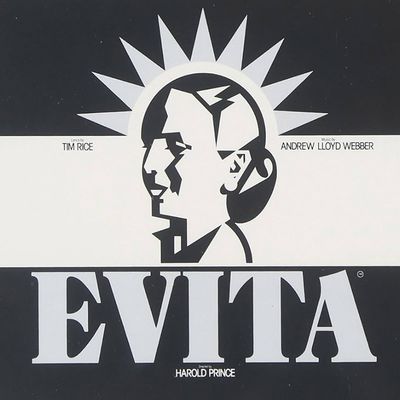
[3:06] Tori Bullard: He moved to London to pursue his career further in 2018, where he was part of the 2019 production of Evita at Regents Park, which was nominated for two Olivier Awards.
[3:18] Eliza Gunther: Most recently, Chris appeared in Cyrano de Bergerac, starring James McAvoy at the Playhouse, which has been nominated for five Olivier Awards in 2020, and is planned to transfer to New York at the BAM in November of this year.
[3:32] Tori Bullard: Please welcome to the podcast, Chris.
[3:35] Chris Fung: Hey, what's going on, guys?
[3:38] Eliza Gunther: Hello.
[3:39] Chris Fung: Hello!
[3:41] Tori Bullard: Thank you so much for coming on and chatting with us today.
[3:45] Chris Fung: Oh, my pleasure.
[3:46] Eliza Gunther: But I guess a great introduction would be keeping it short and sweet. How did you get into musical theatre in the first place?
[3:55] Chris Fung: It's not a, I don't think you get into musical theatre from one beautiful golden moment of sunlight streaming on your face and haha balls of lightning come out. For me, well, certainly wasn't like that for me. I guess it would start with just one performance. I, like I was a kid. I wanted attention. I wanted attention, and people thought they patted me on the head and they said what a good boy I was when I sang. And so I wanted to do that more. And it started with my music high school teacher, I would say, a guy called Scott Copman, who was fantastic, fantastic. And I was Elsa's little shy teenager, and I didn't really know what singing was about, really. But he got me up in the school choir to perform at an assembly.
I still remember that performance. It was "Wayfaring Stranger." I got to sing a solo and I was so, so nervous the entire time that I had my eyes closed and I was shaking like a leaf. And afterwards my friends came up and said, "Hey, you sound great!" And I said, "Do I really?" Yes, I do sound great. I'm great, I'm awesome. And that's where we all start. We're all like, "Yes, I'm amazing at this." You get so much energy as a kid, and you're like, "I'm great at this, I need to pursue it."
[5:07] Chris Fung: It's true. We all have deep-seated emotional needs. Maybe if I was loved better as a child, then I wouldn't be in the career that I wouldn't know. That's a little bit dark. I guess I was loved as a child, I promise.
[5:21] Eliza Gunther: Obviously, you went on then to go to the conservatorium, so I know you studied a little bit before that as well, didn't you?
[5:28] Chris Fung: Yeah, I did. So I went to a pretty academic high school in Sydney called James Ruse Agricultural High, the kind of place where everyone does STEM subjects to science, and a vast majority of the graduates go into being doctors and lawyers, kind of. And everyone studies a lot, and no one really cares that much about the arts. Which is so funny, right? How do you tell a young small child, "Go play the violin because it'll look good on your resume and do this for 15 years," and then when it comes time, "But you don't ever be a musician. Don't be a musician. You have to give it up and spend time on actual things instead." That seems very counterproductive because if you introduce it to someone, like when I was first introduced to singing and I was like, "This is a thing I can learn.
This is a thing people do as a job." I was like, "Done. I'm done. Like there's no way it's been tried. It's been tried to put me on a different path." And I was like, "Nah, sorry, you introduced me to this. This is who I am now."
[6:37] Eliza Gunther: I know your dad, so he wouldn't have batted an eye like that. He'd be like, "Yeah, you do your thing."
[6:41] Chris Fung: He'd be like, "Yeah, you do your thing. You're rolling."
[6:44] Eliza Gunther: You do you, yep.
[6:45] Chris Fung: You do you. He would have probably pushed you out the door. "Start singing now. Do your singing exercises now. Why are you not doing them?"
[6:52] Chris Fung: So I didn't answer your question again. I thought I did a bit of study. That was my, the Queensland Conservatorium. I kept auditioning for music theatre school because there are only about six to the, at the time that I was auditioning, maybe six or seven places around the country that had university-level musical theatre training. And I had done a Bachelor of Arts before then, a three-year Bachelor of Arts and a diploma of music performance. So it was my third degree. And I got in as an older kid. I was about 22 when I got into the conservatorium, and everyone else is 17. And it might not feel like that large a gap because it really isn't, it's just five years, but mentally it's a very, very different place to be.
And I didn't come, as you mentioned earlier, I didn't come from a background that had a lot of value in the arts. So no one around me was doing the same stuff that I was doing. I was like, "Is singing a job? Is musical theatre a job? How much does your body matter?" All of these questions and how do you, I didn't have any frame of reference to answer them. So I had a lot of growing pains figuring that kind of stuff out. What does a musical theatre candidate look like? What is the difference between different things? What does this mean? What does this mean, right? Like, what does it mean to be on a stage? What jobs do I want? And a lot of those questions I'm still trying to answer for myself now.
Like, what do I want out of musical theatre? What do I want out of theatre in general? What roles can I perform? I got through two years of the three-year programme, and at the end of the second one, that's when I got into The King and I. And I went and did The King and I for a year. Then I went back and finished my third year. And Paul Sabi, the director of my course, was so lovely. He let me finish my course via correspondence for the third year, and he gave me credit for my performance tour as part of the degree, which was, from what I understand, it's standard practice in London as well as Broadway for people who are lucky enough to get a job before they graduate. I'm just super grateful. The conservatorium is, I think, a fantastic place. I haven't gone to other places to compare it, but I like the training there was fantastic. It was phenomenal.
[9:04] Eliza Gunther: Yeah, and look, from everything you've said, it definitely sounds like, obviously, look, it's not saying that only the good people come out of this school, but so many good people have, which really is a testament to a school that I feel like we don't necessarily hear as much about or as often. Like, I always hear about NIDA and VCA and WAAPA, and I really didn't know much about the Queensland Conservatorium until we kind of had that chat about it. And I think like you look at the people that have come out of that school, like yourself and Vidya McCann and Georgina Hobson, and it's like, it's pulling out good people and not just chorus people, like leading men and women and people that are also leading the way in music directing and things for Australia, which is something that I think is so important right now.
[10:00] Chris Fung: It feels like the women alumni are doing a lot better than the men for some reason.
[10:05] Eliza Gunther: Because there's Shumshrikanda who was doing amazingly.
[10:09] Chris Fung: Oh yeah, I'm doing alright, I suppose. Do you know about Shumshrikanda? I hope I'm pronouncing her name correctly. She was cast as Princess Jasmine in Australia's Tour of Aladdin.
[10:20] Eliza Gunther: Yeah, vaguely, yeah, I vaguely do.
[10:23] Chris Fung: Courtney Monsma, who is also one of the Queens in Six alongside Vidya, but she's also cast as Anna in the Australian Premier of Frozen. And the list just keeps going.
[10:35] Eliza Gunther: You're absolutely right. I wouldn't like, I think the reason that the Queensland Conservatorium is so little known is because it's new. I mean, they only started, they opened their doors in 2011, and I was their second intake in 2012, so their graduates are only really now for the past five or six years starting to get out there. And schools get their reputation from their alumni. And I feel like the quality of the training matters as well, but that all of these training schools are just nexuses. They're just meeting places for people to meet up, and I'm a really firm believer that you can go to school and train, or you cannot go to school and train. The main thing is that the quality of the people around you.
So what are you gonna do when, because not everybody who goes to music theatre school makes it. Not everybody, like a vast majority of us won't. And that's actually something that everybody who's considering a career in this industry needs to consider, that at most five percent of you will be working after five years.
[11:37] Chris Fung: But you're absolutely right. It feels like the Queensland Conservatorium is overrepresented that way. There are so many fantastic facts, and they're all women.
[11:43] Eliza Gunther: Exactly. And I guess it's all about what you do after the fact as well. And for yourself, you recently moved to London. What inspired that move for you?
[11:59] Chris Fung: This isn't gonna sound great, but I just didn't see a lot of opportunity for me in Australia. I had, I knew that I, I don't know how I got it. I think it's this decision that you make over time that you want to go all in on musical theatre as your life because you never, you just have to dip your toe in. I've always said that if there are words that I can say to someone else to discourage them from musical theatre, then they don't want it bad enough. You have to want it beyond reason because it is beyond reason. And one of the best starts you could possibly hope for from a musical theatre career, I reckon. I went to school and I got a job before I finished school. Who does that? It's not something that you see, at least, obviously, I don't know what it's like.
I've not experienced it overseas. It's not something that I feel, I feel like it's not something you see happen very often here. Like you could, you know, you will do some community theatre, maybe if you have time, or maybe even some pro-am, although we don't have a lot of pro-am theatre in Australia.
[12:41] Eliza Gunther: It's not something you see too often.
[12:57] Chris Fung: Yeah, like we have like we've got, you've got like a few of the real, like the ones that we know, but I feel like when you compare it in the grand scheme of things, we are a small country.
[13:06] Eliza Gunther: Exactly.
[13:07] Chris Fung: But I don't feel like you hear it often where someone is doing their degree and they get a professional Opera Australia level job before they've even graduated.
[13:18] Chris Fung: It was luck. A lot of people, a lot of other performer friends tell me off when I say that a vast majority of my success is luck-based, but I really do believe it. It's luck that I was able to grow at such a level that I was already enough that I met the minimum standard for professional performance after only two years of a three-year course. It's luck! It's luck that I came into contact with teachers of a high enough caliber who were able to shape me.
[13:43] Chris Fung: It was luck that I was surrounded by so many fantastic people. Something like 17 out of 20, uh, out of like out of 30 of my cohort have had a professional musical theatre job. That's ridiculous. That's super ridiculous. We had like three people from my year in Mormon when it was touring around. Billy Boucher is killing it up there. Oh, we had Lochlin Neat, who also did the thing where in the start of the third year, he went and joined Once. There's a photo of you, Vic, uh, Tori. You've got, um, you're outside stage door at Princess, uh, looking for someone at, um, uh, in Once. Oh, I, I, I yeah, I saw Tom who played Guy in Once. I saw him walk past and freaked my guts out. You would have also seen, um, Lochlan Neat, who was in my year, um, in Once.
He got to do that job before he graduated, uh, and he's a multi-instrumentalist who plays everything. Everything, he just plays everything, and he's a phenom, and he's a really good friend of Dominic Woodhead as well. And now he's the front man and drum player and vocalist for a Viking death metal rock band called Valhalla, and they travel all around the world and they've dominated this little niche, and it's really cool. And it's lucky, it's lucky that all of these people happen to be around to help inspire me and help me grow. And, um, but I didn't like it. I guess everything falls into place for a reason, and I guess moving to London was part of that reason for you. Like that was just part of li it was luck, and it was, you know, as well as a hard decision to go look, uh, Australia isn't giving me what I need, and it's time to, you know, take that leap and to move overseas.
[15:27] Tori Bullard: And what was that transition like moving to London? It's a big step. Did you come across, like, how did you navigate the London theatre scene when you arrived?
[15:38] Chris Fung: Uh, how did I, how did I get started? Well, first of all, I should say that I didn't answer your previous question at all. Like you asked me, you asked me, um, uh, you asked me why I left Australia. I just didn't see enough opportunity. Um, but okay, so let's move on to the next question. Moving to London. Um, I've had a really, I've been lucky enough to have a lot of momentum in the first couple of years. Uh, in my second week in arriving, I had, uh, from Australia, I applied, I applied for the Hamilton Open Auditions. And it just so happened that, um, I got an aud, they approved me for an audition, um, when I arrived in my second week, and I was completely unprepared for it, but I still had a crack and I had a bit of a sing, and I got a callback for it the next week.
Um, and I use that alongside, uh, a lot, there are, there's this thing called the Other Palace where you get to sing. Uh, the Other Palace is owned by Andrew Lloyd Webber, and he does these things where once a month he brings in established performers and then they workshop people and then you can invite agents and prospective people to hear you sing. And it's fantastic.
[16:47] Tori Bullard: That's incredible.
[16:48] Chris Fung: It's incredible. You pay five pounds.
[16:50] Tori Bullard: What an opportunity.
[16:51] Chris Fung: It's an insane opportunity to think. I mean, look, there's a good opportun, there's a good chance it happens in Australia and we just don't really know about it. I just can't see that happening here. Being like, great, here are these industry professionals, pay five pounds, do your workshop, have people come watch you do it. It's fantastic.
[17:09] Tori Bullard: It does happen sometimes in Australia. I remember, um, Kelly Dickerson, who actually is quite sick at the moment and is currently going through some, um, some difficulties. So, uh, you know, some thought. I've been thinking about Kelly Dickerson a lot because she's been extraordinarily kind. But Kelly Dickerson, who's one of Australia's main, uh, musical directors for a long, long time. Long, long time. Um, I remember that she had a great friend who was running an amateur musical society in Chatswood, and as a fundraiser, you could pay 20 pounds and be workshopped by herself and another, um, really quite prominent musical director, Guy Simpson. So Guy Simpson is also quite a, um, I mean, the pool of musical directors in Australia is quite small and Guy Simpson and Kelly Dickerson are certainly up there.
And we did this thing where you pay, you know, 10 pound, $10 or $20 and you got to work with these two awesome people. So it happens occasionally in Australia, but you, um, I don't know how I'm not answering your question. I should answer your question after the question.
[18:09] Chris Fung: So let's start the answer again, right? So I arrive in London and I'm lucky. I've got, I'm lucky again because I've got five or six people from the con ahead of me, so I get to, who are already in London and they're trying to do what I'm trying to do, which is get an agent. And I get to talk to them and they tell me, mate, Chris, getting an agent is tough. We're sending out hundreds of emails, we don't get anywhere and it's super hard, but you need a showreel, you need a headshot, you need to get your stuff in order, and then you just send stuff out and you see, you know, what happens. So I wrote off to agents and I said, listen, I'm in callbacks for Hamilton and I've got this masterclass thing if you'd like to hear me sing and here's my showreel, the materials I'd be keen to hear back from you, I'm looking for representation to negotiate a potential contract.
Technically true, I suppose, because it is a potential contract. You know, you gotta sell yourself. I sent him about 20 emails in that first week and I got five meetings back and they all, um, I went to all these meetings and all of them offered me representation on the spot, um, except for one lady, uh, the lady that I went with was the only agent who took the time out to come and watch me sing, and I was blown away by her enthusiasm and her charisma, something that I'd never, I'd never really experienced in Australia. That it's quite rare for Australian agents, I felt, to get that excited to want to make a relationship with me. At least I'd never experienced that. The rest is the rest of history.
I started auditioning right there and then, but you know, luck again to meet people, to, um, to be in a state where agents were recognizing that, um, casting appetites were changing and they needed more BAME, black Asian minority ethnic performers, and that I, and luck again that I happened to be at a certain standard. That was, uh, one of the big questions that I had for myself leaving Australia. Am I good enough? What is the standard like? Can I compete? Am I wasting my time? I came over, um, fully, fully aware that London is a bigger market times by times, you know, 10 for the size of Australia. There's every chance that I'm not gonna work for five years, and am I okay with that? And that part of that is the reason why I made sure to qualify as a teacher, um, before I arrived.
So I'm also a qualified high school music and drama teacher. So, and I knew that if worse comes to worst, I will work, uh, supply teaching as well as so that I can fund chasing for auditions, so I can take time off and do this.
[20:32] Tori Bullard: A part of your journey was, uh, getting the opportunity to perform, um, not only as part of the, um, you know, ensemble for The King and I, but you were also the understudy for the king, and you went on for three solid weeks in Melbourne. What was that experience like? Because obviously, you know, understudies do, you know, depending on the show and depending on the season, can frequently or infrequently go on, but I feel like it can be rare that you do go on for such a block period of time. Like I know people do do it, but you went on for three weeks straight. What was that like?
[21:10] Chris Fung: No one and t, no one anticipated it. No one does, especially in this day and age of, um, of star billing. And I'm super young. I spent the whole time with my eyes super wide going, what the fuck? What am I doing? What the hell? What? Why? Like how'd I get in this position? What is going on? Well, I even though you have these feelings, right? You can't let yourself succumb to them because you've got a job to do. You have a job to do. You don't have enough brain space to freak out. Um, especially in something which is as technical as musical theater, there are thoughts that you gotta have. And the, um, people talk about, I don't know if you know about this, or hello, listeners to PS Stage Store, but they talk about musical theater jobs as a track, as if you have, there are invisible, like train tracks across the stage, and you as a performer, your job is to come out and you, you say a line and then you walk back in and, and it's choreographed and your time for the two and a half hours or three hours in that theater is very, very precisely laid out.
And as an understudy, um, something else, uh, your listeners might not know, um, when, so we, there aren't that many, there's not that much time in order to rehearse a show. You have four weeks for straight theater, sometimes six weeks for musical theater, 'cause you have to learn dances and that takes a lot of time too. You got six weeks, right? And you're pretty much working six days a week, and a lot of that time is used to rehearse the lead roles. And so because they need to learn, they need to learn their job, and they're the priority. So you as an understudy don't, uh, you're, you're a lot of the reason why you're cast is are you able to learn the track if we leave you alone? If we don't, uh, like how well can you learn stuff on your own, how well can you pick stuff up?
Um, and, uh, and it's, it's just part, it's just a part of the business. So I, I hadn't had that much rehearsal time myself as the understudy. You're there to help, uh, everyone else, let everyone else be great so that they don't question your performance enough so that your scene partners can shine, so that the music and the book can shine, so that everyone else can do their job and the integrity of the work stands on its own. I remember being super nervous for my first night, and, uh, just beforehand, we'd had a couple of, I'd had a working session with, uh, Neil Rutherford, my associate director, my resident director, as well as, um, Lisa McCune, who was, who was my queen, my Anna. And we just finished it, and Neil said, listen, you've got about, uh, he gave me like one billion notes.
We had like five million years of notes. And he said something really nice at the end of it, which was your job today is just to get through the show. Just get through the show. Don't worry about knocking people's socks off, don't worry about anything, just get through the show as best as you can, and you'll find the shape of it, you'll find the size of it. It'll come with time. Don't, and that, you know, as an understudy, I don't know I'm on for three weeks. I, uh, this might be my only opportunity, right? And I so I got through that first show, and people applauded, which was different from how I felt when we started, because on the very first day when they announced, uh, when they announced that I'd be taking, I was surprised by it.
They had a voice come over the intercom, right? And they, and the voice, the voice said, for this evening, for this evening's performance, a matinee, I believe. For this evening's performance, the role of the king will be played by Chris Fung. Groans! Groans and boo and the terrible stuff. Um, this and this isn't, this isn't what you want to hear. And one of the more experienced cast members leaned down and said, mate, I've been an understudy before, ignore it. Just, just let your work speak for itself. You're gonna be fine. Because you know what people do come, people do come to see the leading role and these are the expectations that they're gonna have and you know a lot of people will get caught up with the idea of the disrespect that you feel.
I never felt that way. I was, uh, as Jason Scott Lee said, there are too many other things for me to think about to worry about stuff like that. I don't have time in my brain to feel, to worry about fear. I can think about it, but I can't worry about it. I can't dwell on it because I have to be on this mark and I have to connect in this way and I have to remember I'm a king.
[25:21] Chris Fung: I was really lucky that I was able to understudy three different kings and I got to see three different beautiful professional mindsets towards their work. My main king who I had for the, uh, the Melbourne and the Sydney seasons was, uh, sorry, the Brisbane and the Sydney seasons was Teddy Tahu Rhodes who comes from the opera world. Um, my second king, the king that I, that I replaced was a gentleman named Jason Scott Lee. Um, he's a practitioner of Jeet Kune Do. It's a very karate mindset that he has. He says if you panic, you're not gonna get it. So the only way to handle it is to know that you're going to under, you're going to get it and to trust in your process, um, and to, to not panic.
[26:06] Tori Bullard: We did know we obviously that was such an amazing way to start off your career, but it has gone in some amazing directions. And most recently, you booked Cyrano de Bergerac.
[26:22] Chris Fung: It's a, it's the, ah, you keep forgetting.
[26:22] Tori Bullard: Bergerac.
[26:27] Chris Fung: Although I like your title too. Your title works. I'll, I'll actually have a chat to Jamie about that. I'll talk to Jamie Lloyd and say, hey, do you mind changing the name of the...
[26:32] Tori Bullard: Yeah, yeah, can you Jamie Lloyd change?
[26:42] Chris Fung: Now, what was it like getting that call? Because obviously that show was one of the hottest tickets in the West End. So were you pretty ecstatic when you booked that show?
[26:50] Chris Fung: It was completely nuts. Um, it's a straight play. Um, and it was my, it was my West End debut. So, uh, and it was phenomenal. James McAvoy was in the title role, and the cast was ridiculous, ridiculous. Just so many incredible hearts and minds. And to again, the opportunity to work with, so McJamie Lloyd, uh, directed my, um, my production of Evita, which was at the Regents Park. So getting to work with him again is the greatest. That you, you hear this trope a lot from musical theatre performers. Well, well, from all performers that say that you learn, you learn far more on the job than at school.
[27:27] Chris Fung: And I felt that every single day at Cyrano de Bergerac. I had no idea. I had no idea that I'd be up for it. Generally, you stay in your lane. Normally, if you're a music theater performer, you just do musical theatre shows. If you're an actor, you do actor things. So I never thought that doing a straight play was in the cards. Because, again, I'm still figuring out that question of am I good enough? What am I doing? Like, how good am I? What can I do? But it was a relatively fast audition process, not just for me, but for the rest of the cast as well. Literally, Evita finishes on a Saturday, right? We close on Saturday, and this is like late September. And I get a call from my agent on Sunday saying, "Hey, we've just had an availability check for you for this time frame right after over the next couple of months.
And it's for a mystery project. We don't know anything about it. Auditions on Tuesday. Do you want to do it?" And of course, I had planned a holiday over that time. I booked everything, and it was non-refundable. I was gonna go. I went on a trip with my best friend. We were gonna do a Europe trip for like three weeks. It was gonna be my first time off for a while. But it's an availability check, so I thought, you know what? It's not an audition, who knows what? Let's just go for the auditions anyway. So I get the call on Sunday for an audition on Tuesday, rock up on Tuesday, and we end up with like, I don't know, 10 pages of sides or so it feels at the time. And there's Jamie Lloyd and the writer of this new play, Cyrano de Bergerac, which is one of the most well-known plays in the modern canon.
Originally a French play, this version has been adapted, and it feels very hip hop and spoken word, and everybody speaks in rhyming couplets, and it's got a beatboxer. We got a beatboxer who comes in and out of it, it's nuts, it's fantastic, and we had no set whatsoever, and our costumes were literally the clothes that we would wear at rehearsals, and everything is stripped back, and yet people are willing to listen to us use words for three hours straight. I never would have guessed it in a million years. And to have so much momentum just at the start of my time, it was completely unexpected. The writer for Cyrano de Bergerac, Martin Crimp, is phenomenal. What a man, what a genius. So softly spoken, and his whole family are really erudite as well.
They're really curious people, and he spent time figuring out this feeling for the show. There's this spoken word rap feeling. He did a lot of great research. We were all rapping in our natural accents, and you had this world where it didn't matter, it was so diverse. It didn't matter, it almost didn't feel like race or ethnicity was germane to the plot in any way. James McAvoy was rapping in his Scottish accent. We had East London there, we had Australian Kirina Stammel, who is a play school host in Australia, a play school host who happens to have dwarfism. And I got the chance to work with her. Yes, I think I've seen her in play school. She took such good care of me. What a lovely lady. Holy cow.
We didn't have any Americans, but we had all kinds of connections. That's shocking. We didn't have any Americans. That's exciting, and so diverse as well. The fact that you got to be a part of something really new and exciting and vibrant that really focused on the storytelling more so than anything else. It's all like, and that's what I mean. That's ultimately what we all want to do is to tell the story the best it can possibly be told. So to strip it all back and just go back to the text is so powerful. If you're interested, Australia will be releasing the National Theatre Live sometime in the next year, I imagine, when cinemas reopen, you'll get to watch. Just like National Theatre Live has been broadcasting on YouTube, we did one of those things too.
So you can go to the cinemas and watch our production. We were nominated for five Olivier Awards. So that's quite a number. It's pretty cool. It's fine. It's just again, lucky, right? Lucky to be surrounded by talented people.
[32:06] Tori Bullard: Well, everyone will have to come to the cinema to watch that. Cause I'm very excited. We will definitely be hitting up the cinema to watch you in that show. Fantastic. What would you say for you in your career so far? And obviously, I know you're still early in your career, like you've done a lot, but it's still early. What do you think the biggest thing that you've kind of had to overcome so far?
[32:30] Chris Fung: We're all freelancers. We only work job to job, right? So I'd say that it's how to be a human, how to be a person, how to juggle prioritizing money. But also how to be a person in audition rooms. How can you not let your nerves overcome you? How can you trust in your technique? How can you think that it's okay to be rejected for the hundredth time in a row? Something that we all have to get accustomed to, this idea of rejection. But even more so, to think about your own realistic expectations. One of the hardest things that I've had to deal with is I don't have a lot of control over my career. I don't get to decide what shows are coming. I don't get to decide whether I get to be called into rooms.
I don't get to decide how much my agent likes me or who I work with. There's very little control. Oh yes. And I like control. Most people like control, but you've got to give that up. Oh yes. You have to give that up, the illusion of control. And that's something that Chris Renshaw, my director from King and I said, and I didn't really understand what he meant until now. He actually took me aside on our opening night in Brisbane, and he said, "Chris, you just gotta chill out. The opportunities will come if they come, and forcing them to happen or trying to force them to happen isn't gonna help you. It's going to make your journey a little bit more difficult. If you spend all of your time hankering after opportunity, you lose sight of the beauty in front of you.
You lose the imagination to collaborate and find and explore and live in this moment here." And that's something that Jason Scott Lee was trying to tell me as well. You can't, if you live so much and you're worried about the future idea, then you lose sight of the things that you do in the immediacy. Those are some words of wisdom that I think we all need to hear because we try so hard to force ourselves into like, "No, this is my specific career path, and it's gonna be this." And it's exactly that, that you never know when what show is gonna come around the corner. And then like you said before, I think half of it is where preparation meets luck. You've got to be prepared, you've got to be as good as you can possibly be, but there is an element of luck, and you don't know when that's gonna come around, you know.
Remember, when you go into an audition or any job interview for that matter, you're also auditioning them. You're figuring out how they think. Do you want to work with them? Is it something, I mean, that walking away from a job if they offer it to you is kind of obscene to think about in Australia and also the West End, right? Like you're gonna take the job. But that mentality of going in and figuring out how can we make a partnership. The best rehearsal, the best audition room vibes, I think, are if you treat it like if you're already in rehearsal. You're there to figure out how do you think and then what's your capacity and what are you looking for, and how can we work together? But we don't choose what opportunities come.
We don't choose, we have so little control. So, how can you have self-worth if you don't work for five years? That's a big question that a lot of musical theater people, as well as myself, struggle with consistently. If I don't work for five years in my chosen profession, does that mean I suck? Am I terrible? Am I an idiot? And I think the purest way of answering that question is just training, working with great people, doing good things. If you are passionate about something, you never know where it's gonna go. You can do musical theatre, but there are many different areas to that, and if you keep pushing and you keep trying things and you try new things as well, don't just stay in your lane and box yourself into something.
You'd be surprised what opportunities open up, and you know, I feel like we've been lucky enough to talk to some amazing people and get some amazing insight, just like yourself about your career, and we thank you so much for coming on today and talking with us. We really appreciated having you and having your time, and I hope that everyone listening also gets to learn a little bit about, you know, we've talked a little bit about the process of moving to London and getting to hear your experiences and seeing how you have made it so far.
[36:44] Chris Fung: It's my pleasure, and I feel lucky to have spoken with you. Thank you very much for your time. But before we go, as our listeners would know, we have a segment called Bedtime Stories about show mishaps, costume malfunctions, whatever it may be. Do you have a bedtime story for us, Mr. Chris?
[37:06] Chris Fung: Um, does he ever? Well, so I'm in the King and I, and we're just at the start of my three-week run, and Lisa McCune and Neil Rutherford, who they both, they don't have first names, they have a full name. It's Lisa McCune and Neil Rutherford. I don't know, maybe this is like an Asian, I have to respect everyone kind of thing. But anyway, we have our performances at night, but during the day, they give me the opportunity to work with them. We have these working sessions where we talk through the play and we look at it technically, and I get notes, and I get to sort out problems. We get to sort out problems. I get to ask Lisa, "Hey Lisa, do you think that the king and Anna are in love romantically?
Is it a traditional love? What is the flavor of their love? Do you think that at the end of it, if the king were not to die and have this fantastic heart attack? Spoiler alert. I hope I'm not spoiling something which is five million years old. Can I be, are we romantically in love? Is that the feeling? Is that the vibe that bubbles underneath our dialogue?" And Lisa says very emphatically, "No, we are not romantically in love because it's a platonic, it's a respect thing. I respect your intellect, I respect your position, and you respect me. And after all, right? Like you're a young man, we have like five million years between us. We don't." She's beautiful. And I could never, I could never, she's gorgeous.
She says, "Children, I'm happily married, and I've got a girlfriend at the time." She says, "There is no way that I could, I don't find you, I don't find you like I wouldn't be romantically interested in you. You're just too young, and I could not, I could not be interested in you." So you, I mean, you could, I mean, you feel the same way, right, Chris? You don't, you couldn't be romantically interested in me. And I said, "Yes, I absolutely could." And then I leave it there.
[39:02] Tori Bullard: Oh my god!
[39:03] Chris Fung: I don't say anything else because I'm young and I'm kind of like, I don't know, like this is like you ask me a question, I'm answering your question, and then my answer hangs in the air for what feels like 1000 years, and then Neil Rutherford says, "Right, Chris. So on this point in this play," he gives me more notes and covers the kind of, but you know what? I laugh about it now, and actually, it was only a couple of weeks ago that I was Skyping with Lisa just as a catch-up, and we had a bit of a laugh over this as well. And I love how Neil Rutherford was just like, "I'm very uncomfortable with the energy we have created, moving right along." That man is never uncomfortable, he's such a chief. Yeah, but I've been friend zoned by Lisa McCune, which is fantastic. There you go.
[39:50] Tori Bullard: But we thank you so much for your time. It was absolutely amazing getting to chat with you, and we hope everyone listening really got to learn a little bit more because I definitely think Eliza and I have from chatting to you.
[40:02] Chris Fung: So what a pleasure, you sweetie, and your diabetes is so sweet now.
[40:06] Tori Bullard: Oh my goodness.
[40:08] Chris Fung: Oh, I shouldn't say that. So apologies to the diabetic community. It's my pleasure, my pleasure to chat with you as always, and I can't wait to see how much your podcast grows in the coming years.
[40:22] Tori Bullard: Thank you so much, Chris.
[40:24] Eliza Gunther: Thank you. We really appreciate it. Thank you all so, so much for listening. Remember, stay happy, healthy, and safe. We love you all so, so much. Thank you so much for listening to today's episode, and we hope you enjoyed. Don't forget to subscribe and leave us a rate and review on Apple Podcasts and to send us your bedtime stories and Stage Door Sunday pics. We also would love to hear your feedback on the episode and what you'd like to hear from us in the future. You can let us know on our Instagram at ps.stagedoorpod, via our email at ps.stagedoor.podcast@gmail.com, or contact us via our website psstagedoorpodcast.com. We love hearing from you and we will see you next time. Bye.
© Broadway Podcast Network, All Rights Reserved