

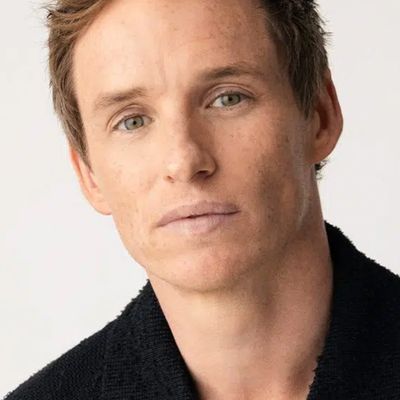
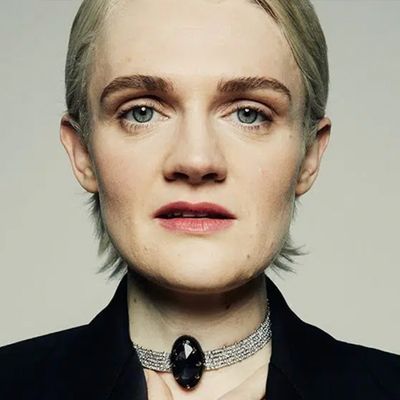
The Tony-nominated stars of "Cabaret" take listeners backstage for a peek at the "synchronized chaos" behind the scenes, and talk rowdy crowds, critics, and Redmayne's fourth go-round in the role of the Emcee... Read More
From the show: Stagecraft with Gordon Cox
Guests
Featured Shows

About
The Tony-nominated stars of "Cabaret" take listeners backstage for a peek at the "synchronized chaos" behind the scenes, and talk rowdy crowds, critics, and Redmayne's fourth go-round in the role of the Emcee.
Transcript
This transcript was automatically generated and might contain errors.
[0:07] Gordon Cox: Welcome to Stagecraft, Variety's Theater Podcast. Your backstage pass to revealing conversations with stars, creators, industry leaders, and Tony nominees. On Broadway, off Broadway, and beyond. I'm Gordon Cox.
[0:21] Gordon Cox: On this episode of Stagecraft, I'm talking to Gayle Rankin and Eddie Redmayne, the two stars of the new Broadway revival of Cabaret. Rankin, who's been on screen in shows like Glow and Perry Mason, and movies like the recent horror film Bad Things, played the supporting role of Fräulein Kost in the 2014 Broadway revival of Cabaret.
[0:42] Gordon Cox: And for this production, she stepped up into the part of the female lead, Sally Bowles. Redmayne, an Oscar winner for The Theory of Everything, and a Tony winner for Red, stars as the MC in a production that's seen the August Wilson Theater remodeled and reimagined into an in-the-round space complete with cabaret tables and drink service.
[1:02] Gordon Cox: Now, Rankin and Redmayne are in the virtual studio with me to talk critics, rowdy crowds, and the production's boisterous, occasionally chaotic backstage vibe. Hello, Gayle and Eddie, thanks for joining me.
[1:15] Gayle Rankin: Hi.
[1:15] Eddie Redmayne: Hi.
[1:16] Gordon Cox: So, congratulations on your Tony nominations. How's it feel?
[1:21] Gayle Rankin: Weird to hear that still, I think.
[1:24] Eddie Redmayne: Lovely.
[1:25] Gayle Rankin: Sorry, lovely.
[1:27] Eddie Redmayne: Yeah, it's an extraordinary thing.
[1:30] Gordon Cox: Has the crowd, has the sort of the temperature in the theater changed a little bit with the crowd when you come in, you know, you've your show with all these Tony nominations, and you've got these sort of, you know, Tony nominated performances? Like, does that feel different to you in any way?
[1:46] Gayle Rankin: It's a good question. We were just talking before about how what's extraordinary is how the crowd shifts like night to night, and that idea of, as actors, when you're on stage, how you can feel a sort of pack mentality and how that shifts throughout the week or so. But I don't know if there's anything that's shifted specifically since the time. What do you reckon?
[2:09] Eddie Redmayne: No, I haven't really, which I think is lovely. I think what's so amazing about and privileged about our show is like there's nothing that's more like alive about it. It's an extremely interactive, kind of symbiotic agreement, our show.
[2:29] Eddie Redmayne: And so like I think that really keeps us on our toes, and I think the audience too, you know. I think they don't really totally know always what they're walking into, which I think is amazing, and something so live about that, and something quite special. It doesn't feel like much else that I've been a part of, and certainly in the Broadway space.
[2:52] Eddie Redmayne: And so I think it's kind of unique in that it doesn't feel like, oh, you're walking into like a Tony nominated show, which I think is an amazing thing, but it feels quite personal, I think. And also that's what's so joyful for us because one of the reasons you do a play for six months is because you keep aspiring to capture that thing with the acknowledgement that you're perhaps never gonna quite get there, but you want to keep trying.
[3:04] Eddie Redmayne: And the audience is, and particularly because our theater is in the round and the audience are sort of centimeters away from where we're performing, that gives us this other stimulus that shifts night to night and makes it so enjoyable. It does feel like sort of live performance in its rawest.
[3:42] Gordon Cox: Can you characterize a little bit more how audiences shift from night to night or what some of the differences can be?
[3:49] Gayle Rankin: Yeah, I mean, what so for the MC often in the numbers, the audience are the other character in the room. And so that can be about whether it's in Vilcom and finding individuals who are charismatic that I can improvise with or play with.
[4:08] Gayle Rankin: And sometimes if I catch the wave of someone or someone's being cheeky or playful back, because it's in the round, the whole rest of the audience sees that moment and either leans into that or goes, oh god, no, I don't want anyone to come talk to me. You know, it's that and but all of those tensions are interesting.
[4:30] Gayle Rankin: And then sometimes there's the idea of audiences who feel quieter and but then at the end seem more explosive. There's a where I think actors are always sort of endlessly trying to rationalize audiences, but with the understanding that it's probably impossible.
[4:47] Eddie Redmayne: Yeah, I mean, and for me it's like Sally's relationship with the audience kind of changes not only like from number to song, number to scene, but it changes mid-number. I mean, and that's kind of her art, her enjoyment and what like, you know, she ends up having some kind of power actually toward the end of the play, especially inside of like cabaret, but it's vulnerable to kind of relinquish control over an audience and really freeing ultimately, you know.
[5:25] Eddie Redmayne: But it can, it's an exercise in like really kind of killing your ego and but there's also trust, you know. There's an element of like trying to build trust with the audience and with theatergoers, you know, like that they want to be here, that they want to be with us.
[5:36] Eddie Redmayne: I remember I was, I told you about this, I think I had a, I was doing a production of Hamlet directed by Sam Gold probably like eight years ago or something like that. And he gave us like a really, Hamlet's a long play, it's four hours. People, you know, get to the world.
[6:11] Gayle Rankin: That was pretty long, that production, I think.
[6:13] Eddie Redmayne: They did the whole thing. You were there. But it's like, you know, people left, you know, people were tired. It was, and it wasn't because they weren't enjoying themselves. And there's something like really important, I think, about, you know, remembering the humanity of the audience, and that they are such a huge part, certainly of our production too.
[6:32] Eddie Redmayne: It's like I think that's also part of what one of the things we wanted to try and do with the production was to let audiences really relinquish their lives before they came in. So part of the idea of going down, coming into the theater through these alleys down into the basement past dancers and through bars and getting disoriented was a way of saying leave your troubles outside, come, let us seduce you into an experience that will be that will inspire all your senses and perhaps attack some of those senses.
[7:09] Gayle Rankin: There's been there have been stories of, you know, some rowdy behavior, what with close quarters and the plentiful cocktails. How do you two experience that or do you?
[7:19] Eddie Redmayne: Well this is interesting because my problem in Vilcom and I am trying to, it's like a rock concert. You're trying to really pull this audience to a place of ecstasy and joy. And so I love someone that I can interact with and what has been known to happen is I get a bit kind of perhaps too interacting with people who I then realize part of the reason they're so interactive is because they've had a glass of champagne too many.
[7:45] Eddie Redmayne: And then by the time we get to maybe this time, this has only happened on one occasion, there was a moment when Gayle was singing maybe this time and this audience member who I had been sort of so thrilled was so engaged at the beginning was now sort of clapping along out of time as Gayle was trying.
[8:01] Gayle Rankin: So, but it's been, I know people have spoken about, there was an article saying that, you know, all these, it's happened twice I think, but yeah, it doesn't feel like a chronic problem and also like kind of to be honest really if there's something about it that really feeds, you know, we want everyone to be safe and enjoy their time and it feels very much like that and it feels like a really safely controlled environment whilst also being really fluid.
[8:01] Eddie Redmayne: But there's something like, I mean I've had some amazing experiences especially during, you know, cabaret or, you know, people being vocal, moved to feeling kind of vocal whether or not like they were under the influence of something or just like, you know, or moved.
[8:55] Gayle Rankin: Yeah.
[8:55] Eddie Redmayne: Um, it's been really kind of remarkable. I've also been offered a few drinks.
[8:55] Gayle Rankin: Oh yeah.
[8:55] Eddie Redmayne: And I'm never one to turn down a sip of champagne during quite a workout of the, I when I walked through the audience right at the beginning I saw a woman holding a full bottle of champagne at two o'clock and I was like wow.
[8:55] Gordon Cox: And do either of you pay attention? Are you the kind of actors who pay attention to critics? You ignore critics completely? You keep a distant eye on them? What's your take on how you respond to criticism?
[8:55] Gayle Rankin: I in this show have tried not to read anything because it is about, for me, trying to have the confidence to cajole a group of people and bring them into a world that is yours. It takes having confidence and I thought that the idea of reading reviews, whether positive or negative, would do something to that, so I've not.
[8:55] Eddie Redmayne: Yeah, the same for you?
[8:55] Gayle Rankin: Same, same camp. I think there's something, I think there's a place for criticism in our society. I just think it's like a personal choice and I kind of take the stance of like if you're gonna read one thing, you kind of have to read everything and to be honest I don't really have the physical space, just the emotional space to take on.
[10:34] Eddie Redmayne: And so much about what we're making is about creativity and how do we protect that? I'm not sure. So that's my, that's been my way of trying to.
[10:45] Gayle Rankin: Yeah.
[10:46] Gordon Cox: Cabaret is a show you both have a history with. Gayle, Broadway audiences saw you in play Fräulein Kost just a decade ago.
[10:56] Gayle Rankin: Also a great role, PS.
[10:57] Gordon Cox: And so what's it like to be returning now in a different part? And why were you interested in circling back to this project and this role?
[11:08] Gayle Rankin: The production was such a draw. I mean, our world is both so different and sadly not so different, and so it felt really necessary to re-engage with this material again.
[11:22] Gayle Rankin: And also I felt like a different person. Um and I am I am a different person, and so what uh I just couldn't really imagine not taking the opportunity to like who gets that chance as a as a in their career to to re-engage with the same material but in a different role. It's almost like it's kind of like an evolution of and a marker in my in my life and kind of this really amazing mirror. Um and so I was just yeah, it was just like I didn't, I I didn't think I was gonna get the chance. And so when you do, I think you can just have to have to take it. And I, you know, I was it there were periods of time where I was, you know worried that I wasn't gonna like that it was gonna feel weird, and I get that question a lot.
It's like, is it weird? Is it weird? Is it weird? And I'm like, it's the least weird thing I've ever done. I'm like, I it's almost like it makes too much sense that I'm allowed to feel this growth. Um, so I just feel very moved by that and very lucky. Um, and also this feels this production feels so relevant, and and and very much not that and the production 10 years ago was extraordinarily relevant. Time, you know, time moves, and I feel like this was the production in which I was supposed to play Sally, you know, and in that production I was supposed to play for Lynn Cost. Right.
[12:57] Eddie Redmayne: And Eddie, for you, you've been in Cabaret. Is this your fourth time? And it sounds like you did some, you did it as a younger actor a couple.
[13:10] Gayle Rankin: Yeah.
[13:11] Eddie Redmayne: Um, which probably is like MC every time. Did you play the MC every time?
[13:16] Eddie Redmayne: I did, yeah. I played it at school um when I was about 15 years old, and then I did a production at the Edinburgh Fringe Festival when I was gosh, 18. And then yeah, and then I did it in London, and and here we are now. So it's but I think that that's a testament to not only what what Gayle was saying about about times shifting, but also that the characters that that uh the MC specifically was created by Hal Prince and Joel Gray, is this extraordinary enigma and um this um uh unsolvable puzzle that it that is, and that's the reason why so many actors are drawn to this character is because um it's one you want to wrestle with, and and that's for every time you unpack something, more is given.
Um so uh but as Gayle was also saying, it's such a thrill as an actor to get to be able to investigate a character at different moments in your life, and to let things, even though they haven't been actively ruminating, they've been sort of sitting there and um it it's it's a joyful thing.
[14:27] Eddie Redmayne: And what particularly feels different to you about coming back to the role in 2024 from uh it was 2021, was the was London is that right?
[14:37] Eddie Redmayne: Yeah, well, one of the things that you know, because I sort of also helped um put this the piece together in in London. And and so since I left, I'd gone to watch all the other casts, and and and it's interesting seeing something that you've helped create also from a distance. And one of the parts of the show that was always something that Frex, our director, Rebecca Frecknall and Tom Scott, our designer, had had created, but I really saw when I was watching it from afar, was this idea of a kind of music box, a toy box, uh a space in which the MC almost conjures the evening, and and that idea of him bringing characters on, it it's almost like he he um uh pulls Cliff into Sally's orbit, into the club, and and he goes from being the puppeteer as as the fascism creeps into the piece to being this kind of conductor, really.
And and so find distilling that idea was something that I've really enjoyed working with here, and and and that has particularly actually in I Don't Care Much, the song which the MC sings almost as a response to um uh Fräulein Schneider's song What Would You Do? But in our production, it's a moment of questioning for Sally, and she's on stage. She's the sort of centerpiece of the of the song in some ways. And but the MC is singing this nihilistic piece whilst almost conducting her through her through the place in her life. And I found that um I found that particular really interesting to remine.
[16:40] Gayle Rankin: Gail, did you see the production in London?
[16:42] Gayle Rankin: Shockingly, no. Which is like such a I because I love love and respect. And I'm a dear friend of Jessie Buckley, um of whom I'm like, you know, sitting on her shoulders. And we had actually been working on a film together before she started rehearsal for Cabaret and had big plans to come and see it. And for some reason, the some some scheduling life kind of got got in the way, and I wasn't able to see it. And then by the time I was I'd been offered the part, um they'd given me an opportunity to come and see the production. And I made the kind of complicated brilliant, but I hope good decision to to respectfully not see it. Um, because I really kind of ached to be able to have my own experience and my own process.
And we really were very clear about how we really wanted to respect the rebuild of this production on Broadway as a true rebuild, you know. Um there's nothing about what we've done that feels kind of slotted into place in any way. And I really wanted to kind of be a part of that, you know. But I want to see it.
[18:01] Gordon Cox: Can you say a little more about uh rethinking of this as a rebuild as a sort of as opposed to sort of a carbon copy? What um what does that because I another question I had for you, Gayle was if uh how was how much you felt you were filling in a role that had been played by somebody else and hitting the beats that hadn't had it?
[18:20] Gayle Rankin: Right. Well exactly I mean, right? To a degree, I feel like in many ways both of your performances must be informed somehow by all the like the lineage of folks you have seen uh play these roles. And so then how do you how do you keep all that in mind and think about that legacy and then do it for yourself?
[18:39] Gayle Rankin: Make it your own. Mind games.
[18:42] Gayle Rankin: Well, there's something also at the core of the of what Rebecca's production is that is about the individual. So quite often the in the past, the Kit Kat Club members have been a sort of uh a slightly more generic ensemble. And what what Freck wanted to do with with Tom was each individual, whether it's Frenchie, Texas, you know, all of the the they are they are completely they were cast and their characters have been designed and they're in all their charisma is about about the individual. It's a celebration of of the individual in some ways. And and as the piece that the fascism descends, you know, they are but they become homogenized in the same way that um, you know, the that we're seeing happening across the world now that rights for various marginalized communities have progressed and are now being rescinded.
And now what I think is so special, having seen also other pro other iterations of our production, is that the production allows for that individuality. And I and it and what's joyful about going and watching other iterations of it is it feels completely different, yet with the same sort of shape. And now, of course, New York, the space itself, the August Wilson, um, and Tom Scott's design of that and his respect for the history of that building and how that inspired him and catalyzed him and some of the commissions for the artists who have um, whether it's the ceramic artists who've made lighting in the bars or artists who have painted murals on the walls, or it's it's all about this the specificity of now and how um yeah, and the encouraging, like the real necessity of like um, yeah, of your own individuality and trusting that. And I do think that was like just encouraged from the top down um and and bolstered um from from day one.
[20:42] Gordon Cox: And so how yeah, having each of you have uh seen many other people in uh your co-stars uh played your cross stars role. Um Gayle, how do you describe Eddie's MC?
[20:54] Gayle Rankin: What strikes you about it? How do you characterize it?
[20:57] Gayle Rankin: God asked me that question. She was about to describe her Sally and that was well.
[21:08] Gayle Rankin: There's something we talked very early on in the first conversation that Eddie and I ever had, he called me. We both talked about how scared we were. And the first thing that we talked about was this umbilical chord that we kind of because the MC and Sally don't spend a lot of time together on stage. They do in terms of the there's stage time, but in terms of interactive time, there's no scenes.
[21:36] Gayle Rankin: Certainly in the script.
[21:37] Gayle Rankin: Yeah, there's no textual, but they are they are linked, they have been forever linked. They are that the two characters, and there's this kind of conflict, there's this kind of confusion, but also like familial uh kind of hand holding that we were like deeply curious about, and um, and there's an exchange, there's kind of an exchange that happens inside of certainly in our production. I think these characters give something to one another and take something from one another. And the MC from my perspective, Eddie's MC from my perspective, it's a large presence. It's a presence of it's and it's more specific than than just symbolic, but and and and it changes Eddie and I and have a relationship inside of so many of the the certainly inside of the club numbers.
[22:37] Gayle Rankin: Um, and there is a progression of um kind of some kind of like emancipation is how I would describe it. Um, that that Sally gets a kind of emancipation from him and kind of also sometimes I think offers an emancipation. Um and I think there's something about artistic freedom and personal freedom and and what that means to these two people. These are performers. These two people are they share, they share the title of performer in some way. And I think that I I always started from there and go back to that kind of vulnerability that they both share and that they both see in one another. And they both can kind of use as a weapon.
[23:28] Eddie Redmayne: Um guess that. Um Gayle mentioned Jesse Buckley, who Eddie, you played uh you played the MC opposite uh her Sally Bowles. Um how what's your Eddie? How do you describe Gayle's take on Sally Bowles? What does what does Gayle bring to the bring to the part? Um there is a a freedom to Gayle and uh a spontaneity that is so extraordinary with with a I uh with a with the sort of comedian like quality that is so unique that I had never sort of seen in in Sally, but but but but it was this amazing moment when we were watching a run. I remember as the MC sitting watching a run, and there was a moment in which Attu as as Cliff says, Will you just be serious for a minute? Yeah, and and and Sally goes, I doubt it, Cliff, you know, and it was like this moment kind of sung in this thing where you'd seen this person using her performance as you're describing, like in uh and layers of performance at so many moments in the piece up to there that suddenly seem to crash into a moment.
And and one of the you know, the chemistry between Cliff and Sally is that she does sorry, he does call her out on things, you know, there are moments, there's a moment where she goes, Am I you know, am I shocking you? And he goes, You're trying to shock me, you know. And it's like, and as the MC, who I see as the kind of chorus guy is like, ah, this guy's got you. You're you're used to these people not getting you, but but this is why, you know. Um, and I find uh uh Gayle's capacity to go from from from the using Sally's theatricality and humor to then seeing almost skinless into the character's soul, like the the fact that that can turn on a pin, um and and suddenly uh it it is profoundly moving. Um yeah, and it's I get to witness it every night. It's amazing.
[25:32] Gayle Rankin: Um you you've talked a bit about the reconfiguring of the August Wilson theater, which is legitimately disorienting uh when as you're as an audience member coming in. And so there's this pre-show that happens. There's a whole cast of performers doing uh pre-show for the first you know, hour and a half before curtain or something. Um, does that make the backstage experience particularly boisterous or chaotic for you? How does that does that impact like a great question? It's so my favorite part of the night. Wait, am I allowed to talk about it? I think I am, yeah. No, it's like no, it's all it's so technical. It's like over the tanoi. Because there's so many, I mean, there's so many, it's a very technical show.
I mean, for it's organized chaos, you know, the chaos is is synchronized. So literally there'll be a call over the town. It'll be like prologue cast for watches and synchronizing. I'm like, oh my god, we're in the military. I'm like, this is crazy. Because they need to know what moment to finish one dance in one bar to move up to another. You know, it's all so cool. And so there's something kind of like we're we're there's so much like hedonism and and and so much of debauchery going on, like you know, a minute away, but we're all like, okay, um, my wig on now and synchronize my watch. But also, what's lovely is that some of the dressing rooms are now used as kitchens to cook for the for the people eating at the desks, and and and that that every and and as you're sort of running on stage, you're passing waiters who are coming back.
I almost stood on a fork last night. There was a fork on the floor. The cabaret hasn't. Um, but there's there's something that w uh is wonderful about that because you feel like you're part of a building, like the whole building, whether it's the the dresses to the makeup artists, to the to the waiters, to the prologue cast, to the there, there's there's a bit often when after Vilcom and I have to run through the underbelly past the bars and and and uh it to get back on for the other side, because you have to cross through the actual building to get to the different entrances, and occasionally up there are a few latecomers, and I sort of can go and sort of have a little quick chat with the latecomers before running off.
And and that that idea of it feeling like a club, which was the point of it, really. You know, cabaret has been done so beautifully before, and as Gayle was saying before, we kind of stand on the shoulders of those productions. But the only reason to do it was if there was something that we felt that we could bring that was new, and part of that is that an audience come to an evening. They they you get discombobulated, as you say, you leave your troubles outside, and and that that prologue casts really uh charge the space so that by that iconic drum roll starting there is a hopefully as an audience you are prepped and ready. Yeah, and it's not exclusive. Yeah, it's actually really trying, really, really trying to be inclusive for commercial, you know, project. Like it's it's I hope people feel yeah, included for better or for worse.
[28:27] Gayle Rankin: You both have done and will continue to do extensive screen work. What brings you back to the stage? Very good question. What well that I think what we were talking about, that well, I don't know for you, but that liveness. I mean, particularly when I did Cabaret in London straight after COVID, it was this this fe and and you you can feel it s still here in New York, this absolute thirst for human interaction to be able to look into someone's eyes who is two meters, twenty meters, you know, away from you, and to see the sweat, to to hear the fragility of a voice to Yeah, and watch the audience change too because they go on a raid as well. And it doesn't feel as scary as people might imagine.
And maybe that's just because I'm a the theater animal, people are like, you're not well. Um that's not normal. Um but I don't feel like alone. Um actually, you know, when I'm up there, I think it's like quite it's just very human. It's just the most human thing that I you know get the privilege to experience, which is like kind of yeah, people agreeing to stay with you, you know, and they do. It's it's really just moving, you know.
[29:46] Eddie Redmayne: You are both in Cabaret for the next several months. Do you have anything coming up on screen that we should be looking out for? And what's next for you? What's next for you, Gayle Rankin?
[29:56] Gayle Rankin: Well, I I shot the the second season of uh House of the Dragon. Yeah. Um, and that's coming out in a few weeks, June, June 16th, which wow, that is pretty cool. Which is the same day as the Tonies. Wow. Oh, that's true. Wow. Just a cash. Just a catch-up. Which one will you be watching? It's the exciting thing. We'll see. I'll probably be streaming one. I'll stream one. I'll pop back and forth. You know. Um, the Tonies on your phone watching. Yeah, it's like watching a football game. Yeah, like, oh wow. Um, so I'm really excited about that. I'm really excited about that.
[30:35] Eddie Redmayne: Yeah, um, and what about for your work in here? Just straight before starting here in New York, I've finished uh a series, um, an adaptation of the uh Frederick Forsyth book The Day of the Jackal, which was made into an iconic movie um with Edward Fox and ours is a sort of contemporary uh reimagining of that story. So I was playing an assassin. Um so that's what's uh coming next. Yeah, for us. Yeah.
[31:08] Gayle Rankin: And uh as you have mentioned, you've got the Tonies coming up any minute now. Are you is this uh how do you approach events like this? Are you excited? Do they excite you? Do they scare you? Do you what's your what what's your feelings? Does it fill you with?
[31:21] Eddie Redmayne: You know what's so cool, like this is a crazy season, I will say. Like, and I what's crazy for me is that like I've never been involved with something that's celebrating so many people I personally know and so much amazing work that it's like kind of sh it's almost it's a bit shocking. So I just feel so I don't know, it sounds really cheesy, but I feel extraordinarily lucky to like just be involved like to be a part of a community and like for our show to have been really embraced. Um so I hope it's just gonna be fun. And an amazing show. Thing about I mean the one thing here in in in in New York is that the the sort of the season I suppose is much more of an established thing than it is in in in the UK.
But what comes with that is is what you're saying Gayle which is this sense of community that you get to you really get to know the other casts of other shows and and then but the actual show itself having been lucky enough to go once about 12 I don't know long time ago no one does no one does it better. Like it's the best award show in the world because it's done by Broadway and and so just purely as an evening to get to go and sit and watch like talent like that. We haven't seen as many shows as we would want to see so it's like very fun. So that'll be well hopefully joyful.
[32:47] Gayle Rankin: Well I hope you uh both have a wonderful time I'll probably be watching House of the Dragon so I don't know just you can tell me how it is.
[32:54] Eddie Redmayne: Perfect how it is thank you both thank you so much for joining me. Nice to talk to you by that was Eddie Redmayne and Gayle Rankin now starring on Broadway in Cabaret. If you enjoyed this conversation here on Stagecraft, I'd really appreciate it if you took the time to rate and review us wherever you listen to podcasts.
[33:22] Gordon Cox: It really helps. Or tell a friend about Stagecraft. Find past episodes and subscribe at all the places you get your pods, including Apple Podcasts, Spotify, and on the Broadway Podcast Network, a great place to find more theater for your ears. Until next episode, find me on Instagram and Twitter at Gordon B. Cox. You can also check out my newsletter about international theater. It's called Jakeweez, and it's at Gordoncox.substack.com. Thanks for listening, and see you at the theater.
© Broadway Podcast Network, All Rights Reserved