

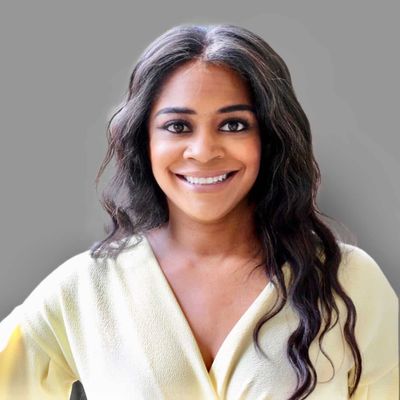
Gennean Scott, the Broadway League's first Director of Equity, Diversity and Inclusion, on the initiatives she's leading to ensure the industry's evolution... Read More
From the show: Stagecraft with Gordon Cox
Guests
About
Gennean Scott, the Broadway League's first Director of Equity, Diversity and Inclusion, on the initiatives she's leading to ensure the industry's evolution.
Transcript
This transcript was automatically generated and might contain errors.
[0:00] Gordon Cox: Welcome to Stagecraft, Variety's Theater Podcast, bringing you backstage and behind the scenes with the stars, creators, and industry leaders bringing Broadway back to life.
[0:09] Gordon Cox: I'm your host, Gordon Cox.
[0:12] Gordon Cox: On this episode of Stagecraft, I'm talking to Gennean Scott, the Broadway League's new director of equity, diversity, and inclusion. Although EDI initiatives had already been a part of the organization's activities, the league created the director position following the global reckoning over racial justice that came in the wake of the uprisings in 2020. Scott comes to the league after a seven-year tenure at Omaha Performing Arts, where she was the vice president of Human Capital and Inclusion. She's also a co-founder of the Black Arts Leadership Alliance and a co-founder of the Nebraska Association of African American Human Resources Professionals. An Omaha native and a former dancer, she also founded and directed a nonprofit dance school to promote equity in the arts for Omaha youth.
Now Scott is bringing all that experience and expertise with her to Broadway. And she's in the virtual studio with me to tell us about where Broadway stands today, the work it's doing now to change things, and the work that lies ahead. Hey Gennean, thanks for joining me.
[1:10] Gennean Scott: Thank you for having me.
[1:12] Gordon Cox: Yeah, and welcome to New York. I know you're just a couple months into your new life here. Um, you're coming to your position not only as someone new to New York and new to the league, but someone who's sort of not embedded in the Broadway industry, which strikes me as a really useful perspective for someone in your position right now. Um, before we talk a little bit about your background and your work in Omaha, I wonder if we could just start by having you tell us about your impressions of Broadway right now in summer twenty twenty-one. Where does the industry stand in terms of equity and inclusion?
[1:49] Gennean Scott: Sure. Well, I must admit I have a little bit of a Broadway just because I come from the road. Uh so um I’m adjacent. How about that? We'll say Broadway.
[1:56] Gordon Cox: Right, yeah, because the organization you came from had a Broadway series.
[2:03] Gennean Scott: Yes. Still does.
[2:04] Gordon Cox: Yeah right. Yes and we're a part of the bro and they were a part of the Broadway league as well.
[2:09] Gennean Scott: Right, right. But looking at where we stand right now as an industry I honestly I'm optimistic. I'm I am hopeful and uh maybe some of that uh is me being naive but uh I like to think that looking at what all the members have done and hiring EDI directors and uh the fact that we have seven new shows that have been written by people of color you have Camille Brown who will be choreographing for color girls. I like to think that we are moving in the right direction in creating a space for people who look like me and what broadly speaking are the area or the areas where we seem to fall down and really need to do more work.
[3:12] Gennean Scott: You know I don't know that there's any one area honestly I I think that it's it's on the stage it's behind the scenes it's in the audience. I don't know that there's any one area that we have fallen short I would say that there is room for improvement across all areas in this industry and that is that's that's why I'm here and that's what I'm looking to change.
[3:39] Gordon Cox: Yeah. And before we start to talk about what's on your plate looking ahead I wonder if we could um rewind a little bit and just talk about your background. I know well first of all I know that you're a former dancer and I wonder if you could just start out by telling us a little bit about kind of when you realize that the EDI work that has become your specialty was something that you really wanted to focus on.
[4:01] Gennean Scott: You know uh as I think my earliest memories as a dancer walking in and being the only uh coming from the middle of the country in Nebraska were pretty homogenous I'll I'll say and I was always the only and while the studio that I was at did its best to make me feel like a part of I don't know that I always felt a part of uh you know there are microaggressions there um people touching your hair um why does your hair look like that uh tights that aren't my skin color that are called nude. I mean I think I recognized early on that um there was something that was not quite right I didn't know exactly what that was at the time but I knew that there was something that wasn't quite right because I used to come home and tell my mom or ask my mom why am I the only why am I the only black kid and it wasn't until I want to say I was a uh junior and I actually came here to New York.
I'd won a talent contest and that was my first time having a instructor, a dance instructor of color. That was my first time seeing a Broadway play, uh a musical and what was it? Uh five guys named Mo.
[5:30] Gennean Scott: Wow. Yeah.
[5:31] Gordon Cox: Yeah.
[5:32] Gennean Scott: And it was my uh I'm probably dating myself now, huh?
[5:37] Gordon Cox: You and me both.
[5:39] Gennean Scott: Yeah, if you remember it, then I am exactly right.
[5:43] Gordon Cox: Yep.
[5:43] Gennean Scott: But yeah, and and it was I j and I saw everyone on stage and I was like, oh my god, they look like me. And uh and it from that moment on I knew that I wanted everyone to experience Broadway the way I had um and to experience the arts the way I had and for them to know that there are people of color out there and um who are who are professionals uh doing the thing out there um on a major in a major way. And so that is really what sparked my my love for the arts and equity. So it's kind of a full circle moment for me right now.
[6:21] Gordon Cox: Yeah. And how did you get to Omaha Performing Arts, which is the organization you're coming to the Broadway League from?
[6:28] Gennean Scott: Yes. Um, well, arts and equity have always been my passion. I started a um a school, a dance school uh in Omaha that focused on arts and equity and creating inclusivity. And uh I s I I saw the position and I met with the president and she was just she asked me, you know, what are some things you'd like to see change? And I said I'd like to see more diversity because um in the community, what I hear is if you want to work at the Omaha Performing Arts, you have to either be a security guard or in housekeeping, and that's unacceptable. Uh and and she agreed with me, and the rest is is history, I guess you'd say.
[7:17] Gordon Cox: Yeah, and well, tell us a little bit about the organization and its programming and its you know audience and who they are and where they come from and what you were the group of people in the community you were working with at that moment.
[7:30] Gennean Scott: Yeah. So I served as the first vice president of human capital and inclusion at Omaha Performing Arts. Um I conceived and spearheaded several programs. Uh uh, one internally uh to increase, promote and retain uh black indigenous people of color. Uh, and we did that within the first three to four years, we were exceeding national standards. Uh I, in addition to that, then we look at the community. Uh I, along with my counterpart um, who was over who's over programming, created a series called Voices Amplified. Uh, and it was created to amplify the voices of um artists of color in our community, but specifically uh at the time of inception, it was created to cre um to amplify black voices. It was in response to a as everyone put out a a narrative uh at the wake of George when George Floyd was uh murdered, and we didn't want to just have it be mere words where we say black stories and black voices and black lives matter. Uh, we wanted it to be action-oriented, and so we created that program.
[8:48] Gordon Cox: Yeah. Can you tell us a little bit about the specifics of the program? You mentioned the program to um attract and retain uh talent of color um from BIPOC talent. Um, how how do you do that? What is the what are the sort of specifics, granular specifics of that in terms of how that program works and what you feel like was really effective and helped it succeed?
[9:10] Gennean Scott: Well, you have to go where the people are. Uh you can't, I mean, what's the definition of insanity doing the same thing over and over again, expecting something different? Uh so we had to go where black, indigenous people of color were. So it meant building a community grassroots base. It meant being embedded in the community and um and and recruiting from within, uh, developing actual relationships and it not being about Omaha Performing Arts or even the Broadway Week for that matter now, telling a community what they need and what we are what we can give them. It's about listening to that community and having them tell us what they need and what we can give them. Uh and so it's sort of flipping it and and putting it on its side and having the community inform us instead of us informing the community. And that is what I think is the true measure of success that we had at Omaha Performing Arts. And that's what I'm looking to bring here to this new role.
[10:15] Gordon Cox: Yeah. And what do you feel like it's this might be a part of your answer to this question? Um, what do you feel like coming from your experience with uh Omaha Performing Arts, what do you feel like were the biggest insights uh or kind of moments where you um that have really uh influenced the way you think about the work you do going forward?
[10:34] Gennean Scott: I think having the community involved in every aspect, from programming to looking at development fundraising, and having them have a seat at the table, I think again having them inform us instead of it being a one-way street where we're gonna tell you, having them tell us, I really think that was helpful in building out a successful programming base that is wildly diverse. I mean, I looked at the numbers before I left, and having 60% of our BIPOC staff being in a manager level or above, that's huge compared to when I first started, and I could literally count on one hand how many of us of color were in management.
[11:39] Gordon Cox: There were three.
[11:41] Gennean Scott: Right. And when you talk about going out into the community and listening to the community, what does that look like in terms of maybe events that you have, or what are the kind of bridge-building or connecting activities and initiatives that you feel like can be really effective? Well, I look at the initiatives that the Broadway League has, and a lot of it mirrors the initiatives that we had at Omaha Performing Arts. We here at the Broadway League have Viva Broadway, which was created in 2009. You have Black to Broadway, which is a more recent initiative designed to inspire a deeper engagement and awareness of access within the Black community.
[12:38] Gennean Scott: In addition to celebrating those Blacks who are already on Broadway, who are leaders, you know, on stage and behind the scenes. And so those programs look a lot like some of the programs that we had at Omaha Performing Arts in creating excitement and a groundswell. Both of those programs go outside of the league's membership to bring on other individuals and influencers within those communities so that we can develop a relationship with those communities and expand our base and expand our programming and really let those communities and others, AAPI, let them know that Broadway really is for everyone.
[13:28] Gordon Cox: Right.
[13:29] Gennean Scott: Yeah. And what have you found are the most useful metrics in terms of measuring change? You mentioned the 60% of your BIPOC staff are in management positions. What other kind of measures are there that you pay attention to to think that you look at to see, oh, the thing that we're doing is making a difference?
[13:53] Gennean Scott: Well, it's not about just checking a box and saying, okay, we have 60%. If that 60% doesn't have a voice, then it doesn't matter. You might as well have no one there. So it's looking at what real authority do these individuals have. Are they just merely at the table, or are they at the table with a real voice? And so looking at position descriptions, looking at where they're seated, how they're seated, looking at how long they've been there and what they really bring to the table, and looking around the table and seeing who's not there and why aren't they there? And how do we create space for them to be there? I am very—I love metrics and I love stats, but I also know that merely reciting stats doesn't really tell a full story if those individuals don't have a seat at the table, if they don't have a voice, not just a seat, but if they don't have a voice at the table.
[15:01] Gordon Cox: Yeah. What for you is your sort of favorite kind of achievement of your time there at Omaha? What do you feel like really affected you and really kind of was a mark of your work there?
[15:18] Gennean Scott: Well, that's hard. I oh my gosh, you're asking me to pick my favorite child.
[15:26] Gordon Cox: I know, that's true.
[15:27] Gennean Scott: That's a good point. Yeah, I will say one of prior to the Voices Amplified series, I would have said the promotion from within the leadership program that I developed to promote staff of color. Obviously, others were able to participate, but it was targeted and geared towards those staff of color because we had a huge amount of BIPOC staff who were in positions even below coordinator, and it was how do we promote them from within? How do we give them the skill set and the tools that they need in order to be successful and to become a manager or a coordinator for that matter? But how do we get them to become a manager and move them from assistant to a management type of position where they have influence and they have a voice at the table?
So I would say the leadership program that I developed was one of my favorites, but now I'm gonna say the Voices Amplified program because we did it during a pandemic, and it was like how are we gonna do this? What are we gonna do? We made it all virtual, and we reached out to people and artists in the community because it was at a period of time where artists weren't traveling. And so you want to talk about community engagement, we had people in our own backyard who had done some amazing things, and we created a platform for them to be showcased. I love it, and it's still going on to date. I serve now more as an advisor type of thing, but it's a really exciting program, and I look forward to seeing where it goes.
[17:34] Gordon Cox: I'll have more with Gennean right after the break.
[17:38] Gordon Cox: And now here's more with the Broadway League's Director of Equity, Diversity and Inclusion, Gennean Scott.
[17:44] Gennean Scott: Yeah. Well, let's talk a little bit more now about what's happening at the League. We should say for listeners who don't know, who aren't in the weeds about this stuff, the Broadway League is a trade association of Broadway producers and presenters. They are the body that advocates for Broadway overall as a business and negotiates contracts with labor unions, among many other things. Tell us a little bit more about sort of the—there are a number of programs. You mentioned Viva Broadway and Elector Broadway, but there's a number of things going on right now these days, some of which have been going on for a while, as you mentioned, and some of which are newer. Tell us a little about that slate of activities.
[18:23] Gennean Scott: Yeah, one of the programs that I enjoy is the Broadway Bridges program, where the goal is to reach every tenth grader in a New York City public school so that they can see a Broadway show in person. We partner with the New York City Department of Education and the United Federation of Teachers to make a significant impact. I think it's like 70%, nearly 70% of those students identify as being people of color. And if we want to talk about sparking an interest in Broadway, I think that's where we start. We have to catch them young so that we can create that path. Another program, which is the Broadway League Diversity Fellowship Program, is designed to give the next generation of theater professionals hands-on experience in working in a league member's office so that they understand that you don't necessarily have to be on stage; you can be behind the scenes because not everybody is a performer and not everybody wants to be a performer, but there are still avenues and there are still ways for these individuals to have a hand in shaping Broadway.
I look at myself, and when I was growing up, I would say, oh, I want to be a dancer, oh, I want to work in the arts, and to have a counselor say, no, you can't do that, or to have a family member say, no, you need to get a real job. Right now, I'm like, yeah, you got one. But I mean, we have to—being a first-generation college student or college graduate, we have to buck that, and we have to do a better job of educating not just laypeople but those counselors that there are jobs in this industry and that we want them and we need them and we're looking for them. I think that this fellowship program helps to create a pathway for that next generation of professionals, and I think another program I would want to mention is something very new.
[21:04] Gennean Scott: Uh and it's where we are partnering with all of Broadway unions um uh and their members and our employees to find opportunities for those individuals to challenge the status quo and to be able to become a part of these unions and uh and work um and work behind the scenes.
[21:31] Gordon Cox: Yeah.
[21:31] Gennean Scott: And do these programs, you mentioned, you know, for instance, the fellowship is for people working in a in a member of the Broadway League's uh office. Does this uh for any member like does this extend around the country because there are members of the Broadway League all over the country? Is this are these are a lot of these programs not just New York focused, but also um in the sort of road and touring activities?
[21:52] Gennean Scott: Well, there this one this one is uh more um New York focused. However, there is the um at Pam Diversity of program, which uh is is for the road. And a lot of our a lot of our presenting our road houses like Omaha Performing Arts have diverse have programs, have internship programs of their own uh that uh some that go alongside uh with Broadway with the at Pam Diversity, and some of them that um are their own standalone programs.
[22:26] Gordon Cox: Yeah.
[22:27] Gennean Scott: Uh you mentioned uh earlier in our in our discussion, you talked about the individual sh many individual productions um are creating these positions um uh devoted to equity, diversity, and inclusion. Tell me a little bit about why you think that's important to have not only kind of an industry wide uh uh position dedicated to that, but also in these individual what they really are is little individual businesses, right? Each individual show. Tell us about sort of what you think these folks will do joining, for instance, Moulin Rouge was someone that just did a higher yeah yeah moulon rouge just did and and wicked and we can and a couple of others just come out with uh came out with uh with press releases um uh naming their uh naming their uh EDI or their um equity or diversity uh directors I think it's important for people to to know that the industry isn't just talk um and I think that this shows a real commitment um intentional commitment to creating an overall change in the industry no one person can do it by themselves and so this creates a network of people working together sharing ideas sharing best practices and um and and creating a creating a support system and a a network I guess a support system a network so that you I myself and and those others who are like me know that we have someone who is in the trenches with us um willing and and able uh and wanting to to make a long lasting change in this industry.
[24:21] Gordon Cox: Right yeah and what looking ahead how have you begun to think about uh new initiatives that you'd like to sort of help um you know move along as you as the season gets up and running and you know you sort of find your feet in your in the position that you were in now and yeah well I've been I've been talking to league members and uh talking to the community and community organizations about how the league can be a better partner in moving the needle uh towards change and equity and inclusion and I think um in order to be successful in this role it's gonna be about relationships and um we're gonna need to expand our existing programs uh and we're going to have to uh create other programs to provide even greater access to to all individuals uh so I look at our affinity groups that we have and there are there are some there are some groups that um may feel left out but please know that they we are in the works of of creating those affinity groups and creating an avenue for um for those affinity groups to be showcased uh so there's there's definitely a lot of work to be done we we have done a lot but now that um they've created this position that that I'm in we are able to be more intentionally focused on how we deliver um who we work with and how we work with and moreover how we communicate those programs to the community at large I I think that that may have been one of the one of the struggles we may have had um in the past is communicating those initiatives that we've had to the people that you know were are created to benefit that you know was created to benefit.
[26:27] Gennean Scott: If we create a program and it's to benefit you and you don't know, then you know how successful is that program gonna be? So I I think that that is um that's one of the things that I am definitely looking at is building stronger relationships within the community and and with these community um organizations, niche community organizations.
[26:51] Gordon Cox: Yeah.
[26:52] Gennean Scott: And what's your take on the way the kind of work much of it is sort of focused on backstage uh you know, behind the scenes stuff kind of filters into the work that is done on stage as well? How does how does the the work that you were doing and the what is the interplay uh between the work that you were doing and the work that we see and the creative work that is done uh artistically on stages?
[27:14] Gennean Scott: Well, I think statistically people um it's said that people uh tend to hire individuals who look like them. There is this kind of fiction ship that exists, it's an unconscious bias that exists, and which is why you see all this unconscious bias training that that goes on in this industry. But if so, if the industry is majority white male, then majority of the jobs are going to go to who white males. Uh so if we can diversify the back of house, if we can diversify those individuals who are doing the hiring, the casting, um, then we will be able to diversify what we see on stage. Uh, I I you know, we are lovers of the arts, and I like to think that we have a creative mind, and we we know that there's no such thing as a a mermaid. So, what difference does it make if the mermaid is of color or if if the mermaid is is white? Uh so um things like that, um those those unconscious things that exist, uh we I think this is a way of combating that.
[28:31] Gennean Scott: So I don't know that we're just solely focusing on the backup house or solely focusing on the curr the career side of things, but I think that um it is important that we focus we focus on that because the stats the stats are real and we all have hidden biases and um and they come into play uh more than more than we sometimes would like to admit.
[28:59] Gordon Cox: Yeah, yeah.
[29:01] Gennean Scott: You arrived in uh as you as we were talking about before we turned the mics on, you arrived in July and there weren't there may have been one Broadway show happening unless Bruce Springsteen had gone on hiatus again. So have you seen a Broadway show yet?
[29:15] Gennean Scott: Broadway is really as we're talking, Broadway is really just starting to get going again. They literally just really opened. Um I I will be seeing Passover uh next week. I was going to go to Hades Town dress rehearsal yesterday. Um however, uh it rained a lot.
[29:37] Gordon Cox: A lot, indeed.
[29:39] Gennean Scott: I think uh terrential rains is what what they call it, right?
[29:43] Gordon Cox: I think that's that's an accurate description.
[29:45] Gennean Scott: Yeah. Uh so needless to say, I did not uh I did not go to that showing. Um I have I have attended Broadway shows prior to my position uh here at the league, but I have not seen one yet in this new capacity. But I look forward to to seeing everything, honestly.
[30:06] Gordon Cox: Yeah.
[30:07] Gennean Scott: Yeah. Um and we look forward to running into you um at the theater sometime as we're all uh back in the house. Um so thanks so much, Janine. Thanks for taking the time to speak with me.
[30:17] Gennean Scott: No problem. Thank you for having me. I am I am excited and and again hopelessly optimistic about the future of Broadway and uh and its return because we will not look the same, and that is and that's a good thing.
[30:33] Gordon Cox: Yeah, can't wait.
[30:34] Gennean Scott: Yeah, thanks, Janine.
[30:35] Gordon Cox: Thank you. That was Janine Scott, the Broadway League's new director of equity, diversity, and inclusion.
[30:42] Gordon Cox: If you like what you're hearing on this and other episodes of Stagecraft, I'd really appreciate it if you took the time to rate and review us wherever you listen to podcasts. It really helps us grow our audience of folks who love theater as much as you and I do. Or tell a friend about Stagecraft. Find past episodes or subscribe on all the pod places, including Spotify, Apple Podcasts, and on the Broadway Podcast Network, which is a great place to find more theater for your ears.
[31:07] Gordon Cox: I'll be back in two weeks with another new episode. Until then, find me on Twitter at G CoxVariety. Thanks for listening and see you soon.
© Broadway Podcast Network, All Rights Reserved