

The actor talks Tony nominations, “Topdog/Underdog,” a surprise dinner with Patti LuPone and an inspiration from Mark Rylance... Read More
From the show: Stagecraft with Gordon Cox
Guests
Featured Shows

About
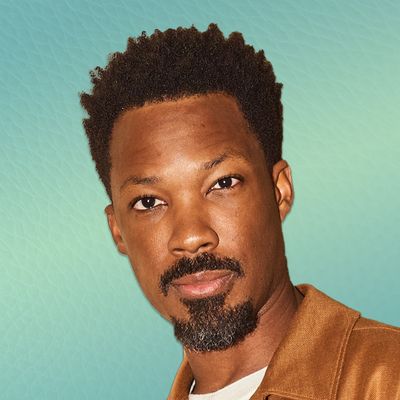
The actor talks Tony nominations, “Topdog/Underdog,” a surprise dinner with Patti LuPone and an inspiration from Mark Rylance.
Transcript
This transcript was automatically generated and might contain errors.
[0:06] Gordon Cox: Welcome to Stagecraft, Variety's Theater Podcast, your backstage pass to intimate conversations with stars, creators, and industry leaders.
[0:15] Gordon Cox: On Broadway and beyond. I'm Gordon Cox.
[0:18] Gordon Cox: On this episode of Stagecraft, I'm talking to the actor and Tony nominee, Corey Hawkins.
[0:24] Gordon Cox: He's in the running for a Tony Award this season for his performance in the recent revival of Susan Laurie Park's Pulitzer Prize-winning play, Topdog/Underdog.
[0:32] Gordon Cox: He'll be competing next month in the same category as his co-star in Topdog, Yahya Abdul-Mateen II.
[0:39] Gordon Cox: Hawkins has also been on Broadway in revivals of Six Degrees of Separation and Romeo and Juliet.
[0:44] Gordon Cox: But the Juilliard graduate is perhaps best known for his busy career in TV and film, and even on screen, a lot of his work has ties to the theater.
[0:53] Gordon Cox: He played Benny in the movie version of In the Heights, and McDuff in the Coen Brothers adaptation of Macbeth.
[0:59] Gordon Cox: Plus, he's got two more movie projects coming up that'll get theater fans excited.
[1:04] Gordon Cox: Later this year, he'll appear in the eagerly awaited movie version of the Color Purple musical.
[1:09] Gordon Cox: And he's also on board the new movie adaptation of August Wilson's play, The Piano Lesson.
[1:14] Gordon Cox: Now, fresh off his Tony nomination, Hawkins is in the virtual studio with me to look back on his experience in Topdog/Underdog and share with us how it's still resonating in his approach to the work he's doing now.
[1:27] Gordon Cox: He'll also let us know what we can expect from the Color Purple and The Piano Lesson on screen, and explains why just the other night he ended up at a surprise dinner with Patti LuPone.
[1:40] Corey Hawkins: What's up, man? Thanks for having me on.
[1:42] Corey Hawkins: Yeah.
[1:43] Corey Hawkins: I am often talking to people at the beginning of their Broadway journey with a show. You know, they've usually just started, maybe they're in previews or the show just opened, but your perspective on Topdog/Underdog is a different one because you've already been on that journey. You've been in the show for something like four months, and you went on the ride. What are your kind of standout memories of the run?
[2:07] Corey Hawkins: Oh wow. Um, it's interesting because when you close a show, man, sometimes it can feel like a bit of a blur, and you need maybe a little bit more time away from it to look back and think about what it is that we were able to put together and accomplished. Um, but the biggest impact I think the show has left for me was just to be able to see the audiences afterwards. Um, sometimes because the show is such a, you know, it requires so much of us, it's hard to do anything else after the show. But one thing that Yahya and I were very sort of adamant about was just meeting people outside afterwards because Topdog/Underdog is a heavy piece and deals with a lot. And there's always some, it's always someone's first time seeing the play, and it's always just great to hear their thoughts, their questions.
We never have answers for them, you know. The answer is like maybe come back tomorrow and it'll be a completely different journey or show depending on who's Topdog and who's Underdog at any given moment. And so it was just thrilling, man, because I look back on it fondly because I've never had a, I mean, I've had some really awesome opportunities, but never had a role that challenged me quite as much as Lincoln.
[3:37] Gordon Cox: Yeah. Can you expand on that a little bit? What particularly did you find really challenged you?
[3:43] Corey Hawkins: Um, for one, initially from the get-go, I didn't really know going in if I would actually be playing the older brother because first of all, Yahya is, you know, just a couple years older than I am. Um, and so that was the first initial, I wouldn't say challenge, but just when envisioning yourself in a role, I didn't necessarily see myself as Lincoln. So you have to automatically get over that and get to work. A lot of the challenge, I mean, there were just so many. Like, first of all, I never, I'm, anytime I'm playing cards, I mean, Lincoln, he plays cards, right? So anytime I actually play cards with my friends, I always pass the cards when it's time to shuffle because I don't know how to actually do that.
And I end up, the cards end up going anywhere. But Lincoln is so facile and so, you know, he was a legend, you know. That's what he's known for, is being one of the best three-card Monty hustlers. Um, and I had to learn how to do that, and the practice of that, keeping those cards in my hand day after day after day, even on the days off, literally taking, having those cards in my pocket everywhere I went, was new and different. And then I had to learn how to play the guitar. Um, and then we had to learn all of those lines. It was just two of us, and neither of us really left stage the whole time. So it was a thrilling challenge to jump into because again, it requires so much of yourself, and then spiritually where you have to go night after night to let Lincoln go is challenging as well.
[5:36] Gordon Cox: Yeah, for folks who might need a refresher, and you've sort of alluded to this already, in many ways, Topdog/Underdog is this very intimate story of these two brothers, but it also kind of is epic or at least mythic in terms of some of the kind of ideas and themes that it touches on. So when people ask you what the play is about, what did you tell them?
[5:57] Corey Hawkins: I would always repeat what Susan Laurie Parks said because it was genius, and anytime I try to explain this play, it would be cut to like five minutes later, and I'm still trying to talk on time. Uh, but it is, uh, Susan Laurie Parks described it as basically two brothers who live in an apartment, both named Abraham, one named Lincoln and one named Booth. And then she said, but, um, bum. You know what I mean? And then that was how she always talked about the play, and because it, uh, it's a play that literally it is a fable when you're talking about that sort of mythology, and it is very much a cautionary tale, a moral tale. Um, but you watch these two brothers in this very tiny apartment try to exist and, you know, they laugh, they love, they cry, they, you know, they're up, they're down, and then, you know, the rug gets pulled out from under you by the end of the play, and you're in a completely different journey than I think audiences initially think they're on.
Um, and that's the magic of her work. That's why she doesn't really like to talk about exactly what it is, but because the plot is so interesting. I mean, they're literally just sitting in the room talking to each other. Um, and you have to, as an actor, activate that.
[7:36] Gordon Cox: Yeah. And what are the, how do you, how did you and Yahya as actors activate that, as you said? Because it could, there is a danger of it just feeling like, you know, two guys sitting in a room talking, but you know, when it doesn't, why doesn't it feel like that? What are you doing to make it not feel like that?
[8:03] Corey Hawkins: Well, I will say, um, Kenny Leon was a big part of that director, yeah. Our director, Kenny Leon. He pushed us, uh, me, um, particularly hard. I remember when we started, Kenny asked me, he was like, you know, do you want to be good or you know, you wanna be great? Because you guys can totally come in and like just do your thing and you know you're both very well, you know, or I could, I can, you know, just push you guys that much more and I was like, yeah, push me, man. It's like, you know, and then cut to, you know, a few weeks later, I'm like, Kenny Leon, you drive me crazy. Um, but he just encouraged us to be students of the world to look outside of ourselves every day we came in. Um, we would just talk about our environments and, you know, just encouraging actors to not be so focused on that, but also be focused on the work in front of you, but just also to be focused on the life you have to live in order to bring yourself to the work.
And it got heavy, it got very heavy. Um, but, you know, in terms of activating, and I know also Susan Laurie Parks was in the room and she, you know, she said it's rare that these guys are just still, you know. It's rare that these guys are just, you know, sitting and talking. And so, um, a lot of it was just pulling back and pushing and seeing how far we could go. I would push Yahya and Yahya would push me, and we do some things in the rehearsal room and I'm so glad didn't end up making it into the play. Um, and some things that actually surprised us and did end up making it into the play, and just seeing how far we could go with their interactions and just human nature. Um, and we were pleasantly surprised.
[10:08] Gordon Cox: Yeah. And what did you end up finding you connected to? You said you weren't sure, or you were surprised to be Lincoln in the play, as opposed to the younger brother. What did you end up connecting to in the character in the end?
[10:21] Corey Hawkins: Uh, Lincoln is, um, I have this, this, this, I'm starting to find that a lot of the characters that I'm drawn to are characters that are enigmas in a sense. Um, characters that I actually can't quite put my finger on. And I feel like success for me is that I don't think I ever get to the point where I figured it out. Um, and I would have loved to have maybe another month or so or a couple months more with sitting with Lincoln because I just felt like I got to go deeper and deeper with him night after night after night. Um, you know, he's a man who cares deeply about his brother, but he has this past, you know, his brother wants him to teach him how to be one of the best three-card Monty hustlers.
But for Lincoln, that is his drug. That is the thing that, um, that's the door, the Jekyll and the Mr. Hyde of it all. And sometimes allowing himself to be the underdog so that his brother can shine, so that his brother can feel as good as he can in their tiny little castle of a world because outside of those walls, um, those two men are not seen at all. They, you, these are men who we walk by every day and would deign to know their story. And so it just fascinated me, this man, and how much he had to take on. This is a man who put on an Abraham Lincoln costume, he puts on whiteface every day he goes to work and he lets people come in and shoot him over and over in the arcade. And what that has to do to somebody, um, it was a question that fascinated me and a premise that I was like, oh, this can definitely, like we can definitely keep pulling at the seams and just see sort of how messed up he actually is and how sad that is.
Um, but then you watch him step back into his power when he picks up the cards after his brother pushes him to pick up the cards. Once you see, I think that's the thing, uh, you know, you see how dynamic he is, you see that he's a magician, you see that he is charming, witty, you know, and it is a battle of wit, you know, throughout this entire thing too. So they may be sitting down, but they are at their jumping leaps and bounds and questioning, you know, life in ways that most of us don't do on a daily basis. So it was just thrilling to be able to play somebody who just felt virtuosic in terms of the possibility, and again, it completely, like people would come back for like a second and third time and see completely different things night after night because we were finding different things night after night. Our conversations halfway at intermission and our conversations at the end of the show were thrilling.
[13:51] Gordon Cox: Uh, what's your sense of how your Lincoln ultimately changed by the end of your run versus the beginning of the run?
[13:58] Corey Hawkins: Can you can is there an easy way to characterize um kind of how your performance evolved? It wasn't until Kenny Leon um he called me one night. He he has a he has a tendency to do this. He called me one night and he gave me just we started talking about um about the cards in in the sense of and and uh we just started drilling down on on um these cards being the drug the thing that he cannot go back to but also the thing that he is literally being being drawn towards um he's threatened with the with with the possibility of losing his job he finally does lose his job and and the one thing he's really good at um is the thing that's that's taken uh literally taken friends away from him uh tragically uh it's taken his life away but he's really good at it and that's the thing where you know he he he flies he sees himself in that um and it was hard to wrestle with that um in the beginning because I'm also you know, I think I think we were just juggling so many things I mean just the just the nature of of the work and the the dance of it all in in previews was just a little it felt like work you know it felt like okay these are the building blocks these are the things you and I remember Kenny just calling me one night and um just giving me permission to just let it go and and um and and really we would pick certain things each night sometimes um you know he would call and say you know think about this only uh with with and don't you know don't don't mention it to y'all y'all just just see see what happens and uh and and by the and and so that would just evolve and evolve and evolve.
[15:57] Corey Hawkins: And it was really one of those slow um gradual uh things. And then it's interesting because Yahya, his process, uh both both of our processes are very are are are different. Um but we're both you know trained actors, we both speak the same language. Um but but Yaya some nights would come in and and sometimes he would tell me what he what he would what he wanted to play with, uh and sometimes he wouldn't. And and sometimes, you know, I'd I'd I'd walk through that door, and that booth I saw that night is is slightly different. And that was fun, man, because again, it kept it alive and it kept us digging and it kept us curious. And so by the end of the run, um, I think Lincoln was uh he was just a clearer picture to me.
Um he was easier to access. I kind of knew physically where he lived, um, which was different than where I live. Um and and that hurt quite a bit. I had to do a lot of a lot of a lot of PT and and you know, just to just to you know sit in that um day after day. But um, but yeah, it's just slow, slowly deepening, I think over the course of uh 16, yeah, the the the run 16 weeks. I'll have more with Corey right after the break.
[17:33] Corey Hawkins: And now here's more with the Tony nominated actor Corey Hawkins. That must be a fairly intimate bond that you develop with an actor when you're up on stage with just the two of you. Uh, you know, with you know, one other person to rely on, and plus you've been through that whole kind of rehearsal process and all of that. Um, tell us a little bit about how uh working with him kind of influenced how you worked on stage. Yeah, um uh Yaya is incredibly gifted. Um, and we knew uh he I'll just say this he knew when it was when when we got into day one of rehearsal, um, that I was gonna be coming in ready to go, you know, and and I think I I knew as well that he was gonna be coming in ready to go and and ready to play and ready to work.
And so sort of like two horses sort of uh stallions just sort of running alongside each other, and and and and it there is a bit of um that healthy competitiveness of because the play is literally called Top Dog Underdogwood. So we have to lean into that. Um, and we have to lean into when who's on top and who's not, you know, and and when that happens and when you can get those zingers in and things like that. And that was all we kept all of that on stage. Um off stage, absolutely no ego. Um and and that was the beautiful part about working with them because we were just curious because we just wanted to make the play better. We just wanted to make each other better, and we just needed to do a service to this play because Susan Lloyd Parts wrote a hell of a fucking play, man.
Like it is, it is one of the best things, and it's also one of the hardest, you know. I always think about it in terms of music, pieces of music that you can play as an actor. And so we had to figure out what each other's metaphorical sort of instruments were. And they changed night after night, moment to moment. And and that jazz sometimes that we were playing, uh, we had to know when to know when to hold them and know to fold them. I guess that's the you know uh the the thing. But like again, we would come off stage at intermission sometimes, and and Susan Lloyd Parts, she would be upstairs listening uh, you know, just uh to the to the words in the she wouldn't watch it. Sometimes she'd watch it, but sometimes she'd be backstage and just listening to to the words and and and sometimes we didn't know she was there, and so we come backstage and and just start talking about what we were frustrated about, what we what why the like this part of the play is still bothering us a week before we're closing, um, or a day before two a few days before we closed.
I remember coming back at intermission and be like, I get it. Oh my god, yeah, yeah, like what the oh my when you did it's only because of something that he did or didn't do, or a a look or whatever that is, an action that was slightly different from the day before. Um it was all about nuance in this play. Um, even though it's such a in-your-face, you know, uh piece of material. But we would come backstage and and then SLP would like peek her head out the door and be like, oh, that's interesting that you guys it was like, oh no. Like, like why the hell did she write that? Or like, why would she let Lincoln say that to him and da-da-da-da? And da da da. And then she'd be, you know, and it and then we'd engage in a dialogue about it.
And or not. Or we just, or she just give us that that sly smile that she she loves to give and and and just sort of walk away. Um, so yeah, uh, we we just have we we encouraged each other to have fun. We pushed each other, man, because um we knew all we had was each other. The only other person who could save me out there is Yaya. So, you know, at the end of the day, we had to show up at a hundred percent. And uh and that's what we did. Um and it it it it took uh, you know, it took a it was mentally draining, physically draining, um, but night after night by the end, um, you know, I I Lincoln transitions and I get to let him go. Um, and then and then a bit of a rebirth because I get to bring him back the next night and and play all over again. Yeah.
[22:09] Corey Hawkins: Now that you're a few months on from the run, do you have a sense of is there anything about the experience that you uh think you will carry forward with you as an actor and as you um are approaching the work you're doing either on stage or on screen uh in the future? Um fearlessness. Um fearlessness. I uh I got to see Jerusalem in London because I missed the performance when they did it in New York, the New York run. And I remember looking at Mark Rylance and going, why I I remember asking myself and asking friends, and I said, where why don't we have that? Like, why can't like I've never seen like why can't we get up there and and do that and have the the opportunity to use all of ourselves and and and just play and take risks.
Where are those and then I I was like, well where are those roles for for black people blah blah blah. And then I said, wait, they're there. They're absolutely there. Top Dog Underdog is one of them. Um and it's up to us to take that risk and we have to be fearless. Um I was so lucky I got to uh I got to have uh uh you know quick dinner with uh Patti LuPone last night random uh surprise all right here in ATL um my fellow Juilliard family yeah um um and also working on a piece uh uh with her and her son uh Josh as well um uh but we were talking about just that fearlessness and why that's important and sometimes you know in in my opinion I think it's it's you know we forget that we forget that we are allowed to take risks and allowed to to to go as far as we can because that's where that's where the gold is you know that's that's and and I and I told myself after seeing Mark Rylance in that performance I was like I'm gonna find a role that I can do that with and be damned you know what anybody thinks about it.
I'm I'm gonna see how far I can take it and how deep I can go with it and and and also to remind myself that those roles do exist, that we do have those great black playwrights who write about the diaspora, and it's up to us to honor them and step into that fully. And so I take that from from Top Dog Underdog, and also um just being able to keep my eyes out into the world and and not so insular the industry and all of that, just to be reminded um that there are people who live their life day to day um dealing with a lot. And and so there was a lot of care and love that we also had to carry with us in order to get through that show. Um and just reminded us to to keep our eyes out to the world and and continue to love, you know.
[25:22] Corey Hawkins: I'm about to ask you about some of the work that you're doing on screen, but first I have to ask about what you're working on with Patti LuPone and her son that you just mentioned. We're doing um he he he put together this incredible um these these radio plays uh and um he asked me to to narrate a a piece um and Patty had had had come to see the show as well, and she asked me to to be a part of it, and I was like, of course. Like, you know, why not? Like um uh and it's uh it's uh uh Udora Welty uh is the is the writer and and uh beautiful short story. Um and we just vibe, you know, just happen to all be down here in ATL at the same time, and and uh and she surprised me. She was like, Hey, um I'm I'm here to I'm let's ask them.
I was like, okay. Uh and uh yeah, it'll is it's gonna be a um beautiful, beautiful story. And that's like uh that'll be like a podcast or uh do you have a sense of how it will be released? Yeah, yeah, I believe so. I mean he's done he they've done um a few of them in the past. Uh I think uh one of the first ones started with maybe Stephen McKinley Henderson and uh and then uh uh Samuel Jackson and Latina uh Richardson Jackson did did one as well and a few of them. So um they're incredibly really good. So I was just like, yeah, I'd love to love to do that. Um yeah.
[27:01] Corey Hawkins: Great. Um I I was looking at uh kind of you know, some of the film work uh you've done and some of the stuff you've got coming up, and a lot of that has ties to theater. Like a couple of the uh projects that are that will be coming up for you is the color purple musical, the movie musical. And then uh I'm talking to you, you're in Atlanta right now, um working on the piano lesson, uh, which uh is a uh film version of related to the production that was on Broadway earlier this fall. What uh is that is that by design uh these uh sort of theatrical links to a lot of the screen work or is that just a coincidence? It really isn't, honestly. Like I I I don't I don't know how or why. Um I mean I I I guess I can see it because I'm I'm so I I I love theater and and uh and and so that's I can see how that can bleed into the work.
[27:49] Corey Hawkins: Um, "In the Heights" was I think the first sort of crossing of that genre that I got to do that with. Um, and then, uh, so my "Heights" producers did "Color Purple," and they asked me to come do Harpo in that, and that's gonna be out there at the end of the year. So I was like, Christmas, of course.
[28:10] Gordon Cox: Yeah, yeah, yeah, on Christmas, and that looks incredible.
[28:14] Corey Hawkins: Yeah, I just love it.
[28:15] Gordon Cox: Yeah, what can you tell us about it?
[28:16] Corey Hawkins: Honestly, I just watched a little featurette that they sent us, which took us back to last summer. Yeah, um, shooting it, and Danielle Brooks, who I went to Juilliard with, we were classmates, kids dreaming about it all, and cut to this season where they're doing "Piano Lesson" a few blocks up. She's on a marquee, I'm down the block. Uh, and then we, um, you're right, but right before that we got to play, she's playing Sophia and I'm playing Harpo.
[28:41] Gordon Cox: Right.
[28:50] Corey Hawkins: To Raji P. Henson, Fantasia Barrino, Coleman Domingo. Um, I, it's sh—honestly, uh, the cast is stacked beyond measure and it's incredible. We had the time of our lives shooting that. Um, it's beautiful. Everything from the sound design to the costumes to the locations, it is, and Oprah, you know, Oprah and Spielberg are back as producers on this, and you can tell that it's a labor of love for everybody involved. Uh, it is a beautiful reimagining of the musical, and Blitz Bazawule, our director, uh, led us brilliantly. So I honestly think people's minds are gonna be blown when they see it. Um, because again, it just subverts expectations. It's like, it's beyond expectations. Um, so I'm thrilled about that.
[29:43] Gordon Cox: Yeah.
[29:44] Corey Hawkins: And now we're doing "Piano Lesson."
[29:46] Gordon Cox: Yeah. Uh, you mentioned "In the Heights" and "The Color Purple." So you sing. Um, would you want to do a musical on stage on Broadway?
[29:55] Corey Hawkins: Allegedly, I sing. I, uh, um, uh, yes, yeah. It would have to be, it would definitely have to be the right thing. Um, I've been approached about it. Uh, um, but it would definitely have to be the right story, the right project, the right, um, I, I, I like, uh, right now I just sort of like doing things that involve music. Um, even in "Topdog/Underdog," as Suzan-Lori Parks asked me, she was like, you know, I play the guitar in that. And she was like, uh, so I was like, okay, I'll just strum a few strings and kind of just say the words. And she was like, no, like sing. Like I want you to sing. Like, you know, I was like, like sing a whole song, like make up a whole. She was like, yeah, why not?
So, you know, I was like, okay, shit, here we go. Um, and so I always, it's interesting because music always seems to find me because that was how I grew up. I grew up singing in the church. And so, um, that all has always found me in projects that I'm working in. So yeah, it would have to be the right thing, but I'm open to it. It's just, uh, it hasn't found me yet.
[31:05] Gordon Cox: Yeah, yeah. And did you get a chance? You're working on "Piano Lesson" right now. Did you get a chance to see the production? Because you were, um, on stage at around the same time. Did you get a chance to see the show before or after?
[31:18] Corey Hawkins: I was, I was blowing up LaTanya's phone. Uh, you know, I was like, yeah, yeah, and I'll free tonight. You know, can we sneak into like a, uh, the dress rehearsal or the—so I did see it early on, uh, and then I also got a chance to go back and see it, uh, later because I think our schedules hit flip during the holidays sometimes. You know, you have 10 shows a week.
[31:39] Gordon Cox: Yeah.
[31:40] Corey Hawkins: You know how that goes. But, uh, we did get to see it a little later on in the run as well. And, and, uh, it was just as beautiful and just as powerful. Uh, so I was honored when they asked, uh, me to come down and join the cast.
[31:54] Gordon Cox: Yeah, who are you playing for folks who don't know?
[31:56] Corey Hawkins: Uh, Reverend Avery, um, Avery Brown. And, uh, it's, uh, it's a, again, you know, when we're talking about adaptations, uh, I just think it's just so well done. It's so well done. It's, it's the creative team is incredible. Um, and I know and have known everybody working on it, um, for a long time. I think going into projects, that's what I wanted to feel like is camp, you know, almost, or like, like, you know, we're just gonna go work on this thing together as a family and see what we can find and do it with good people and with good intentions, and at the end of the day, you know, you can't go wrong, uh, when you put the work in.
[32:39] Gordon Cox: So yeah.
[32:39] Corey Hawkins: Yeah. Uh, we should mention that before those two films, you got another movie coming out this summer. It's called "The Last Voyage of the Demeter," um, which, uh, sounds super cool. I, I was the kid who read "Dracula" and was really compelled by that one chapter that's about Dracula, you know, getting on a boat and riding across to, uh, to, I—where does he go? Does he go to America?
[33:01] Gordon Cox: No, he goes to London.
[33:02] Corey Hawkins: He goes to, yeah, yeah. Um, and, uh, that sounds like fun. Is that a scary movie?
[33:08] Gordon Cox: Yeah, I assume it's a scary movie.
[33:09] Corey Hawkins: It's a horror movie, yeah. It is, it's a thriller. Um, it's Universal and, um, Amblin, uh, doing that film. And honestly, that film has been around for, uh, uh, over 20 years, and they just have not been able to make it until they found me. Uh, uh, no, but it, it, all the pieces, I'm just thankful because like all the pieces came together at the right time, and I'm, you know, a, um, it's set in the 1800s, late 1800s. Uh, my character is British, he's a Cambridge-educated doctor, uh, who ends up on this boat back to London, back to his home, right? And, uh, the boat just happens to have a passenger on board that, uh, probably shouldn't be there. And, um, but it's, but it's thrilling because the reason I signed on to it was because it's a—it really was a character piece and versus the sort of crazy jump scares and all of that.
Um, it was, uh, sort of, you know, what's around the corner, you know what I mean? And so, and it's a, it's a great one of the great chapters out of "Dracula" that, you know, you're surprised, like why did they think about, like who wouldn't make a movie about this? Like, um, so I'm just glad I got the opportunity to jump on that. It's gonna be fun. It's gonna be a good one.
[33:16] Gordon Cox: Yeah. How do you think about, you're doing, you do a lot of screen work. How do you think about integrating theater into your career overall as you go forward in terms of, you know, working theater runs at the theater into your schedule alongside, um, all the work you're doing in film and TV?
[33:16] Corey Hawkins: Um, you, you make time. Uh, you know, you just make time for the things that you love. Um, for me, uh, I started in the theater off-off-Broadway, then off-Broadway, uh, and then "Romeo and Juliet," I remember did years ago on Broadway. Um, and then things started picking up on the film and TV side, and part of me just missed, uh, that live wire act of being up there and in front of a thousand people with no net. Uh, and the best of the best, you know, when you talk to Denzel, when you talk to Sam Jackson, uh, they—it's crazy when you hear their stories too, because they all came up in the theater, you know, when you talk about the people that they work with and San Francisco and like all of the companies and all the Wilson Knights and, you know, it's just, it makes me feel good to be amongst, you know, to be among the numbers, you know, and like I, I, and I, I hear what they say about going back because it strengthens, it just continues to strengthen those muscles, um, that, that, you know, you can get lazy when you're on film and TV.
It's a very comfortable and cushy life. Um, I have no complaints about it, and I do enjoy it, but, uh, but you know, there's something about being able to come back to your roots that strengthens that work as well.
[36:20] Gordon Cox: Yeah.
[36:20] Corey Hawkins: Um, and for me, it's a marathon, it's not a sprint. I'm very picky about the things I choose. I'm very, uh, much, much to like I'm sure my reps, my agents' chagrin. Um, but, uh, um, yeah, I always gotta come back to it. And I remember after "Compton" happened and we did "Kong: Skull Island" and traveling all around the world, and I was like, okay, need to get back to the stage. And then that was "Six Degrees of Separation." And, um, and so, you know, you venture out, but it always, uh, if the calling is strong enough, it's gonna always bring you back, I think.
[36:54] Gordon Cox: Yeah.
[36:55] Corey Hawkins: What are you looking forward to most on Tony Night?
[37:00] Corey Hawkins: Um, I'm—it's the honestly, it's the after parties. I'm looking forward to just having fun. Because we throw a hell of an after party called the Ghost Light, and it is, it is, we've done it for a few years now, and it is honestly one of the best things that goes until the sun comes up, and it's the best because you get to see all of your friends. Everybody comes down in their ball gowns and they're like, people come in their pajamas from like watch parties at home, you know, like it's just, it's a good time. But, uh, uh, I say that because I think the best part about Tony Night is that all of Broadway is there, all of the theater community is there, uh, celebrating the work and celebrating, um, yeah, just celebrating the art and celebrating each other.
Uh, it can sometimes be a thankless job. You know what I mean? It's sometimes, uh, you know, be these incredible ensembles of these huge musicals and plays, and to be able to have one night at least out of the year to just for us all to get together and say, um, we see you, you know, and to celebrate. I mean, and also I'm really excited because it's the first, uh, I think it's the first time that four Black men have ever been nominated in the lead actor category in 76 years in the history of the Tony.
[38:26] Gordon Cox: Yeah.
[38:27] Corey Hawkins: So it's, it's again, it's a testament to progress and it's a testament to change and where we are in the theater. I think we're such a progressive community. Um, and Hollywood, you know, is slowly catching up. Um, but, uh, Tony Night's just gonna be a party. Uh, uh, uh, you know, at the—we'll be uptown at the ceremony in the Heights.
[38:48] Gordon Cox: Yeah, uh, so that's gonna be a good time.
[38:50] Corey Hawkins: I used to live there when I was in school, another broke college kid. Uh, and, uh, so it's gonna be, it's just, it's just, you look forward to the party of the night, not just the after parties, but the just celebrating each other and having a good ass time.
[39:04] Gordon Cox: Yeah. What's it like to be in—this is in air quotes—in competition with, uh, your cast mate in, uh, in the same category?
[39:10] Corey Hawkins: It's thrilling. I'm like, there's no competition. Like, that's like, it honestly, it, it, if I, whoever gets it that night, it's just, that's just the icing on the cake because for me, the win is, is if you ever, if you ever get the opportunity to, to play eight shows a week. Um, yeah, eight shows a week and, and, uh, and to be able to do what we do, that's the win, you know. Um, I, I'm just thrilled because I know all of the nominees in my category and I've seen all of their work and I know how much heart and soul they put into it. And I, I just feel like I'm, I don't know, it's just I have the biggest smile on my face because I'm like, I'm part of this group, and I'm like, this is mind-blowing to me.
Um, you know, I've known Wendell since I was 10, uh, performing with him as a kid at City Center. Uh, then following him to Juilliard and, and Steve McKinley Henderson being in group one of Juilliard and Yaya is my brother, and, and, uh, Sean Hayes kills it in, you know, "Good Night, Oscar."
[40:23] Gordon Cox: So, uh, it's just great.
[40:24] Corey Hawkins: And even at the press day the other day, just getting to see each other, got to see Sean and just be like, you know, just sing his praises and stuff. It's just awesome.
[40:33] Gordon Cox: Yeah, yeah. Well, have a great time on Tony Night.
[40:37] Corey Hawkins: Um, yeah, and we look forward to seeing "The Color Purple" and, uh, "The Piano Lesson" and everything you've got, uh, coming up in the future.
[40:46] Gordon Cox: Um, thanks so much, Corey. Great to talk to you.
[40:47] Corey Hawkins: Appreciate it, you as well.
[40:52] Gordon Cox: That was Corey Hawkins, now nominated for a Tony Award for Leading Actor in a Play for his performance in "Topdog/Underdog." Look for him in the movie musical, "The Color Purple," this Christmas. If you enjoyed this conversation and others we've had here on "Stagecraft," I'd be so grateful if you took the time to rate and review us wherever you listen to podcasts. It really helps. Or tell a friend about "Stagecraft." Find past episodes and subscribe at all the places you get your pods, including Apple Podcasts, Spotify, and on the Broadway Podcast Network, a great place to find more theater for your ears. Until next episode, find me on Twitter at @GCoxVariety. Thanks for listening and see you at the theater.
© Broadway Podcast Network, All Rights Reserved