

The “Skeleton Crew” writer on lifting up Detroit, the influence of August Wilson, the closing of “Ain’t Too Proud” and the advice she got from Chadwick Boseman... Read More
From the show: Stagecraft with Gordon Cox
Guests
Featured Shows
About
The “Skeleton Crew” writer on lifting up Detroit, the influence of August Wilson, the closing of “Ain’t Too Proud” and the advice she got from Chadwick Boseman.
Transcript
This transcript was automatically generated and might contain errors.
[0:06] Gordon Cox: Welcome to Stagecraft, Variety's theater podcast, bringing you backstage and behind the scenes with the stars, creators, and industry leaders on Broadway and beyond.
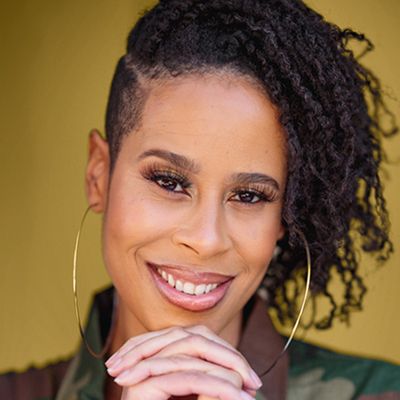
[0:17] Gordon Cox: I'm your host, Gordon Cox. On this episode of Stagecraft, I'm talking to the writer Dominique Morisseau, a winner of the MacArthur Genius Grant.
[0:26] Gordon Cox: Morisseau is the author of plays including Pipeline, Paradise Blue, and Detroit 67. And she's also been a writer and producer on the Showtime series Shameless.
[0:36] Gordon Cox: This season on Broadway, she has two shows. She wrote the Tony-nominated book for the Temptations musical, Ain't Too Proud, which played its final performance earlier this month, while a new production of her 2016 play, Skeleton Crew, is now in previews at Manhattan Theater Club's Freedman Theater and will open January 26th.
[0:56] Gordon Cox: Now Morisseau is in the virtual studio with me to tell us about the complications of making theater in the age of COVID, the surprising closing of Ain't Too Proud, the influence of August Wilson, and the good advice she got from Chadwick Boseman. Hi, Dominique. Thanks for joining me.
[1:11] Dominique Morisseau: Hi, Gordon. Thanks for having me.
[1:15] Gordon Cox: Yeah. You have had two productions on Broadway this season that have been affected by the pandemic in different ways. I wonder if we could start by having you tell us a little bit about what it's been like as a theater artist working on shows while navigating all the unpredictable turns of the last six months.
[1:50] Dominique Morisseau: It closed on January 16th. My musical about the Temptations.
[1:54] Gordon Cox: Yeah. Were you able to be at the performance?
[1:59] Dominique Morisseau: Yeah, yeah. I was. It was epic, emotional. It was an epic show. It was like one of those you had to be there. You never want to forget this moment in history type thing, you know. And it was an electric show. I mean, it was electric, but it was also painful. It was emotional for everybody, for audience and cast and everybody.
[2:18] Dominique Morisseau: And then my other show, Skeleton Crew, which is starring Felicia Rashad, is right around the corner from where Ain't Too Proud was. So, like literally, I was on Ain't Too Proud, it's on two streets because it's the front and the back. So the front of it is on 45th, the back of it is on 46th, and Skeleton Crew is on 47th. So Detroit was basically holding up three blocks in Broadway over the last couple of months.
[2:48] Dominique Morisseau: But Skeleton Crew is about, you know, this very thing. It is about 2008 Detroit when all the factories were closing, and you know, all the small exporting plants had been closing down and outsourced, people were losing jobs. And you just never knew when your factory was gonna be the one shutting down or moving, shipping overseas, you know, and so there was, and you were always negotiating with your union, like you know, the companies wanted you to take pay cuts. That's also something that Broadway was going through. They want actors to take pay cuts, and you know, and then the union's like, no way our actors gonna take pay cuts. You're the big guys with all the big money, and they go, Well, I don't have as much money as that show has, you know. So it's like I've heard a lot of rich people tell me that they don't have as much money as the other rich person lately. I've had a lot of that going on.
[3:38] Dominique Morisseau: And I get it, you know. I mean, I think I don't think they're lying, I just think that it's ironic and so but we're also so inside of the play Skeleton Crew people are coming to work and like you know hey that plant closed and that plant closed and so they go we're the last ones aren't we and that's where the play begins on we are the last plant to still be open and it is inevitable that our plant is gonna also close and that is what so the we have been quoting lines from the play like never before because like it's almost like we show up at work jokingly and quote lines like they shutting us down ain't they that's literally one of the first lines of the first scene of the play and then that's what we feel we feel it we've been feeling it the whole time we see this show close and that show close and we go oh man we gonna have a show tomorrow you know.
[3:41] Gordon Cox: I feel like for a show like Skeleton Crew, a new production like Skeleton Crew, it must be a real challenge to just get into the rhythm of doing a show, you know, doing a production that is relatively new to all these actors as they're trying to figure out, you know, their characters and the rhythms and all of that. That must be a challenge.
[4:55] Dominique Morisseau: I mean you know it is and also I just have a team of champions. I mean they're, I can't say I could I could cry talking about the expertise of not only just my main cast but also our follow-up cast which is our understudies, our covers. One of our understudies was the first one to go on because my actress was out. So her understudy had to go on for the first week of performances.
[5:22] Gordon Cox: Yeah.
[5:22] Dominique Morisseau: And you didn't even know, you didn't know who was the understudying up there and who wasn't. So you know, it's that kind of thing. But I also, it has also just been they, the cast, this is the first week we just passed. This was the first week that my whole cast had been on stage together since rehearsal, since we were in the rehearsal room.
[5:43] Dominique Morisseau: So we've been in the theater for a month, and this was the first week that that whole cast was able to be doing the show together. So that was crazy. They missed each other. So even though yes, it's been hard to get the rhythms and everything of the play, they wanted to be together so badly, they were just electric.
[6:03] Dominique Morisseau: Yeah, it's just like if they just been working so hard or they've been itching to get back in rhythm with each other. And so watching that happen has been another kind of magic, really.
[6:15] Gordon Cox: And speaking of Ain't Too Proud, I feel like the news that Ain't Too Proud was closing was a surprise, at least to someone like me, you know, an observer who Ain't Too Proud was, you know, by any measure such a success, and it just really hit home how hard the pandemic could make things, could make, you know, sort of surviving on Broadway, at least right now. Was it a surprise to you as well?
[6:42] Dominique Morisseau: Yeah, just maybe a few days before was a surprise to everybody else. You know, yeah. I mean, and I couldn't say that I was like shocked, you know. I was like, mm-hmm. I never, I didn't know what was gonna happen because I didn't know how the pandemic was going to honestly affect any of theater, you know. I think I'm more shocked that some shows are gonna, I thought all of us would tank, you know, like all of, you know. I mean, listen, when, you know, if Hamilton is the only one that could save all of us, you know, we're like, Hamilton, are you how you doing? And if Hamilton isn't over the moon, then the rest of us are in big trouble.
[7:17] Dominique Morisseau: You know? And so, but and I just I've always been since this whole year, really, I've been trepidatious about coming back to New York. I was like, I don't know, are we really gonna, you know, people go, oh, you're going back for your show? And I go, ah, I don't know. We'll see. That's what upset to everybody. Because, you know, so it's always like it's kind of ironic to me when when theaters or when anyone says, Well, we couldn't have foreseen this. I go, Are you kidding me? I foresaw this like in January of last year.
[7:44] Dominique Morisseau: Every the whole year when people say, Hey, you're going back to do your show. I've sort of been like, I don't know. You know, because how can we, I mean, they already told us variants were coming. Like, I'm not like, oh my God, we could have never seen this Omicron. Yes, we could have, we could have. They told us. I've been listening to the people who know best. They told us this was gonna happen.
[8:05] Dominique Morisseau: So I don't, it's I think it's this idea that somehow we're caught off guard and we're shocked. It feels to me like that is a bit of a failure of planning, you know. Because I think it is unreasonable to not plan for flexibility right now.
[8:24] Dominique Morisseau: Right. You know, it's unreasonable to think that you're not gonna get hit and that you're gonna be able to go back to business as usual. We're so itching to brand the business as usual. We're so itching to get back to normal, which at the after this past couple of years, I don't even know how anyone would want to go back to normal. We've been fighting against going back to normal for so long.
[8:45] Dominique Morisseau: You know, the theater is supposed to have faced this reckoning over the last couple of years and should be thinking differently. And sometimes it's, you know, I know it's hard because I also run a theater. I'm on the board of some of my most beloved theaters that are also struggling so I have a lot of, I do have grace and mercy for just the man we are trying we can't figure this thing out. But there's also some of it is we just have to be a little bit more courageous and brave and radical in how we're imagining the future because we're not willing to take a leap enough to have a radical imagination of something new.
[8:57] Dominique Morisseau: And I think that we're also suffering as a collective industry from that. Yeah, getting a chance to see Ain't Too Proud one last time on Broadway, did it strike you that there is anything in particular that you are particularly proud of, maybe not too proud to quote the title, but that you are proud of about the work that you and your collaborators did on the show?
[9:54] Dominique Morisseau: Oh absolutely I mean I'm immensely proud of the work that we did. I watched the show and you know I mean it's almost like it feels like a cry to watch a show you're that proud of on a closing night. It feels really, yeah you know I mean I'm looking at the labor that all of these artists whether it's our musicians, our actors, dancers, singers just phenomenal you know our music director, our choreographer, our associate choreographer, I mean they all put all their energy, our director, you know, I just look at the show director and I'm like this is so good. He did such a good job, you know.
[10:30] Dominique Morisseau: And I just look at all of the talent, and I know so many of the stories of that talent, how they got to that our show this, you know, it was so many unconventional ways. I'm proud of every handprint on this show. Everybody who championed it, and this is what makes me really proud. I remember when I went to Harlem at the Apollo Theater one day because Otis Williams was getting his star in front of the Apollo. He was cemented, you know, in front of the Apollo.
[11:05] Dominique Morisseau: And while I was there, some Harlemites, you know, came up to me. They were, you know, Camilla Forbes, who is the executive or producing director at the Apollo. She pointed me out as the writer of Ain't Too Proud in front of this like Harlem crowd, you know. And I remember this woman coming to me and saying, that was the best show in the whole world, you know. And she was so proud of the show, you know, and what it how much it invoked her memory and her truth, you know, her historical truth and everything.
[11:41] Dominique Morisseau: And I thought, man, I gave something to my generation, I gave something to her generation, which was my mother's generation, my parents' generation. You know, I gave something back to their generation, and I gave something new to the generation underneath me. There are two young men who have become like super super fan champions of Ain't Too Proud. Young, young, young boys, who wrote me notes saying how much seeing reflections of themselves on the stage changed their lives. I'm proud of that.
[12:11] Dominique Morisseau: I'm so proud, and I want to make more, but I want that to not be a, I don't want to be an enigma, and I don't want that moment to be an enigma for them. I want it to be a sustainable truth for the rest of their lives. And that's the thing that I think what I am feeling in this moment of all of these shows, and so many of them, the unprecedented amount of black shows that were on Broadway this year, and how many of us have taken a COVID hit.
[12:38] Dominique Morisseau: And then that's just like so it just can do this thing, it could put this cloud over this moment, you know, but we can't let it be the cloud because we can't let it be a moment. It has to be a movement, it has to be part of our future, not just a really quick glimpse into the present, you know.
[13:10] Gordon Cox: And now here's more with the playwright, Dominique Morisseau. Before we talk specifically about this production of Skeleton Crew, I wonder if we could first talk a little bit about where it fits in relation to some of your other work.
[13:24] Dominique Morisseau: It's part of a trilogy of plays, the Detroit trilogy, that are three shows set in different time periods in Detroit. I wonder if you could just tell us a little bit about how when you decided to sort of think like that in terms of exploring a place, this place you're from, and over certain eras and what prompted the project overall for you.
[13:46] Dominique Morisseau: Well, I was reading August Wilson's 10 play cycle. I had just taken it upon myself to read all, I wanted to read all 10. You know, I had read, I was familiar with many of them already growing up in theater, but I just I had never read them all like back to back. I just wanted to try that, you know. And as I was reading them, I think I got to about seven or eight before I got distracted, you know, on another project. But as I was reading them back to back to back, I was like, oh my God, like, oh, what the people of Pittsburgh must feel like when they read this man's work, they have to feel so seen and affirmed, and oh my god, he's like their historian, you know. And I was like, I gotta do that for my city, I have to.
And there's a number of reasons why, but one of them is because of how much being from Detroit, you can hear if you talk to Shantae Adams, who is a part who's a cast member in Skeleton Crew right now on Broadway, she's also from Detroit. And she and I talk, we sound like we're saying the same things, and we did not plan it, you know. But she just has the, you know, we both know what it's like to be from Detroit and go somewhere else and tell people we're from Detroit, and their reactions are always so telling about what they think of our city and what they think of us, you know. And it's not always sometimes it's like ooh, you know, and sometimes it's like, oh, you know, but whatever it is, it's never like oh cool, yeah.
Right? It's never just like good. It means you have like a you carry a negative feeling somewhere inside of you around what our city is. And when you carry negative feelings about someone's city, when they come out of that city, that transfers on to the people themselves, you know. And so for me, it's important for me to shift that, be a kind of contributor to shifting that narrative. I wanted to tell three plays. I didn't think I could get through 10. No. I was like, thanks, August, I'll do three. I'll do a third. I'll do a third of what you do. Baby steps, and because there were three moments in the city's history that really struck me. And you know, the first two, Paradise Blue is set in 1949.
That's when a big housing act got passed in the nation. That eventually led to the wiping out of this black community in Detroit in the name of urban renewal, but it was really in the name of a mayor who ran a very racist campaign to try to, you know, scare white residents from black residents moving into their cities, you know. And then the second one, Detroit 67, it was about 1967 Detroit and this the urban, you know, uprising that happened, very similar to now what we've seen in 2020, you know, in response to police violence and to racial profiling and to disenfranchisement of the black community in Detroit. And that's, you know, I wanted to see that through the era of a Detroit basement party, because that's what I knew my parents were doing in that time.
And I was like, I really want to see a Detroit basement on a stage, you know. And so though I was inspired by my family and my family history, you know, to want to tell these stories. Paradise Blue, I had heard about Paradise Valley, I'd never seen it, you know. And so it was like wanted to resurrect those memories. But 2008, yeah, Skeleton Crew, I lived that one myself. And so for me, Skeleton Crew comes out of my own witnessing of my city, of me coming home to the West Side, my west side neighborhood where I grew up, it was a very, you know, upper working class neighborhood, you know, it was very, you know, families all, you know, had it had they were doing well, they all had jobs with pensions, you know, it was a very thriving working class part of town.
And when I come home in 2008, neighbor buildings and houses in my neighborhood were boarded up. And that was unusual in my neighborhood. And so when I knew it was happening in my neighborhood, I was like, oh, it's definitely happening all over the rest of the city then. And that struck me to my core. And then my own family lost their homes, you know? And then I was like, you know, I always talk about it. I say, you can tell me that a few bad people made a few, oh, not bad people, but a few people made a few bad decisions, right? Economically, that led them to, you know, not having things that they need, not to have their essentials. But you cannot tell me that an entire city just made bad decisions as individuals making bad decisions.
That is something else. That's predatory. I didn't understand what predatory lending was before that, right? So when I see people losing homes, I'm like, what is happening? This doesn't make any sense. My family, what is happening? Like my family's not reckless. Like, what is happening, you know? And then the auto industry collapsed, and I was hearing phrases from politicians that say they didn't say this, but they were saying things like, you know, let Detroit go bankrupt, you know, and like Mitt Romney says, I didn't say that. Well, you said something that made everybody hear, let Detroit go bankrupt. Whatever you said, we all heard let Detroit go bankrupt. And I just never forget that because I was thinking, wow, why would you say that?
Who are you talking about? Who are you talking about when you're when you're thinking of Detroit and the auto industry? What are you picturing? Because you're not picturing my aunt who worked triple over time and got narcolepsy for overworking in the factory. You're not picturing my grandfather who gave his life and his blood to this, to this and was proud, a proud union man. You're not thinking about like the majority of my family. I'm one of the few that has not worked in the factory. Yeah. You know, and so I just thought, man, you got us wrong. And I need to understand, I need to understand this from my own human level. As a theater maker, I wanted to see a factory on the stage. I wanted to see what I know, the Detroit factory on a stage, you know.
And I wanted the sound of my city that sounds like my era, which was Jay Dilla is one of our legendary hip hop producers. And I wanted like he has a whole album, you know, oh that's inspired by factory sounds, you know? And I was like, that's I want that hip hop factory sound in my show. Which is how my husband came on board to be the one to bring that sound. Yeah, he's a musician himself. Yeah. Yeah, yeah. Jimmy Key. So yeah, so that was that for me, Skeleton Crew was born out of my experience of my city in 2008 and seeing like something get broken, but also knowing and helping us find a way out of it by reminding us of who we are, what resilient compassion humanity that I have always known Detroit to have.
[20:47] Gordon Cox: Those of us in New York first saw the play five or six years ago now, at the Atlantic Theater Company. What six years? Yeah, 2016, right? At what point did a conversation start about bringing it to Broadway and what made you interested in revisiting it again?
[21:06] Dominique Morisseau: Well, so a few things. I mean, Ruben and I, yeah, Ruben Santiago Hudson, my director. Who directed both the first production and this Broadway production. Yep. Yep. That's right. He and I, we just, you know, when we did it in 2016, we just did not feel done. You know, we were just like it wasn't, we just we didn't we weren't we didn't it didn't go long enough. It didn't give enough eyeballs on it. We believed in it so much, you know. And then it got it got, it was, what do you call it? Oh extended. It got like an extended run and moved to the main stage you know at Atlantic theater and like a couple of months later in 2016 but at that time I had had a life saving surgery and I was I was out I was down for the count.
So I did not see that run. I wasn't here I missed it's very visible I came for the last day you know and I missed the whole run of my extended run of my show on a main stage. So we both feel robbed from something from that time right and so we've always felt that way we've always been like man and and we were also you know we could have gone to Broadway then and we didn't and we always felt like we should have you know and so when it came time in 2020 and and my show was available and the rights are available and Ruben took a new position at MTC as the artistic advisor we felt like let's do this you know and and Lynn Meadow and I have she's been she's been trying to get me over there. Steven Kowles we've been trying to work together for a while.
So we were like let's do Skeleton Crew like right now. And because one we wanted to be back together, but but two for me, I was like, this is the play to do right now. This is the play about essential workers. This is a play about essential workers. You know, and we need to be putting their faces on stages right now.
[23:00] Gordon Cox: You have worked with Ruben on both this show and other shows of yours. I feel like it is not insignificant that he also has a very deep relationship with August Wilson and his work. I feel like that. What do you feel like he what makes you two a good fit?
[23:17] Dominique Morisseau: Man, so many things. I love Ruben. You know, we have respect for each other. We have a deep, he has a deep respect for me. I obviously have a deep respect for him as the legend that he is and that he has contributed to our field, just enormous work. That he is so close to August Wilson and was chosen, you know, by August in many ways to be an ambassador for his work. I just I feel like he understands he understands the rhythm and the blues of the characters that I write. I mean he understands them intimately, you know. He's a and he's also people don't know this, but he's an adopted son of Detroit. Ruben spent time in Detroit, he went to school in Detroit. A lot of Detroiters know Ruben. You know, he knows things about our neighborhoods and our communities that other directors of mine just don't know.
You know, he's really he's he's deeply embedded in the city. And so he's the right one. I mean, I knew it from I just knew it. I just knew he was the right one to do Paradise Blue when we did it at Signature Theater. We did it at Williamstown. I knew he was the one because I was like, this is this man, this is in the tradition of August Wilson. Even though I don't, I don't consider my plays in any way, shape, or form Wilsonian. They're they are they're Dominican, you know, but they are but they I would be denying the truth if I didn't say I was writing in his tradition and in the tradition of so many great women writers, Pearl Clegg, you know, who wrote Blues for an Alabama Sky and Flying West.
I write in her tradition, and that's a Detroit woman whose father was a legend in the city of Detroit. So I write in the tradition of the people that I was reading and growing up on, and who I saw myself and their work. And so Ruben is like a you know, he's a mentor of mine. And it's we bring a lot of generational fullness to our work because he he speaks for his generation, I speak for mine, and then you know, and we listen to the ones after. We always have someone in the room representing another generation, you know. And I think between all of that, we just get a really full time. He understands my vernacular, like like no one I know. He hears it, he dreams it, you know.
[25:43] Dominique Morisseau: This man calls me at like five, six in the morning with like visions, you know, and I see this one. I'm like, dude, I do not wake up before eight o'clock. Come back. You know, and then I got a baby, and I'm like, okay, I don't wake up before like 7:30. I'm still not getting out. You know, um, but yeah, but he's uh he's just he's a visionary.
[26:05] Gordon Cox: You started to talk a little bit about this uh with the music's for Skeleton Crew, but music in general plays a significant role in your writing. Can you tell us a little bit about how it functions, how you feel that you tend to use it in your writing?
[26:22] Dominique Morisseau: Yeah, I mean, um, I'm I don't know, I'm a lover of music. I grew up on it, you know, it's by the Temptations music. I grew up on that, you know. You know, I just like I can I can hear certain music um in my mind, you know, even when there's none playing. And so um I when I write, I hear music, you know, and I often write to music. So I pick like soundtracks to write to. I used to do my homework to music. Like I just, you know what I mean? Some people can't write and have music playing. I'm the opposite. I can write in silence, but I prefer not to. I prefer to have a vibe going because it gives me, it puts me in a mood, it puts my show, my story in a mood, you know. Um, and uh, and so for me, writing Skeleton Crew, you know, I just would listen to Factory Sound.
I was listening to hip hop, you know, I was listening to Detroit music of the era. Um, and it was giving me a whole mood when I was writing. Uh yeah. And it always does, but I also say music is a clue to the era and the vernacular that you want to be writing in. You know, it's like when you listen to the music of a certain time, the colloquialisms of that era are in that music. You know, you will you will pick up rhythm and language from music too. And you know, and we have to be careful because music is like we go back to the music, so well, what were someone what does someone call someone that they liked back in this era? You know, you can listen to it in a song. So we have to be careful of the music we make, because that's gonna be a clue to somebody in the future on how how we what how we thought about each other. You know, yeah.
[28:00] Gordon Cox: And so Skeleton Crew is currently scheduled to run through February. What's next on your plate?
[28:07] Dominique Morisseau: Uh, you know, so um right after Skeleton Crew, actually, in the middle of Skeleton Crew, um, I'm when I start rehearsals on my play at the signature. Yeah. Uh Confederates. Yes. And I'm very excited about that. Our associate director from Skeleton Crew is the director of Confederates. Her name is Story Ayers. And she's my former student, turn mentee, turned assistant, turn now my mentor and friend. And uh, and just one and and one of the gurus of my work, I think. Uh she's a she's a phenomenal storyteller, and she has helped me understand my own writing way more deeply. So I cannot wait to get in a room with her. And Michelle Wilson, who did Detroit 67 with me, is now gonna be and who did Sweat on Broadway, is now gonna be doing um Confederates with me.
Uh and I'm just and so many other amazing artists that I cannot wait to get over there. And and I love the story. It's a little more, it's a little more uh unconventional for me, um, a little more radical than my other plays, I think. Um just in radical and structure, radical and thought. I just radical. And uh and I get excited about that because I'm ready to take risks and just I never like to get stuck in a thing. I like to try something new. Confederates is about two, you know, two black women from two different eras. One is an uh enslaved rebel woman, and the other one is a modern day contemporary progressive political science professor um at a predominantly white university. And it's about how both of these women are navigating institutions of racism and sexism and classism.
Um, and and the more the play goes on, the harder it is to tell the difference between which world is which, you know. And uh, and it's a lot of fun, it's a satire, it's a lot of doubling of casting going on, and it's just a it's creatively a little bit a bit of a playground for us. So I'm looking forward to it.
[30:01] Gordon Cox: And you've also written for TV. Is that something you will continue to do, do you think?
[30:07] Dominique Morisseau: Yeah, something I'm working on right now. I mean, I'm developing a project with HBO. I have I have one with Netflix and you know, television, you just you know, you always say, until things are on the air, you're just like, I'm developing, I'm just developing, you know, you know, you feel you think you're feeling good, and then you know it happened, or maybe it won't, who knows? Um, but I have a lot of things, and I have a lot of uh the late great Chadwick Boseman, our our Black Panther forever, uh told me when we were he was reaching out to me in 2019, um, before the pandemic to to part with me on a project. And I was like, Oh, Chad, I don't know, you know, I have all these things. And he's like, Dominique, you always gotta have nine irons in the fire.
And I was like, nine, that's a lot, Chad. I I don't know where he got that number, but I wouldn't be surprised if it was some part of numerology for Chad, you know what I mean? And um, and I was like, all right, I mean, nine sounds like a lot. I just but then when I started counting over the last year and some channels like I got about nine, maybe ten, you know. So I was like, Chad, thanks a lot. You oh you made me overdo it. But um, so I have so many things going on, like and I and I recognize that my job as a as an artist is to just be prolific, just be prolific and have stories and more and more stories to tell. Or I always say I have a running cue of just things I want to do. I I haven't gotten half of them. So um yeah. So I'm developing in TV.
[31:33] Gordon Cox: Yeah, great. Um and so you've you've now been involved in these two shows that have gotten running on Broadway as it's started up again after the lockdown. Um, and in the fall, you made a decision to pull a play of yours from the season of a theater over the way it handled a workplace situation. And I feel like altogether these experiences must have given you a really unique perspective on how theater is operating differently and how it isn't these days. And I wonder if you could just share with us any insights about how you think we're doing and what we still need to evolve further on.
[32:13] Dominique Morisseau: Oh God, yeah, no, so loaded. That's a load of one. Uh I mean just I have a litany of things. I don't want to seem like I just I have a long list of blah blah blah, you know. But it is just there's a lot. I mean, I think the uh Reuben always says this in our rehearsals. He's talking about our work on the play, but I've I feel like it applies to like our work in the world. He says, um, never be content. Contentment is your enemy, you know? And so do not get comfortable. Do not get comfortable and relax and feel like you've done the work. That means you haven't, you know, and that means there's more work, there's always work to do. And as soon as we get uh feeling patting ourselves on the back, we've already failed.
So um I think that we're in that place right now where we just we we want to get back together to just be in theater so badly. We're just patting ourselves on the back for being here, you know, and for saying that we want progress. But the actual labor of making progress of of creating change at your theater, that is that is going to require discomfort. And I don't think after a year, two years of discomfort, I don't think that we're really ready to come back into theater and get uncomfortable in each other's presence. So I mean, I have alone a lot of things that I could say that are needed, but the field is already saying it. The field has been talking about it for two years now. The field came out with, you know, so many testimonies and demands, so many demands from so many entities, you know, and and and you know, just for statements of just whatever.
Um there's so much activism and and and so much labor has already been done. I would be remiss to be repetitive, right? But maybe my my biggest thing would be saying instead of running from those things, listen to those things, listen to them. If it makes you uncomfortable, good. It should, it should not, change is not a comfortable thing. Change should not make you feel happy every step of the way like you're getting gold stars. You know, change is radical and and uncomfortable and and emotional. Um, and it will, and it should hurt a little bit to get to something better. You know, no, no, comfortable people never do extraordinary things. So we have to be uncomfortable. Um, I would say lean into those things, and I would say um get out of this desire to get back to normal.
Um, if you can build a new reality, I would I I think what we're gonna need is imagination. Find the people who are not afraid to say, I don't want to do it that way anymore. I don't want to do it's as simple as you know, I look at all of the shows this season um that are taking falls, and I go, What how many of these shows had a a different way of producing? Yeah. I can think of one, you know? Um, but I how many of them had a different way of producing, had a different kind of audience in their space consistently, and it wasn't a ploy or it wasn't a specialized night. It was a consistent thing, right? How many of you are doing that? How are you changing the people that you're working with? The people you do contracts with.
Are you adding new people into these contracts? You know, are you thinking, hey, we already go with this marketing agency, or we always use this ad agency. How about we use one from all over here? How about we get one from uptown? How about we get one from downtown or Brooklyn, right? Like maybe we can get our minds out of the block radiuses that cover Broadway and start looking into deeper into communities where there's been work happening and will continue to be work happening and and and galvanize those people, engage those people. I don't, I think if we're not gonna do things radically, we just might as well go just say we're not gonna try to change. You know, just uh otherwise just say, you know, we're not that interested in changing.
We're interested in just doing things normally. And then let us all know where we stand because I think then a lot the rest of us who want change are gonna have to make some really clear decisions on whether or not we're gonna be able to do this this way. Yeah, you know, let us know the truth, but don't but what I want to say is don't lie. Don't say you want change and then be willing to only do nothing and make no sacrifice in order to get it.
[36:44] Gordon Cox: Yeah, that uh that impulse to uh not be afraid to take risks connects for me with what you were saying about your own work and trying new things with Confederates, for instance.
[36:55] Dominique Morisseau: Yeah.
[36:55] Gordon Cox: And trying not to um rest on uh something that might be more comfortable. So um well uh we look forward to seeing Confederates and all your nine other irons in the fire. Um I realize it's like oh have nine because eight will burn out.
[37:14] Dominique Morisseau: Right, sure.
[37:15] Gordon Cox: Sure. Well, one of 'em you can see right now, I guess the Skeleton Crew on Broadway right now, Confederates coming up soon, and then more to come. Um thanks so much, Dominique. It was great speaking with you.
[37:26] Dominique Morisseau: And lovely to speak with you too, thank you.
[37:28] Gordon Cox: Thanks.
[37:32] Gordon Cox: That was Dominique Morisseau, whose play Skeleton Crew is now at the Friedman Theater on Broadway, while the Temptations musical Ain't Too Proud is on tour in the US. If you like what you're hearing on this and other episodes of Stagecraft, I'd really appreciate it if you took the time to rate and review us wherever you listen to podcasts. It really helps us grow our audience of folks who love theater as much as you and I do. Or tell a friend about Stagecraft, or give us a shout-out on social media. Find past episodes and subscribe on all the pod places, including Spotify, Apple Podcasts, and on the Broadway Podcast Network, which is a great place to find more theater for your ears. I'll be back in two weeks with another new episode. Until then, find me on Twitter at G Cox Variety. Thanks for listening and see you at the theater.
© Broadway Podcast Network, All Rights Reserved