

The creator of the CW musical comedy series "Crazy Ex-Girlfriend," Rachel Bloom is a theater geek at heart... Read More
From the show: Stagecraft with Gordon Cox
Guests
About
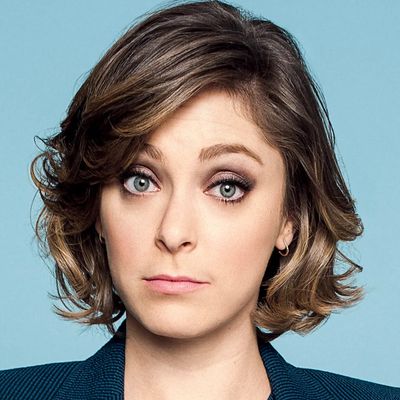
The creator of the CW musical comedy series "Crazy Ex-Girlfriend," Rachel Bloom is a theater geek at heart. She spills on her favorite musicals, the stage roles she'd like to play and recent events on "Crazy Ex" -- and sings a tune from the unproduced full-length musical she wrote, "Broadway Crazy."
Transcript
This transcript was automatically generated and might contain errors.
[0:06] Gordon Cox: You're listening to Stagecraft, Variety's Theatre Podcast, bringing you the stars and creators of the hottest shows on Broadway, off Broadway, and beyond.
[0:14] Gordon Cox: I'm your host, Variety's Theater editor Gordon Cox.
[0:18] Gordon Cox: On this episode of Stagecraft, I'm talking to Rachel Bloom, the Golden Globe winning star and co-creator of the CW TV series Crazy Ex-Girlfriend.
[0:25] Gordon Cox: It's a musical comedy about a New York lawyer who thinks she'll find happiness at last by moving across the country to pursue a romance with a childhood crush.
[0:33] Gordon Cox: As anyone who's watched the show or the YouTube videos in which she first attracted attention, or who caught her as the backstage host of the Tony's this year, Rachel is clearly a theater fan at heart.
[0:43] Gordon Cox: She's in the studio today to talk to us about the developments on recent episodes of Crazy Ex-Girlfriend.
[0:49] Gordon Cox: And I'll also ask her about her proud theater geekdom, what it's like to work with so many theater actors on Crazy Ex-Girlfriend, and when we'll see her on Broadway.
[0:57] Gordon Cox: Hi Rachel, thanks for being here.
[0:58] Rachel Bloom: Oh my god, my pleasure.
[1:00] Gordon Cox: So people know you from your work on TV and on YouTube, but it's very obvious that you are a theater kid. When did you find theater and how'd you do it?
[1:10] Rachel Bloom: I found it, uh, apparently when I was in the womb, my mother plays piano and sings. My mother would play piano and I'd kick. Um, which is such a like theater kid thing. It sounds a little bit like you're making it up, but I'm not, but like um, I just started performing really, really young. Um, my mother played piano, so she'd play piano. I'd sing. My grandfather was an amateur director, actor, and stand-up comedian who sold technical manuals by day, and so very quickly taught me. He taught me um All I Do Is Dream of You from Singing in the Rain. And I remember my grandparents had a coffee table that was the perfect size for a little kid stage, and I'd go up and sing. And I was an only child and just very naturally just took to it and craved attention.
Which is the root of wanting to be an actor. People who are like, I like acting because it allows me to explore, you know, the innermost art of No, you like it because you like the attention, and that's okay. Right. That's okay, right? That's okay.
[2:05] Rachel Bloom: That's the root of it for all of us. We're all, you know, broken. And so what are your favorite musicals?
[2:12] Rachel Bloom: Oh my god, what are my favorite musicals? I mean, honestly. Oh can I s can I curse?
[2:14] Gordon Cox: Yeah.
[2:18] Rachel Bloom: Fucking love Hamilton.
[2:19] Gordon Cox: Yeah.
[2:20] Rachel Bloom: Good. Assassins. So two historical musicals. Um I it's like, I mean, it's real like I'm trying to like uh A Sunday in the Park, uh I mean Chicago and Cabaret.
[2:33] Gordon Cox: Do you do you remember the song? Well, you mentioned that song from Singin in the Rain. Was that one of what were sort of the early songs that got you really hooked on?
[2:40] Rachel Bloom: Oh, that one, Sun will come out tomorrow. Castle on a Cloud. There are a lot of videos of me singing Castle on a Cloud. A lot of piano recitals of me singing Castle on the Cloud, a part of your world.
[2:49] Gordon Cox: So you play piano?
[2:49] Rachel Bloom: Yes.
[2:50] Gordon Cox: Okay.
[2:50] Rachel Bloom: Not well.
[2:51] Gordon Cox: Okay.
[2:51] Rachel Bloom: I I'm really not a I'm I'm not a great pianist. I'm much more of a lyricist than a composer. Um I'm good at uh finding hooks and and finding and I can find the hooks and the chords under it, but I'm really not. Um it's very, very, very secondary to lyrics and rhythm.
[3:08] Gordon Cox: Okay.
[3:08] Rachel Bloom: Um lyrics and rhythm, if that makes any lyrical rhythm. Does rhythm fall under the lyrics side or the composing side?
[3:17] Rachel Bloom: I because I think it can be both. Because to me, they go together when I write. I love how I'm asking myself. Like to like lyrics and rhythm, even before I have a melody or or if someone else writes the melody, they kind of go hand in hand. Anyway, I digress. Here's the question. I'm so tired. But also I'm having such a good time. I'm delighted. Um a colleague of mine and I have an ongoing discussion about what our favorite bad musical theater lyrics are. Do you have any of those?
[3:42] Rachel Bloom: Uh I never knew his name from The Civil War by Frank Wildhorn.
[3:47] Gordon Cox: Oh.
[3:48] Rachel Bloom: It's just repeating over and over. I never knew his name. And it's just like, I never knew his name. I never knew his name. That one's not all the key changes. Suffice to say, here's the thing. A lot of musical theater is not good.
[4:04] Gordon Cox: Right.
[4:04] Rachel Bloom: Um, and you know, you like to think, oh, there's really, really, really good theater being put up in like these little pockets. And there is. But from my experience living in New York, a lot of it isn't. I mean, I was in a Donald Trump musical. I was in a reading of a Donald Trump musical, I mean, this is ten years ago.
[4:25] Gordon Cox: Yeah.
[4:26] Rachel Bloom: It wasn't great. It really wasn't great.
[4:29] Gordon Cox: Right.
[4:29] Rachel Bloom: Um there are a lot of like blank the musicals.
[4:33] Gordon Cox: Yeah.
[4:34] Rachel Bloom: Um put up by people who otherwise wouldn't write comedy, but they're like comedically inclined. I feel a little bad because I feel like in interviews I've been a little snobby about musical theater and been like, oh, a lot of it isn't funny and blah, blah, blah. And you know, like, musical theater is hard to write and and I've written some fucking shit. I mean, we've all written shit, and I think that musical theater is really, really hard to do right.
[4:55] Gordon Cox: Yeah.
[4:56] Rachel Bloom: Yeah. And it it's very so it's very clear that some of the numbers in Crazy Ex-Girlfriend are sort of over overt homages to musical theater numbers. What have been some of your favorites?
[5:04] Rachel Bloom: Well, the this season we did a song called The Moment Is Me.
[5:09] Gordon Cox: Mm-hmm.
[5:10] Rachel Bloom: Um, which was kind of our we all wrote me and Jack, me, Jack Dolgen, and Adam Schlesinger, uh were the three songwriters of the show. We wrote that together, and it's basically everything we all hate about musical theater. I mean, I'm the biggest musical theater fan of the three of us by far. And so there are some parts of the song that I like. It's very emotional. I mean, Adam wrote such a beautiful melody for it. Um our writer's assistant actually, we recorded her singing an earnest version of that song. But anyway, uh there was uh I did a couple things in college where we were made to sing songs like The Moment Is Me, where the lyrics were not too far, where it was like, we're young, we're full of dreams, and it's it's just so easy and saccharine. So that that's very close to my heart, talking about it on a stagecraft podcast. Um I think that one of our best songs we've ever run done is the one Josh Groban sang this season.
[6:07] Gordon Cox: Yeah.
[6:07] Rachel Bloom: Um that was a delightful surprise. The end of the movie, yeah, and he sang that so so well. Um and then musical theater. I mean, God, we have so many musical theater inspired songs. I mean, the first song on the show, Wes Covina, that's that's the musical theater gig at me. And then the partner to it, A Diagnosis, which we just did in a recent episode. One of my favorites so far. Thank you so much. And that's very much like the um the more the slightly more enlightened twin of the Wes Covina song.
[6:32] Gordon Cox: Yeah, interesting.
[6:34] Rachel Bloom: Because it's earned there's an earnestness in the heart to it. And yeah, in the Wes Covina song, she tosses her coat to somebody and he catches it. And in the diagnosis, she tosses an envelope to the same guy and he catches it.
[6:44] Gordon Cox: Oh, wow.
[6:44] Rachel Bloom: Yeah, same actor. Look at that.
[6:47] Gordon Cox: And so Crazy Ex-Girlfriend was initially the idea of Aline Brosh McKenna, who co-created the show with you, right?
[6:52] Rachel Bloom: Yes.
[6:52] Gordon Cox: What did you say?
[6:53] Rachel Bloom: Who was also the showrunner. And really like the the boss.
[6:56] Gordon Cox: Right.
[6:57] Rachel Bloom: Right. Um, and so what did you respond to in that idea initially?
[7:02] Rachel Bloom: It was just so emotionally true, and it was a trope that I felt like needed to be explored and deconstructed, and like was i i it just seemed like perfect for the dark comedy that I'd always wanted to do.
[7:14] Gordon Cox: And it overlapped with something you had written at the time called Broadway Crazy.
[7:17] Rachel Bloom: I read that somewhere.
[7:18] Rachel Bloom: Yes, I I I have a full musical written called Broadway Crazy that's about a girl it's a basically a fucked up thoroughly modern Millie 42nd Street and it's about a girl who the I'll just tell you the opening number's called Hello New York and it goes I always pine for fame inside my padded cell so it wasn't hard to stab that guard. Hello New York and basically it's about a girl who escaped from a mental institution. This is like takes place in the 20s to become a Broadway star. There are some as the show has gone forward I mean one of the biggest similarities is one of her obsessions is with fire and burning things down. Independently of that, the idea of Rebecca burning things down was created by Aline in the writer's room when I wasn't in there and she was like we think that Rebecca's gonna burn things down I was like that's so fucking weird.
And so if I want to do Broadway Crazy now which I do I love it. I'm like do I okay do I want to change around the things that happen to be similar about Crazy Ex-Girlfriend or do I just say like well this is gonna be a lot of the same shit and just do it as is and I don't know.
[8:22] Gordon Cox: And then what how how interested are you in the idea of doing Crazy Ex-Girlfriend on stage?
[8:28] Rachel Bloom: Very interested we are we are actively uh looking into it and pursuing it.
[8:32] Gordon Cox: Yes. After the show is done?
[8:34] Rachel Bloom: Oh yes and and and we want to do four seasons which means that which has been sort of the idea from the beginning it sounds like it's pretty crazy which means it I mean if we stick to that plan, which if we get renewed, which I think we will knock on wood. Um, and I don't think we wouldn't do unless the CW is like, please, please, please do a fifth season, but we're like their lowest rated show. I don't think they're going to beg us to do anything beyond of what we you know want to do. Uh it means a year from now I'll be done shooting the entire series.
[9:06] Gordon Cox: Right.
[9:07] Rachel Bloom: God. That's weird. We're gonna talk about what your plans after that uh momentary. But uh farming.
[9:13] Gordon Cox: What farm yeah, yeah.
[9:15] Rachel Bloom: Skiing. One of the things that I uh a lot of theater fans really respond to in the show is just the number of sort of familiar faces from the stage who show up in the show.
[9:24] Gordon Cox: Yeah.
[9:24] Rachel Bloom: There's Donnalyn Champlin, probably most notably, who plays your friend.
[9:27] Gordon Cox: Well, I've been a fan of since I was gonna ask, did you know her before?
[9:30] Rachel Bloom: Yes. So I've been a fan of Donalyn since middle school because I own the album to this show called Three, uh huh, which only was in LA, directed by Hal Prince, and she sings this song in it called The Air is Free that I've been listening to honestly since middle school. And then I saw her in the Broadway revival of Sweeney Todd.
[9:47] Gordon Cox: Yep, she was great.
[9:48] Rachel Bloom: And there's also Vincent Rodriguez III, who was in Here Lies Love, and there was Santino Fontano, who was in Cinderella, and just recently um Rory O'Malley from Hamilton and Book of Mormon showed up.
[9:58] Gordon Cox: She's so good.
[9:59] Rachel Bloom: Do you and your casting directors seek out Broadway talent specifically for the show, or is that just how it falls out in a show where it is often required for people to sing and dance?
[10:07] Rachel Bloom: It depends on what we're I mean, what starts to happen, especially when we're casting these guest parts at this point, is we're thinking, who's who do we know that's also a fan of the show that we can just offer this to? Like Rory, we knew was a fan.
[10:17] Gordon Cox: Right.
[10:20] Rachel Bloom: We offered, we just, you know, wrote that for him, offered it to him. Um, with auditioning everyone for the series, acting was always the most important part. And the only reason I mean, the main the main reason I wanted to do New York auditions was yes, for the Broadway talent, but also for the diversity. I mean, especially in casting the role of Josh Chan.
[10:40] Gordon Cox: Right.
[10:40] Rachel Bloom: I knew that at the time, uh Asian American actors had more chances in theater than they did auditioning for TV and film. And I just I was like, I just feel like we're gonna find the guy in New York. I feel like he's a theater actor. And sure enough, right when we were auditioning, Here Lies Love was playing off Broadway. When Vinny heard that he got cast as Josh Chan, he was about to walk on stage for the finale of Here Lies Love on a night, and he started crying and stuff. And so uh so my point is everyone who auditioned for the pilot, had they not been able to sing a note, would have gotten the parts anyway. There isn't there is not one person we have cast in this show because their singing made up for the fact maybe their acting wasn't as good as someone. It's always been acting first.
[11:31] Gordon Cox: Interesting.
[11:32] Rachel Bloom: And so the show is in its third season now, and in recent episodes, it's taken a really notable turn into talking really explicitly about someone dealing with mental health issues and sort of struggling with it. Was that always part of the plan?
[11:44] Rachel Bloom: Yes. I mean, I think inherent in the show in doing a fucked up romantic comedy is exploring the reality of if you found yourself in a romantic comedy situation. And the reality is a lot of things we do for love are mentally ill. Uh a lot of things about love uh coincide with mental illness. Right. I mean, they've scanned the brains of people in love, and it overlaps with OCD. It's literally the chemicals that happen in your brain. Yeah, I think I I could be wrong about this. I'm trying to remember the facts exactly, but it's when you're in love, you experience bursts of dopamine simultaneously with with uh drops with drops in your serotonin, which is what happens when you're both on cocaine and have OCD. I could be wrong about that. I'm sorry, science people out there.
[12:29] Gordon Cox: Well, I like it.
[12:30] Rachel Bloom: I like it. But that's why, but that's why, for instance, uh, fun fact, I'm on Prozac because I have slightly low serotonin. The reason I've been with my husband for a long time, but I still remember all the heartbreaks I had so well, and they really affected me because my serotonin's already low. Falling in love made it drop even more and then gave me these like bursts of dopamine, which is how addiction forms.
[12:53] Gordon Cox: Right, right.
[12:55] Rachel Bloom: And so why is mental health then how why is that an important issue for you to address in uh in popular culture? Is it something that you feel like pop culture has gotten wrong in the past?
[13:05] Rachel Bloom: Yeah. Yeah, I felt like it's been pretty misrepresented. And I also feel like a lot of people don't know about it, especially the thing that we have um Rebecca diagnosed with, which is this thing called borderline personality disorder, which affects approximately, I want to say it's like 1.5% of the population. Um personality disorders are you know incredibly common, but no one knows what they are. And I have uh I don't have it, but I have very, very personal experience with people who have had it, and some people don't who don't know that they have it or don't know they have a personality disorder. And there's a real stigma in general with depression and anxiety, and and all of this stuff that you just need to pick yourself up by your bootstraps.
[13:48] Rachel Bloom: And I think it's in in a way, it's different when you're hearing voices or what it's something that's like oh, that's inarguably something chemical, right? But there's there's a certain disdain upon people who are, you know, depressed and have to go on medication or need therapy or who are anxious. Well, just snap out of it. Stop worrying. And it's just, it's not under, it's not understood. And as a child, I I mean, I still have anxiety, but as a kid, I when I hit puberty, I developed what I now in talking to doctors have realized was pretty bad OCD, um, in the form of kind of intrusive looping thoughts. And I thought I was the only one. And these were like shameful thoughts about like sex and and like it just just very, very weird, shameful thoughts.
And I just thought I was a weirdo. And when I would tell people about it, they look at me like I was a weirdo. And just knowing that, like, oh no, other people have had this, and this is something that can be treated, and this is something I I could have treated, and I wasn't alone, that helps. I think just the knowledge that you're not alone is for me half the battle. And I think for a lot of people half the battle.
[15:00] Gordon Cox: And so the winter finale recently aired. Um what kind of a place does it leave Rebecca in and where does she go from here?
[15:07] Rachel Bloom: Sure. Well, as you know, in the winter finale, what happened was um Rebecca is now in treatment and she's she's very, very scared about getting back into the outside world, and she's very focused in um getting an A plus in therapy. And her doctor says, You need to go out and start living life again. You need to kind of make some messes. You know, part of your personality is this idea of perfection and fear of getting things wrong and and not understanding that humans have gray areas because that's a main feature of borderline is this thing called splitting, where you see the world and yourself as either good or either either evil, and you can't reconcile the two to kind of see the nuance and things.
And so Rebecca goes with Paula to uh Buffalo where she's from, and Rebecca has fun with um Rebecca hangs out with Paula's dad, who's like kind of a piece of garbage to Paula, but the fun loving, neglectful alcoholic that R Rebecca needs to spend time with and and at the end of it she decides to she says like screw it and she hooks up with Nathaniel. She finds she has like sex with Nathaniel. And so that's how Nathaniel Who is for people who maybe don't watch the show is her uh it's her her boss or boss. Well, she's not she well, she's not technically at White Feather anymore, so her former ish boss um who is kind of if the trope we're playing with him is like the reformed asshole. Okay. Yeah.
Um and but we've really really seen his humanity this season, and so we kind of leave off in the winter finale of okay, now she's gonna strike try to embark on love again. And okay, so where do the core of the show, which is about love and romantic obsession and uh, you know, w what's what's sane about love, what's insane about love, and then the actual diagnosis start to meet. And that's what we play with a lot in the second part of the season.
[16:53] Gordon Cox: And so what's the angle on season four? Can you talk about that yet?
[16:59] Rachel Bloom: Uh no, just because it'll get into a can of worms.
[17:03] Gordon Cox: Okay. Got it.
[17:04] Rachel Bloom: I tried to talk to Aline about it the other day because you know, we're done writing season three and she's like, I I need a minute, babe. I just need a minute. And like, that is fair.
[17:13] Gordon Cox: So a lot of your work is really raunchy and unflinching and downright dirty. And although you can do anything you want on YouTube, like that's not so true on network television. What's uh what's been too dirty or daring for the CW that you really wish you could have gotten in there?
[17:28] Rachel Bloom: Oh wow. Well, you know, the original look, the original pilot that we did for Showtime, because we we were really a Showtime show, yeah. The make out scene with Greg was a hand job blowjob scene, which I I'm trying to get permission to post online 'cause it was too dirty for the D V DVD of season two, apparently. Oh wow. Uh yeah. They didn't want to put it on. Um I what was hard because we do dirty versions of the songs. You know, thinking about um heavy boobs in season one in an ideal version that would have been at the very least Brawless, where you could really see boobs kind of like flopping around. Um, and we just couldn't, there's only so much tit we can show. I mean, ideally, honestly, it would have been topless silhouetted.
Um I didn't want to, we didn't have the bandwidth at that point to do like that full, because it would have not even just been a dirty version of the song as much as a different just an entirely different yeah, yeah. And so it's things like that, but I'm amazed at the things they let us get away with. Amazed.
[18:26] Gordon Cox: Like what?
[18:28] Rachel Bloom: I mean, the song You Stupid Bitch, the song I gave you a UTI, uh a song all about we tap that ass where we can say, where should we finish on her chest? I mean it's amazing.
[18:39] Gordon Cox: Yeah.
[18:40] Rachel Bloom: Um how in go ahead.
[18:43] Gordon Cox: No, I mean, a little spoiler, we have a song uh we have a song coming up about sperm.
[18:49] Rachel Bloom: And I'm just like, great. We can say that. Awesome.
[18:51] Gordon Cox: How insane is it to write a weekly hour-long TV show with new songs in it?
[18:58] Rachel Bloom: It's insane.
[18:59] Gordon Cox: How does it say can can it be broken down in the way that Broadway thinks about like are there composer lyricists and book writers in the writer's room? Like, how does it even work?
[19:09] Rachel Bloom: It's a it's it's no. It's a really hard process to describe. I mean, the whole way it's structured is so unorthodox. I mean, so basically, Aline and I co-created the show. Right. Aline is the showrunner and ultimately has ultimate say over the scripts and everything to do with them. I mean, Aline approves every casting, uh uh, every, you know, every casting, every every person we cast. She approves all the wardrobe, she approves the sets. She's, I mean, she really is the the boss of the whole operation. Um I'm more like the unofficial sh more of the showrunner of Aline still has like final say. I'm the showrunner of the songs. I supervise um I'll do I'll do an edit pass of all the songs. I script out all of the songs, even if they're songs that I didn't write.
And so that's my domain. In addition to I have a lot of say over the writing. I mean, Aline and I still get together and we edit the scripts together. I'm in the writer's room for the first two months. I write a lot of the scripts with her.
[20:08] Gordon Cox: I assume you leave the writer's room after the first two months because you have to go be in the show, right?
[20:11] Rachel Bloom: Exactly, exactly. So, and then the songs are produced by Adam Schlesinger and Stephen Gold. And so that's huge. Now, Adam Schlesinger then also writes a lot of the songs. Okay. And he's also our executive music producer. So I'm like kind of the song showrunner, but he's also the head of the songs, and we work together, and then the third songwriter is Jack Doljen, who who is at all of the sound mixes. He's the representative for the music at every sound mix. He's the one who organizes when the song due dates are, in addition to writing the song. So it's it's very like our roles are very, very fluid and mixed.
[20:47] Gordon Cox: But the songs are down to three people, it sounds like.
[20:50] Rachel Bloom: Yes.
[20:51] Gordon Cox: Okay. Do you have a oh, we need a minimum of, for instance, two songs an episode or okay.
[20:57] Rachel Bloom: No. It's all about what demands. We try to have two. We've only done one episode with one.
[21:04] Gordon Cox: So theoretically, our minimum is two, but we have an episode coming up actually where we have a short song in the beginning of the episode and then just a reprise.
[21:14] Rachel Bloom: So it's two songs. You could also see it as one and a half.
[21:17] Gordon Cox: Right.
[21:18] Rachel Bloom: Yeah. So I imagine you watched the Tonies a lot as a kid.
[21:22] Gordon Cox: Yeah.
[21:24] Rachel Bloom: And then you were backstage this year.
[21:26] Gordon Cox: Yeah.
[21:26] Rachel Bloom: So tell me about that. What was your favorite part?
[21:29] Rachel Bloom: Oh my God. Um I think what's fun, what was also funny about being at the Tony's was the mix of the wonder, but also knowing some of the people. Uh Brandon Uranowitz, who was in Falsettos, uh, and I went to school together. And so he, I mean, there's actually a segment where I think he comes by and tries to distract me like I'm trying to be professional. And so that's really fun when it's and then I now know Patty Lapone. Right. And so seeing her being like, hey Patty, that's what's really cool. And in general, that's been so fun. And this is for everyone in the arts to come back to people who you knew in you know, college and work with them at a professional capacity. Danny Jallis, who plays George on Crazy Ex.
Yeah. Uh I have known him for over 10 years. He and I have known each other since college. He and I were on an indie improv group together, our college sketch group. And so that's also really special when you can blend the professional with people who you've known for years.
[22:25] Gordon Cox: Do you want to host the Tony's this year?
[22:27] Rachel Bloom: Yeah, of course. Full on host.
[22:29] Gordon Cox: Yeah, of course.
[22:30] Rachel Bloom: I mean, it's it would be scary if people judge you. But yes, I would love to host the Tony Awards.
[22:35] Gordon Cox: But that's true of all the stuff you're doing anyway.
[22:36] Rachel Bloom: So it's true. I don't know if I'm famous enough.
[22:39] Gordon Cox: Okay.
[22:39] Rachel Bloom: Um I mean I'm no Kevin Spacey.
[22:44] Gordon Cox: Well thank God for that.
[22:46] Rachel Bloom: We're gonna let that lie.
[22:48] Gordon Cox: Right.
[22:49] Rachel Bloom: Yeah.
[22:50] Gordon Cox: Um so as you mentioned, uh there's one more season after this of Crazy Ex-Girlfriend, in theory.
[22:58] Rachel Bloom: That's the theory.
[22:59] Gordon Cox: What's next for you after that?
[23:02] Rachel Bloom: A nap.
[23:03] Rachel Bloom: Yeah. A big big nap. It's like a long six-month long nap.
[23:08] Gordon Cox: Right?
[23:09] Rachel Bloom: Sure. Uh I don't know. I mean, I want to do Broadway. Honestly, a lot of projects. I mean, right now I have to write a book.
[23:15] Gordon Cox: Yeah, you're writing a book, right?
[23:17] Rachel Bloom: I'm writing a book, so I gotta work on that.
[23:18] Gordon Cox: Yep.
[23:19] Rachel Bloom: A lot of stuff.
[23:21] Gordon Cox: Yeah.
[23:21] Rachel Bloom: There's a lot of different stuff. Are there are there sh musical pre existing musicals that you would like a role in? Like are there roles you've always w wanted to play?
[23:29] Rachel Bloom: Yeah, I mean a lot of them are Yeah.
[23:35] Gordon Cox: I mean, yeah.
[23:36] Rachel Bloom: Like what? Dot and Sunday in the Park with George, but also George and Sunday in the park with George. Uh anything in Assassins. Uh-huh. I mean, anything in Cabaret, Harold Hill and the Music Man.
[23:48] Gordon Cox: Mm-hmm.
[23:49] Rachel Bloom: Um, yes. So so the the short answer is yes, of course.
[23:53] Gordon Cox: Right.
[23:54] Rachel Bloom: And new musical. I mean, I mean, the the new musicals coming out, some of them are just so fantastic.
[23:59] Gordon Cox: When did you discover sketch comedy as a sort of outlet?
[24:03] Rachel Bloom: College.
[24:04] Rachel Bloom: I got on the sketch group and I just fell in love with it.
[24:07] Gordon Cox: And then the YouTube stuff you did, the sort of the stuff that gave you uh that sort of attracted a lot of notice. You produced all that yourself, right?
[24:15] Rachel Bloom: Yeah. And I mean yours is like the best case scenario of that, right? Like you think you do it, and then it attracts attention and then you um would you recommend it to every artist?
[24:26] Rachel Bloom: You know, starting out on YouTube now is it's so different because it's the market is so the market, the internet now is so oversaturated with sketch comedy. I mean, ultimately everyone from an artistic standpoint, I think everyone doing comedy should get their start in live comedy, whether it's stand-up, live sketch, live improv, the feedback of an audience is it's how you learn. I mean, it's how you you learn in how to write. So I think the people who are just doing YouTube with uh, and this is really in terms of like comedy, who are just kind of going the like, well, I want to get known on YouTube before honing their skills, I would caution against that.
[25:06] Gordon Cox: Right, right.
[25:06] Rachel Bloom: Because I mean, I spent, you know, thousands of dollars of my own money. I had to make sure it was good. I was definitely curious about that because those those videos are really professional, and like how much did that cost?
[25:17] Gordon Cox: Yeah, Fog Mirai Bradbury was probably I think it was $3,500.
[25:24] Rachel Bloom: Oh wow. You can touch my boobies was $4,500. Uh Mermaid, I think it was like $6,000. I blew a lot of money on that one. That's all that one's my my like least favorite. Um and then I started getting funding later on. I mean, still though, when I did I did some videos with crack.com and my and my budget was only three thousand dollars for each one.
[25:46] Gordon Cox: So and I still I saved money then by producing a lot of those.
[25:49] Rachel Bloom: And I'm not a great I'm not a great producer.
[25:52] Gordon Cox: Right.
[25:52] Rachel Bloom: I can do it, but I suck at it.
[25:54] Gordon Cox: Right, right.
[25:54] Rachel Bloom: You've got the experience.
[25:55] Rachel Bloom: I mean, I don't suck at it. I just I don't organization in that way is not one of my like things that I love doing and not one of my skills.
[26:04] Gordon Cox: Right, right.
[26:06] Rachel Bloom: Um in the episodes coming up in the second half of the season, what musicals do you uh refer to?
[26:13] Rachel Bloom: Oh I'm trying to I'm trying, I'm going through my head. Musicals.
[26:19] Gordon Cox: Yeah.
[26:21] Rachel Bloom: There's a little bit of hair coming up.
[26:24] Gordon Cox: Excellent.
[26:24] Rachel Bloom: Other than that, there's actually it's not super musical theater heavy in the second part.
[26:30] Rachel Bloom: It's because we do, we do, there are quite a few reprises coming up.
[26:34] Gordon Cox: Of songs of preexisting of songs that you've written in other episodes.
[26:37] Rachel Bloom: Yes.
[26:37] Gordon Cox: And are they how clear is it that these are reprises of songs that have pre existed?
[26:44] Rachel Bloom: Is that that? Okay. Excellent.
[26:46] Gordon Cox: I look forward to it.
[26:47] Rachel Bloom: Yeah. Um, well, thank you so much for being here, Rachel. Great to talk to you. And I can't wait to see what happens with the rest of season three.
[26:53] Rachel Bloom: Thank you.
[26:54] Gordon Cox: Thanks.
[27:00] Gordon Cox: That was Rachel Bloom, the creator and star of Crazy Ex-Girlfriend, which recently aired its winter finale, and we'll pick up again with new episodes starting January 5th. Stagecraft will take a couple of weeks off for the holidays, but we'll be back in the new year with more in-depth interviews with Broadway's biggest creators and stars. Until then, see you at the theater.
© Broadway Podcast Network, All Rights Reserved