

The film, TV and stage veteran talks about his new Broadway show, "Stories By Heart" -- and reveals that even he feels like a fraud sometimes... Read More
From the show: Stagecraft with Gordon Cox
Guests
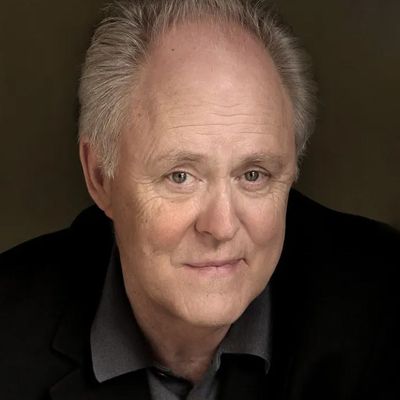
About
The film, TV and stage veteran talks about his new Broadway show, "Stories By Heart" -- and reveals that even he feels like a fraud sometimes.
Transcript
This transcript was automatically generated and might contain errors.
[0:06] Gordon Cox: You're listening to Stagecraft, Variety's Theater Podcast, bringing you in-depth conversations with the creators and stars of the hottest shows on Broadway and beyond.
[0:15] Gordon Cox: I'm your host, Variety's Theater Editor, Gordon Cox.
[0:18] Gordon Cox: On this episode of Stagecraft, I'm talking to John Lithgow, the Tony and Emmy winning star of theater, TV, and film who's had such a wide-ranging and varied career that it's impossible to know where to start.
[0:28] Gordon Cox: From the original Broadway production of M. Butterfly to TV shows like The Crown and Third Rock from the Sun, to movies from Terms of Endearment to the World According to Garp, right on up to Interstellar and Love is Strange, and the very recent Pitch Perfect 3.
[0:41] Gordon Cox: He's now on Broadway with Stories by Heart, a one-man show that's part autobiography and part solo storytelling.
[0:48] Gordon Cox: He's in the studio to tell us all about that show and more. Hi John, thanks for being here.
[0:52] John Lithgow: Great to be here.
[0:53] Gordon Cox: Um, it's pretty rare that you go more than a few years without showing up on Broadway, and it's been no exception with this show. You were last year in 2014 with A Delicate Balance.
[1:00] John Lithgow: Yeah.
[1:03] Gordon Cox: What keeps bringing you back?
[1:06] John Lithgow: I theater is sort of the beginning of everything for me. It's my tap root. I think even what I do in movies and TV is bring my theater chops to the table. And so I always come back to it. I also just love the New York theater community.
[1:23] Gordon Cox: What specifically in your in the way you act and how you think of yourself as an actor comes from the theater?
[1:30] John Lithgow: I grew up in a theater family. You talk about this in the show, of course. And uh I always feel like uh acting in a play or on stage is the one time when I'm using everything I got. I'm just uh th the other thing, very basically, you're sit you're in the same room with your audience. It's the only time when you're telling the story as other people are listening to it and experiencing it. You don't get that in movies or TV. Uh it they they of course have their own thrills, but you see yourself in a movie a year after you did the work. And what you do in film is provide a lot of raw material to other for other people to construct your performance, not on stage. Uh you know, you're not picking the close-ups and uh I'm uh i in a movie.
You're not you're not you do entire scenes where all the pauses are decided by other people. Not on stage. On stage you're completely in control of it. Um particularly in this show, which is just you up there. Um tell us a little about the show for people who haven't seen yet.
[2:41] John Lithgow: It's called Stories by Heart. I started it in a kind of workshop setting.
[2:46] Gordon Cox: You've been working on it for a long time, right?
[2:47] John Lithgow: I haven't really been working on it, I've just been doing it.
[2:50] Gordon Cox: Well, the first time you did it was probably ten years ago, maybe.
[2:52] John Lithgow: Ten years ago this March, I think.
[2:55] Gordon Cox: It's coming right up on ten years, which astonishes me. And how did it come about?
[3:01] John Lithgow: Well, the inciting incident was a moment between me and my parents when my father was very old and which is described in the piece. And very sick, and it's a part and parcel of the piece. And I read to him from an old book that he had used to read stories to me and my siblings when we were kids, and it delighted him just at a moment in his life when he most needed that.
[3:22] John Lithgow: And from that little moment, well, two things. One, it was it sort of taught me or it made me ruminate on why I do what I do, why actors perform and tell stories, why storytellers tell stories and why we all need to hear them. Want need, and love to hear them. There just simply is no culture anywhere that doesn't have stories, doesn't have the arts. And somehow that little moment between me and my dad crystallized all that uh more precisely than anything I've ever experienced.
[4:03] Gordon Cox: And that book that you mentioned is that the actual book that we see on stage?
[4:08] John Lithgow: Yeah.
[4:08] Gordon Cox: And the other thing I derived from that moment was discovering this fantastic piece of material.
[4:16] John Lithgow: This piece which is a book from your childhood, yes.
[4:18] John Lithgow: Yeah, yeah. This well, this story by P. G. Wodehouse, Uncle Fred Flits By, which had been a a favorite story of ours when we were kids, but I'd completely forgotten it.
[4:27] Gordon Cox: Right.
[4:28] John Lithgow: And I showed this book to them, my mom and dad, when I chose to read them bedtime stories to try to cheer my father up.
[4:36] Gordon Cox: Yeah.
[4:37] John Lithgow: And I told them to pick a story. They picked Uncle Fred Flits By.
[4:41] Gordon Cox: Right.
[4:41] John Lithgow: And as I read to them, it was like a firecracker going off in your hands. It was just less fan electrifying piece of comedy writing. And I quite cynically the thought went through my mind, wow, all I have to do is memorize this, and I've got a great one man show.
[4:59] Gordon Cox: Right.
[5:00] John Lithgow: But then the other but then the other dimension of it was what I was doing with this story. I was really uh nourishing the soul of these two old people just when they really desperately needed it.
[5:12] Gordon Cox: And what we see on stage is more of a performance of a piece than it is a uh reading, right? I mean it's it as audiobooks. Two stories from this book.
[5:22] John Lithgow: How did the second one the second one uh I read to my folks also during that month? I I read them lots of stories. The second one is called Haircut, yes, haircut by Ring Lardner. And it is I choose I chose that because it's just a such a fantastic theater device.
[5:40] John Lithgow: It could almost have been written as a stage piece.
[5:43] Gordon Cox: Yeah, it's a monologue, right?
[5:44] John Lithgow: It's a monologue. Every word of the story is told by a barber in a small town in Michigan in the 1920s, giving a sh an old time shave and a haircut to a stranger in town. And the barber chats as part barbers do and tells about the news of the town.
[6:03] John Lithgow: And the news he tells, in fact, is a an extremely compelling story, which just grows and grows and grows in suspense. And the unique thing about this is the barber himself doesn't know the true import of the story he's telling. But the audience or the reader do. And uh that's it just seemed wow, what a great companion piece to a wildly funny English drawing room comedy.
[6:35] Gordon Cox: Were there ever any other stories involved in the piece as you were working on?
[6:39] John Lithgow: I did try incorporating uh replacing Haircut with The Monkey's Paw by A.A. Jacobs, which really was our genuinely our favorite story back in those days. But The Monkey's Paw and uh the Wodehouse story are both from this sort of plummy uh uh drawing room English, very, very English tradition. And I wanted it them to be two very different stories, so I jettisoned that and restored Haircut and positioned it differently. Now I think it works just great.
[7:13] Gordon Cox: I see. And you're working with the director Daniel Sullivan.
[7:16] John Lithgow: This has been an amazing change, yes. Uh all the Jack O'Brien, another wonderful director who got it started all these years ago. He uh I both of these guys I've known for years, and they both come right out of the tradition that they share with my dad. Uh, they all know the same actors.
[7:37] Gordon Cox: Right.
[7:38] John Lithgow: My father's protege was Ellis Rabb.
[7:41] Gordon Cox: Oh, right.
[7:41] John Lithgow: Ellis Rabb's protege was Jack O'Brien.
[7:44] Gordon Cox: Right.
[7:44] John Lithgow: Uh so that's we should say actually that your father was a theatrical man and ran theater companies.
[7:51] John Lithgow: He was an artistic director and producer, created Shakespeare Festivals in Ohio. One of them is the Great Lakes Theater Festival, which still goes on. I think it was the first equity job Tom Hanks ever had.
[8:03] Gordon Cox: Oh, is that true?
[8:04] John Lithgow: Yes. And he also ran the McArthur Theater at Princeton for ten years. So he was he was definitely a man of the theater, but he was not particularly well known back then, and he's completely forgotten now.
[8:16] John Lithgow: So it's another wonderful dimension to the show, is just memorializing my dad. Was it always a foregone conclusion for you growing up in the family that you did that you would be in the theater and or be an actor?
[8:30] John Lithgow: Far from it. Absolutely o the opposite. Uh I did a lot of acting. We all did, me and my siblings. Starting in shows at the theater company. In show we were the little kids, you know, we were uh fairies in Midsummer Night's Dream. I was Nora's one of Nora's children in The Doll's House with my father playing Torvald when I was only two and a half years old.
[8:53] Gordon Cox: Wow.
[8:53] John Lithgow: It's an experience I don't remember at all, except I was told I was extremely good.
[8:59] Gordon Cox: I can imagine um and you know, as a teenager I became uh an apprentice for my dad and uh played all the all those little roles in Shakespeare with one syllable, Nym, Points, Pinch, Froth and then graduated to Gilded and Stern and Hortensio and uh but never Hamlet or Macbeth.
[9:25] John Lithgow: Um so I was an experienced actor just from uh summer summer diversions.
[9:33] Gordon Cox: Right.
[9:33] John Lithgow: But then I went to college where you do whatever you're really good at and I I became a campus star and that was that.
[9:41] Gordon Cox: Right, right. Broadway has changed quite a lot since you've since you first started out. Um what's your experience of it what's been your experience of that of how it's changed over the years and where is it now and how do you think of it in relation to where it was?
[9:55] John Lithgow: Well it's it's similar in a lot of ways and different in a lot of ways. Uh the nineteen seventies that was the decade where I where I was almost entirely a New York theater actor. I think I did about twelve Broadway shows in that period. New York was so different then as everybody says uh the theater district you wouldn't recognize it. Half the theaters were dark and all those dark theaters had marquees up of shows that had closed a year before and they hadn't even had enough money to change the marquee.
[10:33] John Lithgow: But the shows that were on were, you know, Bob Fosse's shows, Hal Prince's shows, Little Night Music, Pippin, That Championship Season, Chorus Line, uh just amazing things going on on Broadway and feverish creativity. It was Joe Papp's golden era. It was I and my pals, we were an amazing bunch of young actors. This was when Meryl Streep and Mandy Patinkin and uh just just we just had so much fun. And we were we were theater rats. We were poor theater rats, and we didn't give a damn.
[11:15] John Lithgow: Uh I I don't know how the what the experience how different the experience is like for young actors now. Uh but uh it certainly was it was exhilarating. I I went to uh Los Angeles in the early eighties when I married a UCLA professor. Not wasn't a professional decision at all. In fact, I hated to leave New York. Uh but that was the only period that I went a long, long time without doing theater. I think there was about a 14-year stretch between M. Butterfly on Broadway and Sweet Smell of Success on Broadway. That was a long, long time.
[11:57] Gordon Cox: Right.
[11:57] John Lithgow: Yeah. And I did only one production in Los Angeles of theater. I just somehow uh Los Angeles never struck me as a theater town, maybe after those years in the nineteen seventies. Of course it is. There's a lot of theater that goes on there, but I always when I do theater, I want to do it back here.
[12:20] Gordon Cox: Speaking of M. Butterfly, did you get a chance to see the new production?
[12:24] John Lithgow: Yes.
[12:26] Gordon Cox: You you said you hesitate. What what did you think? What was it like going back to it.
[12:30] John Lithgow: It was a very different show. I have to say it was extremely hard because it was very different. And I I remembered it as the perfect experience.
[12:40] John Lithgow: So I in fact I went with B.D. B.D. and I went to see it together. We knew we would need each other's company. And we did. It was very hard to watch. I mean there was that's a good thing. There was some beautiful work in it.
[12:55] Gordon Cox: Yeah.
[12:55] John Lithgow: But even the script itself was a very different thing from the way you performed right. David uh tackled his script and I think he wanted to remake it for a different era.
[13:04] John Lithgow: And uh I was stuck back in nineteen eighty-eight watching it.
[13:08] Gordon Cox: Sure. And is that do you have a sort of list in your head of kind of your favorite experiences on stage? Is that one of them?
[13:14] John Lithgow: That was a pinnacle. That was a peak experience.
[13:25] Gordon Cox: Right. Uh for which you won a Tony Award, as I guess.
[13:29] John Lithgow: Two and a half weeks after my Broadway debut. I think I surely hold the record for the quickest Tony win after a Broadway debut. Uh that was unbelievably exciting. It was a long wharf production that came in intact with its entire 22 man cast. Wow. An amazing experience. Trelawney of the Wells at Lincoln Center was a great, great time. Uh so many others. I mean, the two musicals I did were an out of body experience. I never thought I'd be in a Broadway musical, and they were just heaven.
[14:03] Gordon Cox: That was I was actually gonna ask you if you consider yourself I assume you consider yourself more of a play guy, but you've done musicals as well. Do you what's your
[14:10] John Lithgow: Yes? I I do consider myself more than a play guy. I feel like a fraud. I'm almost embarrassed that I won a Tony Award for Best Actor in a musical. This is for Sweet Smells.
[14:25] Gordon Cox: Yeah.
[14:26] John Lithgow: Yeah.
[14:27] Gordon Cox: Are there lessons that you uh that what what have been some of the biggest lessons that you've learned over your careers specifically from the theater?
[14:37] John Lithgow: Well I think the I always tell young people do theater. Do theater. You know, start out in theater. Don't don't aspire to anything else because the stage is where you learn who you are as an actor, what you're good at and and just as important what you're not especially good at and if you're not good at something, how to get better at it. And to be bold, you know, to keep trying do do the things you're afraid to do.
[15:06] Gordon Cox: Did did you find as you were particularly I guess in that period where you did more screen work than stage work, uh did you find a challenge to adjust to the the screen as opposed to you know having calibrated yourself as a stage actor for so long?
[15:21] John Lithgow: Or I think at first I I did there there was a big breakthrough moment when I was in the Twilight Zone movie of all things. And and my director of it was an omnibus film. It was one of the four short films. Right. This was the one on the plane as I recall that the monster on the on the wing yeah yeah uh terror at 35,000 feet or something like that. And the the director was George Miller, uh the Australian director of the Mad Max movies and Happy Feet and and and Fury Road, all this. He was great.
[15:56] John Lithgow: Uh up until George, every uh every film director I'd worked with had constantly told me to keep it down, take it down.
[16:08] Gordon Cox: You've done a fair amount of work with De Palma by that point, right?
[16:12] John Lithgow: Yeah, yeah, right.
[16:12] Gordon Cox: Yeah, that's funny.
[16:13] John Lithgow: But George was so exha he I nothing was ever enough for him. He wanted it more. And you know, look you look at his films, they are operatic.
[16:23] Gordon Cox: Yeah.
[16:23] John Lithgow: And to me it was like, oh boy, finally somebody wants what I got. Right. Right. In fact, somebody wants even more than what I got. And uh that was very, very liberating. Of course you have to be judicious, but it's the other wonderful experience was Third Rock from the Sun, which is six years of really theater on television. It was uh working with a superb ensemble of mostly theater actors.
[16:52] John Lithgow: And with a live audience, right?
[16:53] Gordon Cox: With a live audience and with terrific writers who who responded uh so uh so instinct reflexively to audience reaction.
[17:05] John Lithgow: Uh Bonnie and Terry Turner who created the show remain my very best friends. It was wonderful experience, but it was more a theater experience than film for sure.
[17:16] Gordon Cox: Yeah, that's interesting. And I mentioned in the introduction that your career is sort of impossible to summarize briefly because you've sort of work all the time in a very widely diverse range of projects, right? How do you choose what you work on?
[17:31] John Lithgow: What well there's less choice than you would think. I mean it's not like you're constantly offered things. Uh but I you know, there are many, many reasons to do something or to turn something down.
[17:44] John Lithgow: Uh sometimes it's a good idea just to make money. You sometimes need to. Sometimes it's a big deal, so you go for that. But what you'd prefer to be the reason is because it's good material with good people.
[17:58] Gordon Cox: Can can you characterize the work that attracts you other beyond that? Is there anything other than that in terms of do you have a preferred genre or a
[18:03] John Lithgow: Uh no I I do like to mix it up. Um I I was very excited to do Stories by Heart at this point because I have just done a lot of film and TV.
[18:20] Gordon Cox: What made you think of returning to it actually we didn't
[18:20] John Lithgow: well I have always returned to it. I uh have you done it periodically over the years over the years I've done it about a hundred times.
[18:30] John Lithgow: Uh I did a six week run of it at the Mark Taper Forum about six or seven years ago. And mostly it's been little one night stand tours. I would bunch together f three, four or five gigs.
[18:46] John Lithgow: I had Stacy Levine uh was my tour producer and they would book me in these you know like once or twice a year I would go out and do a little skein of four shows. And as a result I visited about thirty five cities that I many of which I'd never been to before it was very extremely fun.
[19:12] John Lithgow: And performing it for very different audiences the the only problem with it was it didn't change much because if if I was suddenly booked, I would suddenly realize oh I gotta pull it together to do it in two weeks in Galveston or something. I I would simply learn it was all I could do just to learn the words and get it back up. It's a lot of work.
[19:35] Gordon Cox: So I wasn't really changing it. When I met with Todd Hames and said the roundabout, and I said, Look, if ever something falls apart, you know, come find me, and I you know, it'd be great to do it on Broadway. I always did nurse the ambition of doing it on Broadway, but I also didn't think the last time you did it in New York it was off Broadway in Lincoln Center, right?
[19:58] John Lithgow: Yeah, the first time I did it at all. And that was just m seven Monday nights.
[20:02] Gordon Cox: Right, right.
[20:03] John Lithgow: Uh it was strictly a workshop. And I wanted to sort of get some sort of closure, sort of get it out of my system. Although I I've enjoyed it so much, I still I'll still do it.
[20:14] Gordon Cox: Right.
[20:15] John Lithgow: But now when he booked me and gave me the slot, and I thought, well, this is just absolutely perfect. Right, I knew I it was time to get serious and to hire a director. Jack O'Brien had helped me get it started, but Jack is immersed in Carousel.
[20:32] Gordon Cox: Yep.
[20:32] John Lithgow: So I called upon my really good friend Dan Sullivan, whom I worked with four times. He even directed me in King Lear.
[20:39] Gordon Cox: Oh, yes, which you did right before um The Wicked Balance, right?
[20:43] John Lithgow: That summer in the park.
[20:44] Gordon Cox: Yeah, three years ago.
[20:45] John Lithgow: And and Dan turned out to be well, as I knew it, he would be. He was a fantastic editor of the material and tightened it and turned it into a really wonderful, watchable evening.
[20:58] John Lithgow: And we hired a staff. John Lee Beatty designed it, Jess Goldstein designed uh my my suit, you know, and uh uh Ken Posner lit it. It's if it's a fantastic theater piece, which I knew it had to be if I if I were gonna ask people to pay Broadway prices for it.
[21:17] John Lithgow: And that's transformed it. I mean, for one thing, it's like twenty minutes shorter. I always knew I always knew I cannot ask people to watch me for this long, but I couldn't figure out how to cut it.
[21:30] John Lithgow: Well, Dan knew exactly what snipped it right out. He knew exactly what had to go.
[21:36] Gordon Cox: When you get recognized on the street, what do you tend to get recognized for? Is there a project or two that is usually the the the last hot thing because anything you did ten years ago is gone, it's forgotten.
[21:48] John Lithgow: Interesting. The more you can make peace with that, the better off you are.
[21:51] Gordon Cox: So is that the crown now?
[21:52] John Lithgow: What is that?
[21:53] John Lithgow: Oh, it's very much The Crown. Uh Daddy's Home 2, Pitch Perfect 3, you know.
[21:59] Gordon Cox: Right.
[21:59] John Lithgow: Uh Trial and Error, the silly uh NBC comedy I did last year.
[22:04] Gordon Cox: Last season, yeah.
[22:04] John Lithgow: But I would say The Crown overwhelmingly. A lot of people say Dexter to me, actually, which I recall your dexterity performance in as well.
[22:11] Gordon Cox: And Third Rock.
[22:12] John Lithgow: Yeah.
[22:12] Gordon Cox: Uh but you know, it's it it tends to be the last thing.
[22:17] John Lithgow: Yeah.
[22:18] Gordon Cox: And you write as well. You've written a number of children's books, and you've written a memoir, and um does that impulse stem from the same kind of storytelling impulse that you talk about in the show in terms of your work as an actor?
[22:30] John Lithgow: I don't have a strong impulse to write. I don't really like to write, it's because it's so painstaking. You know, the nice thing about acting is how completely irresponsible it is.
[22:40] John Lithgow: I mean, face facts. You have your lines written for you, your your your day is scheduled, all you have to do is show up and be prepared for that.
[22:50] John Lithgow: Uh you know, it's i i you're you have to have courage to write your own material. I have such r almost reverence of stand-up comedians, for example. I could could not do that. It to me it takes such courage.
[23:07] John Lithgow: Um as I say, this is the first time I've really written from my own experience to connect with an audience, and it's a very rare thing.
[23:20] Gordon Cox: It doesn't sound like it's something you're desperate to do again.
[23:24] John Lithgow: Uh no, I'm not desperate to do it again. I i if if some in if the inspiration comes, I mean there was a genuine inspiration here. I I really did want to do this, but I don't have that particular ambition.
[23:38] John Lithgow: Uh you know, I've had little spasms of that. I've written screenplays in my day that I tried to get people interested in.
[23:46] John Lithgow: But you have to have tenacity. It has to be the one and only thing you want to do. And I have the the uh the drawback of constantly being hired to act in something else.
[23:59] John Lithgow: I mean, I'm a I'm I have the most distractable life.
[24:02] Gordon Cox: Yeah.
[24:02] John Lithgow: Yeah.
[24:03] Gordon Cox: Speaking of what have you got on your plate coming up?
[24:05] John Lithgow: Nothing.
[24:06] John Lithgow: You're in this virtually nothing. I'm gonna do Pangloss in a Carnegie Hall concert version of Candy.
[24:13] Gordon Cox: Oh, great. Have you ever played that role before?
[24:14] John Lithgow: No, and I've I'm thrilled to do that.
[24:17] Gordon Cox: Um so you're in uh you're in uh we should say you're in Stories by Heart until March 4th.
[24:22] John Lithgow: March 4th. It's a nice ten-week run.
[24:24] Gordon Cox: Yeah.
[24:25] John Lithgow: And uh to my amazement, I seem capable of doing eight shows a week. Because it is a workout.
[24:30] Gordon Cox: Wow.
[24:32] John Lithgow: You may have noticed how deep and rummy my voice is.
[24:37] John Lithgow: Um but uh no, I have not nothing, nothing booked uh, uh which is not a bid for work. I'm I'm perfectly happy not to do anything for a while.
[24:47] Gordon Cox: Are there specifically talking about stage work? Are there uh kind of roles that you've always wanted to play that you like bucket list roles for you?
[24:57] John Lithgow: The last answer I had for that was King.
[24:57] Gordon Cox: Was King Lear I was gonna say, what else do you do after that?
[25:01] John Lithgow: Now it's gone, you know.
[25:03] John Lithgow: Yeah.
[25:04] John Lithgow: I I you know, things come at me as such a uh ecstatic surprise. Winston Churchill.
[25:13] John Lithgow: That was a phone call from my agent saying that Stephen Daldry and Peter Morgan wanted me to play Churchill.
[25:19] Gordon Cox: This is the blue, yeah, but in The Crown.
[25:23] John Lithgow: And uh my God, that was the job of a lifetime. It was so wonderful.
[25:30] John Lithgow: Um I never would have dreamed that would have come my way.
[25:33] John Lithgow: So I sit around wait to be other people's brainstorms.
[25:38] John Lithgow: Um the very few times when I've done something that has been entirely mine. One of them is Stories by Heart, which has been terrific.
[25:49] John Lithgow: But rarely have my ideas been the best ideas.
[25:54] John Lithgow: I I other people think of things for me that I didn't think I was capable of. And when you're challenged like that, you tend to have the most thrilling experiences.
[26:06] Gordon Cox: Well, we can't wait to see what you do next.
[26:08] John Lithgow: Well, thank you. I hope we talk about it next time.
[26:10] Gordon Cox: Yes, absolutely.
[26:11] John Lithgow: It's great.
[26:11] Gordon Cox: Nice to talk to you, John.
[26:12] John Lithgow: Thank you.
[26:12] John Lithgow: Thank you.
[26:13] John Lithgow: It was terrific.
[26:20] John Lithgow: That was John Lithgow, talking about his solo show on Broadway, Stories by Heart, playing at the American Airlines Theater through March 4th.
[26:28] John Lithgow: On the next episode of Stagecraft, see you at the theater.
© Broadway Podcast Network, All Rights Reserved