

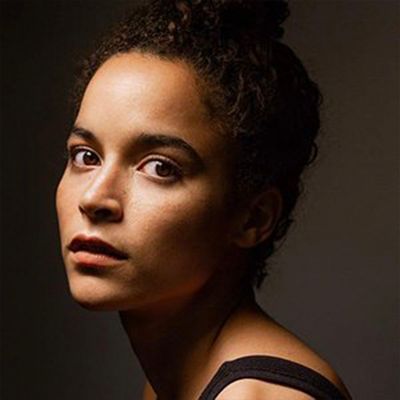
Soon to make her Broadway debut in the buzzy play “Stereophonic,” Canfield talks learning all those overlapping lines, telling an accidental lie on the way to winning her part in the show, the “Succession” diaspora on stage, and that one time the “Stereophonic” cast became a real band in Brooklyn... Read More
From the show: Stagecraft with Gordon Cox
Guests
Featured Shows

About
Soon to make her Broadway debut in the buzzy play “Stereophonic,” Canfield talks learning all those overlapping lines, telling an accidental lie on the way to winning her part in the show, the “Succession” diaspora on stage, and that one time the “Stereophonic” cast became a real band in Brooklyn.
Transcript
This transcript was automatically generated and might contain errors.
[0:06] Gordon Cox: Welcome to Stagecraft, Variety's Theater Podcast.
[0:09] Gordon Cox: Your backstage pass to revealing conversations with stars, creators, and industry leaders.
[0:15] Gordon Cox: On Broadway, off Broadway, and beyond.
[0:17] Gordon Cox: I'm Gordon Cox.
[0:19] Gordon Cox: On this episode of Stagecraft, I'm talking to the actor Juliana Canfield.
[0:23] Gordon Cox: Many of you will know her from the Emmy-winning TV show Succession, in which she played Jess, the assistant to Jeremy Strong's character Kendall, in a relatively small but very important role.
[0:34] Gordon Cox: She's also been in TV shows including The Calling on Peacock and Why The Last Man on Hulu.
[0:39] Gordon Cox: But I'm talking with her now about her Broadway debut in Stereophonic.
[0:44] Gordon Cox: The play, by writer David Adjmi, became an off-Broadway sensation when it premiered at Playwright's Horizons earlier this season.
[0:51] Gordon Cox: The show follows the members of a 1970s rock band struggling to record their new album after a burst of success.
[0:58] Gordon Cox: It's a situation that loosely mirrors a moment in the lifespan of the real-life rock band Fleetwood Mac, and it's depicted in Stereophonic with a hypernaturalistic verité attention to detail.
[1:10] Gordon Cox: There's even original music, a lot of original music, by Will Butler, a former member of the band Arcade Fire, and that music is played live on stage by Canfield and her castmates.
[1:21] Gordon Cox: Now Stereophonic is gearing up for a Broadway transfer that begins April 3rd.
[1:25] Gordon Cox: And Canfield is in the virtual studio with me to talk about learning all those overlapping lines, getting that music right, and whether this play is making any rock star dreams come true for her.
[1:39] Juliana Canfield: Hi Gordon, thanks so much for having me.
[1:43] Juliana Canfield: Stereophonic has been described as kind of hypernaturalistic in the way it recreates these kind of loose overlapping rhythms of everyday speech and everyday life.
[1:53] Juliana Canfield: And I took a look at the script recently. And it yes, it's yes.
[1:59] Juliana Canfield: It's funny because it reminded me of, I don't know if you've ever read the script to Noises Off, which is a farce and a totally different kind of play, but it is so precisely annotated in terms of the timing and when people say certain words and words that you know, this line has to happen right here, and this person moves from this space to another.
[2:17] Juliana Canfield: And the Stereophonic script is similarly meticulously detailed.
[2:22] Juliana Canfield: Like you've got, oh, your line overlaps with this one word in this other character's lines, and then another character moves into this space at a precisely the right moment to join this conversation.
[2:34] Juliana Canfield: It's like hyper detailed. And the idea of trying to learn it sort of broke my brain.
[2:39] Juliana Canfield: So it broke mine too.
[2:42] Juliana Canfield: Yeah.
[2:43] Juliana Canfield: And I'm still picking up the pieces.
[2:45] Gordon Cox: Yeah, well, exactly. Like, tell me about it. I assume it was as much of a challenge as it seems, and then how did you tackle it?
[2:53] Juliana Canfield: Yeah, I mean, you hit the nail on the head. I think it's appropriate that the script looks the way it does, and that it's engineered the way it is because it feels like a piece of music, and of course, the play is about a piece of music, and it's really scored, and the end result is something that can feel quite casual or off the cuff or improvisational, but to get there, the structure was really instrumental.
[3:23] Juliana Canfield: And on the first day, Daniel Akin, our brilliant director, very candidly said, I'm not really sure how to do this because we have to do it perfectly. So I think we'll just run it until we hit a snag, and then we'll do it every day until we get to some semblance of specificity.
[3:48] Juliana Canfield: And I'm talking specifically about the first scene of the play, which is maybe the most extreme version of the scoring. For those of you who are listening, the whole play takes place in a recording studio, so you have the control room, which is the front of the stage, and then the recording, the sound room in the back of the stage, which is separated from the front by a piece of glass.
[4:08] Juliana Canfield: And in the first 20 or so pages of the play, there are scenes going on concurrently between those two with a ton of overlap.
[4:17] Juliana Canfield: So sometimes my cue comes from something I can hear, sometimes it's something that I can't hear, but that I as an actor can hear from another room. Sometimes we're hearing our cues from a microphone that's coming from another room, sometimes we are hearing it from a microphone that only the actors are meant to be hearing.
[4:34] Juliana Canfield: It's extremely precise. And what we would do is we would just start from the top of the play, which begins with the line bass drum, and we would go until someone came in on their cue too soon or came in on their cue too late, and we would go back and do it again.
[4:53] Juliana Canfield: And we would just run through it every day. It felt like carding wool. You know, have you ever carted wool before?
[4:58] Gordon Cox: I don't know if you did that in like—
[4:58] Juliana Canfield: I've never done it, but I can feel I can picture it.
[5:02] Juliana Canfield: Yeah.
[5:02] Juliana Canfield: Yeah, yeah. So we were just carting wool, and then once there was a point we were in the theater, we were in tech, we were in what we were calling sound tech when we were getting the microphones really specific and making sure our levels were good, both for the audience and for our ears.
[5:17] Juliana Canfield: And I felt like we were really in the pocket, and that all of our overlaps were really specific. And David Adjmi, our wonderful playwright, came in and said, You guys, I love you all so much, but you're not getting any of the overlaps correct.
[5:34] Juliana Canfield: And so we sat there all in a circle on the stage, and he had the script, and we started running through it, and he would just say, Nope, you're in late. No, you're early. Go back and do that part again. And we just ran it and ran it and ran it.
[5:49] Juliana Canfield: Yeah, it was a really regimented process. It felt like, you know, we had a drill sergeant sometimes, but I do, and at times I found myself feeling like I wanted to rage against the machine because it feels like such a tight container.
[6:09] Juliana Canfield: But the thing is, David Adjmi is a genius, and he wrote the play in a specific way for a reason. And when we hit the rhythms perfectly, you can feel the whole scene sort of fill with air.
[6:24] Juliana Canfield: It feels like a kite that catches the wind and suddenly it's moving in this beautiful way that feels so natural, but getting there requires a lot of repetition.
[6:35] Gordon Cox: Was it particularly hard to memorize?
[6:39] Juliana Canfield: It was hard to memorize.
[6:43] Juliana Canfield: It was hard to memorize, but we had a pretty protracted rehearsal period because we were also learning how to play instruments and play together as a band.
[6:54] Juliana Canfield: So we had the time, and Daniel, our director, is so brilliant and leads with such a sense of calm. I think if our leaders had any sort of frantic energy, it would have created a major problem for me, but I felt like they believed that we would get there eventually if we just worked at it a little bit at a time.
[7:20] Juliana Canfield: But yeah, I mean it was a hard thing to work on at home by myself. It was the kind of project that rehearsal really felt so completely necessary because of all of the different parts.
[7:34] Juliana Canfield: I mean, there's only so much I can do at home, being like, okay, and then these 12 other lines happen all concurrently, and then that's my line. So it was just being in rehearsal and doing it over and over again. I mean, it really was, as they say in France, the repetition. That's what did it.
[7:51] Gordon Cox: And so let's wind it back a little bit and talk about how you got involved in the project. When did it come to you and why did it appeal to you?
[8:00] Juliana Canfield: Um, I'd heard about this play. This play has been in development for I think a decade. And just before the pandemic, there was a staged workshop of the play that I heard about because it was just one of those projects that I felt like every actor I knew was interested in or had heard about.
[8:26] Juliana Canfield: It was just the talk of the town, kind of, which is so rare for a reading. And I'd heard about it and I knew that they were putting together a production, and then the pandemic happened, it fell apart, and then last spring I was taking a walk with a friend and she mentioned that it was coming back.
[8:44] Juliana Canfield: And I called my agent and I said, you know, I don't really feel like a musical theater actress, but I love music, and it would be so great to put my name in the hat for this.
[8:58] Juliana Canfield: And I did a reading of the play in the spring with a lot of the cast that ended up being in the production. We just read the book. And they asked after I did that reading, they asked if I could sing, and I said, Yeah, I can sing.
[9:17] Juliana Canfield: And they said, Well, you have to put yourself on tape to prove it because we don't believe you. And then I really put it off. I don't know, I really I was scared. Singing is really nerve-wracking, and I really really put it off for about a month, and finally I put myself on tape and I sang "Landslide," and I sent that in, and they said, Okay, okay, she can sing.
[9:50] Juliana Canfield: Can you play the piano? And I had a call with the music director, Justin Craig, and he said, you know, what's your experience with piano? And I said, Oh, I played till I was 18. So I feel pretty confident that I'll be able to handle whatever the music is.
[10:09] Juliana Canfield: And I was talking to my mom later that day, and I told her how the conversation went, and she said, Juliana, you quit the piano when you were in the sixth grade. You were 12. And I said, Okay, well, I guess I remembered things differently, and I just spoke with a lot of confidence about my piano abilities on the phone with a professional musician, so I hope that I can figure it out.
[10:30] Juliana Canfield: Um and yeah, so that's sort of the long story of how I got involved. But yeah, you mentioned that you're saying "Landslide," and the situation in the play sort of parallels a similar moment in the band Fleetwood Mac at a certain stage of its development.
[10:46] Gordon Cox: Sure. Although it is not that story. How much of that kind of historical context did you draw on in kind of creating your character and kind of living in that world?
[10:56] Juliana Canfield: Yeah, very little. I very little. I listen to Fleetwood Mac in my own life, and I listened to probably more of it when I was preparing for the play, but I was listening to it as much for I was listening to it more from the perspective of trying to understand what kind of sounds they made and how music from that time period sounded and trying to imagine what the experience would have been of recording that music.
[11:31] Juliana Canfield: And for Rumours specifically, which you know is their seminal great album, there are all of these incredible first takes, tenth takes, outtakes of these songs that feel very concretized or did feel very concretized to me before I listened to these other versions and hearing all of the other versions, hearing the mess-ups or the different attacks that they were taking producorially, I found that really informative because so much of this play is about trying different things and repetition and throwing paint at the wall and having some big flops, probably, but also finding kind of unexpected genius musical moments too.
[12:33] Juliana Canfield: So that was more what I was interested in with Fleetwood Mac.
[12:39] Gordon Cox: I'll have more with Juliana right after the break.
[12:52] Gordon Cox: Welcome back to my conversation with actor Juliana Canfield, making her Broadway debut in the play Stereophonic.
[13:00] Juliana Canfield: As the play goes on, the characters, everyone, your character included, becomes increasingly sort of frazzled and exhausted. And it's a long play, you know, like it's three hours. And how do you what has been your experience of having to push yourself to that like exhausted state sometimes twice a day? And then that's to get through that to kind of recreate that and then live through it in your body. What's that was that hard for you?
[13:28] Juliana Canfield: Well, one thing is you pointed out very correctly that the play is three hours, and so there's not so much pushing. It's really it's exhausting. The play is exhausting, and it requires a lot of focus, and I think more than anything, it requires a lot of focus, and both because of what we talked about earlier, the way that the script is written, so you really have to be listening so closely the entire time, and also because of the music, and that requires a tremendous amount of listening and kind of patting your head and rubbing your stomach. So David did something I think so useful for us as actors by giving us this very long stretch of road through which to explore the process of becoming exhausted by a creative process.
It's all very meta theatrical. The emotion, yeah. So it doesn't feel that there's much pushing. I mean it's hard and it's emotionally exhausting, yes, to be make oneself vulnerable to that kind of, at least for my character, it feels like there's a lot of emotional betrayal that unfolds as the play goes on, and that's difficult. But I think also the circumstances of the play and the circumstances of the music existing in this like a Beckett play where it feels like it's never ending and it's always improving, or we're taking two steps forward and one step back with the music, all of that operates on the characters' hearts, I think, and just makes it easier for them to break open by the end.
[15:32] Gordon Cox: Did you ever have dreams of being a rock star? And is this fulfilling them in any way?
[15:38] Juliana Canfield: Yeah, I grew up I was a big admirer of Britney Spears. I think I wanted to be a singer, I wanted to be like a pop singer. But I never really, musicians, singers particularly, I think, are superheroes. They feel like next to divine. You need such chutzpah to stand up in front of people, even 20 people. We played for 20 people, and I thought I was, you know, I had an out of body experience 100%. So I can't even playing for Madison Square Garden or even for 500 people seems like I think I would just evaporate and turn to dust if I ever did that. So this is a nice sort of middle ground because I will also say that what I love about the play is and the music that we get to perform in the play is it doesn't feel like a performance.
It feels like rehearsal, it feels like musicians at work, and there's a certain layer of protection in that, I think, because of all we have the glass that quite literally separates us from the audience, so it's even hard to hear how the audience is responding to the music. And also there's a different sort of pressure in this play. It's not the pressure of creating a rock star persona, it's the pressure of being a workman, like a musical workman who has a rock star persona that they can inhabit, but that we're not necessarily inhabiting in the play. That feels like a good happy medium to me. Though, you know, then there's all the boozing and like all the smoking of cigarettes, and that feels kind of rock star and glamorous.
And I don't understand how these people, how anybody ever got any work done. I mean, I smoke three little sips of an herbal cigarette, and I'm like, I need to steam my throat for an hour after this. I need three cups of tea. I can't talk for 12 hours. And all of our favorite music was produced by people who were chain smoking and drinking bottles and bottles of who knows what, etc. It's incredible.
[18:21] Gordon Cox: And so, how hard was it? Did you find well, first of all, to reteach yourself the piano? And then how what was the process of becoming a band as you all learning to play together? Is that uh is it similar to kind of learning to become a cast together and you know, work together as a cast?
[18:39] Juliana Canfield: Um there is a similarity, but it also it's so different. It requires, I said earlier, Gordon, I think the music component of this play requires such deep listening that feels very different from what's usually expected of an ensemble of actors in a project. We in the beginning of the rehearsal period, we would spend the whole morning or sometimes two-thirds of the day just playing together. Trying to each of us get comfortable with our own instruments and also getting comfortable playing together, feeling just learning how to be aware of one's own responsibility to the song, and also have a real awareness of everything that's going on around you because I mean I think that was the main thing for me. I could practice the piano by myself at home and work on.
[20:24] Juliana Canfield: So that was a special challenge. We in the beginning of I think maybe in our first week, Will Butler, who composed the music for the show, member of Arcade Fire, and also his own great band, Will Butler and the Sister Squares, he and that music project had an album release concert that they were doing at Elsewhere in Brooklyn, and he asked us to open for you were a rock star for a minute.
[21:03] Gordon Cox: Yeah, yeah.
[21:04] Juliana Canfield: Well, wait, well wait. So he asked us up. We got an email, it's probably day four of rehearsal, and he says, Will you guys please be my opening band? And Tom Pasinka, who plays Peter, writes back, hell yes. Chris Stack plays the drums, he plays Simon, fuck yeah, I can't wait. Will Brill, who plays Reg, he's on the bass, writes back, dream come true. Sarah and I, Sarah plays Diana. We're like, we can absolutely not do this. We cannot do this. This is a sure way to this is the only possible outcome is total ego death. We won't be able to do the show, we'll have to cancel, we'll have to quit. It's going to be so humiliating. We can barely play through one song. We can't do it. And I felt really sure that it was a bad idea and that we shouldn't do it.
And the next day we came into rehearsal and Will said to me, you know, Juliana, you're right. It's gonna be a really good story in like 30 years when we say that we just didn't open for Will Butler because it could have gone really badly and it might have been embarrassing. And you know, that was that was a good reminder and also kind of a challenge. There's nothing like peer pressure to really get me going. So we ended up doing it, and we had about two more weeks of rehearsal under our belts, and it was kind of incredible to me how much we'd grown in that amount of time. But it did feel I don't really remember it at all. And there were maybe 40 people there. So yeah, that was but but so I think your original question was what what was it like to turn into a band?
And I we just spent a lot of time working on it, and that sort of felt like an important milestone in our ability to play together. And then by the time we were in rehearsal or in performances and we were doing a sound check every day, I felt like we started talking to each other like we were a band. We started nitpicking and having little tiffs about who was going a little too quick here and who needed who was a little flat here, and well, I'll do this for this song if you promise to do this for my song that you keep messing up, and all of the dynamics started to feel really genuine. The squabbles felt genuine, and I think that was a that was the moment when we started squabbling and bickering. That's when I felt like we'd really sunk in as a band.
[24:00] Gordon Cox: What do you when people ask you what the play is about, you know, really about, what do you tell them? What's what's it about for you?
[24:12] Juliana Canfield: Well, when people ask me what it's about, I say that it's about a band recording an album. But I also I think I tend to leave it at that because I think what it is really about is quite deep and quite earnest, and in my day-to-day life, I think I kind of struggle with the kind of earnestness that David asks of us in this play, but I really think it's about the costs of making art and the costs of making life and how those things intertwine. I think in this play life and art are synonymous. So many, or for my character, Holly, her husband is in the band, and later her ex-husband, her best friend, by the end of the play, there are questions about that friendship. But this band, this artistic project is also her life.
Everything is in one bowl, and there's so much joy in the play, but there's a real risk in allowing yourself to pursue that kind of joy artistically and emotionally, and I think the play explores that tension between the thrill of going for something and the devastation of having it taken away.
[26:10] Juliana Canfield: Stereophonic is your Broadway debut. Has Broadway been particularly meaningful to you as a destination or as a goal? Or what tell me about your relationship to Broadway before this?
[26:24] Juliana Canfield: Sure. I mean my I grew up mostly in Washington, DC, but my family is from New York and I grew up seeing shows on Broadway, particularly with my grandmother. Um she loved the theater. She saw everything and she brought me with her to many things. I have a very vivid memory of seeing Wicked with her. Um I was enraptured. It was I couldn't believe how incredible it was. It was I was at the perfect age. I you know, I was I in my mind before the curtain came down for intermission, I was already buying the cast album, and the curtain came down, and my grandma goes, uh, hey, my miss. And I was like, absolutely. I I feel the same way. So I didn't get the cast album I had to buy it on iTunes later. But um I've always I I I don't think that I ever privileged or in in my in my later years as I got more serious about becoming an actor, I didn't privilege Broadway over off Broadway.
The idea of doing theater in New York felt so thrilling to me um in general. But the other day I was walking down uh, you know, 45th Street. I was on my way to see Pearly Victorious, and I was walking um, I was walking to the theater through a block lit up on either side by all of these marquees, and I got very sort of misty. I couldn't believe it. Um I think Broadway I you know, you can be s as cynical as you want if you've if you if you're an actor in America, there's something about it that kind of cuts through that cynicism or um I don't know sense of yeah, it it just doesn't really allow for it, at least for me in this moment, I I I just found myself like feeling quite reclemped and very giddy about it.
And the mar you know, our marquee just went up and we're all sending each other pictures of it, and five of or six of the seven members of our cast are having their debuts, and I'm trying really hard to embrace my pure reaction to it and to allow myself to allow the younger version of myself to sort of peek out of the um the current version and and embrace the the importance personally of this kind of uh an event.
[29:31] Juliana Canfield: A lot of the folks coming to Stereophonic will know you from your role in Succession, which was of course massively popular, and your role was so interesting in it because well, maybe sometimes she didn't get a ton of screen time and maybe the most lines, but she became increasingly important as the seasons went on as a perspective and as a voice, and uh even if it was a a silent voice who you like knew what you could guess what she was thinking, right? Like that I what was it like? How did you experience the kind of response to that show? And then particularly you know, that interest in your character was that uh what was that like for you through the through the course of those seasons?
[30:10] Juliana Canfield: I mean what happened with that show was bananas. Uh it was my first job. Um but I think I think n I don't think anybody in that cast had ever experienced something quite so viral um in its popularity, and it's thrilling. I mean, I it's a job much like Stereophonic actually, that I loved working on and that I felt really proud of while it was happening. The the process felt very rewarding, and I admired and enjoyed all of the cast and crew that I got to work with, and then to have a response that matches the pleasure of making it is not always guaranteed. It's I mean it's almost never a guaranteed, or it never happens. Um so that was wonderful, and then I think you know it was a rising tide for the show.
I I think on a another show with fewer eyes on it or with less enthusiastic fans, Jess as a character might not have felt as important, but because that there was so much light shining on the show, I felt like all all of the characters were sort of caught the the glow of that sun. And um and also I think that Jess is a great proxy in that show, you know, for all of the audience members who are watching at home who can't say anything to Kendall or to Logan as they're watching for different reasons that have to do with you know the laws of fiction and um but you know Jess can't say anything either or feels that she can't often um and so I feel that there's a certain level of communion that's happening or that could be happening between Jess and people who are watching, and anyone who's ever been in a corporate situation probably started at some point in a position kind of like Jess's, and so then I think that's also um relatable place to be on the totem pole.
[32:43] Juliana Canfield: There's sort of a Broadway Succession verse thing happening. Your co-star Jeremy is in a show, and Natalie Gold, who plays Kendall's ex-wife is in a show, and so you've got a whole you can have a whole cast reunion just with the cast of Broadway shows.
[32:58] Juliana Canfield: I know, and then we'll have to like zoom in with the West End, where I think that's right there is Sarah. And I think Brian is in rehearsals for Long Day's Dream Tonight.
[33:08] Juliana Canfield: Yeah, absolutely. I it's pretty fun. Yeah, it it's like the Succession diaspora is treading the boards.
[33:16] Juliana Canfield: Yeah, yeah. So you're in Stereophonic for the next few months at least. What's next for you after that? What what's on your plate that we should know about?
[33:24] Juliana Canfield: You know, I don't have anything coming up after that. I am in this most current season of American Horror Story, which is um written by Halle Pfeiffer, another New York theater.
[33:39] Gordon Cox: I did not know that about it.
[33:40] Juliana Canfield: You didn't know that?
[33:41] Gordon Cox: I didn't know that.
[33:42] Juliana Canfield: No. Yes, she wrote Delicate.
[33:43] Gordon Cox: She wrote Delicate.
[33:44] Juliana Canfield: Um, and she's wonderful. I've always loved her plays.
[33:48] Gordon Cox: Yeah.
[33:48] Juliana Canfield: Um, and she's such a smart, cool young young lady. Um, and that we we shot the first half of it before the strike.
[34:02] Juliana Canfield: And then when the strike lifted, we finished it. And so the rest of it's coming out um in April. And yes, some fun times with Kim Kardashian.
[34:16] Gordon Cox: Yeah.
[34:18] Juliana Canfield: And so looking ahead, how do you imagine theater fitting into your career overall?
[34:24] Juliana Canfield: Mm-hmm. I mean, before this play, I hadn't done a play since the pandemic, but prior to the pandemic, I'd done a play, I think every year since I was seven years old. Um, not all of them professional, but you know, at least one a year, if not more. And I love doing theater. Um doing this doing Stereophonic, it's like it feels so healthy. There's something so substantial and rigorous and structured about a rehearsal process and a performing schedule that feels really good for me as a person and really um fulfilling as a as an actor, as an artist. I recognize that Stereophonic is maybe one of the best plays that I've ever read, and maybe one of the best plays I'll ever get to do. I just love it.
I think it's brilliant, and I love the character that I get to play. Um she's so smart and cool and gets but also gets put through the ringer and gets to express all of these colors, and I've never gotten to do anything like that in a play or in a television show or in a movie. And but I guess getting to do it on stage feels particularly thrilling and particularly satisfying. And if I could do a play like Stereophonic every year, I mean I'd be really tired, but I'd be really, really happy.
[36:23] Juliana Canfield: I'd be really happy. So there's something like John Douglas Thompson, you know, you know him. He's he's so fantastic, and I've seen him in many, many things, and I've done readings and workshops with him. And I remember last year or two years ago, he did a prof production of um The Merchant of Venice at Theater for a New Audience, and I was talking to him after the show, and he said, just remember to do a play as often as you can. It's the best thing, it's like it's like medicine. It's the best thing you can do for yourself as an actor. And I really take that to heart. Um it does feel like taking care of my artistic soul to be in a in a play.
[37:08] Gordon Cox: Well, then it looks like we can look forward to seeing you in Stereophonic and then in the play that gets you gets you on stage in the next year.
[37:15] Juliana Canfield: Yeah. I mean, fingers crossed. And if they you know, or we we can make it every other year if it has to be.
[37:24] Gordon Cox: Either way, we will look forward to whatever comes next. Thank you so much.
[37:27] Juliana Canfield: I almost just called you Jess. Your name is not Jess.
[37:31] Gordon Cox: Uh thank you so much, Juliana. I know I'm sure you do.
[37:34] Juliana Canfield: I turn for Jess.
[37:36] Gordon Cox: Yeah, I'll bet. Uh thank you so much, Juliana. It was great to talk to you.
[37:39] Juliana Canfield: Thank you so much, Gordon. Have a great rest of your day.
[37:45] Gordon Cox: That was Juliana Canfield from the play Stereophonic, beginning previews at the Golden Theater on Broadway on April 3rd. If you enjoyed this conversation here on Stagecraft, I'd really appreciate it if you took the time to rate and review us wherever you listen to podcasts. It really does help. Or tell a friend about Stagecraft. Find past episodes and subscribe at all the places you get your pods, including Apple Podcasts, Spotify, and on the Broadway Podcast Network. A great place to find more theater for your ears. Until next episode, find me on Instagram and Twitter at Gordon B. Cox. You can also check out my newsletter about international theater. It's called Jakewees, and it's at GordonCox.com. Thanks for listening. And see you at the theater.
© Broadway Podcast Network, All Rights Reserved