

Broadway's first Black Glinda on her landmark first show, her advice for young performers and what she learned from being a swing... Read More
From the show: Stagecraft with Gordon Cox
Guests
Featured Shows

About
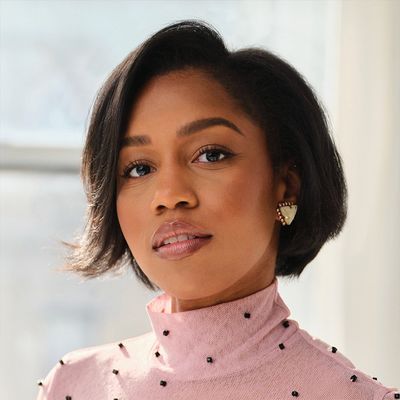
Broadway's first Black Glinda on her landmark first show, her advice for young performers and what she learned from being a swing.
Transcript
This transcript was automatically generated and might contain errors.
[0:06] Gordon Cox: Welcome to Stagecraft, Variety's theater podcast, bringing you backstage and behind the scenes with the stars, creators, and industry leaders on Broadway and beyond.
[0:17] Gordon Cox: I'm your host, Gordon Cox. On this episode of Stagecraft, I'm talking to the actor Brittney Johnson. She's the first Black actor to play Glinda in the Broadway production of Wicked. Johnson had been a company member of the show since 2018 and previously understudied and been a standby for the role of the Good Witch of the North. When she went on for the first time in 2019, she was the first actor of color to play Glinda in the Broadway musical ever. This year, as of February 14th, the part became hers full time. Now she's in the virtual studio with me to tell us about her journey to Broadway, share her advice for aspiring young performers, and reveal how her time as an understudy, a swing, and a standby prepared her for her current history-making run. Hi Brittney, thanks for joining me.
[1:01] Brittney Johnson: Hi, thank you for having me.
[1:03] Gordon Cox: Yeah. So I'm talking to you just a couple of days after your first performance playing Glinda full time in Wicked. What was that night like for you?
[1:11] Brittney Johnson: Oh my goodness. It was incredible. The energy in the audience, it was unreal. People stood up. A lot of people stood up.
[1:23] Gordon Cox: There was a, yeah, you had to cut short a standing ovation, right?
[1:27] Brittney Johnson: I did. I was trying so hard. I was like, is it time? Can I talk? Nope, can't talk yet. They're still going.
[1:35] Gordon Cox: Yeah, you had to start the show, right? And what was the mood like backstage for all that?
[1:43] Brittney Johnson: Electric. I think we were all just as excited as everyone in the audience. You know, we obviously have a job to do, and we take our storytelling very seriously. But it was an exciting time just for all of us to be able to play together again.
[1:59] Gordon Cox: And do I have this right? Was this also your first time performing on Broadway since the lockdown?
[2:05] Brittney Johnson: It was.
[2:06] Gordon Cox: And so how did that feel?
[2:08] Brittney Johnson: Oh my goodness. I was trying so hard not to cry. There really isn't anything like live theater. And even just being in the building is one thing, but being on stage and receiving that kind of energy, that give and take back with the audience, there isn't anything like that. And I really, really missed it.
[2:30] Gordon Cox: And did that fact, combined with the fact that this was, you know, your first performance full-time in this role, did all of that contribute to unusual nerves going on?
[2:43] Brittney Johnson: Yes, actually. I remember I came off stage after the opening and I was like, I don't know if I did it. But we're on to the next scene. I remember feeling very kind of like my Broadway debut, honestly. It kind of felt like that.
[3:01] Gordon Cox: Yeah, yeah. And you, the memorable Glinda entrance isn't that sort of bubble contraption thing. That's pretty high up off that stage. What is that like to ride in?
[3:14] Brittney Johnson: You know, you don't really think of the height. You don't really notice it once you're in the air; all air is the same.
[3:22] Gordon Cox: Yeah, and you're strapped in, right? You've got the little harness.
[3:27] Brittney Johnson: Oh yeah. You feel secure in there.
[3:30] Gordon Cox: And backstage, how do you like climb some stairs to get up there and over?
[3:35] Brittney Johnson: Oh, they actually, the bubble starts on the deck.
[3:38] Gordon Cox: Oh, and then they lift you up in the windows?
[3:40] Brittney Johnson: Oh, okay. They lift you up. Well, I'm actually right above in the rafters.
[3:44] Gordon Cox: Okay. Wow. There's one seat I can always see from up there.
[3:48] Brittney Johnson: I was just gonna ask, so what do you do? You must have at this point a fair amount of experience, you know, waiting there for your entrance. What do you do to sort of prep for a show?
[3:59] Brittney Johnson: I usually breathe, I say a little prayer, and then I actually kind of recite what happens at the end of the show to kind of get me in the mental place for the beginning because our show kind of starts at the end and then it takes you back to the show.
[4:18] Gordon Cox: Right. Yeah, yeah.
[4:19] Brittney Johnson: And do you, could you tell even when you were up there in the rafters that the energy was different that Monday night?
[4:30] Brittney Johnson: I could. I really could. There's just, you know, it's like the chatter and also the fact that as soon as even the tiniest amount of the bubble was showing beyond the curtain, the entire audience erupted into applause and you couldn't hear anything. I couldn't hear the band, I couldn't hear anything. I remember I was just looking at the monitors where we can see our conductor, and I was like, is he, what am I supposed to do? Well, I'm just gonna let him go.
[5:00] Gordon Cox: Yeah. And how did it feel different being in the part full-time now?
[5:06] Brittney Johnson: It feels more relaxed in a way. It feels like, not that I have a chance to make mistakes. I don't think that's really the word for it, but it's like I have a chance to find what makes my Glinda mine. And knowing that I have a chance to, if I find something new, you know, tomorrow, for example, knowing that I get to try it again on Thursday and see if it fits.
[5:38] Gordon Cox: Right. And if it doesn't, I can try something else and, you know, just get to really live in her.
[5:43] Brittney Johnson: Yeah.
[5:44] Gordon Cox: And what does make your Glinda yours? Do you know at this point?
[5:51] Brittney Johnson: I don't know. I mean, honestly, every single person's Glinda is different because we're all different people. So, you know, we all come to it with a specific set of circumstances because it's the same show every time. And there's a specific kind of persona and history that we know about Glinda, but then we all bring our own personalities and our own interpretations of that character, our own histories, you know, we bring all of that to our Glinda's as well. So nobody's Glinda is the same.
[6:27] Gordon Cox: Yeah. Are you a Glinda personally? Would you consider yourself, if the archetype, you know, which Sex and the City character are you? Which Wicked character are you? Are you Glinda? Are you Elphaba?
[6:34] Brittney Johnson: Honestly, I don't think I'm either. I think, well, you know, maybe I'm somewhere in the middle. I don't know. I have never worn so much pink in my life in this role. But I would say I am very, you know, sunny, like my disposition is very bright. I love to laugh and make people laugh, and I think that Glinda likes to do that too. My Glinda likes to do that.
[7:06] Gordon Cox: Yeah. And you know, she's very fun and playful, and yes, she's very selfish and she has a lot of growing to do, and she does grow. But I think that's what is so wonderful about Glinda is that she is really malleable, and she changes so much over the course of the show. And it's really wonderful to get to play a character like that.
[7:33] Brittney Johnson: Yeah. Were you able to interact with the audience at all, you know, at the stage door? Are you doing stage door right now for not because of COVID?
[7:41] Gordon Cox: Yeah.
[7:41] Brittney Johnson: Yeah, no, COVID rules we were not allowed to go out and sign. And I actually, I was gonna go out of the stage door because I was getting decompressed and all of that, you know, and it had been probably like 30 minutes since the curtain came down. And I went down to the stage door, and the security was like, there's a lot of people out there. I was like, oh no, because I used to, you know, pre-pandemic, I used to love that. It's one of the best parts is getting to interact with people. It's honestly, it's one of the things that I've missed most about what something that the pandemic really took from us.
[8:17] Gordon Cox: Yeah, yeah. You talked a little bit about this in an essay you wrote for us for Black History Month in Variety, but I wonder if you could just talk a little bit more about, because there have been Black Elphabas before, and Cynthia Erivo is gonna play Elphaba in the movie. But what for you is particularly meaningful about a Black woman playing specifically Glinda?
[8:40] Brittney Johnson: Yeah. Well, what I kind of touched on in my essay was there is an inherent goodness about Glinda. People come in to Wicked with preconceived notions about how they're gonna feel about her and who she is, and you know, that stems all the way back from the Wizard of Oz. Glinda is the good witch. And so, you know, she comes down in a bubble in this sparkly blue gown, and people are applauding, and she's got a wand, you know, it's just like you don't have to work very hard for people to love you as Glinda. And I think having that kind of inherent goodness placed on a person of color, and as a Black woman in particular, is a type of archetype that we don't get very often. And I just think it is so powerful for especially for young people to be able to come in and see that and feel that.
You can feel that in the audience. You can feel the love and support that people are giving to Glinda. And you know, people are rooting for Elphaba; she's the underdog, but everybody loves an underdog. But you know, there really is something about seeing yourself as good, you know, and wearing a crown that is so special.
[10:08] Gordon Cox: Yeah. You've got a heck of a wig too. I mean, as all Glindas do.
[10:13] Brittney Johnson: Yeah, yeah. So many wigs. I have three of them.
[10:17] Gordon Cox: Did you work on that? Did you have input on sort of how that looked?
[10:19] Brittney Johnson: I did a little bit, you know, the wig designer from the beginning, I mean, he had a vision for how he wanted it, and our director, you know, everybody had a vision for what they wanted. And my input was more about what makes this look more natural. Because Glinda, you know, Glinda doesn't wear a wig.
[10:45] Gordon Cox: Right, right.
[10:46] Brittney Johnson: And so my thing was, well, my Glinda shouldn't look like she's wearing a wig. You know, it should be the same as all the other Glindas. I mean, maybe she has highlights; Glinda goes to the salon weekly. You know, so I'm sure she amps it up a little bit, but it should look like something that could grow out of my head, you know. But they really did a wonderful job.
[11:08] Gordon Cox: Yeah. And tell us a little bit about your time in general with Wicked. When did you first join? Yeah, tell us a little bit about in what capacities you have been involved in the show.
[11:19] Brittney Johnson: Oh yes. The, you know, the before times feels so long ago. Um, but I joined in 2018 in June. Somebody should fact check me because I'm horrible with dating times. Probably very much like Glinda in that case. Um, but June of 2018, I started and I was um in the ensemble and I understudied Glinda. Yeah. So every night I was on as my ensemble track and I was singing, dancing. That track is hard. That is like a real singer-dancer track.
[11:51] Brittney Johnson: Yeah, I would imagine you're so you're an Aussie and a lots of other people, I would imagine. A lot, oh yeah. You're ever every scene pretty much. Oh yeah, how many costume changes? I can't imagine. Yeah. Oh, so many. And those costumes are heavy. They look at you know, we make it look easier. They are heavy.
[12:11] Brittney Johnson: Um, so I did that track for a year. And then um I wanna say in June 2019, I got bumped up to the standby. Right. And so I was doing that until March 2020 when everything shut down. Yeah. And uh tell people for those who don't know, what's the difference between an understudy and a standby?
[12:30] Brittney Johnson: Oh yes. So um an understudy has a role in the ensemble that is, you know, their main role. And then if the lead is out, or in our case, because we also have a standby, if the lead and the standby are both out, then the understudy would go on. Right, right. And so go ahead.
[12:46] Brittney Johnson: And a standby. A standby um doesn't uh is not in the show unless they are playing what they cover. Right. So there's no ensemble track, they just know Glinda or Alphabet. We have an alpha standby as well. Right, yeah. And so you'd been on as Glinda, you know, I think your first one first time was in 2019, if I'm remembering the date correctly.
[13:08] Brittney Johnson: Yes, in January 2019. Yeah. And and so at what point at what point about how often? First of all, about how often had you gone on as Glinda? Not very often, honestly. Our previous Glinda, she had such stamina. Oh my goodness. Um, so she she was rarely out, you know, which is why when we came back in August, I hadn't been on from August to December, I hadn't been on.
[13:33] Brittney Johnson: I well, that's a m I was about to ask you that. That's actually pretty amazing, especially considering absences were far more common, you know, in the last two months than yeah, well, because you know, and you know, we would had people would get COVID and it just I was actually the Glinda that was on when everything shut down. I was on a three week run.
[13:51] Brittney Johnson: Oh, okay. And I was in my second week and we shut down. Oh man. Yeah. Yeah. And at what point were you approached to take on the role full time? Um, I actually I found out during the pandemic. Um I'm not gonna remember the date. I could go back into my journal and I wrote it. But it was before performance episodes started up again.
[14:16] Brittney Johnson: It was Yeah, it's it's before it's before we even really knew exactly when we were coming back. Okay. Um, you know, I was approached about it and I was like, yes, I would love that. Yeah, I was just gonna ask, was that I assume that might have would have been something that you were hoping for. Tell uh tell us a little about a bit about what excited you so much about it.
[14:37] Brittney Johnson: Yeah, I mean, it was already one thing, you know, at that point we had been gone for at least a year and a half. Yeah. And I moved to LA during the pandemic. So I was kind of doing I mean, I was still acting, I was teaching. I really expanded my coaching business over the pandemic. And, you know, we were all getting used to a different kind of life.
[15:02] Brittney Johnson: And even at the time we didn't know exactly when we would be going back. And so even even getting offered that, it was like, yeah, I would love that. When when's that gonna be? Right. We really didn't know at the time. You know, and it wasn't like I was going back to start immediately. I was going back to to be the standby for however however many months um so it didn't really feel it I was excited and you know, I was I was sworn to secrecy.
[15:33] Brittney Johnson: Um but it really honestly it didn't really feel real until Monday. Yeah. Until I did it. Yeah. And you're stepping into this role uh like not not just in Black History Month, but at a time when Broadway has a record number of shows by black creators and the industry overall is working to sort of uh rethink the way it operates in terms of equity and racial justice and I wonder how that has played out in your experience with Wicked.
[15:42] Brittney Johnson: Have things changed for you, you know, backstage or in the uh in the process? Um yes and no, you know, I our environment in Wicked already is it's very supportive I feel like I think the the big things that changed are the conversations that are being had now they are more comprehensive as opposed to you know maybe just just one on one and I think a lot of things have been brought to light and one thing that I am really really proud of Wicked for and proud to be a part of this company for is how they take constructive criticism because it's not that I never I never felt like any kind of discrimination or anything that would happen to me was done out of malice um but now especially that these conversations are being had I feel like everybody is so open to to hearing what they can do differently and are are making changes that I can see.
[17:17] Brittney Johnson: Yeah. So yeah I'm I'm very very proud of Wicked for that.
[17:24] Brittney Johnson: And uh broadly speaking how do you feel like the story and the themes of Wicked land differently now in 2022 versus you know maybe your final performance uh in 2020? Well that's a big question um you know and I think it it changes nightly, honestly.
[17:43] Brittney Johnson: Um I mean, I I think the the themes change every time I go on stage, honestly. Um but the thing about Wicked is it is always relevant, unfortunately, in a lot of cases. We we're still dealing with so much injustice in so many aspects of our society that um you could almost apply it to anything and it's and it's relevant, and hopefully, hopefully people go in and come out with a new perspective on how to at least maybe change their minds.
[18:21] Brittney Johnson: You know, that's that's the first step.
[18:25] Gordon Cox: I'll have more with Brittney right after the break.
[18:35] Gordon Cox: And now here's more with the actor Brittney Johnson.
[18:38] Brittney Johnson: Understudies and standbys have always been a part of Broadway and how it works, right? And though they're usually unsung heroes, but in recent months, we talked a little bit about this uh a little earlier, that it's they've sort of gotten a spotlight just because they are uh their um their integral nature is like so so much more apparent now, is like there's there have been so many upheavals.
[19:01] Brittney Johnson: And so I wonder if you could just tell us a little bit about what life is like, both as an understudy and a standby. Like what's your day-to-day. And I've actually been a swing as well. I've I have I've run the gamut.
[19:12] Brittney Johnson: Um and I will tell you swings and understudies and standby truly, they are heroes. Yeah. Dance captains are uh superheroes. Like I don't I don't think I could never be a dance captain. They're wow. Wow I'm constantly in awe um but I'm so glad that people are starting to understand what it takes to be a cover.
[19:28] Brittney Johnson: Yeah, what does it take hard tell us about it oh my goodness i mean you have to not only do you have to do your job every night but you have to be ready at any moment's notice to lead a show yeah one that maybe you haven't rehearsed in weeks and it's not it's not easy to to tap into that kind of energy it's not I mean even if you're just thinking at it thinking of it from a physical standpoint wearing new costumes that fit and you know you you have to carry them differently because they're wider you're now you're worried about am I holding this the right way am I standing on the exact right number to not impale someone with a swand right you know there's there's a lot to think about and for people that especially for swings that cover multiple tracks yeah at a mo I mean at places they could get get a call that they're on for something wow yeah that that's happened to me before as a swing I was I was it the all of half out we're usually called half an hour before the show yeah and you know I ordered my Chinese food I was I was ready for a relaxing day at the theater and at places I get a call that I'm on for the lead of the show.
[21:03] Brittney Johnson: Not in not one of my ensemble tracks. The principal track. Yeah. At places. When I had to warm up, I had to get myself in the headspace. I had to remember.
[21:14] Brittney Johnson: Yeah. You know, everything that happens, it's like, oh how do you stay prepared for something like that? What's the what's the a you know your day-to-day routine of that when you're not going on as Glinda or any of those other parts that you might be covering?
[21:29] Brittney Johnson: Yeah. Well you have to sing every day. That that's a big one. And that's something that I think we all kind of learned over the pandemic. Um that you you know if you don't use it you do kind of lose it a little bit.
[21:41] Brittney Johnson: Right. So we were all a little rusty trying to shake off the vocal cords. Um but you do you have to you have to move your body every day. You have to warm up every day.
[21:54] Brittney Johnson: And as a swing especially I was watching the show almost every night. Yeah. And just I would track one person at a time.
[22:02] Brittney Johnson: I would I um I was a swing at the Luntfontaine doing Motown. And so there was a little there was an area in the back of the orchestra there's a lot of space and so some of the swings we would just go back there and dance and the audience wouldn't see us.
[22:16] Brittney Johnson: Oh yeah. So we'd be back there doing the entire show. How many roles would you be covering at a time in for instance Motown?
[22:26] Brittney Johnson: In Motown I covered eight ensemble tracks plus Diana Ross. Wow.
[22:30] Brittney Johnson: So nine roles I was responsible for and do you find that when you go on it's in you or it's yes how does it happen every time I guess it is in you there are I always had little cheap notebooks that I hid around the theater.
[22:48] Brittney Johnson: Yeah, of course. Um, but it is in you, but I think that there is something that you just have to accept as a swing that it's not going to be perfect because you are a human being. And that's something that's really hard, I think, for a lot of artists. It's something that's hard for me for sure. Anytime that I get on, like, you don't have to be perfect. You're a human being. This is live. You know, I have to remind myself of that a lot, especially if my voice cracks. I'm like, ah, um, but that's something as a swing, I think I really, really learned. It was like, if you don't go out there, you don't hurt anyone, you don't hurt yourself. And the show goes up and they clap, it was a win.
[23:35] Gordon Cox: What else did you find you learned during your experience as an understudy in a swing and a standby? Or what kind of skills did it give you that you might not have developed otherwise?
[23:47] Brittney Johnson: I am so grateful that my first Broadway show was as a swing because the amount I think of pressure and hype that you put on yourself for your Broadway debut is already so high. That when I was like, and also I had a planned show that I was supposed to go on for, and I ended up going on two weeks prior in an emergency situation. So there was a lot. I didn't even have a chance to be nervous. I remember I had to go back home to even bring my makeup to the theater. I didn't have anything at the theater. Because I was still learning, you know, six of nine tracks. Um, that experience, one, it taught me what I was capable of. I never in a million years would I have thought that I could keep all of that information in my head and execute it at, you know, that high a level.
Like I mean, Broadway it is it's the top of the theater game, really, you know. And it was getting cast as a swing. I remember when I first got the offer, I was terrified and I was like, why oh yeah, I was like, why would they hire me to do all of this dancing? Like but then, you know, learning it and realizing that they trusted me to do it meant that I was capable. And so I just kind of let that insecurity go. And when you can learn nine tracks, you can learn two. So after that, it was like, oh, you just need me to cover one role? Sure. Anything else? I I've got at least at least six others I can do.
[25:38] Gordon Cox: Was Broadway always the goal for you?
[25:45] Brittney Johnson: Once it became the goal, it was the goal. But if that makes sense.
[25:50] Gordon Cox: Yeah, when was that?
[25:50] Brittney Johnson: Um, really not until high school. I grew up singing and I wanted to be a singer. And I joke around all the time that I wanted to be Mariah Carey, which I very much did. Um, and still do secretly. Um, but I didn't really consider Broadway because I didn't really know about it. You know, I think I knew it existed and I knew I knew musicals, I knew movie musicals.
[26:27] Gordon Cox: Where was this? Where were you growing up?
[26:29] Brittney Johnson: I grew up in Washington DC. Yeah, Maryland. Um, but I went to a, you know, academic based high school. We had a really wonderful arts program. I was very lucky. Um, but I wasn't once I was thinking about college, I was thinking, okay, well, I wanna study music, but I don't want to study opera. And also when I'm saying talking about thinking about college, this started my freshman year, maybe even eighth grade. I'm quite the planner, quite the overachiever. Um, so it really kind of formed in my head. I did a pre-college program at NYU. Um, I wanna say summer of before the 11th grade, I wanna say. Um, and in that summer I saw like 30 Broadway shows, and I had all of this acting training and vocal training, and I, you know, I'd been studying private voice since I was eight.
But studying voice in a way that was performance-based was really new for me. And it spoke to me so much because it was kind of what I feel like I was naturally doing, but really learning from, you know, Broadway actors and people that were in this industry, um, it really, it just opened my eyes to an entire world that I didn't really know existed in this capacity. And so after that summer, it was solidified for me. I was like, I'm gonna be on Broadway, and then my blinders were on. I went to NYU for musical theater. I minored in child and adolescent mental health and that was it. The rest was history for me.
[28:22] Gordon Cox: And how did you get your first Broadway show?
[28:27] Brittney Johnson: Which was Motown. Yeah, that was Motown. Yeah. Right. That was my first Broadway show but my first job right out of college was the Le Miz Broadway National Tour.
[28:37] Gordon Cox: Oh okay yeah.
[28:38] Brittney Johnson: Uh, so it was the 25th anniversary tour and that I booked that literally the week after graduation. Wow. Um, but I had been auditioning for it for a year. I think I auditioned for that show like they brought me in, I'm not even exaggerating probably 14 times. I was back and forth in for that show.
[29:00] Gordon Cox: Did you play Eponine? Did I see that? Is that right?
[29:02] Brittney Johnson: I understudied her on tour. I played it on Broadway though.
[29:06] Gordon Cox: Oh okay got it.
[29:07] Brittney Johnson: Yeah, yeah, yeah.
[29:09] Gordon Cox: Um, and what advice would you give to young performers, you know, hoping to show up on Broadway as you have?
[29:18] Brittney Johnson: Oh my god, I have so much advice. Um, I honestly I have learned so much. It's one of the reasons why I started teaching, um, is because I really believe that every single person's journey is gonna be different and it has to do with your readiness, and I mean that in an emotional, mental, spiritual readiness. There are this is not for everyone. Being in the entertainment industry, it is not for everyone. And it shouldn't be. It's really hard. But I think I try to think of it as like what would I have told myself? And I think I would have told myself to relax. And to not be afraid of the other things that I loved. And to really explore myself as a fully dimensioned human. And I think there's a lot of life that you miss when you are that laser focused on any one thing.
And especially as an actor, I think the best actors are people that have lived full lives or are living full lives. And just throughout my entire career, and then I'm still learning is, you know, how do you balance life and career? Especially when your career is so wrapped up in your life. And it takes so much of your time, you know.
[31:28] Gordon Cox: Uh, how long are you in Wicked for? Do you know?
[31:30] Brittney Johnson: Yep. Yes, so far I um, or for now.
[31:35] Gordon Cox: Yeah, exactly.
[31:36] Brittney Johnson: For now, for now, I'm in it until November.
[31:39] Gordon Cox: Okay, great. And what's next for you? Do you know?
[31:41] Brittney Johnson: I don't know. You know, I have a dream of being in television and film. I'm a writer, so I have, you know, I have projects that I want to produce, I teach, I, you know, I just I want to be able to explore all the different sides of this industry that I'm interested in and that I love and to help other people that are interested in being here as well. Um, you know, I think I am so excited to be able to play this on Broadway. Um, I think I hope next for me is something on screen.
[32:25] Gordon Cox: Okay, yeah. I'd love to be able to try something new.
[32:29] Brittney Johnson: Yeah, and is there another part in another Broadway show that you've always wanted to play?
[32:37] Gordon Cox: Yes.
[32:39] Brittney Johnson: Tons. I mean, yes, tons. Um, you know, but out of everything that's on Broadway right now, I think I'm exactly where I want to be.
[32:49] Gordon Cox: Well, good. That's great.
[32:51] Brittney Johnson: I know right. I feel very, very blessed.
[32:55] Gordon Cox: Yeah, yeah. Well, you are in it at least until November, we know. So enjoy the rest of your run. Thanks so much, Brittney.
[33:02] Brittney Johnson: Thanks for talking with me.
[33:03] Gordon Cox: Thank you.
[33:04] Brittney Johnson: Thanks for having me.
[33:09] Gordon Cox: That was Brittney Johnson, now playing the role of Glinda in the Broadway musical Wicked. If you like what you're hearing on this and other episodes of Stagecraft, I'd really appreciate it if you took the time to rate and review us wherever you listen to podcasts. It really helps us grow our audience of folks who love theater as much as you and I do. Or tell a friend about Stagecraft, or give us a shout-out on social media. Find past episodes, or subscribe on all the pod places, including Spotify, Apple Podcasts, and on the Broadway Podcast Network, which is a great place to find more theater for your ears. I'll be back in two weeks with another new episode. Until then, find me on Twitter at GCOXVariety. Thanks for listening, and see you at the theater.
© Broadway Podcast Network, All Rights Reserved