

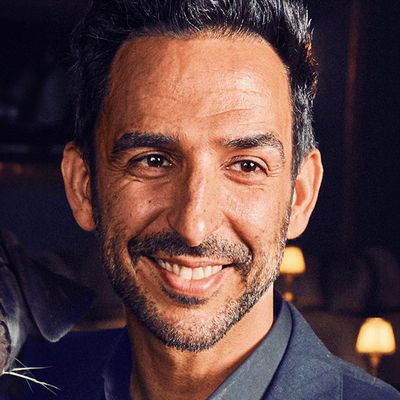
“The Black List” actor on living in the moment, exiting a successful TV show and how his life was changed by "My Robot Buddy.".. Read More
From the show: Stagecraft with Gordon Cox
Guests
Featured Shows
About
“The Black List” actor on living in the moment, exiting a successful TV show and how his life was changed by "My Robot Buddy."
Transcript
This transcript was automatically generated and might contain errors.
[0:06] Gordon Cox: Welcome to Stagecraft, Variety's Theater Podcast, bringing you backstage and behind the scenes with the stars, creators, and industry leaders on Broadway and beyond.
[0:16] Gordon Cox: I'm Gordon Cox.
[0:17] Gordon Cox: On this episode of Stagecraft, I'm talking to the actor Amir Arison. He recently wrapped up nine seasons as a series regular on NBC's successful crime thriller The Blacklist. And the very first project he took on after that brought him to Broadway.
[0:39] Gordon Cox: It's a big role that spans decades and keeps Arison on stage for the entirety of the show. Now the actor is in the virtual studio with me to tell us about living and acting in the moment, exiting The Blacklist, and how his life was changed by the play My Robot Buddy.
[0:58] Amir Arison: It is a pleasure to be here. Thanks for having me.
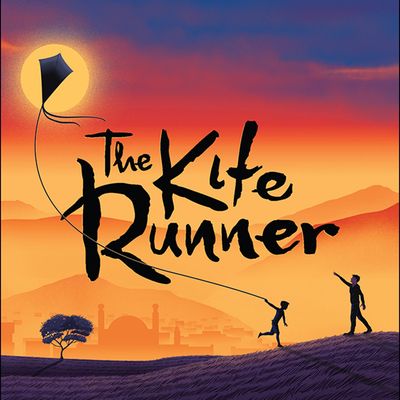
[1:01] Gordon Cox: So you're making your Broadway debut in The Kite Runner, and it's a heavy lift of a show, right? Like you're on stage for the whole thing, and you tell the story, and it all centers around you. How's it been going for you?
[1:15] Amir Arison: I'm absolutely cherishing every second of this experience. Um, there are no breaks. Um, it has required a discipline that I've never even encountered or imagined in my life. Um, which completely and utterly scared me. I've done challenging roles, I've been out front in plays before, but never without an exit, and never for this long, and never with this much, this well-known of a story, and sort of all that goes with it. Um, and so when I got the role, I was like, oh wow, I brought my debut and a character whose name is the same name as mine. And then it was like, oh my god, oh my god, oh my god, how am I gonna do this? And so there was a good deal of fear, which can be healthy if you channel it the right way.
And I took myself, as soon as I finished shooting, I was working on The Blacklist, as soon as I wrapped shooting this past season, I took myself to a dear friend's family's guest house in the mountains in North Carolina and cut off from social media distractions, socializations, put my phone on do not disturb, and studied and wanted to get as much preparation. I told myself I'm not leaving this cabin until I've memorized all 40 narrative monologues, until I've got as much of the accent down as I can when I'm sort of in Kabul in the act one when I'm a kid, and as much of the Dari, which is spoken in the first two scenes, which is the sort of the outbound dialect of Farsi. Um, and then as much of the sort of scene work as I could, and met with the vocal coach and zoomed with the director and there to get as many questions and as many variables prepped as I can, so that when I enter rehearsal, it's flow, getting to know your fellow actors, responding, listening, learning the staging, getting in as much absorbing as this because it's a lot of information, it's, there's no breaks. So as a result of that, and also sort of stretching and getting my mind right, getting the mind right. And as a result, it has centered me more than I could have expected.
[3:38] Amir Arison: And everybody always asks, oh my god, are you exhausted after that show? How do you do two a day? How do you do eight a week? How are you gonna do that again? And um, two things. I always say, day by day, act by act, scene by scene, moment to moment. There is no time for me to overthink or worry where did that laugh go tonight? Or that scene didn't feel as vulnerable, or it does not matter. You tell the story and you ride on to the next moment. There is no, which has been a great lesson and a reminder in life. You don't, I don't have time to go off stage and be like, wow, why didn't that go as well? Or oh boy, I'm nervous, so and so's in the audience, I've got to enter with energy. You don't, none of that, it all goes away.
You just have to listen, respond, and then when I'm doing the monologues, tell the story, and that in that, and just trust life preparation, life instincts, my age, my pre, just you have to fall forward and trust, as fearful as that may be. And that has been so rewarding so that when people say you're tired, I said, well, yes, I'm on discipline, I don't go out. Um, I really don't, I might have dinner on the after the last show of the week. I might, depending on how I'm feeling. That's as much as I'll give myself. I of course say hello to people after the show, but so the physical, the physical and vocal toll is um, is there, and I have to recover and rest, and I have to stretch and do consistently things that I may not have done consistently. You're drinking hot water now, as uh, as you mentioned, for the throat.
[5:06] Amir Arison: Yeah, yeah. Then um, but the mental toll, because he goes through the journey and he really, you know, the character is so shame-ridden and guilt-ridden. And to get to that redemption, which doesn't happen to the last five minutes of the play, last three minutes of a two and a half hour play, um, weirdly, is sometimes energizing. So I'm physically exhausted, but sort of spiritually re-energized, and that is not something I expected, and I can't believe it. And um, the theater gods are um so far are have been loving to me, but I always say I have another one tonight. You can't get too high and you can't get too low. Can't don't punish yourself if it doesn't feel right, and don't celebrate if it feels great. You just so okay, wow, we did that one, and I have another one tomorrow. It's really um really special in that way, very, very special.
[6:05] Gordon Cox: You've been on stage many times before. We last saw you in New York at in Waterwell's Hamlet in 2017, and we saw you at the Public in Why Torture Is Wrong and the People Who Love Them and shows like that. Um, but what uh what's gratifying to you about being back on stage after, you know, whatever it's been five years or so?
[6:25] Amir Arison: Um, you know, I didn't want to do much stage anymore. I told my manager I come from theater, I did it, but once I sort of found the love of TV, um, I was enjoying it. I enjoyed it, having weekends. I enjoyed um, financially it's much, much better than the theater. Um, but you don't become an actor for the, you certainly don't become an actor for the money. And um, the, and then you know, something at the in television that's interesting too is you like I kind of touched upon it before, is you don't have, you don't have time to overthink things. You've got to learn it fast, because you're shooting it in a couple days, maybe tomorrow, maybe in a week, and then you shoot it, you do a couple of takes, and then you have to prepare for the next episode.
You have to prepare for the next scene. You have to let it go and sort of trust your preparation and trust the editors. And um, it if again, it forced me. I think there's a theme that I was quite anxious when I was younger and quite hard on myself. So maybe TV, and maybe I'm just realizing this now, maybe sort of the nine years I had on The Blacklist that forced me to not overthink has helped me get to this point. I'm not entirely sure, but I know that Hamlet exhausted me. And the previous show I did at the, uh was on a summer hiatus between season one and two was The Muscles in Our Toes by Steven Belbert with Labyrinth. And um, that show I was also on stage the whole time, but that show was only 85 minutes, and all of us were on stage together the whole time.
So it was, but it was my character was more quiet. And I remember just depleting myself completely, completely depleting myself. And um, not sure if the rewards outweighed the sort of the toll um for some reason. This is not when I was younger, not when I was starting something about, you know, the last few plays I've done, and uh, and I told my manager I don't really want to do theater unless it's the perfect role with the perfect director and the perfect show. There is no such thing as perfect, but something that I just, I have to do. Otherwise I don't, it has to be worth it to kind of put myself through that.
[8:45] Amir Arison: And uh she said to me, it was before The Blacklist season 10 had been renewed, so I was like, we're looking for a job. We didn't know if The Blacklist was gonna come along. She goes, well, The Kite Runner's coming to Broadway. Um, I think you'd be right for Amir. I was like, oh, send me this. So I just got to say, oh god, this role is hard. Oh my god, this, I don't even like the character. I was like, how am I gonna get behind this? He makes such a series of decisions that are so antithetical to my soul and my vibe. He coward and shame and guilt and which are all very challenging to play because those are inherently inactive and you want to make active choices as an actor. So how do you actively play indecision?
How do you actively play um internal shame? You know, there are moments where he projects it and like, but the, you know, and he projects it outward, which is just so painful. It's like, oh god, you know, the person who hates themselves then hates others, that sort of sage has hate, hate something about themselves will then project it onto others. Um, and I wasn't, but I was like looking for a job, and you know, it is Broadway. I used to dream of doing Broadway, and it's like, you know, this Broadway are mostly musicals, I'm not a musical guy, I'm not such a singer, I'm not a singer. Um, all right, and all right, this role is okay. All right, I'll audition. And I still wasn't completely behind the role, and I thought my first audition I tanked it.
I completely thought it was over Zoom, and I'm trying to stand up and I'm like leaning into the Zoom camera and and then I I can't unpin myself and then like I'm seeing other people and like it was just like weird. And I and um I apologize to my manager. I apologize to my friend, my neighbor who ran lines with me. I was like, I it went, I'm sorry. Because the and I when I I teach sometimes, I teach younger actors and stuff, or do like sort of workshops and master classes. I always say, um, preparation is the only thing you can control. And um that's as much as you control, and if you do your best or not, and I felt like maybe I didn't prepare enough because I hadn't been completely by the role.
And I was being hard on myself because I was very, very busy challenging ARC at the time on The Blacklist. So I was up at 5 a.m. shooting all day. An arc where my character has a, uh also has a mental breakdown. And so I was particularly hard on myself. And I apologized, and uh what I call, what I call my friend Ariel calls it, um, uh audition hangover. Where you feel just like for a day or two, you're just like, oh, I went terrible. And you know, and um I said, well, maybe I didn't really want the role, okay, and I let it go. And then I threw the sides into the recycling.
[11:29] Amir Arison: A week later, I get a call back. I laughed for a minute when she said you're called back. I was like, she goes, I knew you would. She goes, most of my clients that think they did terribly did well, or what you think is terrible is not terrible, but that's not for me to decide. I laughed, and I was so happy to get the call back, not because I had attached myself to getting the part, I really was detached from it. I was a little worried about what happens if I get it, I'm gonna do it. The thing that I was happy about was like I'm getting another chance to try to do my best for me. And I went and pulled the sides out of the recycling.
[12:07] Amir Arison: I hadn't taken them out that week. Recycling every recycle every two weeks, and they were there, which is a good thing. Mike Nichols once said, like, you know, I think Mike Nichols used to rehearse plays and then they would go away for six months and then come back. There's something that happens when you don't think about it or worry about it, it enters your subconscious a little bit. I had completely released and let it go, which is probably again another realization, the ultimate sort of lesson. I completely let it go. And I said, well, what why did I not feel my best objectively without sort of self-hate? I said, well, this moment didn't work. I said, well, you know, the Zoom thing was weird.
Well, forget Zoom. I'm just gonna do it a table read. I'm not auditioning. I'm just gonna table read this. What beats did not feel connected? Why not? Let me go back to the book and look up the let me now. I have a little more time to do a little prep, and I'm kinder to myself and I've already detached. And again, this callback was more for me to do my best, just to feel like I could not have that hangover. And after it was in that audition, in the audition, not before it, that I discovered the love inside of him. And it was in the audition that I fell in love with the part. I still wasn't in love with the part. I was like, I know my job is to humanize these decisions, to make him understandable, you know, all these sort of horrible anti-hero decisions he makes.
I understood all that, but then I found the love inside and it cracked wide open, and I was making discoveries that I had never anticipated. Something about I think being relaxed, which is an important lesson for actors. You can be the more prepared you are, the more relaxed you can be. And when I finished, it felt great in the conversation. You know, most of the creative teams from England, and it's very interesting. In American theater auditions, you come in, there's not much talk, maybe a small little thing, and then you do the audition, and they might give you notes and they say, thank you. Or maybe they'll talk to you after. With Giles, and I hear this is common with English directors. They talk, we talk a lot before we even read.
Oh, how are you? This and that, we're talking about this, you know, and it just converse just a conversation, a little bit about the show, a little bit about what they're doing, what they're looking for, which is sort of lovely and different. And when I got off, when I finished the audition, I said, oh, I feel better. I feel like I just took a creative, a giant creative release, for lack of a better word. And I was like, oh, I'm okay, Amir. You did your best. Thank you, theater gods, for another opportunity to just kind of and also I had an audition for theater. Hamlet and Muscles on our toes were both straight offers. I had done table reads of them, so then I got offers after the table read.
So this was the first theater audition I've done in a very long time. And I just wanted to sort of re-experience that and rechallenge myself in a different way. And an hour after the audition, I said, oh, wait a second. I think I might have given myself a chance to get this. Well, I might get this. Okay. Well, that would be cool. Two days later, I got a text from my manager. Um, you're getting The Kite Runner. And I was like, whoa.
[15:16] Gordon Cox: And were you on board at that point, definitely?
[15:18] Amir Arison: As a, uh, in terms of committing to it. Yeah, I knew I was gonna I knew I had to do it. I was scared, but I knew I had to do it. Of course, you know that you have to go back and forth, manager. There's things, there's a there's things to talk about, there's a few little the nooks and crannies of things. What was the, uh, do you remember the specific moment in the audition that, uh, unlocked the love in the character?
[15:42] Amir Arison: Yeah, it's really, uh, you've been making me emotional. I do remember the moment. Um, uh, not to put you on the spot, but have you seen, have you seen the show?
[15:50] Gordon Cox: I have, yes.
[15:50] Amir Arison: You saw, of course I did. I saw it, I don't know, two days before it opened. I really enjoyed it.
[15:56] Amir Arison: Oh, wonderful. Um, well, the audition was there were two scenes. There was one scene as a kid when he's describing his story to Hassan, about the story he wrote about the magic pearls, the magic cup. Uh, they wanted to see me as a kid, and that made sense. And then the other scene was sort of a one of the sort of, I would call them, uh, for lack of a better word, operatic scenes, if you will, with the giant revelation where he finds out from Rahim Khan that Rahim Khan knows everything that he's done as a kid that he's been hiding that he didn't think anyone knew. And two, that, uh, not any spoil. If you're, if you haven't read The Kite Runner, are you planning on coming seeing it? Cover your ears. This is a spoiler alert, spoiler alert, spoiler alert. Uh, but I do sense that about 70% of our audience has read the book when they come see the show.
[16:40] Gordon Cox: 75%.
[16:42] Amir Arison: Um, but anyway, for those who don't cover ears, when he also discovers that his father is Hassan's father. Right. And um, so it was, uh, it was in that scene, and around the moment he discovers it, that as much of the, um, the frustration, how dare you. I've been dealing with this all this time, but you guys have been complicit in another arguably bigger lie, or bigger, bigger secret is a better word, not a lie, a bigger secret. Um, and that something cracked wide open. And also in also inside of the moment when he finds out that Hassan's died. And I just burst with, um, how much I loved him. It burst out in sort of a form of tears, and just how much I loved him, and I've been burying that love for the whole play.
Because he can't deal with it. He can't, how much he loved me, can't face with what he did to someone he'd just absolutely loved, his closest and dearest friend, who turns out to also be his brother. Because of his privilege and his naivety and his shame and his sort of weakness as a kid. And also it was then that it was actually how much I love Hassan, not how much I hate myself. The hate myself was inherent, had been built up before. And it was like he has so much love. And then when I thought about it after, you know, he didn't have a mom. His dad was very tough. His dad doesn't show love the way he needed it to be shown. So he had a lot of displaced love. He didn't want to. So you know, and you know, that's how I try to lead life.
You know, you lead with love. And I know I'm out front in this company, and I always said when I started, I said, Amir, you gotta be kind to yourself. Because you gotta be kind. Like something gets messed up, if somebody drops a line, it's okay. Like, don't worry about it. And then, oh my god, Amir, I'm sorry, mess that doesn't matter. There are no mistakes. It's theater. It was awesome, it was new. Tomorrow we got another one. It's awesome. And um, sort of, you know, and um, and this the show has reminded me more than anything in my life. I can't tell you how much I cherish it, just as a whatever. We close tomorrow. I hope we don't. Hope we're running. It doesn't matter. The show has given me something and taught me something that, um, I needed.
[19:09] Gordon Cox: I'll have more with Amir right after the break.
[19:21] Gordon Cox: And now, here's more with the actor Amir Arison. The Kite Runner is one of the, as you mentioned, a lot of people coming to see the show will have at least, well, if not read the book, they've at least heard the title. Maybe they've seen they made a movie in 2007 of it. It is a story that is around and that most people are familiar with. Were you familiar with it and what did it mean to you personally before you got involved in this?
[19:48] Amir Arison: I had not read the book, actually, until after I got the part. I read my sections for the callback. I didn't have time to read it before the first audition. And I didn't have, and I didn't know I was getting called back the next day for the callback. Didn't feel when I thought I didn't get it, I didn't feel like reading the book at that moment.
[20:06] Gordon Cox: Yeah.
[20:07] Amir Arison: Um, but um, the story is so well known, there are sort of, I would call the sort of the main event in Act One that is sort of well known and what that so there's sort of the main plot, there's a lot of things in Act Two that people who don't remember even that were, oh my god, I forgot that or I forgot that happened. It's very rich.
[20:26] Gordon Cox: And why do you feel like the story, uh, needs to be told right now? What is particularly resonant for it, uh, about it right now?
[20:36] Amir Arison: Well, there's a very obvious, um, uh, current invasion of another country that's happening right now. The Soviet Union has invaded Ukraine. Um, in the play, the Soviet Union just before the just in the after Act One, before Act Two. Uh, the Soviet Union has invaded Afghanistan. I don't that this play was decided to be put on before that happened. There's something in the zeitgeist, the producers maybe had their finger on. Of course, also this past year, as we know that we left Afghanistan. Sort of the rise of the Taliban came back. There's signs of the rise of the Taliban of the Mullahs with the teachers in the beginning of the play. Even um Amir's father Baba says to him, God help us if the country falls into their hands, you know.
And so, and Amir, my character leaves Afghanistan with his tail between his legs. He doesn't want to look back. He doesn't want to even think about it. He wants to become an American and forget his past. We were there for 20 years and we left, and we didn't not leave under the ways we had hoped. And I don't mean to get political, and I know a lot of people have a lot of different point of views, but those are two facts. Those two very basic facts. It tells it through a human story. So here, Khaled Hosseini, the backdrop of the play is Soviet Union invaded, he's an immigrant in America, trying to find his way. Falls in love. She has an overbearing father, how he has to deal with that. It's just, and each character has their own secret and their own flaw that gets unfurrowed throughout the play, or something that they're not sharing, or they're a lie that even Hassan tells a lie to protect Amir.
He says he did steal the watch in the cash. It's just like the most heartbreaking thing you can ever imagine. Um, the best way, in my opinion, to get people to relate or open their eyes or minds is just tell a human story. Many people know someone in their family or someone dear to them that had to immigrate to this country. Somebody knew, you know, the one of the things I did not originally love about the role is just all the weakness for lack of a better word. But then I found out that the bravery exists in the monologues that he's confessing. Which you can interpret that differently when you read the novel, but in a play, it's like, why am I telling this? What is my relationship with the audience and narrating?
You know, you read a novel, it's an individual. It's like he starts with in the wind, in I remember the moment I became who I am today, and then that moment resurfaces two thirds of the way later, and then he's like, now I need your help. I told you the story as far as I can go. Now I'm sort of entering the present. And um, he's airing his dirty laundry, if you will, and confessing and letting the truth out, um, which ultimately helps free him. And uh, I just think you just tell it, you tell a human story, people will draw their own conclusions, but I think it is important that the backdrop is I can hear the audience when I get to at the very end of the play, the second to last monologue.
[24:18] Amir Arison: I say, we arrived home on a warm day in August 2001. Uh, and while the world, while Sarab was silent, the world wasn't. Then one Tuesday morning, the twin towers fell, and the world changed. America bombed Afghanistan and the Taliban scurried away like rats. I'd go into Starbucks, and people would be talking about Mazari, Sharif, and Kabul and the cities of my childhood. And during all of this, Sarab didn't say a word. It's about Sarab, but that's a and I can feel the audience three minutes before the end of the play go, I can feel them go, oh, which is when I feel like many Americans sort of woke up to Afghanistan. What is Afghanistan? Where is Afghanistan? Who lives in Afghanistan? What is the Taliban?
What is Osama bin Laden? What is our policy, foreign policy? Um and so you can feel like we took this on a on a 26-year journey, and then they join us and they join him here just for the end when he finally steps up. It's you you can you can feel it. So they're on just a human story, and then they say, hey, guess what? That was 2001, and now we're in 2022. How much has changed? What's happening? Unfortunately, things are you know quite troubling.
[25:23] Gordon Cox: Do you know how to fly a kite?
[25:29] Amir Arison: It sounds it sounds really hard. The competition, the kite fighting competition. I don't I it seems like a skill that I will never have. I hadn't flown kites. We had a flight kiting flight uh uh kite flying rehearsal. We all met in Central Park. It was a very bonding thing. We all met in Central Park and they got a few kites. And I ran one and I had Hassan. Hassan ran one, and we ran it together, and it was so such a fun day for the company. But those aren't the same kites that are being flown in Afghanistan back, you know. Uh and Faran, who plays Baba, you know, who grew up in Pakistan, there were a lot of kite fighting tournaments, and he and he taught and he we there was like an hour where he just kind of talked to us about that. And you know, the main difference is is that the string is quite sharp because the string is put through uh glass and glue. So you're actually it's like a it's like sword fighting.
[26:17] Gordon Cox: Is that why it's sharp?
[26:18] Amir Arison: I didn't it's not I did not know. I did I miss I missed that part.
[26:23] Gordon Cox: Yeah, yeah.
[26:23] Amir Arison: I'm gonna hit that line.
[26:24] Gordon Cox: Please do.
[26:25] Amir Arison: Yeah, yeah, yeah. I knew clearly something was happening with that string, but our glass uh me and the son are our glass-coated cutting line, our bullet in the chamber ready. I go out into the field and feed 500 feet of string through a mixture of ground glass, and yeah, and that's why it slices fingers and so forth. So it's it's a yeah.
[26:43] Gordon Cox: Yeah, yeah.
[26:44] Amir Arison: Uh so you are not you you yourself are not a champion kite fighter, but no, and I've also not um uh I've never held a glass-coated cut.
[26:55] Gordon Cox: Oh, you know what's funny in Central Park? Even without the glass, I got a paper cut slice on you know the sort of where your finger, the crease in your fingers are like at the top of my forefinger. I remember like, ow, ooh, ow. And I got a paper cut, and it was like, oh, can you imagine what and then and then Fran told us that you know many people are wearing bandages all over their fingers and hands as a badge of honor of how long they were in the tournament, how how good they were and how much they sacrificed.
[27:19] Amir Arison: Yeah, it's really really unique. Um rewinding just a little bit to talk about how you first got started in performing. I have read that you delivered two lines in your second grade play, and your mother decided you had talent and signed you up for drama club. So my question is what were the two lines?
[27:37] Amir Arison: Oh god, I was a pirate. Excellent. I don't remember, I don't remember what they were. I do remember the line where I knew I was gonna be an actor, which was in the sixth grade in a play called My Robot Buddy.
[27:42] Gordon Cox: I knew I was like, That was my next question, is when you decided to be an actor.
[27:49] Amir Arison: Great. Excellent. So I joined drama club when I was eight. No, second grade, yeah, eight. The third grade I joined, I had second grade. But my mom came up to me after those two lines and just looked at me, he goes, You have talent. And I wasn't great at sports, just like Amir in the play, not great at soccer like his dad wants something. He wrote poetry. Um, and so that's a big way I related into the play, actually. A big way. Um, him wanting to be an artist, and you know, his dad not sure if it's the best. My dad is much more supportive and and loving than Baba, but my dad was not sure if it was a you know a safe profession. He's super into it now. And I have to say, actually, I felt a lot lighter.
This is so funny to say I could also get emotional. When I started the process, I just wanted I just wanted my dad to be proud of me. My mom is just like, you know, I could I could like sneeze and she's proud of me. Like it's but you know, my my dad is the best. Like please know that there's nothing disparaging about this. But I didn't realize it was a I wanted to get to opening physically, vocally, mentally, all of that, and have my dad come to opening night and the show to just work on opening night for my dad to see that. And that was the best. The best. And I felt lighter the next day. I felt a lot lighter since. Significantly lighter. It's like whatever happens, like my dad got to see me on Broadway, you know, and um it was it was all gonna be okay. Then I decided when I was 12 I was gonna be an actor.
[29:21] Gordon Cox: It's okay, but what was the line? Wait, what was the line in in when you were 12?
[29:24] Amir Arison: Okay, I don't remember that. I don't remember the two pirate lines because that was like I don't even remember. But um in the in my robot buddy, I played a that's an excellent title. It's a great little play. It was about a kid who wanted uh who hires this machine, this fact this doctor to build a robot friend, to build the best friend.
[29:47] Amir Arison: Oh my god, I didn't even realize the parallel with the Kite Runner. He wants a best friend, you know, and so Dr. Atkins was my character's name, um, built a robot that will do everything with him. It can he can run, jump, climb, and he's like, he has a new best friend, a robot best friend. But the kid goes, um, but can you make him but I just want him to be happy.
[30:10] Gordon Cox: Oh my god, this is getting quite profound.
[30:12] Amir Arison: I haven't thought about this in a while. I just wanted to be happy, and the the doctor never made dispositions. He just made robots to do whatever you wanted to do with the kid, play catching him, and he goes, uh happy, we don't we don't do this, but the kid goes, you mean you can't do it? And I remember saying, if I go for some reason, something inside of me goes, if I go up with my inflection on this line, it's gonna get a laugh. I don't know where that came from. He goes, can't. I said, I think the character had some kind of faux intellectual accent, almost like a like a like a Fraser Crane or a Niles Crane. It wasn't quite, I don't know where that came from. I go, Cod. I there's nothing I can't do, you know.
Whatever that and I remember doing Kant, and I get a little laugh, and it was lower school audiences, grades like kindergarten through sixth grade, and they start chuckling, and then I do it again, and then they chuckle some more. And then I got this big roaring laugh. And at that moment, I was like, oh yeah, yeah, this is what I do. It was a drug. I was like, oh, this is a high. And it wasn't, and it came uh instinctively. And um, so yeah, that's what I was like, oh, I want to be an actor. And then when I graduated college, I was like, oh, you made you gotta keep this promise to yourself. Oh, let me get backstage newspaper and start sending in headshots and taking workshops and doing off off Broadway plays and getting one line on a soap opera and just beginning and just seeing what would happen.
[31:38] Gordon Cox: And so you have you were on the blacklist for nine seasons, and uh it's been picked up for a tenth season, but you will not be a part of that season, is that right? What what led to that decision?
[31:50] Amir Arison: Okay, so uh be careful what I say here. Um my character was not killed off. Um so there is a potential for me to be back in season 10, but I'm not a series regular, I'm not certainly not there for the bulk of the season. I'm not a a functioning sort of cog in the machine of the of the storytelling or of the case solving. Um so that's a that's a maybe. I'll just tease that. It's a really is a maybe. So it depends on storyline and schedules and lots of things. Um so they left that as a possibility for me and for them, which makes me so happy because who knows what what happens in life. Also, I was it I didn't want to unceremoniously die because I'm I I took a Broadway show. Um but well, the decision again, when I got the job, we had not been offered a season 10 yet.
It's really crazy how how tight it came that the the show got renewed, and then they called us, and just like a week or two before that, I had gotten the Kite Runner. And so when I got the Kite Runner, I said, oh wow, now I have a I I knew that I was there's it was it was there was no decision. I I had been doing that for so long, and this was an immense challenge. And I was like, I, you know, I'm an actor, I have to challenge myself and just care myself. The Broadway dream we came back, it boomeranged back. I had let it go, and who knew? I think Kite Runner's the only play right now. I think there's maybe another play. The minutes just closed, but it's it's mostly musicals. I know plays are coming, but there's one or two plays right now.
The fact that I got an opportunity to leave, and it's such a beloved story. So it was it was really not it was like a no brainer. It was just hard to say goodbye to the best job I ever had, the blacklist. So but you know, what a I mean, my dream when when Broadway wasn't having my dream was to get on a quality series. Never expected it to go nine years, or much less ten. Um much less more than five. Most shows don't go, hit shows don't go more than three or four seasons now. Um so I feel like that dream manifested and then some and then some, and then all of a sudden this other dream came boomeranging back and says, well, a chance to have two dreams come true. Come on now. I I can't, I'm the luckiest kid in the world.
[34:07] Gordon Cox: And what do you hope to do going forward?
[34:10] Amir Arison: I'll tell you very clearly, tonight's show. Tonight's show. I and I I I'm dead serious. That is the only way to approach this material for me, and has been something that I've been sort of teaching myself uh in life. So uh I I am curious, you know, what my next job would be, but uh my next job is tonight's show, you know. I gotta you know, it really, really, really that simply. And you know, you you know, if you do your best, um things often can can work out in better ways than you hope, even. But if not, I got to do this. Who knows? Or really who knows? I just want to get to tomorrow. We have a long run. It's a it's a not a lot, well, it's October 30th. That's sort of it depends on how you look at it. But it's it's it's a long run to do this role. Um, you know, eight shows a week. Um I don't know. We have uh I don't know how many we've done. We've done like twenty-eight or twenty-nine, thirty of them. We have like another hundred to go. So one by one.
[35:18] Gordon Cox: Well, we look forward to seeing what comes next after that. And in the meantime, break a leg tonight.
[35:22] Amir Arison: Thank you so so much.
[35:24] Gordon Cox: What a delight to talk to you, Adam.
[35:26] Amir Arison: Yeah, you too. Thanks, Amir.
[35:28] Gordon Cox: Thank you. That was Amir Arison, now starring on Broadway in the Kite Runner. If you like what you're hearing on this and other episodes of Stagecraft, I'd really appreciate it if you took the time to rate and review us wherever you listen to podcasts. It really helps us grow our audience of folks who love theater as much as you and I do. Or tell a friend about Stagecraft, or give us a shout-out on social media. Find past episodes and subscribe at all the pod purveyors, including Spotify, Apple Podcasts, and on the Broadway Podcast Network, which is a great place to find more theater for your ears. Until next episode, find me on Twitter at G Cox Variety. Thanks for listening. And see you at the theater.
© Broadway Podcast Network, All Rights Reserved