

The six-time Tony winner on Adrienne Kennedy, Black Theatre United and her fancy new dressing rooms at the James Earl Jones Theater... Read More
From the show: Stagecraft with Gordon Cox
Guests
Featured Shows
About
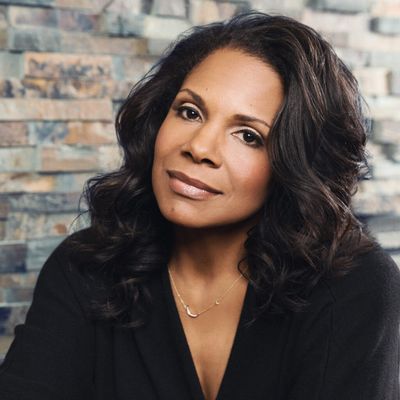
The six-time Tony winner on Adrienne Kennedy, Black Theatre United and her fancy new dressing rooms at the James Earl Jones Theater.
Transcript
This transcript was automatically generated and might contain errors.
[0:06] Gordon Cox: Welcome to Stagecraft, Variety's Theater Podcast, bringing you backstage and behind the scenes with stars, creators, and industry leaders on Broadway and beyond.
[0:16] Gordon Cox: I'm Gordon Cox.
[0:18] Gordon Cox: On this episode of Stagecraft, I'm talking to the one, the only Audra McDonald.
[0:23] Gordon Cox: She is the actor who has won the most Tony Awards ever, with six trophies to her name, most recently winning for her performance as Billy Holliday in Lady Day at Emerson's Bar and Grill.
[0:34] Gordon Cox: She's a regular presence on TV, too. She recently wrapped up the sixth and final season of The Good Fight on Paramount Plus, and later this year she'll return for the second season of the HBO series The Gilded Age.
[0:47] Gordon Cox: Before that, though, she's back on Broadway for the first time since the 2020 shutdown in Ohio State Murders.
[0:54] Gordon Cox: It's a play that marks the long-awaited Broadway debut of Adrienne Kennedy, the 91-year-old playwright whose unflinching, surrealist and groundbreaking work is often studied but rarely performed.
[1:06] Gordon Cox: This interview was recorded just before we knew that Ohio State Murders would be ending its limited run about a month early and closing this Sunday, January 15th.
[1:15] Gordon Cox: But in our conversation, we talk about why it's been difficult to get audiences to come out for this challenging play, and why some theatergoers are taken aback by McDonald's performance.
[1:25] Gordon Cox: We also talk about fancy new dressing rooms, the significance of this show inaugurating the newly renamed James Earl Jones Theater, and what it's like when your husband is simultaneously starring as Neil Diamond in his own Broadway show, right across the street.
[1:45] Audra McDonald: Thanks for having me, Gordon. So Ohio State Murders is the Broadway debut of the playwright Adrienne Kennedy, who is one of those writers who is really influential and revered, but she's also someone who is rarely produced, particularly in New York City, enough that you can be like a pretty well-versed theatergoer and not really be familiar with her or her work.
[2:10] Audra McDonald: When did you first encounter this play or her work?
[2:15] Audra McDonald: Well, I had heard of her, but I had never studied any of her work. And I just it was just a name that I knew. I always say that with the caveat of the fact that I did not have a formal sort of theatrical higher education experience. I went to Juilliard for opera, so I didn't study theater, so I don't know if the Juilliard students in the theater department did there. But the first time I had read any of her work was when Jeffrey Richards and Kenny Leon approached me during the pandemic and asked if I wanted to be a part of a Zoom reading, reading Ohio State Murders for, you know, just for something to do on Zoom.
[2:59] Audra McDonald: Yeah, just to sort of bring theater to the masses in whatever way we could during that time. And my agent was like, oh, you need to do this, you need to do this. And that's when I first experienced her work. And I have to tell you, after I did the reading, I got off the Zoom and I just couldn't get it out of my mind. I couldn't get the language out of my mind, and it just cracked my heart open in a very painful, profound way. And so when I got a call, I think two days later saying they were interested in trying to bring this to Broadway, I was like, count me in.
[3:41] Gordon Cox: Yeah, you mentioned that the first reading was over Zoom. It was during the pandemic, and so that was at a time when we were doing a lot of things like that in order to kind of keep theater alive. And then also at the same time, you were sort of co-founding Black Theater United and doing work with that organization as well. And it feels like those two activities are part of the same whole. And I wonder if you could tell me a little bit about how they overlap for you.
[4:09] Audra McDonald: How well how they overlapped was actually kind of interesting. I think post George Floyd's murder and the creation of Black Theater United and the pandemic and those few months as we were rolling into the pandemic, I think that perhaps sort of that time and that awareness and the sort of demand for accountability that was sort of rising up throughout the country and in all sort of businesses and social structures and, you know, and so same thing within our community and the theatrical community. I think that may have had something to do with some of the playwrights that Jeffrey Richards decided to put in this Zoom reading, and so there's part of the Venn diagram right there. You know, working with Kenny Leon and then obviously focusing on this incredible playwright who absolutely has an awareness in academic circles.
She's taught in schools. My daughter is in her final year at Brown, and she said, oh mom, we read Funnyhouse of a Negro last semester. You know, and so she's getting that education. But just the fact that the commercial world for her has always evaded, you know, Adrienne. And I understand her work is challenging. It blows open the idea of what the form of a play can and should be. And she's taking on very, I don't want to say difficult, but you know, necessary raw material, and she's centering black women. And for some reason we seem to have a problem with that. This country, this planet, this industry really centering black women and centering their stories and their pain and their triumphs and the idea of who they are, who they can be.
I know some people come to see Ohio State Murders and they're a little taken aback by how I'm speaking or the words that I'm using. And it's like, yes, black women exist in all forms in all facets of society in all different ways they exist. And Adrienne is bringing all that to center.
[6:12] Audra McDonald: And some people have a problem with it. And I don't think I'm answering your question very well, Gordon.
[7:01] Gordon Cox: Well, you are actually, is that the greater awareness, as you said, sort of fueled Jeffrey Richards' choice, the producer Jeffrey Richards' choice to do it.
[7:10] Audra McDonald: Yes, and then honestly for me, it fueled my choice when they said we would like to bring this to Broadway. It was like, well, yes, absolutely. And then the last piece of the puzzle to fall in place was the fact that we, you know, at Black Theater United and other organizations, you know, one of the ways in talking about accountability and awareness and action is creating a theatrical community where we can see ourselves as well, and that's not just on stage, but like in the brick and mortar. And so to have, you know, this sort of the new deal, the Broadway's New Deal that BTU struck with many leaders in the Broadway community, and one of those things, one of the tenants, one of the things that we said we needed to see start to happen was to have theaters named for black artists so that the theater tells us that yes, we belong here as well, so much so that here we are in brick and mortar.
And so to have it, you know, our play be at the James Earl Jones Theater and be the inaugural production of the James Earl Jones Theater, Adrienne and James Earl Jones know each other. In fact, I think Adrienne said they had a conversation just recently, it just all felt like Kismet and it all sort of felt like definitely, you know, all landed in the middle of that sweet spot in the Venn diagram of how this all came to be.
[8:34] Gordon Cox: How do you tell people what it's about when they ask you?
[8:44] Audra McDonald: You know, sometimes it depends on who I'm talking to.
[8:46] Gordon Cox: I bet.
[8:48] Audra McDonald: And that's the honest answer because I want people to come and see it. And so if you say, you know, it's a play about, you know, murder and systemic racism as it affects a young black woman in the late 40s and how it affects her to this day or 1992, a lot of people are gonna run from that. They'll be like, huh? So I'll sometimes I'll say it's a murder mystery about, you know, something that happened in the past that someone is now speaking about that they experienced and they're telling that story. And then sometimes I'll say it's, you know, it's centering a black woman's experience of racism in higher education in the 40s three years after Ohio State's dorms were desegregated. You know, but I, you know, I pick and choose who I say that to, again with the purpose of wanting as many people to see it because once people come and they see it, you know, then they understand how important the story is and how necessary it is to tell these stories. There's a cautionary tale too, I think.
[9:26] Gordon Cox: What is it that you mentioned that some people are surprised by the way your character speaks in this play? What is it that you find surprises them?
[9:26] Audra McDonald: Well, in the same way that certain people are like, you know, I'm doing The Gilded Age, people are like, oh well yes, they're just trying to be woke, they're just trying to, you know, sure, okay, black people that had businesses and whatnot in New York City and a gilded age, okay, whatever. It's like, no, no, no. Actually existed, actual historical fact. So there is an ignorance about the fact that, you know, and there's prejudice and there's stereotyping of black people and how people want to see and hear from them in their theater, you know, they want to see and hear from them in a certain way. Well, you know, I want you dancing and singing, or I want you, you know, if you're gonna be, you know, doing a play, it's gotta be Raisin in the Sun, or you know, it's like no, no, no, there are all types of us, and there are in all different aspects of life and in all different sort of levels of education.
And so the fact that this and the I choose I am choosing the way I speak in the show very deliberately to mirror Adrienne as much as possible because this is a semi-autobiographical story. And Suzanne Alexander, you know, there are the four Alexander plays as well as letters to my students. This sort of it's like sort of an avatar for Adrienne. And so because we were, you know, presenting her Broadway debut, Kenny and I really wanted to make sure that we were bringing as much of Adrienne to this experience as possible.
[11:50] Audra McDonald: And so that means not only the actual play, but the interviews you hear of Adrienne before you see before the show begins, and then afterwards, we want people to walk out of the theater wanting to know more about her. And I wanted to bring her into my Suzanne, her Suzanne, as much as possible.
[12:10] Audra McDonald: And because I've gotten this wonderful experience of being able to talk to her, you know, usually on a weekly basis, she emails me every day. You know, we've been having conversations since um July of 2022. So I've I've had a lot of time to spend with her and hear her voice and hear her cadences, and I'm not the first one to do this. When she did this, when the premiere happened with uh Ruby D, and she had first approached Ruby D and asked her if she wanted to be do this play, Ruby um came to her apartment, bounded up the stairs, and one of the first things she said is, I want you to read the play to me. I want to hear you say it. It's such a specific, there's such a specific poetry and rhythm. And I think I was fully able to understand it once I heard Adrian speak.
[13:02] Gordon Cox: Yeah.
[13:04] Audra McDonald: Um, I've heard you say that you one of the reasons you wanted to do the show was that it scared you. Can you uh tell us a little bit about what's scary about it?
[13:14] Audra McDonald: What's not scary about this show? I mean, first, you know, first and foremost, there is the language, which is is incredible and beautiful, and there's prose, there's poetry from time to time, but the sheer volume of it, the fact that it's a memory play, and the fact that um there's I think the script has about 30 pages, and about 28.8 of those pages are all Suzanne's lines. So, but because Suzanne is I I tell people this is harder than Lady Day for me, and it is because at least Lady Day, there were moments where I could relax in the singing, you know, the songs would break up the monologue that that Billy. And it was a slow-moving car wreck. And Billy was at the end of her life, and so she wasn't vibrating on a very high level anymore.
And so she's starting here, and it's just that's what's happening. But Suzanne is sitting on this whole story, and she's trying to get it out without falling apart. So that she can deliver the indictment, so that she can deliver the truth, so that she can finally release her daughters and make her daughters known publicly, say their names, all of that. So she's sitting on it. So Suzanne is vibrating here, and that's a much uh more taxing place to um to be, I think, in some ways, emotionally. Um, and then the subject matter. I, you know, I have two daughters, I'm a mother, and so the subject matter is um very, very painful. Not that Billy's wasn't. Um, so it's just a it's a it's a it's it's the hardest thing I've ever done. All that adds up to the hardest thing I've ever done, but it's only an hour and 15 minutes or so.
[15:07] Gordon Cox: Yeah, yeah.
[15:12] Audra McDonald: Because it couldn't be anything. I think that's probably true.
[15:15] Gordon Cox: Yeah.
[15:16] Audra McDonald: Yeah. I'll have more with Audra right after the break.
[15:31] Gordon Cox: And now here's more with Audra McDonald.
[15:36] Gordon Cox: In other productions of the show, that there are two Suzannes. There's an older Suzanne and a younger Suzanne. Uh in other productions, they have been played by two separate actors, and you were playing both roles in this. Was that always gonna be the choice? And why was that important to you, do you think?
[15:54] Audra McDonald: Well, uh, obviously that was the choice when we did the the Zoom reading, because there was you know no need to really have the another act actor. Um, we were just sitting in our little apartments on Zoom. But um, Kenny and I talked about it, and you know, we had Adrian's blessing to do it. It's not like she went rogue and just said, you know, we're gonna do this, good luck, you know. But um, so that Suzanne, so that old older Suzanne is an active participant in her memory instead of just watching and narrating what's happening. I think as an actress, it it was able because I'm playing both old and young Suzanne, I'm reliving the memory, um, physically, physiologically, psychologically. I'm actually reliving it as opposed to watching a younger actress relive it and then comment on it.
There's something that feels um it's more visceral, it's a more visceral experience for the actors. So maybe that was selfish of me to say, you know, but um it, you know, we were also there's been all kinds of different productions of Ohio State Murders where different characters um have been played by the same actor, not not Suzanne, as far as I know, but and then sometimes we've seen Suzanne's father, I think whereas in our production you don't, I think the very first production you might have seen Suzanne's father. Um, and it it's been varied how all those other parts are played and portrayed, and sometimes it's one actor, sometimes it's three or four, I think, depending on production and and budget and whatnot. But it just seemed like the right thing to try here. And uh Adrian seems um happy for us to experiment with that.
[17:43] Gordon Cox: You talked a little bit already about kind of capturing and uh kind of bringing her voice to the stage. And I feel like you not unlike what you did with Lady Day, you're doing something very specific with your voice, and even correct me if I'm wrong, it seems like you're doing something a little different for the younger Suzanne than older Suzanne. Um, and I just wonder thinking about as you said, you trained in opera and you have uh, you know, a big background in sort of training, training your voice. And I wonder if you could tell us a little bit about how that training informs the kind of stuff you can do with your voice when you are singing or not.
[18:21] Audra McDonald: Well, I mean, I have it comes down to having a really good voice teacher. And I I've been with the same voice teacher since master class uh in '95, so I first found this voice teacher. And uh so this is not necessarily something I found at Juilliard, but shortly after leaving Juilliard, and this particular uh teacher um has taught me um to incorporate my my voice as all being one thing, and so for him it's about the health of the voice, and then you can ask it to do the things that you need to do as long as there is sort of like a singular sort of um centered uh like central command system of the voice, if that makes sense at all, it probably doesn't, but in terms of that it's always going to me bring be me bringing my full body and full voice to everything I do, and then I I tailor it to what is needed.
Um, but finding a healthy way to do it, that's the most important thing. Um, so like even with Billy Holiday, I was still having lessons with him while I was doing Billy Holiday. And this is the same man that trained me to do uh, you know, the lady Lady M's Aria in, you know, in master class as well. So it's the same it's the same warmups. It's all the same thing. It's about incorporating the entire body. Um and then as far as finding the specificity um within the sound, um that that requires for me just a lot of listening. So like most of my conversations with Adrian, I've recorded so that I can and I listen to her every night. And now because Kenny has added her voice to the top of the show, it's that's sort of the work being done for me in that way as well.
[20:14] Gordon Cox: Yeah.
[20:15] Audra McDonald: Yeah. And you all you've also mentioned the fact that you had her around during the whole rehearsal process and uh working with a living playwright, I'm sure in in there's some version of that that can be quite frustrating as new pages are coming in and all that stuff. But um I imagine, particularly with a play like Ohio State Murders, having someone having the actual authority there uh must have been hugely helpful. Can you tell us a little bit about that?
[20:44] Audra McDonald: Oh, it's been incredible. I mean, I I I don't know how I would have done this or or understood this play if I hadn't had her there, uh as as well as I think I understand it and I'm still discovering every night. Um, but even just in in in questions, I can ask her, well, well, what does this mean when she says she meditates on the repetitive phrases? Where does that come from in your life? And she's like, Oh, because sometimes I would just like to daydream. And I would daydream about these things. Or I would, you know, or I would um hear certain words and I just would want to say them over and over again to sort of discover what the meaning was or what how I could make it mean all these different things.
So even just moments like that, whereas if you didn't have the, you know, if you didn't have Adrian, you'd have someone who's saying, Well, I've read everything Adrian Kennedy is haven't done and I've studied all home. What she meant was there, which is lovely, and that's important too. But there's something so incredible about having the oracle right there. You know, having this it's like people talk about source going to source. Source is right there. You know, even there, you know, the one of the um, I think it's okay to say this, maybe it's not, I don't know. But one of the people that she talks about in the play, um, one of the girls that bullied her and antagonized her, um, the head of the group of girls that antagonized her, my girls that did, was a real person.
And I was able to get like specific information about this real person and how she antagonized Adrian and how she made her you know horrible and and and and the ways in which she did it and what she was wearing and all of that. I've been able to just get every little, it's like I feel like I have a coloring, um, I have a box of crayons and I've got 75,000 colors because I'm getting all the little bits and pieces of information right from her. And so it helps me to sort of layer as much as I possibly can.
[22:52] Gordon Cox: Yeah, yeah. Um, as you mentioned, it's a short show, it's also pretty brutal. How do you, I guess, first of all, sustain yourself through it eight times a week. And then how do you you have to leave it at the theater if you're gonna, you know, have any sanity left. Um, what how what is your ritual for that?
[23:13] Audra McDonald: Um I it's it's it's the ritual is getting here two hours before, at least. Um two hours before call. Right. The call is half an hour before the show, so I get here, so that's two and a half hours before the show actually starts. And really settling in and letting Suzanne's sort of thoughts and world take her take over. Um, and then at and every night when they call places, Gordon, it is it is so hard to walk on that stage. I have to tell I have to tell myself I get to the edge of where my door is before I walk into the hallway, then go up the stairs to the stage, and I get to the edge of the door of my dressing room and I always stop and I'm like, I know what's about to happen. I don't, and I have to tell myself, put your right foot in front of your left foot and walk because it's such a heavy lift.
[24:13] Audra McDonald: And what I have to tell myself is just tell the story and, as Monty Price, my great friend and great director says to me, slice the bread one slice at a time. You can't slice the whole loaf at once. You can't hike up a mountain by leaping to it. You have to put that first foot down. And so all I can tell myself is just put the right foot in front of your left and continue to walk on stage. And now all you gotta do is get to the stage. Okay, you did that. Now all you gotta, and it has to be like that, and then otherwise you'd never go, right?
[24:47] Gordon Cox: Yeah.
[24:48] Audra McDonald: Right. You'd never go. And then at the end of the show, I have to say goodbye. I have to make an appointment to say goodbye to Suzanne in the dressing room and say thank you. And I honor you, and I will be back tomorrow to tell your story again. But you have to stay here. You can't come home with me. You know, I had to do that with Billie Holiday too. And then working on Frankie and Johnny with our intimacy coordinator and choreographer also helped to kind of solidify that. It's tapping in and tapping out and saying, okay, this is all very real in this moment right here on stage, and now you tap out and say, okay, now it's my life that I'm taking home with me, and not this. That keeps, that's the sanity.
[25:38] Gordon Cox: Yeah.
[25:39] Audra McDonald: Um speaking of your life away from the theater, by total coincidence, your husband, Will Swenson, also an actor, is also starring in his show right across the way, and exactly you opened something like four days apart or something like that, right?
[25:55] Audra McDonald: Yeah, four days apart, crazy, which sounds, I imagine at first blush, I mean, for people maybe who don't know quite how what the run-up to an opening night is like, like it sounds, oh that sounds fun, but I bet more, I bet it was chaos, is what it probably was.
[26:14] Audra McDonald: It was such chaos, and I also had Carnegie Hall on the third, his opening on the fourth of December, and then my opening on the 8th of December. So we both were rehearsing at the same time and previews at the same time, and for people who don't understand, previews means you're still rehearsing during the day and doing the show at night. So you have like no way. It was so, it was chaos. It's still chaos. Um it's calming down a little bit. And we always knew that my run was a short run. So that was, that's what he's, you know, he's gonna be in those sparkly boots and sequins for quite a while, and that's not the case with me. So we always knew that it was gonna be a rough compact time when we were both going at it.
[26:59] Audra McDonald: But I think because we're, you know, we've been together for so long now. We've been together about 15 years, and um we understand, we've been raising children together, and now we, you know, we've got the three older ones and we have our six-year-old. So it's just about understanding who needs what. And there have been times it's like, well, we both need sleep, but and we literally, you know, narrowed it down to, well, you if you can't sing Neil, you can't do Neil. Right. If I'm right, if I'm feeling a little like hoarse, I could still get through my, you know, hour and 15 minutes or 10 minutes, whatever it is of speaking. Will can't do it. So I've been sacrificing my sleep and getting up with our daughter and getting her off to school at six in the morning so that he can sleep in so that he can do his show.
[27:44] Audra McDonald: Um, and we both under, like all go over to his theater, or we usually have lunch in between shows together now, which has been nice, and you know, it's never anything big, it's just, you know, sitting kind of staring at the wall. I brought you some chicken. Both of us just sort of like, do you want to take a nap? And then just sort of dozing off for a second. It's like, all right, see ya, and then meeting him after the show. But there's a great understanding right now. Um, and always has been, but especially right now, there's just an appreciation for what we both do and understand that we're both going through at the same time so you have kind of a partner in crime and you have an empathetic partner who's also dealing with the same thing. So, but we're very lucky too, I'm not complaining. Our daughter, our six-year-old is the one who hates it the most right now, but yeah, both parents, both parents are pretty busy right now.
[28:11] Gordon Cox: Yeah, yeah, that's hard when you're six.
[28:11] Audra McDonald: So yeah, yeah, yeah. And so in addition to the theater, you, as you mentioned, Ohio State Murders is a limited run. We see you on TV pretty regularly. You've wrapped up, uh, recently wrapped up your last season, the final season of The Good Fight. Um, and then coming up will be Guild, The Age, as you mentioned. Um, what else is on your plate? What's coming up next for you?
[28:11] Audra McDonald: Well, um, there's, I mean, there's a couple things there that I'm not allowed to talk about right now, but, um, you know, I, for me, touch wood, there's no wood, no wood in the dressing room with the Jones. Yeah, yeah, well, it's a new theater, so it's all the new materials. Um, but, um, the universe has always brought me what I needed at the, you know, at the right time. I mean, I'm gonna be doing a lot of concertizing this coming year, but I don't ever want to just focus on one thing. And maybe that's, you know, I've always been sort of, you know, I've had ADHD and ADD as a child, and you know, hyperactive in terms of like squirrel, squirrel, squirrel, squirrel, squirrel.
[29:58] Audra McDonald: But, um, especially when it comes to performing, but all of it feeds everything else for me. You know, when I do work in the theater, that then feeds and informs film work or television work that informs, or I feel that I'm able to evolve as a, uh, you know, a TV actor or film actor when I'm doing theater. And then, like if I'm doing film work or television work, that then sort of can feed and inform the theater work or concertizing work, all of it sort of informs the other for me. And um, it's a part of my sort of main goal, which has always been just to evolve as an artist.
[30:43] Audra McDonald: And so, um, I don't, I don't say no to any one aspect of my career because I want to continue to evolve in all aspects of it. So, um, there's another non-answer for you.
[31:03] Gordon Cox: Um, is there anything we should look out for from BTU in the coming months?
[31:10] Audra McDonald: Um, well, we, uh, I have handed over the presidency of BTU now to um, the great LeShant. Um, and yes, there's always great stuff on the horizon with BTU right now. We're really just trying to make sure that the implementation of the New Deal continues.
[31:31] Audra McDonald: And um, there are regular meetings and committee meetings with the, um, all the signatories of Broadway's New Deal on a regular basis to make sure that we're continuing to evolve with that work, and it's a living, breathing document as well. Um, you know, and a lot of that right now, we're looking at what's happening just sort of like with, you know, like you think about what happened with Ain't No Mo and other shows, that is like there's still a lot of work to be done, not only in getting these shows to Broadway, but in helping them to sustain, you know, their time on Broadway as well.
[32:04] Audra McDonald: And that means, you know, cultivating the audiences, making more accessible financially. Um, and uh also I, I've been speaking out a little bit about this. I think it's important to make sure that, you know, we bring these shows, you know, so we're telling lots of different stories, but it's not just cultivating a diverse audience, you have to do that too. But then you have to entice the, the regular, I don't want to say regular, that's the wrong word too, but you know, for lack of a better word, the white audience, the white theatergoer to come see these shows as well.
[32:41] Audra McDonald: You know, yes, it's, it's important to support, you know, the good old fashioned musicals and the, you know, the things that are not necessarily centering the black experience or the Asian experience or any of the BIPOC experience, but now you need to come and support that as well. You know, there's good theater to be had all around. Um, and so I, I think that's an important part of the, um, the puzzle as well.
[33:08] Gordon Cox: Yeah.
[33:09] Audra McDonald: Uh, as you mentioned, you are the first show in the James L. Jones Theater. And um, the first time I was there, I, you know, there's kind of that side lobby where the restrooms are, and it was so nice that I was like, am I actually in the wrong place? Like this is, you know, Broadway theaters are, you know, a little older.
[33:28] Gordon Cox: Yeah, exactly.
[33:30] Audra McDonald: So I, you're in the dressing room right now. How is it? Is it as glamorous as the lobby out there?
[33:34] Audra McDonald: It's, it, it's lovely, it's absolutely lovely. I'm in a, um, a completely accessible, which is miraculous with accessible bathrooms, accessible doors, um, all of that. It's incredible. There's, you know, you can plug in your HDMI sort of cut, you know, cables as well as your, all that stuff, all the, it's all the modern conveniences. But because I have been doing Broadway since 1992, I walked in, I was like, this is beautiful, it's so clean. It feels like, I was like, it feels wrong. Do you know what I mean? I was like, there's nothing dirty. There's not, you know, there's not like, you know, old couches from the 1950s that are still floating from dressing room to dressing room, or like, you know, a couple of cabaret chairs.
[34:29] Audra McDonald: There's always like four to four hundred assorted brown and black cabaret chairs in every theater, you know. So there was a part of me that had to get used to it being so clean. When I tour and do lots of concerts, concert halls all over the place, the backstage areas, especially the newer concert halls, look like this. So it was, it's just weird for me to be here and be like, okay, right, I'm in a Broadway house. That's the thing. Like so it's like, you know, I'm a creature of also the 90s in New York, and like I kind of miss, you know, the loves drugstores and the, you know, all the mom and pop shops is so, but it's, but it's, but having said that, it's gorgeous, it's clean, it's beautiful, it's accessible, and that's incredible.
[35:11] Gordon Cox: Um so yeah.
[35:12] Audra McDonald: Good.
[35:13] Gordon Cox: Well, uh enjoy that dressing room, uh and uh break a leg with the show tonight.
[35:19] Audra McDonald: Thanks so much, Gordon. It was great, it was great talking to you, thank you.
[35:21] Gordon Cox: Likewise, go ahead and take care.
[35:27] Gordon Cox: That was Audra McDonald, now on Broadway in Ohio State Murders at the James Earl Jones Theater through January 15th. If you like what you're hearing on this and other episodes of Stagecraft, I'd really appreciate it if you took the time to rate and review us wherever you listen to podcasts.
[35:44] Gordon Cox: It really does help us grow our audience of folks who love theater as much as you and I do. Or tell a friend about Stagecraft. Find past episodes and subscribe at all the pod purveyors, including Apple Podcasts, Spotify, and on the Broadway Podcast Network, which is a great place to find more theater for your ears. Until next episode, find me on Twitter at G Cox Variety. Thanks for listening and see you at the theater.
© Broadway Podcast Network, All Rights Reserved