

The "Paradise Square" actor explains how her role in the Broadway musical came along at exactly the moment she needed it most... Read More
From the show: Stagecraft with Gordon Cox
Guests
Featured Shows
About
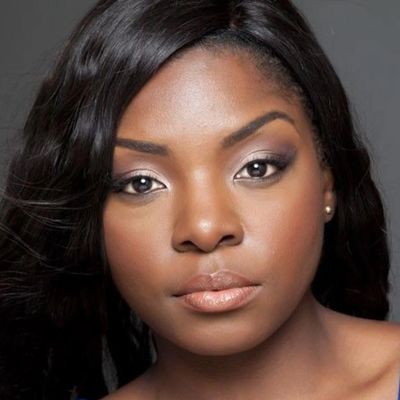
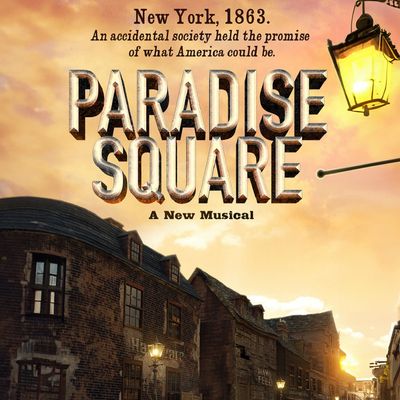
The "Paradise Square" actor explains how her role in the Broadway musical came along at exactly the moment she needed it most.
Transcript
This transcript was automatically generated and might contain errors.
[0:06] Gordon Cox: Welcome to Stagecraft, Variety's Theater Podcast, bringing you backstage and behind the scenes with Broadway stars, creators, industry leaders, and freshly crowned Tony winners.
[0:17] Gordon Cox: I'm Gordon Cox.
[0:19] Gordon Cox: On this episode of Stagecraft, I'm talking to Joaquina Kalukango.
[0:23] Gordon Cox: She's the star of the Broadway musical Paradise Square.
[0:26] Gordon Cox: And just about a week ago, you saw her on the Tony's raising the roof with her performance of her 11 o'clock number from Paradise Square, Let It Burn.
[0:34] Gordon Cox: Later that evening, she won the Tony for leading actress in a musical and was handed the award by Danielle Brooks and Cynthia Erivo, two of her castmates from the Broadway revival of The Color Purple.
[0:44] Gordon Cox: Audiences have seen Joaquina Kalukango on Broadway in Slave Play and on screen in the series Lovecraft Country and the film One Night in Miami.
[0:52] Gordon Cox: Now she's in the virtual studio with me to relive her all-night Tony celebration, to reveal her favorite part of Paradise Square, and to tease some of the projects she's working on as a writer.
[1:04] Gordon Cox: Hey Joaquina, thanks for joining me.
[1:09] Joaquina Kalukango: Of course.
[1:10] Gordon Cox: I am talking to you less than a week after Tony Sunday on Sunday night.
[1:16] Gordon Cox: First of all, congratulations. How do you feel?
[1:19] Joaquina Kalukango: Oh, I'm over the moon. I'm so excited, so grateful. Yeah. I'm happy, yeah.
[1:26] Gordon Cox: What was the first performance after the Tony's like for you?
[1:31] Joaquina Kalukango: Insane. It was madness. Um, there was so much love in that house, and I literally, I just have to stand there. It's so hard sometimes, I think for me to, for people in general, to receive that amount of love. It was overwhelming. And I was like, there's no way I'm in character at this point. They're going on for like a minute. Hey, like, I just want to start a show. But it was so beautiful with all of that love coming at us. And even from my cast backstage, you could hear them like we're applauding it. And even our musicians in the pit, they were all clapping too. So it was just a lot of love. It was beautiful.
[2:10] Gordon Cox: Did you notice a difference as the show went on in the way the crowd reacted to the show other than the sort of additional love that you're talking about? Did it feel different at all for you?
[2:24] Joaquina Kalukango: No, I think they were all fully invested. I mean, we do have people who have seen our show like six or seven times, so they're really excited. Uh, but for our new audience members who were there in the space, I think they were fully listening and with us the entire time, which was beautiful.
[2:42] Joaquina Kalukango: Yeah, I did hear someone shout out though, that's why she won the Tony, like after Let It Burn, which was really funny.
[2:50] Gordon Cox: That's very funny. That must have been hard not to break in that moment.
[2:55] Joaquina Kalukango: That would have cracked me up. Um, I feel like a lot of the people who watch Tony's who are maybe not in the industry don't have a sense of what a kind of bonkers day that can be for performers, right? Like, did you, when you sang Let It Burn on the telecast, was that the third time you had sung that song that day? Because you would rehearse in the morning, right?
[3:18] Joaquina Kalukango: Yeah, we did. I think it was.
[3:22] Joaquina Kalukango: And for a lot of people, they perform usually the full shows before they do their Tonies at night. And so, like, that's its own other madness. But I didn't do the two o'clock show.
[3:34] Gordon Cox: Oh, you didn't, okay.
[3:35] Joaquina Kalukango: No, yeah, yeah.
[3:36] Gordon Cox: Yeah.
[3:37] Joaquina Kalukango: But it's still stressful. You're getting in glam, you're doing other stuff, you're trying to think of, and you're doing an excerpt of the song, right? Because you're not doing the whole song, and it's a whole, it's its own number, basically, right?
[3:51] Joaquina Kalukango: Right. That song is like four minutes and 26 seconds, I think, or something like that. And the Tonys gives performers usually three minutes and 30 seconds to perform. So it's crazy to try to say what can you bring that showcases your whole show? It must be so hard for everyone to figure out what to actually put together.
[4:10] Joaquina Kalukango: Yeah, yeah. What do you do have any memories of what it felt like to be on that stage singing that song and how that felt different from when you do it every night on the Broadway stage?
[4:22] Joaquina Kalukango: Oh, you to be honest, I haven't had any time to reflect on it. A lot of it is a blur, but I do remember it was the first time that I could see people. Usually in the show, the lights are literally, it's two big spotlights blinding you, so you're just staring into the abyss. But this was the first time where I could see like fully 6,000 people like staring at me, which was, you know, intense in its own way. So the preparation and coming off, I just I had to be in a different place to start because my cast came in strong with all their energy, their dancing, and I was like, okay, let's go. They coming in hot. I gotta come in hot too.
[5:06] Gordon Cox: Yeah.
[5:06] Joaquina Kalukango: And what do you remember of the moment when they said your name and you got up there and spoke?
[5:13] Joaquina Kalukango: Oh goodness. I don't remember any of it. What I do remember, um, so me and Danielle, we go way back. We went to Juilliard together. She's the godmother of my son, like she's my best friend. So to see her, and then also Cynthia, who I played Nelly, Annetti while she played Seely in the Color Purple revival. And so the last place we all performed together really was on that stage when we did it at Radio City Music Hall for the Tonys that year. So to have both of those women who have been at pivotal roles in my life, who have always been speaking life into me, words of encouragement. I mean, I got to see what a leading lady was by watching Cynthia Erivo. She was phenomenal. Um, and so to have them be a part of this moment, I literally couldn't make up a better moment. It was divine, it was beautiful, it was all of the feelings. It was just a lot of love.
[6:15] Gordon Cox: Yeah. And how did you celebrate after the telecast?
[6:20] Joaquina Kalukango: Oh, I partied hard. I was party hopping here. I don't think I went to sleep until Monday night at 10.
[6:26] Gordon Cox: Oh, yeah.
[6:28] Joaquina Kalukango: Wow. It was a full-on, yeah, it was a full celebration.
[6:32] Gordon Cox: Excellent. And how has the rest of your week been? Sort of getting back into the routine of the Broadway show?
[6:41] Joaquina Kalukango: Ah, it's been interesting. It's hard. This week has been a little bit of madness, so I can't even say that I'm getting back into a routine because it's still a lot happening, I think, and a lot of excitement. And so it's a new way, a new wave that we're all kind of riding. Um, I think with the excitement and more people now coming to see our show, it definitely is a different energy that we're all kind of trying to map out, which is really exciting.
[7:13] Gordon Cox: Yeah. I wonder if we can rewind just a little bit and talk about your journey with Paradise Square. When and how did you first get involved in the show?
[7:22] Joaquina Kalukango: So last year in May, Moises, our director, he reached out to offer me the role.
[7:30] Gordon Cox: But I thought, had you worked with him before?
[7:34] Joaquina Kalukango: No.
[7:34] Gordon Cox: Yeah, okay.
[7:35] Joaquina Kalukango: No, I had not worked with him before. And when he sent me the Dropbox links that included like the, you know, a version of a script, a couple of songs, of course, the performance that they did for CBS Good Morning. Um, and I was like, oh, this is beautiful. Um, and so I thought I had to audition. So I was like, okay, so what would you like me to sing? And he was like, no, this is a direct offer. And I'm like, oh, okay.
[8:01] Gordon Cox: Do you know where how he'd seen your work? Do you know how he'd come across your work?
[8:07] Joaquina Kalukango: He's no, yes, he knew of my work from, of course, I think Slave Play and previously before that, I guess my name has been around and he, and he, of course, I don't know, directors do their thing, they talk to people. There's so many artists that they talk to, how is she to work with, you know, that familiar context and I think things like that. But between him and I, I believe Garth as well, they decided that they wanted me to play this role. And so once I got that, I immediately started working with Joan Later, who's my vocal coach. I mean, vocal coach of the gods, she's amazing. Um, because at that point, I hadn't been singing, I don't know, for like four or five years. I literally, so in the middle of a pandemic, I didn't know how to breathe. I didn't know, like just to get your whole body, your instrument back to being able to do eight times a week, it was really challenging.
[9:02] Joaquina Kalukango: Um, and then we did the out-of-town tryout in Chicago.
[9:05] Gordon Cox: In Chicago, yeah, yeah, this year just as theaters around the country were just starting up, right? This was like fall 2021, yeah.
[9:11] Joaquina Kalukango: Yes.
[9:15] Joaquina Kalukango: Which of course was scary in and of itself, and in people not really, you know, being very timid about showing up. Um, but we got a lot of support and love in Chicago, which was really nice, and a lot of rewrites and things were able to happen in that space, which was great before we got to Broadway.
[9:31] Gordon Cox: What why were you interested in the part? What was it that attracted you at first?
[9:34] Joaquina Kalukango: Um, the character. I had never seen for a black woman to own a bar in 1863 when most of the people that looked like her were enslaved at that time and not considered human, I thought was remarkable. Um, I think the story of the Five Points, we know it for its violence, for its poverty, for its prostitution and all of that, but you don't know that this was the birthplace of Tap, that literally this was abolitionist headquarters, so newly escaped African Americans sought refuge in these places, that this was a community that was full of love, and so to be able to tell that story for so many people, I think was exciting.
[10:20] Joaquina Kalukango: I'm a huge history buff, so I literally read like all the books I possibly could on this and was like, we absolutely have to tell this New York story in New York, you know, that most people don't know.
[10:31] Gordon Cox: It was remarkable.
[10:32] Joaquina Kalukango: Yeah.
[10:32] Gordon Cox: Well how and how did all that research that you did inform how you approached the character?
[10:37] Joaquina Kalukango: Oh, it informed everything. I mean, you can't play facts, but once you have that knowledge in you, certain things can come up. So even if it's in the script, you can say, well, is this truthful of this moment? How will we respond? And we can tweak it in those moments, which is really nice. I think the more information you have, the more and more free you honestly can be on stage, which is really great.
[11:01] Gordon Cox: Do you have a sense of how you as a performer and your input in the role and your take on the role influenced the sort of evolution of the part and of the show?
[11:14] Joaquina Kalukango: To be honest, I don't know. I knew before I joined, Nellie's role was not centered at all. And I think when they initially gave me the offer, they were going a different way and wanted to center Nellie's voice for the first time. So this was really a collaborative, I feel like experience in one of the most beautiful ways that I've ever had as an artist. Because these are phenomenal creators, and so to even have any type of input is really astonishing that one they trusted me even in that way and respected me enough as an artist to give my little input that I could, you know, and use it to feel like a truly collaborative experience.
[11:58] Gordon Cox: Yeah. And how would you describe the changes that were made in the show from Chicago to here?
[12:04] Joaquina Kalukango: Well, we had a completely new rewritten act two. So that's one of the major differences. And for my end of song in Act One, it used to be "Welcome Home," which was more about seeing my husband, you know, as a ghost and feeling like I would never be able to see him again. And through the trajectory of the show, we realized that, well, we've already had that moment to acknowledge Willie's death. So, what is Nellie really feeling like by the end of Act One? And it was more about her bar, the beginning of the tearing of this community, and hoping that it wouldn't go away. And so Jason Howland came back in and rewrote a whole new song called "Heaven Save Our Home," which was really remarkable.
[12:53] Gordon Cox: Yeah. It sounds like there were probably a lot of new songs in that transition.
[12:58] Joaquina Kalukango: Yeah.
[12:59] Gordon Cox: In addition to the new book or the additions to the book, I guess.
[13:02] Joaquina Kalukango: Yeah. And is there anything you miss from that earlier version of the show that you understand why it got cut, but you missed doing it?
[13:14] Joaquina Kalukango: Oh. Well, I understand why this one song got cut. It was, I'm trying to remember the name now. I can't forget it. But it was a different duet that Nellie and her husband Willie did in place of what this more sweet, intimate moment. It was more like a fun, flirty, and really raunchy song that was like a really ditty song, and people were like, well, this is great, but it's not really telling my story. So it got cut, but it was fun to sing.
[13:47] Gordon Cox: Yeah, yeah. And what's your favorite part of the show to do now?
[13:52] Joaquina Kalukango: For me personally to do, or that's in the show?
[13:55] Gordon Cox: Um, well, how about both?
[13:58] Joaquina Kalukango: Okay. Well, one of my, oh, I have so many. One of my favorite moments in the show personally is the song "Breathe Easy." I remember the first time I heard it in the rehearsal room and saw it with the choreography, which literally includes so many dance forms from the African diaspora, which I thought was something I never saw on a stage, quite honestly, and it was so refreshing. And at a time where nobody was really breathing, just hearing that song as a reminder to breathe was so healing and therapeutic. So that's literally one of my, I think it's the most gorgeous song in there because you see all of these ancestors from the African diaspora literally surrounding this beautiful couple as they escape to freedom. And I think it's beautiful. My favorite song to perform absolutely is "Let It Burn."
[14:54] Gordon Cox: Okay.
[14:55] Joaquina Kalukango: It's literally, I couldn't ask for a better number to perform. The moment I heard it, I was like, oh, they're letting people do this on a stage. This is great. I was like, there's so many things that need to burn down. This is gonna be fun to sing for sure.
[15:17] Gordon Cox: And that's just one of the songs you sang that night. So I feel like you mentioned you're working with a voice coach, but like, is there anything in particular that you do to keep yourself sort of vocally fit and physically fit and healthy and everything that you need to be prepared to do that show so many times a week?
[15:37] Joaquina Kalukango: Right. I drink a lot of water, I steam, I do a vocal warm-up before the show, and then I do a vocal cool down after the show, which I just learned about. I never knew about cooling down after a show; it's just been actually really helpful in repairing the voice.
[15:54] Gordon Cox: Can you tell us a little?
[15:56] Joaquina Kalukango: I've actually don't know much about that. Tell me a little bit about what that is.
[15:59] Gordon Cox: What do you do when you're cooling down?
[16:01] Joaquina Kalukango: So it's just a series of exercises. I could show you, sing a little bit, but it's like a, and you just kind of go down the scale, woo, or you can do a lip trill, and you keep going down the scale, and it's just kind of resetting your entire voice by the end of the night. Because there's so much emotion and screaming by the end of the show that like it is taxing. So to bring your voice back and also your body back to know that it's normal, it's okay, you're not in, no one is coming to attack you. You're a normal person now. It's almost like you always have to do that.
[16:40] Gordon Cox: Right.
[16:40] Joaquina Kalukango: Yeah.
[16:42] Gordon Cox: Do you have a sense of, we talked a little bit about the fact that you're working on the show during the pandemic. And do you have a sense of how, you know, the pandemic was a huge shift for all of us, not just, you know, living with the pandemic, but also the uprisings for racial justice. Do you have a sense of how all those things informed what "Paradise Square" has become as you've been working on it?
[17:07] Joaquina Kalukango: Oh, it's a good question. I don't know if I have a sense of how it's informed it, but I do know that all of us in creating it, I think we feel it. There's a new way to work, I believe, as artists now. I think the pandemic showed us all that life is short. So when you have these opportunities to tell stories, it is a privilege and truly a gift to be able to tell stories. So I think we all came in with the acknowledgement that, you know, you're out there risking your life every night. Even if you're vaxxed and double vaxxed and all of those things, you're there performing. But we wouldn't do it if we didn't love it. And so that to honor these stories, especially in our communities, so much of what we've seen, there's so many nameless communities of places that have been burned down where people once lived and shared and loved each other.
And so to be able to be in a show like this where we can honor those voices for all of us, for our Irish immigrants as well as our African Americans in this country, I think is really telling and beautiful.
[18:13] Gordon Cox: Does that make a difference in terms of how you work in the room as you're working on a show?
[18:20] Joaquina Kalukango: Um, no, the work, at least for me, the work has always been the work. But I do think because we're out of this pandemic, we have all had to figure out a new way to work. There are protocols; we get tested every week, literally a couple times a week for us. And it was really hard, especially when we opened. We literally opened, and then that's when we all pretty much got COVID; it raked us. So it was the uncertainty, I think, of it all is something that is new and interesting that we're all having to navigate, even our producers and everybody.
[19:14] Gordon Cox: And now here's more with Tony winner, Joaquina Kalukango. Who do you consider the biggest influences on your career, Joaquina?
[19:24] Joaquina Kalukango: Ooh. Like, do you mean in terms of mentors or people I looked up to, or both?
[19:32] Gordon Cox: Both.
[19:33] Joaquina Kalukango: Okay. Um, well, mentors, I have to say, Tanya Pinkins has been one of my greatest mentors, I think, since we worked together in 2011 or 12. And she's just kind of held me under her wing and not even said I'm your mentor. She's just been like mama there to me again, like, how are you checking in and offering advice? And so she really holds a special place in my heart, I think, as an artist and someone I've always looked up to.
[20:06] Joaquina Kalukango: You worked with her, was it Hurt Village? Is that what it was? Yeah, okay. Right. And are there is there an artist or uh uh or any kind of type of creative person whose uh career you admire and whose work has really influenced you? I'm gonna say one, of course, is is Viola Davis, uh just because of her journey from Juilliard, seeing her pave the way, her vulnerability, her rawness, um, and and how she's opening doors and creating new spaces. I I I think um she's been a big influence for me just looking up to her and and seeing her trajectory. And then, of course, I my two is always Audra McDonald and LaShawn's. I I've I've always admired them. These were the videos I used to watch in high school of these incredible women, and and um so to be able to meet them and talk with them and and hear words of inspiration from them during this time, especially um my little 15-year old self is like about to burst. I'm like, this is amazing.
[21:12] Gordon Cox: And what speaking of you talked about Audra and LaShawn's, but are there any plays and or musicals that really are close to your heart as uh and became close to your heart as you were learning that you loved to theater?
[21:25] Joaquina Kalukango: Oh goodness. Well, once on this island, that was the first musical I had ever seen. Um and it was when I was auditioning for high school. So that my um high school did it before I could get into the program. And where was this? Tri-Cities High School in East Point, Georgia. Okay. Um, so it was phenomenal. And I just remember being like, I want to do this. I was having the best time of my life. Um, so that and I would also say Serafina has a big space in my heart because it was the first show that I had ever done um at school to be an artist, and it literally changed my life. Learned having to learn how to do South African accents and the research and everything, learning how to sing and dance at the same time, building up stamina and um craftsmanship. I mean, it was a huge challenge for for all of us as artists, but yeah, it was a great way to be thrown into it.
[22:19] Gordon Cox: Yeah, was that in high school as well?
[22:21] Joaquina Kalukango: It was in high school.
[22:22] Gordon Cox: Okay, yeah. And then did you go straight from high school to Juilliard? Was that the trajectory for you?
[22:28] Joaquina Kalukango: Yeah. Yes.
[22:29] Gordon Cox: Yeah, great. Um, and do you have a sense of what kind of work in general you're drawn to? Like, can you characterize the projects that really attract your attention?
[22:40] Joaquina Kalukango: I don't know if I can characterize it. I I'm I know I'm a storyteller, and so if it's a good story, I want to navigate towards it. Um, sometimes I feel like certain things come to me when um when I need to deal with it at a certain point in my life. So for me, like something like Paradise Square came at a time where I was scared of everything, scared to live, scared to breathe, like scared to move. And then you have this woman who is so fearless, who is um so loving and protective of her community, um, to be able to embody that specifically at a time where I didn't have the strength to do it myself, I think was a um a healing thing. So I always feel like certain things come to me at a certain time when I need them. Yeah, if that makes sense. Or there's a certain characteristic that I need to express, and that usually comes.
[23:34] Gordon Cox: And you're based in Atlanta now, is that right?
[23:37] Joaquina Kalukango: I did. I moved back a couple of years ago.
[23:39] Gordon Cox: Okay, and so part of taking a job, the calculus of taking a job for you also involves when you what makes it worth leaving your home for, right? Because you're gonna you're away from Atlanta for a while now, right?
[23:49] Joaquina Kalukango: Right.
[23:55] Gordon Cox: Right. And uh is it Atlanta? You're from the Atlanta area, is that right?
[24:00] Joaquina Kalukango: Mm-hmm.
[24:01] Gordon Cox: Yeah.
[24:02] Joaquina Kalukango: Yeah. Um lots of uh acting work there as well, though, with lots of TV production and things.
[24:06] Gordon Cox: So it's completely changed.
[24:08] Joaquina Kalukango: Yeah.
[24:09] Gordon Cox: Yeah, it's a completely different place. Do you have a sense of what how you want TV and film to fit into your work overall and how theater fits into that as well?
[24:24] Joaquina Kalukango: Yes. Uh you know what's so interesting? Um, I always look at like the um the family of artists in the UK. I think they have it pretty well. They do it all. They go seamlessly from theater to film to TV and back. And I think uh we sometimes here get put in a box and get pigeonholed and say you have to stick to this thing. And so I'm gonna go where I can tell stories. I want it to be in every form. Um, because I think that's what being an artist is to be able to do all of those things. And I think people just have to see it and know that it can happen, you know.
[25:00] Gordon Cox: Yeah. And do you is there a certain kind of work that you're hoping to do going forward?
[25:06] Joaquina Kalukango: In terms of what?
[25:08] Gordon Cox: In terms of the kinds of stories you're telling, or um, the opportunities that it gives you to showcase in yourself as a performer.
[25:17] Joaquina Kalukango: Hmm, I don't I will say for me specifically, I I am more so trying to concentrate on I think um narratives of of our culture specifically because I I I don't see them, and I think there's so many different stories to tell. And so it's it's really just about um finding the right stories that I want to tell. I also um am writing, so there's I'm Angolan, so there are specific stories that I want to tell from my community as well. So I I I wouldn't say that there's a specific thing that I'm working on, but yeah.
[25:53] Gordon Cox: Well uh can you tell us a little bit about the stuff you're writing?
[25:57] Joaquina Kalukango: No, no, I can't, but I will say it's it's it's been great to um research uh a lot of even my tribe um and and my culture and my family history. I started literally um taping my parents, my father passed away three years ago, so I used to take them and just tell them tell me your journey because they came here as political refugees in this country. And that journey was just so phenomenal that I was like, okay, I have to get this written, I have to figure this out.
[26:30] Gordon Cox: So you're not gonna tell us if it's a play or a movie or a TV show yet.
[26:35] Joaquina Kalukango: I will say that there are a TV show in the mix, there's a movie in the mix. Plays kind of terrify me, so I have to wait on that. I have to figure that out.
[26:48] Gordon Cox: What do you know now, or what have you learned along the way that you wish you knew as you were starting out?
[26:56] Joaquina Kalukango: Oh don't be afraid of your power. I think for for the longest I tried to hide it. There's a there's a thing too, I think, specifically in the South and in the southern culture as well, of like, you know, being humble so you don't be um, so you're not arrogant, right? And it's not arrogance to own your power, it's just owning your power and sitting in it with the full confidence that you have everything created in you to be exactly who you need to be at that moment. Um, and I think for so long I was so scared, scared of it, scared to show it. Um, and yeah, I think that's the biggest thing. Don't be scared of it.
[27:39] Gordon Cox: Is that the advice that you would give to young performers uh setting out today?
[27:44] Joaquina Kalukango: Absolutely. I think we all have to be fearless. That's that's the point of art. You know, you can't be scared in this business to share art. It's a vulnerable place to be, to expose yourself in that way. And so I think the more and more you can feel as free as possible, the more and more you'll help other people then begin to be free as well.
[28:03] Gordon Cox: Yeah. So you're in Paradise Square for how much longer, do you know?
[28:09] Joaquina Kalukango: As long as they will have me, and people come see our show. Right now we're open-ended, so let's get people to come in.
[28:18] Gordon Cox: Yeah. And is there anything else on your plate that I should know about? Are you working on anything else?
[28:23] Joaquina Kalukango: Not anything that I can say. But yes, there are some other things, yeah.
[28:28] Gordon Cox: Are there any roles in sort of classic plays or musicals that uh you feel like you've always wanted to play?
[28:35] Joaquina Kalukango: No, I feel like this was one that I always really wanted to play, and I didn't know it at the time. And I I'm I'm a huge champion of original works. I think um, so for me, be I yeah, I I love creating from a space of just complete freedom. Literally crafting a character from the air and working with artists in that way, I think is is really exciting. So I can't say that there's uh a role I'd necessarily want to do unless it was probably a new work. I think that's that's where the fun is for sure.
[29:06] Gordon Cox: Uh well, we can't wait to uh see what that new work is. And in the meantime, we can catch you in Paradise Square. Thanks so much, Joaquina. Thanks for joining me.
[29:15] Joaquina Kalukango: Thank you, Gordon.
[29:20] Gordon Cox: That was Tony Winner, Joaquina Kalukango, now starring on Broadway in Paradise Square. If you like what you're hearing on this and other episodes of Stagecraft, I'd really appreciate it if you took the time to rate and review us wherever you listen to podcasts. It really helps us grow our audience of folks who love theater as much as you and I do. Or tell a friend about Stagecraft, or give us a shout-out on social media. Find past episodes and subscribe on all the pod places, including Spotify, Apple Podcasts, and on the Broadway Podcast Network, which is a great place to find more theater for your ears. Until next episode, find me on Twitter at G Cox Variety. Thanks for listening, and see you at the theater.
© Broadway Podcast Network, All Rights Reserved