

The "Hadestown" Tony nominee on his new solo show "All the Devils Are Here," working with hearing loss, and when he grew into that deep, deep voice... Read More
From the show: Stagecraft with Gordon Cox
Guests
Featured Shows

About
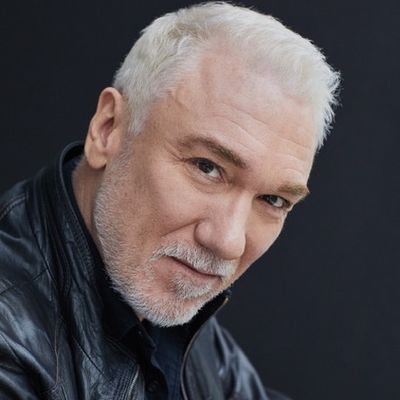
The "Hadestown" Tony nominee on his new solo show "All the Devils Are Here," working with hearing loss, and when he grew into that deep, deep voice.
Transcript
This transcript was automatically generated and might contain errors.
[0:06] Gordon Cox: Welcome to Stagecraft, Variety's Theatre Podcast. Your backstage pass to revealing conversations with stars, creators, and industry leaders. On Broadway, off Broadway, and beyond. I'm Gordon Cox. On this episode of Stagecraft, I'm talking to the actor and writer Patrick Page. He's the Broadway veteran with the very deep voice who originated the roles of Hades in Hadestown, Norman Osborne, aka The Green Goblin in Spider-Man, Turn Off the Dark, and The Grinch in How the Grinch Stole Christmas. He's also been a memorable Scar in The Lion King and Lumière in Beauty and the Beast. On top of all that, he's a widely recognized classical actor with a deep bench of experience in Shakespearean roles, and he's bringing all that experience to bear in his new Off-Broadway solo show.
It's called All the Devils Are Here: How Shakespeare's Invented the Villain. And in it, Page explores all the ways the Bard revolutionized theatergoers' understanding of evil and the people who commit evil deeds. Now, the actor's in the virtual studio with me to tell us all about it. Hi Patrick, thanks for joining me.
[1:12] Patrick Page: Hello, thank you for having me.
[1:14] Gordon Cox: Yeah. Now, of course, we'll talk in just a minute about All the Devils Are Here, but because this is an audio medium, I wondered—I thought we should maybe start with something that occurred to me as I was watching your show last week. You know, it had been a while since I'd seen you on stage, and you know, we all know you have a very deep voice, but then we are confronted with it on stage, and I thought, I wonder when he knew—like at what point did you know that you had the voice? Where were you in your life when you figured out that your voice was going to have the sound that it would?
[1:47] Patrick Page: Well, I remember in my—I believe it was my sophomore year of high school. Between my sophomore—I'm sorry, I'm congested. I have this terrible cold. Hopefully the pseudofed will kick in. Between my sophomore and my junior years of high school, I think that was when it was, I was cast as the MC in Cabaret.
[2:15] Gordon Cox: Oh.
[2:15] Patrick Page: Which is a very—it's not—I don't think it's quite a tenor role, but it's a very high baritone role.
[2:21] Gordon Cox: Yeah.
[2:22] Patrick Page: And it might be a tenor role, I don't know for sure. I haven't listened to it in a long time. At any rate, it was something that I thought I could sing, and then my voice began to change. And by the time it was time to do the play, it was a real struggle. Then I remember after that we did A Midsummer Night's Dream and I was playing Oberon.
[2:47] Gordon Cox: Yes.
[2:47] Patrick Page: Which was I think the second Shakespeare's play that I did of any consequence, and of course Oberon is this marvelous lyrical role, and I remember finding these notes in my voice that seemed to be right for the king of the fairies, you know, at the time, and playing around with them and just sort of discovering this instrument. So I suppose it was around that time.
[3:19] Gordon Cox: Yeah, and so then what did you do to kind of develop your voice as you went about training as an actor?
[3:28] Patrick Page: Well, I mean, it's a long journey. I mean, I always had quite a sturdy voice. I trained it in the way—I used to read biographies of all of the great British Shakespearean actors, and there was a very muscular approach on their part. I remember Richard Burton talking about going out into the hills of Wales and simply shouting these roles at the top of his lungs in order to strengthen those muscles, and I did that. And just like training a muscle, you train it to the point sometimes of fatigue, and then you rest it, and then it comes back a little bit stronger, you know. And then when I was cast in Beauty and the Beast in 1995, I had never anticipated having a career in musicals at all. I was cast on the first national tour, and my agent really encouraged me to look into having more of a career in musicals.
There's just a lot more work. And so I began to sort of train as a singer and then got more serious about trying to add notes to my voice and everything. And for years, all of my voice instructors were keen on trying to turn me into a baritone who could sing all of the great roles that were written for baritones in the '30s, '40s, and '50s for John Raitt and all of those great singers, Jerry Orbach, and I just never was that. And then finally someone said, "Oh, you're a bass." And the minute that happened and we began to train in that way, what was funny is not only did it open up the fullness of my voice in terms of the bottom of my voice, but it opened up the top as well.
[5:24] Gordon Cox: Yeah, yeah. And what do you do to maintain it now? You know, we were supposed to record a few days ago, and you had to go on vocal rest, which is a thing that lots of actors have to do all the time. Tell me about the process of maintaining—just making sure it stays healthy now.
[5:39] Patrick Page: Well, I do a full vocal warm-up. A singing warm-up seems to be the best for me before every show. So I hit all of my notes. I make sure the breath is moving. I do a full physical warm-up because the body, of course, is so integral to the voice. And that takes about an hour to do before the show, and I do it before every show, and I do it when I'm not performing as well.
[6:11] Gordon Cox: Yeah, yeah. So the play you are currently using your voice to deliver is your own play. It's called All the Devils Are Here, and it's about the development of the villain as a dramatic figure throughout Shakespeare's. And going through your resume, even outside of Shakespeare's, you do seem to play villains with some frequency. You know, you can quibble with the idea of Hades being a full villain, but certainly Norman Osborne and the Grinch and Scar. Why do you think that is? Is that a product of having the voice that you do?
[6:41] Patrick Page: I think it's probably partly that. I mean, there's a strong tradition in the theater of those roles being more bass roles, and I suppose that comes from the opera, to some extent, where those roles are differentiated, you know, between Mephistopheles and Faustus. Mephistopheles is the bass part. Sparafucile is a bass part. There's a tradition there. I think maybe we have that. You know, I talk about something in All the Devils Are Here, which was a pseudoscience in the 16th century called the Art of Physiognomy.
[7:27] Gordon Cox: Right.
[7:28] Patrick Page: And it's identifying moral characteristics based on physical characteristics. And we still do that just reflexively. And so I think when you watch movies, you attach certain attributes to certain kinds of people. So Alan Rickman plays a lot of villains, you know, Christopher Walken plays a lot of villains. Sometimes it's a vocal characteristic, sometimes it's a physical characteristic, sometimes it's a behavioral characteristic, as I think it is mostly in Christopher Walken. And yeah, we're all, for lack of a better word, guilty of that to some degree or another.
[8:14] Gordon Cox: Yeah, and indeed that's a lot of what All the Devils Are Here is about.
[8:18] Patrick Page: Yeah, is about trying to free ourselves from that kind of tribal thinking and to look inward and to say, "Oh wow, I have these qualities in me."
[8:30] Gordon Cox: Yeah. Was it your experience playing villains, a string of villains that got you thinking about All the Devils Are Here? Tell us a little bit about the genesis of the piece.
[8:41] Patrick Page: Well, I suppose it partly was. I mean, it partly was, and mostly it's because of my love of Shakespeare's. And then it just so happens that Shakespeare's investigated evil as deeply as any other person in history. It was one of his great interests and concerns, along with love and power. And so it's a very rich vein to take as something to explore in Shakespeare's. And it happens that these characters—many of them have soliloquies, so they have a marvelous interaction with the audience, which when you're doing a one-man show is very useful because obviously the audience is your partner; it's the only new thing every night is the audience, so it's very helpful. And a lot of these are characters that I—some of them I've played, some of them I would like to play or haven't played, and wanted to explore.
So yeah, and then it also just a moment in the world where I thought Shakespeare's has something to say to us right now. We're at a moment where we seem to choose sides very quickly and decide that someone is good or someone is bad, and then align with the good and identify ourselves with the good, which I think is a very perilous thing to do because it means that we're not looking inward to say, "Well, where might I be mistaken?"
[10:26] Gordon Cox: Yeah. I did wonder throughout the—because you mentioned that you played some of the roles, not all of them. You know, you open the show with Lady Macbeth, who I imagine is not on your resume, but which of the roles have you played before, and which are the ones that you want to play?
[10:42] Patrick Page: Well, I've played Richard III, but I've never played Richard III in Henry VI, Part 3, which is the speech that I do in—and of course he's not Richard III, then he's Richard of Gloucester. So I get to do that speech, which I never got to perform when I was playing Richard III. I think Richard III is one of the great roles ever written for an actor. I haven't played Barabbas or Aaron, which I play in this, and that's fun to be able to do those juicy kind of early characters that are very broadly drawn. I've never played Shylock; I have been cast as Shylock and worked on the role, but it's a role I'd very much like to play. And I have played Malvolio, I have played Claudius, I'd like to play Claudius again very much.
[11:28] Patrick Page: I have played Macbeth, uh Prospero, and uh and so uh and and Iago and uh and Angelo in Measure for Measure is a role I'd very much like to play as well.
[11:40] Gordon Cox: Yeah.
[11:40] Patrick Page: Yeah.
[11:41] Gordon Cox: Has your conception of any of the characters that you played previously changed in the years since you've played them?
[11:48] Patrick Page: Well, they always change when you when you approach them again. For example, I just played King Lear in the spring, and I'm I've worked with Lear my whole life in various capacities. And and uh a year or two ago I I taught a 12-week course on Lear. And whenever you go back into the play as an actor, of course you're confronted with your acting partners across from you, and they uh reveal new things for you in terms of uh what the line means. It of course it means an entirely different thing when spoken to a human being than it does when you're looking at it on the page. Um and it and it stays alive and it keeps moving, the meaning keeps moving and shifting. I suppose my main takeaway in that production was just uh well, first of all, how specific and accurate the the depiction of uh the dementia was on Shakespeare's's part, but also the humor, the tremendous humor uh sense of humor that Lear has, sense of irony, and uh and uh and the way he uses humor as a weapon.
Um all of that was a great uh uh uh revelation to me playing it in terms of these characters in uh in All the Devils Are Here, um each night I I make new discoveries, but I it's it's uh it's a funny thing because since I'm out there by myself the whole time, I don't have uh even a nanosecond to uh evaluate any discovery. So everything I discover happens that night and then it's gone because I don't I don't have any time to uh it's just as if you've lived it, because if I let my mind rest for a moment on aha, something new happened, well, I then I'm lost for the next moment. There's no there's no time, it's like air traffic controlling. There's no time to to to think. So um I I will in the moment of discovery have the aha, and then maybe the aha will come again tomorrow night, or maybe it won't, but I I I don't I don't really remember the aha after the show.
[14:02] Gordon Cox: Right.
[14:03] Patrick Page: Yeah.
[14:03] Gordon Cox: Do you can you tell us a few of the experiences experiences that you've had in your career that really shaped your understanding of Shakespeare's's villains and that contra that really contributed to the work that you do in this show?
[14:20] Patrick Page: I think maybe the first one was I saw an actor named Dennis Arnt when I was 18 or 19 years old at the Oregon Shakespeare Festival. Quite a brilliant, brilliant actor, a brilliant actor in the classics. And he played Iago. And I I watched and I thought, oh, he's doing something different than everybody else on stage. He was a human being. And I don't know why. It was just like, oh yes, these are people. I I mean, you know, and and how late to get the memo when you're 18 or 19. But if you see a lot of Shakespeare's performed as if they're something other than people, they're the uh these Shakespearean creatures or something, all of a sudden here's this man just talking, just doing. That was that was very formative for me.
Um and uh I when I was a child, I listened constantly to John Gilgird and and Lawrence Olivier. They were very formative for me in terms of the speaking of the verse because they were completely opposite. Um Gilgird uh was completely vowel-oriented, and uh Olivier was completely consonant-oriented. Uh and then that sounds pretty technical, but it it was uh that this kind of staccato delivery uh on the part of uh Olivier, and then this lyrical kind of legato delivery on the part of uh Gilgird. And by mashing those two together and then and then sort of going, oh, these are human beings, I I don't know, it released something in me. Um, and then I'm always just watching, you know, watching, watching, stealing, stealing, stealing from anyone I care.
[16:05] Gordon Cox: I'll have more with Patrick right after the break.
[16:16] Gordon Cox: And now here's more with the actor and writer Patrick Page.
[16:20] Gordon Cox: And tell me about the process of writing the play. How did you go about kind of culling through the Shakespeare's to find the characters and then you then the speeches that you focus on?
[16:29] Patrick Page: Uh well, the premise of the play is that it's uh a chronological exploration of how Shakespeare's did this. So the chronology itself, once you've settled on that, and people differ about chronology, but there's a generally accepted uh order in which the plays were written. One might you know quibble about whether Titus Andronicus was before Henry VIII or after, but we know they're both early plays and so on. And once you've settled on that, then you can sort of say, aha, this character emerges here, this character there, and then you can sort of look in those characters for what is it new that Shakespeare's, what was the new discovery with this character, right? And so, for example, with Claudius, this really fully formed conscience emerges.
Um what a what an extraordinary thing, and what an act of empathy that was for a playwright to say, oh, these people who do terrible things, they also have a conscience, just like me. It's very easy for us to look at, you know, a terrorist organization or a neo Nazis or whatever and say, oh, they must not have any conscience. Shakespeare said, what if they do? What if the Nazi goes home to his uh children at night and puts Christmas presents under the tree with all the best meaning? Um, and to really ask about that. So in each in each case with Shylock, for example, that that sense of uh uh a person being wronged and having a real uh deep motivation for wanting to right an injustice um and and a logic behind it. Uh and that that is uh I think a Shakespearean contribution. So it's really looking in each case at like what was the new emergence in each of these characters.
[18:35] Gordon Cox: And how much did you rely on, or did you rely at all on sort of scholarship on Shakespeare's and like how much is informed by your own reading and how much is informed by your own insights, you know, just over the course of your career?
[18:47] Patrick Page: Well, you know, I'm I'm a nerd in that way, so over the years I've I've read essentially anything I can get my hands on about Shakespeare's, and it's all in there in one way or another. So sometimes I'll have an insight, and I'll think, oh my gosh, I have this brilliant insight, and I'll go back to a book I read 30 years ago and know, oh no, it's not an insight at all. I read this in Harold Dutter in 1989, you know. But um, but um uh uh so i i I I think it's that. Um I chose not to work with uh uh uh a a scholar or a dramaturg, although I did bounce things off of friends of mine off of uh James Shapiro and Dakin Matthews and other people and Simon Godwin, who's my director, but i I think all of us, uh all Shakespeare's biography, and and to to some extent all the devils are here deals with biography, is speculative.
So you're always going to disagree. So I may say, oh wow, I think his relationship with the Dark Lady of the Sonnets really influenced uh his creation of Shylock. Because one couldn't have a deep and passionate love for a person of color, a marginalized person, and then not and then be writing a marginalized person and not bring that love and empathy to that character. To me, there's a link there. Someone else may say there's no link there. Um and uh and so it's all speculative, you know.
[20:23] Gordon Cox: Were there any characters that you were unable to include that you were hoping to include that you had to cut out for whatever reason?
[20:30] Patrick Page: Yeah, there always are. I I uh we rehearsed uh uh in the in previous versions of this, I had uh a scene between Prince Hal and Paul Stefan, which I really love playing. Um but in terms of the rhythm and trajectory of the play, um Simon felt that it would be it would be leaner and clearer uh if we if we cut out. I had a Mark Anthony's speech uh from uh the forum uh in uh which I think is so remarkably uh uh prescient and topical in the sense that what Anthony does in that speech is he he convinces uh a violent mob to storm the Capitol, and he does it with complete deniability. Um and it it's just remarkable that of course we see precisely that happening on January 6th in our own country. Uh and now people will argue whether or not uh Trump was responsible for that insurrection and pour through that speech to see well, where did he tell them to storm the Capitol?
Well he didn't, and Mark Anthony didn't tell them to storm the Capitol either. But is he responsible? So those those kinds of things are very interesting to me. Uh, you try to make a lean um and and dramatic narrative in the evening.
[21:47] Gordon Cox: Yeah.
[21:48] Patrick Page: And you st you've talked a little bit about this, but can you expand a little bit more on what it is like to take on these roles and deliver these speeches uh solo with the audience as a scene partner versus doing it in a full production uh you know with other actors?
[22:03] Patrick Page: Yeah, I mean, with a great source of energy for an actor. What you have is is your fellow actor. And really, if you're acting well, what you are is a reactor. You've done all your work, you know uh the character very well, you know what the character's uh actions are in the scene, uh, you know what the character wants to accomplish, and then you go out uh with uh freedom and empty hands and an open heart, and you meet your acting partners on stage and you see what happens. And um that of course is not uh uh a luxury you have in a one-man show. Um you have the audience, and uh and you have yourself. I play in in All the Devils Are Here, I play some duo scenes where um the two characters speak to each other, and it's fun to try to let myself be surprised, and it's it's remarkable when I to me, if I am able to surprise myself to that what comes out of my mouth is surprising, and that the other character has to respond to that surprise, and therefore that's surprising.
[23:14] Patrick Page: That's when I'm feeling good about the evening. If it feels in any way locked in, then I come off feeling not so good about myself. And again, with the audience, it's really an act of trust in terms of letting that person, because the audience becomes a person, they develop a personality within the first five or ten minutes of a show, they decide who they're going to be collectively, and to let them be who they're going to be, and to be okay with that, to say, oh, last night there was an extroverted partner, tonight there's an introverted partner, and to move forward with telling the introverted partner the story of how Shakespeare's invented the villain.
[24:04] Gordon Cox: How would you characterize the way all your work with Shakespeare's has influenced the way you work on pieces that are not Shakespeare's, you know, something like Hadestown? How does your understanding of Shakespeare's and everything you've learned working with Shakespeare's influence your broader work?
[24:24] Patrick Page: Well, I would say that Shakespeare's has changed the way everybody works in that way. I mean, Harold Bloom's observation was his book was called Shakespeare's, the Invention of the Human, and what he meant by that is something similar to what I mean by the inventing the villain, which is that the creation of consciousness in these characters, their awareness of themselves, their awareness of their own thoughts, their awareness of their place in time and space, and their full three-dimensional humanity. So, an actor, a modern actor who has any sense will always tell you they are playing from the point of view of the character to justify that character's actions, not to judge them from the outside.
If you're playing Jeffrey Dahmer, you play from Jeffrey Dahmer's point of view, you justify his actions. Here are the reasons that he did it. They're perfectly sensible and irrefutable and undeniable to him. He may have, he may even loathe himself, as Jeffrey Dahmer did, for doing it, but he didn't see any other option. He couldn't find any other way, in his case, to find he was so lonely, he needed someone to be with him who he could control and who he could hold, and who he could be with, and who he could feel calm around. And when you find the point of empathy for that person and play from that person's point of view, to me, that's the Shakespearean insight. So, in a way, all modern acting is based on that.
And of course, with Hadestown, for me, that is always never to stand outside and say, ah, there's the evil, evil CEO of the underworld, or there's the Trump avatar who builds the walls. All of that's not useful to me at all as an actor. What's useful is to say, oh, here's a man with tremendous responsibilities and power, but who is deeply threatened and hurt by the distance that's growing between his wife and himself, and will do anything to win his wife back, and tries anything he can find. And that is in every single scene, plus you find the core of the character, the center of the character, the spine of the character, then that's what the character is doing. So if you're singing "Why We Build the Wall," it may look like what you're doing is inspiring the troops, the workers of Hadestown to build the wall.
What are you really doing? All the energy is going over to left stage where Amber Gray is standing. And look at me, honey. I have all this power. You should be attracted to me. You should come back to me. Look at my look at how masculine and alpha I am. It's all a show for her. Once you know that, then you know how to play it.
[27:41] Gordon Cox: In addition to your work as an actor, you've also been very upfront in recent years about your experience with hearing loss, and you've become an advocate for accessibility in the theater, both, you know, for the audience and for folks on stage and backstage like yourself. I wonder if you could just tell us a little bit about those experiences over the years, particularly in your work on stage.
[28:01] Patrick Page: Yeah, well, I probably started losing my hearing in my 30s. It's something that happens to most people gradually. And the doctors aren't exactly sure how it happened. I probably have about 20% hearing left now. So I have three different pairs of hearing aids that I wear in different situations. They're good at different things. Some of them are good at being very loud, and some are good at screening background noise, some of them hide in the ears better. But I can't work without them. And hearing loss is very common. A lot of people are hard of hearing, and I meet so many people, especially people's partners, who say, my husband or my wife or my father or my daughter has hearing loss and they don't want to get hearing aids for this reason or that reason.
There's some stigma attached. And I just think it's so remarkable that we live in this period of time when there is technology, you don't have to live with this thing. And of course, hearing loss, I say of course, but it isn't obvious. It has repercussions in all other parts of life. It creates anxiety, terrible anxiety in social situations, a kind of terror that you're not following the conversation, that you'll say something stupid, which I still have constantly, and therefore very frequently avoid group situations or like that. It has repercussions, of course, for performers. I've worked with performers who've approached me who have hearing loss of one kind or another. A young man approached me who was deaf in one ear, and his problem was that when he came into audition, he found that the piano was always on the right, and he didn't know how to say, could we switch this round?
I can't hear in this way. And of course, what I advocated for is that I find people are actually quite forgiving and kind if you simply approach them and say, come in and say hello, my name is Patrick Page. I'm deaf in my right ear, but I'm very functional. If we could just switch the piano around, if either you could come to the other side of the room or we can move the piano to the left, I'll give you a wonderful audition, but I won't be able to hear them on the right, you know. People can be quite generous about it, but you have to be upfront with people.
[30:44] Gordon Cox: Yeah, and it sounds like it took you a while yourself to get to the point of using hearing aids. Was it as recently as Hadestown? Is that what I understand?
[30:53] Patrick Page: Yeah, yeah. The first time I wore hearing aids fully was in Hadestown in London. Actually, the first time was in a workshop of Moby Dick, Dave Malloy's Moby Dick at the public. It was just incredible. I mean, because you realize, I mean, I remember going outside and realizing that there were birds in my neighborhood. I never knew there were birds on 98th Street between West End and Riverside. I really didn't know, I had no idea. And there they were. And so there's just this whole world, which I was not experiencing. And the sound designers on Hadestown were just so brilliant in terms of working with my hearing aids. We decided not to use an in-ear device for me, but to use my own hearing aids, which then they calibrated with their brilliant Tony-winning sound design. And it's different with every show. And I do have to work very closely with the sound designer.
[32:03] Gordon Cox: You were in All the Devils Are Here for a little while longer, and then what's next for you? Do you know?
[32:10] Patrick Page: Who knows? I mean, I'm trying to keep an open mind. Right now I'm, you know, we're all on hold because of this.
[32:23] Gordon Cox: Sure, there's still a strike happening, yeah.
[32:26] Patrick Page: So we don't know if there'll be a third season, for example, of Gilded Age or Shemigidun or the other shows. I'm involved with a number of shows, Evil, and we don't know if those shows will be going, so we're all just kind of, you know, on pins and needles.
[32:48] Gordon Cox: What Shakespeare's character that you've never had the chance to play, would you like to play next? Who's next on your list?
[32:55] Patrick Page: Oh my goodness, that's a good question. And Simon Godwin, my director for All the Devils Are Here, and King Lear and I have been talking about that. We're going to begin exploring The Winter's Tale, I think, in December and see if that's a good fit. That is my favorite of Shakespeare's's. I think that's a good fit for you, actually. I'm imagining that that seems like that could work. I will be interested to see that when it happens. I look forward to it.
[33:20] Gordon Cox: Well, thanks so much, Patrick. Thanks for taking the time. Nice to talk to you.
[33:24] Patrick Page: Thank you very much.
[33:29] Gordon Cox: That was Patrick Page talking about his one-man show All the Devils Are Here, now playing off Broadway at the DR2 Theater. If you enjoyed this conversation here on Stagecraft, I'd so appreciate it if you took the time to rate and review us wherever you listen to podcasts. It really helps. Or tell a friend about Stagecraft. Find past episodes and subscribe at all the places you get your pods, including Apple Podcasts, Spotify, and on the Broadway Podcast Network, a great place to find more theater for your ears. Until next episode, find me on Instagram and Twitter at Gordon B. Cox. You can also check out my new newsletter about international theater. It's called Jakeweez, and it's at Gordoncox.com. Thanks for listening. And see you at the theater.
© Broadway Podcast Network, All Rights Reserved