

The celebrated actor and August Wilson regular on finding the rhythms of "Between Riverside and Crazy.".. Read More
From the show: Stagecraft with Gordon Cox
Guests
About
The celebrated actor and August Wilson regular on finding the rhythms of "Between Riverside and Crazy."
Transcript
This transcript was automatically generated and might contain errors.
[0:06] Gordon Cox: Welcome to Stagecraft, Variety's Theater Podcast, bringing you backstage and behind the scenes with stars, creators, and industry leaders. On Broadway and beyond, I'm Gordon Cox.
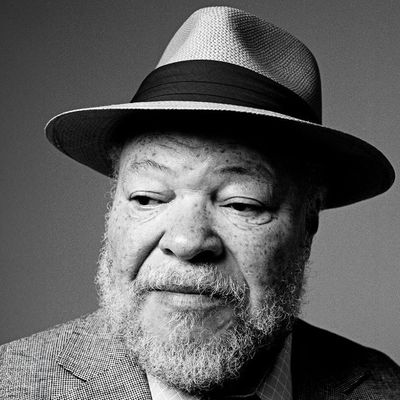
[0:18] Gordon Cox: On this episode of Stagecraft, I'm talking to Stephen McKinley Henderson. He's a celebrated actor who is one of the foremost interpreters of the work of August Wilson, having appeared in eight of the ten plays in Wilson's Pittsburgh cycle. That includes Jitney, King Headley II, Ma Rainey's Black Bottom, and Fences, that last, both on Broadway and in the 2016 film adaptation that starred Denzel Washington and Viola Davis. Henderson has also had a long association with another Pulitzer Prize-winning playwright, Stephen Adly Guirgis, whose play, Between Riverside and Crazy, has brought him back to Broadway this winter. It's Henderson's third time around with the play, having originated his role in 2014 at Off-Broadway's Atlantic Theater, and then returning to it for a 2015 run at Second Stage.
Everyone else in the cast has been with it since the beginning too, except for one notable newcomer, the actor Common, making his Broadway debut. With a story that touches on racially motivated police violence, housing insecurity, and economic inequality, Between Riverside and Crazy feels even more urgently relevant now than it did when it won the Pulitzer back in 2015. Now, Henderson is in the virtual studio with me to tell us about being a student, being a teacher, and why for him, August Wilson is like the blues, and Stephen Adly Guirgis is like rock.
[1:43] Gordon Cox: Yes. So this is now your third time around with this play over a period of about eight years, not counting your involvement in its development prior to that, and now you've been doing it on Broadway for close to two months now. What have you learned about the play this time around that's new to you?
[2:01] Stephen McKinley Henderson: Oh, you know, I've learned that it really has something for every persuasion of audience and that they get to know more about each other as the play goes on. One of the things I love about theater is it's one of the places where people gather, not because they all have the same point of view. You know, I mean, you know, it's not a convention of workers, it's not one team's fan sitting on one side of the stadium and the other team's fans on the other. It really, you don't know who you're gonna have a ticket next to. I mean, you might have three or four people together, but then someone else got another ticket. They could be Democrat, Republican, they could be a senior, a young person. And so it's great that the public sits there together, and we get a great cross-section of all the population that comes to see the show.
And there's some people who laugh at certain things, and other people who famously don't laugh at that, and then there are others who sigh at points and were dismayed by a certain activity, and other people, amen, say, yeah, you know, so it's got a little amen corner, a little church in there somewhere. But that's the thing I've learned about the play is that the play that Mr. Guirgis wrote is universally speaking to all the journeys that are in the audience. Because those whole lives that come in there, they bring that life they live to the play and they find something that speaks to them.
[3:39] Stephen McKinley Henderson: Do you enjoy the process of returning more than once to a role and to a story to look at it again? Does that feed you as an artist?
[3:39] Stephen McKinley Henderson: You know, I've done it a few times, and it's always because the work is meaningful for other people, and so it becomes quite a, I don't know how to put it, what the word I'm looking for, it justifies something about your life choice. You know, I mean, you go into this business and every five to ten years, some experience that really, really lets you know why you slog through the other times. You know, I mean, I have to tell the truth, you know, because it's really quite a calling. And that's, I guess that's it. You really do realize that you were called to the work when you're with a project and work with a group of artists that you really get validated, say, oh my God, there is something to this thing called theater, and I am supposed to be a part of it. I'm glad I ran away and joined the circus when I did, and I'm not cleaning up behind the elephants anymore. I'm doing something really, really important.
[5:17] Gordon Cox: Yeah. The play is set in 2014, but it definitely doesn't feel like a period piece. It feels like it could have been written today. And I wonder if that struck you as it struck me revisiting it, you know, after having first seen it in 2015. How did that inform your work as you came back to the play now? Did it feel even more sort of current and alive than it did back then?
[5:45] Stephen McKinley Henderson: Yes. And because I had changed, and my fellow actors, we talked about what's been going on, what have we done, you know, and then we came to the play and we realized that we bring other things to it and it brings out other things in us. But it is as resilient as all great drama is, as resilient as Antigone is and as resilient as Death of a Salesman is, you know, I mean, because it continues to speak to the time you're in. That's what makes a play a classic, not because it's old, but because it continues to speak to what it is to be a human being. And this play certainly does that, and it does it profoundly in some places because of what has happened in the interim.
[6:44] Gordon Cox: Yeah. When for people who haven't seen it, what do you tell people that it is about? What is your take on what the show is about?
[6:54] Stephen McKinley Henderson: I tell them it's about two and a half hours, you know. I mean, it's really not one of those that could be categorized, but you know, finally I think it is about that everyone is redeemable. There's no, and you know, hopefully that helps people say, okay, well, I'm gonna see flawed people who are not as bad as, you know, maybe the world thinks they are. And that's one of the things I love about the play, that it definitely does say that we're all, it's possible for all of us to find our greater selves. And even in the midst of our flaws, the potential is always there. Hope is always there in the human life. As long as there's life, there's hope. And I mean, it sounds really broad, but it's the only way I can capsulize the things that happen between curtain up and curtain down, you know, between the beginning and the end of this play.
And people take the journey and they're very surprised. There's no one who ever said, oh, I saw where it was going. You know what I mean? I knew how it was gonna, you can't say that about any of Stephen's work and Stephen Guirgis. And I've been in, I did The Last Days of Judas Iscariot, and I've had a great time with that. Philip C. Moffat directed, and some years ago, but that play too is about this event, the passion that took place all that time ago, but it's timeless in that it has to do with, you have to forgive yourself in order to find forgiveness. You can't just get it from the other people, or you have to find a way to forgive yourself. And Stephen always is writing about some, there's some theological nature to his work, and as profane as it is, you know, it really is sacred as well.
[9:12] Gordon Cox: Yeah, yeah. Do you notice the audience reacting differently? You talked a little bit about audience reaction before, but just in terms of an audience in 2022, 2023 watching this play. How do you notice a difference in how they react versus how we reacted back in 2014 for that?
[9:30] Stephen McKinley Henderson: Yeah, you know what? I can't say that I have a vivid memory of what the different things were. The play was received well back then, right? But today, it really does feel like they're saying, oh yeah, amen. Oh yeah. Their laughter is saying, oh my God, yeah, you think that too. Huh? Yeah, yeah, I can see that. I can see that. And there are a few places where they're just absolutely shocked that things are being said. It's like that we maybe have tiptoed around certain subjects, and in this play, they realize that there's no one up there who's politically correct. There's nobody up there who, because you've just gone into, not the lower depths, so to speak, but you've just gone into an area where people speak frankly, and they may be being duplicitous, but they're being honest even in their duplicity, you know what I mean, or duplicitousness.
They are expressing themselves quite frankly, and you find out how genuine what they're saying is. But I remember this phrase I learned from, I believe it was, well, I studied with so many people, but either Lloyd Richards or William Esper, or both, because they sourced other things, but it's the characters don't always say what they want, but they always say what they think will get them what they want. So when you're searching for, so what am I after? What's my character, you know, what's my objective? Remember that they don't always say what they want, but they are always saying what they think will get them what they want. And these characters don't mind putting that right out there.
[11:30] Stephen McKinley Henderson: And when I said that about the sacred, one of my favorite things to tell what's goes on, but there's a scene between the father and the son that I have with Common that I've done, you know, all the time we've done all the years, but it has become in this iteration more sacred and more confessional than it was in any of the other iterations. And you know, it was a conversation that a father and son never had at one point, and it was a sharing between the father and the son that was necessary that the son wanted through. But in this time, it is far more confessional, and it just, and you can't have an event that wipes away the wrongs of the past, but to the extent that it can, there's an instant healing between these two men that happens, and it's witnessed in the next encounter, next time they're together, things are different.
[12:53] Stephen McKinley Henderson: Yeah, close the yeah, the actor Common was the one person new to the cast when the show opened. Um, and do you think part of the new approach or the new resonance of that scene is the fact that he has a different energy, or are you looking at things a little differently now that you're playing off a different person?
[13:15] All of the above. The thing is that when I first approached the role, I was very much aware that I was a widower and that I was still in grief in some ways. So I was really sort of rooted to who I'm missing, and the fact that my son was also grieving, so we had conflicts because, you know, blaming each other and all that. But this time I was more aware of the difficulty of a young man growing up with a policeman father, and especially an African-American young man growing up in the streets with a policeman father. So I knew that I was in many ways trying to atone more so than I was in grief for the loss of my wife. I was trying to make sure, and perhaps for her memory too, that she would want that.
She could want us to be able to. So I went at it from that angle. And because of the way Common was approaching the role, we encountered each other in a different kind of way. His humanity, his social consciousness as a person helped inform some of that, even though that's very different than the character he's playing. But the character he's playing is reaching out and trying to help others. You know, he's brought some rather nefarious people into the house, you know. But it's because I think his mother, you know, he wants to help. He wants to help. That's his. And so yeah, it's a combination of all those things. And he's just such a wonderful person. He's just a nice, nice guy. You know, I'm glad I got to meet him. I had met him briefly at an event some years ago, but this time I really can say, oh yeah, I know Rashid, man. I like that brother. You know, that's a good brother, you know.
[15:26] Yeah. I'll have more with Stephen right after the break.
[15:40] Gordon Cox: And now here's more with the actor Stephen McKinley Henderson. I wonder if you could tell us a little bit about your background and how you came to acting. I know that you're from Kansas City, and I've heard you say that poetry was kind of your way into performance. And I wonder if you could just tell us a little bit about that and how you first found poetry and then moved into kind of performing.
[16:03] Stephen McKinley Henderson: Well, you know, the poetry came from Easter Sunday of the Baptist Church. They asked, I remember the first time they said, "Who wants to do a poem?" We were gonna go up to the church, you know, because we were meeting at Sunday school before church started, and some of us go up to church and some of us didn't, but it was like, "You're gonna do the poem here in Sunday school." But if you got one that you like or you're doing it well, if you're not afraid, you go upstairs, man, and do it in front of the whole congregation. And I enjoyed that. And then I started reading poetry outside the realm of what was being given me there. And the "Rime of the Ancient Mariner," when I encountered that poem, I remember being quite swept by just the scope of it and the whole just being affected by a story, having someone who's lived an event, and they stop someone and they say, "Hey, you need to hear this story right now.
I need to tell you this." And then you tell a story, and I remember the line, "He left like one that had been stunned and was of sense forlorn, a sadder but a wiser man, he rose tomorrow." And I saw that nature of that, that poetry and relating stories to people who needed to know at the moment they needed to know it to change their path. The other thing was my brother, who I didn't grow up with. I grew up with other people; my mother took my brother, and he was deaf, and he loved the movies. He would come and get me sometimes, my older brother, and he would come and get me to take me to the movies with him because he got the story, but there were a lot of things that happened off camera that he didn't know because he read lips.
He learned to read the lips of these 50-foot actors with big heads, you know, that stuff. And so he would ask me, "Stevie, what happened here? What happened? What was going on?" The little places in the story that were sort of a blank to him, and I would recount it for him. I would get up and start acting it out to get him to laugh or to get him to squint his eyes and understand because he was really quite a force in my life, my older brother. He's gone now, but we had a real connection when we were young, and as we got older too, but we lived in other places then. But the combination of my brother's love for film and my love of poetry, which made the even in Kansas, because I'm from Kansas City, Kansas, I worked on both sides of the river.
State line, yeah, yeah. But I grew up on the Kansas side. And so even in the middle of Kansas, you can find a stage. You can start acting because there's a lot of theater between Los Angeles and New York, you know, a lot of stuff. And so the theater was obviously the place that the craft of acting would start for me.
[19:48] Gordon Cox: Can you describe, like can you characterize the poetry of Stephen Udley Gergis, for instance, or some of the playwrights you've worked with regularly? Like do you think of their work as poetry and how do you think?
[19:59] Stephen McKinley Henderson: Oh, yeah, well, you know, August Wilson, of course, the blues, yeah, blues-based. And I think of music in addition to poetry you think of for the case. Oh yeah, yeah, yeah. Because the music and the lyric, you know, what you know, and Stephen is rock to me. You know, he's like, and I'm speaking of poetry and music, yeah, but Stephen is his rock. And like Amiri Baraka was jazz, but Stephen has some jazz threads inside things. But at the thought groups and the breath groups and the phrasing, you know, it's got some rock, you know, the classic rock and some jazz stuff to it. But that's just again, that's my approach because August is the blues iambic, you know, it's like August has got the repetition and that.
But Stephen has some long phrases. He's got some Coltrane-type long, long phrases, man. You know, and then he's got some really catchy things like Dylan, you know, some stuff that you just hear it and you say, "Oh man, there's that wisdom," and there's a way of saying it that's only his, you know. But all that is to say that's how it's wrapped, but the heart of it is just so human. You know, it's not foreign to anybody. You can get it wherever you come from, whatever language you speak because that's the only thing that is foreign. Everything else is human. And if you work at it, you can learn a foreign language, but nothing human is foreign to us. There are different cultures, you know, but there's only a human race. That's all just—
[21:12] Gordon Cox: Yeah, you mentioned that you studied a lot of places, and you did. You went to Juilliard and the North Carolina School of the Arts and Purdue when you studied in London. What were some of the biggest, or was the biggest lesson that you learned from all your studying? What do you feel like you really—what was the benefit of studying with all the various teachers?
[21:12] Stephen McKinley Henderson: Huge, huge benefit. But I tell you, and I started—I gotta add, I just went to one of the greatest high schools ever in Kansas. And that's where I got on the road to that learning is a lifelong thing, you know. And I played Willie Loman in high school. I mean, I said about high school, okay? I played it. I mean, I played at it, but I mean, I was cast as Willie in a high school production, and we did "Raisin in the Sun," and I played Linda. I played the guy that comes to buy the house fellow, you know, because I went to an all-black high school, you know. I got tagged to play Linda. But our teachers, they really did—they knew that a time would come when the curtain would drop because we were in segregation for part of my high school years, and then integration came in, and they didn't integrate our high school with white students; they brought in white teachers, but we never got any white students.
They just took jobs from some black teachers, but those teachers went on to the math teacher was now able to go and work at General Motors or to be an engineer somewhere. And the science teacher, so another thing happened for them. But we got the teachers that came in that were sort of that thought of themselves as missionaries, I guess, you know, but we had a great school for many years, you know, in it. In segregation, and that's why we were able to do all those plays because they were preparing us for when they knew, you know. So anyway, I just had to say that. But the high school experience is why I knew I need to go here; all the rivers run into the lake of truth, as Confucius said, and like the work on the plays of Athletic Fugar was very, very important.
[24:58] Stephen McKinley Henderson: So when I got into that with the anti-apartheid organization and to do those plays in that time and raise funds for that cause and my connection to Amiri Baraka, which August had as well, which is how I think August listened to me the first time I wanted to say, hey, can I talk to you? And he asked me, did I know Amiri's work? And I told him that I knew him. I met brother. So he was impressed with that. But it was this activist nature to theater that made me travel and go a lot of places and the opportunities that came up. And the North Carolina School of the Arts led me to Rose Bruford in England and then to work with Bill Esper because of a connection to Rutgers and Lloyd Richards on the Fox Foundation fellowship because of Israel Hicks and the Actors Center in New York, all these organizations, but you know, one thing leads to the next.
And as they say, when the student is ready, the teacher appears. And as I progressed, people passed me on and said, hey, well, you may go do this, go that, you know. And I loved Greek theater when I was doing that, Shakespeare at Juilliard when I was doing that. But my real goal was always when I picked up that play, A Raisin in the Sun, and I saw all those actors who had been in that play originally. I wanted to be on one of those pages of those books when they pick it up and say the original cast, you know, I wanted that was what I wanted to be at, but who's writing plays today? Yeah, you gotta do all the other stuff. You know, I'm glad for all the knowledge of the plays of history and so on and so forth.
I was really glad to be in the replacement cast of A Doll's House Part 2 when Lucas was directing, you know, I mean that's fabulous. With the great Julie White and Jane Howdeshell, goodness, you know, and Aaron as well. But it's a kick.
[27:20] Gordon Cox: When you mentioned your meeting with August Wilson and how you first worked with him, what, and you also, as you said, like when the student is ready, the teacher appears. How did you and August connect in the way that you did?
[27:39] Stephen McKinley Henderson: I was on my way through, I was coming from Totem Poe Playhouse in Pennsylvania, doing a production of The Boys Next Door. And driving through, I was gonna do a production of Joe Turner's Come and Gone in Buffalo, and I saw that August Wilson was speaking in Pittsburgh. I was driving through town and I spent the night there because I wanted to see the streets that were named in that play. And he happened to be speaking there. And so I went over and I missed him at the place because they had a misprint in the paper. They said he would be speaking at one o'clock, but he was speaking at 11 o'clock. And when I got there, the thing was all done. And I was, you know, press fallen, as the saying is, and but this lady said, where you going?
And I told her I was going to Buffalo, and she said, well, if you take a message to an actor I know in Buffalo, I'll introduce you to my brother. And it was one of August's sisters that was still at the church where I thought he was gonna be speaking at one o'clock. She was clearing up, and she took me over to the next place he was speaking, and so I got the meeting and chatted with him and asked him a few questions. And that play that I ended up doing with August, Jitney, that we did for six years from '96 to 2002, is also what led me to the Labyrinth Theater Company because John Ortiz had seen the show and he introduced me to Steven. They cast me as Judas, as Pontius Pilate in The Last Days of Judas Iscariot, and Philip Seymour Hoffman never saw the audition. He was gonna direct it, but he never saw it. But John Ortiz said, you know, see this guy. And I got to do it, you know, and that's another example of when the student is ready, the teacher appears.
[29:52] Gordon Cox: You've been in eight of the ten August Wilson plays, is that right?
[29:58] Stephen McKinley Henderson: Yeah.
[29:58] Gordon Cox: Are there designs on the two that you haven't done yet? It's the first and the last, right?
[30:03] Stephen McKinley Henderson: No, no, no. I don't have any designs on that. I mean, I may very well eventually do How I Learned What I Learned, that piece that August wrote for himself. But I'm just so fortunate. My cup runneth over, man. I did eight of the ten and I did three with him in the rehearsal hall. That was over a period of years. I can't, I mean if it happens, it happens, but I'm not in pursuit of it. I'm gonna see what Steven's gonna do next, you know. You know what I mean? But no, I'm very fortunate. So no, I'm not pursuing anything. I've got the films that I got to be a part of, and that's such a gift, man.
[31:00] Gordon Cox: And there's a film, you know, Alex Garland, a film that he's got coming out that I am really, I'm so blessed and fortunate to be a part of that, and I can't wait to, I hope that that film is received well because it's brilliant. Civil War is the name of it.
[31:18] Stephen McKinley Henderson: Wow.
[31:19] Gordon Cox: That's what we worked on. It's called Civil War in America's not too distant future. Not that old one. The one that might have happened had January 6th gone a different way.
[31:34] Stephen McKinley Henderson: I'd love to get that little tease.
[31:37] Gordon Cox: Well, no, I was actually gonna shift to because you do TV and film work as well. How do you think of that in relation to the work you do on stage?
[31:48] Stephen McKinley Henderson: Oh well, you know, it's a different discipline, but it's the same craft, the art form of acting, you know. But what's wonderful is to again be a part of a director's vision. That someone has something they want to do and they want every part covered. And so it's quite flattering to get a call like from Halle Berry when she directed her first film to say, hey, I'd like you, you know, I think you're the one for this, or you know, and Alex or Denis Villeneuve when he was putting together the group for Dune and I think I got something for you here.
[32:34] Gordon Cox: You will be back in the second film, yes?
[32:36] Stephen McKinley Henderson: Yes, yes, yes. I mean, my part's done.
[32:40] Gordon Cox: You're probably done.
[32:41] Stephen McKinley Henderson: Yeah, yeah, yeah.
[32:42] Gordon Cox: I imagine you cannot tell us anything about that film.
[32:44] Stephen McKinley Henderson: Not a thing, no. What I really, what's important for me to ask is will we see the return of your little umbrella, which is my favorite thing, and that your character's umbrella filled me with joy.
[32:56] Stephen McKinley Henderson: I tell you, what a fortuitous event that was. And it just happened, you know.
[33:01] Gordon Cox: Yeah, yeah, because you were holding it on set, right?
[33:04] Stephen McKinley Henderson: And they just told you, actually keep the umbrella, yeah. And he said, ah, you keep it in my thing, keep it. I love it. I love it dearly. It told us quite a bit about the character, actually.
[33:13] Gordon Cox: I think it's, yeah, yeah, it was just wonderful, you know.
[33:16] Stephen McKinley Henderson: It really did. But I'm not giving up anything.
[33:21] Gordon Cox: No, yeah, yeah.
[33:22] Stephen McKinley Henderson: And but similarly, the joy it was to work with J, Austin Butler and Stellan Skarsgård, you know, and Timmy, yeah. But it's just a kick, man. You know, Josh Brolin, crazy group of people, man.
[33:44] Gordon Cox: That first group was really Oscar Isaac's man, Jason.
[33:50] Stephen McKinley Henderson: Oh, that was fun, big fun.
[33:52] Gordon Cox: And yeah, and I just saw just recently, I don't know, in the last week or so, there's a trailer for the new Ari Aster film that you show prominently in, along with Nathan Lane and Amy Ryan, and of course Joaquin Phoenix, who's in it.
[34:04] Stephen McKinley Henderson: He seems like another director.
[34:06] Gordon Cox: And Patty LuPone, I did not know.
[34:09] Stephen McKinley Henderson: Oh, it's totally fun. Man, oh boy, get ready.
[34:13] Gordon Cox: Is it gonna be scary?
[34:15] Stephen McKinley Henderson: It looks wacky. The trailer looks wacky, but his films are quite frightening. So it's indefinable.
[34:21] Gordon Cox: Yeah, you know, but yeah, I got to work with Joaquin and Patty and guided by Ari, and I cherish every moment that I had.
[34:37] Gordon Cox: Speaking of film a little bit, Between Riverside and Crazy is gonna be streamed for the last couple weeks. People are gonna be able to watch it on screen. How does that change for you?
[34:52] Stephen McKinley Henderson: Are you gonna be doing anything differently?
[34:52] Stephen McKinley Henderson: Not a bit, no, not a bit. I mean, you know, they're coming to our party.
[34:59] Gordon Cox: Right.
[35:01] Stephen McKinley Henderson: I don't have to worry about dressing to go to their party, man. They come to our party. But no, they prepared us quite well because we've all been miced and they have plotted out the angles and scenes and so on. We know, but if Austin Pendleton comes and says, okay, Steve, you're gonna need to do this or that, I'll listen to my wonderful treasure of a director. But I don't anticipate him to say anything like that. You know, it's gonna be do the because that's the whole thing about simulcast. Yeah, you're getting the experience that the audience is getting. So we can't adjust for that. We've got to make sure that we're here to please or please, but to we're here to enlighten the people who gather in the room.
[35:56] Gordon Cox: And the simulcast gives you a seat in a theater that's full.
[36:00] Stephen McKinley Henderson: Yeah.
[36:01] Gordon Cox: And what's the show runs through February twelfth? What's next for you after that?
[36:07] Stephen McKinley Henderson: Grandchildren, just gonna go and play, and that's it. My wife and I go out and see the grandkids.
[36:16] Gordon Cox: Excellent. Well, we look forward to seeing you on screen soon and whatever brings you back to the stage again. Thanks so much, Stephen.
[36:24] Stephen McKinley Henderson: Thank you very much, Gordon.
[36:29] Gordon Cox: That was Stephen McKinley Henderson from Between Riverside and Crazy, now playing at the Helen Hayes Theater through February twelfth. You can also catch it simulcast live online January thirty-first through February twelfth. If you like what you're hearing on this and other episodes of Stagecraft, I'd really appreciate it if you took the time to rate and review us wherever you listen to podcasts. It really helps. Or tell a friend about Stagecraft. Find past episodes and subscribe at all the pod purveyors, including Apple Podcasts, Spotify, and on the Broadway Podcast Network, which is a great place to find more theater for your ears. Until next episode, find me on Twitter at G Cox Variety. Thanks for listening, and see you at the theater.
© Broadway Podcast Network, All Rights Reserved