

Artist-activists Christine Toy Johnson and Leslie Ishii on how theater can be an important part of the movement... Read More
From the show: Stagecraft with Gordon Cox
Guests
Featured Shows
About
Artist-activists Christine Toy Johnson and Leslie Ishii on how theater can be an important part of the movement.
Transcript
This transcript was automatically generated and might contain errors.
[0:06] Gordon Cox: Welcome to Stagecraft, Variety's Theater Podcast, bringing you backstage and behind the Broadway scenes with the stars, creators, and industry leaders keeping theater alive during the pandemic.
[0:16] Gordon Cox: I'm your host, Gordon Cox.
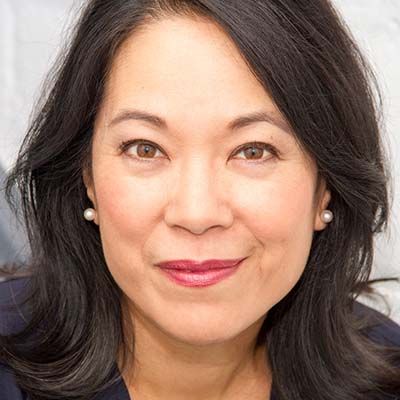
[0:18] Gordon Cox: On this episode of Stagecraft, I'm talking to Christine Toy Johnson and Leslie Ishii, two theater artists who are activists and leading voices in the Asian American theater community.
[0:28] Gordon Cox: With hate crimes against Asian Americans rising over the last year, the shootings in Atlanta in March have galvanized the movement to stop Asian hate, and Asian American theater makers are a part of it.
[0:38] Gordon Cox: Christine Toy Johnson is an actor who was in the first national tour of Come From Away when the pandemic hit. And she's also on the steering committee of the Asian American Performers Action Coalition, the group behind an eye-opening series of visibility reports.
[0:52] Gordon Cox: Leslie Ishii is the artistic director at Perseverance Theater in Juneau, Alaska, and she's also the board president of the consortium of Asian American Theaters and Artists.
[1:01] Gordon Cox: They're both in the virtual studio with me to tell us about how they and their organizations have responded and contributed to the movement to stop Asian hate, and how they believe theater can play a role in moving forward.
[1:11] Gordon Cox: Hi, Christine and Leslie. Thanks for joining me.
[1:13] Christine Toy Johnson: Yes.
[1:16] Leslie Ishii: Wonderful to be here.
[1:17] Christine Toy Johnson: Thank you from Bay Hand.
[1:19] Gordon Cox: Before we talk about what's going on now, I wonder if we could start by having you both tell us a little bit about your backgrounds and the kinds of work you do, both as individual artists and as members of the organizations that you're involved in.
[1:51] Christine Toy Johnson: Thank you. Um and when the pandemic hit, you were in the first national tour of Come From Away, right?
[1:56] Leslie Ishii: Yes, I had been doing the tour of Come From Away for 18 months before we were so rudely interrupted.
[2:02] Leslie Ishii: And uh plan on continuing back when we when we resume, hopefully uh late fall this year.
[2:08] Gordon Cox: Yeah, yeah. Uh and Leslie, tell us a little bit about uh you and what you do.
[2:12] Leslie Ishii: Oh, thank you, Gordon. Uh and I love that tour. I saw Christine in Los Angeles.
[2:17] Christine Toy Johnson: Yay.
[2:17] Leslie Ishii: That's right. Yay! Shout out to you all.
[2:21] Leslie Ishii: Um hi, Leslie Ishii. I go by she, her pronouns, and I'm uh calling in from uh the unceded territories of the Aquaquam peoples on Clinkitani, also colonially known as Juneau, Douglas, Alaska. So I'm way up here in Alaska.
[2:37] Leslie Ishii: And I've been in the artistic directorship here at Perseverance Theater for almost two years now. It's flown by, and a good half of that, as you by the time we get to July, we'll be in COVID mode.
[2:50] Leslie Ishii: So that that's it's an interesting way to begin a new chapter at Perseverance. And then I currently serve as the board president at the Consortium of Asian American Theaters and Artists.
[3:01] Leslie Ishii: And just in both cases, um, really throughout my entire career, being Yonsei, Japanese American, fourth generation. I have been raised to be in community activism, community organizing.
[3:14] Leslie Ishii: And so that's always, always embedded in anything I do. And then I'm on um the core faculty, founding and core faculty of Art Equity.
[3:24] Leslie Ishii: So along with Christine, I'm also an advocate for justice, equity, and inclusion uh in everything I do, but certainly in the American theater field.
[3:33] Gordon Cox: Yeah. Yeah, uh you touched on something that was actually gonna be one of my next questions, which is uh what was there a spark moment for you when you realized that uh activism for inclusion and representation was gonna be a part of your work.
[3:48] Gordon Cox: It sounds like for you, Leslie, it's always been kind of a part of your understanding of your work.
[3:52] Leslie Ishii: It's a really good question. Um sometimes people ask how did you get started in theater? And mine's not usual, although I think it started out to seem usual.
[4:01] Leslie Ishii: I was a teenager and they were raising uh funds for the legal defense fund for Gordon Hirabayashi. I was born and raised in Seattle and the Northwest Asian American theater was producing a reading by Nikki Nojima Lewis who had been a young child and survivor of the US concentration camps during World War II.
[4:21] Leslie Ishii: And this was the first play it was called Breaking the Silence and she wrote this play about the different generations the first generation Isei, second Nisei, Sansei, who at that time that those folks had become lawyers and uh grown up some born in the camps and and uh then grown up became uh lawyers and they were um the lawyers for Gordon Hirabayashi, Fred Korematsu and uh Ninyasui and they they they were resistors.
[4:50] Leslie Ishii: They did they resisted uh going to the camps and these uh Supreme Court basically cases were coming back up. So we were raising funds and we did this reading and and I remember folks saying do you think anybody will come and some local activism was happening to support us.
[5:07] Leslie Ishii: I said well my parents will come 'cause it's my first time on stage. I thought my brothers I have four brothers and my parents, you know they'll there'll be at least six people there, you know.
[5:16] Leslie Ishii: And it turned out we were at the University of Washington, the big auditorium in their hub, which is their Husky Union building. And um it w it was standing room only.
[5:27] Leslie Ishii: And my dad came and said there are people in the bathroom crying in the men's room crying. And you don't usually see Japanese men of that generation show emotion like that.
[5:36] Leslie Ishii: So that was a big deal. I watched my community start the healing process. What I learned later was their healing process from World War II, you know, that mass incarceration.
[5:47] Leslie Ishii: And then two years later, I had the opportunity to stand in the courtrooms while they were fighting for redress and represent uh reparations.
[5:55] Leslie Ishii: Um and uh I watched basically I watched that pass. So I I've grown up understanding how to tell the power of telling stories healing, but how testimony embedded in our stories actually helps to advocate for laws for change for social change.
[6:14] Gordon Cox: Right.
[6:14] Leslie Ishii: Yeah. So that that was, I think, planted big seeds in me early on.
[6:19] Gordon Cox: Yeah, wow. There you go. Um, Christine, what about for you?
[6:22] Christine Toy Johnson: Mine is more of a a showbiz story. Um I grew up in the suburbs of New York City, and against all odds, I I have been making my living as a theater artist and um in this industry since I was um since really I was a teenager.
[6:41] Christine Toy Johnson: Um and so even though I didn't really have role models to watch um on stage and in film and television, um, I somehow had the nerve to pursue it.
[6:54] Christine Toy Johnson: And uh I started off with a lot of the stereotypical roles that every every young Asian American woman does. And then as um I started uh doing what we then called non-traditionally cast roles, I realized that I could have a voice by illuminating the positive experiences that happened with those roles, not only for myself and my fellow actors, but um just as a member of the theatrical community.
[7:29] Christine Toy Johnson: And so I started speaking up about those positive uh experiences and um found my my people uh in advocacy.
[7:39] Christine Toy Johnson: I was um uh part of the elected leadership of Actors Equity for a very, very long time and chair of their Equal Employment Opportunity Committee for a very, very long time until just actually last year.
[7:39] Christine Toy Johnson: Um, and I'm a board member of Alliance for Inclusion in the Arts and through these um these collaborations um just found how powerful it was to put our voices forward in in saying that not only is it about jobs and numbers, but it's about representation and the ramifications of underrepresentation, which is um a lot of what we've been talking about in much uh more dire ways recently, of course.
[8:22] Gordon Cox: Right, yeah.
[8:24] Gordon Cox: Um, and I I wonder if we could talk a little bit about what's going on now and what when and how you all thought about starting to mobilize in the community.
[8:34] Christine Toy Johnson: Well, I think Leslie can really speak about about a organizing um uh activity that Kata has done, but I think all of us have been in uh have been involved in various community activities for years and years, and the beauty, the beauty of uh if we have to look for a silver lining at all, the beauty of the community uh coming together is that we have been able to uplift each other and continue to try to find a road forward.
[9:03] Christine Toy Johnson: And uh Kata certainly uh pulled together a lot of people quickly, and I'll let Leslie speak about that.
[9:10] Gordon Cox: Yeah, tell us about that.
[9:11] Leslie Ishii: Oh, sure, thank you, Christine. You've always been great supporters and uh like you're saying, for many years we've all been really working around representation and and diverse casting, inclusive casting, uh Media Action Networking in LA, also uh working really in tandem with APAC in New York, so and across the country.
[9:30] Leslie Ishii: So there's long been um kind of coalition building and uh concerted efforts, you know, uh coordinated efforts. But recently, well, actually, I I started, I came into the board presidency even after the more uh this past chapter in our uh federal government, you know, past administration was there, and just watching the hate crimes ramp up with all the COVID rhetoric, you know, and um derogatory rhetoric, if you will.
[9:59] Leslie Ishii: And so I started to think, oh gosh, what can we do? So even then we were in the mode of making amplifying that message.
[10:05] Leslie Ishii: You know, I would just do it personally on my Facebook too. But talking with board members about what what are we what are we doing, what can we do?
[10:12] Leslie Ishii: How do we lift up stories? And or now we know when we're in activism, we can't just be full-on activists and then try to limp away after having to put ourselves on the line.
[10:26] Leslie Ishii: We know we have to actually get self-care in there while we're in activist mode or in what I call direct action. So um, we've been starting to address that anyway, especially in this uh last administration.
[10:40] Leslie Ishii: But then when the Atlantis shootings happened, it was like, no, we've got to get in there. We've got to really get an initiative going officially and more fully. So we called, I called HowlRound Theater Commons right away. We'd already been doing a series with them because we had to postpone our conference festival, our confest. Because of the pandemic, yeah. Yeah, because the pandemic that happens every two years. And that was to happen in Hawaii. So we will still be in Hawaii, hopefully next year. Um, but uh and we address in that series of one uh each month we had, you know, an episode, we started to address uh the hate that was happening, the violence. Uh but then so again we were kind of revving towards that or addressing it.
Then eventually we went back to Hal Brown. They said, absolutely. Any episode you need. And then in the meantime, a couple people, Eric Ting, um and Jenny Coons, uh uh and a few others, uh w started a little good uh email thread. Should we do something? Once once the uh you know the shootings occurred, we're like, oh hell yeah. So um that quickly grew into let's have a meeting. We planned an agenda, and by the time we met with, I think by the end of that week, we had basically hundreds of people as uh Asian, Asian American, Pacific Islander, Middle Eastern North African, and Native Indigenous uh identity with us on that on that first Zoom meeting. It was so moving, Leslie, to see the Zoom screen populate with hundreds of of friendly faces and also new f new friends, new colleagues, just to feel that solidarity, because I think that is uh, you know, it's the loneliest scariest thing to to feel like you are facing this new this new kind of insidious racism um alone and and it when you don't feel as alone it's it's so uh empowering and and soothing and I thank you for that.
[12:10] Christine Toy Johnson: Oh sure well and like you said uh the isolation because we're in COVID we're still all sort of sheltering in place for the most part and sort of venture out and we're learning there are incidents of our some of our people when they try to go to work on a subway right not as quite maybe at the level of what we've seen on uh in the news but so there are programs starting up for how to um uh have a safe walk uh and even some funding going on so if you can't afford an Uber we can make or a lift we can make sure you can get there and then we know in Oakland they have started to come together in some of their communities to develop their own patrol because there's a lot of the black community and the Asian community they can't trust that the police will unfortunately uh brutalize them because of implicit bias so they're starting to form their own watch groups and and in neighborhoods since the uh anti-Asian violence has escalated that's been happening in many neighborhoods around the US um and then Kata decided how can we support so the last meeting we kept the meetings going we've had a second meeting now and we brought in folks who um have family practices family uh therapy practices, you know, psychologists, um uh that that are definitely skilled around trauma informed support.
So we've created breakout rooms, other breakouts for solidarity building still to work in concert with each other. Um, and I just intend with Ka today keep that support going, both both kinds of organizing and support. So we've talked with Holaback, how do we support each other for bystander upstand your training? And then the next episode on how around April 12th, we will actually have uh Ginger Clee back with us to talk about how to take care of yourself. You know, she's this one of the psychologists that worked with us.
[14:43] Leslie Ishii: Yeah. I also wanted to mention I'm I'm not a trained psychologist or anything, um, but uh Queen's Theater has asked me to help welcome in AAPI voices into an AAPI healing circle that we're going to do online um for on Tuesday evenings uh from April 13th through May 4th, uh at 7 p.m. Eastern. There's information on their website. And really the idea is just to hold space for people, welcome them in, um, let people talk about what they want to talk about, and um just be there with each other in solidarity.
[15:20] Gordon Cox: I'll have more with Christine and Leslie right after the break.
[15:30] Gordon Cox: And now here's more with Christine Toy Johnson and Leslie Ishii. There's also a performance element to some there was a video, uh song performance that uh sort of got together a lot of performers and uh went out fairly recently. Tell us a little bit about how that came about.
[15:46] Christine Toy Johnson: Well, the the uh video that um that we were Leslie and I were both in. Exactly. Oh yeah, so I wasn't part of the organizing of that, but Leslie, could you speak more about that?
[15:56] Leslie Ishii: I just got an email saying, would you like to be a part of this? I said, Yes, of course.
[16:00] Christine Toy Johnson: I'm so glad you're in it.
[16:01] Leslie Ishii: Yeah, we had beautiful representation. We had over 50 artists. Yeah. We had a some of our playwrights quickly scripted uh something together, and then everyone read through their section, and then we knew the editors would come in and you might say a piece of that. But over 50 artists participated. Elena Chang, who's a wonderful activist, artist, and happens to also be the equity diversity and inclusion director at uh Theater Communications Group. She directed it. Um yeah, it it it it just came together really quickly. Some of our staff, uh Ariel Estrada worked on it. Oh, the Dia Guma uh edited it, yes, yes, and breathe. It was a great, great team.
[16:43] Christine Toy Johnson: Yeah. Yeah. They coordinated. Yeah, and for people who haven't seen it, um, where can you describe a little bit about what the content is? I know it was written and performed, but tell us a little bit about kind of how that what the message was and why why you felt this was the form to send it out uh in.
[17:02] Leslie Ishii: Yeah, I uh just to start, and Christine, you get I'd love to know what you thought when you read your part of the script or the whole script. Um the idea was that we wanted to we felt so the trauma was heavy with people and the grief for those victims and their families and communities in Atlanta, but it also I think um it triggers so much of the trauma all of us have felt. You know, uh folks have asked me, uh well, I was I was accosted in a grocery store two weeks uh just before the Atlanta shootings and brought that to my board at Perseverance and we said, Oh my gosh, we have to protect people and you're a visible leader, you know. But but I had to tell them I've had weird things happen my entire life.
This isn't like a one-off, you know, this is a history of oppression, and we can go into that, that's another rabbit hole. But but basically, uh it was to say we're strong, we have come together, as you mentioned, Christine, in solidarity, and we're actually stronger because we're together, and we'll be moving this way as we go forward.
[18:04] Christine Toy Johnson: So yeah. Interestingly, I was uh on another panel where someone remarked, uh, and in a very supportive way, I I might add, uh, he said, you know, the Asian American community has been silent up until now, and now they're speaking out. And I said, Oh, no, no, no. We have been screaming into the wind for a very long time, and unfortunately, tragically, it's taken well publicized violence and murders to have people hear us. But the speaking of the trauma, and we don't talk about it that much, or we haven't before. The the really the legacy of xenophobia that's been present in America for hundreds and hundreds of years, um, is it is weighs heavily on all of us in different ways. And even if it if you've been fortunate enough not to experience um an act of violence or or or direct uh kind of harassment uh that people some of our colleagues and friends have been experiencing, and certainly you know, the most extreme, them the murders, um the microaggressions add up over time, and it becomes this sort of really heavy backpack of you know garbage that you're carrying around with you and trying to just continue navigating uh in a not paying attention to it.
[19:34] Leslie Ishii: Right. Yeah.
[19:35] Christine Toy Johnson: I appreciate you mentioned screaming into the wind. It's so true.
[19:39] Leslie Ishii: Yeah.
[19:41] Christine Toy Johnson: And even early in the pandemic, there was a major case in the Twin Cities. And I all of us were aware of that. But like that, there was a lot of screaming into the wind.
[19:47] Leslie Ishii: Right.
[19:53] Christine Toy Johnson: In those cases. Or even we go back to Vincent Chin. You know, uh decades ago. There was a lot of screaming into the wind. Um, yeah, we have to honor our those we've lost.
[20:04] Leslie Ishii: Yeah.
[20:05] Christine Toy Johnson: Yeah. And one of the things, Christine, one of the things that uh APEC does is they put out this visibility report regularly. And I wonder if you could, you've alluded to this already, but representation and underwrite, you can draw a direct line between underrepresentation and the things, the kind of things that are happening today. And I wonder if you could tell us a little bit about what those visibility reports are and what they show us in terms of how uh what the what the interplay is between underrepresentation and the and the hate crimes that are happening now.
[20:36] Christine Toy Johnson: Thank you so much. Thanks. Um well, APAC started out in about 10 years ago, a group of eight or nine actors uh wondering if our suspicions that we were underrepresented in New York Cater New York City theaters was was a thing. And it turns out we all had similar experiences and we we decided to look at numbers to see if uh we could back up our theories. And so we it's it's a very grassroots um group of people. We're now 11. We have um we have funding from the American Theater Wing, but for many years we just got together and started pulling statistics from Broadway and the now the 18 largest nonprofit off Broadway theaters.
[21:26] Christine Toy Johnson: And we began collecting numbers about, we always included other groups. So we never were just collecting numbers for who the Asian American actors that were being hired. But now we're also so we're working it's also the African American actors, Latinx, MNASA, Native, Indigenous. We're not collecting numbers for performers with disabilities, but we are factoring in to this collection of stats. Also directors now board members of these nonprofits, which is fascinating. Spoiler alert, it's pretty skewed. Um and uh and playwrights. Um so uh we have a new visibility report coming out for the 2018-19 season. Um it's coming out in about two weeks. Um so I wanted to just read a couple of them for you because um I will uh and also uh as you mentioned, tell you the difference of um that the numbers now make in our understanding of the ramifications of the underrepresentation, especially of stories, our stories not being told through our lenses and what and how that has resulted often in the perpetuation of very harmful stereotypes and then direct line to our dehumanization and our erasure.
[22:59] Christine Toy Johnson: So this is from the New Visibility Report. Nonprofit, this is an interesting thing because we looked at the economic impact as well. We found that now, based on minimum salaries being paid, nonprofit theaters in New York City spent 71 cents on actors from historically marginalized communities for every one dollar spent on white actors during the 2018-2019 season. A lot of that comes from the fact that certain plays are done in smaller spaces that have smaller minimum salaries and a sort of redlining of these plays, and then therefore the actors being hired. Uh, Asian American actors were cast in just 6.3% of all available roles in New York City theaters during that season, and only accounted for 4.9% of all writers, composers, lyricists, and librettists produced during that season, and only 4.5% of the directors.
We also wanted to point out that you know, funding is a big issue. Uh, and a lot of the theaters that have been doing all of this work with diversity, equity, and inclusion embedded in their DNA, have been getting much less funding than the predominantly white institutions that may have programs and initiatives to do that work. And that's meaningful to point out. Uh, looking at the 18 major nonprofits in New York City, the predominantly white institutions received over 170 million dollars in funding, while theaters centering historically marginalized communities received roughly 12.2 million. 170 million to 12.2 million. Um so that's a big difference and uh I think speaks to where the focus is going on uh on the work and and the work and the road forward.
[25:06] Gordon Cox: Yeah, yeah. And what as you as theater is slowly starting to get back up and running, you know, very slowly after uh as we sort of pull ourselves out of the pandemic, what are your hopes for kind of what theater will and can look like uh coming up?
[25:26] Christine Toy Johnson: Wow, that's a good question. I think that's a good question. You know, for Leslie and I I I will speak for you just for this tiny moment. I think for both of us who have been uh advocating for full inclusion in the theater for literally decades. Um you you all we always hope that uh things will look better. That's that's the best I I can hope for, really. I mean, I think it's I think I've learned not to picture things in absolute ways, but uh uh we we are farther along than we've ever been, but there's a long distance to go.
[26:08] Leslie Ishii: What do you think, Leslie? Is that fair?
[26:11] Leslie Ishii: Thank you. Yes, I'm with you every word of that. I uh I've too, over the years we've learned to manage our expectations 'cause it just works so s it goes along so slowly. So slowly. Oh, but coming back, knowing people are coming or folks and organizations are coming back slowly, even here at Perseverance Theater. I'm not optimistic because if it's a smaller season, does that mean uh they have to choose fewer there's fewer slots for shows? And will they choose us? If they can only do two coming back or three or some of the most large, you know, even I think Oregon Shakespeare's got like an eleven or twelve show uh season in rep. I think I don't think they're coming back with as many except they have a note.
So uh there that no one's coming back full yet, which means a truncated season. Who are you gonna choose to put in those few slots, you know? So um I would hope they would look to let's say put an A A P I show in there because given what's happening with us, maybe the visibility and uh show with the black community to lift those stories up. We need to learn so much about this and a native indigenous show. Um anti uh indigenity is still happening as well. They drop off the list because they well, they w they were meant to be, you know, the genocide uh was uh was the intent. So um how do we keep uh um working against those oppressive patterns?
[27:41] Christine Toy Johnson: Yeah, I also do h I do have hope that these conversations I even though we have been having them for so long, they've been cracked open in new ways. And so I do hope I do have hope that people are listening in a deeper way and understanding that there have been systems in place for all these years that have prevented seeing a lot of our stories through different lenses and and um acknowledging that practice and and hopefully moving forward from that practice.
[28:18] Leslie Ishii: Where I do have hope and and want to encourage orgs or anyone who might listen, be an advocate. We're around equity, diversity, inclusion in the American theater field. We're working, you know, there's these org charts where you can see what stage you're at. The stage we ultimately want to be at is to be an anti-racist organization, to be um an organization that is is led by social justice. So given what's happened throughout this pandemic, uh anti-Asian uh violence and hate, uh, the uprisings, you know, around the black community and black lives matters movement, we have to support that. We know that anti-indigenity continues. Can you please lead with your social justice values and keep that in mind as you season plan, as you keep your best practices going.
[29:09] Gordon Cox: Yeah. And how can uh if listeners are interested in getting involved in the cause in some way, what how how can they do that?
[29:18] Christine Toy Johnson: Oh, good question. Uh well, a couple of things. You can get training, get anti-racism training, get holla back training, be a good upstander, bystander. I'm working on my staff to get that uh for each other, and while you're in your communities, it makes you highly aware suddenly of how you could actually have good positive action steps to help take care of your community in these moments. Um and get anti-racism training. Art Equity offers it. Um, and there's a number of consultants out there now that do this work. Nina Malik, um, the uh I think there's it's called Equity Quotient. Uh, there's a number of folks in the field that you can get the training from. I also think on a on a smaller, if if you're a smaller personal level, if you um don't have the access to those programs right away, I think that we can all ask ourselves if there are unconscious biases that we hold, because we all do, frankly, and how we can fight against them and and be really open to the idea that we all have much to learn about one another.
And this is just my high in the sky dream that that over time, you know, that that the arts have this unique um opportunity and ability to influence how we perceive ourselves and each other, and that coupled with breaking out of those unconscious biases that eventually we might be able to see each other for who we are instead of who we're not. So that's that's uh something that I really would love to see.
[30:57] Gordon Cox: Yeah. I think that's a great place to end this. Thank you both.
[31:00] Christine Toy Johnson: Thank you so much for uh being here and talking with me about this.
[31:04] Leslie Ishii: Thank you for holding the space for us.
[31:06] Gordon Cox: Yes, thank you, Gordon. Thank you so much to Christine too. Wonderful to be with you both.
[31:15] Gordon Cox: That was the theater artists and activists, Christine Toy Johnson and Leslie Ishii. If you like what you're hearing on this and other episodes of Stagecraft, I'd really appreciate it if you took the time to rate and review us wherever you listen to podcasts. It really helps us grow our audience of folks who love theater as much as you and I do. Or tell a friend about Stagecraft. You can find past episodes or subscribe on all the pod places, including Spotify, Apple Podcasts, and on the Broadway Podcast Network, which is a great place to find more theater for your ears. I'll be back in two weeks with another new episode. Until then, find me on Twitter at GCOXVariety. Thanks for listening and see you soon.
© Broadway Podcast Network, All Rights Reserved