

Writer Quiara Alegría Hudes on going big, and getting intimate, with the movie version of 'In the Heights.'.. Read More
From the show: Stagecraft with Gordon Cox
Featured Shows
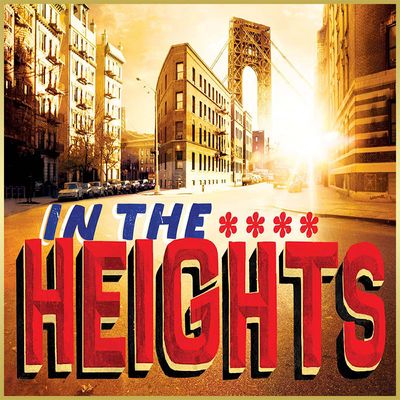
About
Writer Quiara Alegría Hudes on going big, and getting intimate, with the movie version of 'In the Heights.'
Transcript
This transcript was automatically generated and might contain errors.
[0:06] Gordon Cox: Welcome to Stagecraft, Variety's Theater Podcast, bringing you backstage and behind the scenes with the stars, creators, and industry leaders keeping theater alive during the pandemic.
[0:16] Gordon Cox: I'm your host, Gordon Cox.
[0:18] Gordon Cox: On this episode of Stagecraft, I'm talking to the writer Quiara Alegría Hudes. She's a playwright whose work includes Miss You Like Hell, Daphne's Dive, Elliot A Soldier's Fugue, and Water by the Spoonful, the play that won her the Pulitzer Prize for Drama in 2012.
[0:32] Gordon Cox: She's also the author of a just released memoir, My Broken Language. But her breakout work was In the Heights, the Tony winning musical she wrote with Lynn Manuel Miranda, and which is now a new movie musical, for which she also wrote the screenplay.
[0:45] Gordon Cox: Hudes is in the virtual studio with me to talk cuts, updates, the food bubbling on Abuela Claudia's stove, and why filming on location in Washington Heights was like a great big block party.
[0:57] Gordon Cox: Hi Quiara, thanks for joining me.
[0:59] Quiara Alegría Hudes: Hi, my pleasure.
[1:01] Gordon Cox: Um, one of the things that is so thrilling about watching the In the Heights movie, and it's particularly striking in those opening moments, is that it's really joyful seeing this vibrant opening number happening in New York City in a really specific location that reminds us New Yorkers of the way New York was kind of before the pandemic. Um, and it made me think, what for you was opened up in the story in a new way now that you were able to follow these characters to these very real places and to this very real neighborhood that sort of helped inspire the story in the first place.
[1:44] Quiara Alegría Hudes: It was two things, and they kind of go in opposite directions. One was the opportunity to kind of get as big an epic as a Hollywood movie, a Hollywood budget allows as a large movie screen allows. So that's when you're saying, like, okay, carnaval, how many bodies do we really want crammed into that alley singing that song on the hottest day of the summer? Um, so that's really exciting. You know, 96,000. Once we have the idea to set it in the pool, it's like, I mean that pool is by the way, humongous. So if you don't get enough people, it's just gonna kind of look lame. You have to fill it with people, and you need a lot of people to do that. And we, you know, the opportunity to cast out of the neighborhood for that.
Um, there's that one direction that you know we're dreaming and imagining in. But the other direction is the opportunity to get smaller than you can get on a Broadway stage, you know, because if Abuela Claudia is talking to Nina about Nina's hard year at college on the Broadway stage, that has to be as clear and palpable for someone sitting in the back row as for someone sitting in the front row. So it requires an amount of projection, vocal projection, um, that you know, is different than a very private moment might be. And because it's a unit set on the Broadway stage, the setting of that conversation is outside. Um, you know, so the opportunity to actually go to a more personal space to go inside Abuela's house to have um this conversation about what is troubling Nina, for instance, um they can be a little more personal and a little more real behind closed doors.
Plus, we get to see the food that is bubbling on Abuela's stove tops, just these kind of um very quiet, intimate moments that we gain access to. So that's what I was like super psyched to dig into in the screenplays is those extremes.
[3:50] Gordon Cox: And how detailed did you, as the writer get in terms of this scene takes place on this particular corner or in this, you know, particular tunnel in this one subway station? Or you know, Claudia is cooking this on her stove. Like how detailed, how how much were you engrossed in those details, and how much was that the work of like a, you know, a location scout and um and a set deck and things like that.
[4:16] Quiara Alegría Hudes: Well, I will tell you in the screenplay, it's like there is steam rising from Abuela's bubbling ropa vieja. So, like, yeah, I like scripted the steam, okay. And when John Chu and I started talking about production, he's like, you know, Quiara, I can tell from your screenplay that you feel some type of way about food. So do you want to have a lot of control in this regard? I'm like, yes, please. And he gets it because his parents, you know, I grew up in um my abuela's kitchen, but also in restaurants. My parents had a restaurant called Edubiaho San Juan in Philly. His dad is, of course, Chef Chu. Um, so food, uh, you know, that's one particular element we really connected over. Um, and then, and then there's things that I put in the script that a location scout will change.
So when I wrote Basien Caife, for instance, I was like, okay, which subway station am I gonna set this in? And um, you know, I kind of toured around the neighborhood. And what I wanted to emphasize was how difficult um public transit access can be for elderly people uptown because um the elevators and the escalators break all the time. They're always out of service. And because of the very um unusual topography up here, there's the bedrock that is so hard to drill into and to flatten. These are steep ascents and descents. Okay, hottest day of the summer, Abuela Claudia is going to go take a subway ride. And I was imagining it was the A stop at 181st in Fort Washington. Um that's a very precipitously steep escalator ride.
And if the escalator is out of service, what is it for that old woman's knees to walk up and down? You see it every day, you know. So then we, but then when we did the location scout, John Chu fell in love with the uh the one stop that has the long tunnel. Right. I mean, actually, when we got to that tunnel, he and Lynn were running, running back and forth through it like little boys. I was like, oh my God. Uh just like enjoying the echo of it, enjoying the kind of the depth of the depth field depth of that visual. And so it became clear that the tunnel was going to replace the escalator. So um, but it still has that kind of epic journey in the mundane every day.
[6:40] Gordon Cox: And what uh tell us a little bit more about that process of translating the that story to the screen in terms of what were your overall goals, uh, not only in bringing it to the screen, but in bringing it to the screen, you know, more than 10 years after you know you were first working on that show. What were some of your uh goals there?
[7:01] Quiara Alegría Hudes: So many. Um one is just to really honor the medium of film as something different. I didn't want to, I didn't want to get stuck in this like weird in-between gear where we're trying to preserve a stage musical, and then therefore it feels like a stage musical, honestly. I was like, let's just make a movie, okay? Um, and I really had faith that because of Lynn's incredible songs, that it would be hard to lose the DNA, like spiritual core of the piece. I was like, we're gonna, we're gonna retain that, but let's not be afraid of changes. And um one of the things I really spent a lot of time thinking about was the transition from scene to song and how that works differently on stage and on the screen.
I think um, you know, the convention of going and paying a lot of your hard-earned money to see a Broadway musical, is you just sit down and you know there's gonna be transition from scene to song. It's part of what it's part of the buy-in, right? And um, you know the building that is the Rosario car service is make believe, just like you know, the transition from scene to song is make-believe. Um, I think that it works differently on screen because the Rosario car service is not make-believe. We filmed it in an actual car service on that block, you know. So for them to start singing there, um, okay, what? You know, so how do I go there and let it be? You know, John Chu was so clear, he wanted to dream really, really big with these musical numbers.
And he has such a striking visual style. He works with dance so well. So, how do we transition from in those real locations without it feeling like corny, without people tuning out, you know? And so the solution I came up with, the creative solution I came up with wasn't Avi's telling his story. And I kept thinking about the Princess Bride, right? Like Peter Falk, opens the book. And once we know it's the storytelling, you kind of go anywhere with it because you're following, you know, it's a narrator, and we know narrators are unreliable, and we want their unreliability, you know. So that's why literally Usnavi says once upon a time at the beginning. Because I'm like, if we remember that this is all through his lens, then he saw 96,000 as a song.
He saw that day at the pool as a song. You know, he looked at Nina and Benny flirting across the street in the dispatch, and he imagined they were singing a love song. We know it's from his imagination. And I also put in the line um when he's telling the kids on the beach, he's saying, you know, once upon a time in this place I loved called Washington Heights, the streets were made of music. So so that we can hear as an audience and they can hear the kids can hear his story, which is like, yeah, that's that's how he heard things. And it relates back to something Lynn told me back in 2004 when we first started working on it together, which is this was before I moved to Washington Heights, and I was kind of new in New York.
He's like, come uptown, we're gonna walk around the neighborhood and spend a lot of time in the neighborhood together. And indeed, it was very familiar, like North Philly was because the windows are open, people are blasting their music, you hear bachata one way, you hear hip hop another way, you hear um reggaeton coming from there, and it's all clashing and it's all alive. And so it, you know, when Usnavi says the streets were made of music, he's telling a tall tale, but he's also describing reality.
[10:24] Gordon Cox: And you also uh the the story is updated to include things that are more the more recent past and sort of what was going on in the US at the time. And still, um, what tell us a little bit about sort of what guided you there and what made you interested in that and how you kind of threaded that needle in terms of working that in uh to the story that already existed.
[10:49] Quiara Alegría Hudes: Right. There were a lot of questions. When did we want to set it? Do we want to set it when the Broadway show opened, which is when it was written for, or did we want to set it basically now, which is when I was writing the screenplay? Now being, you know, we 2019, let's say. Um there's pros and cons to each approach.
[11:09] Quiara Alegría Hudes: But I guess the question was why not set it now? Um, and we didn't have an, the story still felt relevant. It still felt like something that would, um, be resonant, um, to those blocks. So we went for it, but it did require some updating because, uh, for instance, you know, if they're bantering about a lottery ticket and having a lot of fun with it, Benny's not gonna put the name Donald Trump in his mouth. Like it's some fun joke. You know, so we had to address, you know, how would these characters say these words today? Um, and another thing that had happened was, um, you know, immigration has always been, uh, a really central, um, component to the community. Um, you know, not just headlines, but you know, our lived lives, the lives of our loved ones and our neighbors.
But the rhetoric around it and what had been happening, um, in the nation had reached such a fever pitch that I think it would be hard for someone like Sonny, um, to not have that more actively on his mind. And I say Sonny because he's the, he was always kind of the social conscience of the block. You know, he jokes, but he talks about labor movements, you know, he's talking about, uh, underage cousins of Bodega Workers unite. Well, guess what? Who's probably watched knows about Cesar Chavez and Dolores Huerta, who were Latinos who founded groundbreaking labor movements? So I'm like, Sonny would be the one that is, you know, would be protesting this stuff. I honestly think if I wrote, if I was still writing the screenplay a year ago, Sonny would be at a Black Lives Matter protest and he'd be looking his neighbors in the eye, being like, why aren't you coming with me? Why does this not matter to you? So, you know, it was, uh, it was fun to think about what's on Sonny's mind.
[12:56] Gordon Cox: And as you were doing this, how much were you in conversation with Lynn about all the stuff that you were thinking about cutting and changing and rearranging? And how precious are either of you with this material?
[13:09] Quiara Alegría Hudes: I would say neither of us is precious with stuff. Uh, we really, I mean, now that we've been writing In the Heights together since 2004, um, we have thrown, listen, he has thrown out extraordinary songs because they don't work in the script, you know. And I have, you know, we've thrown out so much material, always in service of is it, is it enough? Is it the final version? That being said, we also have a lot more information now about the stuff that fans really love that audiences really connect with. So you don't want to lose the stuff that makes the thing the thing. Um, how involved was Lynn in those?
[13:46] Gordon Cox: I will say at the beginning, um, basically not at all.
[13:51] Quiara Alegría Hudes: And what had happened was he was writing this other show, it's called Hamilton. Uh, he was a little busy with that. So I said to him, Lynn, you know, I have some ideas. Um, but I kind of first of all don't want to pitch them to you in a conversation because I'd like the writing to be the pitch. Uh, and he was like, great, because I'm busy. So you just go take care of that and let me know when you have something for me to look at. And so it was actually this opportunity for me to kind of like sneak away, make some really bold changes that I had wondered about. Um, uh, not questioning about the stage show, but about how that would translate onto screen. Um, and then I brought, I invited him over to my studio, which is where I'm talking from right now.
And I was like, we started on page one of my screenplay. I had cut the character of Camila, which was big, which I had never discussed with him. Um, I had turned Daniela and Carla, therefore, into the married couple, the business owner couple of the community. Um, I had cut some songs. Um, you know, we knew we were gonna have to make cuts in order to focus the story, but I hadn't told him about what my ideas were in terms of those cuts. So we're starting on page one and we're reading through the opening number, and he's like, um, where's Camila? And I was like, let's just keep reading. He was like, Quiara, you know, and then we get a little further and he's like, Daniela and Carla, whoa, you know, and I was like, let's keep reading.
And by the end, you know, he really bought into, um, those ideas. I think it was really helpful to have time and distance. So we could kind of rip off the band-aid of some of those, you know, we cut songs we love. We cut a character we love. These aren't things we don't like about the show. Um, and then after that point, then he really got his hands dirty with me. And, um, you know, we got more to the detail work of like, which songs are we gonna change? Did he agree with the song cuts? Um, that sort of stuff.
[15:51] Gordon Cox: And you've talked about John Chu, the director who directed Crazy Rich Asians, and he's gonna be working on the Wicked movie. Uh, what can you tell us a little more about how you would characterize his vision and the voice that he brought to the film and why he's such a good fit for musicals in particular?
[16:07] Quiara Alegría Hudes: I mean, I would say we're all, many of us are very familiar with, um, Lin's real kind of deep roots in hip hop of his facility with the genre and the history there. John Chu came to us with a very comparable facility and breadth of knowledge about dance on film. Um, you know, he had earned his stripes, he had real chops in that and had real vision with that. Um, by the same token, the reason he was interested in it was not just so that he could like do another dance movie, but he said to us, he was like, um, you know, my parents came from China. Like I literally don't know what their childhood looks like. You know, I relate this is my story too. Um, and it's that very personal connection married with, um, that bold visual style and that like big kinetic dance impulse that he has that felt like a really exciting combination to work together on.
[17:16] Gordon Cox: I'll have more with Quiara right after the break.
[17:26] Gordon Cox: And now here's more with Quiara Alegría Hudes. Going back a little bit to the filming of the movie. When was that? That was the, when did the movie shoot and how, uh, what are your memories of that time?
[17:40] Quiara Alegría Hudes: It reminds me a little bit of, you know, I'm from Philadelphia, I'm not from New York. And but I was the reason Lynn and I found each other is because I was writing plays out of the Latino community in Philadelphia. And so it reminds me of something that I experienced a lot as a kid in Philly, which is like in the hottest days of the summer, when people need baby pools, when people are gonna jack open a hydrant, um, like people will park a car to block on either end of a block so that there can be no through traffic, and therefore you create an outdoor patio where everyone can come and get relief from, uh, the heat. Um, so filming the movie was like that, except for we just had to get city permits to do it.
Like we basically like roped off blocks as much as we could. Um, we invited neighbors to come join us. So the neighbors would bring out their folding chairs, they would bring us like coquito and, um, like frituras, like little fried treats, um, whatever they had made that day, tostones or whatever. Um, and they would watch too. They would lean over and watch on my little iPad that I was watching the filming on. Um, and we got to know them over time. You know, there were some who would just come and look once and leave. Uh, there were some that were super annoyed that we were like in their way, and there were some that came every day and became our friends. Um, so it was really cool to kind of have this block party vibe, you know, to that.
[19:04] Gordon Cox: And what do you, how do you remember feeling back when you found out? Because, uh, you know, we were all looking forward to seeing the movie in June, June of 2020. And how do you remember feeling, uh, about, um, how it was about it being pushed back at the time? And now, how do you think about how the film will play for audiences after we've all been through, you know, what we've all been through over the last year, 18 months?
[19:28] Quiara Alegría Hudes: You know, I honestly, when we made the decision to push back the release, I felt relief. Um, I had a lot of faith that In the Heights doesn't become outdated over the course of 12 months because we had been trying to make this movie for a long time and we had a lot of roadblocks on the way. We, you know, uh, it never got made at, um, at Universal because of budget issues and like, oh no, there's no Latino stars that test international and blah, blah, blah. You know, for all these reasons, it didn't get made there. Um, and when you're in the middle of those roadblocks, they're, they kind of, uh, they're frustrating. And then what happens is you realize, okay, but it actually led to something better.
That kept happening, like that happened, but then we found John Chu, you know. So I was like, I just trust the universe that a 12-month delay, um, is gonna happen for a reason. And it was like last summer was, we were still reeling, we still hadn't hugged our loved ones. Right. It was a painful time. And people, you know, the New York Times was not concerned with exciting summer movies. The New York Times was, you know, tallying their death toll. That didn't feel like a good time to put out the movie. We were just trying to make it through the days safely. Um, now that we have begun hugging our loved ones again, um, it feels like the time to remember what this movie is full of in every frame, which is neighbors hanging out and talking in each other's faces in the bodega, neighbors hanging like squeezed in tight at the dance club. Um, you know, now does feel like a really good time for that, that kind of joy medicine, that love medicine, that excitement medicine.
[21:25] Gordon Cox: Where will you be on opening night? Do you know where you will see it that on the night it opens?
[21:30] Quiara Alegría Hudes: I'm gonna, um, put on some makeup and put on some fancy clothes, and I'm gonna walk about eight blocks that way to my left and go see it at the United Palace in Washington Heights.
[21:41] Gordon Cox: Yeah. Yeah, cool. Um, let's talk a little bit about, uh, your memoir that, uh, was released in April. Um, was writing a memoir something you had always wanted to do? And if not, what made you decide to do it?
[21:57] Quiara Alegría Hudes: Um, I don't think I like grew up being like, one day I'm gonna write my memoir. But my pop, he did always have this thing where he'd be like, So when are you writing your book? You know, from the time I was basically writing professionally, which probably started in like 2002. When are you writing your book? When are you writing your book?
[22:17] Quiara Alegría Hudes: I'd be like, I pop, I I don't know, I'm not writing my book. Um, and then one day I was like, Oh, this is what he was asking me about. I'm I'm writing my book now. Um I think in part I was writing about our community's history. So and that history included, I'm talking about North Philly, I'm talking about the Puerto Rican community in North Philly, the 80s and 90s, and that that was a history of real like musical innovation. So Juan Luis Guerra comes out with Bachata Rosa. It was also a time of profound tragedy. Uh, the AIDS epidemic, the crack cocaine epidemic, and these were things that affected my family and that I did not understand as we were, and many of us didn't understand as we were living through it.
And with decades of hindsight, I have begun to understand a little bit more. And that feels like the right time. I I could never be a reporter. I can't report from something in the middle of it. I hindsight is very helpful for me. So I said, okay, let's let's look at that time and how did we survive? Um, and and who did we become through that survival?
[23:23] Gordon Cox: And as you went back and thought about the community, the story you were telling and your own story as you were telling it. Were there events that you came to recognize as formative for you that you maybe hadn't noticed or seen that way before?
[23:39] Quiara Alegría Hudes: The one that um that triggered it all, actually, was I was visiting California. I think I was working on my musical Miss You Like Hell at La Jolla Playhouse, and my cousin Elliot lives not too far from he lived in LA, so he drove down to visit, and he was like, Look what I brought, and he had this DVD, but it wasn't it wasn't marked or anything, so it was clearly a dub. And he popped it in to my artist housing DVD player. And it was somehow it was a digitized version of an old VHS home movie, and it was 4th of July 1991, and there we are, me and Abuela and my cousins and my Thias, and we're in um North Philly in Abuela's little row home, and we're dancing our asses off to Vili Rubina by Juan Luis Guerra, which was a seminal song.
Okay, that that song was a game changer. And um, it's the the lyrics, you know, me sube la Vili Rubina, my my adrenaline rises. It's a love song. Um, and we're dancing our asses off, and we're crammed in tight together like sardines, okay, because it's a big fit, it's a lot of women, it's a little space, and the joy is unbelievable. And there I was, I remembered it so well. It was a memory I had forgotten until then. And the joy was very moving. And then I remembered what a hard year that was in my family. We lost people because of gun violence. Uh, we lost people from HIV, and we lost people from addiction and not death, yes, but also just they lost years of of wellness, you know, some of them survived too. So to see that joy, but to remember the setting of it, that's that's what incited me to write the whole book.
[25:26] Quiara Alegría Hudes: Um, and yeah, then I had to remember other things. I remembered a summer not too long before then, a few years before that, where I got my first period. Like, you know, I didn't see it coming. I was I was a 10-year-old, and we had gone I'd gone to six flags with my cousin, you know, my cousins, and they took care of me. They were my cool badass older cousins, and I was scared and I didn't know what was happening to me, and they took care of me, you know, remembering that care that they treated me with. So, yeah, a lot of a lot of seminal memories.
[25:56] Gordon Cox: And in addition to the memoir and In the Heights, uh, what else have you got on your plate coming up? I know you worked on an animated musical uh with Lynn called Vivo that's coming to Netflix soon.
[26:09] Quiara Alegría Hudes: Question mark? Yes. Yes. Um, I think it's I think it's been announced as part of like their summer offerings or something. I'm yeah, I'm not sure of a date yet, but um I'm so excited about Vivo. I can't wait. And you know, I'm not allowed to talk too much about it, but I can say, like, they've announced his character, and so it's really fun, it's got that classic Lin Manuel effervescence and lightness. Um, it mixes all these different musical genres. But the thing I personally love about it the most is some of the characters, which I can't talk about. But the other thing is like I am a hopeless romantic, and that's a side of me I've never written about before. And Vivo's the first time I write it.
So in my real life in high school in Philly at Central High School, I met my husband. We fell in love. We've been together since then. And so there's this whole romantic sodomy I've never written about because honestly, it's like not that dramatic. Um, but here I came up with a little with a dramatic dramatic romantic plot. And so the hopeless romantic in me has been now been filtered through this animated family movie, which I'm super excited about. And it's about um it's about uh a musician in Cuba who um wants to fulfill a wish to deliver a love song to his long-lost love.
[27:24] Gordon Cox: Cool. And will you and Lynn work on uh anything for the stage again? Do you think?
[27:31] Quiara Alegría Hudes: We don't have any plans. Um I I like to eavesdrop, you know, what we do now that we're just friends, in addition to being collaborators, we always call each other when we have new ideas, and you know, so I I like to hear what he's thinking of for the stage. I I share with him my inspirations, and um uh no, right now my projects are mine.
[27:52] Gordon Cox: Yeah, and what are they? Can tell us about some of the some of those that you're working on.
[27:56] Quiara Alegría Hudes: I'm really excited. I I took a pause from theater for a little bit and I'm excited to return. I'm writing lyrics for a music theater adaptation of Como Agua para Chocolate, like water for Chocolate. Um, I'm doing lyrics, which is super fun, and with with the amazing composers of La Santa Cecilia, a phenomenal band. And the script is really good, written by Lisa Loomer. So yeah, I'm I'm super excited about that one.
[28:25] Gordon Cox: Yeah. And when what was what made theater the thing that you first gravitated towards? The form that you really started to uh write in.
[28:37] Quiara Alegría Hudes: It's a few things. One is that growing up, my aunt Linda Hughes, who I was really close with, she wrote the music for the Big Apple Circus for 20 years. So she taught me music. And every year I would come up and she taught me how to read music. So I would turn her during rehearsal when she was stationed in New York for three months out of the year, because the rest of the year they were touring. Um I would turn her pages on the bandstand as they rehearsed. She she played keys in the band, and her husband was the trumpeter and the band leader. Um, so I would watch the clowns rehearse and like I would watch the acrobats rehearse. And I think that put I just fell in love with the liveness of it all.
Um, so that's part of it. And the other part is honestly like a little bit of like scheming and strategy, which is when I got to Yale, I was a music major. Um, but and I had been, I studied music all my life, but for me, music wasn't just Western classical music. It was the bata drumming of my mom's spiritual practice. It was the one Luis Guerra, as I've mentioned. It was, it was really uh, it was the pump. My aunt was also a punk rock musician and she played at CBGB and would take me to her gigs. So it was like punk rock, you know, it was like being the only chick instrumentalist in sight at CBGB, surrounded by all these like hardcore dudes. So for me, music was all of these things. When I got to Yale, and it was like, oh no, music has one definition, it has one culture, it has one skin tone, it has one history, and we listen to it only sitting down.
We do not dance to music. I was like, oh, okay, well, what do I do now? And the old my solution was if I write a musical, I wrote some musicals, Yale. If I wrote a musical that the plot was about these Bodicwa characters, then they couldn't tell me not to compose music that was appropriate to them. So it was actually like this like weird little bit of cultural scheming that brought me to playwriting.
[30:31] Gordon Cox: And now that we're all getting ready at some time within the next six months to a year, be back in a theater watching, watching a show. Um, what do you hope to see from theater overall as we move out of the pandemic and into kind of a return to uh activities with all the you know, hindsight of everything we've been through in the last uh several months?
[30:56] Quiara Alegría Hudes: I mean, it's counterintuitive response in this interview because yes, Broadway, amazing, la la la, like that's you know, how In the Heights catapulted from a smaller piece to you know having kind of international recognition and being done all over the world. That being said, I I really my my wishes for the theater in the uh in the immediate return are a little bit more um neighborhood-minded. And I I just really hope that um community theater uh can really come to life again. Um, and I say community theater with total respect and not as a pejorative, but as the place where most people actually first interact with theater. Um, so I want to see like theater in the parks. I want to see theater in the neighborhoods.
Um, you know, I I think that our larger theatrical institutions do have a lot of work to do in terms of updating themselves to 2021. Um, they have some stubborn institutional habits that need some shifting. And I think actually that therefore neighborhood theater and community theater can lead the way because those theaters are made of the people. That that is theater of the people and for the people. And so that my wishes go towards them to really like leading the way and innovating on a local level.
[32:18] Gordon Cox: Well, we look forward to seeing how things evolve. Um, and we are very much looking forward to seeing uh In the Heights in um in June and uh everything else you have coming up. Thanks so much, Quiara.
[32:30] Quiara Alegría Hudes: Thanks for joining me. It's fun to talk.
[32:32] Gordon Cox: Thanks a lot. That was Quiara Alegría Hudes, the screenwriter of In the Heights, In Theaters, and on HBO Max June 11th. You can pick up her memoir, My Broken Language, wherever you buy books. If you like what you're hearing on this and other episodes of Stagecraft, I'd really appreciate it if you took the time to rate and review us wherever you listen to podcasts. It really helps us grow our audience of folks who love theater as much as you and I do. Or tell a friend about Stagecraft. Find past episodes or subscribe on all the pod places, including Spotify, Apple Podcasts, and on the Broadway Podcast Network, which is a great place to find more theater for your ears. I'll be back in two weeks with another new episode. Until then, find me on Twitter at G Cox Variety. Thanks for listening and see you soon.
© Broadway Podcast Network, All Rights Reserved