

Producer Thomas Schumacher and Anne Quart on opening 23 shows in 7 months, from Broadway to London to Mexico City to Tokyo... Read More
From the show: Stagecraft with Gordon Cox
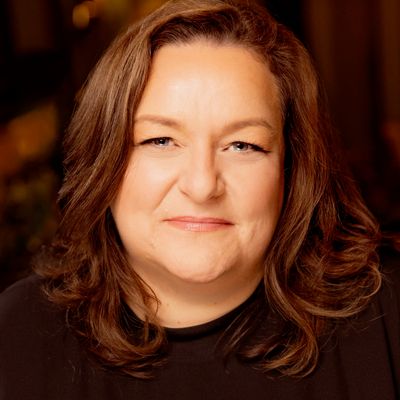
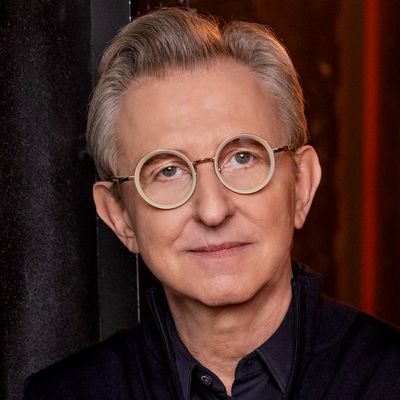
Guests
Featured Shows



About
Producer Thomas Schumacher and Anne Quart on opening 23 shows in 7 months, from Broadway to London to Mexico City to Tokyo.
Transcript
This transcript was automatically generated and might contain errors.
[0:00] Gordon Cox: Welcome to Stagecraft, Variety's theatre podcast, bringing you backstage and behind the scenes, with the stars, creators, and industry leaders helping to bring Broadway back to life. I'm your host, Gordon Cox. On this episode of Stagecraft, I'm talking with two of the executives at Disney Theatrical Productions, who are responsible for getting Disney shows up and running again, not just on Broadway, but around the world. This year, 23 Disney productions, old and new, of shows including Frozen, The Lion King, and Beauty and the Beast, are on track to either premiere or restart performances in cities as far-flung as New York, London, Madrid, Hamburg, Mexico City, and Tokyo. How does it all happen, and how does it all happen at once?
First, I'll talk to Thomas Schumacher, the president and producer of Disney Theatrical, for the wide lens view, and then I'll speak to Anne Quart, senior vice president of production and co-producer at DTP, to talk through some of the details of COVID testing, international travel, and casting over Zoom. Hi Tom, thanks for joining me.
[1:05] Thomas Schumacher: Hey Gordon, oh my gosh, you're all the way across the ocean, and here I am in beautiful Bristol, England.
[1:10] Gordon Cox: Exactly. So Disney International's producing calendar is always pretty packed, but it's doubly so, or triply so, or quadruply so, maybe, right now, if you factor in all the returning shows getting back up and running with the newer, with the new productions of shows that you've got going on over the next several months. Tell us about the kind of scope of that.
[1:31] Thomas Schumacher: Well it's, it is a little head-spinning, but of course it's not by design. We lay out a production schedule with, you know, detailed development processes, and build processes, and rehearsal processes, and all that in many different places, and you know, we have partnerships with many different organizations, the Shiki Company in Japan, Stage Entertainment in all of Western Europe, we have partners in Australia, and we, when we sell, we self-produce, but we have people we work with, and we always have a big scheme, and, and in fact, we call it the tablecloth, which is this enormous production flow chart, which goes out many years, that is as big as a tablecloth, and we lay it out on a conference table.
What has happened, because of the global pandemic, and the shifting nature of this, we have had to crunch the tablecloth into a placemat, and so now it's a very tiny thing, with everything happening simultaneously. So I'm in Bristol tonight, and we're going to do the first public preview of Beauty and the Beast, but simultaneously in London, at the Drury Lane, we will do a paid preview of Frozen, and they're on the same night, and there was no way to get around this. We have, we've done back-to-back rehearsal days, multiple productions, as you know from talking to my colleagues, are rehearsing simultaneously, and we either attend them virtually, we get notes on them, we watch videotapes, or we're in the room, and, and endlessly moving around.
It wasn't an intention, but it all backed up, so as you know, I was in Australia last fall, our fall, our autumn, from sort of Halloween to almost Christmas, getting Frozen ready, which was supposed to open six months earlier, and when I was in Australia, was when Frozen was supposed to be opening in London, but then that shifted now to September, right, and so they're all overlapping, so I will literally, I'm, I'm supposed to be in New York on the 14th to open Lion King there, but that means, but the 15th is when Beauty and the Beast opens here, right, it's, so it's, it, yeah, that's the challenge. It's all happening at the exact same time.
[3:45] Thomas Schumacher: And it has changed quite a bit in the run-up to all of this. How much do you anticipate, you've got the plans laid out for the next several months, how much are you prepared for things to change in the next few months?
[3:57] Thomas Schumacher: As we've been working, and certainly as we get the feel now, there's minor shifting, you know, our, and concerns where we're going to open a production of Aladdin in Mexico, and Casey Nicholaw will go down and do that, whether I can get there for it, my colleague Ann Quart, who you know, will be there. Those things are shifting. Paris, Lion King, which is a brand new production, has shifted a little bit here and there, and then go, because people are looking at their local markets, but don't forget, everybody's on sale, so every time you move anything, right, you're shifting a huge sales window as well, which we've done multiple times. So I think, based on the reported science, based on trends, the things that are currently scheduled to open are going to open. Now, will they stay open? That's the big, you know, gamble.
[4:50] Thomas Schumacher: Yeah, and you mentioned being in Australia for, to open some shows that, and now the, you know, parts of, you know, shows have been on lockdown in Australia again. What about that experience in Australia made you, how has that sort of shaped your expectation for how all these things are going to go?
[5:10] Thomas Schumacher: Well, the interesting thing about going to Australia was when the 17 of us from Frozen sort of mothership went down to Australia, we had already, of course, the show had already been cast to open many months earlier, but it was a big journey because there was no vaccine yet. So we were traveling from all of our points through into Sydney, where we went into lockdown for a proper quarantine for two weeks. I've done five different versions of quarantine, and the Australia one was really the most strict that I've done. And the Japanese one that I didn't do for Frozen was really strict as well. But the Australia one for Frozen was stricken by that, I say, we were learning to respect the situation in that moment, and to respect our commitment together, that what we were willing to do to make sure we were safe entering a culture that was wide open, right?
They had such so little incidence of COVID. We were doing it, not for ourselves, I mean, we're obviously ourselves, our own interest in getting our show up, but we were doing it because we had to protect the people we were going to work with. And then once we did that, we had protocols for masking protocols for testing protocols, protocols for being in different, as we would say, cohorts, who goes into this section, who goes there, how do we do that? It was all very thoughtful and really, really well run. And it was a rigorous discipline that people in the States, when I came home, didn't even understand how we were doing it. Now, we just live by this. So I'm in an addressing room at the top of the Bristol Hippodrome Theatre.
I was in this morning, I've already been tested, I am tested daily, sometimes more than once a day. That's a rigorous testing system. And then we have a secondary thing, if it comes back questionable, then you get a PCR test, and then we have a procedure for how to, and the procedures have changed over time as the science has changed. And I think from Australia, I learned A, this is doable. B, I learned about the extraordinary commitment, passion and depth of talent in our team, the people who were there to do it. It's so moving to, you know, our carpenter, you know, that, you know, flew all the way down, did this thing, we'd never really worked that closely. And then there we are working. That was a very interesting experience. And we learned to respect it. I think it's guided almost everything we've done since then.
[7:40] Thomas Schumacher: Yeah. And through all of this activity you have going on, you're also thinking about all the ways that Disney can alter the kind of industries, structural and systemic racism that's been called out in the last several months. You're doing a lot of work on that front as well. Tell us a little bit about that.
[7:55] Thomas Schumacher: Well, it's certainly getting coverage, particularly now, which I've been involved in from the very start of the conversation with Black Theatre United, with BTU's New Deal. And I was working on that in the very beginning and then, and, you know, offering, you know, if anyone had any questions about how, on my own, not on behalf of Disney and not on behalf of the league where I used to be chair, but everyone there I knew in some capacity, you know, we'd worked together, been on boards or panels or whatever. It's a conversation, what I find interesting about that conversation is too, clearly it's necessary and vital. But also it's a conversation we've been in for a long time, but not naming it in this way.
So, you know, three years, four years ago, when, maybe three years, I guess, when Shelly Williams and I started seriously talking about working together. And we'd been meeting in this co-mentoring relationship for, gee, since she was just out of AIDA way back in the day. Shelly Williams, we should say, she's an actor, director now, she's directing a new production of AIDA. Yeah, she's, yes. And another production, which I'm going to announce in like 20 minutes, but not on your podcast. So just, yeah, park that. But Shelly and I had been in this co-mentoring relationship for, you know, a very long time and it evolved where I asked her if she would direct AIDA. And then we began to talk about what's inside that book and what's inside that piece that needs a rethink, which then led to many kinds of conversations that were brought forward with the murder of George Floyd.
And I think what is, you know, most pointedly called the reckoning that we all faced as a culture and certainly on Broadway, that despite what many people thought were their gold star efforts to reach a place of equity, inclusion and belonging, we had not succeeded. And we had to re-examine everything we were doing and not just what we were doing, but what we would do. And which is what the BTU New Deal is about, what we will do going forward. But I'm very involved also at Black Theatre Coalition and Warren Adams and T. Oliver Reed, who contacted me very early. And I knew T from, he was in the cast of Mary Poppins and we've been working together and we've been working together with Disney. There's a whole Disney, BTC thing going.
And we're also working with Broadway Advocacy Coalition, BAC, which also I was lucky enough to be able to vote for, for their special Tony, because I'm on that committee. So we're deep into this conversation and that means a lifelong conversation. And, you know, when the week that we shut Broadway down, we at Disney Theatrical were honored for our work in diverse casting and inclusionary casting at Disney Theatrical, that the Monday of that week. And it was an interesting thing to think about. And that was for the work we had done. And I think we and others might've said, my, what a good job they're doing. But when you dig into this topic, we weren't really delivering on the promise we'd made to ourselves.
And it's been a call to step up. And it's really been a wonderful, moving, bonding experience with the people who are most passionate and who come to the table with, with grace, hearts wide open and honest demands for how we can work together. And that's been a fantastic experience and deeply moving. To examine yourself so thoroughly, particularly at this point in my career is powerful.
[11:27] Thomas Schumacher: Yeah. And you're weaving all that into, there's trainings going on and things like that.
[11:32] Thomas Schumacher: Oh yeah. You know, each, yeah, obviously through the league, there's a lot of training, but within Disney Theatrical, there's, we're doing extensive trainings and individually, most of us are doing a lot of work on our own.
[11:41] Gordon Cox: Yeah. And what coming up for Disney in New York, you've got a couple of big Broadway shows restarting shortly. And then what's next for Disney in New York?
[11:47] Thomas Schumacher: Well, you want to talk about the development slate? I mean, I just want to, what can, what can you tell us about what's coming up? What's coming up?
[12:04] Thomas Schumacher: Well, I can tell you, I can tell you some of what's on my desk. Like I just got a very exciting new script for Hercules to say, how would we, if we were to take the park version that we did with Oscar, you know, and I've known Oscar Eustace for so long, you know, he calls me Tommy and we worked together at the Mark Taper Forum way, way in the way back machine and in the eighties. And, and, you know, when we had that conversation, could we do something in central?
[12:32] Thomas Schumacher: And the idea of a classical story, Hercules, but set in a contemporary way, working with Lyra de Bessonnet was, you know, so fantastic. And out of that, we've said, what would happen next? So there's a draft of that on my desk with no commitment or announcements attached to it. But enough people know because they're all in the loop. And certainly this rethink of Aida with David Henry Wong re-digging back into the book he wrote for the Broadway show with Shelley and a really interesting team to take that on. But we haven't announced how that's happening. You know, there's other stuff that we're playing with that has been, you know, in the paper and stuff. But my real focus right now is how we get what we've announced back on its feet.
That's not a dodge, by the way. That's I don't know what the world looks like on the other side. I mean, you know, I'm happy to dodge a question like that. But the real issue is how sustainable are all these markets? And they're very different. How sustainable? When do we get Australia back and how does that happen? How is it going with six, seven productions playing in Japan and how do we get them all back up and how will that go? I mean, Frozen is doing fantastic business in a national lockdown, including right through the Olympics. Kind of amazing to think about. But besides Japan, then how do we get Europe back up again? Because we have in Germany alone, you have Aladdin and Stuttgart, Lion King and Hamburg, both set to reopen and then a new Frozen to open in Hamburg.
And then with stage entertainment, we hop over to the Netherlands and in Scheveningen open a new Dutch production of Aladdin. But then we have Lion King to reopen with stage entertainment in Madrid and we have a brand new Lion King to open, all new cast, all new company, everything at the Mogadero Theatre in Paris. And then they, too, are in the loop with then the new production will roll out. But how sustainable is that market? And then we have to go, OK, how is it in Latin America? And how is it going to go with Aladdin in Mexico City? And then what happens with the four companies we have in America right now? And how do we do that? And then when you sit here in the UK and you say, OK, so Frozen's at the Drury Lane, which Andrew Lloyd Webber-Papazini, who I was emailing with this morning, has done such an extraordinary.
You're going to be very excited when you see the theatre and Frozen fits beautifully. But literally, like across the corner is Lion King. And then up the street, there's, of course, Mary Poppins and Prince Edward. And then Turin around the country will be another Lion King. And Turin is this unbelievably beautiful production of bedknobs and broomsticks that Michael Harrison has put together. And then we have this new brand new Beauty and the Beast that I'm going to have a run through in a few minutes and we'll do our first paid preview tonight. So how sustainable is all that? And what will the world look like when you and I do a podcast a year from now? I honestly don't know. I know that there's an appetite for it.
I know that the theatre is tenacious. I know that we as a species are drawn to storytelling and being there live to literally breathe together. And when will we be comfortable to conspire, to breathe together in the room? How does that come back? And are there stumbles along the way? I look at ticket reports in every territory. They all represent different trends. Does that mean the trends are shifting? I don't know. I don't know. I'm very confident that in the long view and that we will look back on this as a time of change, some of it very valuable change. Some of it will have made us much better and much stronger and more vibrant. I honestly don't know what the immediate is. And I think anyone who says they do is just trying to sell you something. Well, I look forward to conversing in a year and looking back over all of this and seeing everything that we've managed to do between then and now. So thanks so much, Tom. Thanks for joining me.
[16:33] Gordon Cox: That was Thomas Schumacher, president and producer at Disney Theatrical Productions. After the break, I'll talk with the company's senior vice president of production and co-producer, Anne Quart.
[16:56] Gordon Cox: And now here's my conversation with Anne Quart, the senior vice president of production and co-producer at Disney Theatrical. Hi, Anne. Thanks for joining me.
[17:05] Anne Quart: Hi, Anne. Thanks for joining me. I'm very happy to be here.
[17:10] Gordon Cox: Before we get into the nuts and bolts of everything you're up to, can you explain for us your position at Disney and kind of what it means you do?
[17:18] Anne Quart: You bet. So I have essentially two hats. One hat is as the SVP of production. So I oversee all production for everything we do first class all over the world. And then the second hat is as co-producer with Tom Schumacher. So I have the distinct pleasure of being on his side as we have gone through the last, you know, 15 years or so. So he and I have done all of those shows together.
[17:45] Gordon Cox: Yeah. And how broadly would you say that the, broadly speaking, how would you say that your job has shifted in the last 16 to 18 months?
[17:51] Anne Quart: Well, it has shifted profoundly. I often joke with Tom that I'm very, I am very excited to one day get back to the thing he's actually paying me to do because I'm spending a great deal of my day doing things that I am, I'm learning on the job and that I'm, I never intended things you don't teach you in theater school, like public health policy and COVID protocols. And, you know, I have become a master scheduler in the process of the last 16 or 18 months. So my job has shifted profoundly. No question.
[18:31] Gordon Cox: Yeah. And you see, there are these nine new productions coming in over sort of a 12 month period new, meaning they had not been up and running prior to the prior to the lockdown. And then there are these 14 others that had been running in March 2020. And now they're and they are all over the world at this point. How does that, that's a lot. And so how is, how does that translate into your day to day? How many of those productions do you touch? Are you even able to touch in a single day?
[18:55] Anne Quart: I touch them all. I don't touch them all every day. It very much becomes a process of where is the greatest need for my attention, for Tom's attention. And then we have, you know, an extraordinary group of people who we are carrying on this journey with us, who are helping us manage all 23 of those very unique situations. Primarily my job right now is here, right now I'm in London and we are focused primarily on getting Frozen open and Beauty open, which are the two of the nine new productions. That's where most of my energy is going, but I'm here for another, last week I was in New York with, with Julie Taymor at the first day of Lion King Broadway rehearsal. So we are being very strategic about where we're putting our time, but I have a sense of what's going on in all of the six shows that are in rehearsal right now. I, I would say every day or two, I'm in contact with each one of them and I have a sense of where we are.
[19:56] Gordon Cox: And what, when you say a production is sort of in terms of what needs you, you, you know, you spend most of your time probably even in person with the shows that have the greatest need, what counts as the greatest need? Like it sounds like this Frozen production that's in London.
[20:11] Anne Quart: Yeah. And Beauty is in Bristol. Is that right? Like they are, they're sort of gearing up toward going into starting performances. Is that right? Or they're going into tech?
[20:21] Anne Quart: Next week, which is so exciting. We have audiences on both next week. We're in this unique situation that we've never done before, which is that we have two brand new shows previewing in the same week, essentially two and a half hours away from each other. So, you know, tomorrow night we'll have an audience at the Lane for the first time at the Worldry Lane where Frozen is. And then Wednesday night we'll have an audience in Bristol. And that's, I mean, never before in our history have we ever encountered that kind of situation. We would never under normal circumstances ever take that on because it's, it's, it's insane.
[20:58] Gordon Cox: And so why did you take it on in that way now? How was that? What was it about the external scheduling factors that made it the way to do it at this moment?
[21:10] Anne Quart: Yeah. So we talked a lot about it because essentially what we're doing is we're opening 23 shows from kind of June to November, mid-December. So, and that's an extraordinary amount of production in a very short period of time. And we could have spread it out much farther, but we made the decision that at the, at the base of what we do is people, right? We have actors and crew and musicians and, and designers who need to get back to work. And we have to raise the entire ecosystem up from the ground. And one, one particular show can't be more or less important than the other. We have to raise it all up together. Otherwise we're not going to have an industry. So we decided to, instead of trying to piece it out over a year or so to do it all at once and to do our best to have the right people in place to support that much work.
And I would say so far we have done an okay job. People are tired, but they're also invigorated by the fact that we're having, we're going to get to an audience. We're going to have people in the theater again. So it was a, it was a tall task, but I still think the right decision in the end because we want to get people back to work as soon as possible.
[22:26] Gordon Cox: And can you tell us a little bit about how your workflow has shifted just in terms of, I imagine you're doing quite a bit more remote work than you ever have before and working remotely in different ways than you ever have before. Can you tell us a little bit about how that works when you're looking at a set being built or a costume designer or something like that?
[22:47] Anne Quart: Yeah, absolutely. We've, you know, the show that arrived in Bristol is a little different because it's what we call subsequent production. So it's another production of something we've already opened, but this version of beauty is brand new. And so we showed up in Bristol to see scenery and costumes that the only time we'd ever seen them was on Zoom. And that's a, that's an unbelievable way to tech a show, you know, to tech a show. So we did costume fittings virtually. We did this unique costume fittings with Japan where we would have the Japanese costume maker with a Japanese translator, and then our English designer on the New York side. And so they would speak, they would be translated. The English designer would look and say, no, raise your hand here, put it there.
That's what I mean. Take that in. So we did that. We also, I cast the entire production of Beauty and the Beast on Zoom as, as we did the entire production of Frozen on Zoom, we cast, which I, I never want to do that again.
[23:44] Gordon Cox: You know, I was just going to ask if what, if there was anything that is good about this? I mean, the, the obvious question is, I imagine that like, it's so different watching someone, you and I are not in the same room right now. And that's very different from you and I having this conversation in the same room. Did Zoom allow you to do anything or open up any new facets of the casting process for you? Or is it just a thing that you would rather not do in the future?
[24:10] Anne Quart: I think that there's certain lessons we've learned that will carry forward. Preliminary auditions for certain characters in certain situations. If you have a team that's spread out all over the world, Kemp could be useful. Children are, we have proven that I think going forward, we can probably cast children on Zoom. The, the difference, you know, for finals, for principals, it is unbelievably hard because so much about choosing the right leading actors for a piece is about their face and their eyes and their energy and what they bring in the room. And whether that makes you make, they do something that makes you go, oh, that's, that's, that's something interesting. That's what we imagined, or that's not what we imagined, but we still love it. And that's really, really hard. But I do think that there's, there is some learnings that will carry forward certain pieces of it.
[25:06] Anne Quart: We will make use of. You know, I don't know that we'll gather in rooms for production meetings anymore if we don't need to, because that I think we've gotten pretty good at. But the thing about creation, creation on Zoom is very, very tricky.
[25:21] Thomas Schumacher: Yeah. And what went right? You're describing this process of, you know, set design and costume design, particularly in Bristol for this new production with a new design that you were approving. What went wrong with that? What could have gone wrong? And did you show up and what were the surprises when you actually saw it in person?
[25:39] Anne Quart: I'll be really honest with you. A bunch of it went wrong. You know, nothing that we can't fix, nothing that we are in the process of fixing. But for instance, when a designer designs a show, then one of the first stages is swatching the show, which means going to the shops and picking all the fabrics and then creating what is the fabric makeup for that character texture and all those things. So much of the fabric choices were done by somebody in a different country that then sent those samples to New York and then choices were made. So when we got in the room, the fabric didn't look under the light the way we'd want it to. Or we have an LED effect with a costume and a scenic effect. And in the pre-COVID times, we would get into a studio and we'd have the LED and we'd light a minute and we'd say, does that play the way we want it to play?
Do I like the way that texture looks against that? And we didn't have any of that. So the first time it all came together, it was like, OK, we have some balance issues. Yeah, so there's definitely been things that we didn't anticipate.
[26:46] Thomas Schumacher: How long will you be in London for?
[26:48] Anne Quart: Well, I've been here since the beginning of June. Right. And so I am here now for another 10 days or so. So that would be kind of till like the 7th or 8th of September. And then I'm coming home. Tom's going to stay here and I'm going to come home and open both shows in New York and both shows on the road with a little bit of a brief stop in the middle in Amsterdam to open Aladdin. So I'll have been here for almost three months.
[27:13] Thomas Schumacher: Right. Yeah. And and what is important, like, for instance, why was it you're in London? You've been there for a while. Why was it important to come back to New York for that first moment of, you know, you mentioned with Julie Taymor and Lion King?
[27:27] Anne Quart: Well, for a lot of reasons, you know, the Lion King in many ways is a center point for our organization. So much of what we have done in the last decade is as a result of the success of the Lion King. It is, you know, we have an enormous company there and I felt we felt it was important that we started properly, that we not only from the perspective of the COVID and the pandemic, but from the perspective of starting new in terms of the racial awakening that's happening and all the discussion and work we've done and training and that we all wanted to start together. And if they were all going to be there in that room, we felt strongly that leadership needed to be there with them as well. So, you know, so that's why it was important to come back.
[28:19] Thomas Schumacher: And that's not a terrible thing.
[28:23] Anne Quart: Right. And actually, those that you mentioned, two topics that I want to ask you about specifically that you are factoring into all this stuff you are doing, one of them, first of all, is the COVID sort of compliance stuff, which I feel like is already complicated. You know, as I'm talking to people here in New York, just dealing with the New York stuff, but it is different for every locality that you are opening a show in. And so how tell us a little bit about sort of how you juggle all that, because not only are you juggling the varying sort of differences in how they handle it, but they all change.
[28:56] Thomas Schumacher: All of them change and evolve as we all have. How do you keep a handle on all that and keep your shows, you know, following all the rules to open safely?
[29:06] Anne Quart: Yeah. So there's a bunch of different buckets. So we have the globally every country has their own COVID situation and their own COVID rules. And so within my group, there's a handful of people who do nothing but kind of monitor what's happening in the Netherlands, what's happening in Germany. Do we feel like everything seems to be the same or things are shifting? We're also monitoring the incoming. Like, how do I get from Germany to France? How do I get from France to the UK? How do I get from the UK home? You know, I've quarantined five times in the process of this, which I'm very thankful I don't have to do again into the UK. But we're monitoring that constantly because the production schedules are built on people being able to cross borders. And so if we have to shift and assume a quarantine, we have to shift. So there's differences between shows we produce and shows we don't produce, you know, so self-produce. So for their license, fortunately. Yeah.
[30:04] Thomas Schumacher: So fortunately, for instance, our licensing partner in Europe is Stage Entertainment. And so in Germany and Spain and France and Holland, they will manage the day to day, although we have to be very closely connected. For us, for Broadway, for London, for Australia, for the road, those obligations are ours, are mine. And I meet daily. I not so much with the UK anymore because we're kind of into a plan. But I meet daily with the US team. You know, how are the protocols going? Because it's based on a handful of things. Right. Vaccination first and foremost. Right. And then after that is testing. And how do you test? We're testing thousands of people every day. And then after testing is masking where we can to reduce risk.
And after that is social distancing is a tricky word because people have a connotation of it. It's really about keeping various groups separate. So if I have a walking cover from Scar, I don't want him anywhere near that Scar on a regular basis. They shouldn't be in the same dressing room together so that in the event that something happens, we can keep the show running. All of these are things I did not know anything about 18 months ago. But things that we talk about, I talk about all day long.
[31:21] Thomas Schumacher: And I imagine just in terms of just the backstage patterns and the way the shows operate backstage, you had to work through all of an entirely new set of, I don't know, roots and routines and all that. All that to sort of keep everyone, you know, safe and socially distanced or as close as possible as they could be. You know, like that must be that must have been a whole other level of.
[31:47] Anne Quart: Whole other level. And it's still every day it changes. So you think you go in with a plan. We think we're going to do this. And then seven, 50 percent of it has to shift because in real life, it doesn't work. But we still need to be safe. And then the other aspect of it. And the important was such an important aspect of it is each individual human within the system has their own feelings about how they feel about the safety, how they feel about COVID, how they feel in the space. And you have to make room for that, too. And so there's just a lot of factors, you know, just in terms of a regular quick change anymore. It's not a regular quick change. How is the quick change happening? Who is around?
Who needs to be around? Is that person being tested every day? Well, they're being they're both vaccinated and they're both tested every day. And the dresser is wearing a mask. OK, we feel like we've checked enough boxes here. But, you know, everything has 500 steps it didn't have before COVID.
[32:50] Thomas Schumacher: Right. Yeah. And then you also mentioned the thinking that Disney is doing about racial justice and sort of rethinking the systems and structures of the way all of Broadway produces. And, you know, for you all, how Disney produces. Tell us a little bit about what those activities involve and how you how you specifically how you fit them into everything else that's going on right now with all these people that are working toward these shows going up again.
[33:18] Anne Quart: Yeah, well, in many ways, it's very much at the center of coming back. You know, we spent a lot of time in the months leading up to being, quote, unquote, in production, talking, doing, talking about and having training, having conversations with our performers on a whole myriad of issues, on issues like hair, on issues such as various some language in the script that that we wanted to change or people felt uncomfortable with. We had all kinds of issues just about what is the culture of our shows. And then from that, you know, we had to make commitments, which we we did in terms of this is what we intend to be held accountable for. And then brought back a community. And really, the work happens in the room, right?
The equity, diversity, inclusion happens in terms of how people interact with each other, how people are treated, whether or not they're given space to be their authentic version of themselves. And that work is never going to end. That work is work we're going to do, you know, going forward. It has to be right.
[34:26] Thomas Schumacher: And how has that changed things for you in particular in terms of how you think about how you do your job going forward?
[34:33] Anne Quart: Yeah, I mean, I absolutely my absolute thought process around casting any kind of hiring, any kind of decisions about putting together a team have completely shifted. And in a great way, in terms of, you know, OK, we're going to put a company together. What's that leadership team look like? Does it represent the community that it's leading? And if it doesn't, it's not OK to say, well, we couldn't find, you know, a person of color to be the stage manager or whatever. The thing is, we have to be committed to doing the work that it takes to find people. So for me, it means making sure that I make it 100 percent clear to the people who I work with and who work for me that this is what we have. This is the box. This is the kind of community we want to create. And we're not going to accept anything different than that.
[35:33] Thomas Schumacher: Do you, going forward, has the rethinking of the way we can work remotely as you've discovered the things you'd rather not do remotely, how is that going to, how do you anticipate that affecting how much you will travel as part of your job? Because travel is a big part of your job, right?
[35:50] Anne Quart: It is a huge part of my job. And I do expect that we will, you know, instead of saying, I'm going to fly to Germany for two days so we can have meetings. I think the days of that for me are few and far between. It will have to be something different to get me on an airplane because I think we've proven that we can meet and we can plan over this medium. You can't create relationships over Zoom. That requires time in person. But I do think it's changed what I'll get on an airplane for. There's no question.
[36:24] Thomas Schumacher: Well, I look forward to seeing how everything develops as you move forward over the coming months. Thanks so much, Anne. Thanks for taking the time.
[36:34] Anne Quart: My pleasure to be here. I appreciate it.
[36:40] Thomas Schumacher: That was Thomas Schumacher and Anne Quart of Disney Theatrical Productions, the company behind 23 new or returning shows this year. The new staging of Frozen opens on the West End September 8th, and on Broadway, Lion King bows September 14th, and Aladdin returns September 28th. If you like what you're hearing on this and other episodes of StageCraft, I'd really appreciate it if you took the time to rate and review us wherever you listen to podcasts. It really helps us grow our audience of folks who love theater as much as you and I do. Or tell a friend about StageCraft. Find past episodes or subscribe on all the pod places, including Spotify, Apple Podcasts, and on the Broadway Podcast Network, which is a great place to find more theater for your ears. I'll be back in two weeks with another new episode. Until then, find me on Twitter at gcoxvariety. Thanks for listening, and see you soon.
[37:30] Music by Ben Thede
© Broadway Podcast Network, All Rights Reserved