

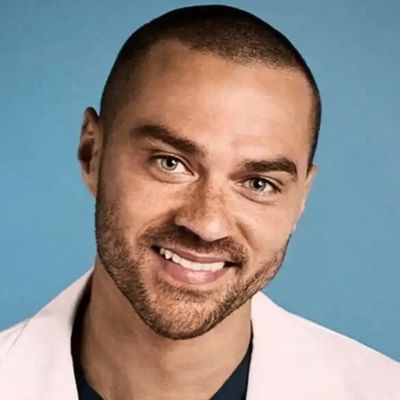
The former "Grey's Anatomy" star on "Take Me Out," his Tony nomination and why theater is like baseball... Read More
From the show: Stagecraft with Gordon Cox
Guests
About
The former "Grey's Anatomy" star on "Take Me Out," his Tony nomination and why theater is like baseball.
Transcript
This transcript was automatically generated and might contain errors.
[0:06] Gordon Cox: Welcome to Stagecraft, Variety's Theater Podcast, bringing you backstage and behind the scenes with Broadway stars, creators, industry leaders, and Tony nominees.
[0:17] Gordon Cox: I'm Gordon Cox. On this episode of Stagecraft, I'm talking to the actor Jesse Williams. He's currently nominated for a Tony Award for his Broadway debut in Take Me Out, Richard Greenberg's 2002 play about a baseball player at the height of his career who comes out as a gay man.
[0:33] Gordon Cox: Take Me Out is one of Williams' first major roles following his 12-season run on Grey's Anatomy, playing Dr. Jackson Avery. And he was in rehearsals for the play back in March 2020, when the pandemic shut down Broadway. But he stuck with the show, along with his castmates and fellow Tony nominees Jesse Tyler Ferguson and Michael Oberholzer. And now he's wrapping up his run in Take Me Out, with the Tony Awards ceremony as the finish line on June 12th. Williams is in the virtual studio with me to tell us about Tony Awards hoopla, explain how theater is like baseball, and reveal whether he ever wants to come back and do this Broadway thing again.
[1:14] Gordon Cox: Hey Jesse, thanks for joining me.
[1:16] Jesse Williams: Thank you. Thanks for having me. Really appreciate it.
[1:19] Gordon Cox: It's been a long journey for you with Take Me Out. It's stretching all the way back to before the pandemic, and now you're coming up on what will be the end of your run pretty soon. How are you feeling right now?
[1:30] Jesse Williams: I'm feeling pretty great. I'm feeling pretty strong. It is a new feeling, even in just recent days, maybe the last week, of feeling like I can see the end. Um, it's always been this mountain, like you said, it's been a lot of build-up and it's so difficult and demanding that it has really been this mountain looming large in front of me with the peak not in sight, and now kind of feeling like we're rounding a corner and we can kind of see some daylight on the end. It feels like it's all happened fast, but trying to stay, you know, that's the thing about theater, you gotta stay present um because you got two shows to do or one show every day. So um it feels great. I'm really really happy and feeling fulfilled and excited that more and more folks are coming to see the play and enjoying it and being able to have pretty robust conversations as a result.
[2:27] Gordon Cox: What do you know now that you wish you'd known going into it?
[2:32] Jesse Williams: You know, I don't know. I feel like I really kind of saw every potential outcome on this because as you said we did start this two years ago before COVID and um while I didn't look at the material during those two years because it was frankly a little bit painful to do that because I really wanted to do it and wasn't sure that we'd ever get a chance to. In that time, you know, I think I really did um kind of prepare myself for every potential scenario psychologically, so sadly I don't really know. I don't really have a quippy answer for that.
[3:08] Gordon Cox: But it sounds like you were prepared for the fact that it would be as you said demanding and challenging. What do you feel like what skills had do you feel like you have honed over the course of this run?
[3:23] Jesse Williams: Well a lot of new ones because I'd never done theater before, really never done a play, and so the level of emotional psychological endurance on top of the physicality, um on top of the voice rest and taking care of your throat and your voice. Those are all entirely new muscles that I haven't had to work like this before. And actually, I've got an answer to your previous question. The one thing I wish I had known was the emotional kind of devastation that my character goes through. It's gonna be more taxing than I anticipated. And I wish that I had kind of established for myself a meditation practice, a grounding practice, a way to get it off my head and heart and body after every show because there was a difficult period.
Um because the character goes through so much, and your body doesn't really know the difference. And um it definitely I had a bit of a dip where it was really um weighing on me and difficult um to push um separate um especially on two show days and just arduous weeks. So that's something that you kind of have to live through to prepare for, but I think I wish I did kind of lay out some of the architecture for healing in the process day to day for the journey that Darren was on ahead of time. I think I'm figuring it out now, but that did kind of kick me in the ass.
[5:08] Gordon Cox: Yeah, I was just gonna ask if you did come up with a practice then as you can.
[5:11] Jesse Williams: Yeah, I have. I'm always honing it and sometimes neglecting it, but it's there, and um even just the awareness of it after feeling it for this long, it makes it just less surprising, easier to identify, easier to identify what it's not, um easier to set aside time um for myself. You know, I really uh I've got a lot of different jobs and responsibilities and interests and I did a I set came out here early um from California back home to New York and did my best to delegate as many responsibilities elsewhere as possible so I could be wholly present and focused on this and not be trying to squeeze in meetings and board meetings and all the other things I have going on. I think I did a fairly decent job of that.
I've got terrific um folks that can help me with that. Um but uh but yeah carving out the time to uh be disciplined about just you know not socializing. I don't I haven't socialized this entire time. I don't go out, I don't do anything, I can't meet you for a coffee, I can't meet you for a tea, I can't grab lunch. I'm focused on um building this up or resting um and taking care of myself in between. So that's been a really interesting six months uh going into six months now um of that and I think uh that will be informative going forward in terms of my future work balance.
[6:44] Gordon Cox: What has struck you about Broadway as an industry and as a community?
[6:51] Jesse Williams: Well what has struck me about the Broadway community is the incredible generosity and welcoming um demeanor. I mean the folks uh I have found myself I'm just so grateful. I came in intimidated. I came in with the utmost respect for this lofty uh you know this this community that lives on a higher tier that you know these are craftspeople that uh work their behinds off and um you know to be here you this isn't it's not glitzy and glamorous it doesn't um overpay it doesn't over um coddle you and you know everybody here I have such a tremendous amount of respect for and to be you know I who knows how it could have gone. I mean a guy who's had a short career on TV and film who was a freaking public high school teacher 12 years ago or whatever it was um has no business here and I didn't know if I was going to be hazed if I was going to be iced out if I was gonna be if I was going to be any good um and I have just found uh support and encouragement and patience and tutelage um at every turn and I so I've really really um it's been better than I could have possibly imagined in terms of um that level of engagement and kindness that I'm experiencing.
So that's been and this is it's to a whole new community to me it's not like I had experiences before and these have changed this is a new world a new a new university that now I'm uh you know an early alumnus of uh in short order so um I'm just I'm just it's been pretty damn terrific.
[8:40] Gordon Cox: Yeah, a lot of the work on Broadway this season has really emphasized ensemble work among sort of a group of actors kind of performing seamlessly as a whole and I feel like your show is one of them. Um and I just wondered what that's how do you what was that what's that experience been like for you sort of working with an ensemble of actors kind of night after night and does it overlap at all with the experience of working with an ensemble of a TV series?
[9:07] Jesse Williams: Hmm well yeah everything about um working with this ensemble um has been tremendous. I mean getting to know some of the guys um two years ago we had two weeks of rehearsal right before COVID hit so got to see them in person got to spend a little bit of time in the rehearsal space just you know put names with faces get a sense of sense of humor and process and um and so much has changed and a lot of us have grown in the last two years and new fathers and new families and new new new situations going on. But this group doesn't work without a really cohesive unit. I've been really you know what it stands out to me is and I don't know if it's it'd be easy to say maybe it's because the theater world is an easy distinct uh distinction between the theater world and Hollywood but in this group there's just no egos there's no pre-packaged kind of set of um habits or mannerisms that you gotta deal with because so and so is used to this or that everybody is really humble really kind really generous um on top of their tremendous talent and I'm and I frankly even though I'm the lead in the play I'm the eager kid tapping shoulders, asking questions, asking questions, asking questions um throughout um because everybody around me has much more experience.
So my point only that with to that is that if this ensemble I'm testing their patience and uh you know we're not just hanging out but I've got a lot to to ask and to learn. Um so the yeah working with this ensemble is terrific. Every you know the my I think I'm in six of the first seven scenes of the play and it's this carousel of me working with almost every actor in the play you know um round and round and round so I really get to open the show every every night um you know touching um you know having a really awesome interaction with everybody and uh and uh I learn a tremendous amount each and every scene. I mean to be this deep into the run and still be making discoveries on stage um is a thrill.
[11:24] Gordon Cox: What was the best advice you got about being on Broadway and who did it come from?
[11:29] Jesse Williams: Definitely I've gotten a lot of words of wisdom from our incredible director Scott Ellis. Something really simple he just said it in passing. Brandon Durden, who plays Davy Battle in the play and is a tremendous person and actor, who also was in Skeleton Crew right before starting our show, he's just you know just so busy and so talented and multi-dimensional. He shared uh something that I believe Noah Emmerich told him when we were in conversation is something really simple about the difference between stage and screen. He just said you know on stage you're doing the master and the close-up at the same time the whole time and that you know, using that language was a little you know, a little bit of a it's fairly simple, but a but a little of a light bulb moment in terms it makes me think about the physicality and and license to be, you know, I've only done uh TV and film and and in that, you know, the camera catches everything.
[12:34] Jesse Williams: So you don't have to be overly expressive. You don't have to show. Um, I don't think. Um, and to be on stage now to fill the house to get to the back row, I've been trying in my early days in the early period stages of rehearsal, certainly, to try to feel that out. How much bigger should I be? You know, you're having on stage, like we don't have mics, you gotta you're sitting and having intimate conversation one-on-one with somebody on stage, but we have to be yelling at each other's faces so the whole theater can experience it with us. How do I do that with nuance? How do I, you know, it's kind of like if it's a light bulb, if you blast a painting with hot light, you wash out all the texture, it just becomes flat.
So how do I communicate in an intimate conversation on stage without blasting out all the nuance, all the texture, all the form, all the detail, all the subtlety? Um, so that simple kind of throwaway from Brandon just gave it kind of gave me a sense of form. Um, both physically and vocally, just to be aware of. Um, I think of, um, you know, I just, you know, a lot of it was really just about, um, breathing, you know. So there's technical advice that I've gotten from Jesse Tyler Ferguson or from Scott, you know, breathing from your diaphragm and not grading your voice and ripping it to shreds, which I almost did early on. Um, I think something that Scott let me know early on was that you're never gonna be 100%.
You're never gonna feel like you mastered every nook and cranny of every scene in the piece, but your 70%, the audience doesn't know. They didn't see the other show, they didn't see yesterday, they didn't see last week when you felt like you crushed it. They're experiencing it for the one and all you have to assume the only time, the only time. And um, you know, your 70% is enough. And that's not about effort, that's about kind of how you modulate your own outcome. And we actors cannot be trusted to be able to tell if they had a good show or not. I've learned, um, you know, throughout the process, you think you tanked it and people loved it. You think you were perfect, you think you were Meryl Streep up there and you weren't. Um, so I've learned to stop trying to guess and to let it go.
Um, and uh, yeah, I think, um, talk I, I room with Patrick Adams, we share a dressing room, he plays Kippy in the play. Uh, and he's been a really wonderful sounding board for me, uh, just somebody to measure um, my fears and concerns with. And I remember, um, you know, early on him, uh, just being able to give me perspective and calm me down when I would carry scenes, I would carry mistakes with me. I fumble something in the third scene, and that insecurity about it would create a kind of bit of a tumble, uh, a rolling stone into the next several scenes, and I felt like I was kind of clunking through the next several scenes because I was kicking myself, and he just really helped me just dust that off, start fresh, forget it, it's over.
That scene is done, start, you know, start fresh. So a lot of the simple stuff for me, because it's theater 101, theater 101. It's my first class. So, um, the some of the things that the folks with more experience know, like the back of their hand. Um, I'm experiencing them all now in real time.
[16:04] Gordon Cox: I'll have more with Jesse right after the break.
[16:16] Gordon Cox: And now, here's more with the actor Jesse Williams. Backing up a little bit, you're coming to the end of, you know, a long and successful run on Grey's Anatomy, and you want to do something else. Why was stage the thing? What was it about that challenge that really appealed to you?
[16:34] Jesse Williams: Stage was the thing because it was in many ways the opposite of what I had been doing. I'd been working somewhere, as you said, for a long time. I know every corner of every set, I know all the wardrobe, I know all the actors I'm working with, I know the hours, I know what to expect, I know how long the season's gonna run, I know the audience. This is the opposite. Um, you don't get 20 takes, you get one. You're live in front of a very critical crowd in your favorite city in the world, and you have to get it right. And I just needed to be shaken up. I wanted to challenge myself. I'd be, I want to, you know, your comfort zone will kill you, uh, is an adage I've heard and can relate to. And I wanted to certainly get out of a comfort zone and just challenge myself, see what else I had in the tank.
Um, you know, I'm, I'm, uh, I started acting later than probably many. I was almost 30. And um, so I wanted, I want to just be, you know, being on a show 10 months a year for over a decade, you watch a lot of other people build out a career, try things, experiment, play, fall on their face, get back up. And um, you know, so kind of like, you know, in the classroom looking out the window of kids playing recess, you know, I certainly can admit to some envy and some eagerness to get out there and play and make some of my own mistakes, um, which this very well could have been one of them. Uh, so I just wanted to just jump. I really just wanted to do something that um, wasn't, uh, didn't involve fear and let me really test what I what I've got, you know, what do you really belong here?
Because I don't have to keep acting. It's not, it wasn't a childhood dream. It wasn't, it's not, there's other interests that I have. Um, I wanna, I want to see um, if I, you know, what it really feels like to be totally vulnerable. Um, and uh, in some ways I feel like this level of commitment and performance is a form of kind of certainly a vulnerability, uh, and kind of, you know, you're bare, you're nude in some ways and uh, so I'd be added, added ops added burden or challenge of uh, actually literally being nude in this one too. So yeah, sure, yeah, yeah, take me out as a big play that touches on a lot of things like so many sort of themes and ideas. Um, what is the play about for you? What what's really the core of what the show is about for you?
[18:22] Jesse Williams: For me, the play is really about heteronormative relationships, masculinity, what is it? What isn't it? What does it require? Kind of male intimacy. Um, what is it to know somebody? What is it to be, uh, to have a friendship? Um, you know, are you defined by what you do or what you're not? Uh, I think it examines how much um, homophobia is woven into what we consider macho or masculine from my generation and um, behind me not necessarily futurists. Um, and so for me it was, uh, it has really been about um sticking your neck out and trying to redefine and reform and shape what our relationships can be um, and what it is to know someone. Uh, I think that there's also a really interesting, um, a really interesting play obviously you have that my character comes out as homosexual, you also he's the character is also um black is also biracial and there are there's an interesting racial um underpinning to the story for me that watches that deals with kind of a white man who is, uh, despite repeated offenses, despite repeatedly um violating and abusing people, he gets chance and chance again and a backstory and a childhood explanation and a letter written to explain away his misbehavior and support and um shows up and totally disrupts my team and my, which is my home which is my family which are really my only really real real relationships that I've carried to re countless to repeat a championships all that happens and just and just like that um, you know, my character is witnessing himself being cast aside for this guy who keeps getting attempt attempt after attempt and the only my only offense really is just saying the words I'm gay.
Um, so, so um, so what that does is that has uh the character of Darren really um he tries to keep leaning on these structures that he's always leaned on these individuals these men in his life but they're all wobbly now or if they're present at all or they're working um, you know, multiple sides of the coin and being a little bit duplicitous in their behavior against him and uh, so it just that examination of um, you know, what real um, kind of like I said heteronormative male relationships consist of um is something that's really fascinating to listen to the audience watch play out to kind of hear you don't can't really see them but I can hearing them put the pieces together as as the second act unfolds um is a really fascinating experience and um, and also just it, you know, it's a play that it's a lot about um arrogance and people can't really know what they don't experience and and my character uh certainly gets a sledgehammer to the chest, um, demonstrating that.
Um, we can we can cast it off as being kind of you know arrogant or or have big-headed, but some but people really struggle to you know everything is either imaginary or it's real. Either I've experienced it and I've felt it, or I've just heard about it. And uh, and Darren Lemming has only heard about um obstacles or the word no or um uh an uphill battle, and so he doesn't really believe in it. It's kind of like the boogeyman for him, uh, until it gets until he gets until it gets shoveled right down his throat. So um, so those are some of the themes that I have found really interesting. Um, and also it's a and also I would say, Gordon, it's um it's uh it's so densely written, the language is so incredible.
Um, there are really interesting parallels in characters that almost that say some of the same things, do some of the same things, live their life by similar principles, but they play different roles.
[23:45] Jesse Williams: The way they're introduced, who they're aligned with makes one a villain, one a hero, one noble and one a coward. They have a lot of the same properties, qualities, and use some of the same language. Richard Greenberg is really testing us as an audience to realize the role that we play in our interpretation of other people's lives.
[24:08] Gordon Cox: You played baseball, right, Jesse?
[24:10] Jesse Williams: I did, yes, as a young person.
[24:12] Gordon Cox: And is there any overlap for you between baseball and theater?
[24:19] Jesse Williams: Yes, actually. I would also say that the fact that I play baseball, my relationship to baseball, was a not so insignificant road into doing this play, choosing to say yes to it. Baseball was a huge part of my upbringing and my connection with my father. It was something that he cared greatly about and used to teach me countless lessons. He used everything around baseball as an analogy for something else, and so I really in part got excited to do this and chose to do this in some ways as an honor to honor that relationship and rekindle those feelings. I would say baseball is similar to theater in the sense that it is both an individual sport and a team sport. Right? In both cases, it is a team collaborative effort.
It doesn't work without the team. However, there are moments of isolation where it's entirely on you. It is entirely on you, and you have to be prepared. It's not just natural talent alone that won't get you there. There are many ways that you could fall flat, that you can make a mistake, that you can have to miss a game or miss a week, that you can injure yourself or others. The level of camaraderie, you know, you can go it alone, but it's far more successful, sustainable, and enjoyable when there is a level of cohesion and joy in the work, and fear can get you killed. Fear can get you hurt pretty badly in both cases.
[26:21] Jesse Williams: I think all of my experience with baseball, it is really a nostalgic experience doing this play, being out there, being in uniform, and being out on the field. We took the team with Scott, our director took us all to Yankee Stadium one day. During the day it was closed, it was empty, which made it all the more kind of spiritual. Being out on the field, it brought back a lot of feelings, and it is in some ways a church and a place for reflection. I was really grateful that I didn't have to imagine that, that I could relate to being out there for the better part of my childhood. So yeah, there's certainly a few parallels.
[27:14] Gordon Cox: Congratulations on your Tony Award nomination.
[27:19] Jesse Williams: Thank you.
[27:20] Gordon Cox: What has been your experience so far of the Tony season swirl? It's a whole thing that you have to do in addition to your shows, right? Like you've got some events and some press and some galas, it's a whole thing. What's that been like for you?
[27:33] Jesse Williams: It's been awesome. Going back to what I was saying before about feeling welcomed and feeling like I'm amongst peers and it's okay that I'm here, it's just really been an extension of that. Getting recognized for your work while you're doing it, it's very different than doing a film that maybe doesn't come out for two years, 18 months after you made it. And it's done. You said those lines, you'll never say those lines again. People see it at all different times in their life and times of day and on different size screens and everything. So it's all disjointed, but recognition is lovely. Thank you so much. You saw the movie, that's great, cool. Thank you very much. But having somebody there with you in the space live when it happened that Tuesday night, and this isn't a different group of people, artists, creatives that are seeing me act for the first time.
Grey's Anatomy is one of the biggest shows in the world, but it has its demographics that it serves. That's not always the most cutting-edged filmmakers and directors and actors of our day or producers, etc. So this is the first time those folks who I also look up to and look forward to working with and admire are standing before me in person telling me how it made them feel and what they experienced and what it called up for them. That's new to me. I've never had that experience. That's really cool and reciprocal in a different way.
[29:38] Jesse Williams: I just was at the Drama League Awards with Hugh Jackman coming up to me and we're talking about each other's work, and that's very surreal for me. I haven't been in one pocket for the entirety of my short career, and so this is something very, very new. To be able to have a venue, you know, we're talking about the nomination, the spaces, you're doing press and doing gatherings and luncheons to be able to fellowship with people whose work really moved you and watching them be celebrated and participating in celebrating them because they've absolutely changed lives. People saw themselves for the first time do something and that made that goal achievable, made them feel like they could write, feel like they could sing, they could act, they could direct because somebody else did it.
So this is a real pinch-me few weeks and months, and I think it's absolutely a huge shift in my consciousness and connection between my work and what it can do in the world and feeling a sense of belonging. That theater and cinema are ahead of me in a way that makes it a little more tangible, a little more within reach, and exciting. I certainly always believe in myself, but to be in the ring is different than to be in the rafters.
[31:10] Gordon Cox: You are nominated in the same category as two of your co-stars Jesse Tyler Ferguson and Michael Oberholter. What's the mood like backstage?
[31:20] Jesse Williams: It's, you know, we're keeping, we're all very polite and supportive and encouraging and sincere. Those guys are so talented, they're really great, and a huge part of my experience, and I'm so proud of them. So yeah, it's a pretty surreal thing. But yeah, we're all, you know, there haven't been any competitive shots or anything. I'm waiting till, you know, a couple more weeks to sabotage their dressing rooms. But no, we're having a really awesome time, which is not always the case in theater or film. You don't always get to work with the people that you're on a project with, right? I've done movies with other actors, we don't have any scenes together. Luckily, I have really pivotal scenes with both of those gentlemen. It's very well earned, and I'm very sincerely excited to be able to have the privilege to work with them and watch them. So it's pretty great.
[32:33] Gordon Cox: Your run in Take Me Out ends June 11th, you've got the Tony's June 12th. What's next for you? And is Broadway something that you're gonna do again, do you think?
[32:43] Jesse Williams: By the way, I love that timing. That's pretty specific. Closing to get right into it and move on from there. Well, theater is certainly, yeah, I'm part of this community now. I've got the bug. I love it. It is very demanding. It's not gonna, I'm not gonna go right back into another production, I wouldn't think. But it's now woven into my DNA, so I will be back. I think I'd be interested in directing as well. I already am interested in directing for screen, but that could expand also to theater.
[33:27] Jesse Williams: Professionally, what's next? You know, I'm not sure. We've got a bunch of irons in the fire. We're in development actually on a limited series expansion of the play with Richard Greenberg and Scott Ellis around the Darren character. That's really developing into something pretty interesting. I've got a couple films coming out. So we'll see. But I'm really, you know, for this is the first time in my career, really, Gordon, where I don't know what's next. I don't know where I'm gonna be next month or in the next three months. I don't know, and that's a pretty cool thing too. I'm gonna take my kids on vacation and do some sailing and be outside with them and just see how I feel in a few months, which warms my heart to know that that's what's ahead.
[34:16] Gordon Cox: Well, we look forward to seeing what's next from you and what gets you on stage next. Thanks so much, Jesse.
[34:23] Jesse Williams: Thanks for joining us. Really appreciate it.
[34:29] Gordon Cox: That was the Tony nominated actor Jesse Williams, now appearing in Take Me Out on Broadway at the Helen Hayes Theater. If you like what you're hearing on this and other episodes of Stagecraft, I'd really appreciate it if you took the time to rate and review us wherever you listen to podcasts. It really helps us grow our audience of folks who love theater as much as you and I do. Or tell a friend about Stagecraft. Or give us a shout-out on social media. Find past episodes or subscribe on all the pod places, including Spotify, Apple Podcasts, and on the Broadway Podcast Network, which is a great place to find more theater for your ears. Until next episode, find me on Twitter at G Cox Variety. Thanks for listening. And see you at the theater.
© Broadway Podcast Network, All Rights Reserved