

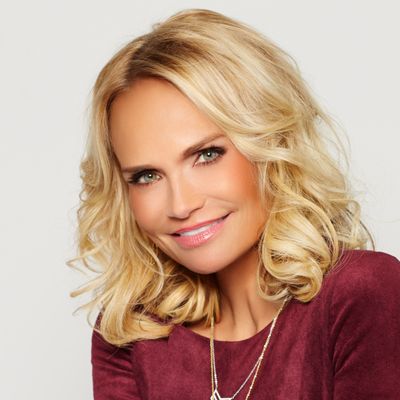
The Broadway favorite dishes on her new album, her worst flub, and the bucket-list musical she wants to write... Read More
From the show: Stagecraft with Gordon Cox
Guests
Featured Shows


About
The Broadway favorite dishes on her new album, her worst flub, and the bucket-list musical she wants to write.
Transcript
This transcript was automatically generated and might contain errors.
[0:06] Gordon Cox: Welcome to Stagecraft, Varieties Theater podcast, bringing you backstage and behind the scenes with the stars and creators of the hottest shows on Broadway, off Broadway, and beyond.
[0:17] Gordon Cox: I'm your host, Gordon Cox.
[0:19] Gordon Cox: On this episode of Stagecraft, I'm talking to a true Broadway favorite, Kristin Chenoweth. Musical theater fans won't need an introduction, but just in case, Chenoweth made her Broadway debut in Steel Pier in 1997, and in '99 won a Tony for her performance as Sally in You're a Good Man Charlie Brown.
[0:38] Gordon Cox: Her other Broadway credits include The Apple Tree, Promises Promises on the Twentieth Century, and, of course, Wicked, in which she created the role of Glinda. She's also busy on screen, winning an Emmy in Pushing Daisies, and appearing in shows like American Gods and Trial and Error.
[0:56] Gordon Cox: And on top of all that, she just released her latest album, For the Girls, which features a group of guest artists, including Dolly Parton, Ariana Grande, Jennifer Hudson, and Reba McIntyre. Broadway audiences will get a chance to see Chenoweth perform those songs live in a concert run at the Nederlander Theater, November 8th through 17th.
[1:16] Gordon Cox: Kristin's in the studio with me now to tell us all about her new album, the new musicals that look ready to bring her back to Broadway, and that time in Wicked when she flubbed popular, like really bad. Hi, Kristin. Thanks for being here.
[1:30] Kristin Chenoweth: Um, how you doing? How's uh your I'm talking to you just a few days after the release of your new album For the Girls, um, and it's doing great. Uh for people who haven't had a chance to hear it yet or have maybe seen, you know, bits and pieces of the, you know, like the Ariana Grande video or something. What who who are the girls and why is this one for them?
[1:52] Kristin Chenoweth: I guess after my last record, I was like, what do I want to do next? You know, and I kept writing this. That was a couple years ago, yeah. Yeah that was and I kept writing down the same songs over and over like I w I wanna do you know the way we were I wanna do Carol King. I wanna do and I just kept looking at the list and I was like I told Steve Tyrell, my producer, I said it feels like it's you know, for all women of all styles, ages, genres and after we started singing and recording, I I I didn't set out to make like this female empowerment thing. It just sort of evolved and then he goes, You know what it is? You know what it is, man? It's for the girls. It's just the way he talked and I I how he was right.
So it's for yeah, yeah, it's for my the younger generation that maybe doesn't know who Eva Cassidy and Dinah Washington are. And Edie Gourmet. And it's um why I love that I have great guest singers on there like Ariana and Dolly and Reba and J Hud 'cause yeah it's all different. And there are no more rules and I think that's one of the things I wanted to say.
[2:58] Kristin Chenoweth: Rules in terms of genre, rules in terms of what in particular Well I used to what I guess I mean is when I first started recording records, it was like you have to stay in your lane. You know you have to And what was your lane? Sort of broad that was always the problem. Because you know I'm uh no matter how I say this, I don't mean it to sound arrogant, but I'm a trained opera singer but I grew up singing country and gospel. But I love music theater. I love pop music. So this gave me the opportunity to have kind of all of it on there. You know, it's funny there's not a lot of soprano singing on this record.
[3:31] Kristin Chenoweth: Right. And that's sort of what how it happened for me in the beginning. But really and truly how it all started was like this for me as a singer. So getting back there is what's been coming as I've g gotten older. Certainly I love the coloratura. I'm so grateful for the training that I have because it does allow me to weave in and out. But this album is, you know I look at the song list and I'm like, wow. First of all it was very scary, but I'm kind of glad I just faced my fears.
[4:03] Gordon Cox: Do you have a sense of why these songs these songs in particular kept coming back to you? What what was it about them that you really were anxious to record?
[4:11] Kristin Chenoweth: Well for me too I'm still old school enough that I still look at the arc of an um album although I know that people are looking at singles now. I'm not listening to albums anymore, right? Right. But I still like how do I want to start? What do I want to say? How do I want to take the people on the journey that want to sit down and listen to it from start to sort of a theater impulse, right?
[4:28] Gordon Cox: The kind of arc of it.
[4:29] Kristin Chenoweth: Exactly. And so it seemed right for me to start with the way we were that um of course I'm paying tribute to as well to Marvin Hamlisch. You know, this is not just for the girls it's for the men who love us, you know behind every in my opinion a lot of strong women have either a strong brother or a great dad or their gay best friend or you know there's a man behind them going, you can do it. And I've been lucky 'cause I've had that and I or I wouldn't be even brave enough to do this record.
[4:56] Gordon Cox: Right. And in terms of you you mentioned the your uh crazy list of guest artists. Who did they first of all, how why were these the people that you wanted to work with and what was it about the individual songs that they're on that sort of made them a good fit for those?
[5:15] Kristin Chenoweth: Well, when when it first started, I I said to my manager, Eddie, if I can just if I could just get have the have the opportunity to actually sing with Dolly, then I could I can leave this planet. And that'll be okay. Right. You know. And he called Danny, her manager, and she said, Well, yeah, yeah. And I was like, Wait, what? 'Cause I I thought maybe we'd do hear you come again, you know, here you come Oh yeah. She said, No, if I'm gonna sing with Kristin, I want to do something I wrote. Oh wow. And that's how that happened. Right. And then with I'm a woman, which I really resisted recording. I will always love you, by the way. For listeners who maybe don't know. Also I'm glad she did by giving us that song to sing.
It stayed in the theme of For the Girls about being listening to your gut and taking a bet on yourself, which she did when she wrote that song because her and Porter Wagner were splitting up. And that was her mentor. So imagine leaving her mentor, telling him, I've got to fly, I've got a sore. You taught me, but you've got to let me go. And they had a big fight. And she went off and wrote that song and came back and played it for him and he said, You're right, it is time you go. So it it showed me it's been a constant lesson for me of bet on yourself. Even when nobody else will. And even with more success, continue to bet your bet on yourself. So it was in line with the album idea.
[6:36] Gordon Cox: Yeah, right.
[6:37] Kristin Chenoweth: Yeah. And then what about some of that, yeah.
[6:39] Kristin Chenoweth: Oh God, well forget about it. I'm a woman, you know, I was really resistant to record it because I said, Everybody's gonna want me to riff and sound like Aretha and I'm I'm not that singer, you know. And Steve Tyrell said, Um, do you remember who sang it originally? That was uh Miss Peggy Lee. And that is something you do, Kristin. Right. And I so I I recorded it on my own and I lo I loved it. I loved it getting to oh right, that is my language, you know. Peggy just spoke saying. And then when she killed it, she killed it. Right. So I understood that.
[7:11] Kristin Chenoweth: But I said, you know, for me, I still want I still want that strong, deep, awesome voice that like Aretha had when she did, you know, everybody, a lot of people put their stamp on it. And I thought I thought, you know, I know J Hud and I admire her so one as one of the best singers on the planet. And I thought, wouldn't it be great to get J Hud? And then I thought, you know, there's three verses. Feels like and then another one of my main queens, the the woman who has had faced a lot and overcome a lot in her life and still just leads with kindness, but never forget that talent which is Reba. Right. And I thought, why we're all so different. Why can't we? Again, the rule breaking thing. Why shouldn't we? Dolly did it many years ago with Linda and Emmy Lou. Why can't I do it with why? So it worked.
[8:01] Gordon Cox: And when you record do you all do you record in the same room? Is it like a thing where you go off and you record your little bits or you how do how do you work with them?
[8:08] Kristin Chenoweth: Oh old school. Wouldn't that be nice? Um our schedules but luckily when now we have Skype. Right. Facebook. We I mean not Facebook, we have, you know, FaceTime and video and there was a lot of that going on.
[8:21] Gordon Cox: Yeah sure.
[8:22] Kristin Chenoweth: Because we wanted the feel. Yeah. You know, but like that that was that sufficed for me. I felt lucky to even to get 'em.
[8:30] Gordon Cox: Right.
[8:31] Kristin Chenoweth: Yeah, yeah. And for our Ariana Grande, who when did you first meet her? Was it before Hairspray Live?
[8:35] Kristin Chenoweth: Or yeah, oh yeah. She was ten and her nana brought her to see Wicked. And she brought her backstage and I she came to my dressing room and her nana introduced her and she said, M this is my granddaughter Ariana, and she wants to be a singer too. And and I go, Oh, that's so sweet, you know. And she was actually on Broadway not long after that, actually, because she was in 13 and 10. Thank you for bringing that up. Not a lot of people remember that. That's her roots.
[9:05] Kristin Chenoweth: Yeah, right. But then she kinda like did a little and her grandma was like, Sing something for her, you know. And she's kind of like, I don't know, you know. She kind of sang something, and it was so good. I I had a little wand in my dressing room from Wicked, and I I just gave her the little wand and I said, Keep this and just keep doing what you love. And then just checking in with her over the years and watching her success and watching her truly fly.
[9:30] Gordon Cox: Right.
[9:30] Kristin Chenoweth: Then in Hairspray Live, you know, we we always were connected, but we really really bonded, and that was when the bond was unbreakable.
[9:39] Gordon Cox: Yeah. And so for people who don't know, what's the song you do with her and why?
[9:42] Kristin Chenoweth: I kind of chose well, I chose it th hoping that she would say yes, because I knew I wanted to do edit with somebody, but I chose Leslie Gore's version. Well, my tip of the hat to Leslie Gore of you don't own me. Of course, Dusty had a barn burner with it too, and I love it, but I always tend to go back to the original source and here was Leslie, and I've always thought Ariana sort of sounded in that world. Like in fact, she could play her, like she could do a biopic on Leslie, like that's a voice that could do it. I'm just putting it out there.
[10:13] Gordon Cox: Yeah Make it happen, Hollywood.
[10:15] Kristin Chenoweth: Right. I just chose that for her in a way. So of course I'm paying I'm celebrating Peggy Lee. I mean um Leslie Gore and Ariana's doing Ariana.
[10:25] Gordon Cox: Right, right.
[10:26] Kristin Chenoweth: Yeah. And what's your musical approach to it? You talked about sort of the ability to not stay in your lane anymore to sort of weave around. What then guided you sort of overall for each of these songs?
[10:38] Kristin Chenoweth: So interesting. I I if you're gonna redo something, you know, you want to really put your stamp on it. That's the thing, because like it needs to be familiar, but not but not a lot of them, right? Yeah. And I I have to be very careful in this department as an artist because Dolly was such a huge influence. I can actually I don't even mean to, but it sounds like her. A lot of times I'm gonna compare to her, you know, and and Patsy Cline is such a unique, unique special voice. It's like I could only hear her singing crazy. In fact, that was another rumble that Steve and I had. I said, I'm not doing crazy, I'm not touching that. Because I can only hear her freezing. We left it for six months and came back, redid it.
Um desperado, for example. This is a perfect example to answer your question. Right. I'm thinking, okay, Linda did it stripped down. Of course, when um the you know, the guys wrote it, Joe and them wrote it, and Glenn wrote it, they wrote it obviously stripped down for the their band. How am I gonna do it? How's it not been done? How am I gonna do it? What and how's it not been done? And does that fit into what I want to say? Right. So we've had it fully orchestrated and it sounds amazing.
[11:51] Gordon Cox: Yeah, it's a full orchestra.
[11:53] Kristin Chenoweth: Yeah. And it's not how you'd necessarily normally hear desperado, but yeah, I think hearing Linda do it, understanding that a woman can sing a man's song, and then allowed me gave me permission to now do it in 2019, you know.
[12:07] Gordon Cox: And you've alluded to some of your other albums in the past. You regularly do this kind of, you do albums and you do concerts, concert tours and things like this. What do you get from, what do you enjoy about this kind of music recording and the performance, the sort of concert recording that keeps you coming back to it? I mean, what does it add that you maybe don't get from the sort of stage and screen stuff that you do?
[12:35] Kristin Chenoweth: I think one of the most interesting components to what we do when you're a singer and an actress is that it's one thing to be in a studio, but it's something altogether different to be in front of a live audience. How many times have we sat down and heard a great vocalist on an album and then say, I can't wait to go see their concert, and then you're disappointed because they're not really performers? Then you have somebody that's like, you know, you on their record, you know, you can kind of do it, but then you go see their show and it's like off the hook. I've been my whole life in my career until the day I die wanting both. And yet when I'm in the studio, I don't want it to sound too perfect.
I mean, I've actually had the conversation, like, don't, I don't like those two words, auto-tune, really. They make me a little nervous because I don't want the young artists to think that it's pristine all the time and clear as a bell and perfect. I want that. Yet I want to be the best version of myself. So I look for all that in the studio, and then when I take it to the stage, I want that audience to walk away going, I did not know this about her, I didn't know why she would sing that song. I want them to know me as an artist. What I want is for people that were dragged along to my concert that maybe didn't know who I was, to walk out going, I learned so much about her and I like it.
[14:06] Gordon Cox: Right. That's a very different kind of rapport that you have with audiences than you might have like in a musical theater.
[14:06] Kristin Chenoweth: What I when I leave a concert and I do meet and greets, and the husband always will go, "Man, my wife drugged me, and I was not really, I was kinda tired and gosh now I'm a big fan."
[14:17] Kristin Chenoweth: That's a big, that's the best compliment an artist can get.
[14:20] Gordon Cox: Right, yeah. And so that's...
[14:27] Kristin Chenoweth: Yeah, I mean, you have to be, to me though, if you have a live audience in any capacity, whether you're playing a role or concertizing as yourself, you have to be a master at listening to them because it's the relationship between the artist and the audience that is so fun. If I don't listen, for example, today I sang on AOL, the build. Yeah, okay, and I did "Desperado." I obviously did it with just piano; I didn't, I can't afford the whole orchestra. But at the very end, you better let somebody love you, all of a sudden a big fire engine with loud sirens goes by, and I just pointed to it before it's too late. And the audience just cracked up because what in the moment, if I hadn't acknowledged it, I'm just saying it was so loud and barreling, and it was even on camera. Like, you have to listen and allow yourself to be free enough to be in the moment to go, and that's called life.
[15:34] Gordon Cox: Right. And this will be the second time, so you're gonna do, oh first of all, we started to talk about a little this before we turned on the recorder, the first time you're doing this sort of concept for the album overall completely all the way through is on Broadway in November.
[15:34] Kristin Chenoweth: Yeah, yeah. And this is the second time you're bringing a sort of concert to Broadway. Why is that a good place? Like, why do you want to do that and why is it a good place for it?
[16:03] Kristin Chenoweth: Well, I was thinking about like where else would you want to play, you know, like do a concept album like I did at the Lunt-Fontanne with, I called it my love letter to Broadway, but it was the Art of Elegance album. Yeah, a lot of it. But I look at it as a theatrical experience. Right? This one will be, first of all, to answer your question, I think it's still awesome that there's a place that an artist like myself can call home and that they say, come, we welcome you, come do your thing. Right? So mine happens to be Broadway. I was thinking about like, oh, looking at the Beacon and because of the van, you know, the music, but it would be almost weird of me not to go on Broadway and do it there.
I kept saying to everybody, I want to have, I want to perform it. I mean, I'm gonna have a moment with this music. I'm gonna be touring it, yeah, but I want, where am I gonna do that? And Broadway just, you know, that's when they used to do it, you know, burn it up here. Sure, right? That's when I remember. And so I hope that by my love letter to Broadway, I can start bringing it back that other artists will be invited. And I'm talking about my age, you know, like I want to go see people on Broadway.
[17:27] Gordon Cox: Yeah, you know what I mean?
[17:28] Kristin Chenoweth: Yeah, yeah. I just saw Barry Manilow, it was just so cool to watch him like do his thing, and I thought this is what needs to like Springsteen. Now we need Broadway too.
[17:40] Gordon Cox: Right, right.
[17:41] Kristin Chenoweth: Yeah. So speaking of Broadway overall, it's coming up on what, five years since we last saw you in a show? It was like twenty fourteen, I think is the last thing.
[17:53] Gordon Cox: Two, maybe it was twenty fifteen.
[17:54] Kristin Chenoweth: I think it was, yeah, I think we are coming up on, I think we definitely on the twentieth century was what time.
[18:01] Gordon Cox: Yeah. Are you due for a return? What's the, do you have an internal clock that says, oh, it's time to head back?
[18:08] Kristin Chenoweth: That's been going off like really loudly in my head. But you know, I also want, because I respect the holy grail, I respect the ground, the theater, the space, the time. I also want to make sure that when I do get to come back, I want to make sure it's the right vehicle.
[18:28] Gordon Cox: Right.
[18:29] Kristin Chenoweth: Back in the olden days, of course, they wrote for stars. And I'm lucky that there are still people that are wanting to do that. Yeah. There's a couple projects that I'm attached to, and that I'm like, who's gonna get to the races first?
[18:43] Gordon Cox: Right. Well, that's always the question.
[18:45] Kristin Chenoweth: That's always the question.
[18:46] Gordon Cox: And you can talk about at least one of them, right?
[18:48] Kristin Chenoweth: "Becomes Her."
[18:50] Gordon Cox: Yeah, that's gonna be delightful. But tell us about who's putting that together.
[18:55] Kristin Chenoweth: Well, I think Universal Theatrical came to me a couple years ago and said we want to attach you, and I thought it was a great idea. I was like, how do though, would I turn my head around or get shot in the belly and like what part? Because, you know, I could do which part. No. And they kind of thought about, they said, you know, we thought the Meryl Streep, but you could actually, you know. We kind of rethought the role, so it would be the Madeline role. And Marco Pennette has been writing, I've just read Act One, and Gary Griffin is our director. Right. And who I've worked with several times and trust. And I think what they're planning on doing and what they're doing is talking to illusionists and people like, you know, Penn and Teller, people like that trying to make this really unique because it can't just be a trickery show. It has to be heartfelt. And that's why it was such a hit, because those two women.
[19:53] Gordon Cox: Yeah.
[19:54] Kristin Chenoweth: So yeah, so far that's who's involved.
[19:56] Gordon Cox: And what do, is there a timeline yet for that?
[19:59] Kristin Chenoweth: I guess there can't be. I would bet within two years. I mean, I bet within two years. But we just did a reading of another musical about the woman behind the man, Earl Tupper, of Tupperware.
[20:15] Gordon Cox: Oh.
[20:15] Kristin Chenoweth: And it was, I know, right? You didn't know?
[20:17] Gordon Cox: I did not.
[20:18] Kristin Chenoweth: And her name was Brownie Weiss. And what made her, she was doing the Me Too thing before anyone was and what that looked like in that time period. And I loved that experience so much, it's with Second Stage kind of shepherding it.
[20:33] Gordon Cox: Oh, cool.
[20:34] Kristin Chenoweth: Yeah. And then of course the long-awaited "Tammy Faye."
[20:36] Gordon Cox: Yeah, right.
[20:37] Kristin Chenoweth: We've got Robert Horn as a writer now.
[20:39] Gordon Cox: Oh great.
[20:40] Kristin Chenoweth: We've had several scripts, but now we feel like this is the right direction. And again, I'm for "Tammy Faye" for the bigger. I just want it to be done right and with respect. So those are the three that I've kind of got my eye on.
[20:51] Gordon Cox: And they're all new.
[20:52] Kristin Chenoweth: Exactly. One of my questions here is about, because I feel like the last few things we've seen you in on Broadway have all been, you know, revivals. I feel like the last new musical was "Wicked," I think, right?
[21:03] Gordon Cox: It was.
[21:04] Kristin Chenoweth: You know, the thing is after you do "Wicked," yeah. And I think I did "Candide" during my run of "Wicked" for a week I took off and went to the wheel.
[21:11] Gordon Cox: Oh, did you?
[21:12] Kristin Chenoweth: Is that the new ones? Yeah, it's always like, oh, I did "Candide" while I was doing "Wicked." Isn't that crazy? I just did a week of it and we filmed it for Great Performances. But after you do that, you think, what are you gonna, what do you do? And they brought me "The Apple Tree," which is right. The requirements is four roles for a woman. And since nobody was writing anything like that, I agreed to do it at the Encores. And then it was such a hit, we took it to Broadway. And so it had never been revived since Barbara Harris. And I kind of thought, first time ever revival. And then "Promises." Yep. First time ever revival. You know? And not a lot of people really wanted to see me in that because they were like, it's not funny.
You know, she's not, who are you gonna cast as a woman who has an affair with a man and tries to commit suicide? Chenoweth? But I wanted to do it for reasons well known to myself. And then many, many years prior, Comden and Green, Betty and Adolf had talked to me about "On the 20th Century." Right. When I recorded my first record, I sang a song they wrote called "If." And they said, you're too young, but one day we've never revived it because it's such a unique role. You need to play the Madeline Kahn role in "On the 20th Century." And then next thing I know, it's like that time in life. And Roundabout said, do you want to do it? And I attached myself to it. So even though they were revivals, I looked at them as they were so unique.
"The Apple Tree" and "On the 20th Century" especially. It's like not so many people can play, a lot of people can play a lot of roles. Sure. And not a lot of people can play, they're very specific roles, right? And they require a very specific skill set. So I would, I know they're revivals, but they felt, and they'd never been revived.
[23:00] Gordon Cox: Right. You know, we see "The King and I," we see "Oklahoma," we see the usual suspects return. Thank goodness. It makes me happy, "My Fair Lady." I love them. But you don't see "On the 20th Century" because it was written for a star. Right. So when the composers say you've got to do it next, we won't allow it to be done until the right person. And now you, it's almost like you better do it, Christine. You know?
[23:21] Kristin Chenoweth: Yeah.
[23:22] Gordon Cox: Yeah. So it was cool. Are you drawn in general more to new work than classic work? Or is it, do you even think like that?
[23:30] Kristin Chenoweth: You know, I don't, I don't. I think about how it's gonna be unique for me to do it. Is it, you know, is it, you know, "Wicked" in a way was based on something. As long as it's based in truth. You know, as long as it's based in truth, I seem to gravitate toward it.
[23:50] Gordon Cox: Right.
[23:51] Kristin Chenoweth: And like the probably the most fun I've ever had was doing "On the 20th Century" because it was definitely fun.
[23:57] Kristin Chenoweth: It was hard. Oh, the hardest thing I've ever done. It's opera, opera, operetta, dancing, comedy, running around, falling down, yeah. But just make ple it gave me such joy. And every performance I felt like this is your role, you know.
[24:20] Gordon Cox: And are there any composers or writers who you haven't gotten to work with yet in the theater that you would like to?
[24:20] Kristin Chenoweth: You know, there's so many, it's hard to list. Of course, I wouldn't hate working with Lin-Manuel. Um, I wouldn't hate that.
[24:34] Gordon Cox: Lin-Manuel, who?
[24:37] Kristin Chenoweth: Yeah, right. I wouldn't hate it. I certainly, Pasek and Paul, you know, made a name for themselves. You know, I've never worked with Sondheim. And obviously, our time is growing shorter. Wouldn't that be cool? I mean, he's got he's working on one from what we hear, right? He's got that Bunuel project happening. So, and a long time ago I was offered a show. Hal Prince had come to me and said, "We want you to do this show called Bounce." And it was happening at the same time as Wicked.
[25:13] Gordon Cox: Right. Not the original first year.
[25:15] Kristin Chenoweth: Sure. It happened at the same time as Wicked. And I just knew I was like, I have to do Wicked.
[25:20] Gordon Cox: Right. And you got to do West Wing anyway.
[25:22] Kristin Chenoweth: So it turned out.
[25:24] Gordon Cox: That sort of leads into my next question, which is sort of how you think about your theater work in relation to kind of your overall career if that includes screen work. Like what's the how do you bounce back and forth and what guides you as you do that?
[25:42] Kristin Chenoweth: Oh again, I just listen. You know, we got two ears and one mouth, as my mom said. Like double listen. There's a dial, of course, depending on what I'm doing. If I'm on television, the camera's right in my face. There's a dial, and it's an inner dial, I call it, that I listen to, but I still pick roles like trial and error. When I read Lavinia Peck Foster, you know, for NBC, I was like, that's a Casey part. How I know to take a part is when if I know I'm gonna sit at home and be mad and watch somebody else play it.
[26:17] Gordon Cox: Oh, okay.
[26:18] Kristin Chenoweth: Then I go, uh, if you know that you're gonna be upset watching somebody else play it, you better not let it pass.
[26:25] Gordon Cox: Right.
[26:26] Kristin Chenoweth: I feel like Pushing Daisies is ripe for a musical adaptation, right?
[26:32] Gordon Cox: I feel like thank you for saying that.
[26:34] Kristin Chenoweth: Um, I agree with you, sir. Brian Hollar, um, hurry up.
[26:38] Gordon Cox: Yeah, exactly.
[26:38] Kristin Chenoweth: And I know he would love to do it, and he's a very busy guy too, and all of the actors are too, but we didn't get the closure. We got what I call the slow no.
[26:49] Gordon Cox: Right.
[26:49] Kristin Chenoweth: And so it was like Pushing Daisies in a way. It's like that yearning, you know. But I miss it, I miss her all of s every day.
[26:58] Gordon Cox: Right. And what do you like about screen work and how does it influence the way you work on stage?
[27:10] Kristin Chenoweth: Sometimes with film, a lot of times with film, there's moments that an artist or an actress gets to have that is so intimate with the camera that it's very, very difficult to recreate that on stage. You know, I feel like it's easier for me to do that through song on stage. The intimate moment. But when a camera comes up on someone's eyes, they are truly the window to the soul. And that is, you know, in roles like Pushing Daisies and even GCB and like Glee, like even Lavinia, who's as big as they get.
[27:46] Gordon Cox: Sure.
[27:47] Kristin Chenoweth: This isn't trial and error. I don't think we mentioned trial and error, which is hilarious. Everyone should watch that.
[27:52] Gordon Cox: Thank you very much.
[27:53] Kristin Chenoweth: That's a delightful thing. It's such a good show. And West Wing, as long as like again, I just keep going back to the authentic truth. If you're doing your authentic truth, it might not be for everybody, but people can't get too mad at you. You know what I mean?
[28:09] Gordon Cox: Uh-huh.
[28:10] Kristin Chenoweth: Yeah. That camera is pretty special when you know you're living. There were a couple times in Pushing Daisies, I thought, and that's a testament to your director.
[28:19] Gordon Cox: Right.
[28:19] Kristin Chenoweth: That trusts you and says, okay, I'm gonna zoom in here. So I know I've gotta be as honest and real as it gets. Or that camera is gonna know. But I feel the same way when I step on stage. It's an interesting web.
[28:34] Gordon Cox: Do you like Christmas a lot? Because I mean, I may have seen a few of these myself.
[28:42] Kristin Chenoweth: Um, you are in, you have been in more than one Christmas movie, and you're, are you gonna be in two this year? Is that right?
[28:49] Gordon Cox: Okay. Tell me about your relationship to Christmas and Christmas movies.
[28:52] Kristin Chenoweth: Do I have Christmas written across my forehead? Because there's something about me that just I just do a lot of holiday. I mean, one of them is delightfully called The Twelve Men of Christmas.
[29:03] Gordon Cox: I may have seen it at least once, maybe more than once.
[29:05] Kristin Chenoweth: Listen, I watch it for the guys. Yeah, they're all so hot. This actress, this woman moves to the town and has a calendar to help like her the business and everything, and I just loved it for a lifetime.
[29:18] Gordon Cox: Yeah.
[29:18] Kristin Chenoweth: And it was eye candy for me every day. And you've got two, and so you've got two more coming this season. Tell us.
[29:23] Kristin Chenoweth: Yeah, it's like I've got one for Netflix. Yep. Emma Roberts is the star and beautiful actress who I love. It's called Holiday, and I play her crazy Aunt Susan.
[29:33] Gordon Cox: Excellent.
[29:34] Kristin Chenoweth: So I would like to apologize in advance to my family for the things that I may or may not be doing on screen.
[29:40] Gordon Cox: Is it lifted directly from your personal experience?
[29:43] Kristin Chenoweth: I mean, some of them, yeah. Which shall remain sure, of course. And then the second movie to switch complete gears is with Hallmark Channel. And it's, you know, they do Christmas better than anybody, and they tackle a subject that I keep that is very close to me, but a subject they haven't tackled yet and I can't give it away. So I'm glad they did. It was kind of Jennifer Aspen who I did GCB with as an actress.
[30:07] Gordon Cox: Oh, she's a producer as well.
[30:09] Kristin Chenoweth: She produced it for them and me. And Shelley Wright and I wrote the title song for it, which it'll be a first for me. For the first time I'll have a song of my own in a movie that I'm in.
[30:21] Gordon Cox: Have you ever worked like that? So you were inspired, you knew you were writing the song for this specific, and was that interesting to you?
[30:29] Kristin Chenoweth: Yeah, I loved it. But I also, you know, then I had to approach, I was being told, okay, D, this is too clever or it's too inside or I'm like, no, no, no, it's the music. But really I had to look at it from a producer standpoint too, like how does it fit into the movie?
[30:45] Gordon Cox: Yeah, right.
[30:46] Kristin Chenoweth: Uh-huh. It was really an interesting process. I started writing the song like a year before.
[30:52] Gordon Cox: Okay.
[30:52] Kristin Chenoweth: And Shelley and I worked on it for a long time. And that's for, it's called A Christmas Love Story.
[30:59] Gordon Cox: A Christmas Love Story.
[31:00] Kristin Chenoweth: Okay. Um, and how often do you write songs?
[31:05] Gordon Cox: All the time.
[31:06] Kristin Chenoweth: Yeah. Nobody knows that really.
[31:07] Gordon Cox: I was gonna say, tell me more.
[31:09] Kristin Chenoweth: How often do you, are you a songwriter or do you think about musical theater ever writing musical theater?
[31:09] Kristin Chenoweth: I think about it a lot. I want someone to collaborate with me on a story I have, and it would be for Broadway. And it is obviously very close to me. The obvious, I look at Stephen Schwartz, I look at Andrew Lippa. You know, I look at those kind of prolific composers because they know me so well.
[31:38] Gordon Cox: Yeah, right.
[31:39] Kristin Chenoweth: But also that would be my own original sound. My, the sound I grew up singing, gospel and country. That's what it was. Right. Um, and how it evolved into opera and music theater. Um, and being an adopted child and what that's like, and what your DNA versus nurture, all that is.
[31:57] Gordon Cox: Yeah.
[31:58] Kristin Chenoweth: Um, so yeah, I can see that happening. I think before it's all said and done, if I don't do that, then I'll have really missed a very thing on my bucket list that I want to do.
[32:09] Gordon Cox: Yeah. Would you play yourself?
[32:11] Kristin Chenoweth: Um, I think that's also scary to think about. Yeah. I would definitely would. I kind of see it in three parts. You know, I look at like Dove Cameron and certain actresses, Beth Beers. I think of certain people, I'm like, yeah, that could work.
[32:28] Gordon Cox: Oh.
[32:29] Kristin Chenoweth: Um, but I don't, I I've got it in my head and I know what it would need to be, but I don't think I could do it from start to finish. It would be maybe even in a narration situation, right? Dare I say.
[32:48] Gordon Cox: I know I really want, I really want that to happen.
[32:50] Kristin Chenoweth: Yeah.
[32:51] Gordon Cox: Last question. What's your biggest on-stage flub on Broadway and how did you fix it?
[32:59] Kristin Chenoweth: Oh well. I don't know if I ever did fix it. Um, I've left a couple jokes on the stage that hurt, but um, that really hurt. In fact, Aaron Sorkin, when we were together, he came to see Apple Tree and he gave me such a hard time because I did miss a joke really bad. And I, and I, we had a pretend fight about it. I said, I meant to do it like that. And he said, no, it's still there. So whenever we do stay in touch, he's like, that joke is still on the stage on Broadway, by the way.
[33:30] Gordon Cox: He's still like, and I love it. You know, that's like fun, fun banter.
[33:34] Kristin Chenoweth: Yeah. I put probably that towards the end of my run in Wicked, I was only in and on Broadway nine months. And towards the end, and that's like max for me. I just become like yaba dab do. I just, I just, it's because you're doing it over and over again because yeah. And I start to get a little graceful bananas.
[33:55] Gordon Cox: So I just completely forgot popular.
[33:58] Kristin Chenoweth: I went off white noise, like blank a stare, the actor's nightmare. But popular. You know why? Because I made the mistake of relaxing. I made the mistake of thinking I can just, you got it. I got this. And the minute you go on autopilot, at least this actress right here sitting in front of you, it's a bad idea. And you know, I couldn't get back on. Finally to the point where I just started conducting the audience because they started singing it for me out of just sheer pain.
[34:31] Gordon Cox: They were hurt for me, and I was hurt for them, especially the money, the people who come to see it. And I just conducted them and I mean I just completely broke. I mean, it was unprofessional, it was, I mean a flop sweat for the first time in my career. But there's people that go, I was there the night.
[34:48] Gordon Cox: Yeah, I don't know. That's pretty cool to have been there.
[34:50] Kristin Chenoweth: That's pretty great, right? They're like, you didn't have a clue. And even the Stephen Remus, the conductor was yelling at, I'll show you what shoes to wear, how to fix your, and I was like, I have no, you, you are speaking German. I had no idea what you're doing.
[35:02] Gordon Cox: Well, yeah. All right. Well, thank you.
[35:04] Kristin Chenoweth: Thank you for chatting with me. Um, we look forward to seeing you in November um on Broadway. And then after that, uh, in whatever um gets you there next time.
[35:14] Gordon Cox: Thank you, baby.
[35:15] Kristin Chenoweth: Thanks, Kristin. Nice to talk to you.
[35:16] Gordon Cox: Me too.
[35:23] Gordon Cox: That was Kristin Chenoweth, whose latest album, For the Girls, is now available, and you can catch her in concert on Broadway, November 8th through 17th. If you like what you're hearing on this and other episodes of Stagecraft, it'd be so helpful if you took the time to rate and review us on Apple Podcasts or tell a friend. I'll be back with a new episode next week. Until then, see you at the theater.
© Broadway Podcast Network, All Rights Reserved