

How Broadway's first intimacy director, Claire Warden, is helping to revolutionize how actors get intimate... Read More
From the show: Stagecraft with Gordon Cox
Guests
Featured Shows

About
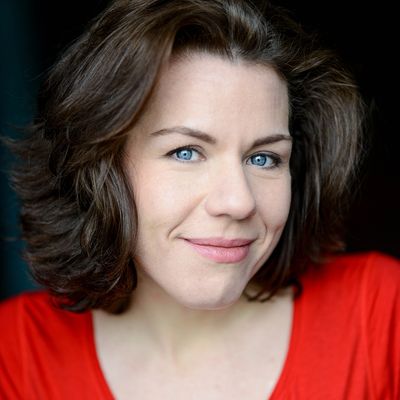
How Broadway's first intimacy director, Claire Warden, is helping to revolutionize how actors get intimate.
Transcript
This transcript was automatically generated and might contain errors.
[0:07] Gordon Cox: Welcome to Stagecraft, Variety's Theater Podcast, bringing you backstage and behind the scenes with the stars and creators of the hottest shows on Broadway, off Broadway, and beyond.
[0:17] Gordon Cox: I'm your host, Gordon Cox.
[0:19] Gordon Cox: On this episode of Stagecraft, I'm talking to Broadway's first intimacy director, Claire Warden. Stagecraft listeners have heard her name before when Audra McDonald told us about working with Claire on Frankie and Johnny and The Claire de Lune, and explained why she hopes Broadway and the entertainment industry at large recognizes the importance of intimacy direction and embraces it. Well, Broadway seems to have listened. Because although Frankie and Johnny was Claire's first Broadway credit just earlier this season, in the six months since she's gone on to work on Slave Play, Linda Vista, The Inheritance, and Jagged Little Pill. Now Claire's in the studio with me to tell us what she does, how she got started doing it, and why it's something Broadway and the entertainment industry has rallied around. Hi Claire, thanks for joining me.
[1:02] Claire Warden: Thank you. I'm very happy to be here.
[1:04] Gordon Cox: And so first of all, I guess we should start with the Irish question, which is what's intimacy direction and why is it important?
[1:12] Claire Warden: Oh, that's a very good question. Um, so the way I describe intimacy direction, it's kind of it's got like three prongs to it as a discipline. First of all, it is advocacy for the actors, um, ensuring that they maintain agency over their body and what happens to it and what is seen of it. Um that anything, any performer, not just an actor, but any performer does as part of their work is something they enthusiastically consent to. So it's taking the dignity, the humanity, and the rights of actors and putting it at the front of the creative process. It's also about creating and upholding protocols for an entire company on the approach to intimacy scenes. Um, scenes of either non-sexual intimacy, sexual intimacy, or nudity.
So that everyone on the team, whether it be a whole theater company, a whole school, a whole crew on set, a production company, understands what their role is and how to uphold this process. And then finally, it is a craft, uh, we are physical storytellers. So it is the craft of creating the scenes and the illusions of sex and sexuality on a kind of parallel, for example, like with violence. You know, we create the illusion of violence, but that the actors aren't actually enacting violence on each other. We create the illusion of sex and sexuality without the actors actually having sex with each other.
[2:41] Gordon Cox: Right, right. And how long has this been around as a discipline?
[2:45] Claire Warden: Well, the kernels of it were first created by a woman called Tonia Cena about sixteen years ago now, as she was working, as she's a movement professional, and she was working and teaching, um, and through her own experience as a performer and seeing the experience of her students and fellows around her, realized that there had to be a better way to approach scenes of sex and intimacy that allowed brave work that was done in a way that empowered the actor and ensured that harassment, abuse, and assaults didn't happen as part of their work.
[3:24] Gordon Cox: And we should probably say that when you know intimacy direction or sort of that kind of care is taken with it, then it sort of opens up the door for even accidental sort of violations of people's what people are comfortable with, right?
[3:39] Claire Warden: Absolutely, and it can come from just not having the conversation. Everyone's a little awkward and doesn't have to be a good idea. Yeah, people are like, uh I don't know how do we talk about this.
[3:46] Gordon Cox: Right.
[3:49] Claire Warden: Um, so then it's like just in the spirit of like improving or seeing what happens, um, and that's a difficult conversation to have with a co-star.
[3:56] Gordon Cox: Yep.
[3:57] Claire Warden: Um, or it comes from someone who's at the top of the power dynamic, perhaps the director or choreographer who is giving instructions to actors who aren't who don't quite yet know how to say no because of the conditioning of actor training. Um or it can be actors or directors taking advantage of the situation.
[4:20] Gordon Cox: Right.
[4:20] Claire Warden: There's a whole gamut of it all. And not all of it is malicious.
[4:24] Gordon Cox: Right, right. Um and so this is yeah, I cut you off. You were talking about the it's sort of started about sixteen years ago.
[4:31] Claire Warden: Right, and so Tonia started creating her um an approach to it and uh and using it in her work and uh and and working her way through. And then we kind of fast forward to about um three and a half years ago, nearly four, um, where she met with uh two other women, Alicia Rhodes and Siobhan Richardson, who were fight directors, um, who had been investigating this thought in their own work. And the three of them decided to come together and say, let's actually, let's actually find a way, see if we can research this and see if we can codify this into a discipline in the way that fight direction is a discipline, in the way that choreography and movement is a discipline. Can we do that? So they spent about a year researching and working and consulting with uh performers and directors and lawyers and anti-harassment specialists and trauma specialists, um, to create a uh the beginning of approach.
And then a couple of other people joined the team, including myself and Jessica Steinrock. Um, and uh we all continue to grow, develop it, add our bits, find the language. Jessica Steinrock found a uh you really helped create the language of what we call the pillars, which is the discipline. Um, and we launched it, you know, to the world.
[5:47] Gordon Cox: And um, at this point, are you uh because you are um uh lead instructor and um the director of engagement, is that right, for the international the intimacy directors international. Is that is that process that you just described, is that the formation of that group right there?
[6:04] Claire Warden: Yeah, so it was after the Tonia and Alicia and Siobhan had um began that first year of codification, then Intimacy Directors International was formed as a company.
[6:13] Gordon Cox: Right.
[6:14] Claire Warden: Um and so I joined once it was formed.
[6:17] Gordon Cox: Right.
[6:17] Claire Warden: Um we have actually changed titles now.
[6:19] Gordon Cox: We have decided, yeah.
[6:21] Claire Warden: Well, we decided um to all, you know, in our awareness and our our working towards power dynamics and how we as a company as individuals um look at and disrupt the power dynamics in the industry. We decided to all become associate directors, so to all like share in that and also the you know how we kind of look at running what the company is and the movement as it goes forward.
[6:48] Gordon Cox: Got it. Okay. Um and so you kind of kind of launched it into the world, and was there what was the response to that?
[6:54] Claire Warden: Well, at first, really very quiet. Um we we began. Uh we all You were, we should say you came to this from the perspective of an actor you're an actor yourself and also a fight director.
[7:05] Gordon Cox: Yeah, I've been an actor my whole career, so over 20 years.
[7:08] Claire Warden: Um, and a fight director for uh well, I began my training in fight and fight directing choreography um about eight years ago. Um and uh and so I had been working kind of between acting and fight directing and like back and forth and splitting, and I'm also a teacher, so I was also teaching um acting uh and fight. Um and so it so craft-wise and experience-wise, especially the kind of teaching that I did, which is was very deep, um deep emotional connection and realization, full body work. Um and in my uh teaching had worked with a lot of actors with um varying levels of trauma, uh physical, psychological, emotional, um, and uh and so had really started honing how to support and work with actors that may have trauma in their bodies that still want to do their work.
[8:02] Gordon Cox: Right.
[8:02] Claire Warden: Um and so uh so yeah, I the in 2017, which is just over two years ago and and honestly feels like uh ten.
[8:13] Gordon Cox: Yeah.
[8:14] Claire Warden: Um I joined the team. I came on uh and learned all that they had created uh and embodied what they had, and then we kept on growing it. And that was right around the same time as the Harvey as be as the sort of awareness of every of you know this issue in the entertainment industry overall hit.
[8:30] Gordon Cox: Was that is that right? Was it around?
[8:33] Claire Warden: Um and once kind of the global recognition of the Me Too movement, which I've been going for years before that coincided with the revealing of, you know, Harvey Weinstein and a number of other um uh people that had uh been in engaging in very uh bad and abusive behavior in the industry.
[8:53] Gordon Cox: Right.
[8:53] Claire Warden: Um it all kind of shot up and um and people became uh aware, and it wasn't that actors just started speaking up, it was that finally we found a way to make the industry and the world listen.
[9:07] Gordon Cox: Right.
[9:07] Claire Warden: Um because actors have been trying to speak up ever since there's been acting.
[9:11] Gordon Cox: Right.
[9:11] Claire Warden: And there's been uh abuse and harassment ever since acting began, I believe. Um and so finally the world and therefore the industry was listening, uh, and so there was a vast, bright, quick enlightenment of how not to do these things.
[9:30] Gordon Cox: Right, right, uh and how not to approach it.
[9:33] Claire Warden: Um and then there was a uh uh a gap of okay, well, we we're pretty clear on some of the ways or some of the things not to do, but how do we then keep doing this?
[9:44] Gordon Cox: Um and often what happens when there's a big kind of um revelation or or cultural shift in understanding. There's that moment of kind of paralysis of fear of we we definitely, you know, many people that don't want to do wrong because too much wrong has been done, but don't know how to do it right.
[10:05] Claire Warden: Um and so uh so there was a question, a big gap of like, well, what do we do now? We don't want to stop telling these stories.
[10:14] Gordon Cox: And so that's where we were we're like, we have some thoughts, we've created something, let us let us uh share it with the industry.
[10:23] Claire Warden: Right.
[10:24] Gordon Cox: And I imagine the IDI and the people you work with at IDI and you yourself work on both uh you know film and uh TV projects as well as stage projects.
[10:33] Claire Warden: Some of us do, yeah.
[10:34] Gordon Cox: Right, yeah.
[10:35] Claire Warden: Some of us are just theater, some of us are just TV films, some of us do both.
[10:38] Gordon Cox: And I imagine they're different in many respects because I feel like it must be very different to uh uh you know, rehearse and perform a scene of intimacy once for the cameras or you know however many times you have to do it for the cameras and then you never have to do it again and then you're Audra McDonald and Frank and Johnny in the Claire de Lune and you do it eight times a week right so that must be an entirely different you must talk about these things completely differently.
[10:38] Claire Warden: I mean it is that the fundamentals of the approach and the understanding is the same but yes the the medium itself is very different. So not only are you do you have like shorter times and it's less um you know repeating it less you might be only doing like three to 15 takes of something as opposed to you know three months, six months a year.
[11:24] Gordon Cox: Right.
[11:24] Claire Warden: Um but also we're looking at it through a very different lens you know with a camera we have complete control over what is seen but it's a lot more detailed it's a lot closer and we're telling a story in a different way in a theater we do not have control as much control over the audience's eyes depending where they're sitting in the house um and so there's it's a different craft in that way um and uh and the the actors um filling of that story in a you know 1800 seat a house is very different to when the camera is right there they still fill the frame but it's it's it's a different kind of presence so and all of that is part of like if we can help them build that story um then they can do their best work, which is what we're there for.
[12:19] Claire Warden: And what has been your pitch to producers as you sort of were knocking on doors, especially early on when you said, "Hey, this is what we're doing and this is why it's important"? What did you tell them? And when there was pushback of any sort, when there was skepticism, what was the root of that skepticism? Did you find...?
[12:39] Claire Warden: I think a lot of the resistance or skepticism often comes from just a misunderstanding of what this work is, or a fear that it is policing or censorship or controlling or getting in the way of the creative process, whatever that means, or it's a statement that the director cannot do their job. And really the way I see it, it's a couple of ways. I consider myself part of the design team, like a fight director, but also like your lighting director and your costume designer and your set designer, in that we all take skill and craft in an area of helping this whole story be realized. And that the director helms that, and you know, along with the actors has the vision, knows the story they want to tell, and then like this is, you know, this is the kind of feeling, what this is the actual, you know, it's daytime, 247, because they just said it was 247.
But the feeling we have here is one of, you know, detachment and coldness and a lack of connection. Lighting designer, help me build that, right? And then the lighting design is gonna create that feeling. So I'm part of a designer that when it comes to the moments of intimacy, sex, nudity, that we're really looking at what's the story that the director and the actors want to tell, what we're saying about this, and then how do we create that whilst ensuring that the actors maintain agency of their body and that it is something they consent to. I also talk a lot about our ability to tell really deep, powerful, authentic stories. And when an actor is not empowered or has at any point in them anxiety or concern about what's gonna happen to them, or is in some way distracted about worrying how they're gonna be touched or what they're seeing, or is being made to do something they're not enthusiastically consenting to, then their ability to do their work is compromised, right?
Because part of their body, brain, soul is taken up with that. So I'm like, and it's not about making actors comfortable because a lot of the work we do is deeply uncomfortable because that's why we're doing it, but is about giving them the confidence, so creating a structure where we know how to have this conversation that is inclusive, that is respectful, that is deep and considering all aspects, and that we can create something that the actors have complete confidence in what story is being told, what their part in it and what's gonna happen, so that they can then be free to do their best work. So the work we do is helming that part to allow the story to be deeper, more authentic, more powerful, more risky, more ecstatic, more joyful, whatever it is we're looking for, to let everyone do their best work.
[16:08] Claire Warden: If we were to talk a little bit about specifics, how I guess first of all, how do you, how are moments of intimacy identified? As you're reading a script, when does the little red flag go off that you say, aha, this is a moment that requires intimacy direction? I mean, if there's any mention in the stage directions or in the dialogue that talks about physical interaction, certainly of any genitalia or deeply intimate physical places, or any intimacy because you know I also work on non-consensual sex as well, so any deep, anything that's sexual, sexually motivated touching. Also, you know, we can look at scenes where it may not be sexual, but there is deeply intense physical contact, you know, the washing of the dead body, for example, is a deeply vulnerable place for that actor who has to pretend to be dead, and we want to know exactly what we're gonna be touching, how we're gonna be washing, you know, dressing or undressing someone on stage, even if it's not sexual, you know, so anything where we have that deep kind of intimate, and if we even if we have stories that may not be specifically or deeply physical, but might have a deeply sexual context to them, or threatening, pervasive, coercive storylines.
It's also helpful to build the structure so that the actors get to hold that and be able to step in and out of them so they're not taking it home with them. Any nudity, which is you know at the moment defined by any area that would normally be covered up with a bathing suit, you know, Speedos or a bikini. But for me, nudity also extends to any part of the body that that actor would not normally show in public. So when you're looking at cultural or religious dress, that we're also bringing in an understanding of respect and sensitivity to that.
[18:09] Claire Warden: And who do you talk to for when you were brought aboard, who do you talk to first? Is that the director initially? Yeah, I mean, depending on who's brought me on board, I have that initial conversation. But yes, my first conversations are with the director because I want to know what, you know, what their vision is of both the entire production, whether it be, you know, TV series, film or theatre, play, and of those moments, but also of how they like to work and what questions they may have because some, it's still reasonably regularly I'm working with someone who's never worked with an intimacy director before, and that will be the case for a while. So just kind of explaining what I'm there for, what I do, how I help support the process and answer any questions they have about it.
And then from there my next conversations are with the individual actors that are involved in any of these moments, so that I can have a one-on-one conversation with them, explain what I do, how I advocate for them, and get to know their requests and their levels of consent and boundaries that we know of at the beginning.
[19:14] Claire Warden: Which of course changes. I was just gonna say part of it has to be allowed to change. Absolutely, and it can be revoked and enhanced at any direction. Yeah, I was gonna say in either direction, right? Yeah, yeah. So there might be like I know contractually, I'm not gonna show this part of my body, no matter what. Right. Great. But then you know, we might not know where the scenes are going and what we're gonna see. So we also like the communication, which is one of our pillars, the foundations of our work is communication. And that continues constantly throughout the process.
[19:42] Claire Warden: How hard, because as you say, a lot of people can be reluctant to talk about these things. How significant of a challenge is that for your work? What do you do, I guess, to make people comfortable talking about that? I think I spend a lot of time facilitating the conversation and just letting people know we're gonna talk about this now. And also being the one, you know, often I'm the one that dispels the discomfort a little bit. So, you know, I'll be the one that says breasts in the room first, and we'll go penis, you know, and it goes and like and now the words are out, so now because the story we're telling here. And so there's just a lot of guidance and facilitation sometimes, and sometimes not. Sometimes everyone's like really great and ready and prepared and on board. So it's very individual.
[20:35] Claire Warden: Yeah, and it must, is it I imagine it's different for every show based on sort of the negotiation between sort of what the director imagines and then kind of what these actors are comfortable doing or trying or whatever. Is it, is that the case basically? I mean, yes, it's different with the group of people you have, it's different with the story that you're telling. It's different with how different actors and directors like to work, what their process is. It's a bit of a dance for the intimacy director to support each individual in their process and be able to adapt and be willing, you know, how much they need and how much they don't, but also you know, when to advocate, yeah, and when to you know step in and divert and change or state something clearly and when to let it be.
[21:22] Claire Warden: And so how regularly are you at rehearsal I guess? Are you there for what the initial sort of staging of these but tell me about what your kind of process is. Well, it depends on again on the demands of the play. So if we're talking about a play for example, if it's a play that has an enormous amount of sex, sexuality, nudity or the like, Slave Play for example, yeah, so that has an enormous amount and it's a fabric of the entire play. So for that, and lucky, you know, I was lucky enough to join with Slave Play right when it was first ever done at Yale. Oh wow, okay, so I've now done three iterations of it, I've been with it for two years. But in a play like that for example, I would be there at the first meet and greet to introduce who I was and what I do.
And then I, you know, I request to be there during the table work as much as I can. Yeah, that makes sense so that I can hear how the actors and directors are building their conversation talking but also the thoughts and ideas that are being put up in the space and in the air so that I can keep be aware of those in my work and especially with a play like Slave Play because it is such a deep and challenging piece with the subjects that it covers, to really learn how we best handle that in a way that is supportive and respectful of all of the actors that have to play it, and so I need to learn that and then I'm there when we're creating each of those moments of intimacy, and then I'll give them a couple days, I'll come back, we'll look at it, you know, we'll work through, I'll be there throughout tech, I'll be there throughout previews.
[22:20] Claire Warden: And how much like choreography is it? Is it, you know, we will hold this kiss for eight beats or something like that? Or explain to me some of the sort of specifics of the, I don't know, timing of or what you were, what you think about as you're choreographing. Yeah, so it's about the specificities of storytelling and that, you know, there are a thousand stories in a handshake, right, let alone a scene of sex. So the core, you know, we agree on and we keep to a choreography of wherever like hands are going, where lips are going, where bodies go together, depending on how they like to work, you know, sometimes we'll look at a timing, which is I often do through breaths as opposed to counting because you know, it's hard to like be in it and be like one, two.
We'll find that out and there's, you know, like every container has a little bit of give in it. So we'll build the story both so that we know that we're telling the same story every time. Right. And also that the actors know exactly what's happening when it's happening every time.
[24:27] Claire Warden: Right so that if there's a change it's easy to address it. But there's a little, you know, there's breath in it, there's space in it. And once we've built the container, the actors can let it live, you know, live inside it as we create it. You've alluded to this a little bit before, but part of acting is being sort of listening to impulses and being open to you know the sort of spontaneity of like playing a moment and the emotions or whatever. How do you negotiate that with kind of what giving them boundaries that also sort of empower them to do their work? Like how do you approach it not as a limitation but as a thing that empowers them?
[25:07] Claire Warden: Well, I think if we think about impulses as our tools as actors, right? All of these things that we have and impulses are the tools. And as long as I'm still the master of the tools, as opposed to the tools being the master of me, because then I'm not acting, I'm being, and we're not beers, we're actors, right? And it's a craft and it's a skill. And so I think there are many ways when an impulse comes up, right, to be able to follow it as an actor, whether the impulse comes up and I just check, staying in the scene. Is that alright if I put my hand there? Great, okay, let's keep going, right? Or we talk about afterwards. I had this impulse, I wanted to check with you. Or I follow the impulse, my scene partner's body starts to tense up and move away. I listen to that, and I shift, and then afterwards you go, oh, let's just talk about that moment again, communication.
[26:05] Claire Warden: Actors are incredible creatures that have a great skill of listening, and that's part of again, that's one of our tools. We have to develop our non-verbal listening skills as well. And so that we're speaking, you know, with our bodies as well as our words. So that we can be part of that, but yeah, communication. And if we follow an impulse and it's not okay, mistakes happen, you know. Then we talk about it, then we stop, yeah, acknowledge it, apologize, okay, talk about the boundaries again, and then we move forward. That's how we change the world, right? Is to respect each other in that way and be willing to be correct and to be willing to be called up as opposed to called out, right? And being finding a way and creating the space in which people can say, that's not okay, and then we address it, and then we keep moving forward.
[27:03] Gordon Cox: And my understanding is that part of your job also is to sort of create a kind of psychological kind of space for this to exist that they can then step out of. Is that right? Is that that it's like can you explain a little bit more about that? Sort of how you?
[27:19] Claire Warden: Yes, I like to think of it as creating the brave space. I don't use the phrase safe space, because I don't think I get to dictate what makes a safe space safe for someone else. And what makes it safe for me does not necessarily mean it makes it safe for anybody else. That's something that each individual has to test. But yeah, it's about creating the structure around the space in which we work, and we do that with actual specific tools and rituals and the kind of conversations we have. Like verbal cues or like tapping in and tapping out, which is something that we have mentioned that actually said that, yeah.
[27:56] Claire Warden: Yeah, so it's just a moment to connect with your scene partner before you start work. And what is that? Just sitting in front of each other. You stand opposite each other, eye contact, you take a breath together, and then you do a high ten. Right. And it's like it's like a little business, but it's like a it's i it's the physical equivalent of like clocking in, like the clocking machine. And it's like, hey, let's start work. Right. We're about to tell a story. I'm gonna turn up my listening, my mindfulness of what's going on with me, what's going on with you, and let's be professionals doing this art together.
[28:29] Claire Warden: Right. Opens up that space, and then when we're done or we go on a break or end of the show, and you tap out, it's the same thing. Right. Eye contact breath, the high ten, and that goes, thanks, partner. Right. I'm gonna leave all this here and pick it up tomorrow at half hour, right? I don't have to take it all and stay living in it. Yep. We're done. What we did just then was in service of the story. The way we touch each other then might not be the way that you and I, the people get to touch each other out of work, right? And we're done. Let's close the lid and let's step back out into our lives and go and see our kids or stroke our dogs or do some grocery shopping or go for a run or whatever it is we do in the rest of our life.
[29:13] Gordon Cox: Your first Broadway credit was just earlier this season, and you've worked on a slew of shows since then and will continue to do so. So it's clearly taking off. What do you consider to have been the milestones for intimacy direction so far? And how do you see it expanding then from here?
[29:35] Claire Warden: Milestones. I think one, you know, the really big milestone that changed it was when Alicia Rhodes, my colleague, was hired on the HBO series The Juice to work on that, and after in the season HBO committed to having intimacy directors on all of their shows. Right. That was a really big seems like eight full-time jobs, frankly. It's a lot. Yes. Yes. Yes. And there's a lot of the team that work on those shows.
[30:03] Claire Warden: Yeah, I bet. That was a big milestone because that was a very large player in the industry standing up and advocating for the work. Right. And you know putting their reputation, the money where their mouth was. And I think then another big milestone was Frankie and Johnny and the first show, the Broadway show of having an intimacy director, which again says to the industry this matters, this is important. Even incredibly highly respected, seasoned professional, brilliant actors like you know, Audra and Michael, this is a support for them, you know, and respect for what they do as part of their craft.
[30:48] Claire Warden: So that helped and then you know other plays coming forward as saying oh yeah this yes this is something we want as part of our community. What are the shows we've worked on this year? Because I listed a few of them at the start of this before in the intro and I don't think I got all of them because so Frankie and Johnny, the Cleveland Slave Play, Linda Vista, Jagged Little Pill, The Inheritance, yeah, The Inheritance and I've just started on the West Side Story, Eva Van Hurst and I'm sure there's more to come so possibly yeah yeah it seems like it seems like things are tending that way yeah um and how do you hope then to see it grow from here.
[31:32] Claire Warden: Well, really the two areas of growth are the number of accredited qualified people that are doing this so that it is more available because we are in an absolute supply demand desperate situation where there is wonderfully the industry is like yes yes yes it takes a while to train someone to do this because of the intricacy of the job. And now you collectively IDI are in the work of are going through the work of training obvious most yes we we you know we've we've trained a wonderful group of both intimacy coordinators and directors and we're just starting another round of apprentices that will work with us as well that we're going to the difference between coordinator and director and intimacy coordinator it does the work on screen so TV film director in live performance.
[31:59] Claire Warden: And so yeah so so that's that's really where and you know it's not that there are our community and there are a number of people that are interested in developing this work it's not that we are we hold the we're the gatekeepers or we hold we are the gurus of the work IDI as a collective have spent a lot of time and pulled a lot of research and expertise and experience of doing the job in the profession in the field and brought all that information back to provide a training basis that is research practiced and ever developing right yeah and so we want to be able to expand that and and bring more people and a much more diverse range of people that do this work.
[33:23] Claire Warden: You know, one of our failings was that as the work grew so quickly and there was such demand on us to do the work and train that we we failed in our paying attention to our diversity in the people that were running the company and the people that were trained and became and and we have become a very white-led organization and we are actively putting enormous energy into changing that and providing opportunities to non-cis white people to be to be part of this work because it's necessary to have a range of people to tell stories and to be part of that.
[34:07] Claire Warden: Because you know, gender and sex and race and is all it's so tied up that we need to be aware of. See the aforementioned Slave Play. Exactly, exactly. So that's what we want. But um, but also we are really doing a lot of work in universities and training institutions with the nefarious goal of breeding a new generation so that by the time the people that are training as actors, directors, stage managers, designers, filmmakers, as those people go to run the rooms in five or ten years' time, that this isn't even a conversation anymore because they understand and a lot of the demand and the push in education is coming from students who are demanding that their schools and their faculty acknowledge this cultural shift and give them access to training in it.
[35:13] Claire Warden: So there's a lot of that, and I really think that that is something we really want to be able to invest in for both the faculty teaching and also to help them to give them the tools and the approach and an understanding of how to take all the brilliant stuff that they do and be able to understand it through this lens of consent culture and empowerment and maybe we can create an industry that can take power over the power over structure and change it into like a collective responsibility so that we are finding equity not equality but equity for all the members of the creative team that includes the actors.
[35:13] Gordon Cox: That was Claire Warden, the intimacy director of Broadway shows including Slave Play, The Inheritance, and Jagged Little Pill. If you like what you're hearing on this and other episodes of Stagecraft please rate, review, and subscribe on Apple Podcasts or whatever is your podcatcher of choice or tell a friend. I'll be back next week with another new episode. Until then see you at the theater.
© Broadway Podcast Network, All Rights Reserved