

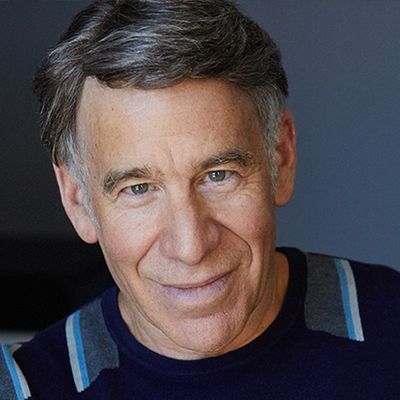
The storied Broadway composer shares his latest updates on the "Wicked" movie, the VOD release of "The Prince of Egypt," and the songs he's writing for Kristin Chenoweth in "Queen of Versailles.".. Read More
From the show: Stagecraft with Gordon Cox
Guests
Featured Shows
About
The storied Broadway composer shares his latest updates on the "Wicked" movie, the VOD release of "The Prince of Egypt," and the songs he's writing for Kristin Chenoweth in "Queen of Versailles."
Transcript
This transcript was automatically generated and might contain errors.
[0:01] Gordon Cox: Welcome to Stagecraft, Variety's theater podcast, your backstage pass to revealing conversations with stars, creators, and industry leaders on Broadway, off-Broadway, and beyond. I'm Gordon Cox. On this episode of Stagecraft, I'm talking to Stephen Schwartz. He is, of course, the composer of Godspell, Pippin, Wicked, and more, and lately he's a busy guy. He recently celebrated the 20th anniversary of Wicked at the same time that he's overseeing the music for the big-budget movie version, the first part of which comes out next year. Meanwhile, The Prince of Egypt, the stage musical adaptation of the 1998 animated film, arrived on VOD this month in a filmed stage performance recorded during the show's West End run.
And he's also got a new musical in the works, The Queen of Versailles, based on the documentary of the same name, and starring his Wicked collaborator, Kristin Chenoweth. Now he's in the virtual studio with me to give us the latest on all that and more. Hey Stephen, thanks for joining me.
[1:06] Stephen Schwartz: Hey Gordon, good to be talking with you, thanks.
[1:11] Gordon Cox: Yeah, so The Prince of Egypt is a stage musical that's been around for a while, but it's one that a lot of audiences, here in the States anyway, haven't had a chance to see. So for folks who haven't seen it, first of all, they should know there are a lot more songs in the musical than there are in the movie, right?
[1:25] Stephen Schwartz: Well sure, you know, I mean, an animated feature is limited in its length and has, you know, fewer songs, just by nature of what the genre is. And then when one adapts for the stage, you have two acts, and you can go into a lot more depth with the characters and with the events, and therefore more songs are required in order to tell the story. So one of the enjoyable things about doing Prince of Egypt for the stage was to kind of revisit that musical palette, and then, you know, write some new songs, you know, with the intention of staying within the same kind of sound that the original animated feature had.
[2:18] Gordon Cox: Yeah, how do you characterize that palette when you say you revisit the palette? What's the mood and the tone and the tools that you're working with?
[2:23] Stephen Schwartz: Well, it's cultural. You know, I did a lot of research for the original film in terms of music of the region. You know, I listened to Hebraic lullabies and Middle Eastern, you know, instrumentation. I had a recording that I found, which purported to be of music from the ancient Egyptian court, though how they possibly knew what that was, I don't know, but it involves a lot of brass. And I got kind of pop records on the streets of Cairo, you know, what, you know, what were they sort of listening to, and made an amalgamation of that. And so consequently, when we were doing the stage show, I went back and listened to that, and then had a lot of discussions with my wonderful orchestrator, August Ericsson, about what authentic instruments can we use, so that we really try and give a flavor of the region and of the culture, and the two clashing cultures as well.
[3:34] Gordon Cox: Yeah. So what are those instruments that you don't often see in a Broadway play?
[3:39] Stephen Schwartz: Well, there's a lot of, you know, percussion, you know, specific percussion instruments. There are stringed instruments like the oud that make certain, you know, they have different tunings, etc. And as one, you know, watches the video, and hears the orchestration, you'll hear a lot of that instrumentation. And I think, you know, in the stage show, and so I assume on the video, there are places where you actually see, particularly our percussionist on stage, you know, playing some of the authentic percussion instruments of the region.
[4:11] Gordon Cox: Yeah. And so tell us a little bit about how the stage musical tells the story differently, or how it fills out the story from what people saw on screen.
[4:23] Stephen Schwartz: Well, you know, the concept of the original animated feature came from Steven Spielberg, when we were dealing with the Moses story, and if you will, the Ten Commandments. And he said, we want to view this as a brother story, we want to view this as the story of two young men who have grown up together, who love each other, who have a great relationship, and then even though there's some undercurrents of jealousy, etc. But then their destinies force them to be opponents and antagonists. And how do we tell that personal story? And then ultimately, how they come to reconciliation. And I think we were able to do that a lot more fully in the stage show than we were in the animated feature. It's less good guy, bad guy.
Even though we really tried to avoid that even in the animated feature, but more strongly in the stage show, it was important to us that this not become a story of my God's better than your God, but a story of the need for empathy, the need for being able to look at a situation through someone else's eyes. You know, obviously, a quality much lacking in contemporary society, you know, and we see in some ways, the same old grievances that exist in Prince of Egypt, being played out in our headlines today, in the horrible situation in the Middle East. So I wish the show were less contemporary. And then it turns out it is, if you know.
[6:21] Gordon Cox: Yeah, I was gonna say there's a real urgency now to some of what Prince of Egypt is about and what's going on in the world. Yeah. Do you have a particular favorite of any of the new songs that you wrote for the stage show?
[6:36] Stephen Schwartz: Um, you know, I never I don't really talk about favorite songs. And the reason I don't is because I don't want to get in the way of the audience's own reception. I don't want them to be listening to something through the filter of, oh, this is my favorite. Why is that? That being said, I was glad for a couple of opportunities in the stage show musically that we weren't able to do in the animated feature. There's a song where Moses responds to the devastation that is brought on by the plagues and you see the emotional cost that it takes on him. We just call for the rest of my life. Again, this is a song that seems unfortunately extremely contemporary in terms of what's going on right now. There's also a whole new character of Nefertari, who is Ramsey's betrothed and his wife and then she becomes his wife in a very real way in the course of the show.
And she has a response to the death of her child, the firstborn called Heartless. And again, I was very glad to have an opportunity to explore that. She's a character. I like characters where you think you know who they are, and then you find out that they're more than you think. I was like that when I encountered in other works. We try to do that, I think, in the show with several of the characters, but especially with her.
[8:19] Gordon Cox: Yeah. The show premiered in Northern California and it had a run in Copenhagen and then went to a con in Utah. And then there was this version that started performances in 2020 for the West End that is revised to some degree. Can you tell us about what that means?
[8:39] Stephen Schwartz: Yeah, I mean, in the development of a show, one is you're always developing until you finally have the finished version. And so, you know, this was all part of the developmental process. You know, having run whatever it was a year in the West End, you know, dealing, of course, with the horrors of COVID. But nevertheless, somehow, you know, running a year there. Now the show is being prepared to be released for licensing. And as one does, we're actually making a few little tweaks to it still, because nothing is ever perfect. And you learn from each production and each experience and can always make it a little bit better.
[9:25] Gordon Cox: Yeah. The director of that West End staging is one you know well, Scott Schwartz, your son. You've done a couple projects with Scott before. What's it like collaborating with a family member?
[9:37] Stephen Schwartz: Yeah, well, I mean, Scott is one of my favorite directors, not just because we're related, but we do have very similar sensibilities in the kind of theater we like, and the kind of stories we like to tell. Scott began his career very deliberately not doing my work, establishing himself through shows like Tick Tock Boom and Bat Boy, you know, which he helped create, etc. And but then he came on board when Disney's Hunchback of Notre Dame was being adapted as a stage piece. And he did it quite brilliantly, had a great staging concept that has now been done all over the world. And so when it was time to try to realize another animated feature for the stage, you know, the DreamWorks team was very interested in Scott, you know, being part of it.
And, you know, I really value his theatricality. He and his choreographer, Sean Cheeseman, came up with the notion of not using a lot of, you know, mechanical stage machinery and great big props, etc. And really having the people themselves create things. So you have the, you know, the Nile being embodied by dancers as the basket with the baby is carried down the Nile, and you have dancers turning into chariots and stones in the desert and becoming the burning bush. And, you know, I like that the use of actors and dancers to embody these gigantic phenomena, you know, and that's the kind of thing that Scott comes up with that, frankly, would never occur to me.
[11:20] Gordon Cox: Yeah, yeah. So the show opened on the West End in February of 2020. And of course, that was, that was right before the whole world shut down.
[11:28] Stephen Schwartz: Right before COVID, yeah.
[11:29] Gordon Cox: Yeah. What was that period of uncertainty like? At what point? I imagine there was quite a bit of time where you weren't even sure that the show would be able to come back at all.
[11:40] Stephen Schwartz: Yeah, exactly. You know, we had, I mean, fortunately, it had done quite well in previews and was doing well when it, you know, from in terms of ticket sales when it shut down, but it was a very new show. And so it was very, it was very challenging to weather the whole COVID time, you know, keep the cast together, make sure they, you know, had insurance. Well, in the UK, you don't need insurance, but right, you know, could eat, etc. And then coming back from COVID was very challenging, because the rules were very strict. And if you reopened, and then one person in the cast got COVID, you had to close 10 days again. And so, you know, that happened a couple of times and was extremely expensive. So from a financial point of view, it was, it was extremely challenging. But as I say, somehow, you know, we did manage to eke out the year's run we were scheduled to do.
[12:41] Gordon Cox: And so how did this filmed version come about?
[12:44] Stephen Schwartz: Well, because, you know, of the, the, the challenges of being able to keep a big show like that going through the whole COVID period, you know, Universal and people who had seen the show and really loved the production, wanted to have some kind of permanent record of it that they could then, you know, share with broader audiences. And so the decision was made, as several shows are doing now, to do a video capture of it, which I'm obviously very glad to have, because I think people who see the video will see, you know, I think the production is quite beautiful to look at. And so one gets to experience that and just the feeling of what it's like in the live theater, but also, because there are cameras that move all over the place. It's, you know, it's like you have every seat in the theater, and you also get to be on stage. So, you know, you get a lot of different perspectives to the show, which I think is exciting.
[13:45] Gordon Cox: Yeah, yeah. And tell us about some of the cast for the for the musical for the West End musical and how that came together. It feels like it feels like diversity and representation were a real formative factor in the way you put that cast together.
[13:59] Stephen Schwartz: Yeah, very, very much so. Obviously, it was extremely important that the cast be diverse. But all but it's not sharks, you know, like sharks and jets. I mean, Scott felt that it was important not to have, you know, all the Hebrews look a certain way, and all the Egyptians look a certain way.
[14:22] Stephen Schwartz: The Upper Class look a certain way, what he felt was like this was an entire company that was telling this story, and at times they were all everything. So they were all the Hebrew slaves, or they were all upper class Egyptians, or they were all commonplace Egyptians, etc. And that this would be moved around and that there was a real cultural diversity. Unfortunately, we were able to find a lot of extremely talented people from different backgrounds and ethnicities.
[15:04] Gordon Cox: I'll have more with Stephen right after the break.
[15:15] Gordon Cox: And now here's more of my conversation with the composer of The Prince of Egypt, the Queen of Versailles, and Wicked, Stephen Schwartz.
[15:23] Gordon Cox: The filmed version of Prince of Egypt, of course, comes out pretty soon after another show of yours, Wicked, celebrated a pretty big milestone on Broadway with its 20th anniversary. How were those festivities for you?
[15:36] Stephen Schwartz: It was so nice, Gordon. You know, I saw people that I hadn't seen since the developmental stages since, you know, workshops before we opened on Broadway. It was like a gigantic family reunion. You know, there were several people who had played Elphaba, or Glinda, or Fiyero, or been part of the company who came. You know, I told people it was like having a family reunion attended by fans. So we were all family, and then there were a lot of people applauding them and taking their picture. But it was a really enjoyable experience.
[16:15] Gordon Cox: Yeah. And so what is the day-to-day of your involvement in Wicked? You don't fully ever walk away from a show that's, you know, still running, particularly not in the number of productions that it is around the world, right? How does Wicked play a part in your life these days?
[16:29] Stephen Schwartz: Oh, yeah. All of us, the creative team, work very, very hard at maintaining the show, trying to keep it very fresh. Just last weekend, I was in Philadelphia to see the tour, along with Stephen Aremus, our musical supervisor, and Lisa Leguio, who's the director, who basically is in charge of maintaining the productions. And we were all taking notes, and I was working with the sound guy at the soundboard, etc. Because the fact is that, you know, someone who sees the show now, let's say on Broadway, where it's been running 20 years, if they're seeing the show for the first time, we want them to have the best possible experience and not feel like they're seeing something that's, you know, a faded facsimile.
So everyone works extremely hard to maintain the show and keep it at the highest possible level. And, you know, I'm part of that. I'm, you know, I get emails. I got one today about a cast replacement. And would I look at the video that this young woman submitted, you know, and consequently be able to approve her as, you know, a Nesero's takeover, which I did, because she was fantastic. But the point is that, not just I, but all of us, you know, remain involved. Obviously, we have careers and lives and other projects that we're doing. So it's not as full time as when you were originally doing the show. But yeah, there's definitely a commitment to maintain the show.
[18:04] Gordon Cox: Yeah. And most of the productions of Wicked around the world look like the Broadway productions or follow the stamp of the Broadway production. But just recently, there was one in Sao Paulo that was an entirely new production. Did you get a chance to see that?
[18:16] Stephen Schwartz: Oh, yeah, I went down and worked with them.
[18:18] Gordon Cox: Yeah, that's what I thought. Yeah, yeah. And tell us a little bit about that production and what it brought out.
[18:23] Stephen Schwartz: Yeah, it was really, it was so cool. Just now, we're starting to, they're starting to allow what we call non-replicated productions. So there was, yeah, this excellent production in Sao Paulo. I was just recently in Gothenburg, Sweden, because they just did a non-replicated production there. And it's always fascinating, you know, to see a different director and a different design team reinterpret the story. I mean, obviously, the show is the same, though, in the case of, you know, it was translated into Brazilian Portuguese in Sao Paulo, and into Swedish in Gothenburg, etc. But yeah, there are always like staging ideas that are different and cool. And, you know, some, listen, I think the Broadway production is really superb.
And I just saw it again recently, obviously, for the 20th anniversary. But there's always different ways of doing things. So, you know, without going to specifics of like, oh, they did the flying in this way. And they did the wizard head in that way. And, you know, the set was differently designed in such and such a way. It's really fascinating to see those different approaches.
[19:41] Stephen Schwartz: Yeah, the flying in the Sao Paulo production, sort of, I saw a couple clips of that. It looked very different from what we see on Broadway.
[19:46] Gordon Cox: It is. It's impressive in a different way.
[19:51] Stephen Schwartz: Yeah, yeah. Well, because she comes right out into the audience, and you feel at one moment, she's actually going to land on the audience. And yeah, you know, there's like this gasp as she drops. And yes, it's very cool. And, of course, there's also a wicked movie or two in the works. What is, how are you, what's your involvement in that? Do you spend a lot of time? Do you need to want to spend a lot of time on set? Are you writing any new music for it? What's your involvement?
[20:13] Stephen Schwartz: Yeah, I mean, first of all, Winnie Halsman has done the screenplay. And so she and I, along with our producer of both the show and the movie, Mark Platt, and director John Chu, did a lot of work on the, you know, what is the screenplay? I don't know how much I'm allowed to tell in terms of publicity, but I know it's out there that there are two new songs, although both of them are in the second movie. And there are some adjustments of certain other songs, expansions and revisions. And then, you know, my job is to be in charge of the music. So, you know, I was there for all the pre-recording and will continue to be as the recording is finalized. I was on set a couple of times, which was really fun because the sets and the costumes are astonishing. Yeah, but that that's my involvement so far. I know John Chu has been editing, but I haven't seen anything.
[21:24] Gordon Cox: Yeah, I was just going to ask, are you liking what you've seen so far? That was my next.
[21:29] Stephen Schwartz: I haven't seen it yet. It's not my job yet. I mean, obviously, once we get into scoring, et cetera, you know, then then I will be involved with that. But I didn't feel it was appropriate for me to be sort of watching the sausage being made, if you know what I mean. I thought it would only be stressful. And but I feel that way about stage shows, too. I like to sort of I feel like let the director do his job or her job, you know, step out of the way, let them do what they're going to do. And then I can come in, you know, with a clearer perspective. And if I see some issues, you know, help to turn a light on them.
[22:04] Gordon Cox: Right. Yeah. Speaking of stage shows, you're working on a new one with your former Wicked collaborator, Kristin Chenoweth. It's called Queen of Versailles, and it's based on the documentary. I had a reading in the spring. How did that go?
[22:14] Stephen Schwartz: Yeah, well, we're in process. So we just finished a workshop period. It seemed to go very well, but it's it's in development. There's lots to do, you know, things we need to fix and change and revise. And that that will keep going through, you know, some more development process and an out of town tryout, presumably, you know, just that's that's how it goes until you get to, you know, I think it was Stephen Sondheim who said, you know, musicals are never finished, they're merely abandoned. And so basically, you just keep working until basically you have to freeze the show before opening on Broadway, and then you abandon it until you get your next chance to do more work on it for licensing for a London production or whatever. But there's always, you know, you can always make it better.
[23:06] Gordon Cox: So and when you're writing songs specifically for Kristin, how are you tailoring them specifically to her talents? Like what does she like to write for as a singer and performer?
[23:19] Stephen Schwartz: Well, Kristin has an extraordinary range. Yeah, as you know, she well, we because the character she's playing in Queen of Versailles would not have a soprano. She doesn't she doesn't go back and forth the way she does in Wicked, where we developed because of Kristin, the concept that Glinda has a public persona who sings in soprano, and a private persona who is, you know, more whatever you want to call it, you know, chest voice. Jackie Segal is, you know, sort of mostly set almost all set in that part of Kristin's range, but I know her voice very well. And, you know, obviously, my job is to make her sound great. On every single note, we have found, but again, without giving it away right now, a way to sneak her soprano in one sequence, because we should because it's Kristin.
Yeah, but basically, it's, she's playing a character. And I think doing it really, really well. And therefore, you know, the songs are, of course, meant to be sung by Kristin, but within the context of the Jackie Segal character she's portraying.
[24:40] Gordon Cox: What is the in the way you were talking about sort of the palette of the music for Prince of Egypt? What is the palette for Queen of Versailles?
[24:46] Stephen Schwartz: Um, yeah, I don't know how much I'm allowed to give away. It's a pretty pop score, which is a little maybe country inflected. Again, just the nature of the character. There is an element, I'm going to be a little secretive about it, but there is an element that is quite different and involves some much more classically oriented music. That's all I'll say about that for now. Because otherwise, I'd be in real trouble with the producer.
[25:14] Gordon Cox: Yeah. And so that will, that is making its way in toward its first production. What is the, what do you see as the future stage life for Prince of Egypt? You mentioned that now it's being sort of put out for licensing. Do you, do you imagine a New York run at some point? What's your, what's your thinking?
[25:33] Stephen Schwartz: Yeah, I don't know in terms of what will happen in, you know, in so-called first class productions, because that's an economic decision. The show was created originally. The reason that there became a stage show was a huge demand for theaters, theater groups, colleges, church groups, community theaters around the country, and frankly, around the world who wanted to do a stage version. And there were a lot of pirated versions being done. When I was working on something in Copenhagen, I saw that there was like a pirated version being done at a town in Sweden nearby. And I went and saw it.
[26:22] Gordon Cox: Did you go?
[26:22] Stephen Schwartz: Oh my God. Yeah, I did. Because, you know, and they sort of made up their own script and then stuck the songs in. And so, you know, finally, Universal and DreamWorks said, well, you know, if people really want to do this, we should give them something to do. And that was the, you know, the genesis for, you know, the impetus for doing the stage show. And now I think, as I say, it's going to be out there. I expect that there's a lot of interest. So I expect there'll be a lot of productions all over the place. And, you know, if there's a first class production in New York, great. And if there's not, that's fine. You know, but I feel as we've been saying, it's a story that unfortunately has great contemporary relevance and therefore, you know, having productions out there that may help people to think about others they consider their enemies in a different way, in a more compassionate and more empathetic way. If the show can help, you know, bring that into the world a little bit, that would be a great thing.
[27:30] Gordon Cox: Yeah. So we will be seeing the show on stages everywhere and on screen very soon. Thanks so much, Stephen. Great to talk to you.
[27:39] Stephen Schwartz: Thank you, Gordon. Yeah, great to talk to you, too. Thanks for your interesting questions. Take care.
[27:48] Gordon Cox: That was Stephen Schwartz of the musical Prince of Egypt, which is now available on VOD, on Broadway HD, Amazon Prime, and more. If you enjoyed this conversation here on Stagecraft, I'd really appreciate it if you took the time to rate and review us wherever you listen to podcasts. It really does help. Or tell a friend about Stagecraft. Find past episodes and subscribe at all the places you get your pods, including Apple Podcasts, Spotify, and on the Broadway Podcast Network, a great place to find more theater for your ears. Stagecraft will return in January after we take a little break for the holidays. Until then, find me on Instagram and Twitter at Gordon B. Cox. You can also check out my new newsletter about international theater. It's called JQuiz, and it's at GordonCox.Substack.com. Thanks for listening, and see you at the theater.
© Broadway Podcast Network, All Rights Reserved