

The Emmy winner on an “Orphan Black” reunion and her timely new stage role... Read More
From the show: Stagecraft with Gordon Cox
Guests
About
The Emmy winner on an “Orphan Black” reunion and her timely new stage role.
Transcript
This transcript was automatically generated and might contain errors.
[0:06] Gordon Cox: You're listening to Stagecraft, Variety's Theater Podcast, taking you backstage with the biggest stars and the hottest shows on Broadway, off Broadway, and beyond.
[0:14] Gordon Cox: I'm your host, Gordon Cox.
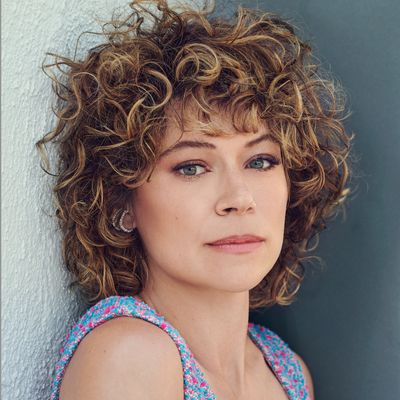
[0:17] Gordon Cox: On this episode of Stagecraft, I talked to Tatiana Maslany. The shapeshifting actress spent five seasons playing a dozen characters in BBC America's sci-fi action series about human cloning, Orphan Black, and won an Emmy Award along the way. Now she's making her New York Stage debut in Second Stage Theater's off-Broadway production of Mary Paige Marlowe, the new Tracy Letts play that finds the extraordinary in the ordinary moments of one woman's seven decades of life. Maslany is here in the studio with me to tell us all about it. Hi Tatiana, thanks for sitting down with me.
[0:46] Tatiana Maslany: Thank you for having me.
[0:47] Gordon Cox: It seems like the most immediately striking thing about you and Mary Page Marlowe is that you spent all this time on a TV show in which you played all the roles, and now you are starring in a show in which you play only one role and you share it with five other women and a baby doll who play the same character at different stages of her life. Was that part of the appeal for you?
[1:05] Tatiana Maslany: I mean, the script itself, you know, like Tracy Letts's writing is just so completely embarrassingly accurate and revealing, and reading the scenes that I was gonna be doing, reading all of the scenes really, I just felt so compelled to do it in the sense that it was saying things that I felt that I knew to be true that I was questioning myself. And because of the sharing of the part, there's like this element of community in it. And that felt oddly like a cool political statement as well. So often, you know, there's one space for a woman in a piece or in a scenario or whatever, and this is all of us sharing one role, so there's a real sense of like egolessness to it. It's not my part, it's our part. And we really do speak about it that way. And I yeah, it's just been such a great dismantling of like any preciousness of like ownership and this real sense of sharing.
[2:15] Gordon Cox: And what's the play about for you? You mentioned you were talking as we before we turned on the recorder that some people it seems like they need to think about it when the lights come down. They're not sure what just happened to them.
[2:27] Tatiana Maslany: Yeah, yeah, I think that there the thing that I loved about this play and how it ends is that it doesn't wrap things up in any kind of cathartic satisfying way. We don't ever get the release. You're sort of left with the shock of how life ends or how a situation ends with kind of no aplomb and no ceremony. And that sort of innocuous ending is what life is, and at the same time, you know, I don't want to give away what the last scene is, but it's a fairly mundane interaction between two people who are strangers, and what it highlights is that anybody you're standing behind in line at the grocery store or at the bank or whatever has this life that expands out from them that you would never know because you look at them and be like, that's an ordinary person.
You know, so there's sort of this sense of the ordinary as extraordinary, and yeah, and that sort of goes along through the entire show, right? All these moments could be seen as, as you said, innocuous, but kind of resonate as you sort of stack them up against each other.
[3:36] Tatiana Maslany: Totally, and in context and in concert with each other and like where they are placed next to each other as well. What lessons Mary Page is learning in one scene and how she's embodying those or warping those in the next, or you know, this sort of we do a lot of crossing on stage of the Mary Pages where we get a chance to look at each other in a sort of abstracted, is it us thinking about that moment? Is it us, you know, embodying that moment? What is it? You know, that transference and yeah, so it's beautiful. I'm obsessed with it. I'm having the greatest time.
[4:25] Gordon Cox: When was the last time you were on stage?
[4:25] Tatiana Maslany: Seven years ago.
[4:25] Gordon Cox: Okay. In what?
[4:25] Tatiana Maslany: In Toronto, I did a play, my friend Ben Lewis got the play. It's called Other People by Chris Shin, who wrote Down the City. Yeah, and it's an awesome, beautiful play, and Ben like got it all together and we produced it ourselves, and yeah, and it was, but that was the last time.
[4:35] Gordon Cox: Right. And then other than that, like some improv shows and stuff like that, but no play play.
[4:40] Tatiana Maslany: Yeah, you've done improv, you have an improv background, right?
[4:43] Tatiana Maslany: Yeah, I grew up doing that.
[4:44] Gordon Cox: Yeah.
[4:44] Tatiana Maslany: Like from the age of nine.
[4:48] Gordon Cox: Improvement?
[4:49] Tatiana Maslany: No, no, not at all. I like I fully revere them and like they're my heroes, but I d it's a world, you know, that I like to look at, but not participate in necessarily.
[4:58] Gordon Cox: And why was theater something that you wanted to get back to?
[5:01] Tatiana Maslany: Well, theater was where I started for sure, and where what I was in young people's theater for years and was always doing musicals, always doing, you know, this was in Canada.
[5:13] Tatiana Maslany: Or Saskatchewan, yeah, in Regina, Saskatchewan. And we had awesome programs there. I was always in like community theater and dance classes and all of that, so we were always performing. And there's something about being on stage that's just so unlike the experience of doing a film, which is kind of in this weird bubble, and you don't get that interaction with the audience, that feedback, that kind of communication that you get when you're on stage with them. Yeah, and I just I'm feeling that so much, and also just like the mechanism of what's happening backstage. There's like a purity to the storytelling that's like we're all making this for you right now in this moment, and we like want to share it with you.
There's something so kind of unadulteratedly pure about that, and sort of I don't want to say uncool, I mean uncool in the way that it's not in it's deeply earnest like that. Yeah, it's just like so like for you right now, you know, and there's something really kind of childlike and playful about that, and yeah, it's just it's amazing. I'm loving it, yeah.
[6:20] Gordon Cox: So, how did as the five of you got together to talk about how to play one character and I just how did you approach the idea of you are all playing the same person, and where do you overlap in terms of, I mean, you know, I don't know what mannerisms or emotional life or whatever. How did you crew try to create something that was create a character who was cohesive across these five women?
[6:42] Tatiana Maslany: Yeah, so six women. Lila Neugebauer, who's directed unbelievable and she did you know her before this?
[6:48] Tatiana Maslany: I knew I knew her very, very briefly through Christian, actually. But we all like the entire cast, there's 18 of us, it's a massive cast for a play. It's huge. It's so huge, it's like old school musical.
[6:59] Tatiana Maslany: Yeah, it is, it is. But we all sat around the table for a week and a half going through the script and discussing things and sharing parts of our lives that felt resonant or that could color something differently, and we really there was really no like, and now this is my scene and now I talk about my scene. There was a real sharing of story and of ideas and of questions from the start. So it was never individual as much as we do our individual work. But also then we're working with an awesome vocal coach called Gigi Buffington who does warm-ups with us. We read each other's scenes, all of us Mary Pages, to speak the words of us at another point or us, you know, in the past, just to kind of get a sense of connection that is sort of un I don't know, unintellectual, you know.
[7:54] Gordon Cox: Right.
[7:54] Tatiana Maslany: And yeah, we get to act out each other's scenes with each other, which is really fun. And you learn a lot through how people express themselves or how they inflect or how they gesture. And that's the other thing is we've been able to sit in rehearsal with each other, watching each other's scenes and watching how, you know, I watch how Susie moves through the scene, how her hands move. Yeah, and who's just phenomenal, you know, watching her impulses move through her and going like, I wonder if I could try that on just to see if that resonates for me, or if that gesture feels really resonant, that feels like Mary Page, you know, in my scenes. And you know, so there's things we steal from each other and share with each other.
[8:41] Gordon Cox: Right. How do you think of your Mary Page as being different from the other Mary Pages in terms of where she is in her life and how she's feeling about it?
[8:50] Tatiana Maslany: Yeah. I mean, it's she's starkly different from where we see her at nineteen. And Emma Gear plays her at nineteen with this beautiful openness and possibility, and like, you know, she says the phrase, I don't know, but it means a thousand things. It means the world is open and there's so many chances and there's so many opportunities she could seize and she's willing and ready to do that. And then when we see her, the next chronological scene is one of my scenes where I'm having an affair with my boss and sort of locked into this pattern of behavior that doesn't seem fulfilling.
[9:28] Gordon Cox: Oh, that's interesting. You just said the next chronological scene, but it's not how we see it in the show, right?
[9:32] Tatiana Maslany: No, like the next time I'm on stage is in the string.
[9:35] Gordon Cox: Yeah, right, right, which is late after that other scene which you were just talking about.
[9:39] Tatiana Maslany: Yeah.
[9:39] Gordon Cox: Yeah, like ten years after.
[9:41] Tatiana Maslany: Now that I'm thinking about it just now, it's very clear what the timeline is in that play, and that's pretty impressive now that I think about it.
[9:48] Tatiana Maslany: Well, and that's the thing, Tracy said he wrote the play in the order that you see it. So he didn't write it in chronological order. It made sense the way he was writing it. You know, and there is like a kind of sort of traditional theater arc in it.
[10:03] Gordon Cox: Yes, yeah.
[10:04] Tatiana Maslany: Even though it is nonlinear.
[10:06] Gordon Cox: Right.
[10:06] Tatiana Maslany: Yeah, and I guess in terms of like where my Mary Page is at, there's a deep questioning of identity throughout. But she's really facing the dilemma of the roles that women are expected to play in their lives, in their own lives and within themselves, and how they play out those roles, how they fit into those roles, whether those roles are constrictive, restrictive, whatever, whether they put them on or themselves or had them put on by society. Which is something I can very much relate to and would love to talk about at great length at any time.
[10:42] Gordon Cox: No, it's great. It's great to get to express, you know, explore that every night on stage.
[10:46] Tatiana Maslany: It's yeah.
[10:47] Gordon Cox: Right. Very resonant. Let's talk a little bit about Orphan Black because I think it's actually a really appropriate thing to talk about on a theater podcast because for me that show felt like one of the most theatrical things on television in that it made acting visible in a way that I don't get from anything other than theater, usually, right? Like the part where we get to see one actor play multiple characters in a single story is like a thing that happens in Angels in America, like it's baked into the DNA of Angels in America, for instance, but it's not a thing that we get to see on screen. And that was one of the things that I enjoyed so much about Orphan Black. So my question is did specifically your work on stage kind of inform the way you kind of created all these characters and differentiated them in your head?
[11:34] Tatiana Maslany: Yeah, I mean, I think we had to really kind of go with the gimmick of it and lean into it without like I had to shirk a lot of embarrassment of like people are gonna see my acting. You know what I mean? Because it is because it is overt. It's like now I'm in a different wig and now I'm doing a different accent and you know I'm the same person. So there is this an element of like trusting the suspension of disbelief that I think definitely comes from doing improv as well and doing that.
[12:00] Gordon Cox: That was my next question, actually, is if improv played a role in that.
[12:02] Tatiana Maslany: Totally, because you know, in improv you're creating the setting, the like costume, the status, the like time period, all of it with nothing. Right. And with just the suggestion. And just in the moment with your scene partner and the audience, like fills in the blanks. So I think that element really helped me in just kind of going like just dive in and just like trust that people are going to go with you on this. Right. And trust yourself to just like play. And then also this sense of like yes and you know what I mean? You get like the small thread of who this character is, so she's like maybe Ukrainian has killed many people, but like loves to eat. Right. So like so those are like the three things I've got, and then it's like hyper religious, but like a deviant. So like how do you know, and those are the suggestions, and then it's like from there you just kind of extrapolate and expand on it, and suddenly this creature comes out, you know.
[13:08] Tatiana Maslany: Um, for listeners who haven't seen the show, that is one character. She's delightful. I did not make her out. Um, but she changed a lot, you know, as we went on and as we sort of threw new things at her, and um, yeah, and I think definitely theater and just like being able to um, uh suspend my own disbelief helped.
[13:27] Tatiana Maslany: How much is that process not only in Orphan Black but in anything, like including Mary Page Marlowe? How much is the creating of a character an intellectual exercise and how much is it intuitive? What's the balance there for you?
[13:40] Tatiana Maslany: I used to be so intellectual about things that it stifled me and made me so in my head that I was making choices before I ever got to set or ever met my scene partner, and um, that was never fun, and that was never acting, you know. But there's a safety in being hyper intellectual for me to kind of go like A plus B equals C.
[14:01] Tatiana Maslany: Um, I think because of improv and because of um working with certain actors, um, my partner is an actor and he's extremely intuitive, has massive intellectual interest too, but is such an intuitive, impulse-based actor, and watching him work with his scene partner and really like working to connect with the scene partner, like it just I'm like, yeah, of course. Like, what the fuck? What am I doing? You know what I mean? And it's just opened up such a huge thing for me in that transference between people. And for me, it's way more impulsive, instinctive off the top. I try to go with my emotional response to the script. I try to go with like whatever kind of is resonating through me in my life, in the way I feel about doing this piece, like everything sort of factors in to creating the character.
[14:52] Tatiana Maslany: And then when you have something like this where we're sharing a part, you do start to bring into it the intellectual stuff, the backstory, the um, the placement within the chronology that I am, um, the era in this case, the where it takes when these individual scenes take place, right? Totally, like the lack of freedom that I have in the early 70s as a young woman in the workplace.
[15:15] Tatiana Maslany: Right, right. And the sort of, you know, trying to figure out that role is very different than a young woman nowadays, after um we're finally talking about what a fucked up mess it all is. But Mary Page doesn't have that luxury, you know, she knows it in her gut, but she doesn't know it yet to act on it, and there isn't that movement necessarily for her.
[15:36] Gordon Cox: Yeah, there is a real timeliness to Mary Page Marlowe, isn't there?
[15:38] Tatiana Maslany: When, yeah. Did you know that going in? When did you sign on?
[15:41] Tatiana Maslany: I signed on in January.
[15:43] Gordon Cox: Okay, so it was always there, yeah.
[15:46] Tatiana Maslany: I mean, and you know, Tracy wrote that play, what, a year or two before that? So it like it was always part of that plan. This is never going away.
[15:53] Tatiana Maslany: Right. This play will always be relevant, I have a feeling. You know, even if it is like, oh, remember a time when I highly doubt it'll ever be that clean.
[16:02] Gordon Cox: Right. And did creating all those characters on Orphan Black then inform the way you worked on Mary Page Marlowe? How did that work sort of feed into what you do now?
[16:13] Tatiana Maslany: Well, I think because that was such a like a pyrotechnic show, like it was so much about the effect of the transformations and the like amazing technology of putting me into that is for real true. Like it's unreal. It like the things happen that like the camera moves around or something.
[16:33] Tatiana Maslany: One of you knocks the teacup out.
[16:35] Tatiana Maslany: Yeah, yeah, totally. Another character played by also played by you. It doesn't make any sense.
[16:38] Tatiana Maslany: No, I don't know how they do that. And it makes no sense in the moment either. But they're intelligent creatures are like the most amazing post-production team and they just know what they're doing and make it all look effortless.
[16:47] Tatiana Maslany: Right. Which it definitely is not on anybody's part, you know what I mean? Um, but I think because there was so much in innate mechanics in it and technical kind of um requirements in it.
[16:59] Tatiana Maslany: Right. I'm so happy to not have to um do that kind of mechanical stuff. Sure. Um, to have a bit more freedom to just be like, okay, where am I at as a woman right now in my life, and how can I bring that truth to the stage every night? And something about doing a play over and over is something I'm not used to. I'm used to like going in, you get three takes and then you're out and you're off to the next thing.
[17:25] Tatiana Maslany: Right. So having this space and time, it's like, oh my god, we can go so much deeper with things and sort of nebulous with things and sit in the gray area a little bit more than the kind of results and the like machine of television.
[17:38] Gordon Cox: I feel honor bound to ask with anyone who was involved in any television show that had some kind of cult success. Has anyone yet talked to you about a reboot or a revival?
[17:48] Tatiana Maslany: Yeah. Yeah, they yeah. I guess they're gonna be a movie.
[17:52] Tatiana Maslany: Yeah. Yeah. We're doing a full movie series.
[17:55] Gordon Cox: No.
[17:55] Tatiana Maslany: Right. Um no, there's action. We got action figures, we got comic books.
[18:00] Tatiana Maslany: Right. I mean, well, there's actually a lot of story out there, right? There's all these comics that I'm like, oh, cool. I did not know this about. You know what I mean? It's kind of cool.
[18:10] Gordon Cox: Right. So it's not a thing that anyone has begun talking about.
[18:12] Tatiana Maslany: Yeah. I don't think so. But I think John Fawcett joked at one point that we would do something like who's the creator, yeah. Yeah, who's a creator of the show that when I'm like 70, we're gonna do like a reunion special. So all the characters will be like in an old age home.
[18:25] Tatiana Maslany: Let's do it. And I'm up for that. I think that that is logical to me. All right. Something too soon doesn't make sense.
[18:31] Gordon Cox: No, no, I agree. See when they're geriatric. Let's do that.
[18:34] Gordon Cox: And so let's talk about what else is on your plate. You I know you've got a movie coming out eventually. You worked on a movie. You mentioned your partner, Tom Cullen. Um, and he wrote and directed it.
[18:43] Tatiana Maslany: Yes. Tell us a little bit. It's called Pink Wall, and it sounds superficially a little bit like Mary Page Marlowe. Oddly, oddly very, very similar in the sense that it's a nonlinear exploration of like kind of innocuous moments in uh relationship.
[18:56] Tatiana Maslany: Right. Um, maybe not so innocuous, maybe a little bit more heightened, sort of like we see in Mary Page as well. But uh the sort of turning points or the there's all these like moments. Okay, how and how did how to describe this? It's six scenes from six moments within a six year relationship. And it's nonlinear. Um, and Tom wrote and directed it.
[19:20] Tatiana Maslany: It was his first feature. Wow. We shot it in nine days in Wales for zero money. Nine days. Nine days of feature, and we somehow felt like quite luxurious. We're like to me it within it felt very like God, That's we've got so much space and time.
[19:34] Gordon Cox: Because you were only playing one part. Is that because how long did you shoot an episode of Orphan Black? Was that?
[19:39] Tatiana Maslany: Oh, like seven days? Yeah, right. Yeah, which is not fair at all. Um, Tom just like gave us so much freedom. Um, Jay Duplass is my scene is my my scene partner in it.
[19:51] Tatiana Maslany: My uh your co-star is a little bit more. My co-star, that's the word, yeah. I'm new I'm new to this acting thing. Um, yeah, so he he's uh he was always in Tom's mind as like the dream casting because he loves Jay so much. We both do, we just think he's incredible. Um, and then when he said yes, we were both losing our minds. And um, yeah, working with Tom was incredible. He has such a like natural gift for directing and such an ease with it, uh, even though I know he's doing a lot of work.
[20:21] Tatiana Maslany: Right. He never makes you feel like there's any rush to get anywhere. And he's very um good at talking to actors. He's an actor himself, he knows what that is, you know, he knows what shuts him down, he knows what opens him up, so he's really generous with that. And uh yeah, and we just had the best time. And now he's doing postproduction on it and like composing his best friend Chris Heysen is composing music to it, and yeah, it's just like I always want to be doing something like that. Yeah, you know, where it's like a family affair, you know.
[20:53] Gordon Cox: Right, right. Do you have interest in writing yourself or writing or directing?
[20:59] Tatiana Maslany: Yes. Yeah. I'm still too embarrassed for anybody to see what I have written because I have like stacks of diaries. Oh my god. And I like read those, I'm like, no one will ever see this. Well no one is ever going to read this. Uh, but I definitely I have I had I got a lot of opinions.
[21:17] Tatiana Maslany: Okay. Got a lot of thoughts. Um, so I'd love to at some point be able to put those into some kind of storytelling. Right. Um, I'd love to direct. There's so many of my friends who I think are just so talented, and I'd love to direct them and see what that feels like.
[21:31] Gordon Cox: Yeah. And so what how would you characterize the projects that sort of get your attention these days, the things you want to do now?
[21:36] Tatiana Maslany: I don't know. It's kind of a gut thing. I mean, uh, I did a film recently called Destroyer with Karyn Kusama uh directing and Nicole Kidman is the lead in it. And for me, Nicole Kidman is such a transformative, exciting, risky actor.
[21:55] Tatiana Maslany: Yeah. Um, who's like just so fascinating to watch. I just love watching her so that this the story of her in this role is so unexpected. And I was just like, oh my god, that's amazing. I can't wait to see what that is and to be part of that. And the character is um kind of like again, like oddly connected to the Mary Page in the sense that I play her at twenty and then at 37.
[22:22] Tatiana Maslany: Oh and we've seen like a massive change in her life and she's gone through something that has altered her uh forever. Right. Um, yeah, so I guess like age has oddly become like a bit of a theme for me, age and like the passage of time, right? You know, and the roles that we play at different points in our lives. Um, Pink Wall kind of has that resonance to it too.
[22:44] Gordon Cox: Right. Right. Do you would you go back to a TV for a regular TV gig?
[22:49] Tatiana Maslany: Yeah, yeah. I mean, I think if it was something that I felt really like um about, you know, I know what it takes to do a show now, like after being on Orphan Black, and I always loved Orphan Black and I need to love the thing as much as that to you know.
[23:05] Gordon Cox: Right, right. Presumably it would be slightly less grueling because you don't have to swap out and play all those roles.
[23:10] Tatiana Maslany: But you know, who knows? I know it's still pretty hard to be in a TV show. So it's just that like consistency. I kind of have uh right now I have a bit of a short attention span, so I'm happy to do to do, you know, three months on something, four months on something.
[23:23] Gordon Cox: Yeah, I bet.
[23:24] Tatiana Maslany: Yeah.
[23:24] Gordon Cox: Are you interested in making theater a part of your career or literally?
[23:28] Tatiana Maslany: Like right now, I'm like, I'm never gonna do anything but this. Like, can I do this play for the rest of my life? Um, yeah, I just sort of I really want to keep doing this. I just love this like collaborative aspect of it. It just is so yeah. It's it's so much fun. So much fun.
[23:44] Gordon Cox: Do you sing? Is there a musical in your future?
[23:46] Tatiana Maslany: There is musicals in my heart at all times. But I do not have that they are athletes. Right? It's you know what I mean? Like I remember seeing In the Heights, I think was the first musical I ever saw.
[24:01] Tatiana Maslany: Oh wow. Which is uh I mean uh yeah on Broadway. Yeah, yeah, I saw musicals since I was four years old. Jesus Christ Superstar was the first one. Terrified me. But well you did a little Jesus Christ Superstar in Orphan Black, yeah, yeah. That they were like thrown through me. For your own.
[24:12] Tatiana Maslany: Yeah, exactly. Um, but uh when I saw In the Heights, I just remember I was sitting like second row and the lights went out for intermission and I turned to my friend and just like burst into tears 'cause I was just so moved by this talent.
[24:28] Tatiana Maslany: Yeah. And being that close to it, I just couldn't. And then we I got to go to the Tonys recently and like see Bernadette walk past me and me and my best friend Tess, who we grew up doing theater together. We're like just nerding out.
[24:42] Gordon Cox: Yeah.
[24:42] Tatiana Maslany: Yeah. I mean, I'm happy to watch them.
[24:44] Gordon Cox: Other than Jesus Christ Superstar, what are some of the other musicals that live in your heart?
[24:48] Tatiana Maslany: Um, well, uh Into the Woods. Really anything Sondheim. West Side Story. Yeah. Kind of like a classic musical theater nerd.
[24:58] Gordon Cox: Are there any roles that you're dying to play on stage?
[25:02] Tatiana Maslany: Uh no, I don't I don't know. I don't know.
[25:05] Gordon Cox: Are you more of a newer? Do you can do you consider yourself gravitating more toward newer to classic roles?
[25:10] Tatiana Maslany: Maybe. I've never I've never really played I've I mean with musicals I always did like we did Annie, we did Oliver, we did, you know, everything into the woods, all that. But I've never I've never really done an old play, I guess. No, I don't I don't know.
[25:26] Tatiana Maslany: Yeah, I mean I'd love to. I'd love to do anything.
[25:28] Gordon Cox: Well I can't wait to see what it is, whatever it is.
[25:34] Tatiana Maslany: Thanks a lot for being here, Tatiana. It's great to talk to you.
[25:36] Tatiana Maslany: You too.
[25:44] Gordon Cox: That was Tatiana Maslany, now starring in Second Stage Theater's off-Broadway production of Mary Page Marlowe. If you've enjoyed what you've heard on this and other episodes of Stagecraft, don't forget to rate and review us on iTunes and subscribe wherever finer podcasts are dispensed. On the next episode in two weeks, I talk to Zachary Quinto about boys, bands, Broadway, unexplained mysteries, and Mr. Spock. Until then, see you at the theater.
© Broadway Podcast Network, All Rights Reserved