

One of the foremost interpreters of Wilson's work, Ruben Santiago-Hudson, on how he crafted his screenplay for "Ma Rainey's Black Bottom.".. Read More
From the show: Stagecraft with Gordon Cox
Guests
About
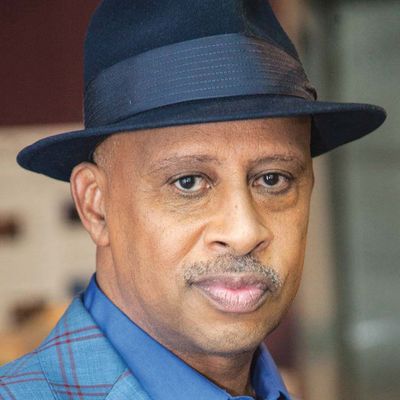
One of the foremost interpreters of Wilson's work, Ruben Santiago-Hudson, on how he crafted his screenplay for "Ma Rainey's Black Bottom."
Transcript
This transcript was automatically generated and might contain errors.
[0:06] Gordon Cox: Welcome to Stagecraft, Variety's Theater Podcast, bringing you backstage and behind the scenes with the artists, producers, and industry leaders keeping theater alive and bringing plays to your screen during the pandemic.
[0:18] Gordon Cox: I'm your host, Gordon Cox.
[0:20] Gordon Cox: On this episode of Stagecraft, I'm talking to the Tony winning actor, writer, and director Ruben Santiago-Hudson. Over the course of his career, he's appeared on Broadway in shows including Stickfly and Jelly's Last Jam, and off Broadway in his own play, Lackawanna Blues, but I'm talking to him now as one of the foremost interpreters of the work of August Wilson. He won a Tony in 1996 for his performance in Seven Guitars, appeared in the Broadway production of Gem of the Ocean, and in New York alone has directed stagings of Seven Guitars, The Piano Lesson, and most recently, the Tony winning revival of Jitney. He's even played Wilson himself in the writer's memoir monologue, How I Learned What I Learned.
Now he's written the screenplay for the film adaptation of Wilson's 1982 play, Ma Rainey's Black Bottom, which recently premiered on Netflix with a cast led by Viola Davis and Chadwick Boseman in one of his final performances. Santiago-Hudson is in the virtual studio with me to tell us how he learned what he learned about the work of August Wilson, how he moved Ma Rainey from the stage to the screen, and why Wilson's enduring work still speaks to us today.
[1:24] Gordon Cox: Hey Ruben, thanks for joining me.
[1:26] Ruben Santiago-Hudson: Thank you.
[1:26] Ruben Santiago-Hudson: Thank you for having me.
[1:28] Gordon Cox: So I have to tell you, I was astonished by your work on Ma Rainey, even before I hit play, because I noticed that the running time was 94 minutes, and I thought, whoa, that's not long enough for most first acts of August Wilson plays. Like I just, and it made me think, not that you'd like cut it to shreds, but that you and your collaborators must have thought really hard about rethinking the way the story is told and sort of reshaping it for the screen as opposed to the stage. Give tell me a little bit about sort of what your goals were as you thought about not just the trimming, but the kind of refocusing and reimagining that you guys did.
[2:07] Ruben Santiago-Hudson: Well, first of all, my number one goal was to try to write the finest movie I could write. That was number one, obviously. But second, I wanted to make sure that I honored August Wilson and the muscularity and the beauty of his writing, the way he captured authentic, culturally specific style and rhythms and language of black people that had come up from the south to the north and stayed colored and stayed black. And you know, so I wanted to keep that language, but I also didn't want to hurt what August had captured in themes and in drama and in comedy. So it's like that's all the things I wanted to do. And then I had the, I shouldn't say insurmountable because we mounted it, but the very difficult task of pleasing some very powerful entities, Denzel Washington, George C. Wolfe, Netflix, all this Wilson, and then Ruben had to somehow find some satisfaction other than that just to check, or I probably should have just go drive a truck somewhere and make a check.
I can get a check somewhere else. But I wanted the satisfaction of serving, I guess all those purposes and all those missions and all those people and still because one thing we had in common was we wanted to make a great film. So no matter what debates came about anything, we kept saying, is this the best thing for the event? And sometimes we would disagree, sometimes we would agree, but it turned out to be for the best.
[3:41] Gordon Cox: And how do you describe what you ended up learning about the ways that August Wilson's work can live on screen in terms of how you shifted sort of the dynamics of a scene or the movement of the piece or in any ways that you might be able to describe?
[3:41] Ruben Santiago-Hudson: You know, I had to embrace the fact that as incredible as August Wilson's work was, that everything isn't a gem and everything isn't to be kept. Everything is not precious. So I had to figure out, well, the things that were very important to me because I knew his work intimately. I know his work intimately. I mean, had you done, have you either been in or directed a production of Ma Rainey?
[4:34] Ruben Santiago-Hudson: Yes.
[4:34] Ruben Santiago-Hudson: Yeah, I directed it. I produced one. I recorded, which will be released in December, all ten plays, and I directed the Ma Rainey among other plays. But to get back to it, I had to find out, okay, if I'm going to remove something that made August incredible, his language, what do I replace it with? I replace it with pictures. Let's replace it with Rome Beard and collages. Let's replace it with William H. Johnson's images in my mind. So though I'm not directing it, I'm hoping and praying, and because of my relationship with George Wolfe, we could talk about these things. Okay, we're going to take this beauty out of it, this muscularity, this mellifluous storytelling. What do we replace it with? Mellifluous storytelling visually. So that's what I replaced words with. So that's how our ended up missing. But I just couldn't let it be gone and you miss it. Whatever I removed from the play, I didn't want you to be able to find it.
[5:33] Gordon Cox: Mm-hmm.
[5:34] Gordon Cox: Right. And it must have helped all your experience not only with August Wilson, but specifically with Ma Rainey to have that kind of deep knowledge of a play even before you went into it and deep knowledge of that body of work, right?
[5:49] Ruben Santiago-Hudson: Yeah, it helped tremendously, but also it hurt because it made me say, man, I can't lose this, I can't lose this, I gotta lose it, I gotta lose it. So I would try it without losing it, and then I would try it with losing it and see if I could still pick up the rhythms and still pick up the tempo and still pick up the style. So sometimes I would have to move something closer to pick up the rhythm of the melody of that, the way that phrasing went.
[6:10] Gordon Cox: Right.
[6:11] Ruben Santiago-Hudson: It's hard to explain it, but because I know the phrasing so well, it's very similar to me. It's the same phrasing that I speak with. And August, you know, he also wrote that down on a pad and showed me one day when he first heard me audition the same music I have, same song. Wow. That's what he said about my interpretation of his work.
[6:29] Gordon Cox: Yeah.
[6:29] Ruben Santiago-Hudson: And so it was easy for me to do August Wilson's work because it's the sound of the people that taught me all the lessons that I learned other than in school. It's the lessons I learned at home, that melody, the way mama talked coming from Farmville, Virginia, you know, the way my godmother talked coming from, you know, Tuscaloosa, Alabama. So it's like those rhythms, those other people in Pittsburgh, those other people in Detroit, those other people in Cleveland and Buffalo, people from Mississippi, people from Jacksonville, Florida, and people from Alabama and Virginia.
[7:04] Gordon Cox: Yeah, yeah.
[7:05] Gordon Cox: You know, one of the things that's so striking about the film is that there, the monologues are still there. There are probably not all of them. I imagine there's some that, but they, you don't think of monologues as being things that show up on screen nearly as often as they show up on stage, and yet you, it was clear that you worked very hard to sort of give everyone their moment of, you know, their big speech.
[7:32] Ruben Santiago-Hudson: Right.
[7:32] Ruben Santiago-Hudson: Yeah, they're, yeah, yeah.
[7:34] Ruben Santiago-Hudson: So that was hard because some of my favorite speeches didn't make it. And I had to wonder what do I need to keep to tell the story that we're trying to tell, you know, because as a playwright, we can write to our hearts' content. We're the editor. No one can tell you that can't be there, that's too much. No one when I'm writing a play. That's why I spend the majority of my life in theater. Because I'm the editor. You know, I don't have six voices. So in, but that's part of the deal that you when you sign your contract is part of the deal. And those six voices are all very intelligent people, very passionate people. You know, some people's intentions are different, but as long as your intention is to make the great, the biggest intention is to make a great movie. You know, but so though these are monologues I've done and said in plays, you know, is it do we need it? Is it too much, it's too much fat? Let's get to the lean meat.
[8:30] Gordon Cox: Right, right.
[8:31] Ruben Santiago-Hudson: But sometimes the fat is what makes it taste good. You know, the fat, you know.
[8:35] Gordon Cox: Do you have a, can you think of a moment in particular that you were really sad to lose or an element that you were really sad to lose?
[8:42] Ruben Santiago-Hudson: Many.
[8:43] Ruben Santiago-Hudson: Yeah.
[8:45] Ruben Santiago-Hudson: One line goes, I'm sad. Because I literally, my actors always tell me when I'm directing his plays, they say Ruben knows every line. And I really don't. I scare them, I make them think I know every line. But I know a lot of them, a great deal of them. I mean a lot. I would say I know when I'm directing an August Wilson play, I know 80% of the lines, at least.
[9:07] Gordon Cox: Right.
[9:08] Gordon Cox: Yeah. And so yeah, you brought up the sort of editing process and the sort of post-production process. How much of what the film became was then shaped? One of my questions was how much of the shape of the film was determined by the screenplay versus the work that you all did, sort of post-production. It sounds like you have you had sort of structured the screenplay, the structure of the screenplay that you wrote has ended up being pretty much what we saw. Is that right?
[9:37] Ruben Santiago-Hudson: Yes.
[9:38] Ruben Santiago-Hudson: Yes. I mean, of course, you know, George's vision plays a very strong part of what you see on film because he's the director, no matter what I write in the script, you know, and, but as I'm a director too.
[9:53] Ruben Santiago-Hudson: Right.
[9:54] Ruben Santiago-Hudson: Yeah. And I'm not listening, I don't write any character that I'm not playing myself. Woman, man, child. And I don't write any scene that I'm not directing myself. You know, because it's got to work for me before I can give it to somebody else to try to convince them to make it work for them.
[10:11] Ruben Santiago-Hudson: So, you know, the same way I wrote Lackawanna Blues or Vegas 55 or Love in the Driest Season, any other films I've written, you know, I'm always everything in it. And then I have to be selfless enough to hand it to someone else and get out of the way.
[10:27] Gordon Cox: Yeah. And the one thing you cannot capture that Ruben does, and Ruben knows about August's work, is the rhythms.
[10:39] Ruben Santiago-Hudson: Not uh it's not exclusive to me, the rhythms. A lot of people are, you know, know, you know, from those southern roots. What we find out in colleges, though, and in the conservatories is what they want to teach out of you is all the habits that and in language and style that they think doesn't work. They want you to fit into white theater, white films, white ideas, white vision, you're you, you know, European vision. So your southernness, your countriness, your blackness gotta go. August says, Come, blackness, come, southernness, come country, come in, come in, come in. A lot of these actors, by the time they get to this place, they've removed all that. And so they gotta relearn it. Rube still the Rube you're talking to right now with the PhD and with the master's degree and with the bachelor's and everything else in a hundred plays and 40-some movies, is the same country boy from Lackawanna.
And but I'm still a doctor. And the difference, and I think the contradiction, I think that people feel sometime with me, particularly if I'm doing Shakespeare. I do a lot of Shakespeare. You know, I've been at you know, Shakespeare in the park many times, and um because I speak this way, and then I'm on, and I'm there may be in the cup of spider steeped, and one may drink, departed, and yet partake no venom, for his knowledge is not infected. But if one present the aborted ingredient to his eye, make known how he hath drunk. Then I do that, then I say, yo, hold on, hold on, hold on, whoa, whoa, whoa. What if I slide in over here, and then when I holler at him this way, maybe the kids from Juilliard and you'll be like, did he just say he was gonna slide over and holler at him this way?
And then I'll just go right back into the language, too hot, too hot, you know, and they would say, How do you do that? Because I have learned to make myself accessible to all kinds of forms of language in existence so I can get ahead. So I can so I can make you comfortable in the room. But when you get me like this, you get just me. You get the boy from the Ruben House in Lackawanna. I did not remove that from my persona. I did not remove that from who I am. I added on to it. And if all everything I've learned in my life has its place. And the place that I'm from, that Rumen House has its place. And that's the biggest part of me.
[12:46] Gordon Cox: Not only do you know August Wilson's work, but you've even, you know, played him to, in a sense, and you've you've done how I learned what I learned. And uh what how did how did his your sort of knowledge of not just his work but also August Wilson, the person, uh kind of filter into the work you did uh on the screenplay?
[13:04] Ruben Santiago-Hudson: Because because I you in my hundreds and hundreds of hours of conversation with August over the two decades that we were friends, and he was a mentor of mine and uh a combatant at times and uh a supporter. Out of all the that experience, I got to know the man and what the things that were important to him, why he wrote his work, what he wanted it to, how he wanted it to affect the world, where I fit into it, where you know, um, and so I would instill some of that when I'd be fighting to keep certain lines or keep certain scenes. He, you know, I knew August was about empowering his community. I knew August was uh was you know uh adamant about the celebration of being black. Uh there is a celebration, it's just not woe, and it's just not pain.
There is a joy, a secret cup of gladness, Ozzy Davis would call being black. And so I knew that August celebrated that. I knew he was well aware of of uh of uh Ozzie and Ruby and their fight and Harry Belafonte and you know uh Mary Baraka and many of the revolutionary artists who who in their own way paved the way for all this.
[14:28] Gordon Cox: I'll have more with Ruben right after the break.
[14:38] Gordon Cox: And now here's more with Ruben Santiago-Hudson. Of course, we can't talk about the movie without talking about the cast who was involved. At what point did you know? Like, did you know that you were writing for Viola Davis uh at any point as you were working on the script?
[14:54] Ruben Santiago-Hudson: And did that away? So and did that how did that influence the way you approached the screenplay? Did it at all? Uh I would I would be lying if I didn't say it didn't affect it a little bit, but whoever was going to play Ma, I knew that I had to create an aura that was not in the play yet. My Rainey comes in on page 48 of a hundred and two-page play. Right. Ma Rainey and my movie came in, and our movie came in and page one. The first thing you hear is the thing that was her God's gift, was her most powerful aspect, her voice. The first thing you hear is her moaning. Mmm and in the black, and it comes in the light. Yeah. And I wanted to put you in her temple, which was the show tent. I wanted to make sure it was power.
Show her power. And then I didn't leave her. I came back to her in the hotel, walking through the lobby like the queen. I you know, her telling and in the script, when you get a copy of the script, you'll see, unless they did something I don't know they did to it, that people part like the Red Sea as she crosses through the lobby, you know, eyeing her, the the high brows looking at her, and she highbrowing them right back. Power, power, power. So so when people are talking about when is she coming, when is she coming? When is she coming? Her whole day is coming, she's coming. The whole day is prepared for her when her dress, her hat, everything. I'm I'm gone. Yeah, I'm going and I'm gonna put on the show.
[16:17] Gordon Cox: And what about Chadwick Boseman's involvement? He's spectacular in the film along with uh as is Phila Davis, of course. Um did you when did you know uh he was involved?
[16:27] Ruben Santiago-Hudson: Well um I learned, you know, because they have to make deals and work out schedules. I knew that's who they wanted. And they were gonna try to make it work. So it you know, I was gonna write the film I was gonna write. Right. And uh whether Viola played it or uh Susie Q played it, I was gonna write a film to impact and empower Ma Rainey so her effect, her her bunionesque aura would would rain throughout the movie. So it just helps tremendously when you have somebody as powerful and as wonderfully talented as Viola Davis. When you have somebody as extraordinary as who brings such an incredible feel and level of integrity is is Chadwick Boseman, who walks into a room and commands the space that he's in and empowers that space with dignity, with integrity, with purpose.
[17:16] Gordon Cox: Yeah. And of course, we should say that there are uh a there's some a handful of uh theater actors who a lot of theater fans will all recognize, Coleman Domingo's in it, and Michael Potts and Jeremy Sheamus. There's uh there's sort of a great uh a great uh team of like theater folks who um have a lot of stage experience and many of them have August Wilson experience too.
[17:37] Ruben Santiago-Hudson: That's another reason you want George. That's another reason I'm fighting for George to direct it. Yeah. I I threw George's name in whatever, no matter what you read or what you see. I said to Denzel, I need George. Because I knew that we would get people who knew and appreciated August's work, theater actors. It'll be a different process. I know how George works. He did my film Lackawanna Blues. I did Henrietta Lacks for George. I know what he does. He wants to, he wants to have rehearsal, he wants to discuss purpose, arc, dialogue, uh, intention. You know, they don't do that now. You know, I've done a lot of films. Yeah. Three dozen, more than three dozen. And that ain't a whole lot in the big Hollywood scheme of things before regular old you know, yeoman actors decent.
And directors don't do that. They don't want to have rehearsal. It'll be like, show me what you're gonna do, and let's film it, let's slide it, let's shoot it. You know, George actually wants a process, a theater process, a real process. And so I don't know what they, you know, the names that I hear about who they do who's directing other plays. I don't know what their process is. I mean, moving. I don't know them. And and probably I won't get a shot in any of them because they probably don't know me. They don't go who goes to the theater to see Ruben Santiago-Hudson and the in the hundred plays that he's done. So, as much as I love August's work, and as much as I feel uh uh at a very extraordinarily high level of of uh uh uh of intimacy of his work, who's gonna give Ruben a shot?
Is you know, is Barry Jenkins or is uh is uh whoever uh do they know me? So I'm I'll worry a little bit that some of the you know actors who've dedicated their lives to August's work won't get a shot.
[19:15] Gordon Cox: Right.
[19:16] Ruben Santiago-Hudson: Won't get an opportunity because they understand and know that language. You don't have to teach them how to do it, and then these directors that don't know the language, don't know the style, don't know August's history or work. How do they help give that to some of the actors that have never done the plays, that have never read the plays? They read this film script. Whoever writes this film scripts. You know, so that used to worry me, and I just had to say, Rule, let it go, let it go, let it go. You know, you did your job.
[19:47] Gordon Cox: Right.
[19:47] Ruben Santiago-Hudson: You know, so uh anyway, I uh we weren't talking about you know why what keeps me up at night.
[19:53] Gordon Cox: Yeah. When did you start work on this project?
[19:56] Ruben Santiago-Hudson: What was the what what was the timeline of start out at HBO uh a couple years ago?
[20:01] Gordon Cox: Yeah, a couple years ago.
[20:02] Ruben Santiago-Hudson: Okay, yeah.
[20:03] Gordon Cox: Yeah, and then you know, then we hung there for about a year.
[20:06] Ruben Santiago-Hudson: Right.
[20:09] Gordon Cox: Uh um with new regime with with new intention.
[20:13] Ruben Santiago-Hudson: Well, not new intention, but new people know me a little bit, you know, right.
[20:18] Gordon Cox: Yeah, but it's changing, budgets up, budgets down, budget back up, you know.
[20:22] Ruben Santiago-Hudson: So cut at, cut at.
[20:25] Gordon Cox: And then and then how did you how do you think about uh the way how does Ma Rainey uh the play resonate now in 2020 um differently than it maybe did, you know, even two years ago when you started when you first started working on the piece?
[20:43] Ruben Santiago-Hudson: Not much difference. I mean, the the situation that Black America finds itself in is similar to the same situation Ma was in in 1927, the same situation Loomis was in, damn near in in uh in 1911 and Joe Turner's Come and Gone. The same situation, you know, that Sally Two King's trying to free his people and trying to find fight for dignity, integrity, and then freedom in in 1906 and Gem of the Ocean. So our problems uh remain uh visceral and the same in a lot of ways, it's just done differently.
[21:16] Ruben Santiago-Hudson: You know, there's still a prison system, there's still a parchment farm in Mississippi. You know, there's still ways to lock black folks up and get them to do your work for free. So it's like it's just, oh, we gotta do it a different way, but we're gonna do it because it's money, it's marketable. So Ma Rainey's, if she was today, if she was an R&B hip hop singer today, she'd be fighting the same thing. White people taking her power, putting it in a box, selling it and getting the most of the money and giving her a percentage. You know, usurping it, as they would say in Shakespeare's play, you the usurper. Right. You know, what does that has that changed? Whether it's boxing, art or music, you know?
[22:06] Gordon Cox: And we've talked some about your long relationship with August Wilson, your long and very deep relationship with August Wilson. How do you think of the way he influenced you as an artist? How has he, how has him and his work sort of really influenced the kind of artist that you became and the kind of work that you have gone on to do?
[22:27] Ruben Santiago-Hudson: First of all, it gave me a platform and an opportunity to have a lot of work. You know, I mean, if I look back on the past two and a half decades, almost three decades of my career, it's been about August Wilson's work more than anything. I mean, and I've been in some prestigious companies. I came to New York in the Negro Ensemble Company and Soldiers played Peel of Surprise 1982. I came in '83 and picked up the national tour. And that's my first, then that brought me into New York to off Broadway to ceremonies in Dark Omen. So I've had some great opportunities in New Federal Theater, Shakespeare in the Park, but the majority of my recognition, I guess people recognize me most from August's work because of those two Tony Awards, the one for actor and revival of a play.
So, and not to mention recording all 10, well to mention recording all 10 of those and get ready to release those in educational and research places and places just for entertainment values. So he influenced me there. He influenced me as a writer. His conversations telling me, we in the things I write, don't be afraid to let my people talk. America, the world doesn't want black folks talking. You got to give them a voice, let them talk. Don't be afraid, don't let people tell you what to say, you know, those kind of things. And then telling me straight up, you need to direct my plays and give me an opportunity to direct Gem of the Ocean at the Bacarda Theater, 1997, I think it was. I had retired from directing for 22 years, and I came back with that.
So, and haven't stopped since then. I mean, they got me on the brakes now, you know. Hold up, Ruby, we let us in. You know, so I'm paying a lot more attention to a lot of other writers around me that need me as well.
[24:13] Ruben Santiago-Hudson: And this play came out. We're recording this just before the film comes out on Netflix on the 18th. What's next for you after that?
[24:26] Ruben Santiago-Hudson: I am very excited about Lackawanna Blues coming to Broadway in the fall. Wow. Yeah. Very excited. I was yesterday at the theater, almost broke out in tears because I haven't been in the theater in 10 months, and in the past 50 years of my life, every year of those 50, I have been in the theater. Whether to seeing a play, rehearsing a play, I hadn't been in the theater in 10 months, man. And so I needed to walk the stage. I walked an empty stage in an empty theater, and my heart was still full because I knew this is where I'm most comfortable. So come September, all things work out the way they're supposed to. And I think now with this new administration finally getting some useful information and some information that looks as though it's here to help us, not to hurt us. I think we will be ready to come back into the theater open arms in the fall. And one of the first plays out is Lackawanna Blues making this Broadway debut.
[25:30] Gordon Cox: And will you be in it?
[25:31] Ruben Santiago-Hudson: Again, I don't let anybody do that. That's my mother. I'm not putting my mother in anyone else's hands. It's me and an incredible guitar player. Wow. Who's replacing my guy and my road dog, my partner in crying for the past 20 years, Bill Sims Jr., who passed away and almost left me in the lurch. I didn't want to do it again. And on his deathbed, he said to me, you have to do it. And I said, why, Bill? I don't have you. He said, because they need it. You have to remember, Gordon, you know, when Lackawanna Blues became a hit, it was right after 9-11. Right. It was a hit before that. We put it to bed. 9-11 hit, and everybody wanted to hear my mother, Nanny, the mother of the community, say it's going to be all right.
And so we came back out in 2002 and we toured it. And then I put it to bed again until last year. And now Broadway's beckoning because you know why? They need it. They need Nanny to say it's gonna be okay because we're coming through it, you know. And we're gonna come through this. And then hopefully Nanny's blessing will help with like my boys.
[26:38] Gordon Cox: Yeah, oh great. And do you have, you mentioned you've done a lot of work on film over the course of your career, including Ma Rainey. What do you have anything coming up on the film realm?
[26:49] Ruben Santiago-Hudson: I am presently writing a film right now, which I'm slated to direct, and which I cannot disclose because the three companies that put all the money together let us control the narrative. So I will let them control the narrative, but I'm writing it, that's my job right now. And I'm overwhelmed with all these wonderful, wonderful accolades that Ma Rainey is getting. So I'm getting it to talk to people like you, wonderful people like you, and one after the other, and it's just like, wow, you didn't forget the writer, because they forget the writer a lot.
[27:17] Gordon Cox: They often do, yeah.
[27:19] Ruben Santiago-Hudson: Yeah, you know, and so I'm getting, you know, my publicist has been working diligently to make sure that they don't forget me on this one, and it means the world to me that people like you would give me the time to at least have a voice.
[27:32] Gordon Cox: Well, I think it's people, it's particularly listeners for this podcast who are theater people and will have seen Ma Rainey, because everyone has seen Ma Rainey, I feel like, will understand the work that you did because it can be sort of invisible in terms of the shaping that you did in terms of taking a play and making it live on screen.
[27:55] Ruben Santiago-Hudson: Gordon, then you've done your job, yeah.
[27:57] Gordon Cox: Well, that's right, right?
[27:58] Ruben Santiago-Hudson: I don't want to be visible, I want to remove myself. I don't want you to discover me in the process, but after it's done and everybody else gets the champagne, give me a glass.
[28:08] Gordon Cox: Yeah.
[28:10] Ruben Santiago-Hudson: If you were gonna work on a film adaptation of another August Wilson play, what would you want to do next to either write or direct or both?
[28:24] Ruben Santiago-Hudson: You my man. You my man, you're gonna give me a lot of trouble. Listen, I will to be quite honest with you, I will write any one that they ask me to write, but I've got to get one to direct. Yeah. If I'm, if they don't see me as a director, it's gonna be hard for me to, you know. I mean, and I would think the public and the theater goers would beckon them to let me at least act in one of them. You got eight more to do.
[28:57] Gordon Cox: Is it one role for Mr. Ruben in this?
[29:00] Ruben Santiago-Hudson: I mean at least. I hope my one in each. I hope, I hope my food just takes. Would y'all let Mr. Ruben in, please?
[29:07] Gordon Cox: Which one would you direct? Do you know?
[29:09] Ruben Santiago-Hudson: I swear, if you like throw it up in the air, let me grab one. I probably, I would have said Jitney because of what I've been with it so long, but I just lost Anthony Chisholm and I almost can't fathom being in Jitney without Chisholm. So, but if that would be the one, then I'd do it, but I'd love to direct any of them or write any of them that I'm invited to. That group and that mission that Denzel is on is extraordinary, and it would mean the world to me to continue to be a part of it, you know, and I'm not making demands by saying, you know, I have to direct one, but I'm just saying what I think is very, very important and that I can add more to this than just Ma Rainey. And I hope now that the world is embracing Ma Rainey that it shows the powers that be as well that we need to continue having women here and there.
I spoke to a writer yesterday who does not even like August. He said to me straight up, I don't like August's work, but I want to write one. And I said, well, I love his work, and I probably won't get to write another one, you know. So I said, but, and I've heard directors say the same thing. I don't even like August's work, but I gotta be a part of this. And to me, that almost, it's almost a travesty to say that and still get chosen to do this work because your name is a Hollywood name, you know.
[30:31] Gordon Cox: Right.
[30:32] Ruben Santiago-Hudson: So that's a personal thing, and I know that's gonna get me in trouble, but I said it, you know.
[30:36] Gordon Cox: Yeah, well.
[30:37] Ruben Santiago-Hudson: I have faith that you will be involved in the coming films that August Wilson's work becomes. And congratulations again on Ma Rainey. It's great, it's so good. And it was really a pleasure to watch. So, thank you for joining me. Thanks for taking the time to chat.
[30:58] Ruben Santiago-Hudson: I so appreciate the work you're doing and the opportunity to have a chance to chat with you.
[31:07] Gordon Cox: That was Ruben Santiago-Hudson who wrote the screenplay for Netflix's new film adaptation of Ma Rainey's Black Bottom. If you like what you're hearing on this and other episodes of Stagecraft, I'd really appreciate it if you took the time to rate and review us on Apple Podcasts. It really helps us grow our audience of folks who love theater as much as you and I do. Or tell a friend. You can find past episodes of Stagecraft or subscribe on Apple Podcasts and on all the other pod places, including Spotify and on the Broadway Podcast Network, which is another great place to find more theater for your ears. I'll be back in two weeks with another new episode. Until then, find me on Twitter at GCoxVariety. Thanks for listening and see you soon.
© Broadway Podcast Network, All Rights Reserved