

The Oscar winner on “The Ferryman” and how James Bond made him a writer... Read More
From the show: Stagecraft with Gordon Cox
Guests
About
The Oscar winner on “The Ferryman” and how James Bond made him a writer.
Transcript
This transcript was automatically generated and might contain errors.
[0:06] Gordon Cox: Welcome to Stagecraft, Variety's Theatre Podcast, taking you backstage and behind the scenes with the stars and creators of the hottest shows on Broadway, off Broadway, and beyond.
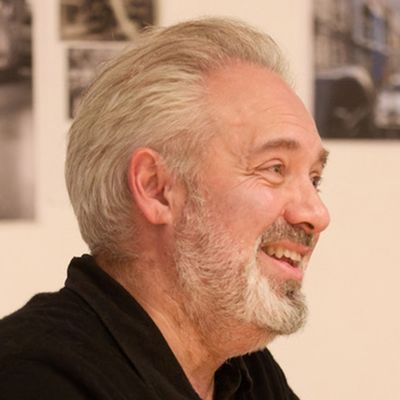
[0:16] Gordon Cox: I'm your host, Gordon Cox. On this episode of Stagecraft, I'm talking to director, producer, and writer Sam Mendes. He's the busy film director behind a string of movies, including American Beauty and two Bond films, Skyfall and Spectre, as well as TV projects like Penny Dreadful. The theater audiences got to know him before that, thanks to his influential tenure as artistic director at London's Donmar Warehouse, and especially to his award-winning revival of Cabaret. After it premiered at the Donmar, he teamed with co-director and choreographer Rob Marshall to bring the show to Broadway, where it played for a total of seven years in two different runs. He's back on Broadway this season as the director of the hit play The Ferryman, but that's not the only thing bringing him to New York lately.
Next up is the Lehman Trilogy, an Italian play about the American Financial Services Institution that famously declared bankruptcy in 2008. After a run at London's National Theatre last year, the play lands at New York's Park Avenue Armory this spring. Hey Sam, thanks for joining me.
[1:16] Sam Mendes: It's a great pleasure.
[1:19] Gordon Cox: Um you've always got a lot of plates spinning at once. You've got across genres, like not just theater, you've got a couple theater things going on right now, which we'll talk about, but you've also got um some movies happening and some TV projects and stuff. And before we start talking about sort of the individual stuff that you're working on right now, how do uh tell me a little bit about how you think about how theater fits into kind of overall your activities uh uh and into your career.
[1:47] Sam Mendes: Um Well, I'm a theatre person really, and that's how I think of myself. Um I take vacations uh uh in the movies, and uh they're long and extremely hardworking vacations, but nevertheless that's how they feel a little bit. Um it's partly is it because they're so fun that they're vacations are maybe sometimes uh most of the time they're more like working vacations. Uh they are um uh you know, but by definition, movies take you away from you know your home. You're often shooting on location, you're shooting outside of uh places that you're familiar with, whereas theatre for me is very familiar, it's very comfortable in terms of its environments. Um the work can be challenging, sure, but you don't always have to leave home and work such antisocial hours.
So movies for me um where I want to go when I feel a little trapped or a little claustrophobic in the theatre. Um and theatre's where I tend to want to go when I feel a little exhausted um and uh over traveled um in movies, and I'm lucky enough to be able to go back and forth. But for me, theatre is where I was returned to, and um uh you know, well, I I I can imagine myself directing plays into my 80s. I can't always imagine myself directing movies, you know, if I last that long.
[3:09] Gordon Cox: Yeah. And so when you first started directing for the screen, what did you find that your time in theatre made you good at when directing films? What did that sort of what groundwork did that lay for you?
[3:18] Sam Mendes: That's a good question. I mean, I think that the end of the day, you know, without wanting to be cliched about it, you're a storyteller, and you know, hours and hours spent sitting with audiences telling them stories and beginning to understand uh how to shift rhythm and to hold attention and divert attention uh and to change the rhythm of a two and a half hour story, but to treat it as a unity was very, very helpful when I came to do movies. Um that experience of sitting with audiences and learning from them and learning from my own mistakes too, was something I carried over. Obviously there are other similarities, working with actors, working with script, but the scripts by their nature are very, very different.
And I think the best movies are as far away from theatre as maybe two art forms can be. Uh it's perfectly possible to make an almost wordless film, um, and a great almost wordless film. It's very difficult to do that in an environment which is based entirely on the spoken word, which is theatre on the whole. Um so there are great similarities, but there are huge differences as well. And I think the big difference, and I know it sounds very obvious, but it sometimes um needs to be said that film operates in 360 degrees, and theatre is mostly constructed to be viewed from one perspective, and that is a big difference. Um, and I've seen many films directed by uh theatre directors who seem to have forgotten that you can look at the scene from angles other than the fourth wall, you know, and I think that is a big a big uh shift.
It's not to say you can't obviously have very clear point of view in in movies and you can't shift between the subjective and objective gaze, um, but on the whole it's a much more immersive medium movies and and and it's a much less formal. Um, you know, that the there are no rules. I find there are less rules in film than there are in theatre.
[5:27] Gordon Cox: And what did you find then what did you find most challenging those first you know, the first time you directed your first few films? What did you find you needed to sort of train yourself uh to um oh all sorts of things. I mean, there were all sorts of things I had to learn very, very quickly. Um how light check is different, very different uh in film than it is in theatre. Although you know you do have to make those decisions as where the light's coming from, where your light sources are, uh how to direct background, uh, you know, how to modulate and control performance. They're not projecting over, you know, to the back row of a large Broadway house. They're they're you know, the camera's often inches from their face.
How the camera observes and can be drawn in to someone in stillness in a way that they can't on stage. Um how it's possible to um how can I put this trick an actor into giving a performance on film, and you cannot do that on stage because they have to repeat it. And therefore they have to understand what they do. In fact, what you're doing most of the time with an actor on film is discouraging them from using their outer eye. Don't look at yourself, don't monitor yourself, don't check yourself. Simply be well uh by definition in rehearsals for a play, what you're doing is asking them to do that and monitor themselves at the same time because they have to repeat it the next day and the next day and the next day.
There's a reason why the French call rehearsals repetition, you know, it's just repeating it. Whereas there is no such thing in movies. You you're looking for let's say you do eight takes, you want each one to be different. Or you're looking for one particular thing, and but you may have that after the third take, and then you start experimenting and maybe trying out a few things just in case there's a better option, which often there is. So you're you're very it's very, very different in that respect.
[7:16] Gordon Cox: And then when shifting back to stage work, how do you find that the work that you've done in film influences the way you think about theater and how you approach it?
[7:27] Sam Mendes: Uh I think it influences the way that uh I think theatre should move. I think that you get very bored in film or very used to being able to jump over connective tissue, shoe leather, if you like. Um, you can go from I mean the old adage in film is get out of a scene as soon as you can and get into the next scene as late as you can. And so all the the sort of letters between, you know, A and E are unnecessary. You can jump straight from A to E. So you get very bored in the theater of having to of scene changes and having having a sense of waiting for things. Uh it's a very it's it's it's very laborious sometimes theatre, very heavy and concrete if you're not careful. And I think I've become much less fond of moving scenery than I was before I did movies because you feel like story, you know, you you you need less, weirdly.
So it's it's interesting that going out into the world of movies where you have five, you encounter a much more literal environment, makes you want to make work in the theater that's much less literal.
[8:37] Gordon Cox: Yeah. Um let's talk a little bit about Ferryman, which uh is a big hit and is doing so well here in the States that uh you have to get some more actors to go be in it. And uh you're working with right now was that.
[8:50] Sam Mendes: Round them up on the streets.
[8:51] Gordon Cox: Yeah, exactly. Exactly. Um, and those there are some great actors in that cast. They include Brian Darcy James, who's taken over for Patty Considine. And it's a story that's pretty steeped in Irish history set in Northern Ireland during the Troubles. And were you surprised that American audiences have responded to it in the way that we did?
[9:12] Sam Mendes: I think I was surprised that all audiences have responded to it. English as well, a British rather. I mean, this is a play that as a director stretches me, stretches every performer, answers every question the actors could have about their characters within the play itself. Fully imagined, detailed, extraordinary piece of work. And to read that coming from a contemporary, an old friend indeed, um, is incredibly moving and and a little bit I'm a little bit awed but by that in Jez, by his ability. So I always found it. This is Jez Butterworth, we should say. I'm not sure I've said his full name yet.
[10:14] Sam Mendes: Yes. The playwright, the author of The Ferryman. And so um uh I was uncertain when we opened whether it would be um you know, it it it's a it's so ambitious on so many levels. Whether whether it would find a more uh uh mainstream audience, effectively, uh whether it would be able to communicate um, you know, uh across um many different strata of people who come to see it. And and that's what surprised me. So I've I felt very hopeful, having witnessed that happen in London, that it might happen again in New York. You know, which is a town more steeped in the traditions of the great family dramas, the great poetic naturalism of O'Neill, you know, of and Tracy Letts, um Miller, you know, these plays for me uh have slightly more in common than some of Jez's English forebears.
Uh, you know, it seems to me to have roots in those playwrights and and in people like Brian Friel and Shaun O'Casey, all of whom have had terrific lives in New York with New York audiences as a large, obviously Irish community, but the tradition of the big family drama, you know, uh is something that I'm more aware of in New York than I was in London. So I was hoping that it would tap into that desire for story, desire for the big epic um, you know, uh family experience, as it were. And and that seems to be what's happened, which has been fantastic for for everybody.
[11:49] Gordon Cox: How did you how did you first get involved in it? How did you know how do you know Jez?
[11:54] Sam Mendes: Jez was a couple of years below me at university, and uh I've known him for a long time. I mean, I met him properly around the time of his first play in Mojo, which he wrote when he was in his mid-twenties. Um in the mid-90s, I guess, thereabouts.
[12:10] Sam Mendes: Yeah, yeah. So that was probably 20 to 25 years ago. So um, and we uh remained good friends over the years, and um, but Jez had had uh um a very, very fruitful collaboration with another director, Ian Rickson, who'd done his plays uh incredibly well. Broadway audience was um uh Jerusalem directed by Exactly directed by Ian Rickson who and uh that was a fantastic production and a really memorable evening that I've never forgotten. And um and so I had always remained friends, but we hadn't had a working relationship on stage.
[12:45] Sam Mendes: When I came to do my last two movies, both of which were the last two Bond movies, Skyfall and Spectre, I had enlisted Jez as a writer. Um a little bit like I always think that you know directors of those movies on those scale on that scale, uh like football managers. Um, you know, you you you have a team of writers, you sort of bring on substitutes at various points where people get exhausted, you know. And that's uh uh so Jez was a substitute. Uh he came on in the last in the last quarter, as you you guys would call it, um, and uh and he did brilliant work and so we'd seen each other a lot and he'd been writing. And um for one reason or another, uh, you know, he he'd written this play and we were at a football match together, and uh he brought the script along with him, it had coffee stains on it, it was incomplete, and he said, Would you have a look at this for me?
He didn't say would you do it, you know. Um and and I said, I'd love to, you know, w what is it? And he said, Oh, it's well, it's a attempt at a new play. And uh I read it on the train the next day, and I just thought immediately thought this is a I mean I did use the word masterpiece, which is not a phrase or a word I use very much, or I I think it's a sort of in a way it fools errand to find something that is perfect, you know, and it isn't perfect. I mean, but it is unbelievably successful in its ambitions, and it was even then. That is despite the fact that the last act finished about halfway through, and he just had a paragraph of description as to what was going to happen. And if you see the play, you'll know that that paragraph is pretty intense.
I was gonna say, yeah. I was like, holy shit, you're gonna do all that in the last 20 pages of this play. So I said, Well, you know, let's do a read, you know, I'd love to do it. And he said, Well, I'd love you to do it. And then we did a reading. Um and it went well. We did another reading. In fact, we did three readings which was incredibly important uh for the genesis of the play, and in that time he finished it, obviously, and then we refined it, and then we refined it again in rehearsals, and it was a it was a tricky rehearsal process. Uh it was one of the more difficult rehearsals I've ever done. It it I kept saying to people at the time, it's like a box of frogs, you know, there are so many moving parts, you just think you've got all the frogs in a box, and you know, one jumps out and you're chasing that one, and another one jumps out. And and that that's what it felt like because we have, you know, as you know, uh babies, four kids, uh animals, we have a goose, we have a bunny rabbit, and all sorts of other things.
[15:22] Gordon Cox: That's true. And that's actually one of my questions is you mentioned you just you called it an epic, a sort of family epic in the along the lines of O'Neill, but there's also sort of a massiveness to the scale of just the production in terms of the number of people and the uh you know, the z the zoo that comes on and things like that. What how is that integral to the story and the storytelling of it?
[15:43] Sam Mendes: Um because I could imagine another producer uh having saying to you, you know, oh hey, can you cut the animal cut the livestock? One of the bunnies, you know, yeah, I don't know. And can we do a can we do a puppet baby or something? Well, all credit to Sonia Friedman and and the Royal Court and um Neil Street and all the other people who helped produce the show because nobody ever questioned that and um which was which was significant but I think that's where you know having Jez having a bit of a track record but I you know that's where it helped yeah but there is also a kind of um balls out theatricality to the play which uh you have to as a as a director at least embrace the potential chaos of it and marshal that chaos but there's always an element of the unknown I mean the goose will shit on the stage you know the baby will cry and and and yell you know the rabbit will as it does piss all over the apples that are stored in the same pocket which he then has to hand out to all the kids to eat right so this is but but you know if you try and control that stuff it's a it's you know you're on on a hiding to nothing so you learn very quickly but that but it's very deliberate as well I mean very early on in the play Jez does something that even I question when I was rehearsing it which is that uh our central two characters uh um Quinn and Caitlin are are staying up late drinking whiskey and listening to the Rolling Stones and they're debating uh which band they would save uh out of Led Zeppelin the Stones and the Beatles um if they were in a lifeboat and they if the the boats you can only choose one band you'd only choose one band exactly and the light uh the they're they're smoking and they're there's candles around the place and the lamp on the table bursts into flame and they both ignore it because they're more interested in the argument than the fact that one of their lamps is burning.
[17:32] Gordon Cox: And I said to Jez do you do you really want me to make the lamp burst into flame?
[17:38] Sam Mendes: He said, Yep. And uh an interesting thing happens very early on there, which is uh there is always a frisson in the audience. Is that supposed to happen? You know, something's on fire. And then they very quickly realize, oh no, it's it's intended. And then, you know, sure enough, after a couple of you know, 30 seconds, one of the characters gets out a fire extinguisher and puts it out. But there's a sort of weird bond that happens after that with the audience, which is in a sense, okay. If if you can do that, I'll I'll I I'm in. Right. Uh, and he uses the animals like that too. Um that's a real goose, you know, and it that there's something un there is no sense in which that goose knows it's in a play.
I don't know it sounds absolutely ridiculous, but it's the same with the baby. That there just there's something about real life on stage. That there's a sort of and it makes a strange and unusual bond with the audience, unlike anything I've ever experienced. Because I've never had a baby in a play before. I mean, I've you know, use one in a movie, but that's quite different. Um, you know, because that you're occupying the same space as the child, the same space as the animals, they're breathing the same air as you, and you know that they're innocent creatures, and that is a really amazing thing that he's uh managed to achieve in the first act. Um, that sense of of unstoppable life force, you know, of just the kind of fecundity and the the and the plenty of family life in a farm and the smells and the noises and the shit and the piss and the crying and the nappies and the and the food smells, you know, we cook a meal, you know, you can smell the the bacon frying, you can smell the goose in the beginning of Act Two being cooked, the goose that you've witnessed alive in Act One, and which by the way has a has a symbolic import as well uh in the play.
[19:28] Gordon Cox: So all of those things add up to something that's perhaps a little bit more than your average play. And when you this is a thing you've done before, but you're in town now working on putting this these new cast members in, and sort of uh the production is in a way already a remount of a show you'd done before in London. Um do you enjoy that process of revisiting a work like this? And what do you find that you get from something?
[19:54] Sam Mendes: Yeah, I was a bit ambivalent about it to begin with. Uh I I I'm not a big fan of you know, reheating yesterday's meal, if you know what I mean. Um, but it didn't feel like that at all, actually. I really really enjoyed re-rehearsing the the first Broadway company, who was really in essence the first London company again. They'd played it for a long time, they had the confidence of it, they knew what they were doing. Um, and you know, by necessity, when you're in rehearsals for a play, a new play, you're making changes up to the last minute, you're adding rewrites in, you're kind of there's a few little band-aids around the place trying to piece together something that is, you know, you put a cut in here, and those things are still kind of remembered when you first open.
When you come back to it after a year, they've all gone. It has its own integrity, it feels like a unity. Uh and suddenly you can start working in greater depth. And I I've I feel and have felt that this first Broadway company was the best the play's ever been. Uh and that was because of the enjoyment and the the pleasure we all uh took in working in that level of detail when we we got to New York. Um, even though it's the largest stage it's ever been on. And and sometimes, you know, initially that was a challenge. Uh, but I feel like across the board it's it's been really a happy experience.
[21:13] Gordon Cox: How hard is that accent for American actors?
[21:17] Sam Mendes: No harder than for English actors. In fact, in some ways less hard, I would say, because it it has more in common with your with with uh, you know, I mean i i it's interesting. The the ear is not um the the English accent is further away, I think.
[21:35] Gordon Cox: Um are there elements to the story or kind of to the historical context of the play that uh I don't know required more explanation or thought or understanding on the part of the American actors that are now being worked in?
[21:49] Sam Mendes: I I think everyone needs to know you know to know the background of the play. They need to understand the time of the hunger strikes and and what Thatcher was doing at that time, the kind of standoff between the English government and and um and what was happening in Northern Ireland and the IRA. So that that's sort of basic tenet, that's what you do when you begin rehearsals, but there have been no adjustments to text at all. Um and and certain things get used to get laughs, a kind of knowing laugh to in in London, just the sound of Margaret Thatcher's voice, for example, a kind of you know, frisson of mild disgust to travel around most of the audience. And here it's different, you know, you don't you don't get that feeling, but you have other things that the the US audience finds much funnier. Um and it's certainly a very I think very funny play and and very um uh very accessible.
[22:42] Gordon Cox: Yeah. Uh let's let's talk now about the Lehman trilogy, which um you will be working on you another play you are revisiting uh here in New York. Um that is sort of a fascinating uh project, and that it comes from an Italian playwright, and then it was it's about this like really American institution, and it was first done in London. How did it get to you and what uh what did you discover in it?
[23:06] Sam Mendes: In many ways, it could not be more different from the Ferryman, which is you know, uh all about detail and um behavior and uh subtext. There's very little subtext in this play. The play that as it came to me, well, I was working on the last Bond movie, and I w was feeling homesick. I was in Mexico City and I was reading The Guardian online, and I read an obituary of the uh Italian theatre director, Luco Ronconi, um, who I had met a couple of times and and uh who was a magnificent uh grand old man of the theater, if you like. Uh and it said in his obituary that his last production had been something called the Lehman trilogy. Now I had lived in New York for seven, eight years, and while I lived here in the late 2000s, uh we had experienced the crash and the Lehman collapse was something that had fascinated me at the time, and I actually tried to make a film about um and toyed with doing uh what then became uh smartest guys in the room, or is that is that what it's oh yeah, the HBO Yes, I'm not gonna remember.
I I think I said the smartest guys in the room. I think that's what it was, was what it became anyway. I didn't um but I remained fascinated, and I it just popped. I thought that title sounded amazing, and I'd not heard about it, so I tried to get the play. It didn't exist in English. We commissioned a literal translation, and what came back was 280 pages of blank verse in it in literal translation with no speakers that there were no listed speakers at all. It was just an epic poem. And I thought this doesn't make sense. How can how did you do this as a stage production? So I did a little bit of research. And it turned out, according to Stefano, who is the writer, that he wrote it as a as a chunk of text, and it was up to the director and the actors how many people performed it and how it was performed.
Which is not a which is a novel way to approach a play, but nevertheless, are you imagine if someone were to hand you the Wasteland by T. S. Eliot and say make a play out of this, or or Under Milt Wood by Dylan Thomas, uh you do it, you decide who says what and how you mount it. Um, which of course is a red rag to a bull for a theatre director. It was like, well, that means I have carte blanche in a sense. So we then did a series of workshops of it at the National Theatre Studio, and I started with 12 people, and then I went down to nine, and I ended with three. Um, nobody had ever done the play with three people, the original had done done with twelve.
[25:33] Sam Mendes: But there was something beautiful about this idea that the three original brothers, the three Lehman brothers who arrived from Bavaria in the 1840s, Henry, Emmanuel, and Meyer, end up playing their own children and grandchildren and every other character in the play.
[25:48] Um, and it seemed to be a poetic construct that matched the sort of broad, um, daring poetry of the play itself, which attempts to take 160, 170 years of, you know, uh, Lehman family history, including right up to the eve of the crash, and do it in one evening.
[26:09] Um, and so that's what it is. It's three men playing actors.
[26:14] We should say they are Simon Russell Beale and Ben Miles and Adam Gardley, and New York audiences will know them as well as Brit audiences.
[26:20] We've seen them around a lot, yes.
[26:22] Yes, and they're absolutely fantastic.
[26:24] I mean, they are, it's in many ways a celebration of their extraordinary dexterity and brilliance.
[26:30] How many roles do they each play?
[26:32] Well, I think it technically, I think Anna's.
[26:34] Are there even roles?
[26:35] Actually, that's okay.
[26:36] Well, they are.
[26:37] I mean, he plays probably over 40 characters.
[26:41] Um, but then, you know, that would include 12 women in very quick succession and 10 eight-year-old boys in very quick succession, for example.
[26:50] Um, I mean, and that is the joy of it, is what's the most sort of mercurial, um, you know, uh, brilliance of their playing.
[26:59] But at root, it's really about tradition, it's about religion, it's about what you hand on generation to generation, how it gradually diminishes and is eroded.
[27:10] Um, but also the things that we labor under all the time, you know.
[27:14] How has it got like this?
[27:15] How have we got in a situation where we literally cannot survive without financial institutions?
[27:22] You could not survive.
[27:23] You or I, Gordon, could not survive without a bank, you know.
[27:26] Um, how did banks come to be?
[27:29] How are they created?
[27:30] Why do we get to the point where it's, in the words of one of the characters in the play, uh, banks are like breathing, you know.
[27:39] Uh, you cannot exist without them.
[27:41] You know, if you have a friend who keeps his money under the mattress in cash, you think he's a weirdo, right?
[27:47] Do you know anyone like that anymore?
[27:48] No, there is so, um, and how have they got so much power and how have they remained unchecked ultimately?
[27:56] Um, and what are the little forks in the road that, um, that existed between, uh, the mid, you know, uh, eighteen forties when they arrived as shopkeepers in Montgomery, Alabama, and to the point where they are part of the most significant financial crash in history, really.
[28:16] Certainly the one that affected us the most.
[28:18] So all of those questions are attempted to be not exactly answered, but asked.
[28:22] And when you put them in the course of one evening, you begin to detect and sense the shape of history in a way that you just don't if you treat it in a more literal manner.
[28:31] And so what it's doing is trying to unearth the kind of iceberg beneath the water, you know, um, of how these vast institutions came to be and what basic human needs they fulfilled, and at what point did greed and avarice perhaps take over, uh, at what point did it get out of control?
[28:51] So all of those things, um, and it's, but it's not a polemic, you know, it's not didactic, it's not pointing the finger, it's not blaming people.
[29:00] In many ways, it treats them with great dignity and respect.
[29:03] Um, and certainly the reason they came to be is treated with utter seriousness.
[29:08] It's what happens when you lose the direct contact with the people that you're doing it for, direct contact.
[29:16] You don't see them anymore, you don't speak to them anymore.
[29:18] What happens as the people you're serving get further and further away and you have less and less contact with them.
[29:25] I suppose that's the big question.
[29:27] Do you anticipate it landing differently here in the US than, uh, did for...
[29:27] Gosh, yes, I think so.
[29:33] I mean, look, there were lots of Americans who saw it in England and, um, uh, but you know, we are right in the middle of it here, and it in many ways it's a hymn to New York as well.
[30:17] It's a love letter to the possibility, the limitless possibility of this city and, uh, the sense of what it represented, particularly in the twentieth century.
[30:17] Uh, uh, which I think, you know, that moment in many ways has passed for New York.
[30:17] I'm not saying it's not obviously full of potential always, and it always will be, but that moment when it really was, uh, the center of something or it embodied something that was, um, a pure 20th century dream, that moment I think in many ways is past.
[30:17] And, um, but you know, it, it, it's, uh, yeah, it's a love letter to this place, so I hope it will be treated differently, and I hope it will be, I'm sure debated.
[30:27] I mean, um, uh, you know, it's not, uh, how can I say this?
[30:31] It's not strictly accurate.
[30:33] It doesn't try and tick every box.
[30:35] It couldn't possibly in three hours, you know, do justice to 160 years of, uh, financial history and the financial landscape of New York.
[30:45] So by definition, it is a poem really, and it should be treated as such an epic poem, but it's certainly going to have people, I hope, talking about it.
[30:57] While you're working on these two shows, you've also got a movie project, uh, going pretty strong and will be out fairly soon, as I recall, right?
[31:05] Uh, end of the year, yeah.
[31:06] Exactly.
[31:07] This is, this is a, don't remind me.
[31:09] This is a film called 1917.
[31:11] What can you tell us about?
[31:13] Can you tell us anything about it?
[31:14] The last thing to say is it sounds like I'm a, I'm a sort of masochist in that I managed to construct a year where I've got both these plays coming to New York and I'm doing a movie at the same time.
[31:25] It wasn't meant to be like that.
[31:27] It never is.
[31:27] Yeah.
[31:28] I would, you know, since my last movie, I've only done two plays, you know.
[31:32] It's just that I can't, neither of them will die.
[31:34] They both keep going.
[31:36] Which is a lovely problem to have.
[31:37] So I'm very lucky, but at the same time, obviously I'm trying to juggle this movie, which is a huge and, um, extremely complex understanding.
[31:45] Well, it's, it's, uh, I wrote it myself.
[31:48] Uh, yeah, and this is the first time you've written something, is that?
[31:48] Yeah, and tell us about that.
[31:53] Well, I, in, we, it sounds strange, but in weirdly that was brought on, or I was given the confidence to do it by doing the Bond movies.
[32:02] Not because I wrote large chunks of the Bond movies, or I wrote the odd line, um, but because I really was in the room with the writers while they were developing it and steering with them, steering them with the movie every step of the way, and that put me much closer to the writing process than I think I've ever been before.
[32:19] I tend to, as a director who doesn't write or doesn't commonly write, I'm, I'm, you know, prey to whatever script happens to hit my desk at that time and hope that it chimes with things that I'm thinking or wanting to say.
[32:35] But you know, that doesn't always happen, and it happens less and less as you, you've done more and more, you know.
[32:41] You can't do a war movie anymore, you can't do a gangster film, you've done one, or you've done a two suburban movies, you want to do another one.
[32:48] So, you know, your possibilities are limited, and of course, um, so I ended up, um, I ended up having the confidence from those two movies to think about writing, and I had a story that was a fragment, uh, told to me by my grandfather, uh, who fought in the First World War, and it's the story of a messenger who has a message to carry, and that's all I can say.
[33:17] But it lodged with me as a child, this story or this fragment, and I, and obviously have enlarged it and changed it significantly, but it has that at its core and remains the case that it's, uh, it's a very simple story in a way, but it's a very complicated situation.
[33:36] And, um, uh, it's called 1917 and set in the First World War, and, uh, and it'll be out this Christmas, and you know, it's a, it's a big experiential, immersive, uh, movie, I hope, and you know, it has, uh, a wonderful cast, which I can't quite announce yet, and, um, uh, Roger Deakins is shooting it, you know, uh, and, and you know, it has an A-team, uh, crew, which I'm very, very thrilled about, and, and, uh, yes, it's my first time back on a film set since, uh, since Spectre, which was nine, which was four years ago, yeah.
[34:15] Yeah, yeah.
[34:16] As in general, as your projects come to you, are there ever the projects that could go either way in terms of what genre they end up being?
[34:24] Like could one, could this have been a play?
[34:26] Could 1917 have been a play called the case?
[34:28] I can, I know I can, I can say with absolute certainty this could not have been a play.
[34:32] And, and, you know, what's interesting is that you get drawn, I find myself more and more drawn to the things in movies that you can't do on stage, um, and the things on stage that you can't do in movies.
[34:46] I mean, you know, the idea of making a movie of The Ferryman, for example, which is three hours of, you know, one room basically, that's not so exciting as a film, but it's certainly exciting in my opinion as a play.
[34:58] And similarly, you know, you works the other way with movies.
[35:01] So no, I don't, I tend to find that I seek out the things that are different from one from the other.
[35:09] Yeah.
[35:09] And what's your next stage project?
[35:11] Do you know?
[35:11] Do you have anything on?
[35:11] Uh, you know, I don't, uh, no, I, I had Lehman was always there as something I was developing and working on and, and sort of, you know, noodling with and trying to find the right form.
[35:24] Um, and that and The Ferryman both had a lot of work before we put them on.
[35:29] Um, I, you know, I hope, I hope Jez will write another play soon.
[35:33] Um, I'm certainly working hard and trying to persuade him.
[35:37] Uh, one thing I would say is I've loved doing two new plays.
[35:42] Um, I love the feeling, and I know it sounds very obvious, but I love the feeling that you get in an audience when they don't know what's going to happen next.
[35:50] And I think after twenty-five years of directing revivals and, uh, you know, uh, classic plays, it's very, very lovely to not really feel an audience judging.
[36:01] Um, you know, there's a dialogue, isn't there, when you do Shakespeare, which is, you know, they're watching the play, but they're also watching the production, they're watching the commentary on the play.
[36:09] And I've loved just doing the play.
[36:12] Yeah.
[36:12] Uh, that sort of answers my next question, which is, are there any classic musicals left?
[36:17] Because you've done a lot of them for a while, uh, like Cabaret that you would be interested in taking another look at, or...
[36:17] I don't think there are that many, uh, that haven't been done pretty damn well recently, um, or I've already done that.
[36:31] You've done them, yeah.
[36:33] And, uh, so I, I, and I wouldn't say that's my, it's always, it's not always been my happy space.
[36:42] Right.
[36:42] Uh, I loved Cabaret.
[36:44] I mean, that was a great experience for me.
[36:46] Um, and it's a product, one of the few productions that I still miss, you know, uh, which is why I allowed it to be on and helped revive it, um, a year or two ago with Alan Cumming and Michelle Williams and then, and then Emma Stone and Sienna Miller after that, and that was very pleasurable to revisit that for a couple of years.
[37:06] The other show I loved that we did at the Donmar many years ago was Company, but again that's been superlatively well revived by Marianne Elliott and with a significant twist at the center of it.
[37:19] So we anticipate seeing that over here at some point, I would hope so, yeah.
[37:19] Um, uh, so yeah, I mean, uh, but I, I don't, I don't think of it sounds guy now I am, yeah, I just come to me with your new plays.
[37:19] All right, well it was great chatting with you. Thanks for, thanks for taking the time. I appreciate it.
[37:19] Sam Mendes: It's a great pleasure.
[37:19] Gordon Cox: Well, thank you. That was Sam Mendes, the director of Broadway's The Ferryman and of The Lehman Trilogy, which runs March 22nd through April 20th at the Park Avenue Armory.
[37:54] If you like what you've heard on this and other episodes of Stagecraft, don't forget to rate and review us on iTunes and subscribe wherever finer podcasts are dispensed.
[38:02] Until next week, see you at the theater.
© Broadway Podcast Network, All Rights Reserved