

The star of Lynn Nottage's 'Clyde's' talks second chances, sandwich nirvana, and why Clyde is like Jaws... Read More
From the show: Stagecraft with Gordon Cox
Guests
About
The star of Lynn Nottage's 'Clyde's' talks second chances, sandwich nirvana, and why Clyde is like Jaws.
Transcript
This transcript was automatically generated and might contain errors.
[0:06] Gordon Cox: Welcome to Stagecraft, Variety's theater podcast, bringing you backstage and behind the scenes with the stars, creators, and industry leaders bringing Broadway back to life.
[0:17] Gordon Cox: I'm your host, Gordon Cox.
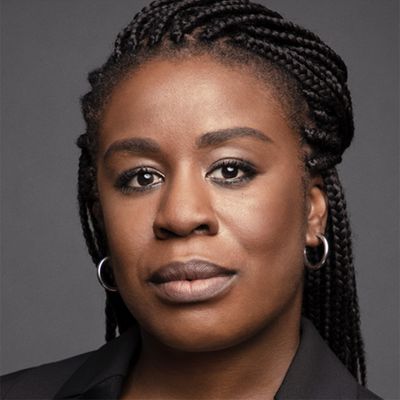
[0:19] Gordon Cox: On this episode of Stagecraft, I'm talking to Uzo Aduba, the star of Lynn Nottage's's new Broadway play, Clydes.
[0:27] Gordon Cox: Aduba, who's appeared on stage in shows including the Broadway Revival of Godspell and a London production of The Maids, will be familiar to TV audiences from her Emmy-winning performance as Suzanne Crazy Eyes Warren in Orange is the New Black, and more recently, as the therapist Brooke Taylor, in the latest season of HBO's In Treatment.
[0:49] Gordon Cox: In Nottage's new comedy Clydes, Aduba plays the title character, the proprietor of a roadside diner that employs the formerly incarcerated.
[0:58] Gordon Cox: The actor is in the virtual studio with me to talk about second chances, her own personal sandwich nirvana, and why the role she plays in Clydes is a little bit like playing Jaws.
[1:10] Gordon Cox: Hey Uzo, thanks for joining me.
[1:12] Uzo Aduba: Thanks for having me today, Gordon.
[1:15] Gordon Cox: Yeah. So one of the things that struck me about Clydes is how funny it is. I feel like Lynn Nottage's, the playwright, can be we tend to think of her as a more serious playwright because some of her better-known plays are like, you know, Sweat and Ruined, but like, you know, by the way, Meet Vera Stark is a very funny play, and like this play has its own kind of, like there's a kind of antique comedy to it, and there's a little magical realism going on occasionally. Like it's got like, uh, it creates a world that, uh, you know, if you're expecting something more like Sweat is sort of unexpected. Um, tell me a little bit, uh, for you, how you explain what the show is to people, both in terms of what it's about and what the kind of tone is.
[1:55] Uzo Aduba: Sure. You know, I think this is a play about second chances. Um, second times around, second time around. Um, it's a play that takes place at a rest stop diner called Clydes, um, where they specialize in a variety of things, but in particular their sandwiches. And as the employees are building their sandwiches, uh, they're also trying to figure out how to rebuild their own lives and make their way into this new world as returnees from prison.
[2:36] Uzo Aduba: And you said something so right on. Um, you know, when you set that as the backdrop, these are characters who are returnees, um, just coming out of being part of the prison system, you would think that would be an entirely sober, serious story that you would be getting. But, and especially when you link the name Lynn Nottage's to it. But I think really what makes Lynn a genius and such a brilliant writer is that ease and the facility that she has within her wheelhouse to bring all the shadings and the sides of real life together. You know, life is not only ever dark, there is light. And I think she does this really brilliant thing of bringing comedy into the piece to remind us of that, that as they're finding their way into this second chance, second life, that there is light possible.
[3:44] Gordon Cox: Yeah, yeah. And was that tone was like the tone of the world and the kind of, um, you know, flourishes like there's pyro at a couple points, like it's very like there's stuff going on. Like, was that tone set as you got in, or was that a thing that evolved as you all rehearsed and kind of found the world in rehearsal?
[4:06] Uzo Aduba: Yeah, well, the pyro was definitely set. I don't think sure, yeah. We can't do that on the we don't stumble on pyro.
[4:13] Gordon Cox: Yeah.
[4:15] Uzo Aduba: Um, Kate Worrisky definitely had our director, she had that as part of the world from Minute One, which I thought was really exciting. Um, but yeah, I think you know there's a lot of cutting and chopping and knives in this play, and they're very, very sharp knives that are being handled. And we are also in this play balancing on that razor's edge as well. Um, and I think that is intentional within the writing, you know, balancing your existence um between the left and right side of light and dark, joy and sadness, all of this, um, which I think was the exercise of the rehearsal practice, the rehearsal process, excuse me. Um, it's funny until it's not, you know, and really figuring out for our each of our characters and the journey of the play when those moments occur, you know, of levity, until we're talking about the truth of the system, the truth of what got us here.
How do we get out of this? And then it can dance right back into something like Montrellis describing, uh, play by Ron Cephus Jones. Um, you know, uh, a sandwich that feels like it might only exist in the heavens, you know. Um, it's just it's really, really that was I think mostly the practice. Um, and then I think we also had for me, you know, um figuring out how Clyde, someone like Clyde gets to be the way that she is.
[6:05] Gordon Cox: Yeah. Um, that's actually one of my next questions is actually because she's so complicated, right? Like she is in some ways so generous and in some ways kind of nasty, right? Like she's how do you think about how did you yeah, come to like find your way into that complicated person that she is?
[6:23] Uzo Aduba: Yeah, you know, um, I really started thinking about life and what a woman, a person like Clyde's has had to push up against from minute one of existence in order to even occupy this much space on the side of a road of on the side of old Pike Road, a place that people pass through. They don't even stay with her. Um what small little bit of real estate she holds, and especially as herself a returnee. It may help me to understand or believe that I don't think she's mean. I think she's just someone who has been trained, conditioned to survive. And has had, you know, she says this thing in the very beginning of the play that she's been poked by her mother, you know, with her fingernails. She tells us from the beginning that who she is and how she came into this world, that her own mother used to poke her just to see if she'd cry, which means she's not.
She already had those walls in place long ago. Um, and I think that for me informed what I know to be true for a lot of people who every second, every minute of their life existence has to be explained, um, justified in some way, what that can harden or look like a hardening and shape you into becoming. Um, but really it's just trying to survive because what I know for a fact is she has a heart because why would she make it her business to employ all of these people? She doesn't have to. She could employ anyone, but she chooses instead to put people in job positions who've been through six experiences like hers. Um, and that really sort of brought to life to me the complexity of who this woman is. That it's not just me, me, not me. You know, she she's just trying to do the best she can with what she knows.
[9:17] Gordon Cox: And how did the role come to you? What and what appealed to you about it?
[9:22] Uzo Aduba: It came to me, um, over email, um, my agent. Could you imagine? Pigeon, no. Um it came to me from my agents um to take a read at this part to see whether I might be interested in um playing someone like this. I've been really desperate to come back to do something on stage for some time. Um, and the timing hasn't always really aligned. Um when I got the play, and I was looking for to do something different too, very different. Um, and that would prove challenging. And so when I got the play, I first saw Lynn Nottage's's name, and I was like, well, we're already halfway to yes. Like, you know, we're already nearly there. And then I saw that Kate was going to be directing as well, and that really excited me because I remember when Ruined was playing at MTC, I went and saw that play three times because I was so blown away and so in love with the story and the performances and the direction.
Um, and I saw Sweat, I had seen Sweat, and I was blown away as well by that. And I've been blown away by Lynn's work forever, whether it's Crumbs or Vera Stark, Fabulation, you name it. And so then this woman, when I saw this character, I was like, oh my gosh.
[11:02] Uzo Aduba: This I don't know if we've seen this woman get to hold space before. And I would really like to try and find a way to fight for her and do my best to try and defend her.
[11:24] Gordon Cox: And has that been a challenge?
[11:29] Uzo Aduba: Yeah. I mean, when I was reading it, I was like, whoa, those are some tough words, you know, like to say. Why, why dreams? You know, um, it has been hard because I actually see Clyde as like the biggest dreamer. You know, like in my imagination, this is someone who, you know, maybe if life had handed her a different set of cards would have gone into, you know, fashion or creative direction or something like this, um, had big, big dreams, big, big sights, and understands the danger of dreaming, which is such a tough thing to say out loud. And so the thing of survival, um, I also would layer in that I think of her sometimes as a teacher that she's what I fight for for her is that she's really just trying to keep people from sealing the having the experience that she had of having her dreams dashed.
[12:54] Gordon Cox: Yeah. And when I think about it from that lens, the intention is good, even if the execution is horrible.
[13:04] Uzo Aduba: Right. You know, she is really trying to help, you know, in some way. Um because she knows how hard it is out in the world.
[13:18] Gordon Cox: I'll have more with Uzo right after the break.
[13:30] Gordon Cox: And now here's more with Uzo Aduba. The play initially premiered in 2019 at the Guthrie, uh, and it was called Floyd's then. And then, you know, 2020 happened, and uh among the things that changed in the play is the title change, because you know, the the the name Floyd, I imagine carried too much uh weight for for uh this show. Um what in what other ways do you feel like the show lands differently now than it might have in in 2019?
[14:05] Uzo Aduba: Wow, yeah. I mean, I think a couple ways. I think, you know, the show, um the character now, what was once Floyd's is now Clyde's now is played by myself, a black woman, um, which I think dangles hang the show hangs on on a different uh net, you know, um, especially when you thinking about the interactions between uh Clyde and Jason, um and moments where she's saying things like, I'm not mean, I'm I'm in charge, you know, and what sort of how language that he says bounces or maybe hits differently where he's talking about feeling um, you know, he can't walk down the street without feeling like everybody's hating on me and saying it to a different tone front-facing room than perhaps had been said before it had been said before that rings, I think differently.
I think um I think also um between then and now um I think also some of the things that uh Letitia Carrie Young's character brings up with regards to Jason May differently. Um I think Jason, I guess. Sorry, I just wanted to play.
[15:32] Uzo Aduba: Yeah, exactly. I just want to say that Jason is a character who comes in sort of covered in white nationalist tattoos. It's that like tall white guy covered in white nationalist tattoos is uh and he is in a in a in a room full of people of color.
[15:47] Gordon Cox: Correct, correct. Thank you for that.
[15:50] Uzo Aduba: Played brilliantly by Edmund Donovan as well. Um, I think those things hit differently, and then I think even just from like uh ensemble makeup, it's nice to see in this um coming back to Broadway, a company that is that looks like the world. You know, and I think people take that, uh, take stock of that, take account of that. Um, and that each person, and I say it all the time, I think this is a remarkable, remarkable cast who each have their individual superpowers that I think are so beautiful and so wonderful to watch. They were just awesome to watch in rehearsal come to life.
[16:34] Uzo Aduba: And it's like that thing that only, you know, Reza Salazar who plays Raphael brings, can be brought by him, or that theme that Ron Citones, who plays our Montrellis, can bring is brought into it. And it's just wonderful to witness and to see so many different faces, voices occupying the same space coming together to tell a singular story well.
[17:06] Gordon Cox: Yeah. One of the things that uh you, as you mentioned, you were talking about all the other cast members. Another thing that's striking about the show is that you are you play the title character in that part and in the play, and yet Clyde, for quite a bit of it, sort of seeds the stage to these three younger characters and sort of their journeys. And I I I wonder if you I mean, I and then Clyde sort of, you know, takes center stage in sort of her own moments. And um did the uh ensemble appeal of the did the ensemble feeling of that appeal to you? Because there's something you're interested really interesting about how we get to know Clyde in terms of like first she's this you know presence kind of looming over these these three folks, and then we get to learn more about her.
[17:47] Uzo Aduba: Oh yeah. Well, first of all, the ensemble appeal definitely the ensemble element definitely appealed to me for sure. Um I feel like that's the exciting thing about the I mean we you have that in other mediums too, but it that's the exciting work, I think, of like engineering putting together theater pieces. Um so I was definitely in the last play I did was a you know a three-hander ensemble piece that I loved that experience as well. So I really love that like feeling the mechanics of making something together. Um and even though, you know, she yes, she is off stage for um good sections of the play, and it made me think of Jaws, actually.
[18:35] Gordon Cox: Okay, yeah, because she's definitely present, right?
[18:37] Uzo Aduba: Like it made me think of Jaws. Yeah, you know, like the whole movie is about a shark, but we don't get to see it until the last five minutes, you know what I mean? Like, you know, it's titled Jaws. We know people that have the effects, we see the effects of Jaws, and then you get to see Jaws at the end, you know? It's not until like the final five minutes that you're like, oh wow, that's you know, and but there's a real power in that um that I think Lynn um does really well is like there is a lot of conversation about her had so that the audience has to imagine what else is happening on the days that we're not present to see Clyde's Clyde, excuse me, um, until you see her in action.
[19:28] Uzo Aduba: Um, and I think that's a an exciting thing. Um, but and it makes um it made the work of trying to bring to life a lot of what is talked about with her in those scenes. Um exciting challenge, you know, where it's like, you know, I wrote down all those descriptions that they have for her. She's like a little horny dude. She's she's stronger than she looks. She's got lucha libre moves, you know, she's a gatekeeper, she's a beautiful woman, you know, all these things that make up who she is in their eyes, and then figure out how to move within them when I come on stage.
[20:18] Gordon Cox: Yeah. You mentioned alluded to this a little bit earlier, just being back on stage at this time as Broadway is getting back up uh and running again. What's it like? Being back on stage at this time and like being in front of people. Like what's the what's the feel for you in terms of um, I mean, the audience, at least when I saw it, was extremely warm and very uh responsive. Um, what's it been like for you?
[20:42] Uzo Aduba: It's been amazing. I mean, I think we all feel it, you know. I don't the the just the the great feeling of something that we always just I guess suppose thought would be there to be back, and that's not to say that we, you know, took it any of us took it for granted that Broadway would always be there, theater would always be there. But I don't think anybody could fathom, I certainly couldn't like fathom that like this thing that everybody works in the rehearsal room, goes through tech, goes through previews, does eight times a week, Monday dark, lights up, you know, in Times Square just would be gone. And for such a long time, you know, for such a long time. Um it just never seemed possible.
And I think you don't know what you're thirsty for until it's either gone or it's placed in front of you, and it's been incredibly amazing to see that come out of this time that we've been through that people like community, and one of the few art forms that exist where you can have community is the theater, and I think that these houses are so full and so loving and so generous is a reflection of that community, both on stage and off, frankly.
[22:42] Uzo Aduba: Um, to be part of it at this time um is filling to the soul. It reminds me why I do this, and it is incredibly humbling to be a part of the number, you know, of two shows that are getting to be to open and play to the community.
[23:10] Gordon Cox: You mentioned that you were eager to get back to a play. What uh what did you miss in particular about it?
[23:17] Uzo Aduba: Um, well, firstly, rehearsal, because I love rehearsal. Um, I really enjoy rehearsal. And you don't do it much in TV, right? You don't get a lot of. No, there's not really a lot. Not, yeah, certainly nowhere near the length of what we have in the theater. Um, yeah, I love rehearsal. I love it. I love it's there are just so many opportunities to try something. And it's just really exciting to be from the tape on the floor to the mock-up, make you know, fake set that gets built, everything. It's just really exciting to come into the room with your other creative peers, and no characters exist, day one, and then four weeks later, there are these very real characters who you feel like you could almost like call up somewhere, you know.
That's how alive they are. Um, so I miss rehearsal. Um, and then I think, yeah, I think there's also just like you know, I was saying before, there's something about that community too, you know, the liveness of it, being in a room that's hot, you know, that's meaning this audience is with you, like there's no do over, you know, there's no back to one there's no you know it's just when we press play we go until the end of the song if I mean you know so it's like I love that feeling and there's something really just I don't even know if the word exists like magical doesn't take it far enough but knowing when you do the show I did Sunday night is not going to be the show I did do Tuesday night it will have all the moat you know the lines and everything but because completely different people are there because I'm having this conversation with you today is going to set the energy into another place where other discoveries will be made and the experience will be completely different for the people who come into that space you know or there will be things that might be different when we say not completely things that might be different that that audience will experience and it won't ever happen again that exact same way.
[24:23] Gordon Cox: Do you find that uh are there things that you have sort of developed over your work on screen that now you are carrying into the work you do on stage?
[24:23] Uzo Aduba: You know, that's a really what a little sometimes sometimes um there are moments you know okay so my first TV job I had um Jodie Foster, she directed us uh on an episode of my first show, Orange, and she had given me a note that I wrote in my like acting journal that I think applied that just hit me and applied to like no matter what medium, you know, of work that I'm coming in, I'm doing. And um she had said something to me, like she said, you know, you're just gonna stand, you just say there's stand there and just say the words, you know, we don't do any like any of the other movement that we have for the wider shot. I said, okay, why, Jodie? And she said, because sometimes you let sometimes you go to the camera Uzo, and sometimes you let the camera come to you.
And I remember thinking that was such a massive note that hit me in a really powerful way. And I wrote it down because the camera is really only representative of the audience, right? And um, there are moments that I think sometimes you bring the thing to the audience, and then sometimes when I'm talking to Montrellus, I know when we're looking out at the top of a play, and there's another moment towards the end. Um, we are he and I right here, Ron. And I can feel that the energy is going out, meaning is being felt, but I feel like that is the audience because the audience is participant as well in play in the theater, I believe, anyway. And it made me understand like, no, in this moment, this is when you come to us to get what we're saying to each other. This is for you to come in to us. So that would be something. Yeah.
[28:11] Gordon Cox: Um, I feel like I have to ask you not only about the costumes, which are you have a number of really stellar costumes, and then you've got the nails, which are a whole other uh thing. Do you ever like are the nails the kind of thing you can wear between shows? Or do they kind do they come on and off? Or how does it well these ones stay on?
[28:31] Uzo Aduba: Yeah, those I see those. Yeah. Those look great. They stay on for life. The other ones come on and off between shows. They're press-ons that we double up on, do a little theater magic with my dresser Kate Sword and I. Um, but yeah, we had um big conversations. Um, Jen Muller, our costume designer, and I and Kate and her vision talking about the hair and the look and who this woman is, and you know, this idea of armor, you know, um, and these women, we know these women, um, and how they I I I know these women, I've seen these women, how they come into uh go through the world rather. Um there is a bit of armor that's a part of that way of presenting in the world to be seen as you want to be seen, so people can't really see you. Um, and if you do that, maybe they can't hurt you.
[29:40] Gordon Cox: Yeah, um, and so um, yeah, that was a big part of it. Um, I feel like before we wrap up, we have to ask a really important question because so much of the play is taught is about the perfect sandwich. What's your perfect sandwich?
[29:55] Uzo Aduba: Oh, well, the perfect sandwich for me is the sandwich I've been having since um 13 years old. Lettuce, lettuce, tomato, pickles, American cheese, turkey, extra mayo, on a hero, cold.
[30:08] Gordon Cox: Awesome. What's in the sandwiches? You don't actually eat the sandwiches on stage ever, do you? Do we ever see you to actually take a bite?
[30:17] Uzo Aduba: I don't think we do. But um, what's in those sandwiches?
[30:21] Uzo Aduba: Oh my gosh. Well, some of the I haven't gotten the chance to eat them. Um they do have like professional, like they are professionally made. And my castmates say they are delicious, and I love sandwiches. So I'm like, I could try them. They are absolutely delicious. Like they really love them. They think they're just the most delicious things they've ever had, but I've never actually tasted them. I stare at them longingly, and that's not a lot of that. Not a lot of that either. I'm like, I want that sandwich.
[30:54] Gordon Cox: Yeah. And what's coming up for you after you're gonna be in Clydes until uh through I believe it's January. Um, and then what um what's next for you after that?
[31:05] Uzo Aduba: Um, I have another project coming out um soon that I will be able to discuss soon and just continuing to work. Um gonna take a little vacation, I'm sure. Um, and then jump back into um work. We'll be able to share soon.
[31:29] Gordon Cox: Well, uh, we look forward to seeing you uh back on stage soon. Uh sooner rather than later, we hope. And enjoy the rest of the wrestler run of uh Clydes. It's really it's it seems like it's a really good time uh on stage for you all.
[31:42] Uzo Aduba: It is, yeah. For sure.
[31:43] Gordon Cox: Thanks so much, Uzo. Great to talk to you.
[31:46] Uzo Aduba: Thank you.
[31:50] Gordon Cox: That was Uzo Aduba, now appearing in Lynn Nottage's's Broadway play, Clydes, running through January 16th at Second Stage's Helen Hayes Theater.
[32:00] Gordon Cox: If you like what you're hearing on this and other episodes of Stagecraft, I'd really appreciate it if you took the time to rate and review us wherever you listen to podcasts. It really helps us grow our audience of folks who love theater as much as you and I do. Or tell a friend about Stagecraft, or give us a shout out on social media. Find past episodes and subscribe on all the pod places, including Spotify, Apple Podcasts, and on the Broadway Podcast Network, which is a great place to find more theater for your ears. I'll be back in two weeks with another new episode. Until then, find me on Twitter at G CoxVariety. Thanks for listening and see you at the theater.
© Broadway Podcast Network, All Rights Reserved