

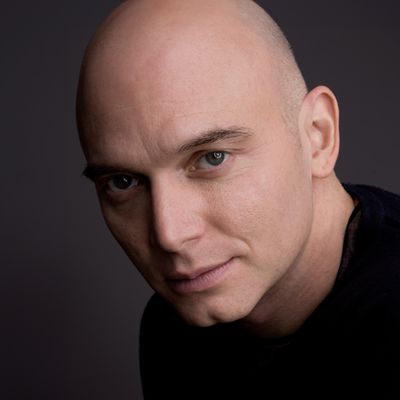
Michael Cerveris joins the podcast to share his wisdom about being in FOURTEEN broadway shows! Host Sydney Lucas and Michael share fun stories of their time in Fun Home and the 2015 Tony Awards... Read More
From the show: Take A Bow
Guests
Featured Shows
About
Michael Cerveris joins the podcast to share his wisdom about being in FOURTEEN broadway shows! Host Sydney Lucas and Michael share fun stories of their time in Fun Home and the 2015 Tony Awards. On top of that Cerveris talks about being from West Virginia, life in quarantine, being in movies and tv shoes while being known on broadway, and talks about his band. Tune in for this *FUN* filled episode.
Transcript
This transcript was automatically generated and might contain errors.
[0:00] Eli Tokash: Hey everyone, and welcome back to episode 11 of Take A Bow.
[0:04] Sydney Lucas: I'm Sydney Lucas.
[0:06] Eli Tokash: Today is our lucky number 11th episode.
[0:12] Sydney Lucas: 11 is my personal lucky number.
[0:15] Eli Tokash: And for this very special occasion, we have a very special guest on.
[0:21] Sydney Lucas: He is a father figure to me and a mentor, and he is extremely talented and successful.
[0:30] Eli Tokash: He has been in so many Broadway shows and so many TV shows, and he's been nominated for six Tony Awards, and of those six, he has won two.
[0:41] Sydney Lucas: If you haven't guessed it already, today we have on the Michael Cerveris.
[0:47] Eli Tokash: He played Bruce in Fun Home.
[0:49] Sydney Lucas: He played my father in Fun Home.
[0:51] Eli Tokash: And I had the honor of working with him for a few years, in which he taught me so much and instilled with me such a confidence and awareness for being present in the moment at all times.
[1:07] Sydney Lucas: And he was able to share so much of his experience and wisdom in this interview.
[1:13] Eli Tokash: And we can't wait for you guys to hear it.
[1:23] Sydney Lucas: And I mean, six Tony nominations.
[1:26] Eli Tokash: That's um unbelievable, to be honest.
[1:46] Sydney Lucas: So yeah.
[1:47] Eli Tokash: Especially during Tony Awards, Tony Award season, because while obviously it was my first season, he had already experienced a Tony Awards season like four or five times before.
[2:01] Sydney Lucas: So he was already a veteran to the Tony Awards.
[2:05] Eli Tokash: He knew what to expect.
[2:06] Sydney Lucas: He was chill, and he was exactly the soothing, grounded, chill energy that I needed to get through the Tony Awards.
[2:15] Eli Tokash: And so, and we'll talk about this in the interview, but I very much leaned on him during that whole time.
[2:22] Sydney Lucas: He's honestly like one of the smartest people and most well-spoken people I have ever met.
[2:29] Eli Tokash: Yeah.
[2:29] Sydney Lucas: He had a lot of great things that he had to say just on his experience doing like 14 Broadway shows, I believe it was.
[2:37] Eli Tokash: Uh goodness.
[2:38] Sydney Lucas: And then on top of that, like literally, he's like appeared in every TV show you can think of in my always making these small visits, but I mean, it's incredible.
[2:50] Eli Tokash: And he has his own band, Loose Cattle.
[2:52] Sydney Lucas: Yeah, what the heck?
[2:53] Eli Tokash: That's so right.
[2:54] Sydney Lucas: That was pretty neat.
[2:55] Eli Tokash: And you'll hear all about that in the interview.
[2:58] Sydney Lucas: So without further ado, do you want to send it over to Michael?
[3:02] Eli Tokash: Yeah, let's send it over to Michael.
[3:04] Sydney Lucas: Michael, take it away.
[3:41] Eli Tokash: Oh my goodness, we are so honored to have him on.
[3:44] Sydney Lucas: He has been one of the greatest teachers, mentors, and father figures in my life.
[3:49] Eli Tokash: He has been described as the most versatile leading man on Broadway, and I couldn't think of a better way to describe the incredible range of his talents.
[3:49] Sydney Lucas: And I couldn't think of anyone more deserving of this title than this brilliant man.
[4:00] Eli Tokash: Everyone, please welcome my dear friend, the incomparable Michael Cerveris.
[4:06] Michael Cerveris: Welcome to the next one.
[4:06] Sydney Lucas: Thank you, Steve.
[4:08] Michael Cerveris: I'm blushing here in the board.
[4:11] Sydney Lucas: Okay, so my goodness, Michael, you have been, I guess if we're talking in exact terms, you've been in about 15 bajillion Broadway shows, 36 Brazilian off-Broadway shows, and about 7 million billion thousand other projects, whether they be regional at the West End, on TV, etc.
[4:32] Michael Cerveris: You have been in all of these are Broadway, by the way.
[4:34] Sydney Lucas: You have been in The Who's Tommy, Titanic, Assassins, Sweeney Todd, Evita, Fun Home, and so many more.
[4:41] Michael Cerveris: You have played Hedwig at the West End.
[4:43] Sydney Lucas: You have been in so many off-Broadway shows.
[4:45] Michael Cerveris: I literally cannot count them all on my ten fingers.
[4:48] Sydney Lucas: You've been in a bunch of movies.
[4:49] Michael Cerveris: You've been in a bunch of TV shows, including CSI, Law and Order, Fringe, Person of Interest, The Good Wife, Madam Secretary, Gotham, Mindhunter, and some of your most recent television roles have been in The Prodigal Son and The Plot Against America.
[5:03] Sydney Lucas: Let me take a breath for a sec.
[5:05] Michael Cerveris: Not to mention you have your own band.
[5:10] Sydney Lucas: You have your own band, Loose Cattle.
[5:12] Michael Cerveris: I don't know how you do it, Michael.
[5:14] Sydney Lucas: You are seriously superhuman.
[5:16] Michael Cerveris: How did this all start?
[5:18] Sydney Lucas: When did you first know you wanted to do this?
[5:20] Michael Cerveris: How old were you? And were you interested in the performing business when you were a kid?
[5:25] Michael Cerveris: Well, I grew up in a family with parents who were both in the arts.
[5:32] Michael Cerveris: My dad and mom met at Juilliard.
[5:34] Michael Cerveris: My dad was a piano student, my mom was a modern dance student.
[5:38] Michael Cerveris: And they both decided to forgo performing careers to raise a family, basically.
[5:44] Michael Cerveris: And so my dad went into academia and became a university professor and taught all over the place.
[5:50] Michael Cerveris: I grew up in West Virginia, and that was where my dad was teaching in um well are you from there, Eli?
[5:57] Eli Tokash: I am.
[5:58] Michael Cerveris: Where in Virginia are you from?
[6:00] Eli Tokash: Huntington.
[6:00] Michael Cerveris: Oh my god, I'm from Weirton.
[6:03] Eli Tokash: No way.
[6:04] Michael Cerveris: Yeah.
[6:05] Eli Tokash: See, I really like that.
[6:06] Michael Cerveris: Yeah.
[6:08] Michael Cerveris: Um yeah, so my dad taught at Marshall University and all the time that I was growing up.
[6:14] Michael Cerveris: Um and uh so even though, you know, Huntington had actually a pretty vibrant artistic cultural life.
[6:22] Michael Cerveris: There was the Keith Alby Theater where touring companies would come through, and I remember seeing like the first national tour of Jesus Christ Superstar there and Godspell and you know the Washington Ballet would come in with Margot Fonteyn and Symphonies and stuff.
[6:38] Michael Cerveris: So that was a great way for me to be exposed to culture in West Virginia.
[6:44] Michael Cerveris: And there was also a lot of community theater that I got involved with, either because my dad would sometimes be musical directing or just because I would get involved.
[6:54] Michael Cerveris: So I did it a lot from the time I was little.
[6:59] Michael Cerveris: In fact, the first time I was ever on stage was in like second grade in a production of the Caucasian Chalk Circle.
[7:07] Michael Cerveris: And I played like one of the little prince's friends.
[7:10] Michael Cerveris: So I didn't have any lines, but I, you know, but I hung out and I was I was in the show.
[7:15] Michael Cerveris: And, you know, and so at in second grade, my my first theatrical experience was in Bertolt Brecht.
[7:22] Michael Cerveris: So, you know, I was starting in at the deep end, I guess.
[7:26] Michael Cerveris: But you know, but it was funny.
[7:27] Michael Cerveris: My parents, they didn't like push us in any way to be involved in the arts.
[7:32] Michael Cerveris: It was just a thing that we did, and it was a thing that our family did, and they certainly encouraged us and supported us and gave us tons of opportunities and took us to see things.
[7:44] Michael Cerveris: And, you know, we heard my dad practicing at home, and I was telling somebody the other day that my introduction to Stephen Sondheim was by my dad bringing home the vinyl LP of, you know, a little night music or something and putting it on the record player and sitting me down and explaining how the music was all working and all this stuff.
[8:05] Michael Cerveris: So it was around and it was a big part of our lives, but so was, you know, sports, so was Little League, so were a lot of things.
[8:14] Michael Cerveris: And I guess because my parents had chosen not to pursue performing careers, I had a really healthy respect for the sacrifices that are required for to really try to have a career and a profession doing it.
[8:29] Michael Cerveris: So I wasn't one of those kids who was like from the time I was six years old, like had to be on stage and you know, knew that what I wanted most of all was to be performer for my life.
[8:40] Michael Cerveris: I was it took me until well into college to even say, well, I guess this is what I'm gonna try to do.
[8:47] Michael Cerveris: I went to I specifically chose a college where it wasn't just a conservatory where I was gonna do regular academics also because I wasn't all in on the idea of just being an actor.
[8:58] Michael Cerveris: You went to Yale, right?
[9:00] Michael Cerveris: I went to Yale undergrad.
[9:01] Sydney Lucas: And um, you know, but it but what was great about that place for me was that there was terrific acting training.
[9:09] Michael Cerveris: It really wasn't at all a conservatory program.
[9:12] Michael Cerveris: There was no voice and movement, there was no speech, there was no, there's no musical theater program, but there were scene study classes, and I, you know, I just independently took a dance class through the gym and took singing classes through the music school, some of the music school graduate school teachers also taught undergraduates, so I studied privately, really not because I thought I wanted to do musicals, but because I wanted to do Shakespeare, and I thought, oh well, it'll be good practice to just train my voice so that I can do Shakespeare.
[9:45] Michael Cerveris: But I didn't think I would ever be in musicals.
[9:48] Michael Cerveris: Like that was never, never my plan.
[9:51] Sydney Lucas: Look where you are now, my goodness.
[9:54] Michael Cerveris: Yeah, well, you know, my plans don't always go the way I go.
[9:58] Michael Cerveris: So yeah, that was kind of, and you know, and then I got out of college and I thought about going to grad school, and most of the people that I knew there said, you know, go to New York and see where you stand with things.
[10:14] Michael Cerveris: And if you feel like there's more that you need to learn, then you'll be going back to learn that and not just to avoid the real world for longer.
[10:22] Michael Cerveris: So that seemed like good advice.
[10:23] Michael Cerveris: And instead, I just kind of made New York my grad school, and I would I was just a sponge.
[10:29] Michael Cerveris: I would go to rehearsals I wasn't called to.
[10:31] Michael Cerveris: I would get a tiny part with like two lines in a Shakespeare play off off Broadway, but I would go to the voice and speech rehearsals, even though I didn't have anything, just to listen to the other people.
[10:45] Michael Cerveris: And I would go to fight rehearsals even though I wasn't in the fight just to like watch how that happened.
[10:50] Michael Cerveris: And I ate hamburgers in the background of like every soap opera in New York.
[11:06] Michael Cerveris: And you know, that's how I learned how people hit marks and how people know, you know, which cameras on and all that stuff.
[11:13] Michael Cerveris: So I just was a sponge for years when I first got to New York.
[11:17] Michael Cerveris: And that was, you know, that was my grad school.
[11:20] Michael Cerveris: And at some point I just finally admitted, well, I guess I haven't found anything that I have more aptitude for or interest in.
[11:29] Michael Cerveris: So I guess I'll just try to pursue this as a career as long as I can.
[11:34] Michael Cerveris: And luckily I got enough encouragement each time I was about to throw in the towel and give up.
[11:40] Michael Cerveris: You know, I got just enough to go, well, all right, I'll give it another six months or whatever.
[11:45] Michael Cerveris: And here I am still essentially doing the same thing, just trying not to give up.
[11:53] Sydney Lucas: Yeah.
[11:53] Michael Cerveris: I actually have two questions.
[11:54] Sydney Lucas: So you mentioned Sondheim and how your dad brought his vinyl home and everything, and years later you've come to perform in several of his musicals.
[12:05] Michael Cerveris: Talk about like how full circle that is and kind of like how cool that experience was.
[12:10] Michael Cerveris: It's one of the coolest things and one of the things that it's still hard for me to get my head around completely, because at some level I still am completely the West Virginia kid who you know thinks all of this world is another world that exists somewhere else than where they actually are.
[12:29] Michael Cerveris: And that you know, that keeps thinking at any minute now they're gonna realize and you know kick me out.
[12:36] Michael Cerveris: But the craziest thing is that doing Sweeney Todd, Sweeney Todd was the first Broadway show I ever saw.
[12:43] Michael Cerveris: My mom and dad took us on our first trip to New York, and they took us to see Sweeney Todd in previews. It wasn't even open yet. So people didn't really know, there wasn't a lot of news around about what it was about. But for my mom and dad, it was like it was Sondheim, so we were gonna go. And we sat in the next to the last row of what was then the Euros Theater, it's now the Gersh one. So anybody that's been to see Wicked knows how huge that theater is. And the next to the last row of the balcony is like a football field away from the stage. And I was thrilled from the moment the whistle went off at the beginning of the show. And it really was that show in particular that convinced me that maybe there was something in musical theater for me.
I loved musical theater, but I thought I wanted to be a more serious dramatic actor, and I didn't really think of myself as a singer. I still think I'm an actor first, singer second, and dancer, like a way, way distant twelfth, if nobody's looking and it is absolutely necessary.
[13:43] Sydney Lucas: No, you killed it in Rank of Love.
[13:46] Michael Cerveris: Well, you know, that was pretty much the pinnacle of my dancing achievement. And I was just trying to follow you most of the time. But watching that show and seeing Len Kerry and then later George Hearn playing Sweeney, it was like seeing somebody do Shakespeare with music at the same time to me. And I thought, wow, if there's something like this complicated and dark and twisted and interesting and funny, you know, if that's what musicals are, then you know, maybe there is some place for me in them. So then when it came around years later to get to do it, it just seemed insane to me. I remember I had done Assassins by that point, and I had met Sondheim and, you know, been in the rehearsal room with him and had to try somehow to calm my nerves every time he was around and also get myself to not be a total fan geek every time he was around.
So a little bit of that had worn off, but you know, only a little bit. And then here was this opportunity to play what to me was one of the great roles in all of theater, let alone American musical theater. And it was thrilling, but it was also kind of terrifying because I thought I've known this music inside out since I was a kid, and I, you know, we used to listen to it in car trips, you know, in our station wagon, and our whole family could do every line from every character. And I had Len Carey's voice so deeply in my head, I thought, how am I gonna ever do this and not feel like a complete phony?
[15:22] Michael Cerveris: And I was lucky because John Doyle's production, while he revered and admired the original Hal Prince production as much as all of the rest of us did, he wasn't trying to recreate that, and he wasn't trying to like undermine it or replace it. He was just trying to go back to the story and tell the story, you know, his way with the people that he had with him, and he encouraged us really to do that and to make our own personal connections to the character, not the production that we knew so well. And so, because of the way his rehearsals go and they focus you so much on the tasks at hand and the simple details of the things that you have to work on, you just kind of naturally let go of an idea of what you were supposed to do or how it was supposed to be and how it had been done before.
And that gave me enough space to eventually kind of just come up with my own Sweeney that was as much me as it was all the people who had gone before me. I guess at the end of the day, that's all any actor can do. Otherwise, nobody would ever play Hamlet again, because you know, it's been done for 400 years by people that everybody is certain were better than they were. And it's not about that. It's about, you know, it's about you connecting with the story and you telling that story to new groups of people, and it's automatically interesting and new because nobody else has been you.
[16:52] Sydney Lucas: Wow. You talked about Assassins as well in the process of that. You have been nominated for like four Tony Awards, and you've won two of them. So like six whole Tony rides.
[17:04] Michael Cerveris: Oh my god. Is that right?
[17:05] Sydney Lucas: Yeah.
[17:06] Michael Cerveris: Okay. That's insane. Six nominations. And you won for Assassins, right? And you also won for a show called Fun Home. Is that right?
[17:13] Michael Cerveris: Yeah, yeah. A little yeah. When you're not calling it Fun House, then I only know it as Fun House.
[17:22] Sydney Lucas: I don't, I'm not sure what Fun Home is.
[17:24] Michael Cerveris: Yeah, no. Do you remember how confused people used to be in the beginning days? Didn't he? Like nobody could ever get the title right.
[17:31] Sydney Lucas: Oh my god, it's insane.
[17:33] Michael Cerveris: I love your show Fun House.
[17:36] Sydney Lucas: Oh, thank you. Thank you. Not really the title, but glad you love it.
[17:39] Michael Cerveris: Like seventy-five percent of people would do that. It's insane.
[17:45] Sydney Lucas: Does that ever get old? Just being like on Broadway and getting Tony nominations and winning, like it's crazy. Also that's six whole Tony seasons.
[17:57] Michael Cerveris: What? How do you survive one Tony season, let alone six?
[18:03] Sydney Lucas: Excuse me.
[18:04] Michael Cerveris: That's a good question. Part of the answer to that, Sydney, I think, is that some aspects of it do get easier. The first time, as you know, is almost impossible to get through. You know, people have no idea. And it's hard to get people to feel very sympathetic when you say, Oh, it was so difficult being nominated for a Tony and having to do my very popular Broadway show and all of the meetings and luncheons and interviews and autograph signings, and you know, it's just it's so fatiguing. Like people just don't really want to hear that. But it is exhausting and it's so stressful because you're trying to do the absolute best version of your show, not just for yourself, but for everybody else in the cast and for the production itself, whose fate, you know, to some degree may rest on the results of you know of a contest, which is a little bit more.
[19:04] Sydney Lucas: Yeah, and and it's impossible, and it seems to go on forever. And every night you think, you know, well, what if the deciding Tony voter is in the audience tonight? You know, I have to give it my absolute best show tonight, and then tomorrow I have to do exactly that all over again for weeks and weeks and weeks. And there are like a million other things you have to do all day, and sometimes after the show in that season at a time when you really want all your energy just to be going into doing your best possible show.
[19:38] Michael Cerveris: Right. So that you know, that's a really hard and unnatural and not terribly healthy setup. I can say though, having been lucky enough to go through it more than once, that the first time is the hardest because it's also new and also unfamiliar, and you know, so much of it is unknown. When it's happened other times, you're able to kind of go, okay, I know what this is, I know some of what to expect, I know what the places where I want to put that energy, and I know the places where I maybe don't choose to put the energy. And I always have said that I feel really lucky, most of all, that the first time with Tommy, I didn't win. It taught me a lot of really great lessons right away. You know, first of all, the world didn't stop when they didn't call my name.
And, you know, after a period of disappointment for, you know, a good solid couple of minutes right backstage, I was immediately kind of swept up in because the show then went on to win Tommy went on to win other awards and stuff. And I was really quickly swept up in the fact that my real prize was I get to go back to the theater tomorrow night and do this thing that is my favorite thing in the world to do with the people that I want to be with more than any other people. And you know, and there'll be another audience that's gonna get the excitement of getting to hear this story for the first time. And it really helped me put all of the awards in perspective really quickly and realize that you don't lose anything.
Like you don't actually ever lose a Tony. Sometimes you are given one and that's really nice, but you don't lose. And you get to go have your prize the next night when you go back to work. And that helped me, you know, through the years, every time I've been lucky enough to go through the whole thing again. It's been easier and easier to enjoy the things that are really fun, which is you know Sid going and sitting at a table with s with your heroes and them talking to you like you're their equal. And you know, you sit there thinking, well, I'm not at all, but it's nice that they're treating me like I'm their equal and I get to listen to them and I get to be a part of this club for at least this time. And you know that's really cool.
[21:58] Sydney Lucas: And that's you know that really that's the part when people say it's an honor just to be nominated nominated. That's the part of that that is really true.
[22:06] Michael Cerveris: You know I mean I was 11 so like I I didn't necessarily feel like people were treating me as their equal.
[22:14] Sydney Lucas: Going on for me but still no but you you really carried yourself in a remarkable way through that whole process. I'm being honest you were like a huge reason why I survived the Tony season. Because you were always someone who, you know, because you had experienced it numerous times before you would always reassure me and helped me freak out a little less but you also helped me to realize take this all in just soak it all in because you know you never really know if you're gonna be back here and and you helped me ground myself back down to the earth and stay present and just like look around and and not get too much in my head and and be grateful for everything that happened.
[22:54] Michael Cerveris: And also I'm in the same boat with you. I'm I'm genuinely so glad that I didn't win. First of all, I gen I didn't care when I didn't win. It wasn't like I never went through a disappointment phase because I was just glad that I got through the performance. That was it.
[23:07] Sydney Lucas: Oh my god, that was so scary.
[23:09] Michael Cerveris: I will never forget that.
[23:11] Sydney Lucas: I won't forget it either. One of my favorite parts of that day was after I finished my performance and we were still standing on stage. I looked over to you just kind of like, should we go off the stage now? What's happening? And I was just kind of looking to you to guide me about what to do now. And you looked at me and you just kind of gestured over to the audience and I looked out in the audience, and that was the first moment in that entire time that I actually took it in. I was like, you realize they were there, yeah.
[23:39] Michael Cerveris: Yeah, but that was I remember that so vividly, and I I really wish they got it on video, but I think had the camera pointed at someone else. But I looked over to you and you looked at me and you just pointed to the audience. And that oh my god, I just that's absolutely that's one of my favorite parts. So thank you. Thank you for helping me to get through that because I would not have been able to do it without you.
[23:59] Michael Cerveris: Well, I wouldn't have been able to do it without you because I was just sitting there reading the paper. So I don't think anybody would have really really wanted that performance.
[24:07] Sydney Lucas: That performance is like one of the most unforgettable performances. Just like Sydney's performance alone and you and Beth, like everyone still talks about it. It's incredible.
[24:18] Michael Cerveris: Thanks. Thank you, Eli. I love you, Eli.
[24:21] Sydney Lucas: I love you.
[24:23] Michael Cerveris: Michael, do you still get nervous for performances? Because you've done so many. I can't even, you know, do you still get butterflies before you go on stage, or are you kind of past that?
[24:34] Michael Cerveris: No, I definitely do. And I guess uh it's I suppose partly an answer to Eli's question about whether you know being in Broadway shows ever gets old. Um it doesn't, because the thing that we're always trying to do and telling ourselves and each other all the time is that every performance should be like the first and last time you ever do it. Because it does get tiring and you do get fatigued over the course of a long run. But one of the best ways to kind of cope with that, I find, is by reminding myself and my colleagues that we may have done it 500 times, but there's a lot of people who spent a lot of money and and sacrificed a lot of things, and this is the only time they will ever see this.
[25:21] Michael Cerveris: And um the good side of that is it can make you sort of it can help you feel like this is the first and only time you might ever do it. It can also, though, help you feel like every time could be opening night and terrifying in the same way that it often is. So I think that's why that's part of why I still will get nervous and and it's weird. Like you'll go for weeks and you'll be like really relaxed. And I remember with Fun Home in particular, the kind of nice nervousness and nice butterflies of excitement more than terror, most of the time. It was such a great way to start the show because you remember Sydney, I you and I used to be backstage together. You know, we would have our little conversations and our little rituals and and jokes, and you know, it would just it was really pretty relaxed.
And most people watching us would think, aren't they ever gonna get ready to go on stage? In fact, yeah. And and yet both of us, I noticed, like had our own little ways of just like when it was time of just sort of suddenly just retreating inside to do whatever things we needed to do to be able to walk through the, you know, through the curtain. But there was something in that theater, especially because we were so close to the audience, because they were so much a part of the show that helped it not seem as strange and uh like there was so much of a difference between real life and performance life. And that's what I really try to cling to because that for me makes it easier to not be so nervous if I don't have to think of what's about to happen like it's some terrifying thing.
It's just like, no, it's just the next moment in what's happening tonight. You know, so I guess the short answer is yeah, I still get scared and it's an ongoing thing, and it's different every night and it's different all the time, but it's helped so much when you really feel connected to the people that you're gonna be working with and to the people you're about to perform for.
[27:30] Sydney Lucas: And for those of you who don't know, um, Michael, was it just us on that side of the stage, or was did we have Oscar and Zell too? Or were they on the opposite side?
[27:37] Michael Cerveris: The they would like come and say hi usually, but it was just you and I. So yeah, for those of you who don't know, in Fun Home Circle in the Square, there are pretty much two entrances, one on well, circle and square, it's in the round. So we pretty much enter through the audience, and then underneath the audience is pretty much our backstage area. Pretty much the entire rest of the cast, except for Michael and I entered on the opposite side, and then Michael and I entered on the s the side opposite from that. So yeah, we would talk and we would do, you know, we would goof around and we would laugh, and you know, after a while, the show became second nature. And you know, I don't want to speak for you, but at least for me, what would happen it is like I just would have zero nerves whatsoever and it would just be like blah blah blah blah. And then the uh I think Rob, he would go uh rumple stiltskin, which for me meant 30 seconds because I don't like being told 30 seconds because that makes me so anxious.
[28:36] Sydney Lucas: 30 seconds! Oh my god.
[28:38] Michael Cerveris: But I I had uh I made I had them make a code word rumple stiltskin. So every time it was 30 seconds before I had to go on, it would be he would tell me rumple stiltskin, and then we would both kind of, you know, like you said, retreat into our own whatever and then just go on and do the show. Didn't we used to hide didn't we have like a little like a monkey or something that we hid around places backstage?
[29:02] Sydney Lucas: Oh bongo?
[29:03] Michael Cerveris: Bongo. Well we have him, he's just over there.
[29:07] Sydney Lucas: Really?
[29:08] Michael Cerveris: Yeah. I remember Bongo used to like, you know, show up in various places, I think at various times.
[29:13] Sydney Lucas: Oh yeah.
[29:14] Michael Cerveris: Oh yeah, for sure. And Michael, I something that I remember about you is you were super big into burning incense, like in your dressing room. Um do you have any other regimens like that that you think help to prep you for the show and help you have a good performance?
[29:30] Michael Cerveris: I often have little kind of rituals or routines at least. My dressing room is kind of my inner sanctum halfway stage between regular life and the show. And so I like to kind of make it into a place that has images or smells or you know, or colors or things that kind of put me in the world of the show whi while I'm getting ready. And with a Vita, for example, I had a little record player and I would play tango records from the 40s and 50s all the time. And you know, and found scents, incense or other smells that kind of smelled to me like Argentina and like Buenos Aires and the colors that that my dresser and I painted it and the furniture or fabrics and things that we would sort of have around, or images that I'd collected of actual Juan Peron and Evita with Fun Home was a lot of pictures and Allison's drawings and photographs of our trip to Beach Creek and my turntable then had a lot of like partridge family and you know that kind of stuff.
Oh, yeah. So yeah, I have those kinds of things. I'll have different warmups depending on what the show's like and where I need to be at the top of it. And then I also have sometimes developed after show rituals to kind of help ease myself back into the real world. Like after Sweeney, I learned to start this kind of process of a really conscious kind of, you know, washing the makeup off, which we didn't really have makeup in Fun Home because the theater was so small. But just doing like a really conscious, mindful hand washing, someone suggested that is a way to kind of psychologically tell yourself to let go of all of the troubling stuff that you have to kind of access in order to tell the story, but that you don't want to carry with you and carry home with you.
So it's just kind of a way to sort of say to yourself, okay, I'm I'm letting go of all of this. It'll all be there when I need it tomorrow, but I don't need to carry it with me now. Because especially with a you know story like Fun Home, I found it and Sweeney too, a real challenge as the run went on to be spending, you know, a couple hours a night in you know, in some of that unhappiness and misery and and struggle. And it's not like you, you know, you walk around in character all the time. But when you're tapping into those things on a consistent basis, it just does leave residual stuff in your system. And I think you have to to maintain your health and your ability to keep giving a good performance, you need to figure out how to let go of it as much as put it on. And over time I've sort of just come up with little things that that work for me and and they change all the time.
[32:15] Sydney Lucas: Yeah for sure. Do those just kind of come to you or do the y is it like d does it take a while to like explore and be like, oh this is kinda helpful?
[32:21] Michael Cerveris: It's more of a an organic ongoing process. It's it's sometimes you'll suddenly someone will suggest something like somebody suggested to me the hand washing thing. So sometimes somebody will suggest something or say something, but more often it's kind of trial and error and you you know you'll suddenly have a notion that you know this might be helpful and maybe it's really helpful um and maybe it's not and you you know you do something else instead and and I think too at different points in the run you need different things. I think some of the things you need early in the run to really focus yourself and get yourself in the right place like you were saying Sydney like after a while you don't need that stuff anymore. Now maybe you need things to kind of reinvigorate yourself in a different way or or inspire you to have new ideas and different ideas or something. So you know it's it's not a static thing. I think it evolves and changes as you go along.
[33:24] Sydney Lucas: Oh yeah, for sure. And you know, also like you said, it sometimes the thoughts or the kind of rituals that you do in order to get into a character or or get out of character. For me it's get into a character. Luckily I haven't yet struggled with getting out of a character. But for example, if I need to cry I'll have specific thoughts or or memories in my mind that I just play on loop in my head and it'll like instantly make me cry. But then sometimes they don't work anymore and I have to retire them and I have to pick another thought. And you know music does that for me a lot too.
[34:00] Michael Cerveris: Oh really like listening listening to if it's a play where you need to like enter a scene at the top in a particular emotional state. If I can find the right music that sort of affects me in the right way. Because music I find kind of bypasses my brain and just goes directly to my heart in a particular way and my emotions and so for me often music is really my way into an emotional state if if you need to just kind of bring that on with you.
[34:35] Sydney Lucas: Oh you know what that is so smart. But you're right sometimes you can wear it out or at least for a while and then you have to find something else that you know that will do the same thing. That is so smart. I want to use that. And it makes sense because whenever I go on auditions I always play logic so that I don't get too much in my head about the audition. So I just play it hypes me up and I'm like I got this.
[34:57] Michael Cerveris: Yeah. That makes sense. That's really true. Speaking of music, you have a band, Loose Cattle. And you guys have been doing virtual concerts online during the pandemic. My dad and I watch one of them. So good.
[35:11] Michael Cerveris: Thank you. And you are also an amazing guitar player. Can you kind of just tell me a little bit about this band or how it got started or you know what you're doing now during this pandemic?
[35:21] Michael Cerveris: I've been playing music almost as long as I've been acting. I started, you know, when I was a kid in West Virginia, and but I never really took it super seriously. I think because I had such an idea of what a musician was in the in my father. And to me, like a musician is somebody who studied their whole life, knows theory, knows how to read music, you know, can play anything, can sight read anything. And I I hadn't devoted nearly that kind of uh time in it. I was I'm largely self-taught guitar player. I don't even really fully read music for singing, even I kind of like it's such a disappointment, I think, to my father. You know, that his his son is still kind of faking his way through things half the time.
But I but as a result, I really developed my ear really well. So I can, you know, you can play me something and I can sing it back to you or figure it out on guitar myself. And so, but because of that, I never really took music seriously as a career choice and always just did it because I loved it. And I had bands from the time I was in high school, junior high school on, that were, you know, varying degrees of skilled, but never very good. But we were usually very loud, and that was what mattered most in high school. And then it was funny. I was doing a TV show in Los Angeles. I was on fame in the last season of that, and I was playing this English guitar student named Ian Ware. And because in Los Angeles, people sort of assume you are what you pretend to be on TV.
I would go to like see a gig. And this was at the time that like Jane's Addiction was playing their first shows in Los Angeles, and Guns N' Roses was a brand new band. And so I was going to clubs and seeing bands like that in you know the early days, meeting all these other musicians, and they kind of treated me like I was a musician because I was playing one on their TV screens. And that gave me long enough to kind of be around them and sort of see, well, okay, I'm not the greatest guitar player in the world, not the greatest singer in the world. You know, I could at least do what that person's doing, and they have a five-record deal, so maybe I should stop saying that I am not a musician, and I should finish some of the songs I writing, and I should like actually put bands together.
And the great thing about that was it changed my feeling towards my acting career because suddenly I wasn't dependent on having a job to be able to be creative. If I didn't have a job, if I was just auditioning and not getting stuff, I could go home and write songs, or I could, you know, get together with some people and play music.
[38:03] Michael Cerveris: And suddenly I wasn't as desperate with every audition and I wasn't as heartbroken with every job I didn't get because I could still be creative on my own. And since then I've, you know, I've put bands together here, I put a band together when I was in London and I started writing my own music, and it really has been something that I go back to, you know, when things are difficult or when I have the time to. My current band, Loose Cattle, began back in, I think 2011. We started, and it was really just supposed to just be fun. And our biggest dream was to play in the living rooms of our friends, and that was kind of like our biggest goal. And then a couple of weird things happened, and we got a chance to actually open we got to play on Mountain Stage, this NPR program that comes from West Virginia.
And we were recording it in my hometown in Huntington on the big Keith Alby stage, which was like a huge thrill. And we got to play at Lincoln Center as part of American Songbook. And so all of a sudden, without even trying, we were getting all these opportunities to play really great shows. And we thought, well, maybe we should take this a little more seriously and actually rehearse a little more and write some songs and stuff. So that's what we've been doing. And my songwriting partner, Kimberly Kay, who's the other singer in the band, and I kind of began the band in New York, and then she moved on to New Orleans. And I have a house down in New Orleans and spent a lot of time down there. So we now have kind of a New Orleans-based band now.
And the beginning stages of things shutting down in New York happened. Kimberly was actually in New York because we had a couple of shows that we were supposed to play, and they were both canceled in that first week of March. So we decided, well, we really wanted to play, and we were looking forward to these shows, but we certainly didn't want to jeopardize our health or anybody else's health. And a friend of ours has a company that does live streaming stuff. So he said, I'll come over to your house and we'll just shoot this live stream thing. And the version that you and your dad saw, Sydney, was just the one camera version from it. But he actually had three cameras running, and he's now cut together a whole edited thing of that, which we're gonna live stream again sometime soon we're just trying to figure out how to do it so it'll be kind of the same thing but an even better version of it.
Wow people hadn't quite really adopted that the way everybody's taken to it now it was still early days. Right away so many people a surprising number to me of people saw it and found it and from all over the globe and it was my first indication that you know things were really changing and that people were gonna be really hungry for this kind of thing and that it didn't need to be perfect and it didn't and part of what people love is just like seeing people at home trying to do things warts and all so you know we have plans to do more of that kind of thing and we're also doing collaborations long distance collaborations where I'll sing and play guitar and send that to our drummer and then he'll put the drum part down and then we'll send it to the bass player and he'll record the bass and we're just doing long distance remote recording sessions like that and you know we'll record video of each other and you know try to edit it together and stuff. So it's a way for us to keep connected with the people who want to hear us and to be doing something positive and creative while we wait to see what's next.
[41:48] Sydney Lucas: Yeah, you're making it work that's really awesome you just you were just doing what you loved and then look at this yeah so much love then all of a sudden opportunities came crashing through the door. I think there's gonna be so much of that as you know, even when things do start to open up, because it's not gonna be easy and it's not gonna be anything even remotely like overnight. You know, it'll be one thing when governors decide it's okay to open theaters again. It's gonna be another thing whether people are going to feel safe going there even if they're open and the people working there and the economics of it all. And you can go crazy trying to guess what all that's gonna be. In the meantime, there are things that we can do, and making stuff and sharing it with people is sometimes all we can do right now.
[42:32] Michael Cerveris: Yeah, I see every time I'm on any social media, it seems like you're always doing something to provide entertainment for people, and it's just so cool to see that there's a lot of people out there just doing that now because everyone's turning to the arts to have a source of entertainment without sports and anything like that. This is what we can watch, just music and entertain people and share some laughs, you know. It's awesome.
[42:56] Michael Cerveris: And it's funny too, you know, you would think being somebody who, you know, has done this for a living and you know has argued for years and spoken for years about the you know, the value of the arts and the meaning of music in our lives and things. And I still can be surprised just how true that is. I was watching a live stream last few nights, there have been various people that I'm fans of. There's a band called Drive by Truckers that I'm a huge fan of, and each of their two songwriters did solo concerts from their homes, and this other guy, Billy Bragg, who I'm a big fan of. He's a British kind of activist and folk singer. He did a Mother's Day concert that he hosted with performers from all over the place.
And I would say, like at least one time in every one of these live streams that I just sort of put on because like, oh, it's cool, like, you know, I don't have to get dressed and go anywhere. I can just like, you know, watch these shows in my living room. And in every one of those things, there was some moment where it suddenly went from being like, oh, this is a cool, fun thing, to this is what I really needed. I needed to hear this song sung by somebody who really means it and is really trying to connect to a vast world of people that they can't even see because they're just like singing into a camera. But here I am, thousands of miles away, like getting teary-eyed and choked up, maybe because it's a sad song, or maybe just because it's a human being expressing something, and it doesn't matter that it's a thousand miles away and mediated through you know, ones and zeros and electronics.
I'm actually having a in the moment connection with this other human being because of the art that they're making. And you'd think I would know that that's the way it works, and it still is surprising to me, you know.
[44:50] Sydney Lucas: That's very well put. You're like a book of knowledge. I mean, it is in everything. It's crazy. Wow. I'm also a book of a lot of useless knowledge if you need any of that.
[44:59] Sydney Lucas: Thank you. That's my favorite kind of knowledge.
[45:02] Michael Cerveris: It's the best kind, really.
[45:03] Sydney Lucas: It is. Okay, Michael. Um, so before we wrap this up, Eli and I have this segment that we call illicit. And it's kind of clever because if you think about illicit, it's kind of like our names put together, Eli and Sid. So ill so it's basically about eliciting a response from our guest. It can be quickfire, or it doesn't necessarily have to be if you want to elaborate a bit more, but we asked fans on our social media accounts to send in questions for guests that we may have on. And we got a bunch of questions, and I am going to just ask you a couple. Ready?
[45:40] Michael Cerveris: Okay.
[45:41] Sydney Lucas: Ready?
[45:41] Michael Cerveris: Okay.
[45:41] Sydney Lucas: Could you still play Bruce Beckle on a moment's notice?
[45:44] Michael Cerveris: Yes.
[45:45] Sydney Lucas: You could, really?
[45:46] Michael Cerveris: I think I could. You know, obviously I would have to brush up the raincoat choreography. Or I would just stand behind you and do what you did too.
[45:54] Michael Cerveris: I know I feel like absolutely the emotional storytelling, I think, is still in my cells because it was just such a deep thing. You know, I don't know that I would get all the lyrics and lines right. But I bet, you know, I feel pretty confident I could absolutely do it with a week's notice. Because, you know, remember when we got together again after almost a year from the final performance of the public to rehearsals for Broadway. I felt like we were kind of ready to do the show. When we did that, we did that lab for a week, right? And by lunch on the first day, I kind of felt like we could sort of do the show now. I don't think that's true of everything as I think we proved on Seth Rudetsky's thing when completely stumped by some of the Evita stuff. So I don't think I can't do that with every show, but I feel like Fun Home would come back. I think it's just beneath the surface.
[46:53] Sydney Lucas: Okay, next question. Who are your top three favorite musicians or bands or whatever?
[47:00] Michael Cerveris: That is so hard because they're like a million and they, you know, it sort of depends on the day. Let's not say like top three. Let's just say, you know, three that currently you're really admiring.
[47:13] Michael Cerveris: Well, like I said a minute ago, I love the Drive-By Truckers, a guy named Patterson Hood and Mike Cooley. They're the two main songwriters. Jason Isbell also used to write with them. I just love everything about that band. Also, Vic Chestnut is a Athens, Georgia singer-songwriter who sadly passed away some time ago, but I've always really loved his music. It's so idiosyncratic and funny and smart. You know, I mean Stephen Sondheim kind of Sondheim.
[47:44] Sydney Lucas: There you go. Absolutely. Idiosyncratic. Can you just tell me for a sec what that means?
[47:50] Michael Cerveris: It means like very unique and often means kind of quirky, not like other people. You know, very sometimes it means like a really unusual style or something, but it means not common. And very much of themselves.
[48:08] Sydney Lucas: That's a good word. I'm gonna use that from now on.
[48:11] Michael Cerveris: Oh yeah. See, like I said, he's one of the best teachers in my life. He's constantly teaching me new words.
[48:17] Sydney Lucas: I actually have a question.
[48:18] Michael Cerveris: Go ahead.
[48:19] Sydney Lucas: This one says, What's your favorite on stage mishap?
[48:22] Michael Cerveris: Oh god. I know there's probably been a lot 'cause you've been so many shows, but yeah, I've had plenty of mishaps. Uh well, I think I think one of them has to be my Broadway debut in Tommy. Oh my goodness. The dress rehearsal run in the afternoon that they used to call the gypsy run. It was it would be the audience would usually be all of your friends and colleagues from other shows, and it would be in the afternoon, so that like on a Tuesday afternoon or something or Thursday afternoon, so that they could all come. And it was sort of your last dress rehearsal, and usually that night was your opening night. And so it was an audience full of Broadway actors and singers and dancers, most of whom I didn't know 'cause I was brand new there.
And my second entrance in the show, I was supposed to come tumbling in on wires, and they got hung up in the lights. And so I started tumbling and then just stopped in midair and was just hanging there. And anybody who's worn a flying harness knows that it's not the most attractive look. And it does strange things to your body. And when you're hanging there, it's you know in white jeans and a white t-shirt. You just look about as ridiculous as you could look. And I thought it was bad enough when I'm just hanging there and the orchestra stops and everything kind of stops, and the stage manager says, excuse me, we're having technical difficulties. And it was bad enough when I'm hanging there and just like staring at this crowd of people.
But then in the things that they were doing to try to get me down, all they did was basically turn me around. So now I'm just hanging there with my butt hanging out for the audience, which was just about the most embarrassing thing I could think of as a way to start my Broadway career.
[50:14] Sydney Lucas: Yeah. Did you have a successful like open like for real opening night though?
[50:19] Michael Cerveris: Yeah, yeah. They saw they solved whatever that was.
[50:24] Sydney Lucas: Oh good. When you before you actually had to do your first performance, did they have to do like an emergency like test call for that? Because sometimes like if something goes wrong, they want to make it.
[50:34] Michael Cerveris: Yeah, yeah. It became a part of the pre-show stuff to figure all that stuff out. And you know, stuff still would go wrong.
[50:47] Michael Cerveris: And also, this is a kind of thing you don't maybe want to just leave in the hands of machines. So it took three people. It took one crew guy to do the up and down motion, another crew guy to do the onstage and offstage. And then I would have to sort of gauge my spinning speed so that I would land on my feet in the middle of the stage at the right time. And you know, there were subs some nights, and there were nights when my toes would just kind of skim and I wouldn't quite land. So instead I would sort of skittle across the stage like Superman. And then there were other nights when I would just like under rotate, I guess, and my feet would just like slam on the stage floor and my whole body would just be jarred, and I would have to like try to stand up after that and try to like look like, oh yeah, I planned to do it that way. You know. It was always an adventure.
[51:50] Sydney Lucas: And then just real quick, just like one last question because I really like this question for you. What does success mean to you? If you had to like in a couple of sentences, just describe what success means to you, how would you describe it?
[52:01] Michael Cerveris: That is such a good question. I think for me, success is a combination of the respect of my peers and my colleagues and the people that I work with and the people that I work for, you know, the audience, and a feeling that I'm giving more to the world than I'm taking from it through the things I do. That's why I was so proud and grateful to be part of Fun Home all the time, because I felt like at our core, we were a show that was about doing that, about giving something really meaningful to people. And then on top of that, we looked for ways to take it further and out into the world. And whether it was going to Charleston, South Carolina to support the people who had had Allison's book banned at their university or flying down to Orlando for one benefit performance to support the people in Orlando after the horrible nightmare at the Pulse Nightclub.
You know, it was a group of people that looked for ways to make theater mean even more. And that honestly, more than any prize or any great review or anything else, those to me are the things that mean success, I think.
[53:25] Sydney Lucas: Yeah, that's such a beautiful answer. Well, Michael, it has been so wonderful having you on. You are like we have established a book of knowledge. You're so well spoken.
[53:34] Michael Cerveris: And you're so like an old leathery book of knowledge.
[53:40] Sydney Lucas: Like old, like no.
[53:44] Michael Cerveris: Is that what you're trying to say? Are you saying that I look old and leathery?
[53:48] Sydney Lucas: No, like a shiny new whatever book of knowledge. Like a kindle, like a kindle.
[53:55] Michael Cerveris: You're a kindle of knowledge.
[53:58] Sydney Lucas: You're a kindle of knowledge. We absolutely love having you on. Thank you so much for coming on. And now it is time for our curtain call, Michael Cerveris. Take a bow.
[54:09] Michael Cerveris: Woo! Thank you guys. I've had such a great time. Thanks. And to meet a fellow West Virginia, that was just like so special.
[54:17] Sydney Lucas: I know. I love seeing that.
[54:19] Michael Cerveris: Me too, Sydney. Thanks for giving us your time.
[54:21] Sydney Lucas: Thanks, Michael. I miss y'all too. Bye.
[54:23] Michael Cerveris: Yes, bye bye. Take a bow, Michael Cerveris. I love you. You deserve a billion bows.
[54:31] Sydney Lucas: Thank you so much for. He's practically almost taken a billion bows on Broadway.
[54:36] Michael Cerveris: Yeah, too.
[54:40] Sydney Lucas: Thank you so much for coming on and sharing your wisdom. For those of you listening, Michael was the to all of the kids in Fun Home, he was the father figure. He basically, like for Father's Day, we would give him cards. Like that's how we viewed him. He was he he taught us and he mentored us and he was always sharing wisdom, but he was always like cracking clever jokes and making everyone laugh when they needed to. And he was always someone that people trusted and you know knew that they could go to. And he was also very much an encourager. He was always encouraging me and teaching me and and without even outright saying it, but he was always encouraging me and and telling me that I could do whatever I put my mind to. And as someone who's been in like 14 Broadway shows and who's been nominated for like a gajillion Tony Awards, obviously he knows what he's doing and he knows what he's saying. And um, yeah. I love you, Michael. I miss you.
[55:41] Michael Cerveris: Yeah, I mean, from what I've heard about Michael from other friends and just the interview alone, like you can really tell that Michael is the true like veteran and leader that you want in your corner, you know.
[55:56] Sydney Lucas: Leader is a good word. He was he was most definitely like he he just embodied that leader that people looked up to.
[56:04] Michael Cerveris: Yeah, and I bet that was so special for you, like being able to talk to him again and kind of revisit all those memories and stuff like that. So I'm glad that we were able to do this.
[56:14] Sydney Lucas: I know. And I hope you guys enjoyed that one. He's such a compassionate guy too.
[56:18] Michael Cerveris: Yeah. You can tell.
[56:20] Sydney Lucas: He's just like a like a teddy bear almost, you know. Like he has such a big heart.
[56:25] Michael Cerveris: Yeah, and he's like super kind and like welcoming and just makes you like automatically feel comfortable, you know.
[56:31] Sydney Lucas: Yeah. Yeah, and it was cool. Like I I never met him or anything, and so I was I'm glad that we were able to like, you know, kinda meet. But it was awesome to, you know, hear he was from West Virginia and just have those kind of little things that kinda was just relaxing me, you know, and just making me be like, Oh yeah, yeah, you know, like this guy, he's cool. Like he was been in 14 Broadway shows, but he's he's he's still relatable.
[56:59] Michael Cerveris: Yeah, exactly. He's still like, yeah.
[57:01] Sydney Lucas: Um, so that's awesome. So special reunion there. Shout out West Virginia and this week we have a special announcement.
[57:12] Michael Cerveris: I don't know what this announcement is.
[57:14] Sydney Lucas: Eli was like listen, when I say it, you may know it.
[57:19] Michael Cerveris: But will I?
[57:20] Sydney Lucas: Yeah, yeah, yeah, yeah. You you easily can. But recently, as it's twenty twenty and it's the end of a new decade, um Sydney Lucas was nominated uh for a Broadway World Award for best breakout performance of the decade for Fun Home.
[57:40] Michael Cerveris: And I'm glad that it actually lined up that it was this episode.
[57:44] Sydney Lucas: Yeah. And I'm glad that it lined up for this episode because, you know, it's just like Fun Home theme. This week it came out.
[57:52] Michael Cerveris: I was?
[57:53] Sydney Lucas: Yeah. And and the voting is still open. So if you, you know, listen and go vote on BroadwayWorld.com. Uh, and there's a bunch of other, you know, categories and nominations.
[58:06] Michael Cerveris: How did I even know about this?
[58:08] Sydney Lucas: I'm shocked you don't. I found out from What?
[58:11] Michael Cerveris: Yeah, I know. I found out from the Victoria, who is like who made us that video for our tenth episode.
[58:23] Sydney Lucas: Yeah. I saw it from her story, and I was like, oh my god, like I can't wait to talk about this.
[58:30] Michael Cerveris: Wait, hold on. Let me look this up.
[58:34] Sydney Lucas: I swear the thing, because she literally showed that she was, you know, voting.
[58:39] Michael Cerveris: So congratulations, Sid, uh on being nominated for best performer performance of the decade. So exciting.
[58:46] Sydney Lucas: Huh? Do you see it?
[58:49] Michael Cerveris: Yeah, I do see it. Um that's so exciting.
[58:55] Sydney Lucas: Whoa, there's so many cool people here.
[58:58] Michael Cerveris: Yeah. No, seriously. There's the people you're nominated with are quite incredible.
[59:03] Sydney Lucas: Oh, and Anthony's um oh my gosh, so many oh my goodness. These are some incredible people. Wow. I'm so flattered.
[59:13] Michael Cerveris: Yeah, so go vote so she can win.
[59:19] Sydney Lucas: Literally anyone can vote. So go to Broadwayworld.com and vote for Sydney Lucas.
[59:23] Michael Cerveris: Well, I'm so flattered just to be in in a group with these people. This is this is special. Thank you, Eli, for bringing this to my attention.
[59:32] Sydney Lucas: You're welcome. That's what I'm here for.
[59:34] Michael Cerveris: No, I'm gonna go tell my family now.
[59:36] Sydney Lucas: I know. I was I was literally just gonna say, I'm so happy that I was the one for us to do two. And and it's funny because I mean, is it best breakout performance of the decade?
[59:46] Michael Cerveris: I think so.
[59:49] Sydney Lucas: Uh I think Ray Mo. He's currently in first position and first position.
[59:54] Michael Cerveris: Oh my gosh.
[59:55] Sydney Lucas: First place, I meant and I've got to say I am obsessed with him in Hamilton. I mean, everyone here, like, I am obsessed with like we have oh my goodness. We have Alex Newell, we have Brendan Urie, we have Erica Henningson, we have uh Andrew Barth Feldman, we have Kara who was on an episode. We have Kara Lindsay who's in Newsies with my brother, we have Anthony Rosenthal, we have oh my gosh, this is Oh my god, he's an upcoming interview. Oh my god, should I have said that? My bad.
[1:00:22] Michael Cerveris: Yeah, I know you can we've already pretty much announced.
[1:00:24] Sydney Lucas: Guys, this is this is so exciting. Wow, well, I'm thank you so much, Eli. I'm gonna go tell my parents. This is really cool.
[1:00:32] Michael Cerveris: Yeah, we'll wrap it up here. Um I just wanted to say one more thing. We have a new kind of like temporary link for it's not like a website for Take A Bow, but it's uh it's a good tool to have for us. It's smart.bio backslash take a bow podcast. And there you can find all of our links to listen to the podcasts. You can find links of press that we've done. We you can find links to our Patreon um to become a patron, and you know, you you can find a couple cool things there, so go check that out. It literally has all the information and all the stuff you need to know for Take A Bow.
[1:01:15] Sydney Lucas: I'm the worst. Okay, it's forward slash so smart.bio forward slash take a bow podcast. I swear I'm gonna get this eventually. Please forgive me. I'm sure you guys all got the gist, but yeah, go check it out for uh all things Take A Bow and find out more information and go look at all the fun tools and stuff you got going on there.
[1:01:38] Michael Cerveris: Yay. Well, I guess that that concludes it. So congrats. I'm glad that Michael is on and this is like a Fun Home kind of themed podcast episode. Um go Fun Home. We love that. And um, yeah, we can't wait to see you guys next week. I'm really excited about next week's episode because it's not an actor.
[1:02:02] Sydney Lucas: Yeah.
[1:02:02] Michael Cerveris: So we're gonna get a new perspective on what's going on in the business.
[1:02:07] Sydney Lucas: So uh stay tuned and listen up next week. Bye everyone.
[1:02:11] Michael Cerveris: Sick beat, am I right? For our curtain call, we wanted to give a few special thank yous to Nikki Torchia and Cor McCollinon for our amazing music, Giselle Bustos for designing our logo, and Tessie Tokash and Sydney Lucas for editing our episodes. Feel free to subscribe and leave a review on whatever platform you are currently listening to us from. This podcast wouldn't be possible without the help of Dory Berenstein, Alan Seales, Brittany Bigelow, and Katie Rosen at the Broadway Podcast Network, as well as our top patrons, Henry Friedman and Brian Thompson.
[1:02:47] Sydney Lucas: Speaking of, if you enjoyed this week's episode of Take A Bow, go check us out on Patreon at Patreon.com slash TAB and become a patron today. Through our Patreon, you will form a relationship with us and get an inside look on what goes into this podcast. To learn more about this podcast, visit BPN.fm forward slash take a bow and follow us on Instagram at takeabow podcast, where you can contact us with any feedback, suggestions, or questions, and keep up with all things Take A Bow. See you next week.
[1:03:17] Michael Cerveris: Bye everyone.
© Broadway Podcast Network, All Rights Reserved