

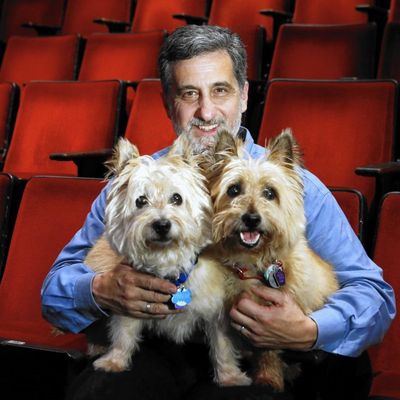
The infamous dog trainer of the Entertainment Industry discusses the importance of being yourself to create opportunities to succeed in what you love to do. The dog trainer of over 300+ productions in theatre, movies, tv shows, commercials, and magazines... Read More
From the show: Take A Bow
Guests
Featured Shows
About
The infamous dog trainer of the Entertainment Industry discusses the importance of being yourself to create opportunities to succeed in what you love to do. The dog trainer of over 300+ productions in theatre, movies, tv shows, commercials, and magazines.
Working in productions such as Annie, Legally Blonde, Sesame Street, The Ferryman, The Greatest Showman, etc. Bill has worked with some of the top people in the industry. We talk all about working with people such as Julia Roberts to Beyoncé. He also explains the differences in training animals for theatre or a day on set. Tune in for some animal loving talk, industry stories, and inspirational conversations to embrace who you are.
Bill Berloni, Curtain Up!
Connect with Bill on Instagram: @berlonitheatricalanimals
Connect with Take A Bow on Instagram: @takeabowpodcast
Connect with host, Eli Tokash on Instagram: @tokash_eli
Produced by the Broadway Podcast Network
Edited by Tessie Tokash (@tessietokash)
Transcript
This transcript was automatically generated and might contain errors.
[0:00] Eli Tokash: Hello everyone and welcome to episode 54 of Take A Bow.
[0:05] Eli Tokash: I'm your host, Eli Tokash, and today we have quite a different episode coming about for you guys.
[0:12] Eli Tokash: Um, and it's different because we have a very different type of guest that we've usually had on the show.
[0:18] Eli Tokash: Uh the infamous dog trainer of Broadway, uh, Bill Berloni or William Berloni is going to be joining Take A Bow this week, and he is, um, like I said, the infamous dog trainer of Broadway.
[0:31] Eli Tokash: And uh he started by training this dog for Annie in a local theater production, and then the rest is history.
[0:45] Eli Tokash: So, uh, w it's a very exciting episode for me.
[0:48] Eli Tokash: I've worked with him on both Finding Neverland and uh A Christmas Story.
[0:54] Eli Tokash: Um, so, uh we have some memories and, uh, what he was saying was just really cool for not only like people in the industry who, like, I don't know, who wanna like learn different fields, but also at the same time like people who love dogs and just to see how what his thoughts are on animals and how he trains and everything like that, and then just his geeking out of Broadway and the people that he's worked with, and, uh, he and then he says some pretty, uh, inspiring things.
[1:27] Eli Tokash: So I hope you all enjoy this episode.
[1:29] Eli Tokash: It's very different and it's very fun, and I'm looking forward to it, and hopefully you all enjoy it.
[1:35] Eli Tokash: So, um, with that being said, let's turn it over to the news before we turn it over to the interview.
[1:42] Eli Tokash: Um, we have some exciting things to announce.
[1:45] Eli Tokash: So Passover is going to be the first Broadway show to officially like open on Broadway that is like brand new.
[1:56] Eli Tokash: So like not pre-pandemic to where it's now opening post-pandemic or anything.
[2:03] Eli Tokash: Like it's the first one like being announced that this is actually like a brand new show that's coming, and it's gonna be opening August 4th on Broadway.
[2:13] Eli Tokash: And I don't know if any of you all have seen uh Passover before.
[2:18] Eli Tokash: It was premiered at the Lincoln Center, um, and then there have been several productions since then.
[2:24] Eli Tokash: And one of the most famous productions was at Steppenwolf in Chicago, and Spike Lee was affiliated with it, and he actually funded it so that it would be recorded and filmed.
[2:37] Eli Tokash: Um, and now it you can watch it on Prime Video.
[2:41] Eli Tokash: Uh, and in that performance, I I've watched it.
[2:44] Eli Tokash: I had I was doing it for school, and then I rewatched it when I saw that this was announced that it was gonna be open on Broadway, because I loved it so much.
[2:54] Eli Tokash: The story is incredible.
[2:56] Eli Tokash: Um, it's about two black men and they're kind of they're homeless, really, um, and they live on the streets of Chicago, and just to see the racial stories that it tells, because it's only like two black guys, and then you're you the rest of the company, which is not very big, is like white, and it plays on a lot of racial scenarios and how the two of them live as homeless people, and all of these things and how like a brotherhood is formed and all these amazing stories and idioms that, uh, that come out of this production is just so brilliantly done.
[3:35] Eli Tokash: Uh, so even if you don't want to wait till August 4th, which I encourage you not to because that's over a year, and you're gonna forget me talking about this in over a year.
[3:46] Eli Tokash: So please go check that out on Amazon Prime because I promise you you will not regret it.
[3:52] Eli Tokash: And hopefully it'll even make you more excited to go see it on Broadway with the original cast who premiered the show at Lincoln Center.
[4:00] Eli Tokash: So very exciting for me at least, and I'm sure for the cast as well.
[4:05] Eli Tokash: Um, but yes, Passover, it's amazing.
[4:09] Eli Tokash: It's on Amazon Prime right now, so go check it out, and then it's going to be coming to Broadway next year, August 4th of 2022.
[4:18] Eli Tokash: That's so weird to say.
[4:19] Eli Tokash: I'm so sorry.
[4:20] Eli Tokash: Uh, 2022.
[4:21] Eli Tokash: I don't even it's too far away.
[4:23] Eli Tokash: Um, okay, and then another exciting announcement, I guess, as far as shows are concerned.
[4:29] Eli Tokash: Our very own guest, Selicia Thomas and BPN fam and Trevor the Musical fam, all of the things.
[4:38] Eli Tokash: Her she was in a musical.
[4:40] Eli Tokash: I don't know if you all remember her episode, but she was in a musical uh before the pandemic, and it was shut down during rehearsal.
[4:47] Eli Tokash: And that musical was Once Upon a One More Time, the Britney Spears musical.
[4:52] Eli Tokash: And they have set their pre-Broadway world premiere in Washington, DC, to be in November of 2021.
[5:27] Eli Tokash: So she's couldn't be more excited?
[5:27] Eli Tokash: I w I I want to get her on and just to see and talk to again to talk to her about how this is all reopening, how this is working, uh being in DC, like the traveling, how is that working?
[5:27] Eli Tokash: Are they gonna do local hires so that, you know, the virus doesn't spread?
[5:27] Eli Tokash: Are they wanting to keep the travel to a minimum?
[5:25] Eli Tokash: How does this all wanna work out?
[5:27] Eli Tokash: So, um, it's gonna be very interesting.
[5:29] Eli Tokash: She's couldn't be more excited.
[5:31] Eli Tokash: It's a step in the right direction for the show, it's a step in the right direction for Broadway as t in terms of reopening and everything.
[5:38] Eli Tokash: Um, and hopefully that and that show is going to be, uh, be seen on Broadway eventually.
[5:45] Eli Tokash: Um, but they're doing their little world premiere at Washington DC, which is popular, so um, which is very common to do for new shows.
[5:57] Eli Tokash: And, uh, I know we I know I've talked a lot about like jukebox musicals on this show, but like I don't know, Britney Spears, she gets a pass.
[6:06] Eli Tokash: I like Britney Spears, it's gonna be a fun one.
[6:09] Eli Tokash: I don't think it's gonna be about her life.
[6:10] Eli Tokash: It literally it's more like her music.
[6:13] Eli Tokash: So, uh, I'm curious to see what they do with it and how they, uh, it seems like it'll be an original story with her music.
[6:20] Eli Tokash: Uh, so I don't know.
[6:21] Eli Tokash: I I'll be interested to see how it works, and, uh, I'm excited for it.
[6:21] Eli Tokash: I'm excited for it, and, um, just hear that it's going to be, uh, having its world premiere is very exciting.
[6:32] Eli Tokash: So on previous episodes of Take A Bow, I've mentioned that, uh, you know, Dear Evan Hansen and, uh, a couple shows, you know, they they haven't announced who their real stars are coming back, like who their cast is coming back, everyone everything's still up in the air.
[6:48] Eli Tokash: We know that majority of the people will be returning, but we also know that like, you know, things happen and some people may not be able to, um, you know, step back in right away.
[6:59] Eli Tokash: Uh, but it was announced uh recently that Jordan Fisher is going to be rejoining Dear Evan Hansen.
[7:06] Eli Tokash: So for everyone who, uh, didn't get a chance to see Jordan Fisher in Dear Evan Hansen, and they really wanted to, well, you still have a chance.
[7:14] Eli Tokash: They announced it with a great performance on Good Morning America, and I am so excited that he's saying you will be found with some of the cast, and it was just so good.
[7:22] Eli Tokash: And, uh, I'm so excited because I missed Jordan Fisher being Evan Hansen on Broadway, and I really really wanted to see him.
[7:31] Eli Tokash: So now that I get the chance to, I could not be more excited.
[7:35] Eli Tokash: And before we wrap up this week's news, I would be remiss not to mention, uh, there was a there was a lovely new film created by Casey Likes, and uh, it's called Thespians, and some of, uh, Take A Bow's very own, uh, guests were able to join forces to create this movie with Casey Likes, who wrote and directed it.
[7:59] Eli Tokash: Um, and the short film stars our very own Sydney Lucas, okay, and it also stars our guests, some of our guests, Andrew Barth Feldman and Annalise Scarpaci.
[8:12] Eli Tokash: And this film is literally incredible, it's so funny.
[8:17] Eli Tokash: Um, it's like before we return to theater, see what happened when we lost it, you know, like what people did without theater, and like how they did it on Zoom boxes, and this is literally done on Zoom boxes.
[8:31] Eli Tokash: This film, it's incredible.
[8:32] Eli Tokash: And it the whole short film stars Sydney Lucas, Samantha Williams, Andrew Barth Feldman, Annalise Scarpaci, Antonio Cipriani, uh, Caitlin Santa Juana, Sam Primack, Gabriella Caruba, Casey Likes, and Tony Nominee, Rob McClure.
[8:49] Eli Tokash: So go check it out.
[8:50] Eli Tokash: Um, the whole scenario is like hilarious.
[8:53] Eli Tokash: Just with the fact that, you know, you have all of these young Broadway stars who are like pretty much like, you know, young adults, you know, they're they're in their teenage to early 20 years still.
[9:05] Eli Tokash: Um, you know, and all of a sudden you have Rob McClure showing up on your screen.
[9:11] Eli Tokash: Um, it's just it's brilliant.
[9:50] Eli Tokash: It's really well done, especially like the fact that they did it on Zoom and but that also to like capture that real, uh, coronavirus pandemic vibe of the whole movie.
[9:50] Eli Tokash: It's just so it's just really well done.
[9:50] Eli Tokash: Casey Likes created it.
[9:58] Eli Tokash: Go check it out.
[9:58] Eli Tokash: You can watch it on YouTube, just go search in Thespians, and, uh, if that doesn't come up, maybe type in a couple of the names that I just mentioned, Casey Likes, Andrew Barth Feldman, Annalise Scarpaci, Antonio Cipriani, Sydney Lucas, Gabriella Caruba, or whoever you may need to, uh, to search up there to get the video.
[9:58] Eli Tokash: Uh, it's really well done.
[9:58] Eli Tokash: I highly recommend watching it, especially if you want to laugh.
[9:58] Eli Tokash: It's not too long either, so, uh, it's great.
[9:58] Eli Tokash: Um, go check it out.
[10:00] Eli Tokash: Thespians.
[10:01] Eli Tokash: So that wraps up this week's news uh segment.
[10:03] Eli Tokash: But let's turn it over to the drama dictionary word of the week.
[10:06] Eli Tokash: This week, we're gonna be talking about strike.
[10:10] Eli Tokash: So we talk a little bit about this in like Bill Berloni's episode, where, uh, you know, touring can be I I asked him if touring could be hard, especially with, you know, the different animals, especially because you know, they go to a new state and they have new smells and everything like that, and they're not used to everything, and there's traveling and everything like that.
[10:30] Eli Tokash: But in order for a tour to run smoothly, there's something called a strike at the end of every city that, uh, the tour goes through.
[10:40] Eli Tokash: And on Broadway, a strike only happens once.
[10:43] Eli Tokash: So what strike is is it's literally the tear down of, um, the final night of the performances, you know.
[10:52] Eli Tokash: A lot of people will understand this for those who have lived in apartments or especially like in New York or something like that.
[10:58] Eli Tokash: You know, you go from this fully furnished apartment and then you have to move everything out, and you have to take the couch out, you gotta take down the TV, you gotta take down the beds, you gotta take down all of the things, the clothes, everything has to be has to go.
[11:11] Eli Tokash: And you literally have to return the theater as good as new, nothing left behind.
[11:15] Eli Tokash: You have to return all your rented materials, everything like that.
[11:17] Eli Tokash: You literally just tear down the set, you tear down the stage, you tear down your, um, what you have in the ceiling, what you have hanging, the curtains, all of the things.
[11:29] Eli Tokash: Uh, and, uh, you basically just leave it super empty, it's super nostalgic, and it's super, um, bizarre just to see an empty theater when you go through a strike, you gotta clean out your dressing room, you gotta clean out it all.
[11:44] Eli Tokash: Um, and, uh, that but they call that a strike.
[11:47] Eli Tokash: So it's not like a protest or anything like that.
[11:49] Eli Tokash: It's literally like they call it like striking away the pieces.
[11:55] Eli Tokash: Um, and it's just like the teardown of it all, and you, you, you know, you put everything back to where it belongs, which is none of the theater.
[12:05] Eli Tokash: Um, so that wraps up this week's drama dictionary.
[12:08] Eli Tokash: It's called Strike, and, uh, you know what?
[12:11] Eli Tokash: I've done enough talking.
[12:12] Eli Tokash: Bill Berloni is gonna talk to us now, and, uh, he has some fabulous things to say.
[12:17] Eli Tokash: So without further ado, Bill Berloni, curtain up.
[12:40] Eli Tokash: On this week's episode, we have a guest who is going to bring a brand new side of the industry that people rarely even think about.
[12:49] Eli Tokash: Animal trainers are people in the industry who don't get enough credit, but we are gonna, because we're gonna shine a light on it today.
[12:58] Eli Tokash: And our guest has been a part of over 20 Broadway productions and over like 200 productions of musical theater, uh, from theater, from TV, uh, movies, all of the things.
[13:11] Eli Tokash: Um, everyone, welcome to Take A Bow, Bill Berloni.
[13:14] Bill Berloni: Thank you so much for coming on this week.
[13:16] Eli Tokash: I'm so excited to be able to talk to you.
[13:18] Bill Berloni: No, it's great to be here, Eli.
[13:22] Eli Tokash: Um, so let's let's get into it.
[13:25] Eli Tokash: I mean, your story is so fascinating.
[13:28] Eli Tokash: Um, let's talk about kind of your farm first, because that's kind of how this all fell into place, right?
[13:36] Eli Tokash: So talk to me about the farm.
[13:38] Eli Tokash: Talk to me about how you started working with all kinds of different animals and training them and how you got into it.
[13:45] Bill Berloni: Well, currently, uh, my wife and I live on a 90-acre farm here in Central Connecticut, which serves more as a sanctuary for the animals we've adopted.
[13:56] Bill Berloni: Um, in terms of, uh, you know, when we adopt an animal to use in a performance, whether or not it works the rest of its life, we give it a forever home.
[14:06] Bill Berloni: So, um, and we need a place where they can have a good life where they could run and have freedom and bark without having to worry about being, um, evicted.
[14:15] Bill Berloni: So we call we call it the farm that Sandy built.
[14:20] Bill Berloni: You know, so it's, uh, it's this wonderful, uh, place, uh, where our theatrical animals live.
[14:28] Bill Berloni: But to go back to the beginning, um, you know, I was, uh, I grew up here in Central Connecticut.
[14:37] Bill Berloni: I wanted to be an actor, and, uh, I had enrolled in I had auditioned for Yale and NYU and Webster and all those colleges, but couldn't afford to go.
[14:47] Bill Berloni: Um so what we did was I decided to go to a local college for two years and then transfer, you know, do all my core courses and then transfer to some acting school to do the acting part of it. So instead of wasting my summers after high school just having fun with my friends, I wanted to learn as much as I possibly could about professional theater. Now, I had done high school productions, I didn't, you know, um community theater productions, but I really wanted to be around professionals. And here in Central Connecticut is one of the most famous theaters in the world, the Good Speed Opera House, Good Speed Musicals, where theaters dedicated to the American musical and um shows like um Man of the Mancha and Shenandoah, and you know, had started there, and so I applied as a technical apprentice, having no technical skills and was accepted.
So my first summer uh out of high school, the summer of 1975, I was in this wonderful professional world of New York actors and designers, and uh pretty much living my dream, you know, learning as much as I could. I was so good, I guess, that they invited me back the second season, night summer of 1976. And um they back then they would do two revivals and introduce one new show, and the show that they decided to do that summer um had a dog in it after they after it was announced and they had a production meeting. I was like, okay, who's gonna train the dog? And they said, Well, we'll call some trainers in New York, and they found out the trainers were very expensive. So then they went to the paid staff members, the carpenters, the lighting people, and they said, Someone's got to train the dog, and they all threatened to quit.
So basically, the producer needed a sucker, someone he could talk into doing the dog thing for the new show. Now I had I had never been in the producer's office. I I'm sure he knew me. And then one day I was invited and uh he sat me down, and his name is Michael Price. Michael Price was the executive producer for many, many years, and uh sat me down in his chair and said, Billy, you know, we love you here, and how would you like a part in one of the shows and your equity card? Now I'm all of 19 years old. Um, and I'm thinking, man, he's brilliant to recognize my acting skills just from watching me. Oh my god. I was like, sure, yeah, that'd be great. And he said, All you have to do is find and train the new dog for us for no money.
I was like, Yes, yes, absolutely. Um and it took like a week for me to realize the deal I had struck. And summer of 1976, and he goes, Okay, so here's $35 to buy the dog and feed it for the summer. That was my budget. Oh my god. Um so the show in particular was the original production of Annie. Wow. So the script called for a medium-sized dog of indistinguishable breed. That those were Tom Meehan's words. And someone said to me there were cheap dogs at the animal shelter. Now, I'm an only child that grew up on a farm. Animals were my companions, they were not my pets. I had never been to a shelter. And when my first dog died, my mom took me to the pet shop and we bought a beagle. So um one fateful day in May of 1976, I went casting for the dog that was gonna play Sandy.
And I had a list of the animal shelters, and as I was going to these animal shelters, I was very depressed. I had never knew that animals were un were cared for like that in dirty cages and you know, and Metsy. And uh I ended up at the Connecticut Humane Society where there was one little abused dog who looked like Sandy. But when I tried to explain to the people there that I was I needed to take a picture and have him approved, they said, Well, uh, he's gonna be put to sleep. And believe it or not, at 19 years old, I didn't know what that meant. And when they said that his time was up and he was gonna be put to sleep the next morning, uh it was a it was a profound moment in my life to know that we killed animals arbitrarily, that they had expiration dates, and that nobody cared.
So, of course, I went back to the opera house that night and I couldn't find Martin Charnon, the director or Michael Price, the producer to okay this dog, and I didn't even have the money to adopt him. He was it was seven dollars, and I had three dollars in my pocket. So my roommate later that night said, Idiot, here's the four bucks, go back tomorrow morning before they open and get the dog, which is what I did, and so that's how I acquired the original Sandy, and he was abused, and you know, but uh again, I thought if I could figure out a way, like my dog would follow me anywhere without a leash. So if I could figure out a way for Sandy to be part of the crew and live with us and be backstage, he might not be as frightened and come to like it, which is what my training methodology was, which was no real method at all.
But it worked. And so um, you know, fortunately, my first actors were kids, and kids love playing with dogs. So by the time we got to, you know, act one, scene two, the tomorrow scene, Sandy would see uh the original Annie, Kristen Weigard out there wagging his tail, wanted to go out there and get a cookie. I mean, so it was it just it just worked, and um the show got terrible reviews. Um Michael Price gave me the dog, and I tried to give it to my mother, and she was like, I'm I have your old dog, you take Sandy. So Sandy and I moved to Greenwich Village, five-floor walk-up with two roommates, and I started studying with Stella Adler at the at NYU in their acting conservatory. Stella Adler, when she was alive, um and eight months later, they called and said they were doing Annie for Broadway and wanted to know if I'd be interested in in being a part of it.
And at that point, not only was I I needed the money, but um, I mean, Mike Nichols was brought in as uh producer, and I thought, well, anyway to you know, make some money and do a Broadway show, why not? And we didn't know what we had, you know, and uh so when we when the show opened at the Neil Simon Theater on April 21st of 1977, this phenomenon happened, and at the age of 20, I became a world famous animal trick. Yes. So, you know, and I the day I got Sandy, I made a promise to myself that if I when I grew up, if I ever got another dog, I would rescue it. So soon after, we needed an understudy, and then there were national tours. And so the idea of rescuing dogs and turning them into stars was quite unique.
Yeah. Um, and uh I still was studying with Stella and I was taking dance lessons and singing lessons, but by the time I was offered my third Broadway show, I realized that not only had I had I created a niche that never had an animal played a character in a play. They've been walked on, they've been carried on. Right. But Sandy furthers the plot, and nobody thought an animal would be capable of that. Um I realized I was much more an talented as an animal trainer than I was as an actor, and just made that my life, and it's been incredible. Um, and there's I bel do believe there's a certain amount of karma when you rescue animals and that it comes back to you. Absolutely. Um because we have this beautiful farm, and I've been to the White House six times, and I've written three books, and I did a reality show. I mean, so many blessings of being an artist, not just in the traditional way, but in so many other creative ways that have been come from this profession of working with animals.
[22:29] Eli Tokash: I love everything that you just said, and I have so many questions. Um, all of this is so fascinating. You talked about like you were doing casting for a dog, like how does that work?
[22:44] Bill Berloni: Um, well, often oftentimes, as we know, the director has final say on everything within their project. So um, you know, just like casting kids, you know, you want a kid that looks this way and not that way. So I just had to make sure that the look was what they wanted, number one. Um and what I learned later too is that some dogs don't always like performing. So, you know, we also look for the right temperament. Right. Again, just like with just like with actors, you may see somebody walking down the street who's a stockbroker and say, You I'm gonna put you in a movie, and they may like, but I'm too shy and I can't do that. I don't want to do that, you know. So you have to have the looks and the talent and uh ultimately the director decides the looks and I decide the talent, you know, who's who can do it.
[23:32] Eli Tokash: So do you like go out and like scout and like meet them basically and see like if how they respond?
[23:38] Bill Berloni: Yes. Um you know, for the theater work, again it was unprecedented and it takes so long to get a a dog ready for the theater that we will adopt them and spend a year training them before we ever show up to rehearsal. But for example, this is my morning, you know, I'm sending um pictures of um dogs to the new Amy Schumer uh TV series so they can pick whether they want a Pomerini or a poodle. I mean who cares? But you know what I'm saying? But uh it's a little dog that has to be put in a microwave. Does it really matter what it look like? Um, you know, or we're trying to find a peacock, but um so I do that on film.
[24:19] Eli Tokash: You do like peacocks too?
[24:22] Bill Berloni: W I will do um I will do domesticated animals, animals that have been bred to interact with man. I will not do wild animals. Um because uh con c controlling a wild animal is um ultimately cruel the way you have to do it, and I just we just never went down that road.
[24:43] Eli Tokash: Sure, sure. So what animals do you have at the farm? I know you have like a bunch, like you have like chickens, you have dogs, you have everything. Like what other ones you have?
[24:55] Bill Berloni: Well, we have 25 dogs, um three cats, uh we have uh two geese that were in the Broadway production of the Ferryman, um in addition to the little bunny who is in the ferryman, um gamefully retired. Uh, but we have a horse, a donkey, two pigs, and a macaw. Wow.
[25:19] Eli Tokash: And so just like at any time, even if you don't have the animals, you end up fostering them basically and just like keeping them until you know they you get the next call that they may need to be used.
[25:33] Bill Berloni: Again, all of the dogs and all the animals here are animals that we've acquired to be in theatrical events. You know, where you really have to put all that training in. Um, but for the film work, you know, if if my Pomeranian doesn't get cast, I represent other trainers, other people who have highly trained dogs.
[25:52] Eli Tokash: Okay.
[25:53] Bill Berloni: So, you know, then I they do the dog training, we meet on set, I handle the onset stuff. So that way I could I have a a catalog of all different types of breeds and species, but we don't have to own them all.
[26:07] Eli Tokash: Sure. So I have to like this is kind of like off topic, but like have you ever considered doing like Westminster dog shows?
[26:15] Bill Berloni: Um, you know, the again, I've been an adoption advocate for all my life, basically. And I'm also the director of animal behavior for the Humane Society of New York. Yes. In New York City. Something that I've been I can do in my spare time to help them out. You know, and and I promote responsible pet ownership. And so if someone wants a purebred dog, I want you to go to a reputable breeder, you know, and not to a puppy male. So the animals that have been represented in Westminster are obviously h well cared for and all that good stuff. Um but because we don't breed, there there's no need for our animals to acquire those titles or be part of that. So I've never I think I've gone and spoken at Westminster a couple times, but um that's like a Miss America pageant. And you know um, none of us are ready for that.
[27:18] Eli Tokash: Right. So tell me, so you had Sandy, right, for the original production, and then it was moved to Broadway. Was she the same dog that stayed for the Broadway company, or did you like move them out on tour? Like how how does it work?
[27:34] Bill Berloni: Um, the original Sandy from Good Speed, uh was the only actor to do the entire run of the show, all two thousand three hundred and thirty-three performances of Annie.
[27:45] Eli Tokash: Oh so he did the entire eight week eight year run.
[27:49] Bill Berloni: He went through the five Annies, um, and but and then again we had adopted other dogs to do national tours, uh the national tours at that time. And you know, um, since then shows like Annie, the Wizard of Oz, Legally Blonde, you know, once they've ended their Broadway and touring learn, go into stock rights. And so regional theaters will do them. So that's why we have three Sandy dogs and four Toto's and two bruisers, and um, because they'll continue to work in other productions, and so that's sort of our um what we do with them currently. But the original Sandy, yeah, was a a record breaker for sure.
[28:25] Eli Tokash: Oh my god, I can't believe it. The only person the only actor to do the show the full run.
[28:31] Bill Berloni: That's incredible.
[28:32] Eli Tokash: Do they do dogs like ever miss performances?
[28:36] Bill Berloni: Um they can. Uh-huh. Um I I liken it to training somebody for the Olympics. You know, if you're if your goal is the height of your profession, you do everything you possibly can to stay healthy, to be fit, so that you don't don't take risks, you know, so you don't end up missing a show because of some accident or some illness. And again, a dog who is who's happy to go to the theater and go on stage for his cookies, right? Um it's pretty easy to keep s safe from any extraneous disaster, you know.
[29:22] Bill Berloni: In fact, when their careers are over, it's pretty devastating for them. They miss all that attention. So, I don't think Sandy ever missed her performance because he was ill. Ever. And most dogs don't. Because our job again is to keep them as fit as possible.
[29:41] Eli Tokash: That's insane. What is it like to tour with animals? Like, how does it affect them, like going to a new theater every week and smelling new smells? What would be the most challenging aspect of touring?
[29:57] Bill Berloni: They actually love touring because you have one trainer and two dogs, the main dog and the backup, you know, who are together 24/7. They travel by van. We have a customized van that they travel in. And because again, they're rescued, they're very thankful for any life they get. But in particular, you may go to a new theater, but the set is exactly the same. The people are exactly the same. And so they're in a box that's pretty much familiar. The hardest part of traveling actually is the extremities and weather. You know, playing palm strains, you know, where it's 105 degrees out. People in the audience and cast can stay indoors, but dogs have to go out three or four times a day in that heat.
Or we were in Minneapolis doing Annie for Christmas and it was 20 below, you know, and the dogs still have to go outside to eliminate. So sometimes the weather is the hardest thing. If the dogs leave here in December and they have their full coat and we go to LA where it's warm, it throws off their system because they start shedding; they don't know whether it's summer or winter, that sort of stuff, but it doesn't affect their performance. Again, we make sure they're rested, they play, they have a good time, and they love it.
[31:28] Eli Tokash: It's incredible. So let's talk about Bill. Okay, enough about dogs. Well, I mean, we can still talk about dogs, but like let's talk about you. First of all, do you have like a favorite animal to train?
[31:43] Bill Berloni: I think my spirit animal is a wolf. So definitely, I connect with canines, you know, because they are part of the lupine genesis. So dogs are my favorite thing to train.
[32:01] Eli Tokash: Wait, wait, wait. You've trained wolves?
[32:04] Bill Berloni: No, no. My spirit animal is a wolf.
[32:06] Eli Tokash: Okay.
[32:06] Bill Berloni: So I do believe that somewhere in my past I might have been a wolf.
[32:12] Eli Tokash: Oh my god. I'm obsessed. That's amazing.
[32:15] Bill Berloni: Yes, dogs are the best. And that's how Bill and I know each other. I know I haven't announced that yet. Bill and I did a Christmas story together, and then we also did the Finding Neverland tour together. So we were able to reconnect there and start the journey of the tour there. That was a journey in itself. How long does it usually take for you to train a person to do this stuff for the dog?
[32:38] Bill Berloni: Um, what is how long so obviously you have your whole system, right, of training animals, and you have, you know, you have this I guess agenda like the this schedule and the system that you've put into place.
[33:03] Bill Berloni: Sometimes it takes years. When I look for trainers, the ad looks something like, you know, no dog training experience, must love dogs. Because the methodology we use is completely different than what people think is dog training about negative reinforcement and forcing animals to fall into line. So if you have a trainer who's learned that and then I have to try to unteach them that, it's hard. But if you find someone who knows the theater and loves animals as much as I do, their main goal is to wake up every day wanting to protect their dog, wanting to do what's right. Those are the people that we find, and then introducing them to the many facets of what the dangers may be in an entertainment venue.
Getting them up to that because the dog training and the bonding is easy, but it's teaching them how to be that advocate, how to be that person who will stand out. Come out during the middle of a tech rehearsal in Buffalo, New York, and say, Diane Paulus, we are not doing that with the dog. It takes a lot of self-confidence to be able to do that, to be an advocate for your animal. Sometimes you have to put your career on the line for what you believe in. So that's the harder part. People will come and they'll do a high school production and then they'll do a community theater production. If they continue to like it, then we can move them up to Broadway and tours and that sort of stuff. But yeah, it takes a while.
[34:51] Eli Tokash: You guys have like a whole village, I'm telling you. You guys have so many animals, people's everything to take care of. It's insane. I applaud everything that you guys are doing. It's incredible. Okay, I have to ask. You made your Broadway debut in Annie, and then you've done many other shows since then, but a lot of them have this trend where you're working with both animals and kids. So there's this renowned quote of, oh no, don't work with kids and animals, but you've done that literally almost all of your productions. What are your thoughts on that? And how are you not like training the actors or anything, but you're kind of making them feel more comfortable with the fact that there is a dog with them while they perform?
[35:49] Bill Berloni: Actually, you are incorrect. We do train the actors.
[35:54] Eli Tokash: Right, okay, that's true.
[35:54] Bill Berloni: Part of the methodology is again, if it's positive reinforcement, if there's an actor who doesn't like dogs or doesn't speak dog, why would my dog want to go hang out with that person on stage? I can't tell you how many times I've said to a casting director, make sure you hire someone who has had dogs for the role of Barry, for the role of El Woods, for the role of Annie. Because I can't teach that love, that innate comfortable place, you know, in eight weeks or four weeks or whatever it is. So we have to take actors and turn them into trainers. They have to be as good at what we do because the dog has to respect them and like them. They have to be able to think on their feet in a live performance.
I credit my success to the fact that the first actor I ever trained was a child. Because I didn't know what to do. What happened was Sandy and Annie went out in the back and played ball, and then they hung out together, and they became friends. Trying to get an adult in an eight-week process, you know, who's going to open on Broadway to get down on their hands and knees and play with an animal in order to facilitate the production is impossible. But you say that to any child actor, and they're like, Let's go! So it's easier to work with. It's sort of like that song in Finding Neverland, getting adults to play again, you know, because animals live in the moment and they just want to have fun.
Getting an actor to do that with an animal keeps them sort of in the moment and not just saying their lines and waiting for a response. The other thing that's hard for actors is you see an actor say to a dog, What are you doing, Sandy? And then you see the dog react. Well, it's like a ventriloquist because the actor is actually controlling the response; the actor is giving a cue that makes the dog respond, but the audience is unaware of that. So an actor has to be so in tune with an animal that they're acting their role and making the animal do their role as well. It's quite a juggling act to be done well, and kids do it so much better than adults.
[38:32] Eli Tokash: Wow, that means so much you don't even know. That's a good thing to hear. It says on your website, where it shows literally your hundreds and hundreds of productions, that you worked on The Greatest Showman. What were you doing with The Greatest Showman, first of all? And what is the big difference of having an animal in theater and then on set?
[39:04] Bill Berloni: It's got its pros and cons. First off, when they called, my first question was, Are you using real lions and tigers? And they said no. We're CGIing all the circus animals. I went, Okay, then I'm in. Basically, we provided the dog that played the Queen of England's dog. It had to be a very specific King Charles Spaniel that had to replicate the dog she had historically, so we had to find a dog that looked like that and train it just to sit there and let Tom Thumb come up and bark at it or whatever. It was a small thing. It was shot here in New York. In theater, because I'm a theater person, we get in a room and we collaborate as artists. The director, the scenic people, the choreographer, we're all there together working together.
In film, it's very departmentalized. You show up the day of, there's no rehearsal, you sort of block it out and you shoot it, and animals don't think that quickly. What happens is if you watch a lot of shoots, you'll see an animal looking off camera at where the trainer is because it has no relationship with the actor it's working with unless you do a cutaway. I find that very distracting. When I watch films, it's like, oh, the trainer's over there, I could tell. Whereas on stage, the dog is interacting with the actors in a way that is real. Film is quicker, more lucrative, but less satisfying for me and harder on the animals. Whereas theater, it's repetitive behaviors that they look forward to doing every day with their friends.
[40:54] Eli Tokash: Do you think like the whole eight shows a week, do you think that like it's, you know, I don't know, like what I'm trying to say, but like I don't, I would assume like doing it as a person, it can be difficult. I couldn't imagine doing the same thing as an animal, like being in a theater and like getting the same treats and doing it all like eight times a week. I feel like I would just get bored of it, but like somehow you always keep them invested.
[41:21] Bill Berloni: Exactly. There's a certain boredom effect to doing repetitive behaviors, but animals don't have cognitive thought processes, so they just come in looking for something that feels good every day. They want to come in and feel good, so they don't know they're going to do it for eight years. Our job is to rest them. If they were running around all day and then came to the theater exhausted, it would be hard on them. But we keep them quiet, give them a couple walks so that when they come to the theater, it's the best part of their day. Every once in a while, do we have to change a treat? Yes. Do we have to put a little more energy in it? Yes. But again, they thrive on the fact that they don't have to think because nothing changes.
It's the same people, same set, the same words, all that sort of stuff. It's just like you have a pet at home who knows when you're driving in the driveway, you're coming in, or when you open the refrigerator, they know it's feeding time. So it's repetitive behaviors that actually are very easy for them to do versus film, which is you've got two minutes to teach this dog how to do this trick in front of a hundred extras on that set, you know, and camera booms and lights, that sort of stuff. You don't have time to prep for that, so it's a little more stressful on sets than it is in theater.
[43:00] Eli Tokash: Wow. I would never even think about that, but it's true. Even as an actor, like a human, you know, I've done projects where I don't even know the people in the movie. Like, how does that work? Like I worked with them technically, like we were in the same production, but I don't even know you. It's just so weird, just the difference between film and television and theater, of course. So you recently were doing Girls Five Ever, the movie that is coming out soon with Sara Bareilles and Renée Elise Goldsberry and Ashley Park. Do you love kind of that film where it's like combining your love of theater with film at the same time?
[43:44] Bill Berloni: I don't really look at them that way necessarily. What dog training has brought to me is the opportunity to meet and work with some of the most genius artists in the world.
[44:03] Bill Berloni: You know? So I look at every project, you know, not from a point of what what's the end result, but who are we working with? What is the story we're trying to tell? And um it was so interesting that uh like for Girls Five Eva, uh, the new um Sarah Borellis film, um, I had just worked with Sarah the season before uh before COVID on Little Voice. Uh we had a dog on her series. And I saw her many times a week, and she's a lovely uh person. I mean, in real life, and she loves dogs. I mean, so oh my god, you know, and then you put that talent on top of it. So I had that connection, but a couple months before I had gotten a call, Tina Faye was looking for a dog, and someone gave her my name, and one day my phone rings and she goes, Hi, this is Tina Faye, you know.
Um remember, we're looking for a dog to adopt. I'm like, no problem. So I I got to know Tina and her husband by helping them find a dog, and then three months later they said, Oh, by the way, we need a bird for the first episode. You know. Um, and and you've been on set, you know, you know how there's a hierarchy of everybody has their own departments and nobody talks. So animal trainers are not well respected. And um we came in, we brought this, we had this large bacal, and my wife and I were sitting there, and um, everybody was like, uh AD was like, ever quiet on the set, quiet on the set, and Tina sees me and she stomps everything and comes over to say hello and hug us and all that sort of stuff.
And I could see everybody in the studio going, Who is that? Right. Why is she talking to that person? You know, so um again, her and her husband are brilliant writers and composers and all this stuff. So that's what excites me working with, you know, Julia Roberts coming to my trailer on a film and knocking on my door and going, hi, I'm gonna work with the dog. Can I say hello? That to me is a professional. That to me, uh people who have animals have a soul and a heart. Right. Um and uh, you know, but she recognized that if she was gonna look good, she needed to come say hello to the dogs because she has dogs. So I mean that's that's more what excites me about uh working on a lot of these projects are the getting to know people who are geniuses but also nice human beings.
[46:27] Eli Tokash: Well, you're being very humble right now because you also like did uh this photo shoot with Beyoncé who you had to get her to hold a snake. Like what? I couldn't imagine. Like you have worked with some of the coolest people ever. Did you ever think that like when you know that day you were said like now I realize the deal I struck when you were doing the sh Annie at Godspeed? Did you ever think it would turn into this?
[46:55] Bill Berloni: Never, but I I'm grateful gr grateful every day. It's incredible. And so now, like you said, you've done this reality TV show on the Discovery Channel in 2015, which you're probably most known for. It's called From Where Oh my gosh, From Wags to Riches. Wow, that's a tongue twister. Um but like how cool is it to like have your own like reality show and kind of be on set, but like able to just have like a normal day and like kind of be you, you know?
[47:26] Bill Berloni: It was far from that.
[47:27] Eli Tokash: Really?
[47:28] Bill Berloni: Oh yeah. Oh my gosh. You couldn't tell. The opportunity uh again, Discovery created a new channel uh for the uh uh family-oriented, and we were one of the first shows that they greenlit because they felt we were good role models for rescue and all that sort of stuff. We had this interesting life. And um so it was a way for us to get our message across. That's what I was most excited about. Um and I don't know, I reality shows are so fake, and so if anybody's ever watched it, the very first shot of me on my reality show is coming out of the bedroom in my pajamas half asleep because I am not a morning person, and my wife and daughter are like have been up for an hour and a half. That's that's who I am.
I'm a I'm a theater person, I'm slow in the morning, and I wanted to show that if I was going to invite you into my home, this is the deal, and it's okay to be different and all that stuff. Um that was and I finally get a reality show to do that and halfway through the season, Discovery cancelled the channel. They they canceled we had you know, ever they had they had seven or eight pr shows in production and they just stopped halfway through. So we only did five episodes. But it's really interesting to be able to say, if you want to see my house, just watch this reality series. And you know, when you think of other animal trainers like Lassey, did you ever see where At Lassey lived? No. Did you ever see where Benji lived?
No. Because other animal trainers may not want to show the audience the conditions in which those animals live. Oh, interesting. We're transparent. If if you've got nothing to hide, then you can be a role model. Which is why I was particularly excited that they they said we'd like to come and film you. I'm like, please come film us. So that was uh that's what I took away from that the ability to show people how we live.
[49:26] Eli Tokash: Yeah, that's awesome. And it it's so cool, and you can still watch it. They have it on Amazon Prime and they have it on like Apple TV and uh Yeah, I yeah, that's it. Um there's too many nowadays. Um and now you you're doing like this current uh this this event, I guess, on Playbill that is called Tales from the Stage, which is so cute, like Tales like a Dog Tail. Um but like at the okay, you understand. I don't have to explain it. But yes, I I love it. It's so cool. Tell us what uh what that's about and kind of what people can get out of those and when they are, and yeah, just promote that.
[50:08] Bill Berloni: Um very much like you, uh Playbill wanted to give a an insight uh into the backstage workings of the theater, the Broadway theater, and uh but because their revenue had shrunk from not printing playbills, they had to reinvent themselves. And so they created not just a um I don't know what you'd call it, but it's a live event that they don't tape. So it's like oh it's a it's a show. You can't you know it's a one off, you can't see it anywhere else, so you know, the tw $12 ninety nine you pay for a ticket, you're seeing a real show in that there's never gonna be another performance of it ever again. So um I came in sort of at the tail end of that, and fortunately, theater is reopening. So um we may we may do a note on a couple more, but I think people are already excited about getting back and seeing live theater and and that sort of stuff and moving away from the live podcast.
It's it's not a podcast, what do you call it? A live stream? Yeah, live stream. First one I did was about Annie, the second one I did uh was about legally blonde, you know, and um we were thinking that I had 23 shows I could do if I if we continued to do it if we needed to, you know, so um, which would give people into insights of a lot of different animals on a lot of different shows. But at the moment we're sort of on hold because we're coming back.
[51:43] Eli Tokash: Yeah, that's so cool. But that's also such a fun way for you to continue to, you know, promote like rescue animals and also to tell your story and to tell keep Broadway alive and continue working in some way, you know, like it's so it relive memories, like that's the whole that's what's so fun about projects like even this. Um it's so fun to talk to you and like revisit all of those memories. Um but it's so cool what you're doing with Tales from the Stage. Go check it out if there is any more. I'm su I hope there is because they're a blast. And maybe like, would you ever consider doing like a live show of that? Like maybe at like a 54 below or something.
[52:24] Bill Berloni: You know, I uh because I I do uh shows all the time, whether they're fundraisers for animal shelters or at libraries or at the drama league or whatever, I've been asked to do a presentation, so I have some material. Um, but it sometimes it takes me away from actually doing the art sure you know um I I don't necessarily want to be an onstage person I want I still want to create amazing images with animals that move people so um but they've talked to me about it about possibly doing it um like you said at 50 far below or somewhere else and I I might entertain it uh who knows yeah who knows because I I certainly have the animals and the stories and the the history to go along with it.
[53:14] Eli Tokash: Oh my gosh. And now you you also have like you mentioned before you have a few books out there that you've written you said three and it I mean like it's it's actually pretty funny because when I Google you it says you're an American author you're not a dog trainer. It says like Bill Berloni American author. It's amazing. So talk about your books and what readers can expect to learn from them and kind of hear when they read it.
[53:40] Bill Berloni: Two of them are out of print. The first one uh when Annie opened on Broadway and the New York Times magazine section did a article about me rescuing this dog and how we found it uh the president of Simon and Schuster called big publishing out and and she said you know is the is um the story I read in the Times about you true now remember I'm all of 20 years old. I this is all like crazy and I went well yeah she goes well we'd like to write a book about you I was like I I'm sorry I don't I'm not really a writer oh we'll find somebody so the first book is called Sandy, The Autobiography of a Star. And it's uh written in Sandy's voice about how he was rescued and became a Broadway star. So it was a children's book, you know.
Um and it did very well. The second was I was asked to write a book called Doga, in which this uh yoga instructor, you know, many of the poses in yoga come from animal forms, and so she wanted to show animals doing yoga. And um the the funny story was uh I I said to her, dogs don't do yoga, and she was like, but I was like, yeah, they may stretch out into a downward dog, but they don't do it on command. So we had to negotiate a way because I wouldn't I didn't want to um photoshop the photos and make people believe they were doing it because I didn't want people forcing their dogs to do it. So we we came up with a very beautiful way to show these animals doing these poses. The book hit was a big success, and literally I got calls from like Jay Leno.
No way from um, you know, all the big talk shows saying, Will you come on and show us dogs do a yoga? And I kept saying, they don't do yoga, like not they're not gonna do anything. It was you know, so um, but I'm very proud of that book again because it it does show the beauty of animals uh and how they relax and how they find their strength and relax. Uh but my third book, which is is which is current, is called Broadway Tales, the inside story of animals on Broadway. And it was you know, my my career has not been easy. There are no unions representing animal trainers, there are no laws protecting animals. So I have been fighting for animal rights for my entire life, and sometimes the the stories of that are unbelievable.
So I decided to tell the backstage stories. And so it was the first version was uh my first 18 shows. And um this and it started with you know the story, it's a rescue book. So how I get the show, how I train the animal, and how they live happily ever after. Um, but there are some villainous characters on Broadway who I don't name, but I talk about in the book. You know, and how the obstacles that were put up and how we overcame them. Um and so it was so popular, it's now in its third edition because you know, after three or four years, I had another three or four Broadway shows, and they said, We're still selling, you want to update the book? And I said, Yeah, and so um the current version came out in 2019, and now it has 27 chapters.
Um each one again, the final chapter is our new production of Because of Win Dixie, the musical we're writing. Yes. Um, so it's a it's interesting for not only people like you who want to know how it works backstage and what may happen, but also for animal lovers. Um one person called me up, my friend said, You didn't tell me it was sad. I said, Well, yeah, the animal was abused, but it has a happy ending. She goes, Well, I was in I was on the subway reading that chapter and I started to cry on the subway. Oh my gosh. So um, so yeah, Broadway Tales, uh, current one. Uh last chapter was uh um because of Wendixie, the Ferryman. We did the Ferryman, and so wow. Incredible.
[57:48] Eli Tokash: Yeah, so go check that out. It's still out there. Broadway Tales, that's so exciting. I I wanna I want to read it. I'm interested, I'm gonna read it. Um you know, thank I can't thank you enough for doing this today. So many people speak so highly of you and what you do for animals and what you do for Broadway to tell stories to complete the shows. Um we had John Bolton on who you're good friend of um, he had nothing but amazing things to say during the episode um to kind of tease your episode coming into today um and just what you've done for for him. He actually adopted an animal off you. Um and he for the bumpus hounds and a Christmas story, we he shared some of their stories. Um it was a blast. And seriously, like thank you for everything that you do for animals. I mean, you're a huge advocate, like you've said, and like we've gathered today, um, of all animals and treating them right and adoption adopting and um so many great things.
[58:48] Bill Berloni: So thank you for all you do, and thank you for coming on this podcast today.
[58:52] Eli Tokash: Oh my god, it's my pleasure.
[58:53] Bill Berloni: And I and you know, my favorite appearances to do, Eli, are at colleges and high schools. Really 'cause what I want young people to realize is that uh I created this whole thing. There was nobody like me before it. And so, you know, for young people who are trying to get into whatever part of entertainment, don't try and replicate someone else. Just be yourself and capitalize on that. You know, um, and that's that's the lesson of my life, you know. Um little did I know I would have this career, but had I just stayed being an actor, had I not decided to do more Broadway shows, I don't think I would have had the life that I had. And um I wouldn't discover what my true talent is. So that's my advice to I'm sure many of your listeners who are thinking about how they look or how they sound.
It's like you don't always have to sound like everybody else in the room. In fact, the person who's different usually gets that attention. So thank you for educating people who are interested in theater about how some of us have gotten to where we are.
[1:00:02] Eli Tokash: Oh my god, of course. And it's it's so one of the big things about this podcast that I try to emphasize is just there are so many fields of the art in general of m betwe whether it's like theater, if it's movies, whatever it is, it takes a whole village. It's not just the person on the screen. So you don't just have to be the person on the screen, and you can make it in this industry in so many other ways. So thank you for uh being one of those people who have changed the industry and created new fields of the industry and just are an inspiration to others trying to make it in this industry.
[1:00:38] Bill Berloni: My pleasure, my pleasure.
[1:00:40] Eli Tokash: Thanks, Bill. See you soon.
[1:00:43] Bill Berloni: Thank you, Eli.
[1:00:44] Eli Tokash: Take about Bill Berloni. Okay. This was one of the more interesting conversations that I've ever had with anybody. Um I loved talking to him about, you know, animals and like show business isn't really talked about. And like if it is, you kind of don't want to think about it because, you know, it may be done pretty hard, like harshly. And um you don't want to think about that sometimes. But Bill, Bill does it all right. And uh just to hear how he somehow fell into this brand new industry uh that he created for himself in the entertainment industry, um, it's very interesting, and I and I loved hearing all about it, and just hearing the fact that he has a farm and he is taking care of all these animals.
For any of you cat people, I'm really sorry because there was a lot of dog discussion. But at least we talked about cats. Well, we didn't really talk about cats, but like at least cat he has cats at his lovely, lovely farm. Which, by the way, John Bolton, our previous guest on the show, he he mentioned the farm. He actually went to his farm and he like fell in love with his farm and all of the animals there. So he's literally doing all the things with all of the animals. He's worked on some of the coolest projects, literally. Uh working with Beyonce, he's worked Girls Five Eva, this the new movie with Sarah Barellis. Uh he's doing any that is how he got into it at a local show, and then all of a sudden they asked him to go to Broadway.
I don't know. It's incredible, literally. And now that's his field of work, and he's this amazing dog trainer for the entertainment industry and for the arts. Uh, and he's got he's got stories for days, and we didn't even get to talk about the real real stories behind it all. But we kind of talked about how it all works and uh what he's done and some of the books and everything that he's written. So it's been it's it was really cool to talk to him. It was really cool to hear uh some of the things that you you don't even think of, especially like and you think of your favorite shows, and hopefully, I mean, hopefully Finding Neverlands in there, right? Um, but also like you know, you know, you think of the fairy man, you think of Bullets Over Broadway, you think of Annie, you think of a Christmas story, you think of The Whiz, you think of Chitty Chitty Bang Bang, um, you think of uh all these shows, Gypsy, um you know, Oliver, Camlot, uh all of these shows he has he has been affiliated with and had just dog trained for.
Um it's incredible. And uh it you think of those shows and hopefully those are some of your favorite shows, and all of them have dogs in it. And not one person like really thinks of, oh like how does that dog how does that dog pay attention on this stage and how does that dog do all of these things? And uh it's just really, really cool to uh to be able to talk about that and talk about what goes into it and shed a light on that because it's some long hours, especially like even as an actor, I couldn't even imagine as the person who actually has to train the dog and the humans, uh, which he made clear on the the episode today. Um but no, it's true. The it there's so much work that goes into it, and actors are especially in theater.
I know he talked about that film is a different beast, but actors in theater and performers in theater, they really take the time to get to know the dog and work with him and make sure they have a strong connection to in in order to do the show eight times a week and in order to get it to the right place. Um it's very important stuff, and if you're a dog person like me, I hope you enjoyed this episode. I know I certainly did, and all the animals just that we talked about is really, really cool. Um but with that with that being said, let's turn it over to the triple E segment because I'm gonna talk about my experience with dogs, but I also want to talk about br shed a light on this quote that I had mentioned in the interview about how there's this, you know, myth in the industry that there's like, oh, don't work with kids or animals, or or don't work with um it's hard to work with animals and kids or or whatever and a lot of the shows that I've been affiliated with actually all the shows because as a I was a kid um all the shows that I had done were with both dogs and kids and they were some of the most enjoyable times of my life like they were definitely more enjoyable even Pippin Pippin had dogs in it build in and do it Pippin um but I mean literally all of these shows have animals in it you and you don't even like realize it almost because you you focus on the stars or whatever but with that being said there's this myth in the theater and that it's like don't work with kids it's hard don't work with dogs it they can be disruptive all these things and it's just it sucks like that that's like put out in the world at some point in time um and and it's not and it's not true like I've worked with all a lot of my experiences all of my professional shows besides like Mary Poppins and Trevor have been with animals and um I there've been some of the best times in my life and I've been fortunate to work with a lot of people so like if all of these people are in agreement in agreement that it's not that it's not that bad then I don't understand why it's put out there and why it's some why people say it but I think working with animals and kids are some of the best times that you can ever have it's the it's the point of live theater, really.
[1:06:32] Eli Tokash: And uh it keeps things fresh, it'll keep you on your toes. You never know what you're gonna get energy-wise, you never go know what you're gonna you never know what comes out of their mouth, how they say a line, whatever. Like, it's totally different in like what dogs do, like where they're gonna look, and how you're gonna pick keep them engaged, and all of these things, it just makes your experience that much better. You know, people say they love doing live theater because it's live, so like why not have that element that just keeps it even more like real and raw and uh emotional and lighthearted and all of these amazing things that it does, having that aspect of kids and the young energy that they bring and dogs and what they bring as far as their cuteness and their their just sheer element of surprise.
So I just wanted to address that and uh talk about that for a second, but then I want to talk about my experience in in working with animals. So on okay, it's literally my favorite thing. Okay, I'm a huge dog guy, I have a couple of my own. Um, and I've only worked with Bill when there's been dogs in my shows. I've never worked in a show where there hasn't been dogs, even though he trains so many other animals. Um, so my experience working with Bill is incredible because I did the Finding Neverland on Broadway, of course, and I did it on tour for a little bit, and on tour, like he spent so much time with me learning his ways of how it was happening. Uh how you know we were gonna train the animals and how we were gonna get them to focus and what kind of treats they like and when should they should get it, and what hand I should hold it in, or what pocket I should keep it in.
Like, all of these things are so important, and sometimes, you know, you're human and you're worried about other things during a show, and you have your own performance to work on. So sometimes, like, if you forget a treat, you kind of just have to like fake it. You have to like fake it for the dog and be like, No, I have a tree for you. It's like right here. And you have to like put your hand in front of the face and like and squeeze your fingers together as if you have a treat there. And like it's like you you find ways to like keep the dogs engaged, or you give them a little pet and you're just like, Hi, hi. And you may have to go a little off script from what Bill teaches you. Um, and in a way, he's another director for Diane, you know, like it's it's it's really interesting because he directs us everything that we have to do with the dogs, and Diane kind of gives the ideas, and then uh and then he's like our director.
So it it's really really cool to see how it all works, especially with dogs. And even with the Christmas story, I didn't get to I don't deal with the bumpus hounds a lot, which is which are the dogs in a Christmas story. But like when we did, like he would give us treats and he would train us when even when we like didn't even have to like interact with them on stage, like everyone had to know how to deal with the dogs, and especially like on a tour, it makes sense. Like everyone has to really take the time because you know, you're traveling with them, you're gonna see them in the dressing rooms, like you know, you you have all of these places that you can't really escape them.
[1:09:42] Bill Berloni: So everyone has to know how to deal with them, everyone has to know the rules of the dogs, uh if you can visit them during a show, if that's gonna throw them off, if they need to rest during a show, do whatever they need to do. Um it's all very interesting, and it's all aspects that you never realize unless you're even put in the situation. Um, but Bill does a fantastic job, he's literally the top uh animal trainer in the industry, and like he said, he's created this own field of the industry that he never even thought was possible, never thought was imaginable, it wasn't there before he existed. So I'm gonna reiterate the message that he was sending and making sure that you all just continue to be who you are.
And if you love this industry, then figure out how to be in it, and you can create your own field. This industry has been around for a long time, but there is always room for change, and there's always room for new uh fields of the industry and new jobs in the industry. Nothing is ever set in stone. And uh if you if you like something, like you totally have something to bring, okay? And uh don't think it's crazy, because look at Bill, look what he's done. He's literally done over probably like 500 productions uh all together, including theater, films, TV shows, commercials, all of it. Um, it's just been he's been incredible, he's awesome, and he has incredible stories. And I was so thankful to talk to him today on this episode of Take A Bow. He truly deserves to take a bow, and so do all the animals at his farm. Literally, they're the cutest things.
[1:11:14] Eli Tokash: So that about wraps this week's episode up. I'm just gonna quickly mention that next Friday, the In the Heights film is premiering. I'm couldn't be more excited. Literally, like we were talking June 11th, like it was years away, and now it's next Friday. Not tomorrow, not tomorrow. Next Friday. Um, and I cannot wait to see it. It's gonna be incredible. It's gonna be in theaters, but it's also gonna be on HBO Max. Everyone, if you're interested, go watch Passover, it's incredible. If you have an Amazon Prime account, you have a Prime Video account. Um, so go check it out. It's free. Uh, it's awesome. And uh, yeah, I think you'll love it, and I'd love to hear what you all think about it. Um, and with that being said, thank you all for listening to episode 54 of Take A Bow.
Once again, I'm your host, Eli Tokash, and I couldn't be more excited to bring this to you all every week. So uh it's been fun. Everyone, stay nice, stay kind, and figure out new fields of the industry that you can get into and create some new jobs for everyone. And uh with that being said, thank you all for listening, and I'll see you all next week. Bye everyone.
[1:12:23] Eli Tokash: For this episode's current call, I would like to recognize a few people who also deserve to take a vow. This podcast would not be possible without the help from Dory Berenstein, Brittany Bigelow, Katie Rosen, Alan Seals, and the team at the Broadway Podcast Network. Next in line to Take the Bow is Tessie Tokash, who edits the audio and all the visuals for this podcast. A special thanks to patrons Brian Thompson, Pat McNamara, the listeners at PCC, as well as all the other patrons for their continued support. If you're interested in becoming a patron, go to Patreon.com slash T A B. And if you enjoyed this week's episode, don't forget to subscribe on the platform that you're currently listening to this on. Also, feel free to give us a follow on Instagram at TakeA Bow Podcast. Take a bow's logo is designed by Giselle Bustos, and the music is by Nikki Torsha and Court McCollinon. Bye everyone. Hope to see you next week.
© Broadway Podcast Network, All Rights Reserved