

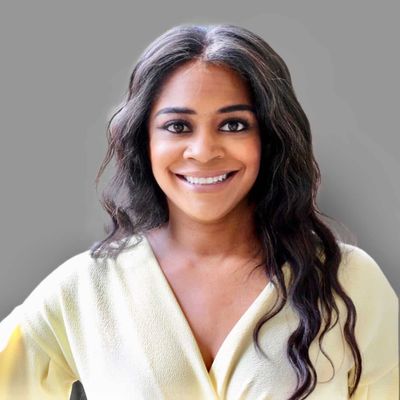
As the Director of Diversity, Equity, and Inclusion at the Broadway League, Gennean Scott is leading the way toward a more inclusive and diverse Broadway for all. Listen to her journey and plans for Broadway future in this episode of Take A Bow!.. Read More
From the show: Take A Bow
Guests
Featured Shows
About
As the Director of Diversity, Equity, and Inclusion at the Broadway League, Gennean Scott is leading the way toward a more inclusive and diverse Broadway for all. Listen to her journey and plans for Broadway future in this episode of Take A Bow! If you enjoy it, head on over to Gennean's podcast Black Business to Broadway, also available on the Broadway Podcast Network!
Gennean and Eli talking points include:
- Broadway Reopening
- Building a Better Broadway
- Equity, Diversity, and Inclusion
- The Broadway League
- Educating Others
- Black Business of Broadway
- The importance of Mentorship
- + a ton more...
Connect with Take A Bow on Instagram: @takeabowpodcast
Connect with host, Eli Tokash on Instagram: @tokash_eli
Produced by the Broadway Podcast Network
Edited by Tessie Tokash (@tessietokash)
Transcript
This transcript was automatically generated and might contain errors.
[0:00] Eli Tokash: Hello everyone and welcome to episode 91 of Take A Bow.
[0:04] Eli Tokash: I'm your host, Eli Tokash, and this week we have a very, very exciting episode. It is unlike any episode we've ever had on before. This guest is not an artist that you can see on the stage or in maybe like a playbill for like a director and casting director. It's not our typical guest. That's really is what I'm trying to say. Um, but this guest is equally important to any other guest that I would have on the show normally, and anyone else who is involved in Broadway. Uh, this week we have Janine Scott, who is the director of equity, diversity, and inclusion over at the Broadway League. So, very, very exciting guest. She talks about so many things related to Broadway, what the Broadway League is, behind the scenes, what happens, um, all of that.
Uh, so great, great conversation coming to you all, and she has her own podcast that it was just launched on the Broadway Podcast Network, um, called Black Business of Broadway. So, check that out if you enjoy this week's episode um for more content uh and all of that. It's it's great stuff, and we talk a lot about it here. Um, so I'm very excited to to share that with you all. But before we do that, let's turn it over to some Broadway news, shall we?
[1:22] Eli Tokash: Um, very exciting news out of Wicked. Um, this week, Brittany Johnson w is like officially the first ever full-time Glinda in Wicked on Broadway. Now, she has been in Wicked before and she's played Glinda before, and other black artists have played Glinda. Um, however, it has not been a full-time job. It's usually been like understudies or swings or something like that, or standbys. Um, however, she is it is her role. It is full-time. Uh, she's doing it, so very exciting, very emotional night uh for everyone involved. The cast, Brittany, of course, all the photos and the videos and everything that I've seen have just been absolutely incredible. It's just been like so moving, and you can't help but smile and like be so happy, you know.
Um another exciting news for like along with casting, I guess, since this is like a full-time casting role in a way, uh, where she steps into like the role full-time or whatever. Beetlejuice announced it cast uh for the I guess Broadway return or Broadway resumption. Um it's not quite a revival, I don't think they're calling it. Um, but it seems like everybody is going to be returning to the show, which is like huge. Um, however, there are two pretty big changes.
[2:47] Eli Tokash: Um, so new to to Beetlejuice is going to be Elizabeth Teter as Lydia Dietz, which um is kind of being rumored that uh she which hasn't really been public, but like around the Broadway world kind of thing, it was it's rumored that she was actually gonna be stepping into the role once Presley left, but Presley never had to leave the show because Beetlejuice shut down because of COVID. Um, so that's kind of interesting. So it was kind of like her role already, and like this coming back to Broadway, they just were still holding auditions, maybe they were unsure or whatever. But huge congratulations to Elizabeth Teter, who is a former Take About guest, which is so exciting. Hopefully, we can get her back on and talk to her again uh about stepping into the role of Lydia Dietz.
Um, very exciting stuff. And of course, uh, we have a new um not a new character, but a a new re-imagined version of Miss Argentina, who will be played by Michelle Aravina. And usually that role is like shared. Uh it's a role like the it's two characters are played by the same person, which is usually like Leslie Quit Kritzer. However, they are dividing up the roles of Miss Argentina and Delia, which is usually which was pr uh previously played by both by Leslie Kritzer. Um, however, Leslie is just doing Delia, and they have brought in Michelle to do Miss Argentina, so it's kind of like two different people. Um very exciting stuff. Uh, congratulations once again to all involved.
[4:28] Eli Tokash: Um, huge, huge congrats to Elizabeth. Uh, I'm so happy that Carrie Butler, uh, who also has a VPN podcast, um, and of course, Alex Brightman and Dana and all of them will be returning to the show, which is all very exciting. I I I love their performances and can't imagine anyone else, especially Alex Brightman uh per in Beetlejuice. And this is gonna be at the Marriott Marquis Theater on April 8th. That's when they will be opening back up. Very exciting stuff. Um, what else is going on? This is the last week of two for one Broadway week. I know I've said this for like the past month. Um, so I guess two for one Broadway month. However, this is the last week, and uh you won't have to hear me say it anymore. Um so go get your tickets while you can. Um once again, this is now uh Broadway and off-Broadway shows for this week. Please, please, please go support the art and theater and all the things at an affordable price this week.
[5:30] Eli Tokash: Uh, you get two for one tickets, which is two tickets for the price of one. Uh, everyone go check it out. We have interesting news over at uh American Utopia as well. Uh American Utopia is actually extending to April 3rd. They've continued to like extend and extend, and like it seems like every couple weeks they're like, we're extending, we're extending. But uh it appears that this is gonna be like the official last time that they actually extend. Um this is like the last time they're like actually like contractually able to extend to. Um, so I guess their closing date is officially April 3rd. Um, it's kind of amazing that they continue to extend. I I didn't know like it was doing that well, but hey, great for American Utopia. I just thought that was some something fun to share.
[6:16] Eli Tokash: And the cast of McBeth was announced, and I talked about you know, Amber Gray leaving Hades Town uh last week on the podcast. Uh, but now we're not gonna be seeing her like off the stage for long because she's going to be appearing in McBeth. Now, I am not one who like dies to go see Shakespeare or anything like that. However, I'm actually pretty excited about this one. Um, it looks very uh incredible. It's featuring um Philip James Brannan, uh, Grantham Coleman, Asia Kate Dylan, uh Amber Gray, as I mentioned, Bobby McKenzie, who was in School of Rock, a child performer. Um, they've got some amazing BIPOC artists that are going to be involved in this new Macbeth. Uh, and it's gonna be directed by Tony Award winner Sam Gold, um, who directed Adoll's House and and Fun Home. Um, and this is going to be at the Long Acre Theater, uh, starting on March 29th, and it will uh open like officially after previews, um, on April 28th.
[7:24] Eli Tokash: So everyone go check that out because I think it's gonna be a really cool, uh, really beautiful um production of Macbeth. And uh once again, we're not gonna be seeing Amber Gray off the uh stage for too long. No surprise, she's a true entertainer, it's amazing. She's so good. Her performance in Hades Town, wow, just unbelievable. All right, that's all I have for you folks this week on the news. Um I do want to talk about some drama dictionary, word of the week stuff. Um, I know I missed it last weekend or last week, but it was just it was a lot last week, and I was I it was a lot. So um I'm back this week. I'm back with the drama dictionary. Uh I'm here.
[8:05] Eli Tokash: Uh, and we have an exciting drama dictionary word of the week this week. Um, this week's drama dictionary word of the week is going to be dramaturg. Um, and for those of you who don't know, a dramaturg is a person who assists the director by researching the context of the play, including like historical periods, uh biographical information about the playwright, um, person who assists the playwright with clarifying and revising the script um as they see needed to make sure that it's historically and uh accurate and all of that. Um they've got like textual analysis, they do um it they do like anytime you like go buy a play at the drama bookshop or something like that, and you see like the back of it, it's got a description.
They're the ones that write that, and they check out um critical reviews of performances of previous performances and and if it's like a Shakespearean play, uh they have to go through all of the different types of text that's come before and the translations and everything and interpretations.
[8:53] Eli Tokash: They have to go through that to help and assist the director specifically but also the entire creative team um to make sure that they are putting the best uh piece of art on the stage. Um this role is is insanely uh important especially to a show that is uh brand new uh and this is not and now I don't mean like a new musical or a new piece um I just mean any production whether it's a revival, whether it's a tour, whether it's a like whatever it is, uh the dramaturg will uh just be at the start of the production for any type of uh theater show.
[9:48] Eli Tokash: Um it's very, very important. Uh they are usually they are helping um they they do a lot of the educational um stuff for like when schools come and do they do a little bit of everything and um they do it all like while the show is opening up so like two months into the production all the stuff is done and they can just reuse the same stuff. So the need for the dramaturg um isn't uh anymore it's needed, however it's not um as needed and it's not um as I guess um necessary uh and so they are able there's very few dramaturgs so they're able to like jump from show to show very quickly. Um, however, again, they are one of the most important pieces uh of the creative team, especially when uh starting out a show.
[10:41] Eli Tokash: Uh, they do a little bit of everything for um the show, and it's really about the historical context and the language and um all of that that's involved. And even like they have to know so much history and they have to research so much about the time period that like it even comes down to like set pieces and costumes and everything like that. They are the ones that has to point out and be like, you know, that's actually not really this time period, or you know, maybe you're a little bit too behind, maybe they're it's a little bit more advanced at this time period. Like they point all those things out to make sure that it is um super accurate the show that they're about to put on. Um, so yeah, that's I could talk about Dramaturg all all day, but that's the um kind of three minute or four minute, however long that was little spiel about a dramaturg. Very important.
[11:30] Eli Tokash: Uh huge shout out to all the dramaturgs out there. And uh yeah, that there you have it. That's this week's drama dictionary word of the week. Thanks, Diana, for your um kind of name for that segment.
[11:45] Eli Tokash: Uh hashtag Patreon. You guys are the best. So, with that being said, let's turn it on over to our wonderful interview and conversation with Janine Scott.
[11:59] Eli Tokash: Janine Scott, curtain up.
[12:17] Eli Tokash: This week we have a guest, unlike any other guest that I've had on this podcast before. This former performer is now the director of equity, diversity, and inclusion at the Broadway League. And now she has just created her very own podcast, Black Business of Broadway. So everyone, welcome to Take A Bow. Janine Scott.
[12:36] Janine Scott: Yay!
[12:39] Eli Tokash: Yay! Oh my goodness. I'm so excited for this. This is literally unlike any anything that I've done before on this. So I'm very excited to have you on and to meet you.
[12:49] Janine Scott: Well, I'm excited too. I'm excited to be here.
[12:52] Eli Tokash: Yes. Okay, there's so many things going on in your life right now, and it all has to do with Broadway. So I I'm I love it. Um, but before we talk about that, talk to me a little bit about yourself and like your backstory and like what got you involved in the entertainment industry.
[13:09] Janine Scott: Yeah, well, I'm from Omaha, Nebraska. Uh in the heartland, right smack dab in the middle of the country. Most people are like, I don't even know where that's at. And then the second thing is there are black people there. I'm like, yeah, we're everywhere. Go figure. Oh my gosh. And so as you can imagine, uh being a person of color uh in Nebraska who had an affinity for the arts. Um more specifically at that time, it was dance. Um, there weren't very many uh like me. I kind of felt like a unicorn. And so that's really what what developed, you know, that's really what sparked my love of the arts.
[13:50] Gennean Scott: And so I continued to dance and then we'll like fast forward. Um I go off to college because and my parents are like, um, yeah, you're not gonna be a dancer. They don't make any money, and uh you need a job. We're not sending you to Florida to go be to rack up all these student loans. Right. And only make like 30,000. Okay, I'm a little bit older than I probably and make about thirty thousand dollars a year teaching and so I was like okay fine I mean um de less than thirty thousand dollars a year dancing and I'm like okay fine whatever so I I went into education and I kind of I got I kind of got burnt out real quick but I'd always been dancing the entire time um I'd been teaching dance at like recreational centers and at dance studios and so it just never stopped and I ran into somebody and they were like hey look um we're looking for someone to oversee community outreach at our organization or nonprofit and I was like oh okay I could do that you know I like kids and so a little part-time thing grew into a full-time thing which led me to um Omaha School of Music and then that led me to the Omaha Performing Arts which is a um a presenting organization for Broadway and that led me to here wow okay so it was a big big climb of the ladder here um so you didn't have like the education you didn't go to school for you know EDI or community outreach or anything like that well so I while while being a teacher I I ended up after leaving I went after being a classroom teacher I went into being an administrator as an administrator um one of my one of my uh targets and I worked at a Title I school which is for low income students uh and statistically those students tend to be people of color and so I oversaw a program that dealt with um educating parents educating staff and about inequities and training those staff and recruiting volunteers and so I started training in that area while in the school system and then I transferred over and I transferred that skill set into community engagement uh in an arts organization and then from there it just kept so it was equity work long before it it was cachet totally totally I get it um well so now do these like these experiences that you've had you know being a black person or a person of color in Nebraska who loves the art like did those did that kind of you know influence your your decision on like becoming more involved in in affecting other people's and in the future of Broadway of like performing arts absolutely yeah it absolutely shaped everything um those experiences make me who I am right now and it's why I'm so passionate about diversifying um the business side of Broadway right I saw my first live real Broadway play in New York at 16 and it was called Five Guys Name Mo and it was a black cast and I was like what the heck what you know coming from Nebraska I'm like what I mean obviously I know they're black people come on now.
Right it was just like seeing it on stage and and it you know I'm like how does this happen and and and where and how do we make this continue to happen and so when I went back to Omaha I was like I'm gonna open up a studio and which I ended up doing as well opening up a dance studio um I didn't do that at 16 but I did it later on but it it it's that idea started formulating in my head at the age of 16 of how do we make a space for people of color or any marginalized group to be able to see themselves and you know it should I I shouldn't have been 16 going to New York actually seeing myself for the first time outside of fame you know and Debbie Allen on TV so that was that was life changing for me and at that moment it that it really changed the trajectory for the rest of my life.
[18:26] Gennean Scott: Wow okay so then that led you obviously to where you are today at the Broadway league so talk to me for those listening you know what just describe what the Broadway league is first and like what it does.
[18:40] Gennean Scott: So the Broadway League is is a trade association yeah and uh I I like to explain it to um to people that who are like I don't know what I don't know what that means with the trade association. I think about the MLB you know the major league uh baseball I think about um the NFL you know those are all league associations and they have multiple teams well we have multiple you know multiple shows multiple venues so we represent uh the theater owners we represent um the presenters. So like Omaha performing arts is a presenter uh we we represent like over 700 plus uh we have over 700 plus members. And so they're producers, they're presenters, they're general managers. Um and so think of it, yeah. Think of it like kind of like the NFL and how they have separate things and they all come together to to one thing.
And we rep we we help to represent the brand Broadway. Uh we help with like bargaining agreements. Um we help in the area of um government relations, uh and those types of things. So we yeah, I hope that explains it.
[20:01] Eli Tokash: Yeah, totally.
[20:02] Gennean Scott: It's really like the business side of Broadway.
[20:05] Gennean Scott: It is, it is literally the business side of Broadway. I mean, like we do research and we maintain those archives, you know, for the theater. So yeah, all of that good stuff.
[20:15] Eli Tokash: Amazing and make sense, black business of Broadway.
[20:19] Gennean Scott: Okay. Yes.
[20:19] Eli Tokash: Copy.
[20:20] Gennean Scott: Um, this is amazing. So then uh so your time at like you said that Broadway League is like represents, you know, Omaha, the the theater that the theater of Omaha, is that what you were saying?
[20:33] Gennean Scott: So Omaha Performing Arts is a member of the Broadway League.
[20:37] Eli Tokash: So that's then how you were introduced to to this?
[20:41] Gennean Scott: Yes, yes, amazing. So talk to me now because you're you said like I said, you're the director of equity uh diversity and inclusion at the Broadway League. So this obviously it has never been a position before. Um at the Broadway League. And you were hired during the pandemic. Um what is that like? You know, not really having uh a base of like what to go off of and kind of creating this from scratch start to finish, you know, right scratch.
[21:12] Gennean Scott: Yeah, well, in Omaha, um, I I did this. I did this work in Omaha. Uh and it looks like and I was the first there too. So creating that kind of blueprint right was it's just taking it and putting a magnifying glass on it now because the league is so massive as opposed to Omaha being one part of something. But so I wasn't I'm not necessarily new, you know, to this and to this work. But it started really with me doing um what what my boss calls a listening tour Charlotte uh she's like I need you to go on a listening tour. And so I did that for 90 days and I looked at what opportun I asked people what opportunities exist in e in the area of EDI with the league. What areas are we doing amazing at that we need to capitalize on and ensure sustainability where have we completely missed the mark and it wasn't just about asking those members but it was also asking lay people outside of the industry how do you view Broadway and then creating a plan of action that we can actually implement.
So it was looking at the BTU agreements. It was listening to it was listening to um BTC and BAC and Industry Standard Group and all of those auxiliary organizations that that exist that talk about equity, diversity and inclusion within our industry. And so it was it was taking those meetings. It was, it was talking to just people who are like, hey, I saw you got this position. You know, I'm not I'm I'm a I I am an aspiring actor or actress, and you know, these are kind of my thoughts. And it was like, okay. I mean, I I'll listen because it's only gonna help to make uh to make our programming um more robust and more inclusive, to have input from everybody and not just from one side.
[23:17] Eli Tokash: Totally.
[23:18] Gennean Scott: So now, I mean, obviously, I feel like since Broadway has reopened, um, there has definitely been some growth uh in being more inclusive uh of Broadway and being more diverse. Um obviously there's still a lot of work to be done. How much like what are your thoughts on that? And like how can you, you know, help that because like if the writing isn't there for black artists, like how is that gonna be able to be more inclusive? Like what is how do you, I guess, expand on that?
[23:56] Gennean Scott: Yeah. Well, here's the thing the the business practices of last year or two years ago are no longer those business practices, they can't be. We can't go back. Um, you know, we had we had the COVID pandemic, but we also had the racial pandemic that is that was and is very real. Um, although it took America to wake up to it about two years ago, I've known it my entire life, you know, as a black woman. I've I've seen it, I've heard the stories. So this is something that I've known my entire life. And so now that that the world has caught up to where most marginalized groups are and and in trying to gain better understanding, um, we can't go back. Right. Because to go back is to say is to ignore everything.
And we we can no longer, you know, um we can no longer close our eyes to that. So what it looks like is, you know, talking to unions, uh, looking looking at those procedures that it takes to join and to be a part. It looks at it, it it's about talking to the producers and creating a way, um, whether it be a program or a system, that they are able to see more diverse directors, more and get more diverse stories out there. And it's about intentionality, right? We can't do business with the same people we've been doing business with, and that's how we change it. If we really want to do, if we really want a different outcome, we have to do something different, and that is what we are committed to doing, and that is what we've started doing.
I mean, even just to be a Tony voter now, we have to take unconscious bias training. That's a big step. And I know people are like, okay, uh unconscious bias training, okay, that's just one thing, but that's just a step. It's a step in many, and we have to one, we can't walk around. Somebody has to teach it. Okay. And I'm okay being that person. Right. If I have to be that person to teach it to create change, I'm okay being that person. Because if we don't do it, I'm not, I'm not willing to rely on other people to do it. I'm not one of those people that waits for someone else to do something and then jump on board. I'm like, oh, it's not there, okay. I'll do that. Right. And then you can come along with me.
So it's it's about looking at our business practices and doing them totally differently because we cannot rely on those old business practices. Otherwise, we're gonna continue to have what we've been having. And if we say that's unacceptable, then we have to do something about it. And I am glad that um that the membership is a hundred percent committed to doing it. I mean, I was hired during COVID, right? No money coming in. You know, there was little money coming in because the shows weren't up and running, but because of their commitment to this effort, they still hired this position and hired it at an executive level, not at a not at an entry level, but at an executive level where I'm at all the meetings and I'm a part of all the committees to really bring about change.
[27:34] Gennean Scott: I really work cross-departmentally, and that's how you really affect change is to be involved in every department from government relations to labor relations to audience development, engagement, workforce, research, you name it.
[27:50] Eli Tokash: Yeah, you have to be there, you have to be in the room where it happens, right?
[27:54] Gennean Scott: Absolutely, absolutely. It's incredible because like, you know, these are things that like people don't even think about, you know, and like just uh the fact that like this is what you're doing, and like this is the extent of what it takes to create change and create that, you know, for you to lead the way, like it's incredible. Like, I'm just like blown away by it. And I'm like, tell me like everything. Um I'm obsessed. It's it's fascinating. And like, huge shout out to the Broadway League for seeing this uh as an opportunity to to you know grow and learn from our mistakes in the past, but unfortunately, is it's taken a little longer than it should have to mean that. But um, but this is so cool, like for you, and just like hearing your story of like you know, you being a performer, and now you know, you're leading the way for the next generation of BIPOC artists and uh still involved in the arts and industry, like what does that mean to you?
[28:52] Gennean Scott: Yeah, you know, uh it means everything to me. And you know, it's not just about BIPOC, it's all marginalized groups, it's non-binary, it's LGBTQIA plus. It's looking at accessibility as well, you know. So it's being there for every group that has historically been shut out. And it is at times I I can't lie, it's like, oh my gosh, how am I gonna do this? The heel is so high. But you take it piece by piece, and and I realize that and I hate I hate hearing this, and I'm gonna say it, is that we didn't get here overnight. And that's true. We didn't get here overnight, but we can create we can we can create milestones and say, okay, by here we're gonna be here, by here we're gonna be here, and we can attack it, you know, um piece by piece, and then eventually we we will see, we will see that that type of change that we're looking for within our industry.
[29:56] Eli Tokash: Right. So, like, as I mentioned, like you joined during the pandemic and there were no like shows going on like you mentioned. So, like, how difficult was that to like start it, or was it like a positive that you were kind of just like, you know, this is what I can focus on. I don't have to worry about shows right now.
[30:17] Gennean Scott: It was a positive, absolutely, because everybody was still right, and so I could have their undivided attention, and so they had time to actually meet and talk, and we can get to we can talk about serious things. I mean, they were there were trainings, there was anti-racism training that went on during that period of time. Everybody had a day or two to give to those types of trainings and to sit there and to really process it together as a group. It wasn't like individual training, it was all of us in in one Zoom sitting there listening, and there were multiple, multiple um uh classes of this, so that we can all sit there together and unpack the history of our country because we have to understand the history and this industry is like every other industry, it's not just Broadway, every industry is facing this, you know.
The corporate world, the nonprofit world, if you look at the stats of leadership of people of color, it is abysmal for it to be 2022. It's it's not it's not there yet. And so we we we look like every other industry, but I'm hoping that we can help lead and be the leaders of this industry, heck, of the country. I mean I have big goals, okay? I don't dream I don't, I don't dream little.
[31:50] Eli Tokash: Yes, you got my vote.
[31:50] Gennean Scott: I don't dream little. I'm all about dreaming big. And I I love it. So I I think we can be the leaders of the country of how you create change within it within a system, within a organization, within a company. And then this is what it looks like. This is where you start. These are the things that you have to do. And then you have to be patient. I have to be patient with myself because I tell you there are times that I'm like, okay, I'm gonna, okay. I know it's like 11 o'clock at night, but I just gotta do just this one more thing. And I have to say to myself, okay, self, you need a mental health break.
[32:30] Eli Tokash: Oh, yes.
[32:30] Gennean Scott: You know, the the because I just get so I get so fueled and it and it excites me. It doesn't feel like work. People are like, oh yeah, and it doesn't feel like work because I genuinely enjoy this. I really, really, really want to make this industry so much better. And I want to see, I want to see everybody of every shade of every ability of every everything. I wanted to, I want this industry to truly mirror the a better world than what we live in.
[33:08] Eli Tokash: Yeah, I love that. I can't imagine some of the conversations that you've had to have had over the the course of this, you know, eight month period that you've been at the at the league. It's incredible. Um I have a question, like I there's been like every time you say something, it's like, oh my god, question about this, question about this. Um, like how do you work with like casting directors at all like in in kind of educating them because like there's a story like Wicked where it's like you know the it's about a character alphabet who's like a different shade than everyone else and um it's like okay to be different like and it's never been played by a person of color it's always been played by a white person I'm just like there's a prime opportunity for a black artist or BIPOC artist to lead Broadway and like such an iconic show and that's never like been done full time and just recently we've had a a Glinda you know like it's taken that long like they've been on Broadway for 20 years. So like do you work with like casting directors for these shows that have kind of been the cornerstone of Broadway for so long?
[34:15] Gennean Scott: So many of the shows like Wicked uh shout out to Christina Alexander who is at Wicked uh she is she is the person who is leading that and so I I don't get into each show because or each member's um uh Kool-Aid to use a slight term I don't I don't get into each member uh because they they have made their own commitments within their organizations to hire those individuals as well. So there is there is somebody there at Wicked who who did who talks to and at Moulin Rouge and at Disney Theatrical and you you know it goes on and on Mrs. Doubtfire um six Hamilton. I mean, so you think of the show, most of them have someone who is dedicated and who was spoken Harry Potter who is focused on that one area for that show. And so there there are other there are other Mis out there who are doing it for their specific show.
[35:19] Eli Tokash: Wow. So is that put that's not put in place by you?
[35:22] Gennean Scott: That's hired from their companies.
[35:25] Eli Tokash: That's hired from their company, yes.
[35:27] Gennean Scott: But we do meet and we do talk and we and we we look at we look at the opportunities that exist.
[35:35] Eli Tokash: Wow.
[35:35] Gennean Scott: Um and and we we provide a support system for one another because this work is it's hard because people are like, okay, I want change and I want it right now. And it's like uh we got we have to put some systems in place to create lasting change because we don't want to build anything that's quick. I mean, it's like if you build something fast, it it's not gonna last.
[36:00] Eli Tokash: Right.
[36:00] Gennean Scott: Right. And if we want something that's gonna last. So it's about laying a solid foundation, it's about knowing where we are so that we can we can get there together and and doing it right the first time so that we never have to do this again.
[36:15] Eli Tokash: Right. And I I love that you were saying, you know, like when you started this, like it was all about educating people because that our education system is very flawed. That's a whole nother podcast episode. Um so uh, but yes, that like that's where it starts to lay that foundation to then be able to expand and and work further. And I love that that's kind of what you're doing with your podcast is really educating people on different types of things involved in this industry.
[36:44] Gennean Scott: So, like I mentioned, Black Business of Broadway is your podcast on the Broadway Podcast Network as well. Um, talk to me about your podcast and just lay out basically what what it is and what you talk about.
[36:58] Gennean Scott: Yeah, so it's titled The Black Business of Broadway. It is sponsored um by the Broadway League and uh and our initiative uh Black to Broadway. And basically, we are we are highlighting all the jobs that people don't think about. You know, people when you think about the stage, you're like, okay, they think about Broadway, they think about actors first. We're talking about what about those the CEOs and presidents of the presenting organizations because Broadway just isn't in New York. Right. It's global. And so it's saying you can be in, you can be in Dubai and still be a part of of Broadway, or you can be in Mexico and still have a part of Broadway. You can be in Nebraska, you know, California, Washington.
And so Broadway is everywhere. And so it's one educating that that one thing is that we are not just New York. And then it's looking at those positions that exist that support Broadway. So it's like not just the directors and choreographers and the producers, but it's the ticket takers, the ticket administrators, the ticket managers, it's the systems that are in place. It's IT, it's finance, it's marketing, it's press reps, agents, it's um usherers. I mean, like I could go on and on its facilities, um, who who's putting who who's making these buildings accessible. It's um it's human resources, which is my which is my background. You have HR, you have education and whereas you're like teaching another generation to come into Broadway or to have a love for Broadway and to have a love for theater it's PR it's research um now it's social media there's COVID people now there's labor negotiations attorneys I mean there are so many jobs there's hair there's hair there's makeup there's wardrobe there's seam strict there's scenic design there's lighting design I mean there are so many positions stage managers company managers general managers producers lead producers associate producers I mean there are so many jobs out there but we don't think about it and we don't know about it and so this is an opportunity to say hey you know there are positions there are jobs out here and we want you yes and that's how we create we create the diversity in the back of it in the back of the house are in the offices and we create it on the stage and that's how I think we become we create a more inclusive and more equitable right you know Broadway.
[39:57] Eli Tokash: And I I love that because there's so much there there's so many people that go see a Broadway show and they're just like oh my God I love Broadway and I love this industry and I love performing arts and everything but I wish I could like act and perform on stage. Well like you don't have to act and perform on stage to be involved on Broadway. Like that's what I'm studying at school right now. It's like this is there's it's a whole, it's a whole like group of people.
[40:22] Gennean Scott: It's an ensemble, really.
[40:24] Eli Tokash: Whether it's like on the stage or behind the scenes, like everyone, it's such a a group uh effort to make Broadway what it is. And it's not just what you see on stage. There's so much that goes into it. And your podcast really brings that to light. Um your podcast also talks a lot about mentorship.
[40:38] Gennean Scott: Uh and especially in the first two episodes.
[40:44] Eli Tokash: And I just absolutely love that discussion. And I I'm a strong believer in mentorship and just having that person there for you so that they can guide you along the right path and help you in the future. Uh talk to me like about that and like kind of is that kind of another topic, or is that like more of a sub topic or like whatever?
[41:05] Gennean Scott: Yeah, you know, uh mentorship is it's big. Uh the f you know, I've had I've had some great mentors personally and professionally. Uh Joan Squires, who's the president CEO at Omaha Performing Arts, uh, Deborah Bunting, who used to be over at the Nebraska um arts or she was at the Nebraska Arts Council.
[41:27] Gennean Scott: Those two individuals really helped to mentor me professionally in this area. And then when I moved here, I was like, I need a mentor. Like I I I I need I still need that. I need a mentor. I need someone who knows this industry, who knows Broadway. And Donna Walker Kuhn, who is who is an icon and a Titan, uh, when it comes to equity, diversity, and inclusion in this industry. I reached out to her and she's actually gonna be on the podcast. Uh-huh. Um, and so it's it's a really great opportunity that um I I was grateful that she said yes. And then it it was even better having the opportunity to uh to interview her. But I think that if you have a goal to be big or to do whatever, you need someone to say, hey, look, you know, I don't know if I would approach it that way.
Have you tried this? Especially being a woman and a woman of color. I needed those, I needed those women to say there were times I was the only, and now you're there. And so I needed to not, I needed to have the history of where I'm at to fully appreciate where I'm at, but also to make sure that the history never repeats itself. To make sure that I'm no longer ever the only person in the room. They were the only, so I shouldn't be the only anymore. So how do I how do I change that? And they help to navigate me. They're like, have you talked to such and such? What about this? Um, and so they give me really an outline to what I can do to find success in this position. And I I cannot do this by myself.
Um, I I need I need that support system. No one person can do anything by themselves, and if they say they can't, or you know, um successful. Yeah, so I mean, I think you really have to have a solid mentor, someone who's been there, done that, and who can help you. But the mentorship isn't just a one-way street, you know. They say, Well, you know, Janine, as much as you say that I've taught you, you've taught me about this or that, because times change. Right. And so it's about an exchange, it's about that exchange of learning. But I really I am I am such a proponent of mentoring and mentorships. Even if you are considered being successful or have arrived, you still need someone who is seasoned to be in your ear.
And you need someone who's up and coming in your ear. So I mean, people may say I'm their mentor, and I'm like, well, I feel like you're my mentor, even though you're younger than me, because there is still something to be learned. And so I think it's it's really a two-way street, that mentoring component. I'm a big proponent of it. I think everybody should have a mentor, and everybody should be humble enough to be a mentee.
[44:25] Eli Tokash: Right. Well, you can never stop learning. And that's the bottom line. So if why not learn it from someone who has that kind of experience that you may not have, you know. Um, I love that. So you mentioned some of your future guests. Uh talk about the guests that you've had on and your future guests that you can like kind of tease.
[44:43] Gennean Scott: Okay. Uh so yeah, I mean, I'll get so we talked to uh Lady Irene Gandhi, uh, two-time Tony. Uh one Tony for producing and another uh Tony Honors recipient. And she she's on there and she's she's fabulous. As you heard, the one that we just released with Colleen Jennings Rogan Sack, who's our vice chair of the road, um, and Kevin Taylor who's up and coming making his Broadway debut. You have Brian, um, Brian Moreland, uh Aletha Stevens, and upcoming. I mean, we have some of the presenters, some of the black presenters who are over who are over the performing arts centers on the road, because I really think, again, we have to drive home that Broadway is not just in New York. Right. Everywhere.
And so we bring those in. We have some choreographer, we have a choreographer coming in. We have a dancer who's coming in to talk about dancing on Broadway, being a choreographer for Broadway, uh looking at directors, looking at some actors. We have a company and stage manager who will be who will be on there. Cody Renard Richard is going to be on. I love him. Yes, yes. I mean, so there we're gonna be talking to some of these EDI directors who are EDI for the specific shows. So kind of like you're talking about when we talk about casting and things like that. Um Disney Theatrical really does some amazing work when it comes to um accessibility and folks with disability and talk about visual um visual impairments and things like that.
I mean, so we're gonna have such a diverse cast of characters on our on our on our podcast. It's it's super exciting. I am I I am super excited. I am I'm grateful to the Broadway League for saying, yes, let's do this. It's impossible for us to communicate out to and get to every school. Right. But this is a way, this is a medium that we can use to promote these careers in our industry and to start really seeing some diversity. Because we have lots, we have some fellowship programs and internships, and that sometimes people just don't know about. And it's like this is an opportunity for us to do that, to say, come on, intern, you know, become a fellow. And I'm I'm just I'm just I'm pleased, I'm excited. If you can't tell, yes, I'm I'm really really excited about this. And if I use the word really one more time, I'm gonna like start putting money into a jar.
[47:20] Eli Tokash: Oh my god. No, I mean, understandably so, like seriously, and that's what I love about podcasts is that literally you can access it anywhere. And so, like the fact that you're able to be that voice and you're able to represent the Broadway League and the black business of Broadway, like that is huge. And that is incredible. And you inspire me. I just met you, and I'm like already seriously. Um, and so that's why I was like, I I just have to talk to her. And like for everyone at home listening, like please go check this out. Like, honestly, um, it's accessible anywhere you listen to podcasts, it's on the Broadway Podcast Network. And then you can of course follow uh do you mind sharing your social media so that they can follow your you can you can follow me on Twitter.
Um I don't remember my name. I I think it's like consked it or something, but but if you go to the Broadway Podcast Network, it links directly to my social uh you can find me on LinkedIn because you know, this is a professional avenue. So I will share, I'll share job postings, not just that the league has, but just like if somebody's like, hey, you know, we have a position, I'll put it out there. I mean, because I I I want I want individuals to to get hired in this industry and to and to be working and to be successful, yes, you know. So yeah, anything I can do. Um, and it it says black the black business of Broadway, but it's for everybody. The stories are universal, and I think that's one of the things that I hope people take away, is that these stories are universal.
You know, struggle isn't just one demographic, you know, and success doesn't look like just one demographic or one person, and so these stories are universal. My I mean, some of my mentors are white, and your mentors don't have to always be people of color, it's whoever has the heart. And I think Brian Moreland said something about not letting your vessel stand in the way so not letting not letting your skin stand in the way of who you who you receive and who you seek out and I absolutely loved it when he said that because it's so true sometimes we get in our own box and we stay in in community with people who look and think and act like us and we gotta break out of that. And um and so I really appreciate it when he said that. So yeah all of those things.
[49:42] Eli Tokash: I love it. Well Janine thank you so much for your time it was an honor to meet you and and just be able to talk to you about all of this wonderful stuff that you're doing and the fact that you're leading the way it was so wonderful to pick your brain. Uh everyone like I said go check out her podcast Black Business of Broadway so you can hear more from Janine. And seriously you deserve to take a bow on all of the things that you're doing for Broadway. Seriously thank you.
[50:06] Gennean Scott: I am I am really humbled and I mean when I got the email I was like what you want to talk to me so I I appreciate I I so appreciate you giving me this opportunity.
[50:29] Eli Tokash: Right and so I I thank you I thank you I thank you I thank you.
[50:33] Gennean Scott: Oh my gosh you absolutely deserve to to be able to appreciate all the wonderful things that you're doing and take a step back and just be like wow like look what I'm doing. I'm really leading the way for everyone else in the future of our generation and our future of artists that are gonna come to Broadway. Um, so it's amazing what you're doing, and you you definitely need to to remind yourself of that. So I'm glad I'm able to do that.
[50:56] Eli Tokash: Yeah, of course.
[50:57] Gennean Scott: Oh my god. Thank you again.
[50:59] Eli Tokash: Uh it was wonderful.
[51:00] Gennean Scott: Take about Janine Scott.
[51:03] Eli Tokash: I mean, come on. That was that was incredible. Um, just to hear her story and kind of what she's doing to lead the way for the next generation of artists on Broadway, all artists, truly. Um, like she mentioned, it's just it's not just BIPOC artists, and I think I didn't really understand that until like she came on and talked to me about it. Um, just everything that she had to say was just so fascinating.
[51:28] Eli Tokash: And I could have talked to her for hours and hours, and uh, I'm sure you could have listened to her for hours and hours. And if you could, then go check out her podcast, Black Business Abroadway. The first two episodes are now available. There's a little trailer episode, and then of course, the episode third, the third episode is coming out very soon. Um, so go go check her out, go follow her on all the things, including her podcast.
[51:52] Gennean Scott: Um, her podcast again is called Black Business Abroadway.
[51:56] Eli Tokash: Um, it's incredible. And as she mentioned, it doesn't matter what demographic you are, this podcast is for you. The stories are are being told and are absolutely relatable. Um, I I I'm a first-hand witness to this, and uh I will absolutely vouch for her on this um because I was listening to her podcast and I was able to relate and I was able to be interested in these stories that were being told.
[52:21] Eli Tokash: Um so if you are interested in learning more, check out Black Business of Broadway on the Broadway Podcast Network or anywhere you listen to podcasts. Once again, I I'm truly so appreciative to Janine, and I'm appreciative for you guys for listening to this because uh honestly it's not a typical episode and it may not catch your eyes like some of the other episodes may, but I think that this this the conversation that we have in this episode may actually be one of the most important conversations that we've ever had on this podcast before.
[52:50] Eli Tokash: And which is one of the reasons I want to have her on the show. So once again, Janine, thank you for coming on and thank you all for listening to Janine and taking the time out of your day. Come back next week and uh we'll we'll have a new guest. Um it'll wrap up Take a Val's dedication of February to Black Black History Month. Um so yeah, it'll um and then we'll start Women's History Much Month, which with a wonderful, wonderful leading lady of Broadway.
[53:17] Eli Tokash: Um so very excited for all of that, and uh there's there's a lot to come for Take A Bow. And once again, uh tickets will be on sale for Take A Bow Live very soon. Um when that happens, I will obviously keep you all posted. That show is going to be on April 18th at Green Room 42 at 9 30. I hope that you can make it. I hope that you can make it.
[53:40] Eli Tokash: Uh follow us on social media so that you know exactly when tickets come on sale. We'll be posting on that, and and uh we'll be doing a little podcast slash cabaret kind of thing with incredible former Take A Bow guests, and uh I'm just so excited for all of it. So stay tuned and uh follow us on social media, check us out on Patreon and all the other things.
[54:01] Eli Tokash: So once again, thanks for listening, and I hope to see you next week. Bye everyone. Have a great week.
[54:07] Eli Tokash: For this episode's curtain call, I would like to recognize a few people who also deserve to take a vow. This podcast would not be possible without the help from Dory Berenstein, Brittany Bigelow, Katie Rosen, Alan Seals, and the team at the Broadway Podcast Network. Next in line to take A Bowl is Tessie Tokash, who edits the audio and all the visuals for this podcast. A special thanks to patrons Brian Thompson, Pat McNamara, the listeners at PCC, as well as all the other patrons for their continued support. If you're interested in becoming a patron, go to patreon.com slash TAB. And if you enjoyed this week's episode, don't forget to subscribe on the platform that you're currently listening to this on. Also, feel free to give us a follow on Instagram at TakeA Bow Podcast. Take a Bow's logo is designed by Giselle Bustos, and the music is by Nikki Torsha and Cormac Collinon.
[54:57] Eli Tokash: Bye everyone. Hope to see you next week.
© Broadway Podcast Network, All Rights Reserved