

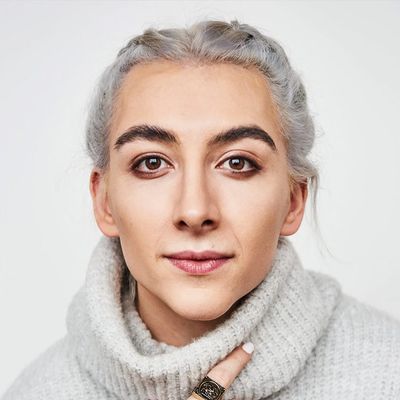
https://www.masonalexanderpark.com/ Mason Alexander Park Social- @masonalexanderpark. Patreon for Tell Me on a Sunday. https://www.patreon.com/tellmeonasundaygraceaki. https://www.theguardian.com/music/2017/sep/14/pansy-craze-the-wild-1930s-drag-parties-that-kickstarted-gay-nightlife... Read More
From the show: Tell Me On A Sunday
Guests
Featured Artists
About
https://www.masonalexanderpark.com/
Mason Alexander Park Social- @masonalexanderpark
Patreon for Tell Me on a Sunday
Transcript
This transcript was automatically generated and might contain errors.
[0:38] Grace Aki: Welcome back to Tell Me on a Sunday podcast. It's me, Grace Aki. I hope you're doing okay. I hope that that intro into season two didn't completely turn you off from listening. Um, thanks for sticking around. Thanks for being here. Um, I've missed you. I've missed you a whole lot, and I'm glad that you are welcoming me back into your ears. And there are so many episodes from season one that did not get put out due to, um, I'm just gonna mention the other episode of this season. Um, that's kind of why, uh, it ceased for a minute, and so I'm excited to put some out that are almost like a year and a half old at this point, but hopefully it won't be too dated. Uh, this one is actually pretty fresh.
It's certified Rotten Tomatoes, very fresh. This interview, um, that I got to sit down with, um, just the incomparable Mason Alexander Park, who if you don't already know about them, they are literally blowing it up. I mean, you could have seen this a mile away, um, if you're familiar with their work. Uh, starting, you know, it well, for me it was, you know, recognizing them through Hedwig and the Angry Inch, the national tour. Um, I knew this person was very special, and then, um, shout out to Jonathan Damar for posting so much about Mason and their Green Room 42 show. And I thought, who is this person? I'm gonna have to stalk them on social media, and then we ended up stalking each other. It was great.
And, uh, I'm just so excited for you to hear all about them. And they're not gonna promote their stuff because I told them that I would already talk about it here. And I just want you to put on your radar, if you're not already a big fan of Cowboy Bebop, the live-action version of Cowboy Bebop, the anime show. Uh, it's coming to Netflix and it's going to be amazing. And they're also doing, uh, The Sandman, also brought to you by Netflix. And you gotta follow them on all their social media accounts. Follow them at Mason Alexander Park. Pretty simple. I appreciate that it's, uh, cut and dry. But yeah, they've got so many great projects coming up. I'm excited to see them in the Pansy Craze. Uh, their Green Room 42 show coming up at the end of, uh, this calendar month, the end of Pride Month, thank God.
Uh, and yeah, I hope that you're having a good week. Um, New York is finally starting to feel like home again. You know, I went back to my home in Georgia for a long time, and then I was staying, I was crashing at a friend's house because they were gone in Brooklyn, and then I, it took me a very long time to be able to have the means to get an apartment. Um, due to a lot of like financial, legal, all of the unfortunate adulting, uh, costs that came with the pandemic for me. Uh, so if you had to deal with any of that, I'm already sorry and I feel for you and I understand and you know, I was very nervous about abandoning New York for the longest time. But I wasn't abandoning it. I had to go. I couldn't, I could not live here.
And, um, I was so excited to be back because it's beautiful and I've missed eating mussels and, uh, sitting and talking with people in the face because I've been so careful and now we're all vaccinated, hopefully, and, uh, it's good. It's getting to be really good, but also if things are still kind of bad, I get nervous all the time. I posted this thing on my Twitter that, you know, I feel still scared a lot of times. I'm so excited, like I wanted to plan this like dinner date and I wanted to, you know, I'm meeting my friends, and then I thought, what if I have a panic attack on my way? Like, what if I, what if I can't do it? And you know, it's happened a couple of times. I was inside of a restaurant for the first time and in Hell's Kitchen, and I was like, okay, people are so close to me, and I don't know if I can be this close, but you know what?
I've gotta trust it. You know, they scanned people for their temperatures at the door and they're, uh, they're checking their vaccine cards and I just gotta, I gotta, if I'm gonna do it, it's gonna be okay, and it's okay to not be okay. Um, but yeah, I just, I just want you to know that you're not alone if you're feeling a hundred different things. And I, you know, I deal with my own bipolar two disorder on top of all of this pandemic, so I really can't pinpoint it to being like, oh, this is something I normally deal with. Thanks, Lexapro, or if it's just what happens when you live through a global crisis. Who's to say? I will say. I'm excited to talk to Mason Alexander Park today. And I know you're gonna want to listen to this. So here are some stories brought to you by my friend Mason Alexander Park.
[6:07] Grace Aki: I'm so excited to sit down face to half of my face with Mason Alexander Mia Thermopoulos Ronaldo Park. This has been, I've wanted to talk to you for so long about so many of these things. So it is an absolute honor that you are sitting down for this storytelling podcast. How are you? How are you doing, Mason?
[6:33] Mason Alexander Park: You know, I am doing okay. I am a tad bit overwhelmed. Um, I am very, I don't know. Some of it might have to do with like the real world, some of it might have to do with the world inside my head. Who knows? Yeah. Um, so many things. But I, uh, yeah, I'm doing really well. I mean, like, there's not a lot to complain about. I'm just, uh, very, very happy to be healthy and be functioning and able to sometimes get out of bed. And that's, yeah, it's going, it's going okay.
[7:07] Grace Aki: I appreciate that you said sometimes getting out of bed because I am telling you, I was not giving up my big ass king size bed for nobody. And I because I live there now. That's what I'm trying to say. Like days when I'm just physically not getting out. And I know like this sounds TMI, but I know you've seen my bedroom, like it's all dark right now. And it's like sounds like absolutely sketchy. But you know what I'm saying? Like it's so dark, and just like, you know what? If it's a sad day, it's a sad day. But if it's a good day, um, I, you know, I'm in here, so whatever. Um, it's hard to get out of that hole sometimes.
[7:42] Mason Alexander Park: That's what she said.
[7:43] Grace Aki: That's what I said. That's what they it is.
[7:45] Mason Alexander Park: So in absolutely stalking you, just because I'm like so familiar with a lot of like what you do and who you are now because you are so, um, transparent with a lot of things on most of your social channels, which I find really empowering and also like really beautiful. Um, but I did some deep diving because I want to start at the beginning of your life, bitch.
[8:11] Mason Alexander Park: Okay.
[8:14] Grace Aki: I kind of knew like you grew up a child starlet in a way. Like you starting, I mean, not even starting, like starting at, you know, age five, going into Icar Lee later. Um, can you just tell me a story about like kind of because I think you do have like a memory of first being on stage and all that good stuff. Like, can you tell me a story about how that kind of came to be for you?
[8:38] Mason Alexander Park: Uh, okay. Um, I definitely, the very, very, very first time that I ever was on stage in like, um, a theatrical context was my parents. Um, they really liked trying to get me to try new things. And so they put me in a lot of different activities as a kid, like every sport you can imagine, um, every random extracurricular that they could get me to take. It was definitely a really great thing, but also, you know, like I felt like I was just trying to balance so many different things. And they, I guess they had picked up on my obsession of like film and the fact that I had this very weird idea that I was going to grow up to either become Stan Winston or Steven Spielberg. Like I was obsessed with Jurassic Park and Jaws and like the animatronic aspect of it, like the creature creation part of I would sit and just like watch these like special features for all those movies over and over.
And so I loved the, I don't know, I like the creative process of making film. And, um, and I think they just sort of picked up on that and thought that maybe they would put me in like an acting summer camp. Um, we were living in Texas at the time, and I went to this place called the Magic Theater in San Antonio, Texas, right down the street from the Alamo, very apropos. And, um, they did themed camps where you like, uh, based on your age group, you could pick different themes, and you would basically be in that camp for a week and create a show or a play, you know, an original work based on whatever that theme was. It seems very illegal, although maybe it's covered under parody law, but like basically you we were doing like Lord of the Rings, Harry Potter, like whatever it was. And so my very first one was, uh, Lord of the Rings, and I played The Witch King, which honestly should be my drag name.
[10:47] Grace Aki: I was literally about to say, where's that show green room?
[10:52] Mason Alexander Park: Yeah, and that was like, that was the gig. I loved that my first time on stage is playing, you know, like a villain in Lord of the Rings. And now that seems to be the, uh, kind of track that I continue to, uh, play into my adulthood. So I'm very grateful, uh, for the Magic Theater for really telling me what my type was early on.
[11:13] Grace Aki: Oh my god. You're like, I've been typed. Thank you so much. Still learning my queer identity, but thank you for typing me as The Witch King. That's really beautiful. Um, I mean, that is just inherently so queer. The Witch King, like title of Up, Witch King.
[11:30] Mason Alexander Park: Um, I didn't also realize that you were a Texan, because I'm a Georgian and I did not hear that coming out of your voice when I first heard you.
[11:39] Grace Aki: Oh, thank you.
[11:40] Mason Alexander Park: I, uh, no, I trained it out of me.
[11:43] Grace Aki: No, I moved around a lot. Um, but I always lived in the south. Like I was born in Virginia, and then my dad, um, for his job, you know, we had to sort of relocate a lot. And so, um, we, his side of the family lives in North Carolina, so I spent, uh, four or five years, you know, there, and then also in Texas, is where my mom's side of the family is. So we kind of hopped around to a lot of different, um, yeah, hotbeds of southern charm.
[12:10] Mason Alexander Park: That's amazing.
[12:11] But yeah, I know it doesn't.
[12:13] I when I first moved to Los Angeles, people used to say I had a country accent, and I was very confused.
[12:18] Because I I'm pretty convinced I sounded just like this.
[12:21] Yeah, yeah, exactly.
[12:23] Like we all think, like, oh, my accent's gone.
[12:25] And like the first I was working in Soho, like when I first moved to New York, and I I was like, um, do you want this in a large or a medium?
[12:34] And then people would be like, um, your accent.
[12:35] I'd be like, I don't know what you're talking about.
[12:38] Like I would I would try so hard.
[12:40] But the truth is like I I love everyone's natural voice.
[12:43] And I think it's weird when we try to like, you know, uh demean people for their accents.
[12:49] Yeah.
[12:49] Um, but when you find your voice, that's your voice.
[12:52] You know what I mean?
[12:52] So it's it is what it is.
[12:54] It has come to me that you are a child philanthropist and and still a philanthropist as well.
[13:00] Literally, yeah, like that blew my noodle.
[13:04] Can you tell me a story about like literally channel, I guess like one or nine or whatever it was for the San Antonio News featuring you.
[13:12] I was just like, this cherub of a baby.
[13:15] Mason is out here being like, diabetes will be cured.
[13:18] I was like, what's happening?
[13:19] Can you please please tell me a story because this blew my mind?
[13:23] First of all, how dare you pretend diabetes?
[13:27] I am so mad at you for that.
[13:29] That is, oh God.
[13:30] That really like puts me in a very specific moment in time.
[13:34] I, you know, like watching television and that man coming on just being like diabetes every day.
[13:39] I feel like really that did rock my world.
[13:43] Um, I oh yeah, so I guess long story short, a really long story short.
[13:49] When I was five, I think like four or five, whenever kindergarten is, I'm not good with that.
[13:54] No, you're right, you're right.
[13:55] Um the the elementary school that I went to in San Antonio, uh participated in the school walk for diabetes, which basically um provided like little prizes to people based on whatever um amount of money you could fundraise uh for the walk.
[14:14] And then it sort of culminated in, you know, everybody walked like I mean a quarter of a mile or something, you know, like on school wearing t-shirts that said, you know, the American Diabetes Association on it or whatever.
[14:25] And that was that was kind of the whole gig.
[14:27] And so the first year, I I mean, I was a very competitive child.
[14:30] I still am a very um competitive child, I think.
[14:33] And I um raised like $400 or something.
[14:36] I was the top fundraiser for uh the school.
[14:39] Um, and uh, and so there was like an inkling of of I won some kind of award from the American Diabetes Association and just sort of like it sparked something weird in me where I was like, I had a lot of families that were affected by it.
[14:54] And um, wow, a lot of families.
[14:56] I am okay, I need help.
[14:58] I had a lot of family members that were affected by diabetes, uh, among many things.
[15:03] Uh, you know, good health does not run in my genetics.
[15:06] And I like it just was something that I I cared about and um and was good at.
[15:14] So the following year I was like, well, I'm gonna beat, you know, my I'm gonna beat what I did last year.
[15:20] And it was sort of like I was in competition with myself.
[15:22] And I think the second year I raised somewhere between like two and and four grand.
[15:27] And um just by like, you know, like asking everyone I know, I like I would go door to door and take, you know, pamphlets and like talk to people at like, you know, six years old.
[15:38] And it was it was very, very extra.
[15:40] But weirdly enough, like I think that this is the place that sort of in my life that sparked my comfortability as uh as an actor or as a public speaker or whatever, you know, like it was the first time that I had to learn how to one take rejection, like people slamming doors in your face all the time, and two, you know, how to um be quick on your feet, how to talk about something you cared about, all of those things.
[16:06] So uh the American Diabetes Association asked me to be, you know, their ambassador that year.
[16:11] I and then eventually asked me to sort of like go all around Texas giving speeches.
[16:19] Um because I I received an award, and my mom and I like prepared a like a five to 10 minute speech for me.
[16:26] And they were just like shocked that I that a child could talk, uh, let alone like you know, talk at length about it.
[16:32] And you're like, no, no, no, this is like what I do.
[16:35] Like this is what I built.
[16:37] Honey, I got this.
[16:39] And uh, and so I like, you know, I used to get picked up from elementary school in like a stretch limousine and taken to like the Hyatt Regency to like give a speech in front of like 3,000 business people to try to convince them to, you know, get involved and and and help with corporate sponsorships and that sort of thing.
[16:58] Um and so every year it just like it got bigger and bigger and bigger.
[17:02] And um, yeah, uh to date I've raised uh a little over, you know, like a hundred thousand dollars for different charities.
[17:09] Um, the Le Kemia Lymphoma Society, the American Heart Association.
[17:12] But yeah, it all sort of like came from uh that weird like competitive spark at five years old.
[17:23] Yeah, and it's beyond the whole like uh, you know, you're competing, like you know, when you're selling like gift wrap for your school, and then you're the highest seller or whatever it is, and then you're like, okay, that's cool, but like what you're what you're raising money for actually makes the difference.
[17:35] Like like JDRF and like all of those organizations are kind of like great.
[17:39] My my dad had type one, I guess, whatever the worst is.
[17:42] My dad had type one diabetes.
[17:44] Because I would watch I grew up, I thought that every dad would use insulin shots.
[17:44] I thought that every single dad like grew up ever like three or four times a day shooting their belly.
[17:55] And like I just thought that that was like very normal.
[17:57] And then I was like, Hold on, you have to pay how much for that?
[18:01] Like it kept going up and price of going over.
[18:03] And I was like, this is not fun.
[18:04] And in fact, like the other the other day, my mom broke my heart with a story because I I complained that my dad would always serve me for dessert.
[18:14] He would always get uh watermelon, and I would get so annoyed because I hate the taste of watermelon.
[18:19] And um, I told my mom the other day I would like kind of make fun of my dad or something.
[18:24] I would be like, why doesn't my dad like want to have like real dessert?
[18:27] Like, why does he why did he always like get watermelon?
[18:30] And my mom goes, Oh, Grace, that's because watermelon has the lowest sugar and any fruit.
[18:36] So most diabetics, like they they eat watermelon, and I was like, Well, I'm a bitch, like that sucks.
[18:41] I can't take that back.
[18:43] I wish I had known that.
[18:45] I was just some child brat, not understanding that that was you know something that he had to have, and that happened just the other day.
[18:51] That's why I had to share it.
[18:52] But um, uh yeah, that's that's amazing though.
[18:55] And then you kind of carried it out throughout your career and even into now.
[18:58] Like you you just have that part of you.
[19:01] Yeah, I it's it's obviously, you know, back then it was the sole focus, and I'm trying to find more time and more ways that I can use, you know, um where I am in life to kind of uh continue all of that work.
[19:19] Um, and uh, but you know, it's it's hard.
[19:22] You when you're um when you're an actor and you get so preoccupied with yourself and you're like, I need to do X, Y, and Z, and like you're worried about making your own rent you know sometimes it's hard to then be like and now let me continue to do all of this other stuff on top of it so it like definitely took um not a back seat but it it was I I've been way less like hyper focused and involved on that and on that aspect of my life and I'm very upset about it.
[19:49] So um I'm hoping that now that things have started to um solidify for me at least scheduling wise and and knowing what's what's next that I can completely just start you know getting back on that horse again and and raising money for different causes that I care a lot about.
[20:05] Well don't beat yourself up because you do care about it.
[20:08] You know some people don't give two flying fucks and that's what bothers me is that even when they have the means and the ability they sit on their ass and wonder when when does their house free up in the Hamptons and and you don't do that.
[20:19] So I'm just saying don't don't shoot yourself well I will say if any if any of our listeners have a house and they have to have anyone yeah please send me the invite.
[20:29] So like again we're not even into like you getting out of your teens I I still want to stay I want to stay because I need to know more about this like high school theater star that you were like I want to know were were you the one they were like we're doing the show for you or were you the one that was in the back that was like absolutely like mouse hiding and then one day you just burst onto the scene.
[20:53] Because there are two I feel like there are two types of theater professionals now.
[20:56] They were either in the ensemble or they were absolutely the finch in how to succeed from day one.
[21:02] You know what I mean?
[21:03] Like that bitch.
[21:05] Dreamroll.
[21:05] I I was I was I was definitely that bitch.
[21:09] Like I was the uh um I uh I was the kid that they purposefully had to pick a show I couldn't be the lead in in order to make people feel like there was no favoritism, and that's like the shittiest thing that I could ever say is is that they knew that there were very, very, very few shows that they could do that I wouldn't like get the lead somehow, whether it was uh, you know, like uh uh written for a female, you know, written for like it didn't matter.
[21:09] They knew that there was some chance that I would like somehow snag it.
[21:45] So um there was a year where uh my drama teacher confided in me, and he was he like legitimately had to pick uh a show that he couldn't that that he knew I couldn't play lead in.
[21:59] Um and uh the show was Dream Girls for obvious reasons.
[22:04] Oh my god, you're so right, which turned out to be so amazing, and I still was in it.
[22:09] I played the Cadillac car track, which was phenomenal, loved it.
[22:13] Um like what a what a what a way to go, you know.
[22:16] Just come and you sing your one tune.
[22:18] Oh, it's fantastic.
[22:19] No one gives a shit about you.
[22:21] You're you're just the villain yet again.
[22:23] Um I I probably am the only uh Mexican person who's ever played that track, I think.
[22:30] I feel like there's no way there's no way that that another that a another person like me has ever played that white, white, white, white track.
[22:40] Probably, yeah.
[22:42] No, you're probably right.
[22:43] That's so funny.
[22:44] But I also wonder if, like, because you you do mention that you have played villains, and I wonder if some of it is like queer codedness, if it's like, because yeah, you know what I'm saying?
[22:55] Like, I wonder if that's kind of a sucky part of it because I'm thinking you play a villain so incredibly well because you're a great actor but I also wonder sometimes if we do this to queer people often like if we're just like and you the villain yeah well I mean it's sort of been a trope that's that like has existed since the inception of of Disney animated films.
[23:17] You know it's like really it is shocking to like go back and watch all those movies and be like oh the reason I was so in love with all of these villains was because they are so inherently queer like they are queer coded characters from Scar to Ursula you know you're like oh these are literally the the queerest of queers um and it is really it is depressing at times to think that like the overlap exists and there isn't much representation outside of it or at least at one point in time you know theatrically um because so many of the characters in like the musical theater canon that are queer beyond like maybe Lakage um you know I'm talking like pre you know the 2010s like most of those queer characters were kind of villainous unless it was a play unless it was like, you know angels in America or something.
[24:07] But um so it's you know when when I think of Frankenford or when I think of the MC like these really very obvious you know um queer characters that are definitely not the good person like not the hero of the show um but are so much fun to play.
[24:26] Mason Alexander Park: So it's that weird combination of like, oh, these were like, this gives me everything that I want as an actor, but what does this say socially about the world at large? And I think we just to help balance it out, I'm hoping that I will just continue to get to play more queer characters that are not nefarious and evil and mischievous and can just sort of exist in a little bit.
[24:49] Grace Aki: You did just mention that you were playing MC and I've seen several clips of you doing cabaret and you did it with Ali Silver, right?
[24:57] Mason Alexander Park: Yeah. I there is so much. I feel like this could be a separate podcast that I could talk to you about because I remember meeting Alan Cumming like back when he was doing it at 54. And like just watching, I feel like you could watch the MC and not watch the rest of the show and you feel like you watched the show, like if they're doing their job. Will we ever get to see you do this again? Like what is there a recording that we can like put out in the world? Like what? How did you? I'm sure that you have always been in love with that character. Like, can you tell me a story of that character process for you when you were doing that show?
[25:37] Mason Alexander Park: Yeah, um, the MC really came into my life at a time where I think I needed to see some semblance of a future for myself as an actor. I was, I remember specifically being in high school and being very disgruntled at the thought that like I would have to wait until I was 40 or 50 to play a part that really felt close to, you know, who I was as a human being and like the part I'm referring to is Albin in La Cage, like literally was the only rep I could think of as a high schooler where I was like, oh, this is a very like gender non-conforming character that like I don't know. I am so drawn to more than just that, like if it was more than just a drag part for me, and there was something, you know, so enticing about it.
And like I can't do that show until at least another 10 to 15 years go by. And so I, um, from now, so even from then, you know, like 100 years ago, like I was I was far too young. So I remember Googling, I straight up Googled, like, um, I don't remember if it was if I Googled like transgender roles in musical theater, if I Googled like gender non-conforming roles in musical theater, but it I was looking specifically for any kind of, you know, play or musical that had a character that sort of, you know, toyed with gender. And it was before I had a real deep understanding of, you know, like who I was, um, identity-wise, and I, you know, I was just sort of identifying as like a cis person who liked drag and androgyny.
Um and I remember finding a video from Cabaret, and I knew I had seen the movie, like I knew the role and hadn't really thought of it as, you know, explicitly like what I was looking for in sense at the time, and just saw a clip from that, you know, the Roundabout production. Um it actually wasn't Alan, I don't think it was, uh, I saw Raul singing "I Don't Care Much," like on a really crappy bootleg of Raul Esparza doing it. And I was like, this is one of the most incredible things I've ever seen. It just was haunting and so beautiful and visually, like really, really stunning. And, uh, and it kind of solidified for me this idea that there might actually be a chance for me as an actor to play parts that felt close to how I felt inside or how I identified, you know, or wanted to identify on the outside.
Um and I just hadn't really seen anything like that up until that point. So it I went into a deep dive of like the MC of Hedwig and Frank-N-Furter. And I was like, okay, these three parts, these will this should hopefully get me through like a professional career for at least a little bit. And maybe they'll write more, maybe there'll be more things like this that'll exist, you know, 10 years from now. But at least I know that like there are three leading parts out there that I could realistically play. Um, and it might be worth, you know, pursuing musical theater instead of just selling my soul to TV and film. Cause that was that was sort of the dilemma that I was in. Like I was working, uh, you know, on Carly and and all these other like Nickelodeon shows at that time and was at an impasse where I was trying to decide if I was going to go to college for musical theater or if I was going to not go to school, stay in Los Angeles and just keep auditioning for TV because I was in like a had a good string of the world.
[29:01] Grace Aki: You were doing it, yeah, yeah, yeah.
[29:03] Mason Alexander Park: And, uh, and so this literally that night, like that Google search changed the trajectory of the next, you know, at least like four to maybe eight years of my life after that. And so, um, when the part, you know, came to be in this production, you know, it had definitely like crossed my path a few times. I had never it had never really lined up where I was able to either audition for it or available or anything. And so this version of it just sort of like came to fruition and it was a bit of a dream come true. It was a the production itself was so stylistically and visually different than the Roundabout version that it really allowed me to step outside of that and sort of find new reference points that weren't just Alan because I felt like I already was, you know, um, a little too close to him in general, you know, like is he's the one person that everyone's kind of compared me to, uh, artistically, my whole world.
[30:00] Grace Aki: Really?
[30:01] Mason Alexander Park: Yeah, we're well because there aren't a lot of people like him, you know, that like so that they just liken you to another person that happens to be very interesting. That kind of okay, well weird.
[30:14] Grace Aki: Yeah, I think that's the way that it is, you know, sometimes for people where you'll just sort of like they have no other reference point of like someone that kind of has been famous for toying with, you know, like literally just that one part. And I mean other parts. He's definitely bent the rules in a few shows. But yeah, I, uh, that was always the like I remember even in college, like my senior showcase. That was like the note that I got the most was like yeah, Alan Cumming, if uh Alan Cumming if I I just but I also have to say that I think that people do this a lot of times with, uh especially queer people that have great cheekbones. I think that they liken them to other people with good cheekbones. I'm not even joking, like tell me I'm wrong. I think that they do that.
[31:00] Mason Alexander Park: I'll take it. I'll take it. I mean, you're like, okay, thank you. I have good skin next.
[31:05] Grace Aki: Oh, please keep going.
[31:07] Mason Alexander Park: We could not be more different. Um, this would not be my podcast if we didn't talk about Hedwig. And that's just the truth of it.
[31:12] Grace Aki: I know.
[31:15] Mason Alexander Park: And I think that that was kind of one of the first like conversations, like quickly that we had of like you doing the show. And like I think I showed you like my little tattoo of the origin of love on my side, being like, this is so important to me. I watched you do it on your, um, one of the videos of your pansy craze concert. And I could listen to it on loop. First of all, you gotta cut that album. That's a separate thing. I need you to do that emotionally for me. But I want to talk about you doing that show. Uh, because it's so incredibly special. And what you were just talking about with like you Googling what roles could exist for me. And then you made that happen with that national tour. Like, can you tell me a story of your either audition process or like you preparing for that role in any way? Because that's huge.
[32:02] Mason Alexander Park: I gotta say, I have a really creepy habit of manifesting everything that I like all the roles that I've really wanted. Um, those those three from high school, I crossed off my list as soon as I possibly could. Um, you know, Desire and Sandman literally started from me tweeting Neil Gaiman, uh, asking if Desire is gonna be in the first season. I was like, hi. So weird question, but like, can I play this part really? Like in and so it's just sort of I've been very um lucky that I think I have a decent enough understanding of what it is that I do and or what it is that I can offer to parts, and it just happens to line up really well with things that I'm very passionate about. I like I'm very fortunate in that regard.
And so Hedwig was a similar situation where yeah, it was like it was definitely a defining piece of theater and a piece of film for me in high school. It was one of the reasons I pursued musical theater professionally. Um, and you know, I had been dying for a chance to do it, but I was in college, you know, when the show was on Broadway, and far too young to, you know, be in the part. There also wasn't a standby. It was only Neil, you know. So Neil insisted on doing it himself. If he was sick, he wanted the show to be canceled, kind of a thing. And, uh, and so throughout that whole run, they never really had anybody that could have made up for, you know, any sort of performances. They only did seven a week.
Like it was such a specific situation. And so, uh, with the tour, it was you obviously can't do that on tour, number one, and number two, you know, you have to do eight shows a week. So they wanted to make sure that they had two Hedwigs, you know, at all times. And so Darren Chris was gonna start it, and they needed somebody to, uh, you know, to stand by for Darren. And I had just I was just graduated college when they announced it, and I was going to New York to do, uh, to do my senior showcase. And so my senior showcase was like, uh, Sunday, maybe or something, and, uh, and they were having an open call for it the next Monday. So I was like, you know what? I'm in New York City, I'm just gonna go to an open call for shut up.
Are you kidding me? I'm I should you not. This was in this was an EPA for Hedwig and Angry Inch. Um, and I was like, I need to, I just I feel like this will be a great story to tell one day when I do it at like a regional theater in, you know, five or ten years, and I can be like, oh yeah, fresh out of college, I auditioned for the tour, like an idiot thinking I could do this, you know, up until that point, every famous, you know, all it was only famous cis men that had played the part and like obscenely famous.
[35:01] Grace Aki: Yeah, all white except for Tay.
[35:03] Mason Alexander Park: Except for Tay, right? And so we I just there was no indication whatsoever that like it would ever be a serious thing for me. So I went in and the uh monitor was like, um, so oddly enough, they're they're saying you can have up to like five minutes of time in the room if you don't like if you have a full song, you're welcome to do full songs instead of like 16 to 32 bar cuts. And we were everybody was like, uh, okay. So I I went in and I, for my showcase, had put together a Hedwig medley that was like "Wicked Little Town" and uh "Hedwig's Lament," um, sort of like mashed together in some Frankenstein-y way. I believe those were the two songs, or I could be completely wrong, but it was cut because it was too long for my showcase.
And so I had this like, you know, three-minute long cut of Hedwig material in my, um, in my book, and I just sort of gave them the freedom of choice. I was like, I prepared another song, but I think, uh, you know, if if you're interested, like I can do a little Hedwig medley, and they all looked at me like I was, you know, an insane person. And they were like, please, please do the do the do the Hedwig songs for us. And I was like, okay. Oh my gosh. I pulled up a chair and I sang it for them, and everybody was like, you know, I think pretty unanimously confused and shocked that you that it that I didn't fall on, you know, flat on my face, I think.
[36:32] Mason Alexander Park: So I um within like an hour or two, I had a call from my agents saying that they really loved me and they wanted me to come back then like on Friday or something to do a bunch of material. So they gave me like 10 pages of material. I was like the it was at nine, you know, I was the first in as I left. There was like famous person after famous person, you know, like in the waiting room in Hedwig Drag. And I was like, Oh, okay, I know you, I've seen you on TV. Oh, I saw you in Rinse. Like that's not intimidating. Oh, right, right. Yeah. Yeah, like it's not intimidating at all. And uh, and so I did, you know, like did the callback for them there. And then again, like I on my drive, I left New York and was driving back to Pittsburgh because I went to college there.
And uh within a couple, like I think it was three hours after my audition in the morning, they called on their lunch break and they said, Hey, you know, um, we have no idea what this process is going to look like. We don't know when you know, we're going to be doing call like final callbacks, but we just want you to know that like Mason is our top choice right now, and we would love for Mason to come and do a final callback, like in a couple of months. And I was like, Okay. Um sure. And again, you're probably still like, okay, sure. Sure. Right. Every time I was like, oh, this is really, really cool to have gotten to this point. This is where it ends. And like, how cool that it ends here. Um, was like never, never thinking that it was a possibility.
It was always about the like, oh, that's great. All right, well, can't wait to not get it. Um, and so I was doing I was working at Pittsburgh CLO at the time. I was doing South Pacific there, and uh the way that CLO works is they don't do understudies and um or anything. And uh it was the week of shows because it was only one week of shows, was the same week that Head of Ig decided they needed me in New York to do uh callbacks, which were like final callbacks, which were very heavily involved. It was like we're talking work sessions where I showed up in drag and learned, you know, like I learned choreography from Tear Me Down uh for like an hour, and I had to then go to a like a studio, a music studio, where they had the band there, they had, you know, full mic setup, everything.
And I sang it and performed it with full audio, like as if you were doing a show in just a smaller theatrical space. Um, so I literally like go through this process. Steven Trask is there, like everyone that I've been obsessed with forever. Forever is like watching me do, you know, like 20 minutes of material from Hedvig and uh and I'm 20 years old, you know, trying not to show it. Like you're a damn baby. A child, like putting on as much, you know, makeup as I possibly can in hopes that they think that I'm older. Because everyone else, you know, like the part she is an she is an old, old person. Like Hedvig is, I mean, not an old person, but she's yeah, in her feet, no, but she's live according to the Lord.
Definitely, yeah, exactly. And so I was terrified that that like my age was gonna ruin it. And um and they and it didn't. They asked me to come back again that Friday. So I flew back to New York and uh and like basically would fly to New York and then fly back to do uh South Pacific at night. And my flight was canceled on the last on the last day. So I had to call Pittsburgh CLO. And if anybody from them, you know, listens to this, they'll they'll finally know and then they'll kill me. And I had to pretend I was sick. I was like, I'm dying, I'm I'm in a hospital. Like, literally had to come up with the most insane lie in order to get out of it. And they sent someone on stage with like a script in hand to you know, wow.
That's okay. They're fine. Which is fine. CLO's fine. They made their money, they're they're totally fine. I um but yeah, it was unbelievably involved, and I've never been through a process where like I've actually gotten to live with a character in such a specific, like intense way, and gotten to show people truly, you know, what you're capable of doing in a non-audition context. Like it felt um like a work sessions and it felt like performance, and it really gave me a little more opportunity to kind of like live in her bones a little bit. Um, and uh, and yeah, that was so that was my whole like beginning to end process. And and then they called and said that I got it probably like a couple a week or so after that, I imagine.
Um, shock of the century, but also like what a beautiful experience to have had right after school. You know what I mean? To say, like, oh, this is how I get into this, and this is how what collaboration really means, and this is what working is, because I think that a lot of times people get out of school, and not that I did not go to musical theater school, but I think a lot of times people get out of school and then they go, Well, I'm supposed to show up at everything wearing this outfit, and here's my book, and and they're they're just taught all of these like very cookie-cutter things, and you seem to have remarkably just like been able to be yourself as well as like being a pro at it. And that's that's probably just uh that's worth more than any paycheck they could have given you on tour, you know.
Truly, yeah. I got very I yeah, I just am a very fortunate human being in that regard. I don't know what it is, but I I feel very lucky to yeah, to to be so close to a lot of these parts and things that are so very specific and and kind of iconic. Um, because it does, it did make me feel like very seen and very taken care of, and also like there would be um yeah, hope beyond that one show, or hope beyond, you know. I I never felt like I had to conform to an idea of what a musical theater, you know, person who looked or sound that sounded and sang like me had to be. You know, I've always sort of been able to do my own thing, and it's been fortunate enough um to have been celebrated and and consumed in in various ways. Um, which I yeah, I'm a I'm very happy about.
[42:39] Grace Aki: Um this is the hi, welcome back. Um this is the kind of end of the show where you and I kind of play a game called Short Story, and it's very simple. Don't worry, it's not like you had to have taken an improv class in college to do this. Uh, but basically what happens is I'm gonna give you a one-word suggestion, and then you're gonna tell me it can be a true or false story, but you have to tell me a story in two minutes that made you think of that word. You don't have to use the word. Like you could, I could literally say goldfish, and you could tell me a story about how you scoop it out, like it, and it doesn't, it's not like you have to tell me a story about a goldfish. Um, and then you are gonna give me a word, and then I will tell a two-minute story. So I can go first with the storytelling, or you can go first, either way. You can give me a word first.
[43:24] Mason Alexander Park: Let's see. Okay. All right. I'm nervous.
[43:26] Grace Aki: Mason Alexander Park, your word is wig and your time starts now.
[43:32] Mason Alexander Park: Oh my goodness. Okay. Um, when I was playing Head Wig, okay, it's so basic, but uh first thing I could think of every, you know, I could do this with every role because pretty much I'm always in a wig. But when I was doing head wig specifically, um, there was so much wigography for anyone who's ever seen that show. There is like during Wig in a Box, there is that sequence where you are like just taking wigs off, putting them on, and they're all magnetic. They all automatically attach to the base wig that you have on that has like all these magnets inside. And I remember that my first performance of it ever. Um I the wig, the like there's a trashy one that goes on right after uh Angry Inch ends, and it's like the wig that Hedwig is wearing um in the trailer park when she starts the song, and then it comes off and she starts putting them on.
And I remember poor Hannah Corneau, who was playing um Yitzhak for me at the time. It was our first time doing it together on stage. We had rehearsed it together and stuff, but I guess my height was a little bit different from uh from the headings before. And uh, and she could not yank it off my head. And so it's like there is a bootleg somewhere of like me just Hannah like yanking this thing that's like magnetically glued to my scalp off of my head, and us trying to play it off. And it was it's very beautiful.
[44:55] Grace Aki: Oh, and that's and you did it in one minute and a half. Look at you.
[44:58] Mason Alexander Park: There you go. It's funny somebody was telling me, like, how on earth does Tina Turner do the Tina show on Broadway? How do they do that with the wigs? Like she's literally running around with throwing her head, and I'm like, you know what magnets are, right? Like, you know that we've been doing that shit for a while. They're really strong. So that's that's really funny that you um, oh gosh, I could just see it. I mean, I I've seen I've seen Lena's shoes from when she was Yitzhak at the for the very end, and they're such tall heels. She's already a tall woman, but I I remember just thinking about like how enormously tall, but then when you're Yitzhak, you're wearing like like just boots, right? Like you're just wearing like Doc Martin's.
[45:44] Mason Alexander Park: So yeah, she did not have any help. That's really great.
[45:48] Grace Aki: Yeah. Oh, all right, Mason. You are gonna give me a word whenever you're ready, and then I will start the time for my two minute story.
[45:57] Mason Alexander Park: Okay, all right. Uh your word.
[46:00] Grace Aki: Yeah, I'm looking at things in my room, and I have like I saw the white behind your shoulder, so I went with it. Very, very smart, very smart. Um, okay, your word is vanilla.
[46:12] Mason Alexander Park: Oh my god, vanilla. Let's talk about men for a second. Why on earth is their favorite ice cream flavor vanilla? I'm not saying that vanilla is bad, but if you're gonna go with a vanilla, perhaps go with a vanilla bean. Like, I like even like a triple milled vanilla, perhaps. Like, I don't understand the immediacy of being like, I'm at an ice cream shop and these motherfuckers are giving me truffle bamboozle chocolate dick surprise, and you're out here getting vanilla, and I'm just I'm just confused. And I'm telling you, if you Google number one um male requested scent, it's it's vanilla. Like if you go to yes, even the base note of most popular colognes is vanilla. When they when if they ever go to the Bath and Body Works, they do request vanilla bean. Noelle, it is the weirdest thing in the world. It's like an absolute addiction from most as men. I don't understand. Um, but it's it's kind of sweet, I guess.
[47:11] Mason Alexander Park: Like it could be worse. I guess it could be cinnamon, like cinnamon is lovely. I love a chai, but I don't think that it would be my first top note for a scent. That's what makes me think of vanilla.
[47:22] Grace Aki: That's that.
[47:23] Mason Alexander Park: I love that. That was a one minute, and I'm not even joking. Like, I absolutely subscribe to that.
[47:30] Grace Aki: So big yikes. What did you see in your room that was vanilla?
[47:34] Mason Alexander Park: I have a candle that says uh vanilla tobacco.
[47:37] Grace Aki: But see, okay, see, but the tobacco gives it that dark, like rustic, like uh yeah, yeah.
[47:43] Mason Alexander Park: Exactly.
[47:44] Grace Aki: It's a good blend. Um, I it's from like a dressing room then. But I I like to I put I'm one of those people that probably uh it's very illegal, I think, to light fires in most theatrical spaces. Um, that's okay.
[47:56] Mason Alexander Park: But uh burns it, I'll burn a candle or two in my in my dressing room. I'm I'm currently burning. Oh gosh, I'm gonna get up for a second.
[48:03] Grace Aki: Oh no.
[48:04] Mason Alexander Park: No, no, no, no, no. I wish I could again, I wish you could say this. Um it's lavender and dragon fruit. Um, it's delicious.
[48:11] Grace Aki: Yeah, it's very oh gosh, it's it's very bright.
[48:14] Mason Alexander Park: If someone has just like ruined your bathroom, you can light it. If your room smells of like debauchery, you can also do that. Like it's it's really good. It's a really great, it's a really great candle.
[48:27] Grace Aki: Um, Mason, I will have talked about your upcoming shows.
[48:31] Grace Aki: I will have talked about anything else. Is there anything that you want to impart, either story-wise or things that you are inspired by or advice? Also, you're not held to this, so I can cut it if you're like, I don't I don't have any of that, so you're not sounding like no, just entirely empty.
[48:49] Mason Alexander Park: Yeah. Is there anything you want to impart today?
[48:55] Mason Alexander Park: Oh god, I have so few words of wisdom for any human being. Um I don't know what the what could I say? There's so many things I could say, yeah, but I'm so bad when it comes to like not having a prompt. If I have like a specific prompt, I'm really good at shit. It's for some reason that someone's like, what is the best advice you've ever gotten? My brain completely will like just go numb. I'm like, uh, I don't think anyone's ever given me advice in my life.
[49:23] Grace Aki: Well, Mason, what would you tell your younger self? Like, if you could go back to like a story when you were a younger person, would you be like, hey, this this thing's gonna happen? And even your Google search, like this thing is gonna happen and it's gonna change your life, and you're not gonna feel like this anymore.
[49:39] Mason Alexander Park: Ooh, ooh, ooh, ooh. Yeah, I mean, if I could go back and talk to my younger self, there are a lot of things that I would I think all of us would say. I feel like universally, most people would go back and be like, be kinder to yourself, or you know, or something to that effect, which I still probably need to remind myself of even as an adult. Like, I need to go back to the person yesterday and say that the same thing. Um, but I guess what I would say is um your ooh, okay. Your desire to fight labels doesn't necessarily come from a place of not wanting to be seen, it just comes from a place of not having the right words to describe how you feel.
[50:27] Grace Aki: Wow, wow.
[50:30] Mason Alexander Park: I think I I think that's what I would say. Yeah, because I I spent a lot of time uh kind of like avoiding questions, avoiding identity as a as a whole thing, because no one could really understand what it was that I, you know, represented, uh, whether I was uh gay cis person, whether I was a trans woman, like there were just so many question marks in a time where like the the rainbow, the spectrum of you know human representation wasn't nearly as colorful and as uh specific and inclusive as it is now. So any time that I like thought that I got to a place where I was like, oh, this might be what I am or who I am, you know, there were a million people telling me that that didn't make any sense or a million people that were assuming it was I was wrong or I was lying to myself or there was something else going on.
[51:21] Mason Alexander Park: So I was just like, well, I'm never gonna label myself ever about anything. And I'm just gonna be this elusive character that like you know uh does their own thing and no one can can say anything about it. And uh and that was only because I just didn't have the right vernacular. Like now that I have words to describe you know my identity to gender, my identity to sexuality have umbrella term like queer that is so universally loved and accepted, you know, in a way that it it really wasn't like that wasn't an answer back then. You could say it people would be like right but are you what is that like okay but you're a lesbian. You're like no no no I said what I said yeah I would definitely go back in time and and um and tell myself that like things are going to change dramatically and that what you're feeling is so valid and a lot closer to how you actually are going to feel in 10 years or 15 years than what you you think it is.
[52:20] Mason Alexander Park: It's just like the rest of the world has to catch up first.
[52:25] Grace Aki: Yeah here we are I'm glad we had a year uh I'm not glad for what happened in the year, but I'm glad that we had the year to figure more of ourselves out because there was nothing else distracting us from who we are.
[52:36] Mason Alexander Park: And um, I think that that's true for for most people. Also, if you didn't grow this year, fuck off. I don't know what you were doing, but it wasn't good.
[52:45] Grace Aki: It wasn't good, folks.
[52:46] Mason Alexander Park: You probably were absolutely fine. And for that, I say, fuck you, anyways.
[52:52] Mason Alexander Park: Yeah, I actually talked about that on another podcast, like a completely that was for like a cowboy bebop um oh yeah, uh sort of podcast situation. And we for at least 20 minutes in the beginning just talked about like how much growth happened in the pandemic for everyone. And but like me in particular, I've been really lucky to see how many queer people I think found a better sense of stability and a better sense of identity and self-worth without the distractions of like everyday life, you know, a lot of non-binary and a lot of trans people like myself who are visually queer and visually trans.
[53:29] Mason Alexander Park: Um you are constantly reminded when you're in the real world of like kind of how much of an outsider you actually are, and how little people respect you and respect your identity. And and the sad thing is is that like translates so directly to your own view of yourself, to your own self-worth. And so having that year where like you're at home and no one's like really coming into your house to be like, hey sir, or hey, ma'am, like you know, and like misgendering you or talking shit to you, um, is a really liberating experience.
[54:02] Mason Alexander Park: And so it wasn't until I started working again, like it wasn't until I went to do Bebop and started getting misgendered, you know, way more frequently and like you know, started uh being in press releases about these map about these like massive shows or people are like making fun of pronouns or making fun of trans people or you know, like that kind of stuff. That like I didn't get hit again with that sort of sense of like, oh my god, I'm a I forgot that like the world views me as a freak, as like a problem.
[54:29] Mason Alexander Park: Um and and and it's still that way, you know, it's like it's getting it's getting worse, and I notice it more and more, and the world's reopening and it's and it's going back to that, if not you know, being multiplied, you know, like getting COVID tests. Like I remember getting COVID tests during Sandman and the and the person that was doing my tests, like straight up like I was there in a little in like a um a slip and a blazer, and it was a weird yes.
[54:57] Mason Alexander Park: First, first time I decided to wear a dress out in like ages, you know, like truly in ages. And and like first thing out of this person's mouth was like, I hope you're uh oh, is that a costume? I hope that's not your real clothes. I hope you're not wearing that outside.
[55:10] Grace Aki: Oh my god.
[55:10] Mason Alexander Park: And I was like, who how do you get on? Like you're shoving a stick up my nose.
[55:14] Mason Alexander Park: Stick up my nose. I like and and and talk and like just being an asshole to me. Where do you get off on sort of like telling me how I can or cannot express myself?
[55:24] Mason Alexander Park: Like literally was like, oh, I didn't expect that voice to come out of you. And and like just like could not shut up about the entire interaction was about my how strange, you know, my presentation or how strange my gender was, how weird it was that I had you know, lipstick on, or like and that like they they were so like couldn't not talk about it. And I was like, Oh, right, this is this is what being at home like offered me the chance to kind of not really have to deal with this in real life, just on the internet.
[55:54] Mason Alexander Park: And now I have to deal with it on the internet and in real life again. And that is uh not exciting.
[55:59] Grace Aki: Yeah, uh, I'm sorry, I'm really sorry, but I'm also like really I'm I'm really proud of you. Like I just that all of that is really awful, and I hope that it keeps changing. But I think that the more people are educating themselves that they're supposed to do that on their own, and like, you know, getting better at learning, I hope that it changes, especially for young people, because I don't feel, and again, it's it's it's not my story, so it's not like I'm an authority figure on any of this.
[56:25] Grace Aki: Um, but I just hope that you know, uh, one day we're gonna wake up and nobody has to announce anything. They can just like go about and they they can just say, like, oh, this is this is how I'm identifying and this is how I exist. And then people are like, okay, that's fine. You know, not like I've gotta, I've gotta figure that out.
[56:42] Mason Alexander Park: Like, oh god.
[56:43] Grace Aki: Right.
[56:43] Mason Alexander Park: Everyone, everyone wants to understand it.
[56:45] Grace Aki: Everyone wants, or not necessarily wants to understand it, but everybody wants to be able to control it. It's like if you aren't, if you don't identify that way, then it's hard for you to fathom why any human being on earth would be anything other than the thing that you are.
[56:58] Mason Alexander Park: It's like we, I mean, the narcissism that exists in this world, especially in our country, is astounding. And that's where it really all just comes from a place of like ignorance and narcissism of people being like so confused and baffled by the fact that they might not know everything, or that they, you know, might be privileged, or that they might like it's just it is so weird when people are confronted with you know something different and see it as a threat if it doesn't involve them as opposed to just like.
[57:26] Grace Aki: Oh, right, it's always threatening, right?
[57:27] Mason Alexander Park: Right. It's like oh well, that doesn't bother. You know, it's like what what is me being on television, like me being, you know, non-binary, uh, like ever going to do for someone in a negative way that like doesn't identify that way.
[57:42] Mason Alexander Park: Like all they have to do is ignore me. Like, just don't, you know, that you you can not like me or whatever, but don't like judge the the no the reality of you know, the identity. Don't judge the reality of the fact that like you're everybody's gonna be different from you, like not everyone's gonna be the same, you know, exact boring person.
[58:03] Grace Aki: So like let's just let's just chill.
[58:06] Mason Alexander Park: Yeah, pack it up.
[58:08] Grace Aki: Yeah, and just don't be friends with that person if you don't want to hang out with a non-binary person, then just like don't hang out with me.
[58:13] Mason Alexander Park: Like, no, it's because come to your house and call you an asshole.
[58:18] Grace Aki: No, but I think that it's also this fear of like, well, then if you are so celebratory of who you are, oh my god, what have I been doing my whole life? And what are my kids gonna do? God forbid they end up like you.
[58:31] Mason Alexander Park: Oh, what?
[58:31] Grace Aki: And I'm like, oh, sorry, you want you don't want your kid to love themselves.
[58:35] Mason Alexander Park: Right, yeah, your kids so weird.
[58:38] Grace Aki: To wear fabulous outfits and yeah, be cute.
[58:43] Mason Alexander Park: Yes, oh god, god forbid.
[58:46] Grace Aki: Well, we are we are doing the Lord's work for the South. That's what we're doing today.
[58:50] Mason Alexander Park: That's that's what this podcast was.
[58:52] Grace Aki: And it's funny you even mentioned narcissism because um I that's the whole episode before this one. Um is kind of all about that. This was such a lovely conversation. Mason, you have so much to get back to. What a what a pleasure to sit down with you.
[59:06] Mason Alexander Park: And I every time there's like a random fucking press release of like you're doing this thing or like another, I'm just like, yeah, go off. Like, I'm so happy for you. It's been such an exciting year, and and I can't wait to watch Cowboy Bebop because my little Japanese anime ass is gonna be thrilled to see it on on the screen.
[59:26] Grace Aki: And um, I I can't wait. So thank you so much, Mason.
[59:29] Mason Alexander Park: Thank you.
[59:30] Grace Aki: Anytime. Thank you for listening to Tell Me on a Sunday podcast. This has been a that's Good of Media Production. I want to give a special shout out to my Patreon subscribers. That's Triple threats and beyond. Daniel, Joe, Abigail, Matt, Caitlin, Carson and Marissa, Joe F, Priscilla, Rick and Margaret, Molly, and Norman, Mackie, Violet, and Michael.
[59:50] Grace Aki: Merch is going to be released through my Etsy shop. If you don't already follow that, that's at Grace Aki MadeIt on Instagram, but also you can find it on Etsy, Grace Ackie Made It. Uh lots of podcast related merch, I guess.
[1:00:00] Grace Aki: And by lots, I mean probably one or two to start. And uh all of my other artwork is available on there too. I mean, as artists, we do a million things. We're multi hyphenates. You can still listen to me weekly on Broadway radio. That's usually Tuesdays through Thursdays.
[1:00:15] Grace Aki: You can get your Broadway news every single day. Presented by me, Matt, Ashley, sometimes James Marino. It's really good. Highly recommend that you listen to it. Uh, thank you guys again for joining me on this journey of storytelling. I hope to see you next week. Otherwise, stay safe. Love you.
© Broadway Podcast Network, All Rights Reserved