

Hamilton's Aaron Burr (Sir), Nik Walker, talks about being Broadway's little brother, how his ADHD got him into theatre, and some behind the scenes stories about Hamilton and Ain't Too Proud... Read More
From the show: The 54 Below Podcast
Guests
Featured Shows

About
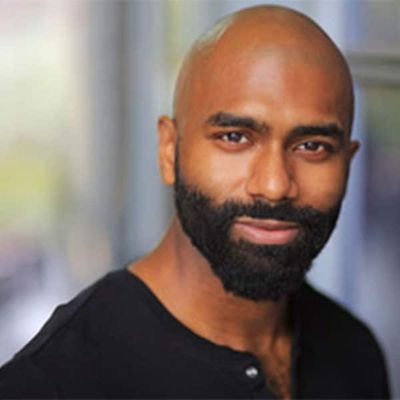
Hamilton's Aaron Burr (Sir), Nik Walker, talks about being Broadway's little brother, how his ADHD got him into theatre, and some behind the scenes stories about Hamilton and Ain't Too Proud.
Nik Walker is an actor, writer, cinephile and theme park nerd, who’s been doing the Broadway thing for a decade and counting. Currently on Broadway as A. Burr in that Hamilton skit, he’s also the co-host of the arts/activism show “The Chaos Twins,” and his movie podcast, “Little Justice,” is streaming wherever podcasts are imbibed. In the free time between all of this, Nik is a highly unqualified adjunct professor at NYU.
For more info about Nik's upcoming show, please visit 54below.com/NikWalker
The 54 Below Podcast is hosted by Nella Vera and Kevin Ferguson, and produced by Michael Allan Galvez and Alyssa Masarik, with support from the 54 Below marketing staff.
Original artwork design by Philip Romano.
Follow Nella on Twitter and Instagram at @spinstripes
Follow Nik Walker at @nikkywalks
Transcript
This transcript was automatically generated and might contain errors.
[0:00] Nella Vera: Good evening, everyone. Welcome to the fabulous 54 Below. Before we get started this evening, just a polite reminder, please take this moment to silence your cell phones and also there is no flash photography, please. Welcome to the 54 Below podcast. I'm Nella Vera, the club's director of marketing. Our guest today is a self-described actor, writer, cinephile, and theme park nerd who's been doing the Broadway thing for a decade and counting. I love that description. He's currently starring in Hamilton on Broadway as Aaron Burr, sir. He comes to 54 Below on July 31st with some of his friends, including James Moreau, Ephraim Sykes, Crystal Joy Brown, Chris Jackson, Sasha Hutchings, and many others. Nik Walker, welcome to our podcast.
[0:48] Nik Walker: Thank you so much for having me on the podcast. This is a pleasure and an honor. Very cool.
[0:52] Nella Vera: Well, I was gonna do this at the end, but we know you have a podcast also. So let's give a little plug for those podcasts.
[0:59] Nik Walker: Oh, yeah. So well, and it's so funny because we're actually one of the podcasts. We are very much in the process of trying to figure out how we can get a season three out there because with, you know, I'll say the names of these podcasts first, and then I'll tell you our plans with them. So I have Little Justice, which is my movie podcast, where me and my buddy Alex Smaller, who's a filmmaker out in LA, we talk about all things movies, and then I have the Chaos Twins with my best friend Sasha Hutchings, who will also be this concert where we talk about arts and activism and everything in between. And Chaos Twins is certainly taking a much longer pause, just because Sasha, right now, for those of you who know Theater News, she is out leading the tour of Oklahoma, so that takes a lot of her time, as does Burr take a lot of my time.
Trying to figure that out. But Little Justice, I think we have a little more wiggle room there with Alex's schedule. So we're trying to figure out how we can get kind of a nice season three out there potentially soon. But yeah, those are my podcasts. Yeah, but I'm on this one today, so that's what matters.
[1:53] Nella Vera: I know you get to be a guest, you don't have to worry about anything. Just answering questions.
[1:56] Nik Walker: Exactly.
[1:58] Nella Vera: Awesome. So let's go back to your roots. Tell us how did you first start performing? You know, how did you start? What was your first gig?
[2:07] Nik Walker: So it's so funny. You know, I started because I have ADHD, and as we were discovering this as a young child, one of the things that my mom had heard would focus me was theater. And so from a very, very young age, I was writing plays, doing plays. I did a bunch of plays at Wheelock Family Theater, which is the theater in down in Boston, which is where I'm from, and I did a bunch of plays down there. But it was really at first very much this thing to help me focus, which is so funny because it very much became my focus. It very much became the one place I knew I could go to kind of quiet the voices. And so that continued all throughout school, elementary school, high school. High school is right around when I wrote my first professional show.
I had just been kicked out of the Western Cherubs program for some very, very sad reasons, it turns out. But suffice it to say, I was back home in Boston, and at that point, a bunch of my theater teachers in high school, they had a theater company that at that point had been running for 15 years. Now it's been almost 30 years. This company called Company One out in Boston, and their whole mission is to kind of connect theater to the Boston community. So they do a lot of edgier work, a lot of thought-provoking work, and they knew that I was back home prematurely from Northwestern. And they were like, "Well, we've commissioned a young man, he's a spoken word poet, and we've commissioned him to write a play.
Do you want to? We know that you write spoken word. Do you want to audition for him and see if you guys can collaborate on writing this play together?" So I went into this audition and I auditioned for him, and we ended up really hitting it off. In fact, he became my one of my other best friends who ended up marrying me and my wife. He officiated my wedding 10, 12 years later. But we wrote my first professional show, and it was called Articulation, and it was all spoken word poetry. And it really just kind of continued on from there. But I would very much credit Company One with kind of defining the work that I really was drawn to because I was always drawn to certainly darker material, certain at least material that you couldn't just sit and enjoy.
I really always loved material that would really engage you. And that doesn't mean it has to be self-serious. It's just I like a show where I'm on the edge of my seat. I like a show or a play or a movie where I'm engaged in the story. I don't necessarily entertaining me is wonderful and takes just as much craft and art, but it's not my favorite experience. I always want to be engaged in what's happening. So that's where that started for me. And then I went to NYU for Shakespeare and for theater, then you know, finding a way to pay my bills ever since.
[4:32] Nella Vera: Amazing. That's so fantastic. And you know, it seems counterintuitive in a way with the attention issues to do a play or drama, but it actually I've heard Audra McDonald tell the same story about how she got into drama. Her parents put her in because she was overactive and needed to focus, and we know how that turned out. And that's not the only story that I've heard, which I love that because I guess you are forced to focus, and then you can lose yourself in that experience and what you're doing.
[5:04] Nik Walker: I think right, the Audra story is right on the mark, and I think that it's something that's so crazy because what I found out about ADD in my later life is right, you're essentially a thrill seeker, right? You need a dopamine rush, and so you are constantly looking for a new thing, and that's, I think, what is so wonderful about theater is it's never the same, and it's always a puzzle. Yeah. Right? Whether it's just the puzzle of, you know, if you're fortunate enough to have a long career in this, how do I keep doing this eight shows a week? Right? Like that's a puzzle itself, or the material that you are working on could be the puzzle, right? Like Sweeney Todd is a puzzle. Sweeney Todd is like, oh my God, this is dense. How do I achieve approach this character? Same with Hamilton, very much so. And the audience, too, the unpredictability of what they might be doing that day, right?
[5:50] Nella Vera: Absolutely.
[5:51] Nik Walker: Absolutely. So it's all I'm very thankful that I found this venue and this outlet. Yeah, it's saved my life. Saved my life.
[5:57] Nella Vera: So before we jump into the show that you're currently in, let's talk about some of your other theater experiences. You were in Motown the Musical.
[6:05] Nik Walker: I was.
[6:06] Nella Vera: And I remember you played multiple roles from what I recall from seeing it. It was such a fantastic show because you felt like you were getting a lesson in the history of this music, but it was also really entertaining and just like a big old Broadway show.
[6:20] Nik Walker: Yes. How was that experience for you?
[6:22] Nik Walker: Ooh, oh my goodness. It's so Motown, you know, I think everyone's first Broadway show is like that, you know, they you have a similar experience where it's just like you're thrown into something that you thought you understood, and you find very quickly that you didn't understand, and you have to learn what it is. And that's what Motown was like, okay, you said you want to do this, so let's see what you can do. And I will say that, you know, I friends that I made in Motown, Sasha Hutchings being one of them, are friends that I will have for the rest of my life because it was such a hard show, it was such a complex experience. So much was being asked of every performer, and you had and every performer in that show could have had their own show.
I mean, I think that was the other amazing thing about Motown. The late Eric Lamont Summers, who played the lead contour and Jackie Wilson, and I mean, one of those things where I look at the current Broadway shows now, and I just every time I see something, I'm like, oh Eric could have done that. And right because it's not just him, but you know, everyone was at the top of their game. Everyone was somebody Ari DeBos, everyone was somebody who was going to do something down the road. And so I think that was what I remember most about Motown was just kind of, you know, in other phases of life you kind of find yourself as kind of the big fish in a small pond and all of a sudden you're the small fish in a very big pond.
And thankfully this was a community that really knew how to take care of each other, really knew how to make space for each other. So I learned the ropes at Motown. I kind of got honestly how I kind of feel about my career through my twenties was kind of like this just free master classes in how to do Broadway. Motown very much the start of that because like there's just no way you can prepare. There's no way you can prepare for what was being asked of you. And I started as a so I kind of rose up to the ranks. I started as a vacation swing covering three tracks and then I joined as a permanent swing covering eleven tracks.
[8:10] Nella Vera: My God.
[8:11] Nik Walker: It was oh it was it was insane and and again and also I just want to say I could not and still arguably cannot dance and so I had to really quickly learn how to at least pretend like I could dance. You know so it was like very much this moment of like oh wow okay we're gonna figure this out but I think that's my pride and joy is now looking back and being like oh we did that like we made that show run and to this day I will say if you ask me any of those dance numbers I can do them like that. I have them in the back of my head just because I drilled them so hard. You know it was such a training ground, and I'm so fortunate. And the people that, you know, again, that I worked on Motown with are people that I work with to this day are friends of mine to this day. So I am nothing but thankful for that crazy experience of Motown the musical.
[8:57] Nella Vera: Yeah. I mean, you know, we've been talking a lot in the industry about how valuable the swings and the understudies are, but I have such enormous respect, even just for an understudy who's covering one part, because the mere thought terrifies me, right? But then multiple parts. And you just said you were covering 11 tracks. That's insane. How does the brain even remember that? Like, how's that possible?
[9:27] Nik Walker: I want to throw in again that I do have ADD. And that's it was very it's actually it I think I kind of naturally had swing brain in the sense that, like, you know, okay, you're throwing me into a very complex situation, which I have to figure out because you're paying me. So let's figure it out. And what it honestly came down to, and this is what I think where I think people really need to give swings and understudies their props, is like you have to do the mental work to accept that it's never gonna be perfect, right? Your job is to make sure the show is seamless. So you're gonna do the best you can at that. You might you're gonna bring a different energy than the person who's on eight shows a week. You're gonna make choices that they don't make, and you're gonna hope that your fellow cast members are open enough, warm enough, receptive enough to kind of like be like, okay, cool. This is a different direction, so let's try it. And thankfully, that was what we had.
[10:17] Nella Vera: Yeah, you know, generally at Motown was was a sense of like, oh yeah, let's okay, cool, Nick's on, let's see what happens. I'll never forget my first my first night on, my first night on. I was on for Jesse Nager's track. He was playing Eddie Kendricks in the in the Temptations. And I remember that my first night on after I did it, Donald Weber and Nick Christopher put me on their shoulders during Bows. I will never for I will never forget that because I was so nervous. And it was it they just made me all of a sudden feel so accepted. So like you did it and and you're good, and that was a vibe that just carried on. So lots of crazy things happened at the lun when we were doing Motown, but I will say that that cast had each other's backs, you know, and it also started my career of understudying Brandon Victor Dixon for the rest of my life. Which, you know, I oh I love that, you know, that's my big brother, so I'm happy to do it. Not a bad gig.
[11:11] Nik Walker: Not a bad gig, but it was very funny place. Motown was a very funny place, yeah.
[11:15] Nella Vera: I had a chat with T. Oliver Reed the other day, and he talked, you know, he just said, Oh, yeah, he knew the whole show, and he went on for the fates, a part that he was not covering, but happened to know where they stood at all times because he's the dance captain, and he just went on and it was a great success. But again, my God, actors are the most incredible creatures ever. And it's just such respect, you know, for that.
[11:43] Nella Vera: So you were also recently in Ain't Too Proud. How did you prepare yourself for the role of Otis Williams?
[11:50] Nik Walker: How just one prepare? And I know he's still around.
[11:53] Nik Walker: Yes. So that's another part of it. Oh, there's a whole bunch of layers. I will say, the first thing I did was call Derek Baskin who I was replacing and say, "How the hell are you doing this? Eight shows a week. You need to tell me everything." And he very kindly did. And again, that's what's beautiful about this, right? Like, at a certain point, the Broadway community and the theater community, like we all know each other, right? So it is as simple as a phone call of like, "Hey man, I'm coming, like, you know, there's no hard feeling."
[12:22] Nik Walker: It's like you're leaving, I'm coming in, like, give me your secrets because you have figured this out. And this, you know, for those of you who are listening who don't know, the role of Otis Williams is a very, like, it sneaks up on you. It's a beast of a role because you never leave the stage. You pretty much are the script. Dominique Morso, who is, you know, one of the best writers of our generation, she wrote this incredible script, but it's really just Otis speaking the entire time. And you're dancing in every one of the numbers, and it's Sergio's choreography. So it's not light choreography. So, like, I think that the preparation for me was number one, talking to Derek. Number two, the good thing I will say about Ain't Too Proud was Des Mackinough, who directed Ain't Too Proud, funnily enough, was my college best friend's godfather.
So I've had a very long relationship with Des. And so we had a very short, we had a shorthand that we knew, and that, you know, just in terms of me finding my way into this piece, he was, you know, we were very much able to kind of like play that tennis that you really love to play, where it's just like director and actor, like, okay, let me try this. Does this work? And I know what his aesthetic is, I know what his style is, and so I can kind of slot in that way. And then the biggest prep and help and assistance that I got was Edgar. Edgar is, if you don't know him, he has acted as Sergio's associate, but he's a choreographer in his own right. He is one of the most incredible dancers you ever meet.
And when they offered me the role, I was still doing Hamilton, and I was like, I'm honored that you would offer this to me, but again, I want to reiterate I cannot dance. So, how are we gonna do this? And Edgar actually flew out to the Hamilton tour that I was Burr on at that point, and for five weeks put me through boot camp. And so I was doing Ain't Too Proud Bootcamp in the day and Hamilton at night. And he really taught me how to do those moves of that show and how to learn the style. And so much of it was about getting out of my own way. I will say that I live in my head, right? I live up here. And dancing is about feeling. It's about your body. It's about these things that like I am so terrified to get in touch with.
So it was very much Edgar kind of taking my hand and saying, like, it's not about finding the perfect way. It's just how do you move? And that was such a release. And then the other release was when I finally got on stage. You forget that the beauty of Ain't Too Proud is that it's not just you, it's the five of you. And, you know, Joan, who played Melvin Franklin, who is, by the way, now a Temptation. Yeah, I saw that. Amazing. Oh, it's literally like that's my brother, and I love him. And what I will say is like he has been destined from that moment I met him. I mean, that is literally just full circle exactly what needs to be happening. I'm so happy for him. But like what made it easier when I got into the shows was like, oh my god, I came up with these guys.
Like, I know these people, and the people that I didn't know, we got to know each other. So we just formed a bond that was very much similar to swinging, where it was like, okay, I got you and you got me, and no matter what happens, we're gonna figure this out. And once that trust was there, then I could hit the step, and I think the show became so much easier because we the five of us knew, like, yes, this is a marathon, but we're all doing it together. And that just was so I'll never forget that feeling of being up there with those four gentlemen. Like, it really is amazing. Totally, totally. And you know, just in that part, you're the narrator, you're the Greek chorus. It's such a beautiful book, and Dominique is, I've always thought she was a genius, just being a fan of her writing.
And you know, it's the best of this type of show. Like, it really, when people talk about catalog musicals, there's always a negative connotation. And when I went to see Ain't Too Proud, I was so blown away. It just felt like a full-bodied, 100% original musical, and she did an amazing job with that script. That you know, you go to these shows, and every show has a moment where you kind of cringe because they have to wedge the song in, or and there was never a moment where you cringed or you thought, oh, that's so contrived. Like, the whole book was just beautiful. The smartest thing that she, I mean, she does everything so smart, and you know, and I will tell her that every day I see her. The most brilliant thing that she did, I think that she made a very conscious effort at some point in the process to say, okay, I know that you want the story of the Temptations.
I'm gonna give you the story of five young Black men growing up in the civil rights era, and they just happen to be Temptations. And that difference is what made the show, because all of a sudden you got a character study, and the songs weren't right. I think that what you're speaking to, this whole idea of you know the cringe moment, right? These songs weren't meant to carry necessarily narrative weight, they are pop songs, they exist for your consumption as pop songs, so again, she doesn't put that weight on them. Right, so you're able to experience them as band members when they're performing at your favorite concert, but then there's the play, and you're experiencing them as people, and she's just, she's brilliant. I mean, I can't speak enough amazing words about Dominique, she's the best.
[17:29] Nella Vera: We're gonna take a break and we'll be right back.
[17:33] Nella Vera: We're back talking to Nik Walker, who has been part of the Hamilton family for some time now. How did you get your start with the show with this company and how has your experience been throughout this journey of all the different parts that you've played?
[17:49] Nik Walker: So Hamilton, you know, I think everyone who's been in this show has their own Hamilton story because it is just such a, it becomes like, you know, such a big part of your life. It is a springboard for so many other things, and you know, it means so much to be in it. And I will say that my Hamilton journey I started hating Hamilton. I hated Hamilton, everything I had. And it was mostly envy, very, very appropriate to the character that I now play. It was mostly jealousy. Oh, yeah, no, I mean I again, you know, understand like Ephraim Sasha Oak, these are people that I came up with, and I, you know, I go away for a summer and I come, you know, and they're, you know, normal everyday, you know, actors on Broadway, and then I come back and they're all megastars.
And I'm like, what the hell is this show that is doing this? And I saw it and then I understood. I was like, oh, this is some of the most brilliant writing that's ever been put on the stage. And this Lynn guy, and like, you know, it's a whole thing. And to be fair, I had auditioned for this show several times. It was back in the workshops back, you know, when it was still the Hamilton mixtape, you know, and I had never quite cracked it. And I, you know, I've told the story countless times, but I think that the key to me cracking in and getting into the show, you know, I was scared because I didn't, I've never, I'm not a hip hop guy, right? I grew up in Boston, so I was listening to Irish Punk and I was listening to Blink 182 and Rock, you know, pop rock and punk rock, and so hip hop was never my thing.
And then I finally had a friend be like, Well, Nik, you were a Shakespeare major. This is just Titan Text. It's just Shakespeare. And being able to kind of make that switch was like, Oh, okay, yeah, I can just, this is not about rap. I can, I can't rap, but I can respect the meter, right? I can, I can respect the line endings. I know how to do that. So once I figured that out, then it was kind of like I was in. And I will say, Hamilton has been, it's the biggest gift of my life. It's the gift that keeps on giving. I joined it at a time it was at the height of its powers and popularity. I mean, it's still, I do not understand how it still has this staying power even now. Our houses are full. I mean, it is insane.
But at that moment, it was right after the Tonies. Lynn was just leaving, Leslie was just leaving. So I was coming in and it was like, oh my god, what have I joined up with? What is, I've never experienced a play or a musical with this much energy around it. You know, to this day, the stage door crowds are insane. People love this thing. And it was so, it was very daunting at first. You know, you talk about a breeding ground and a training ground. I learned Hamilton taught me to be a better actor. And they really, you know, at first I was an understudy, I understudied George Washington, Aaron Burr, and Mulligan Madison. And then I took over or I took the tour out as Burr, and then I went and did Ain't Too Proud.
And the pandemic happened, and I did more Ain't Too Proud, and now I'm back on Broadway as Burr. But all in all, off and on, it's been almost six years. No, six years, off and on. I just, you know, it's one of those shows where you truly can't compare to anything else. It really is the best for Hamilton and Burr, it is you will never find a better written character to play. It is the possibilities are endless. They are so complex. They are so driven, they're so passionate, and they are so tragic. And Burr, especially, has become like my best friend. You know, I just, at least the Burr on Lynn's page, I really feel like I know this dude now. And I know my Burr, right? My Burr, which is very different from Leslie's Burr.
Every Burr is, every iteration of these characters, I think that's the other thing too, right? Is that they really don't confine anyone to playing any sort of version of the character. They really want you to bring you. That's their biggest thing. And so, and that shows that that's why every company stays fresh, because it's a different show. It's a completely different show. It's fun to go back and see the different people.
[21:47] Nik Walker: Yeah, I've seen it a bunch of times, and I haven't seen it again. I saw it when it reopened with a different Burr, Jin. Yeah, Jin, who's over here. Yeah, and he was great. It's amazing. I was like, I haven't really seen him in a lot, so I was like nervous because I've got all these great memories of all the other Burrs. And he blew me away. I was like, oh, that's such an interesting take on this kind of more subtle, sneaky little Burr. I loved it. You know, it's really fun to go back and see the characters that you love by different actors, different interpretations. It's the best. It's why, I mean, I'm a huge comic book nerd. You know, right now I have this theory that the Joker, the character of the Joker is kind of the modern-day Hamlet.
Like every great actor wants to do their spin on the Joker. It's true, like, right? Like everyone, it's the coveted character. And everyone, you look at all these Jokers and you're just like, wow, this is the same character, but just so many different variations on how you can approach it. And I think it's the same with these, when you have a character that is so well written, there's just endless possibilities, and that is what Lynn has done, particularly with Hamilton and Burr, is really given a gift to the actor to be like, yeah, go forth. And I'm personally, I'm looking forward to the day where, you know, I love you, Alex Lackamore. You have changed my life. Please play with the keys so that a woman can get a stab at Burr.
I mean, like, I want to see that. I think that would be so amazing. Do you mean because it's like these characters, the envy and jealousy and ambition are universal themes, you know? So just I'm all about mixing and matching it up all the way. I think let's see what happens, you know? And also it's so funny to me that people who are extreme traditionalists and say, well, you know, that person was blonde and that person can't play that part. And I'm like, is that the most important characteristic? Shouldn't the most important characteristic be the essence of the character? Absolutely. Who cares if it's a person of color or a white person or who cares? And then is the gender the most important characteristic?
That's the question, right? So if in some cases, yes, the gender might be important, but in many roles, who cares? Like, as long as you're getting across the essence of the character, then it can be played by the best person for the role. Couldn't I just was involved with a movie, the theater company Waterwell, which is run by Ariane Moyed. We did a play called The Courtroom, and they filmed it, and it's at Tribeca right now at Tribeca Film Festival, and they filmed the play, but the characters don't match the gender of the script because it's a transcript of a real live deportation proceeding. So Marcia Stephanie Blake is playing a male judge, but it's just her because she's getting that no-nonsense, that hardness across, and she was the best person who could get that across.
[24:39] Nik Walker: So, you know, and it also reminds the viewer that it is a transcript. You know, the defense lawyer is a man named Richard, but it's played by Linda Powell, you know, and she's getting across the gist of the character, and the gender was not necessarily the most important thing. We needed the actress who could do these things. So it's just to me, you know, there's no limit to imagination. And it's so silly that we limit ourselves by, you know, when people say, "Well, you know, uh Burr wasn't, you know, black." Well, like, really, is that we're really stuck there? It's kind of crazy to me that that's still happening. It's insane.
[25:16] Nella Vera: I couldn't agree more. And what a what better tool is there to promote empathy, to promote, do you mean to promote true connection than really allowing for people to step in?
[25:26] Nik Walker: I just did a, I can't, you know, I sadly can't say what it was, but I just did a very long lab of a revival of a show that knock on wood comes in, and the character, the original actor who played my role was a white man, and this was so wonderful to step in, you know, because that is not in fact, that is the opposite of what the script is. So it was so wonderful to step into this role that I truly never thought I would get a chance to play. And add what I bring, you know, not as a black, but just as Nik. Do you mean what do I bring as Nik? And that needs to happen more and more again. Just like you said, if your script dictates and the plot necessitates that you have somebody who looks like this, is this gender, okay? But if not, open it up. Let's see what happens. I don't know. Yeah, let's play.
[26:10] Nik Walker: It reminds me of um a Shakespeare when I was at the Shakespeare Theater, I was the company manager, we did a Tempest where we had a white Prospero and a Japanese American Miranda, and some terrible subscriber in the lobby complained to me after the show about her being Japanese. And I said, "Well, first of all, lady, do you know who her mother is? Because we don't ever see the mother, so she could have been a Japanese princess, for all you know, right? And also, we have adoption, and how much more beautiful does the story turn out if she is not his biological daughter, and he has suffered and sacrificed, kept himself alive for this child that is either his adopted child or might be the result of an affair that his wife had, and he still loves her? Like, how much more meaningful is that story?"
[27:00] Nella Vera: Absolutely. You imagine it, you know.
[27:03] Nik Walker: Absolutely. It just was so interesting to me that they were harping on that one thing, and I'm like, oh, please. You mentioned theme parks that you're a theme park nerd. Are you like Disney, Universal, or roller coasters? What's your jam there?
[27:16] Nik Walker: Everything, everything. My vacation's coming up in a couple of weeks, and me and my wife are going back to Disney World for the first time since the pandemic. We've been to land since the pandemic, but not world. Oh wow. Extremely excited. And it's very simple because right now in Hamilton, there is a faction of us. Like it's not just me. It's me, Kyle Scatliffe, Fergie Philippe, Idle Hart is a huge theme partner. Like there's a whole group of us who he's in the Disney family now. So and then across shows, like that's kind of been like the joy of Broadway is finding other like Richard Blake, who's another big brother of mine, he's a huge theme park nerd, like Shelly Williams. Like it really, there's so many of us, you know. We are here, we stand strong.
[27:59] Nella Vera: So fun. I just went to Disneyland Paris last month for the first time. But of course, it's a small world of a shutdown, and that's my favorite little crazy ride. So it's like, why is it shut down when I'm in Paris for one week? Like so that. But we want to go to world. But my boyfriend says we need a kid.
[28:17] Nik Walker: You not need a kid. You tell your boyfriend. I don't know what your boyfriend's name is, but if you're listening, you don't need a kid. You just need to know how to navigate the parks as an adult. Because like it truly is. Look, we understand, we understand that this is a big corporation and they're peddling sugar water to all of us. We get it. However, these theme parks are so especially for those of us who grew up with these films. I know, they're amazing. It's amazing. Amazing. It's almost so I hope you guys get it.
[28:46] Nella Vera: I think we will. We will and you know, I might take my nephew. He's seven. I mean, come on. Gotta go. Couple of questions. You also mentioned Law and Order, SVU in your show bio. You can't be a New York actor if you haven't booked a Law and Order, right?
[29:00] Nik Walker: Such addition. It's very true. I remember when I saw Shrek, I think it was Chris Seabrook who had in his like listing his credits and he had the obligatory, you know, my obligatory Law and Order SVU appearance. And it's true, like it really is this kind of rite of passage, like that you show up at least in one episode, maybe it's like three episodes as three different characters. Who knows?
[29:18] Nella Vera: Exactly. Well, Dennis O'Hare, you know, has been like a lawyer and a white supremacist and a schizophrenic brother. I mean it's so fun. You know, it's also, you know, amazing because he's Dennis O'Hare and he's, you know, one of the greatest living actors of our time, you know, so he can do that and just appear and we won't know.
[29:36] Nik Walker: I know. Your show's called Torch Songs for the Talent 10th. Tell us about the show and why you chose this title.
[29:44] Nik Walker: Oh boy, so when, you know, I it's first of all, I just wanna acknowledge that to be at a place in my career where fifty four below asks me to do anything is very surreal. And so when I got that email, you know, inviting me to come do a show, I was like terrified because I was like, I was like, hey, are you sure you have the right email? Like this is sure you're asking. Because you know, it means a lot. It meant a lot to get that email and to be invited to do something. And like I said, I think for me, you know, I never want to just entertain. If you're giving me a platform of any kind, I always want to have a conversation. I always I want you to leave something that I've, you know, written or produced or done it had anything to do with knowing something that you didn't know, thinking a thought that you didn't have before, having a question you didn't have before.
You know, I don't know anything. I really don't, but I have a lot of questions and I want I feel like questions are a really wonderful way to connect. So when this email came through, you know, I was thinking about okay, what could I do? And you know, there is a world where I just did a concert and I love a good concert and I love singing the songs that I love. But I also just I was in a moment I was writing a lot with so my one of my writing partners is Alex Brightman, the amazing Alex Brightman, and we are closing a deal over right now with a studio who I will not say until I till we close the deal. But we're writing very much about an experience, one of the characters that we're writing on or writing a character who has a very similar experience to mine growing up in Boston is kind of one of the only people of color in a very white town.
And there's something that that does to you, and as I was writing, you know, kind of spitballing with Alex, it just occurred to me that like there's a lot that I take from that experience that has made me feel othered and that has welcomed me. And the greatest joy of something like Hamilton is that, you know, I actually was able to find a bunch of other people who had had that experience. And what that means to grow up as the only one of your kind and what pressures you put on yourself.
[31:47] Nik Walker: So that's the talented tenth term, if you, you know, for those of you who don't know, it comes from W.E.B. Du Bois. He wrote a, believe it was an essay first, and it was many speeches that he made talking about the talented tenth, talking about the idea that in order for the black race to progress in America, you know, we would have to look to a talented tenth of those of us who were able to kind of rise within the American system and play the game and move forward. And at the time I think he it was intended as very much a good thing. I think down the line it's become something more complicated because right, if you're only making room for a tenth of us in the door, number one, you're not seeing a full perspective.
And number two, for those of us who whatever door we eke through, what does that do to our mind to know that we're the only ones who have made it and that we are separating, we're separate from our own community and we're not necessarily welcomed by the community that we just, you know, talented tenthed our way into. So, you know, I think that it's certainly my concert is definitely the songs, you know, musically it's the songs that got me through and got my friends through these moments when they were, you know, in these positions and doubting and trying to find solace. But it's also a discussion of what that means to be in your, even if only in your own mind, that special one. That that's our diversity hire for the second for the day.
[33:08] Nella Vera: Yeah, I mean, it's so interesting. When I started in this business, you know, I'm on the admin side, and honestly, it was kind of daunting that I was the only person of color in these admin offices. And it just seemed like I do I belong here was always a question in my mind. And I'm happy to say that a lot has changed. You know, we have made progress. There's still more to do, obviously. But I feel like young people now don't question themselves as much. You know, they rightfully so have realized that they have worth and that why shouldn't they work on Broadway?
[34:45] Nik Walker: Very kind, very kind. Speaking of your friends, they're amazing superstars and talent. Uh and they're coming to join you.
[34:47] Nik Walker: Yes. I went to a really kind of like very rich university, and you know, I was supposed to go to law school, and I just thought working in the theater is not something that you did unless you knew somebody. Because someone's like, how do you even do that? You can't go to law school for that. Like and so, and I'm so happy. I mean, maybe because of the internet also, but it feels like young people now are entering the business and are seeing themselves and are seeing that there's space for themselves. So I think that, you know, the work that you and so many other activists and people have done in this space to change that and to make sure that people know that they are welcome is so important. You know, and I think all of us who are in these positions are in we have a responsibility to, you know, have people feel like they're welcome and mentor and open those doors. That's so important. So yeah, thank you for everything that you do.
[34:53] Nik Walker: Yes. How crazy it is that this is your group of friends, like the most talented people on the planet.
[35:00] Nik Walker: It's very surreal, and I still I really do think and you have to understand, like, you know, I don't know when it happened. I think I probably did it to myself, but at some point I became like this the surrogate little brother of most of Broadway, in the sense that like my relationship with if you were to ask any of these people like, hey, do you know Nik Walker? They'd be like, oh, screw that guy, I hate that guy. Because that's our relationship. Like, like nobody, nobody who knows me and is my friends speaks to me in like a kind manner. And I think I think that I invite that. I'm pretty sure I do, because like that's that's my love language is like teasing and playing. So they absolutely it's it's kind of these all my frenemies, I would say, are showing up to this thing.
You know, I'm very honored that they would, you know, and I I said this in the in my, you know, in every you know, when I was texting them, calling them like, hey, you know, I want this to be a moment where you're able and open to share, you know, just what you've gone through. Like this, this is as much as it's a concert, it's also a discussion, it's a chance to be as real as you want to be. So I also I just want to give props to them, you know, and people who've joined on, like we it's you know, you you named uh you know, C Jack and Eigelhart and Sasha and AJ, you know, Justin Sargent's coming through, and like Gabby McClinton, like all these people who, you know, are just incredible. Amazing, you know. So I'm very thankful for their willingness to jump in and share a story or two.
[36:21] Nella Vera: Fantastic. Nik, thanks so much for joining us today. It's been amazing talking to you.
[36:27] Nik Walker: Thank you for having me. Seriously. Pleasure, pleasure. We cannot wait for your show. You can catch Nik Walker on July 31st at 54 Below. Tickets at 54Below.com.
[36:42] Nella Vera: You've been listening to the 54 Below Podcast, part of the Broadway Podcast Network. Subscribe and rate us on Apple Podcasts or your favorite podcast app.
© Broadway Podcast Network, All Rights Reserved