

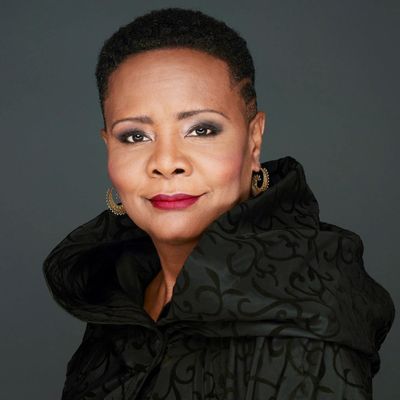
HOW MUCH NUISANCE ARE YOU WORTH? It’s a special episode of The Afro-Existential Podcast, as we look back at some of our favorite moments from the past 40 episodes. We have an excerpt from our interview with filmmaker, and Tony Award-Winning actress Tonya Pinkins... Read More
From the show: The Afro-Existential Podcast
Guests

About
HOW MUCH NUISANCE ARE YOU WORTH?
It’s a special episode of The Afro-Existential Podcast, as we look back at some of our favorite moments from the past 40 episodes. We have an excerpt from our interview with filmmaker, and Tony Award-Winning actress Tonya Pinkins. She explains the term “nuisance value”, and her experience working on Jelly’s Last Jam with George Wolfe and Gregory Hines. What Charlayne Woodard told her to do, and she talks about snatching a weave out of somebody’s head! From our Breakthrough Interview Series, we talk with the former prison inmate, Rich Loya. He talks about working for actor Tim Robbins, and the breakthrough moment that helped him become the current Program Manager for The Actors' Gang Prison Project.
Would you move a dead body two miles for one million dollars? That’s the dilemma that the Mulligan family is facing in our audio play production of Dead Wait. Listen to a sneak peek before you make any plans. It’s available now on the Broadway Podcast Network. All that and a lot more fun in this special best of episode of the Afro-Existential Podcast – an audio play and podcast in one.
Follow us on Instagram: @afroextheater
Visit us at https://www.afroexpodcast.com/
Transcript
This transcript was automatically generated and might contain errors.
[0:00] Alistair Justin Black: Hello, I'm Alistair Justin Black from Theatre and the Black.
[0:05] Blaine Teamer: Playwright Blaine Teamer began writing Dead Wait in 2016. You finished it nearly four months later. The writing of the perfect line in a great play, or the making of a line of fine fancy wines takes time. Perfect example is Afro Eggs' new and improved bougie Beaujolais, a red wine with notes of tang, green apple, tropical punch, black cherry, and invisible grape. It's a fancy wine for those fancy moments. What was true nearly four months ago is true today. It's five o'clock somewhere. Take life one sip at a time.
[0:49] Alistair Justin Black: Ladies and gentlemen, we invite your apprehensive listener. Here's something else with big news: you have to always know how much nuisance you're worth.
[1:02] Blaine Teamer: I don't understand. Like, is the talent or the relationships or whatever you have worth the nuisance?
[1:11] Alistair Justin Black: Anything else?
[1:12] Blaine Teamer: I know what my nuisance value is. I know that my work is exceptional, that I'm gonna bring something. And I also know that I'm replaceable. Can always replace me, but you're not gonna have me and that thing that I bring. And I think each of us has this thing that is so unique that only we can break it. And people have to decide if it's worth all of you to have that thing.
[1:34] Alistair Justin Black: You're coming in loud and clear.
[1:36] Blaine Teamer: Hello, and welcome to a special episode of the Afro-Existential Podcast. Or am I wrong? The audio play and podcast in one. That's exactly what I mean. I'm your host, Blaine Teamer. And on this episode, I decided to take a moment and think about the past 40 episodes. Amazing guests, lots of laughter, and loads of insight. It's been an amazing experience, so I decided to pull a few excerpts from previous episodes that embody the overall spirit and energy of the podcast. If you're a first-time listener, if you don't like this episode, don't bother with the other 40. The art of appreciation is lost in this world of dog eat dog. If you've listened before and you're back, it's a miracle. Thank you very much. This episode is the one to share with friends, family, exes, future exes, and anyone you know who would listen.
[2:32] Blaine Teamer: I kicked off the show with the one and only the award-winning actress and director, my friend, TONYA PINKINS, talking about nuisance value from season one, episode number 14. I'll have more of that interview later. Oh yes. She talks about her experience working on Jelly's Last Jam, George Wolfe, Gregory Hines, and snatching a weave out of somebody's head.
[3:13] Blaine Teamer: But My Dead Weight is a black comedy about the Mulligan family and their loss of social status and money, and how far they'd be willing to drive in Los Angeles traffic to get it back. Disgraced and displaced from Hancock Park, Brady Mulligan, his wife Georgina, and their adult son Oliver have had to downsize to a small apartment in Los Angeles, just south of Wilshire Boulevard.
[3:40] Blaine Teamer: Now, in this excerpt from Act One, Georgina makes a confession, and Oliver discovers something new about him and his mother. We shall begin now.
[3:50] Georgina: I never envisioned myself being not rich. Does that make sense? I just wasn't prepared for this. I just don't identify with not being rich.
[4:04] Oliver: It most certainly does. And neither do I, mother. You know what we are, mother? We're trans affluent.
[4:13] Georgina: Hmm?
[4:14] Oliver: You know how you have your transgenders, people whose sense of personal identity and gender does not correspond with their birth sex, right?
[4:23] Georgina: If you say so.
[4:24] Oliver: I don't say so. That's what they say. They feel like they belong to the opposite of what they are. Isn't that us? Isn't that us, damn it?
[4:32] Georgina: No, not at all.
[4:34] Oliver: Yes, it is. Listen, we feel like we belong with affluent people, and we don't identify with being poor. So we are trans affluent.
[4:44] Georgina: You just made that nonsense up.
[4:49] Oliver: Oh, but somebody said they were transracial. You remember that lady?
[4:52] Georgina: Yes.
[4:53] Oliver: Now that's a thing. Transracial. She came out white as cotton, got some cornrows, a spray tan, said she was black and got a Netflix special. So why can't we be trans affluent?
[5:05] Blaine Teamer: Well, find out more about the Mulligans in Act One of Dead Weight. And we'll be right back after a word from our sponsors.
[5:22] ♪ Musical number: "Afro Existential Sheen Shampoo" — performed by Afro Existential ♪
[6:17] Blaine Teamer: Welcome back to the special edition of the Afro-Existential Podcast. I've never seen anything like it. So we have the audio play portion, which is Dead Weight. We have the interview series.
[6:28] Blaine Teamer: And we have the bits in between. These are kind of our fun, unplanned moments. And this is one of my favorites with my co-host INDIRA WILSON. It started off as a game of this or that, but I only got to ask INDIRA one question. I was afraid of that.
[6:45] Blaine Teamer: And it spun off into its own thing, worthy of its own new name with a special introduction from our very own Alistair Justin Black from Theater in the Black.
[6:57] Alistair Justin Black: Hello, I'm Alistair Justin Black. And welcome to our new series, How Great Ideas Were Born.
[7:08] Blaine Teamer: On the Afro-Existential Podcast. Brought to you by new fancy wine.
[7:16] INDIRA WILSON: Carla Rossi or Boon Farm.
[7:18] Blaine Teamer: Oh, Carlo Rossi.
[7:20] INDIRA WILSON: Mm-hmm.
[7:21] Blaine Teamer: That's real wine, I think.
[7:23] INDIRA WILSON: Yeah, yeah.
[7:24] Blaine Teamer: Though I was a huge Boone Farm drinker, but I have a theory that Boone's Farm is now just Dela Rosa.
[7:30] INDIRA WILSON: I think it's the exact same, but they just put a classy sticker on things.
[7:34] Blaine Teamer: You can sell anything, anything.
[7:38] INDIRA WILSON: And I was positive the other day when I went in and they had some pineapple. I was like, you ain't shit.
[7:44] Blaine Teamer: Pineapple Boon Farm?
[7:46] INDIRA WILSON: No, Stella Rosa has like a pineapple, or it was pineapple or strawberry. It was something that was like, y'all trying to sell us a muscatel.
[7:54] Blaine Teamer: I tell you.
[7:55] INDIRA WILSON: How was it?
[7:56] Blaine Teamer: Delicious.
[7:59] INDIRA WILSON: It was wonderful.
[8:00] Blaine Teamer: It was wonderful. It was delicious.
[8:02] INDIRA WILSON: Somebody makes one, maybe it's Stella Rosa. And they do like an apple, like a green apple.
[8:08] Blaine Teamer: Yeah, they do a green apple. That's how you know it's Boone's Farm.
[8:11] INDIRA WILSON: That it is just some sugary wine.
[8:15] Blaine Teamer: And you don't get drunk off of it. It's like a one cooler.
[8:19] INDIRA WILSON: And that's funny you say that because it's like the popularity of wine coolers has gone down. But it's basically, it seems like it's basically like a wine cooler in what? A very fancy bottle.
[8:27] Blaine Teamer: Fancy wine.
[8:28] INDIRA WILSON: Fancy that's fancy wine.
[8:32] Blaine Teamer: Fancy, fancy wine.
[8:35] INDIRA WILSON: I wonder if I could do that.
[8:40] Blaine Teamer: Make a fancy one.
[8:41] INDIRA WILSON: Fancy.
[8:42] Blaine Teamer: Fancy wine.
[8:43] INDIRA WILSON: No, bougi lay.
[8:44] Blaine Teamer: Bou Gileigh.
[8:46] INDIRA WILSON: Yes.
[8:46] Blaine Teamer: That's one of the titles. You know, so it's fancy wine, and you got the Bou Jolet, the Cabaret Cabernet, the Mercy Merlot, the Pinot Black, not the Pinot Noir, the Pinot Black.
[9:05] INDIRA WILSON: Fancy wine for the basic bitch in your life.
[9:15] Blaine Teamer: Fancy wine for the basic bitch in your life. Exclusively at Ace Hardware.
[9:24] INDIRA WILSON: That's how you got some.
[9:25] Blaine Teamer: It's only at Ace Hardware right at the front.
[9:25] INDIRA WILSON: Right at the front.
[9:30] Blaine Teamer: So for every man that leaves, he picks up some fancy wine for his basic bitch at home.
[9:35] INDIRA WILSON: And they get every wrench.
[9:39] Blaine Teamer: You get a fancy wine.
[9:43] INDIRA WILSON: And it's got to be like really, really, really, really, really cheap.
[9:47] Blaine Teamer: Like the price point can be no more than $6.99.
[9:51] INDIRA WILSON: There's two bucks chuck.
[9:52] Blaine Teamer: So it could be two dollars. The bottles probably cost more than the alcohol.
[9:57] INDIRA WILSON: That's the selling point.
[9:58] Blaine Teamer: That's the selling point. We mix Kool Aid and a drop of red wine.
[10:06] INDIRA WILSON: The bottle costs more than the Brother.
[10:12] Blaine Teamer: Get your bougie, your Mercy Merlot, your cabaret cabernet, and your must-have Miss Me Bitch Moscato.
[10:12] INDIRA WILSON: Miss Me Bitch.
[10:19] Blaine Teamer: Miss Me Bitch.
[10:24] INDIRA WILSON: It's five o'clock somewhere.
[10:29] Blaine Teamer: You know, and then you gotta have your table wine.
[10:32] INDIRA WILSON: Table that.
[10:33] Blaine Teamer: Table that.
[10:34] INDIRA WILSON: Table that.
[10:35] Blaine Teamer: Table that.
[10:36] INDIRA WILSON: This is where you can drink wine all day.
[10:38] Blaine Teamer: It's got like four percent alcohol content.
[10:40] INDIRA WILSON: It's just called mellow.
[10:44] Blaine Teamer: Fancy wine.
[10:49] INDIRA WILSON: How they have a year was made.
[10:50] Blaine Teamer: Yeah.
[10:51] INDIRA WILSON: Ours would just say August.
[10:54] Blaine Teamer: Made in the fall. And it needs to have, it has to have a twist cap for sure.
[11:00] INDIRA WILSON: It's definitely fancy wine has a twist cap, but it needs to have some type of special type of a twist cap.
[11:05] Blaine Teamer: Something that's a little bit fancy, like maybe it looks like a diamond on it or something.
[11:09] INDIRA WILSON: Or top, glued on top.
[11:13] Blaine Teamer: Fancy. I feel fancy. You know, and then it's gotta be, and you know what the really key is is for parties, it's every bottle.
[11:21] INDIRA WILSON: This is for real, has to be a different color.
[11:24] Blaine Teamer: Okay. So you got like a pink bottle, you got blue bottles, you got green bottles, and then so when you have a party and people lay out their wine and stuff, that it looks real pretty, you know.
[11:36] INDIRA WILSON: Right, it looks real pretty. And then we can host fancy parties, then promote fancy wine parties, you know, have your fancy book club.
[11:44] Blaine Teamer: Are you fancy?
[11:46] INDIRA WILSON: And we gotta get whoever you fancy, huh?
[11:48] Blaine Teamer: Are you fancy, huh? Hair done, nail done, everything did. You fancy, huh?
[11:52] INDIRA WILSON: Uh you fancy, fancy, fancy parties, and the fancy party has to be real basic.
[11:59] Blaine Teamer: Like you ain't even gotta dress up, you don't have to go fancy to the party.
[12:05] INDIRA WILSON: But we put glitter on top of all of our packaging, so it's it's fancy.
[12:08] Blaine Teamer: That's the fancy part. Exactly. It's just glitter is everywhere, glitters all over your hands, all over the supermarket, or all over Ace Hardware.
[12:17] INDIRA WILSON: Everywhere you go over all the displays, it's just a bile of glitter at the bottom.
[12:21] Blaine Teamer: That's how you find the fancy wine.
[12:23] INDIRA WILSON: That's genius, Blaine.
[12:24] Blaine Teamer: They would think that it was a mistake.
[12:26] INDIRA WILSON: It'd be like, no, no, no. There's meant to when you set it down, it leaves the glitter.
[12:31] Blaine Teamer: So we as soon as you go on the wine aisle, you see the glitter on the ground. That's fancy wine.
[12:34] INDIRA WILSON: Oh my god.
[12:39] Blaine Teamer: Again, if we were what we would already be making fancy wine.
[12:45] INDIRA WILSON: This segment has been brought to you by a new fancy wine.
[12:49] Blaine Teamer: It's five o'clock somewhere. Enjoy life. One sip at a time. Hair done, nail done, everything did. Fancy, huh?
[13:00] INDIRA WILSON: Fancy.
[13:02] Blaine Teamer: When do you have a breakthrough?
[13:05] INDIRA WILSON: When do you have a breakthrough?
[13:07] Blaine Teamer: And now you have a breakthrough. A breakthrough for me generally comes at accepting the crisis or accepting and acknowledging the value of whatever the tension is.
[13:22] INDIRA WILSON: Where I start to acknowledge the value of the tension because it's given it's got my attention.
[13:27] Blaine Teamer: The tension has got my attention. Our second interview series, now playing wherever you enjoy podcast, is called The Breakthrough from Vision to Fruition.
[13:37] INDIRA WILSON: 13 interviews with content creators.
[13:40] Blaine Teamer: People who overcame some of life's most difficult obstacles to have their breakthrough moment and make their dreams a reality.
[13:48] INDIRA WILSON: We wanted to know how people did it and how they got over the obstacles along the way, in the hopes that it would inspire other people to make their dreams a reality.
[13:56] Blaine Teamer: When do you have a breakthrough? Educator Mentor and Advocate Diana VALENTINE from episode number two in the series said when the tension gets your attention.
[14:07] INDIRA WILSON: And I thought that was the perfect way to kick off the series.
[14:10] Blaine Teamer: Yes, it is. Our guest for episode three and four and the breakthrough interview series from the ACTORS' Gang PRISON Project, Hannah Shotis and RICHARD LOYA.
[14:11] INDIRA WILSON: The ACTORS Gang PRISON Project is a rehabilitation program that offers theater programming to 14 California state prisons, a re-entry facility, and an LA County probation camp.
[14:30] Blaine Teamer: The ACTORS Gang, which was founded in 1981 as an experimental theater ensemble under the direction of Shawshank Redemption actor Tim Robbins, is now celebrating their 40th anniversary.
[14:42] INDIRA WILSON: In this excerpt, RICHARD LOYA shared the moment that led to his big breakthrough.
[14:47] Blaine Teamer: That's what we want to know.
[14:48] RICHARD LOYA: What I can talk about, Blaine is the history of our group. I'll never forget September 19th through the 26th, 2016. I was fortunate to work in the program office.
[14:59] RICHARD LOYA: And so through the program office is where usually firsthand we hear of new programs coming in. My boss was the Lieutenant Crenshaw.
[15:06] RICHARD LOYA: When the lieutenant brought it to me, he goes, Hey, a new group, a new program is coming in. It's Tim Robbins and some actors. That's all that's all I got.
[15:10] RICHARD LOYA: It's Tim Robbins and some actors. That's all he had. And so, okay, I recognize the name, Lieutenant, but what is it about?
[15:20] RICHARD LOYA: He goes, I don't know. You guys are gonna be acting with some actors. So come up with a list of 25 of the men in the yard and bring me the list.
[15:27] RICHARD LOYA: At that time, Blaine, I knew like a real good group of men that were in the same process of me making change. I said, Okay, Lieutenant, I'll put that list together.
[15:36] RICHARD LOYA: I know a group of men that are in in the process of change. So he says, Who are you thinking about?
[15:41] RICHARD LOYA: So they were involved in other programs already, other classes. And so they're all doing positive things.
[15:47] RICHARD LOYA: And so Lieutenant says, No, I don't want them. Why does it always have to be that same group to get in the good groups?
[15:53] RICHARD LOYA: Bring me the F up, bring me the bad, bring me the worst. You know who they are. Have them on that list.
[15:59] RICHARD LOYA: And I'm like, all right, Lieutenant, I'm gonna get you a list of what you're asking for. But if something happens, it's not on me.
[16:05] RICHARD LOYA: And he goes, just go do it. Go take care of it. I literally went with a piece of paper with the memo that this new program was coming, the ACTORS Gang, and it's Tim Robbins with some actors.
[16:15] RICHARD LOYA: So here's what I was talking about. I had to be real with myself because I'm talking about change in my life.
[16:21] RICHARD LOYA: I could have easily went and played the favoritism, my homies played the homie card and go get some of my homies that I knew were in chain in the process of change and fill fill up the 24 other spots with most of them.
[16:35] RICHARD LOYA: But I knew for this to work, and because I was given the responsibility of this, I had to give everybody an opportunity, which meant I have to go to all the races and ask them if they want to be part of this.
[16:46] RICHARD LOYA: And so I did that. One by one, I went to every race, and you go to the the one that has the juice, mainly.
[16:52] Blaine Teamer: Right. Because if they say yes, then you get them to agree, they're gonna join.
[16:57] RICHARD LOYA: And so in doing that, first group I approached was the blacks.
[17:02] RICHARD LOYA: So I'm like, I had to do some convincing, and just with what I was given. I don't know, man. It's it's Tim Robbins, some actors.
[17:09] RICHARD LOYA: Maybe they're gonna help us act. I don't know. It's a self-help group. They're coming in, it's for a week.
[17:13] RICHARD LOYA: They would say, Rich, are you doing it? And I'm like, Yes, I'm gonna do it. That's why I'm asking you.
[17:18] RICHARD LOYA: Like, all right, sign me up. Hallelujah! That was 2016, but that one shift in thinking mixed with action changed the course of his life.
[17:29] Blaine Teamer: Check out episodes three and four to find out how he became the program manager for the ACTORS Gang Theater Prison PROJECT in Culver City.
[17:37] INDIRA WILSON: I follow your advice to the letter. Here is an excerpt from Act 2 of our audio play Dead Wait.
[17:45] Blaine Teamer: In this scene, Brady Mulligan shares how he met his wife, Georgina. Not a word to a soul. And then his wife Georgina is a chance to tell her side of the story.
[17:55] INDIRA WILSON: That idea is the worst of all. Here's a little preview to quack your appetites.
[18:01] Blaine Teamer: Okay, we are back in 5, 4, 3, 2, 1.
[18:07] INDIRA WILSON: Who's that? Baby's Daddy Day on the Alex Winter Show.
[18:13] Blaine Teamer: Welcome back. Please welcome Brady.
[18:16] INDIRA WILSON: Brady says his wife, Georgina, has consistently acted in bad faith over the course of their marriage, and now he wonders if his son Oliver is actually his biological son.
[18:30] Blaine Teamer: Brady, after 25 years, why are you questioning if Oliver is yours?
[18:36] RICHARD LOYA: I love my wife. I've done everything I could to keep her in the lifestyle that she thinks she deserves, but it's never enough.
[18:43] Blaine Teamer: I want to say.
[18:51] RICHARD LOYA: What? My wife is two-faced and both faces lie like the devil since day one.
[18:52] Blaine Teamer: No!
[18:52] RICHARD LOYA: Since day one!
[18:59] Blaine Teamer: Really? Where did you meet and how did she lie?
[19:03] RICHARD LOYA: I met at the Snooty Fox Motor Lodge on Western A41st.
[19:06] Blaine Teamer: The Snooty Fox. For those of you not from Los Angeles, the Snooty Fox is a type of hotel establishment where you can rent by the hour.
[19:14] RICHARD LOYA: Two two. Hey, beep beep. If you get my 70s reference.
[19:20] RICHARD LOYA: I had just opened my very first video store across the street, and over at the Snooty Fox, they were shooting a music video for this rapper called Gerardo.
[19:28] Blaine Teamer: You mean Rico Suave?
[19:30] RICHARD LOYA: He was huge.
[19:31] Blaine Teamer: That's what she said.
[19:37] RICHARD LOYA: I let them use my parking lot for crab services.
[19:39] Blaine Teamer: So I'm behind the counter.
[19:41] RICHARD LOYA: And the most beautiful girl I'd ever seen walked in.
[19:44] Blaine Teamer: Georgina.
[19:45] RICHARD LOYA: Hell no, Georgina was behind her.
[19:48] RICHARD LOYA: The beautiful girl was a regular at the Snooty Fox. Georgina came to the county and wanted a box of Now Laters.
[19:53] Blaine Teamer: I used to love Now Laters.
[19:55] RICHARD LOYA: My favorite was Black Cherry.
[19:57] Blaine Teamer: Black Cherry. That was the name of the girl from the Snooty Fox, but she was meeting a client.
[20:01] RICHARD LOYA: Don't look at me.
[20:04] Blaine Teamer: Well, then what happened?
[20:06] RICHARD LOYA: I chatted Georgina up instead, and I gave her the Now Laters, but in retrospect, now I wish I would have told her later because Georgina had this long, sad story about how she just got replaced with the director's girlfriend, and now they just wanted her to shimmy in the background.
[20:20] RICHARD LOYA: She said she had danced in a firebird or something, and she was real proud of that.
[20:24] Blaine Teamer: I thought she was dancing in a Pontiac Firebird, but she said it was some ballet.
[20:28] RICHARD LOYA: So the Firebird was asked to do the funky chicken at the Snooty Fox.
[20:34] Blaine Teamer: After we started dating, I found out she was hired as an extra from the start.
[20:38] RICHARD LOYA: Sounds like she was extra from the start.
[20:43] Blaine Teamer: She said it was just a little white lie, and I didn't really care.
[20:46] RICHARD LOYA: But it was just one white lie after the other.
[20:49] Blaine Teamer: Okay. Let's bring out Georgina to hear her side of the story.
[20:56] INDIRA WILSON: Georgina, America wants to know.
[21:00] Blaine Teamer: Are you a firebird or a funky chicken?
[21:05] Georgina: He knows that I dance the lead in Stravinsky's firebird.
[21:12] Georgina: And he knows he's my baby daddy.
[21:15] Georgina: I mean, he knows he's the father of our child.
[21:17] Georgina: I was a virgin when we met.
[21:20] Blaine Teamer: A version of what?
[21:21] Georgina: After Snooty Fox.
[21:26] TONYA PINKINS: Yes, I was a professional dancer. He's just doing all this to humiliate me and drag me down to the gutter with him. You see, when we met, I lived with my parents in Hancock Park. That's where I was raised. My father was a very well-known architect. When my parents passed away, I inherited the estate. Once we were married, he gambled us into debt, and we lost the house my father designed and felt it was tragic. And then he moved us just south of Wilshire.
[22:03] INDIRA WILSON: Just south?
[22:04] TONYA PINKINS: I heard any further south of Wilshire, you would have needed a passport. Hello! I was once a prima ballerina. You're actually the much older sister of famed premier ballerina, Helen Summer, right?
[22:23] TONYA PINKINS: Uh, not that much older, Alex. Find out who's the baby's daddy in Act Two of Deadweight, a journey in Afro Existentialism. Daddy, may I please? Last but certainly not least is my interview with my good friend TONYA PINKINS. She's an award-winning actress and filmmaker. You may recognize her from her portrayal of Livia Fry on the soap opera, All My Children, or Ethel Peabody in the TV series Gotham. TONYA PINKINS has won or been nominated for nearly every award there is in the American theater. And for her roles on Broadway, she's been nominated for three Tony Awards, winning the Tony Award for Best Featured Actress in a Musical for Jelly's Last Jam. I interviewed her right before the release of her 2021 debut film, Red Pill, that went on to win multiple awards. And this excerpt, we talk more about nuisance value. And I asked her, How do you navigate your nuisance value when you're not being valued at all?
[23:22] TONYA PINKINS: Here's the story for that for me. When I did Jelly's Last Jam in Los Angeles with Oba Bag Batunde, I was coming off of a period of time where George C. Wolf and I had worked together. He wrote my nightclub act at Sweetwaters. He was an NYU grad student. And something I said to him after that before the show even happened offended him in such a way that he did not show up for the show. And for the seven years that he did not speak to me, he became the George C. Wolf multi-Tony award-winning producer, artistic director of the public theater, and I couldn't even get an audition for him. And as it turned out, there was someone who was leaving a show that he was doing, Caucasian Chalk Circle, and I got an offer to come and replace her.
He needed somebody who could come in real quick and do this gig. And while I was doing that, they asked me to come and audition for something else. I didn't know what the something else was. I was given some sides. I went to Susan Birkenhead's house. I read the sides, this one side, and I sang a song. And I didn't even know what the show was. And I immediately got an offer to go to LA, literally like the next week, to do this show called Jelly's Last Jam. And I read the script on the plane to LA. I've got a nursing baby with me. I'm heading to LA. I'm reading a script. This is like the first time in my career at like what was I, 27 or something, that I was going to get to play a woman instead of an ingenue.
And I didn't know if I had it in me. I could see my grandmother and my mother and all these women in my life, but I didn't know if I had it in me to do that. When I got to my first rehearsal, I discovered that all of the people in the room had been working together on this show for several years. And in fact, the woman who had played the role before me was now in the chorus as one of the honeys. So I walked into a room where I was enemy number one. And I was terribly intimidated. And I would, I just I was paralyzed in the room. I couldn't get myself to do anything. I just would come in and I would just read and I could see everybody rolling their eyes and like where you know, you could just see people like what they bring her in here for.
She can't even do nothing. But when I would go home at night, I would have all this stuff in my mind of what I was gonna do. Then and what I told myself is I'm so scared of these things I want to try that I've dreamed up that feels so good when I do them at home. But if they stop me at any point, I don't think I'd have the courage to try the next one. If they stop me at one thing that I try, I will lose my courage to do everything else. So what the bargain I made with myself is if I could just make it to the first run through where I could go straight through everything I'd been dreaming of, that's what I needed. Well, the night before the first run-through, there was a concert in Hollywood with Mary Bond Davis, and everybody was going to it.
And as it faced with havoc, George and I's cars arrived at the parking lot on Sunset Boulevard at the same time. Now it wasn't until 10 years later that he told me this, but he said he had decided that he was going to fire me the next morning because I wasn't doing anything. But he is a very spiritual person. And the fact that our cars arrived at the parking lot at the same time, he thought, well, I should let her do the run through. Okay. So I mean, I did not have any nuisance value, and I was getting fired. That run through went through, it was like all hell broke through. It was like people was mad because I brought it. And now they was mad because they didn't know that I had it to bring.
And that meant everybody had to adjust everything that they was gonna do because they had just written me off and I wasn't doing shit. But now they were gonna have to respond to all that I was gonna bring. And that brought with it a whole nother set of problems. So that is where I say I earned my stripes and learned what my nuisance value was because I could energetically feel what I had done. And as much as everybody was hating me and wanting me gone, once I brought what I brought, now they was mad that, oh, this bitch, this is a contender. Now they was mad. You know, they had written me off. Now they was mad that I wasn't, you couldn't write me off. Literally, through the rest of that time, it was they hated me.
It was like I get terrible no, it was like, you know, I it was bad. And when they were coming to Broadway, they weren't gonna take me. I had to come in and audition, and I was like, I don't want to audition for that. And that was one of those times we were talking about when you don't know what to do, like how do you find out? And I said that if I'm in a situation and I'm stuck, and my mind only sees like these are my options, and none of those options will get me what I want. I will find somebody I know who just sees the world in a way that I totally don't see it, who does things that I don't do, and say, Now what's your thing? And that person for me is Charlayne Woodard, and she has you know changed my life three gigs.
And she was like, Tanya, that's your job. That's your gig. Now you can't let them say she wouldn't even come in and audition. You need to go in there and you need to audition and you need to go in there and take your job. And I was like, Oh, Charlayne, I mean, why I got an audition for a part of it, girl, go in there and get your job. So, you know, I did what Charlayne told me to do because that was not what my mind was. I was like, Mama was like, Fuck them. They want me to come and audition. I already did this part, I got the receipts and the reviews. And then I got fired four or five more times. And Gregory Hines, you know, didn't speak to me publicly for the whole time. So I think that was when I realized, oh, I might have some nuisance value.
[29:36] TONYA PINKINS: All that's been explained leads to one conclusion. So I have this friend who is crazy, but you know, she had her nuisance value. She was so much fun and so smart and so talented that it was worth the nuisance. And she would get very sad around holidays. And I spent a lot of holidays with her. And so this holiday, we were out at a restaurant, and she was having a rough time. And because I know her, I've known her for a while. Like I wasn't I the crazier she got, the calmer I got. And it was almost as if the calmness of me just pushed her further. And she had called me a nigga and a bitch and a cunt. And I'm just like getting calmer and calmer. And so she stood up and raised her hand. And I was like, Now, if you hit me, we're gonna be two niggas rolling around this weave out your head.
May I say it just once more, please? We're gonna be two niggas rolling around on this catch that weave out your head. Now I was not angry. It was like dealing with a child who's about to you know bite you with something like that, and you like have to go no. So I didn't really have any emotion about it because I know what I'm dealing with. There was no emotional thing going on here. She has never spoke to me again. May I say it just once more, please? We're gonna be two niggas rolling around on this catch that weave out your head. Looks to be in pretty good condition. I wonder how old it is.
[31:02] Blaine Teamer: Ladies and gentlemen, thanks for listening to this special episode of the Afro Existential Podcast. The audio play and podcast in one. Please click subscribe and take a moment to visit our website at AfroEXPodcast.com for more insightful content. Anything else? You can follow us on Instagram at the Afro EX Theater, and email us your thoughts and comments at the Afro Existential Podcast at gmail.com. And a special thank you to DYANA VALENTINE, RICHARD LOYA from the ACTORS' Gang PRISON Project, and TONYA PINKINS. And our heartfelt thanks to the cast of Deadweight. I cannot do it without you. SHAWN CARTER PETERSON, K.J. Middlebrooks, LaShea Tomlinson, Frederick Sparks, INDIRA WILSON, and I'm Blaine Teamer. These people have powers beyond anything you can imagine. And check out Deadweight, a journey in Afroexistentialism on the Broadway Podcast Network. And as always, have a great day on purpose.
© Broadway Podcast Network, All Rights Reserved