

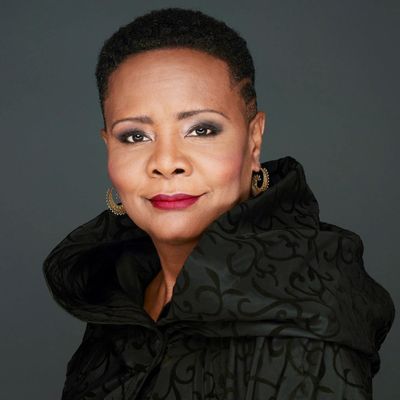
**Warning: Explicit Language in this episode*** Welcome to the Afro-Existential Podcast. On Episode 6 of the Podcast, we interview Tony Award Winning Actress Tonya Pinkins!!! Learn what your nuisance value is... Read More
From the show: The Afro-Existential Podcast
Guests
About
**Warning: Explicit Language in this episode***
Welcome to the Afro-Existential Podcast. On Episode 6 of the Podcast, we interview Tony Award Winning Actress Tonya Pinkins!!! Learn what your nuisance value is.
For more information about the podcast, the host and the cast of "Dead Wait", visit our website at www.afroexpodcast.com and follow us on instagram at @afroexpodcast. You can also find us on the Broadway Podcast Network at https://broadwaypodcastnetwork.com/podcast/afro-existential/.
Don't miss Tonya's podcast "You Can't Say That."
Visit our website at www.afroexpodcasts.com and follow us on instagram @afroexpodcast.
Transcript
This transcript was automatically generated and might contain errors.
[0:00] TONYA PINKINS: So, you know, I did what Charlene told me to do because that was not what my mind was.
[0:04] TONYA PINKINS: I've been like Mama's like, I'm going to come in audition.
[0:06] TONYA PINKINS: I already did this part.
[0:07] TONYA PINKINS: I got the receipts and the reviews.
[0:11] TONYA PINKINS: And then I got fired four or five more times.
[0:16] TONYA PINKINS: Ladies and gentlemen, we invite your apprehensive listeners.
[0:26] Blaine Teamer: Welcome to the Afro Existential Podcast, a play and podcast in one. We're your hosts, Blaine Teamer and Indira G. Wilson.
[0:35] Indira G. Wilson: And for the next 25, give or take minutes, we ask you to take a moment, ladies and gentlemen, and think outside your box.
[0:52] Blaine Teamer: Hello, everyone, and welcome back to the Afroexistential podcast. We are so glad you are joining us, and hopefully you have listened to the finale of Dead Wait, a journey in Afroexistentialism by Blaine Teamer.
[1:14] Indira G. Wilson: Yes, I hope you have. And check it all out. It's so much fun. And you should have one of those, you know, the young people are doing these like parties.
[1:35] Blaine Teamer: Yeah, you know, the hip new virtual parties and things. You should, you should, you seem like a hip person if you're listening to this show. You should have one of those viewing cocktail wine parties where you listen to it virtually with your friends.
[1:48] Indira G. Wilson: Over Zoom, not in person.
[1:50] Blaine Teamer: Not in person. And we'll even come. If you do one, we'll come and like we'll zoom in.
[1:56] Indira G. Wilson: We'll zoom in. Do people use that term? Or did I just pick that out?
[1:59] Blaine Teamer: You should coin it.
[2:01] Indira G. Wilson: We'll zoom in.
[2:04] Blaine Teamer: I think I just did that. Virtual cocktail party. We may even have one of our own. Stay tuned.
[2:11] Indira G. Wilson: Yeah, stay tuned. You never know. Well, we have some wonderful things for you today.
[2:17] Blaine Teamer: We have a phenomenal interview with the marvelous TONYA PINKINS, which is very exciting.
[2:27] Indira G. Wilson: I was telling Blaine, she is very wise, very smart, but she's also very, very talented, of course. But she's so funny and hilarious. We've all been friends for a long time, and we just crack each other up.
[2:43] Blaine Teamer: So I hope what we'll bring to this is seeing how great a sense of humor she has and how funny she is.
[2:52] Indira G. Wilson: Yes, and TONYA is someone who has really lived. You know, she has worked, she has walked the walk, she is wise, and really listen to what she's saying.
[2:55] Blaine Teamer: Yes, and one funny TONYA PINKINS story is she was working with a therapist for a legal case, and the therapist told the judge that Miss Pinkins had grandiose ideations because she thought that she had won a Tony Award.
[3:27] Indira G. Wilson: Wait, what?
[3:30] Blaine Teamer: So she was working with a therapist, the therapist reported back to the judge and said that Miss Pinkins is delusional because she thinks that she's won a Tony Award.
[3:43] Indira G. Wilson: Do you know that this happens to every black woman every day at work?
[3:50] Blaine Teamer: Black people in general, yeah.
[3:51] Indira G. Wilson: Black people in general. I think you really, I'm glad you put a word to it. Now we people can go back to work and go, they think I'm having grandiose ideation.
[4:01] Blaine Teamer: Right.
[4:02] Indira G. Wilson: And I did not do A plus work in here yesterday.
[4:06] Blaine Teamer: Hmm.
[4:07] Indira G. Wilson: Okay. Did the, I'm assuming this was before the internet?
[4:11] Blaine Teamer: No, no.
[4:13] Indira G. Wilson: No.
[4:15] Blaine Teamer: No.
[4:20] Indira G. Wilson: She's having grandiose ideation. She thinks she's won, she thinks she's won a Tony Award. Can you imagine?
[4:26] Blaine Teamer: Can you imagine that? And that's going to it reporting that back to a judge that's deciding the case.
[4:33] Indira G. Wilson: You know, that brings me to the point that we introduced her wrong. I said the marvelous. We should always introduce her as Tony Award-winning TONYA Pinkins.
[4:43] Blaine Teamer: I'm sorry, TONYA. That's like not calling the Doctor Doctor.
[4:50] Indira G. Wilson: Or Dame or Sir Dame.
[4:53] Blaine Teamer: TONYA PINKINS.
[4:54] Indira G. Wilson: Yes.
[4:56] Blaine Teamer: But we also have some fantastic news to tell all our listeners today. Blaine and I and the Afro Existential Podcast have been drumroll, please.
[5:11] Indira G. Wilson: We've been invited to join the Broadway Podcast Network.
[5:17] Blaine Teamer: And I never get invited anywhere.
[5:18] Indira G. Wilson: I never get invited anywhere.
[5:20] Blaine Teamer: So this is so exciting.
[5:21] Indira G. Wilson: Me either. People usually ask me not to come.
[5:24] Blaine Teamer: Right. So we're super excited. They enjoyed our podcast, and now we are being invited to join their network.
[5:33] Indira G. Wilson: And just FYI, the Broadway Podcast Network is the premier digital destination for everyone everywhere who loves theater and the performing arts.
[5:43] Blaine Teamer: Yay.
[5:44] Indira G. Wilson: So hopefully it will share our podcast and to listeners who appreciate theater.
[5:52] Blaine Teamer: And I see it as our first step to Broadway.
[5:56] Indira G. Wilson: You know, I for me, I think there is Broadway in the title. I'm just telling people we're going to Broadway.
[6:01] Blaine Teamer: I didn't, I'm not adding all the other stuff. We're going to Broadway.
[6:05] Indira G. Wilson: That's not real.
[6:09] Blaine Teamer: And we're going to be able to do that.
[6:09] Indira G. Wilson: We're getting our mull again.
[6:11] Blaine Teamer: We're getting our mulligan.
[6:12] Indira G. Wilson: We're getting our mull again.
[6:13] Blaine Teamer: We're getting a mulligan. I hope everybody has looked up the word mulligan by this point because it's really funny if you look it up.
[6:20] Indira G. Wilson: It's funny because they think they already know what it means.
[6:23] Blaine Teamer: Right.
[6:24] Indira G. Wilson: You're not gonna care.
[6:27] Blaine Teamer: So starting August 17th, we will be re-releasing the play and our podcast via the network.
[6:35] Indira G. Wilson: So if you've joined us so far and you would love an encore, please come back and follow us there as well as give us the listening numbers so we can get that advertising dollar.
[6:54] Blaine Teamer: Our interview today is with TONYA PINKINS. She's a Tony Award-winning actress who has starred in nine Broadway shows and numerous off-Broadway shows.
[7:05] Indira G. Wilson: She has a riveting podcast called You Can't Say That on the Broadway Podcast Network.
[7:11] Blaine Teamer: She's appeared on television in Madam Secretary, Scandal, Gotham, Fear of the Walking Dead, and she's the author of Get Over Yourself, How to Drop the Drama and Claim the Life You Deserve.
[7:24] Indira G. Wilson: Her debut feature, Red Pill, will be available fall 2020.
[7:29] Blaine Teamer: And this interview contains explicit language. So if the kids are in the car, child, cut this off.
[7:39] Indira G. Wilson: I want to talk about a film called Red Pill. I want to talk about the essay that you wrote. But first I want to discuss a new phrase that you introduced to me that I love. It's nuisance value.
[8:03] TONYA PINKINS: The actor Avon Long used to live in a building I lived in in Washington Heights, and he told me about nuisance value, and he said, you have to always know how much nuisance you're worth.
[8:17] TONYA PINKINS: Like, is the talent or the relationships or whatever you have worth the nuisance?
[8:24] TONYA PINKINS: Exactly. So I had this friend who is crazy, but you know, she had her nuisance value. She was so much fun and so smart and so talented that it was worth the nuisance.
[8:35] TONYA PINKINS: And she would get very sad around holidays. I spent a lot of holidays with her. And so this holiday, we were out at a restaurant, and she was having a rough time.
[8:45] TONYA PINKINS: And because I know her, I've known her for a while, like I wasn't, I the crazier she got, the calmer I got. And it was almost as if the calmness of me just pushed her further.
[8:57] TONYA PINKINS: And she had called me a nigga and a bitch and a cunt, and I'm just like getting calmer and calmer. And so she stood up and raised her hand.
[9:07] TONYA PINKINS: And I was like, now if you hit me, we're gonna be two niggas rolling around. Now I was not angry. It was like dealing with a child who's about to, you know, bite you and something like that, and you like have to go, no, you get to hold them and shake them or something like that.
[9:24] TONYA PINKINS: So I didn't really have any emotion about it because I know what I'm dealing with. Well, she was like, she was like clutching her pearls, like, oh, how did you talk to me the way I'm gonna, I'm gonna tell everyone what a horrible human being you are.
[9:41] TONYA PINKINS: I'm gonna do this, I'm gonna do this. And I was like, don't threaten me. Because I know all of that. I know what you mean. And now you won't threaten me, I will put all shit in the streets. Don't try it.
[9:49] TONYA PINKINS: And for me, it was like there was no emotional thing going on here. She has never spoke to me again.
[10:01] TONYA PINKINS: All that's been explained leads to one. So, you know, I always think when people say, if people say have said I'm difficult, and then they still invite me in the room, then they know what they getting.
[10:12] TONYA PINKINS: They know they brought me in the room. I'm gonna be calling stuff out. You knew that before you brought me in.
[10:18] TONYA PINKINS: You knew what was what they brought with you. I know what my nuisance value is, I know that my work is exceptional, that I'm gonna bring something.
[10:29] TONYA PINKINS: And I also know that I'm replaceable. You can always replace me, but you're not gonna have me and that thing that I bring.
[10:36] TONYA PINKINS: And I think each of us has this thing that is so unique that only we can bring it. And people have to decide if it's worth all of you to have that thing.
[10:47] Indira G. Wilson: When you were going through the drama with Mother Courage, I remember you telling me the vulnerable position that the young actresses were put in in the production.
[11:00] Indira G. Wilson: How do you navigate your nuisance value when your value is less?
[11:07] TONYA PINKINS: Here's the story for that for me. When I did Jelly's Last Jam in Los Angeles with Oba Babatunde, I was coming off of a period of time where George C. Wolfe and I had worked together.
[11:18] TONYA PINKINS: He wrote my nightclub act at Sweetwaters. He was an NYU grad student. And something I said to him after that before the show even happened offended him in such a way that he did not show up for the show.
[11:34] TONYA PINKINS: And for the seven years that he did not speak to me, he became the George C. Wolfe multi-Tony Award-winning producer, artistic director of the public theater, and I couldn't even get an audition for him.
[11:55] TONYA PINKINS: And I got an offer to come and replace her. He needed somebody who could come in real quick and do this gig.
[12:02] TONYA PINKINS: And while I was doing that, they asked me to come and audition for something else. I didn't know what the something else was.
[12:10] TONYA PINKINS: I was given some sides. I went to Susan Birkenhead's house. I read the sides, this one side, and I sang a song.
[12:20] TONYA PINKINS: And I didn't even know what the show was. And I immediately got an offer to go to LA, literally like the next week to do this show called Jelly's Last Jam.
[12:30] TONYA PINKINS: And I read the script on the plane to LA. I've got a nursing baby with me. I'm heading to LA. I'm reading a script. This is like the first time in my career at like what was I, 27 or something, that I was going to get to play a woman instead of an ingenue.
[12:50] TONYA PINKINS: And I didn't know if I had it in me. I could see my grandmother and my mother and all these women in my life, but I didn't know if I had it in me to do that.
[13:00] TONYA PINKINS: When I got to my first rehearsal, I discovered that all of the people in the room had been working together on this show for several years.
[13:17] TONYA PINKINS: So I walked into a room where I was enemy number one. And I was terribly intimidated.
[13:25] TONYA PINKINS: And I would, I just I was paralyzed in the room. I couldn't get myself to do anything. I just would come in and I would just read and I could see everybody rolling their eyes and like where's, you know, you could just see people like what they bring her in here for.
[13:38] TONYA PINKINS: She can't even do nothing. But when I would go home at night, I would have all this stuff in my mind of what I was gonna do.
[13:47] TONYA PINKINS: And what I told myself is I'm so scared of these things I want to try that I've dreamed up that feels so good when I do them at home.
[13:55] TONYA PINKINS: But if they stop me at any point, I don't think I'd have the courage to try the next one.
[14:05] TONYA PINKINS: So, what the bargain I made with myself is if I could just make it to the first run through where I could go straight through everything I'd been dreaming of, that's what I needed.
[14:16] TONYA PINKINS: Well, the night before the first run through, there was a concert in Hollywood with Mary Bond Davis, and everybody was going to it.
[14:24] TONYA PINKINS: And as it face would have it, George and I's cars arrived at the parking lot on Sunset Boulevard at the same time.
[14:33] TONYA PINKINS: Now it wasn't until 10 years later that he told me this, but he said he had decided that he was going to fire me the next morning because I wasn't doing anything.
[14:45] TONYA PINKINS: But he is a very spiritual person. And the fact that our cars arrived at the parking lot at the same time, he thought, well, I should let her do the run through.
[15:08] TONYA PINKINS: So I mean, I did not have any nuisance value, and they I was getting fired. That run through went through, it was like all hell broke through. It was like people was mad because I brought it. And now they was mad because they didn't know that I had it to bring. And that meant everybody had to adjust everything that they was gonna do because they had just written me off and I wasn't doing that. But now they were gonna have to respond to all that I was gonna bring, and that brought with it a whole nother set of problems. So that is where I say I earned my stripes and learned what my nuisance value was because I could energetically feel what I had done. And as much as everybody was hating me and wanting me gone, once I brought what I brought, now they was mad that, oh, this bitch, we this is a contender.
Now they was mad, you know, they had written me off. Now they was mad that I wasn't, you couldn't write me off. Literally, through the rest of that time, it was they hated me. It was like I get terrible no, it was like, you know, it was bad. And when they were coming to Broadway, they weren't gonna take me. I had to come in and audition, and I was like, I don't want to audition for that. And that was one of those times we were talking about when you don't know what to do. Like, how do you find out? And I said that if I'm in a situation and I'm stuck, and my mind only sees like these are my options, and none of those options will get me what I want, I will find somebody I know who just sees the world in a way that I totally don't see it, who does things that I don't do and say, now what's your thing?
And that person for me is Charlene Woodard, and she has, you know, changed my life three gigs, and she was like, Tanya, that's your job, that's your gig. Now you can't let them say she wouldn't even come in and audition. You need to go in there and you need to audition and you need to go in there and take your job. And I was like, oh, Charlene, I mean, why I got an audition for a part of it, girl, go in there and get your job. So, you know, I did what Charlene told me to do because that was not what my mind was. I was like, Mama was like, them, they want me to come and audition. I already did this part, I got the receipts and the reviews, and then I got fired four or five more times. And then Gregory Hines, you know, didn't speak to me publicly for the whole time.
So I think that was when I realized, oh, I might have some nuisance value. And then, you know, the publicists for the show were like, she's not even an important character in the show. They weren't even doing any press with me because I was like, oh, they were like, she's like the eighth lead in this show. But you didn't let that stop you. You worked with your own publicist when something happened. That's what we did. We just kept sending out press. We take photos, we write stories, we sent them out for like six months, and nobody picked anything up. And then when I got my first nomination, it was like then all this stuff that we had done for months and months that nobody cared about. Suddenly I was like in People magazine six weeks in a row.
It's kind of the same thing with Red Pill. We had been pitching deadline for three months, and then you know, we kept pitching it around things that are happening in the world because the story is so topical. Finally, they liked our pitch, you know, TONYA PINKINS puts a horror lens on the election. But we had been pitching for months, and we had pitched it many ways. You don't know what's gonna get somebody else's interest, and you just keep trying, you just keep trying and angling and what else, and what else, and what else and what else?
[18:38] TONYA PINKINS: Right. Um, how did I know that Karen's and Becky's were gonna be so prominent right now? I just made a movie about my experience, and now people will know what I'm talking about. Right, and Aaron and Becky ain't gonna like it. I don't understand. So often when people don't understand, they never ask for an explanation, they're just really quick to critique it from the vantage point of not understanding it. They are, and I find really with this film and with like making a play, as the creator, you have to know what you're making. And I think that there's something about being an artist that you can read between people's lines. It's like you've got to be able to see through people's taste or through people's inability to see where you're going.
I love process. Even when I'm making a painting, like and I have to do layers and layers, like every layer is beautiful to me. Like, I'm like, look at this layer. And people are like, okay, you got some four colors on a board. And I know that it's gonna be something, but it's like, isn't this fabulous? Right. They don't know where I'm going, and they're like humoring me, uh-huh. Right. So for me, the process is very exciting. And if you're lucky enough to find somebody who actually can see in your process where you're going, I mean, that's like a freaking gift.
[20:08] TONYA PINKINS: Oh, yeah. Um, and certainly many of the people who signed on to do this film, there was something in the story that spoke to them, and they were like, yeah, I know the truth of that, and that's why they came on to work to do this movie because they could see where I was going. I wrote a brilliant essay entitled Why I'm Fed Up with Performative Activism from White and Black Theater Makers. Can you tell me what led you to writing that article? You know, I was really getting very upset with all these emails I was getting with all these theaters suddenly with the black lives matter and the black lives matter, and then I was in these conferences with these white people who clearly wasn't even thinking about black lives matter, and then I got invited to sign the we see you what.
I wasn't invited to participate in the what are we talking about, right? They just wanted me to sign off on something that's some people who I don't even know who they were who made it. Right. But you know, some prominent people said, come and sign this, and it's like I can't sign this. Right. I do this in real time. Right. And so it was like I had both of these things going. And I think they're important. I think that they're absolutely parts of the process, and it's fantastic. And I applaud everybody for doing it. It's not enough. It's not enough. Right. Okay. It's just not enough. There's more. And there's always more. And there's never gonna not be more. Right. And I think that I am very comfortable with the fact that it doesn't stop.
If you're still breathing, there's more to do. And I think there's a cultural desire to be finished, to applaud ourselves. We've done it, we did it, we did it, and I'm just comfortable with the fact that everything's always in process. And with a piece of art, you have to leave it in process. And if you could keep working on it, you could forever. And I felt I had to speak about it because every time I saw something else, I was feeling so much emotion about both sides and what they were saying.
[22:24] TONYA PINKINS: I really feel like this moment is so pregnant with possibility. These are such prominent people who are saying this, and everybody's looking for leadership right now in a moment where we don't have it from the top. I wanted to plant a seed for them who have ears that hear for something much greater than what I perceived as these rehearsed responses and these band-aids. As Ruth Wilson Gilmore said, we only have one thing to change, and that's everything. So I wanted to plant seeds for somebody to pick up and go, okay, oh, that there's another path that I can go on. Because I truly do not believe that the path of committees is the path. Yeah, committees do have to do something, but after somebody blew up the room.
Right, right. And I was willing to go in there and blow up the room. Right, you know, yeah, because it's not enough. And I tried to give as many examples as I could from disparate situations that I had been in of like, yep, I've tried that, uh-huh. And you know, people have to learn the way they learn, and they learn, you know, some somebody's got to go through the committee process to learn that for themselves. You can't take my word for it. Right. But if there's somebody who's already in that ad of place of like, I wanted to say, yeah, you uh is right, because there is another way, you know. Because when you got all the Tony Award winning Pulitzer Prize winning, people saying this is it, you like just like, yeah, this must be it. And that was how I felt about time's up. This is like the A list of Hollywood, they're gonna do something. And it was like, no.
[24:23] TONYA PINKINS: You told me that George Wolf read your essay. What did he say about it? He said that we you need you need people to infiltrate the room, and also, Sherilyn Eiffel says that you know, she's an infiltrator. You need people to infiltrate the room, you need somebody to blow up the room, and you need somebody to feed the community while the other things are happening. What does each do? So, what does the infiltrator do? The infiltrator, which I've been an infiltrator, um, the infiltrator gets in the room and can bring other people into the room, like make names of other talented people who are black who wouldn't have an opportunity, get them into the room. I've often been an infiltrator and used my being in the room to get people higher salaries.
I've been an infiltrator to create a space for black people to be brought into the room as audience members and to get them to focus on hiring people who would target getting the black audience in the room or create programs that could make discount tickets. So that's part of what I've done as an infiltrator. I think that my blowing up the room really has only been with, you know, the letter I wrote about leaving Mother Courage and the letter I wrote, you know, what why I'm fed up with performative activism from white and black theater makers. Those are the only two times where I've blown up from. I will say that there was one time when a director asked me to blow up a room, relying on this reputation that I have.
He wanted a song cut and he didn't want to hurt the artist's feelings. And so he came to me before the rehearsal and he said, Tanya, you know, right before we get to that song, I want you as the character to just have a tantrum, I can't take it anymore. I was like, cool. He explained to me why. So we do the rehearsal, and I do it, you know, like full on, like it's real. And you see people running to get their phones to talk about Tanya having a nervous breakdown. They don't even know that we didn't already work that out. Strategy. And it worked. It worked. That song was cut. That other song was cut. Because the moment was so powerful. Right. It became part of the show. They thought it was real, but it became part of the show.
[26:50] TONYA PINKINS: And so, and so who are the people that feed the community? I think the people who feed the community, you know, I think all of the organizations like Color of Change, NAACP, Legal Defense, the Movement for Black Lives, I think those are all feeding the community. I think that they are, you know, all of our service organizations are feeding the community and preparing them for this new world that we're building. I mean, uh, Black Lives Matter has been around now for about 14 years. It took them that long to get ready for this moment that we're having right now. So they've been feeding the community. Color of change has been feeding the community, and you know, getting to the point where you can get three million signatures on something to get them to arrest those people who killed George Ahmad Aubrey.
I think that is the feeding the community, all our community organizations, Kimberly Crenshaw's African American Policy Forum. I think Tanahisi Coates, Robin D. G. Kelly, Michael Eric Dyson, you know, I think those are people who are feeding the community by educating them and giving them the artistic inspiration and opportunities and modeling what's possible. And yeah, I think that those are the people who are feeding the community.
[28:07] Indira G. Wilson: And so are you.
[28:08] TONYA PINKINS: Well, thank you.
[28:09] Indira G. Wilson: Okay, well, I think that will be it. You're gonna be like I did one interview with Blaine 10 years ago, and he has turned that into 25 different podcasts.
[28:23] TONYA PINKINS: My pleasure. It's always delightful to talk to you, Blaine. You make me laugh so much. So I whenever I'm looking for a laugh, I'm always like, I need to laugh. It's really brother. I need to laugh today. I need to talk to Blaine.
[28:40] Blaine Teamer: Yeah, it must be done. And it must be done more than once. Ladies and gentlemen.
[28:48] Blaine Teamer: Oh, isn't she just refreshing? Love Tanya. Love Tanya the pieces. So much, so much fun. And look for her new movie, Red Pill. And her podcast, which her show is called You Can't Say That, which is also on the Broadway Podcast Network.
[29:10] Blaine Teamer: All right, guys. Well, this has been a fun, fun time producing this podcast so far, and we are excited about the next phase. We most definitely are. So thank you so much for joining us for the Afro Existential Podcast. Have a great day on purpose. Ladies and gentlemen.
© Broadway Podcast Network, All Rights Reserved