

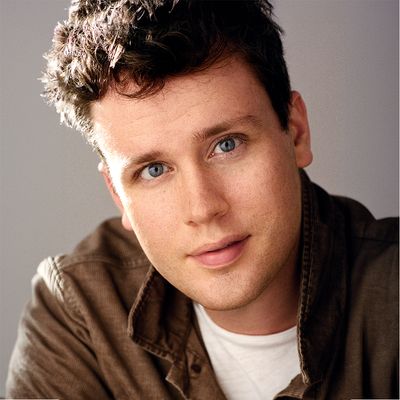
Broadway's Tony-nominated comedic genius Grey Henson is a magnet for good, and he's here to tell you how on The Art of Kindness. The musical theater performer joins Robert Peterpaul to share acts of kindness from behind the scenes of shows, like Book of Mormon, Mean Girls and Elf, to now..... Read More
From the show: The Art of Kindness: Pop Culture & Positivity with Robert Peterpaul
Guests
Featured Shows


About
Broadway's Tony-nominated comedic genius Grey Henson is a magnet for good, and he's here to tell you how on The Art of Kindness. The musical theater performer joins Robert Peterpaul to share acts of kindness from behind the scenes of shows, like Book of Mormon, Mean Girls and Elf, to now... BIGFOOT?
This positive podcast covers:
- How to be a "magnet for goodness" in your every day life.
- What Grey's learned about unlocking vulnerability and "childlike wonder" through the iconic musical theatre roles he's played.
- Leading with BIG kindness on his new musical BIGFOOT! + more!
GREY HENSON recently played Buddy in the Broadway revival of Elf the Musical, earning him a Drama Desk Award nomination. He made his Broadway debut as Elder McKinley in The Book of Mormon, a role that he originated on the first national tour. He was also seen on Broadway as Storyteller 2 in Shucked and earned Tony and Drama Desk Award nominations for his performance as Damian in Mean Girls. Other credits include Michael in tick, tick… BOOM! at the Kennedy Center and Tate in the Netflix series “Girls5Eva”. Find out more: BIGFOOT: A NEW MUSICAL
Got kindness tips or stories? Please email us:
artofkindnesspodcast@gmail.com
Follow Grey
Follow us
@artofkindnesspod / @robpeterpaul
(https://www.buymeacoffee.com/theaok)
Music:
"Awake" by Ricky Alvarez & "Sunshine" by Lemon Music Studio.
We are supported by the Broadway Podcast Network.
Transcript
This transcript was automatically generated and might contain errors.
[0:00] Grey Henson: Hi, I'm Grey Henson, and you are listening to The Art of Kindness.
[0:11] Robert Peterpaul: Hello, beautiful people. Welcome to The Art of Kindness, where we have compassionate conversations with artists from all areas of the entertainment industry who are using their voice to spread joy and make this big spinning planet in the universe a better place to be. I'm Robert Peterpaul, and I'm so glad you're here.
[0:45] Robert Peterpaul: Hello, friends. Thank you for choosing kindness today. First and foremost, whether it's your first time listening or you've joined us for all wow, 198 episodes, I am so glad you are a part of our kindness community. Oh, audio hug. That's right. We are just two episodes away from number 200. I can't believe it.
[1:12] Robert Peterpaul: If you are a longtime listener, I love you. You'll know that one question I always enjoy asking our guests is how they are at accepting compliments. And I did that in this very chat. Quick side tangent. This weekend I had the privilege of officiating my cousin AJ's wedding. Shout out to AJ and Kelsey on a beautiful day. It's also why I have no voice today.
[1:37] Robert Peterpaul: It struck me though that weddings are kind of like festivals of compliments. Most especially for the bride and groom, of course, but if things are going well and the vibe is right, which it was, guests are all just in the best mood. And compliments are flowing just as much as the champagne, perhaps. I think compliments really are also great icebreakers at these events. You know, where maybe you don't know everybody. A nice way to start a conversation is to say, hey, I like your tie, I like your dress, I like the buttered roll on your plate, and I'm gonna eat it.
[2:14] Robert Peterpaul: Okay, sorry. Someone who still admits they are learning to accept compliments right alongside me is our guest today, who I've had the pleasure of marveling at in multiple Broadway shows now. The one and only Grey Henson.
[2:31] Robert Peterpaul: Grey Henson is a performer from Georgia who has become one of Broadway's brightest comedic talents. He made his debut in The Book of Mormon and later received rave reviews for playing Damian in Mean Girls the Musical. That Tony-nominated turn was followed by a hilarious turn in Shucked and a syrupy sweet performance as the iconic Buddy the Elf in Elf the Musical. More recently, my sister Julia and I had the pleasure of seeing Grey star in the titular role of Bigfoot in You Guessed It, Bigfoot the Musical. We were charmed big time by this silly sweet show, which runs at the New York City Center through April 26th. So put those big feet on the ground and run to catch this show while you still can.
[3:32] Robert Peterpaul: Where we hope to bring some digital kindness into your news feeds. Now, without further ado, please welcome the great Grey Henson.
[3:53] Grey Henson: Well, it's so wonderful to see you. And we got to meet briefly after I saw you shine and blow in the wind in Bigfoot the Musical, Grey, which was so much fun.
[4:05] Grey Henson: Yeah, thank you for coming. It is fun, isn't it? It's so much fun. And I just feel like it's what we need now in this world is joy, and you're delivering that to us. And you've delivered that to us for so many years now. So I'm just so grateful for you as a performer.
[4:21] Grey Henson: And for everybody listening, just for some clarity, after the show, sometimes they invite folks to create content. That's such a weird phrase. And I'm very awkward at those moments, but I want to bring it up because you're so kind and you made it so easy. And I gave you like this little foot and I blacked out. And I just feel like, sorry, I have my own little foot here too. I just feel like you're such a joymaker, and that's so much energy to put out when you've done this massive show that you're leading. I just don't know how you do it.
[4:51] Grey Henson: Yeah, I mean, first of all, the foot is in my dressing room that you gave me, and I put it on top of an orchid that I got for my manager for opening night, and so it looks like the orchid is growing a foot. I love it so much.
[5:08] Grey Henson: I'm glad you're gonna be able to do that. Exactly. Yeah, and I always love meeting people post-show because I mean, where else can you meet people that just viewed your art? I mean, I guess that the thing that I love about theater is that there's this immediate connection you get with a crowd or with a group of people that you just experienced this live thing with. So, like, you know, when you see a movie, you don't get to meet the movie stars after, but there's something about doing a show and then stage dooring or chatting with people after that's just like a beautiful reminder of how special live theater is.
[5:50] Grey Henson: There's a lot that goes into doing a show, especially like Bigfoot, because the costume is such a big ask, right? Like I'm in this massive fursuit. And so it's exhausting and it's hard, and eight shows a week is grueling, but then to immediately connect with people that just sat there and enjoyed it, it's a beautiful reminder of like that's the whole reason. It's just about connecting people, especially in this age of like, you know, encroaching AI and things becoming less human and real and connective, you know. It's really nice. So I always love meeting people after shows.
[6:30] Robert Peterpaul: Oh, that's so beautiful. Thanks for sharing that. And I'm sure after the shows you just get bombarded with compliments. And I'm curious, how are you at accepting compliments, Grey? Because front-facing you do a great job. It's a big part of your job is getting praise. So how do you sort of handle that?
[6:45] Grey Henson: I mean, I hope it's a big part of your job. Yeah, yeah, me too. I assume it is. It is a weird thing, isn't it? I'm trying to get better at it. Because I, as an actor, it's important to not take yourself too seriously. And so I think that's where the resistance comes from, because you never want to feel like you are good or worthy in a way that at least to me, I'm really unattracted to people who are... I thought you're just like, I'm really unattractive. And I was like, I'm super unattractive. No, wrong word. Freudian slip. No, no. Like, no, I'm just like digging for compliments here, I guess. No, I mean, put up my lift. I'm unattracted to people who are super unaware. And so I always try to strive for just like a deep knowing of like my surroundings and how I sit and where I am in the world.
And so sometimes compliments can feel a little bit abrasive because you're like, oh, I don't want to accept that about myself, right? But yeah, I think a compliment at its core, and when it's genuine, is just like someone connecting with something you do.
[7:58] Grey Henson: And so I've really been lucky to play these roles that are superhuman, but also super connected to who I am as a person. And so I think that there's that little like window that's always there. There's not really a divide between me and my characters and an audience. And so when people say something sweet, I feel like they really see me in a way. And so, yeah, I've been trying to accept them more. And also, yeah, I'm just trying to be more proud of what I do and how I do it and my place in this really weird, complicated industry that is performance and acting. And so, yeah, I'm trying to take a little bit more ownership of that because also nobody likes anyone that's like falsely humble, right? It's like just accept it, accept the goodness that's coming your way.
[8:46] Robert Peterpaul: Yeah, I love that. You mentioned people being unaware, which is certainly funny in characters, but not necessarily in real life. And I mean, one that came to mind is Buddy the Elf is almost like so aware and innocent that he's unaware. It's kind of a weird, complicated thing. But before we dive a bit more into your career and then get to Bigfoot, I'm wondering for you, from growing up in Georgia to now, what would you say is your definition of kindness, Grey? And how do you think it's kind of evolved over the years? Because I feel like down south, kindness gets a very specific definition.
[9:19] Grey Henson: Oh, totally. Yeah. Are you from the South?
[9:23] Robert Peterpaul: No, I'm not.
[9:25] Grey Henson: Oh, okay.
[9:26] Robert Peterpaul: No, but I want to be.
[9:28] Grey Henson: Famously.
[9:29] Robert Peterpaul: Yeah, I wish I were.
[9:30] Grey Henson: The famously, yeah, people in the South can be sort of superficially nice, I guess, or nice to your face and talk about you behind your back. I mean, that's sort of like what that's the trope of like these sweet southern ladies, you know. But no, I was raised by like one of the nicest people ever. My mom, Paige Henson, is so genuinely nice. She looks like Judy Dench, but she acts like a liberal Paula Deen. Like she is, she just sort of exists in that I'm painting the picture for you. She's just this sweet, like she looks kind of like Mrs. Claus. She is the dearest, sweetest person. And it's so real and genuine. And so obviously, I think kindness is about is like rooted deeply in empathy. Like I think it's about sort of seeing other people and trying to connect from them and see it from their POV because innately we as human beings are all so selfish.
I mean, not even in like, not even trying to, you know, I think it's just it's a natural thing to be, right? We're all at the center of our own stories, and it's inevitable, but I think genuine kindness is when you put yourself in someone else's shoes, right?
[10:56] Grey Henson: And so my mom always taught me to do that. And I think what it is for me, I think of kindness as a genuine curiosity for other people and their experiences. And you can tell, you can tell when someone is genuinely curious and asks questions and cares, and when it's just for show. And so I've always watched my mom. Like, she will tell me stories about people that I don't know or care about, and she talks about them as if they are family. And I'm like, wow, you genuinely just have such deep love and admiration and care for everybody she comes across, and she makes that known, and she's really, really beautiful at that. So I've that was the model for me and still is, and but also I know how I feel when someone is genuinely kind.
Like for instance, my friends. I have a friend that made an observation about me once that was so astute that it blew me away. And to me, that was like the ultimate friendship kindness because it's like she basically just made an observation about my character that I know, but I didn't know anyone else knew in some weird way. And it was such a it was like just being seen. The concept of being seen by someone in a way that you didn't think anyone could see meant that that person cared so deeply to like go through the muck of what I present and find the core of something there that I tried to give out. So, yeah, it's about I think a genuine curiosity. That's how I see it. And that's how I try to move through the world. Because it is, it's hard not to center yourself. It's hard not to center yourself in the story of what in this industry, you know.
[12:54] Robert Peterpaul: It's just if you want to make it, you gotta miss the wedding sometimes. You gotta like it's yeah, it's a lot of sacrifice. And you know, taking a page from Paige's book, your mama Paige, yeah, have a really clunky transition. One thing I feel like I admire about you while looking back on your career and your performances is that you sort of have this, I don't know if a reverent is the right word, but this like a reverent innocence at it's like it's such a duality that's so cool to see on stage from Mean Girls to Elf to Bigfoot. You kind of tap into this unabashed excitement almost that's just so pure, especially in Elf. And I wonder if you have advice for folks listening on how they can sort of be vulnerable, not just as a performer, but in life.
I feel like being passionate and excited about things in today's world is just kind of po-poot like poo poo done. Like, I don't know. I just feel like it's totally it's not cool to walk around being like, oh my gosh, that tree is beautiful, you know, and yeah, you have that sparkle in every performance. So I just wonder your thoughts on that.
[14:00] Grey Henson: Yeah, that's a great question. I have been lucky to play those people, haven't I? Yeah. There is something that I wrote down in a post-it note by my front door during this rehearsal process for Bigfoot, because the character is really similar to Buddy in that way. Um, and it's I wrote down childlike wonder, um, which is what these characters tap into. Buddy, obviously, everyone's familiar with the movie, but the musical is the same in that he sees the world through this purity lens of goodness and kindness and Christmas, obviously, but that's what it represents. And throughout the course of the show, he affects everyone else by doing that. And that's the message is that we should all tap back into that, right?
Um, they all believe in Christmas by the end. And with Bigfoot, it's the same thing. He has this beautiful innocence that I think can be written off as childish or immature, but it's actually this like sort of deep zen monk knowing that like that's what matters, right? And so yeah, it's the childlike wonder um that I try to bring into my daily life. Uh as actors too, I mean, I look at even what I was like. I know this isn't when I was a child, but when I was like 22, starting out my career, I had so much like, and I don't even call it confidence. It was just like I just wasn't as weathered by the world. But it's that innocence that is so um, I guess it is a confidence. It's like this innocence that you sort of are capable of doing anything that children have.
And um I uh we go so far away from that as we get older and we build neuroses and we're like worried about how we come across and our place in the world. But you look at kids, and um, for better or worse, they just are so simply intentioned, right? And um I I worry a lot as a person that I care too much about what other people think and retweet. Retreat, I mean it's it's not hard not to. I know, I know I am a recovering people pleaser, yes. Yeah, um, and without being malicious or taking other people down, I've been trying harder to um take care of myself more, I guess. And I don't know, I think those two things kind of go hand in hand. It's about being compassionate while still staying focused on your own intentions and wants and needs.
Yeah, there's that there's a lot about um Bigfoot and this character that I've tried to incorporate into my daily life that I did when I played Buddy. Buddy, when I was nervous or anxious about doing the show, I would just have to buttify myself, is what I called it. And I would just like I would just see the show or any sort of worries as um something I could throw into the backseat because it was all about just connecting to people and living in the moment and about being in the present moment. Um, it's like the song for what is it? Forget your troubles, come on, get happy. Yeah, exactly. Yeah, yeah. And it's not, and that's I think it's it's so often written off as being um juvenile, like I said, or like you know, um immature.
But there's a lot of maturity in that thought, yeah. Yeah, sort of relentless optimism. Someone once called me a relentless optimist, and it was a little aggressive in the way they said it, but I sort of like that phrase because I think optimism and kindness, it's not all puppies and rainbows, it's not all, you know, putting syrup on spaghetti. It's yeah, it's very powerful. I think. It can be very hard, especially in the process of creating a new show, which I mean I'm hoping you didn't have too many difficult moments, but there's always something that comes up during tech and how we can handle that with kindness. And you're also a teacher in a lot of ways, people look up to you. And I wonder so many kids now sort of look up to you and are looking at your performance and maybe trying to copy it, which they'll learn, you know, to bring themselves to the roles. And I mean, Mean Girls is being done all across the country. I think they did it at Macon Little Theater where you got your start recently.
[18:10] Robert Peterpaul: I saw.
[18:17] Grey Henson: Yeah, it's called Macon.
[18:19] Robert Peterpaul: So I'm making Georgia.
[18:20] Grey Henson: But gorgeous. No, yeah, it's making like bacon. Actually, in Macon, they're like the name of our hockey team was the Makin' Whoopee, which was hilarious. And then like there's a place called like making time where they like sell clocks. Or maybe I made that up, but I yeah, it's making not make gold. You know what? I appreciate that. You said hotcha whoopee, or you said whoopee, ha cha whoopie, and that reminded me of Chicago. And we do have, did I load it? I have a little sound thing here, which no one should ever give me one of those, but I do have one. And this brings me to a segment called Curtain Up Kindness, and I'm gonna cue our theme song by the one and only Kate Baldwin. It's curtains up kindness, curtains up kindness, leave your jazz hands at home.
Thank you, Kate. I ripped that from our interview. I don't know if she knows I'm using it, but I am. I love her so much. Yes. Like talk about kindness. But Grey, I am gonna name a production you've been a part of, and you quickly just throw out there, we'll probably go on some tangents, but I know I gotta rein it in to get you out of here early. The first act of kindness that comes to mind from that time or that show. Does that make sense?
[19:33] Grey Henson: Okay. Yeah, we've covered some of them, so we can we can skip some. But the first one here is The Book of Mormon.
[19:41] Grey Henson: Um, yeah, well, the the person that I try to emulate most. I met first day of rehearsals for Book of Mormon is the late Gavin Creole, who was a dear dear friend of mine who passed a year and a half ago now. Um he would have been 50 years old next week. Um he, if you don't know who Gavin was, was just an incredible, not only performer, but just person and um leader. And just yesterday I got together with some of his closest friends, and we celebrated by volunteering at a meal um preparation bank. It was uh he was just everything. So I was 22 when I started The Book of Mormon first national tour. It was the month after I graduated from college, and Gavin was our Elder Price, and I played Elder McKinley, and I just moved to the city.
I didn't know anyone, and it was my 22nd birthday, was our first day of rehearsals, and he found that out halfway through the rehearsal, which is the first day I ever met him. And that night he took me out for my birthday, took me out to dinner. And um which is something that I don't even know that I would have done, right? You know, it's something that I don't think a lot of people would do. And he just always led with goodness, kindness, talk about like childlike wonder, like that was him. Um, he was sort of Peter Pan in a magical way. Yeah, was was relentless at times, and I was like, How can one person be like this? When I feel jaded and and like over it or you know, cynical, um, I would always look to Gavin.
Um, so yeah, that was where that my Mormon kindness, I always think of him. I'm honestly for my entire life. I have always looked up to him and I still do. And if I um if I'm ever thinking how I should live my life, I think what what would Gavin do?
[21:37] Robert Peterpaul: Hmm. That's so sweet. Thank you for sharing that. He's he's such a special person. I got to interview him a couple times. He just always treated me like you know, he knew who I was, and you were the only person in the room. And when he kind of shined his light on you, it was very much like Peter Pan. You're very astute. You kind of nailed that.
[21:54] Grey Henson: Oh my gosh.
[21:55] Robert Peterpaul: So yeah. If you're listening to this in the future, if you don't know Gavin for some reason, go look up some of his performances on YouTube, and we're lucky to have that light captured in in some ways. I appreciate you sharing that. And I know that show was also with Mr. Casey Nicola, who did Mean Girls as well. So maybe we should move on down to Mean Girls. What is an act of kindness you remember from that giant fanfare of a show?
[22:20] Grey Henson: I mean, Casey is a great one. Uh, when I think of joy and jolliness, I think of Casey. Um, Casey also, if if it had happened at the time when he was um 20 something, he would have played Damien. Like that, that was that was sort of the connection there we had. And yeah, the character of Damien is another one. I think that while he was sort of sardonic and sarcastic as a character, he was a really good friend. And that was his calling card, and that's why people liked him. Um, which is sort of sort of how I fit in in school and avoided all of the sort of um the the closeted gay fear that I had in making Georgia growing up by just being good and sweet and nice to everybody. That was my secret weapon.
By the way, did you know that your Wikipedia page under personal life just says openly gay? Like that's all it says. I don't know if you know that's fabulous. I went to your Wikipedia, and it just everything has so much, and then it just says openly gay. It's kind of cool.
[23:27] Grey Henson: I would screen yes, that's literally all it says.
[23:31] Robert Peterpaul: Wait, who writes those things?
[23:34] Grey Henson: I don't know. I think you could probably get control of it if you wanted to, but I would leave that. I think that's just kind of iconic.
[23:41] Robert Peterpaul: Yeah, hey, I'm proud of it, man.
[23:42] Grey Henson: Yeah. I mean, come on.
[23:44] Robert Peterpaul: It made me talk about it.
[23:45] Grey Henson: Being in the closet now. Imagine not saying you're gay if you're gay nowadays. What a bummer.
[23:49] Robert Peterpaul: Yeah.
[23:51] Grey Henson: Um, but sorry, I didn't mean to interrupt you. You were so good in Mean Girls.
[23:54] Robert Peterpaul: Oh my gosh. And that's another one where there is the fear of just this iconic piece of cinema, and then just sort of bringing yourself to it.
[24:02] Grey Henson: And major fear, that's a good word for it. We were afraid. We were afraid of playing those roles that we all knew so well. And um, especially Damien had all those like iconic lines. And when we thought of Damien, we thought of Daniel Franzese from the movie. And so to adapt something like that, there was a lot of pressure on us. But Tina Fey was unbelievably hands on, and her husband Jeff Richmond wrote the music, and they were there every day, and they really connected to us and they really modeled those musical parts around us. And so that was amazing to watch, too. I mean, talk about kind. And Tina is one of those loyal, amazing people that if she likes you, she keeps you around. Um, I got to work with Girls5Eva, right?
[24:46] Robert Peterpaul: Girls5Eva.
[24:47] Grey Henson: Yeah. And bring that show back, honestly.
[24:50] Robert Peterpaul: Oh my God, it was so good.
[24:52] Grey Henson: Yeah.
[24:52] Robert Peterpaul: Um, but but she keeps good people in her orbit. She doesn't want to work with people that aren't good and kind and easy to work with. So I learned a lot from her too, and Jeff and Casey. That whole process was scary, overwhelming, but ultimately like just life-changing.
[25:09] Robert Peterpaul: That's beautiful. Erica Henningson said that Tina Fey read y'all the four.
[25:14] Grey Henson: I wrote the four agree grease.
[25:16] Robert Peterpaul: I think that means the four agreements, probably agreements.
[25:18] Grey Henson: The four agree grease.
[25:20] Robert Peterpaul: I have it right here.
[25:20] Grey Henson: There, big fan.
[25:21] Robert Peterpaul: But I think that's just a beautiful way to set it. Sorry, I'm so unhinged, y'all. We had some telling issues and talk about kindness. Grey, you were so kind the way you accepted that.
[25:30] Grey Henson: Oh my god, you were like five minutes late.
[25:31] Robert Peterpaul: It's totally fine.
[25:32] Grey Henson: I know, but I feel so bad. I'm like, what's his address? I'm gonna send him a fruit basket.
[25:37] Robert Peterpaul: So love. We should move on here to keep up with the time. We talked about Elf a little bit, but what I'm most curious about with Elf, and I gotta shout out my buddy Dave Solomon. Love you, Dave, is becoming love, Dave.
[25:49] Robert Peterpaul: Talk about just like a quiet kindness. Becoming the real sort of driving force behind a big Broadway show. I feel like you are, and from what I've read about you, and just getting the sense, you're such a community maker, if that makes sense. Even backstage after Bigfoot, the way you just made everybody feel so comfortable. And I've heard you say that that's not necessarily innate for you. Like you feel like you're almost a, you couldn't find the word for it, an intro introverted expert. I don't know. Anyway, I'm rambling. But now being the number one with Bigfoot, and then looking back at Elf, what you learned during that time is sort of creating community, leading with kind of something you think about. Is it just innate? What are kind of the ways you lead with kindness?
[26:34] Grey Henson: Hmm. That's a great question. It's not something I consciously think or try to do, I don't think. I think it is something that when I sense is needed, I just naturally pull up and try to deliver. Does that make sense? Um, it's like filling a void or just making space, which is I think goes back to what I was saying about kindness. It's like having an awareness of what is needed in the room and then giving people their moment and then taking up the space when it's needed. It's also what's what's how to be a good actor. Being a good actor is being a good scene partner. And you can tell the actors that are focused solely on themselves versus trying to make their partner look good on stage. And hashtag self-tape spiral. Sorry.
[27:22] Robert Peterpaul: Totally. Well, yeah, that's why self-tapes are so terrible because you're existing in this void where you're just acting with the wall or a friend on Zoom or it's the worst. But being on stage, it's about making that other person look good. And so that's empathy, that's kindness, that's goodness. And so it's the same when I walk into any process. Um, and yeah, there is a pressure to set the tone when you are leading a show. That's also something Gavin taught me just by watching him do it. Um, it's about understanding that if you are at the top of that quote unquote, I don't know, food chain, you sign in sheet.
[27:50] Grey Henson: You sign in sheet, sure. You have a responsibility to um set a good uh energy in the room. Um, but also know when to take a back seat. That's what I'm saying, I think. You know, I it's not it's not something that I think is um sorry, I'm in New York, so all the sirens all the time.
[28:23] Robert Peterpaul: No, people always apologize, but listeners love it because we have people listening all over the world, and it's just so New York ASMR.
[28:30] Grey Henson: I know it is, isn't it? It's just the busiest city of all time. Um then I edit it out, like the the room tone sort of shifts in the edit, and people are like, what are they talking about? There's no side right here.
[28:41] Robert Peterpaul: Yeah, I don't hear anything.
[28:43] Grey Henson: Um yeah, yeah, yeah. There uh it's about like it's I think it's a quiet um act of leadership, is what I think it is. And that's how I tried to do it. I don't want to ever come in a room and be like, I'm in charge here, look at me. I really I turn away from those people.
[29:00] Robert Peterpaul: And so with Elf, I had never led a Broadway show before. Um, it was a revival of a show that like did pretty well the first time around, and and um everyone, another movie that people are obsessed with that know they know every word of that movie, and then they're like, Well, how are you gonna do this in your own way? And again, I didn't want to recreate what Will Ferrell did. And it was just one of those things where like the stars aligned and it was such a perfect part for me at the time in my life that I needed it. And and it was a real surprise delight doing that show and the company and everyone was everyone was so incredible, and um I was genuinely so happy to be there.
[29:40] Grey Henson: And so the whole process was just amazing. Um, yeah.
[29:43] Robert Peterpaul: So the audience, such a joy to see.
[29:46] Grey Henson: That was like amazing.
[29:47] Robert Peterpaul: Well, no, that wasn't me.
[29:48] Grey Henson: Oh no, that was Sean Astin, who Well, yeah, secret, it wasn't even Sean Astin.
[29:53] Robert Peterpaul: It was on the Oh, that makes sense.
[29:54] Grey Henson: It was the guy blacked out in double.
[29:56] Robert Peterpaul: Oh I wish I had been in the thing.
[29:59] Grey Henson: This the sleigh does fly over the audience, which is so incredible.
[30:03] Robert Peterpaul: That was really cool.
[30:04] Grey Henson: That was such a joyful show. And to just there's something with when you're doing shows for families and kids, just to see the joy wash over their eyes, like there's nothing else like that.
[30:14] Robert Peterpaul: I feel like that's so true.
[30:15] Grey Henson: Yeah. I had never done a a kid's show before either. And that talk about like a great reminder of like childlike wonder, like how important that is. Um people were they were just so excited to be there and to meet Buddy. Um so that was a special reminder when you're like, Oh gosh, my voice is tired, my knee hurts. Like I, you know, I'm breaking up with this guy. Like all of that, none of that mattered when I was just playing Buddy DL for like a couple 10 year olds on the front row.
[30:43] Robert Peterpaul: It was amazing.
[30:44] Grey Henson: Right. It's like Jane's 10, and this is her first show ever. So that kind of oh, exactly here, you know, that is something that still I try to remind myself of is that like even if you're tired having a bad show, even doing Bigfoot to a crowd of 300 people, this could be someone's first theatrical experience.
[31:01] Robert Peterpaul: And so it's just a great reminder to be like, nope, pull up this the that's why live live theater is so special.
[31:08] Grey Henson: I mean, or last gray. It goes both ways, not to bring it down, but it could be somebody's last show, too.
[31:13] Robert Peterpaul: So true.
[31:14] Grey Henson: No, that's very, very true.
[31:16] Robert Peterpaul: Yeah, and and so it's it's a good reminder.
[31:19] Grey Henson: Yeah.
[31:20] Robert Peterpaul: Well, I also wonder, as we're we've talked about a lot of your iconic roles here, you said comedy and making roles your own could really comes from honesty and truth, which is both the easiest thing and the hardest thing to do. Like sort of walking into a room fully as yourself should be so easy, and sometimes it's just not. So I wonder if you have advice or thoughts on how to unlock your own vulnerability as a performer.
[31:45] Grey Henson: Because I think vulnerability is the gas in the car of kindness to have a bad metaphor.
[31:51] Robert Peterpaul: But really everything.
[31:52] Grey Henson: No, no, I yeah.
[31:54] Grey Henson: We're driving that car. I feel it.
[31:57] Grey Henson: Okay. This is a this is a question I get all the time. And I don't know that I I have a good answer for it.
[32:04] Grey Henson: Yeah, because I think that I um I have brought myself to a lot of these parts I've played. And um yeah, it it's like when I so I did a show called Shucked where I narrated the show as one of the narrators, and I sort of basically played.
[32:22] Grey Henson: Yeah, so fun, so joyful and hilarious and silly. But on pay or when people saw the show, they thought I was just on stage being myself, and it it almost seemed like not um challenging or like I wasn't acting or performing.
[32:39] Grey Henson: They were like, oh, Gray's just being himself, and it's and written off in a way. And I actually was like so proud of that work because that was harder than anything. Trying to make it seem so off the cuff and casual, like we were just talking and telling jokes.
[32:54] Grey Henson: Like someone asked me after the show if I did stand-up, and I'm like, I would never do stand-up. That's like the last thing I'd ever want to do. But the fact that it seemed like we were just these two people communicating to a crowd of people, that was the biggest compliment for me because it is hard work, and I don't really know how to do it.
[33:09] Grey Henson: I don't know the secret to bringing yourself to something like that, but that's that is the secret. Do you know what I mean? Like, I don't know how to tell someone else to do it other than just like let your walls down and and communicate.
[33:22] Grey Henson: Like, that's what it is. It's communication. It's it is, like I said, listening to your partner. And um, yeah, it's about getting out of your own way, I think. It's about trusting that it's in you and and like going on the ride.
[33:38] Grey Henson: Like in therapy with my therapist, I've worked a lot on letting go and jumping off a cliff of a show and trusting that the work you've done will set you up for success. Like that was a big takeaway from theater school for me at Carnegie Mellon and a teacher of mine, Barbara, would always tell us to focus on having a freedom within a framework.
[33:59] Grey Henson: And the framework is the preparation you do.
[34:01] Grey Henson: There's Barbara. She's like, beep beep. Sorry. She's like, that's me. Go gray.
[34:07] Grey Henson: Um, but like the framework is preparing and learning your lines and studying and like doing all the work. And then the freedom within that framework is just letting go and enjoying that. And so that's what it is.
[34:19] Grey Henson: And and I do try to bring myself to everything I do because people want to see that. It's also like, I think about Meryl Streep, right? She plays a million different types of characters, but you always see Meryl in there somewhere.
[34:31] Grey Henson: And that's why we care because I don't want to see someone become necessarily like a transformed version of like uh an idea of someone. There has to be humanity in everything you do.
[34:43] Grey Henson: And so it's not, it's about like not losing that. Um, and I don't really know how to tell someone to do that other than just to like let their guard down.
[34:51] Robert Peterpaul: Wonderful.
[34:52] Grey Henson: Yeah. I mean, because then when you go and watch friends in a show or see another show, it's like it always just seems so easy watching it. You're like, they're so free. And then you get on stage and you can overthink these things.
[35:04] Grey Henson: But sometimes it's a good idea. And I am a chronic overthinker.
[35:08] Robert Peterpaul: Like, I think that that's a part of it.
[35:09] Grey Henson: That's also I think, yeah, I think it's important to acknowledge that even those like scary bits that like I have anxiety. I sometimes get stage fright. I get I'm a really anxious person, but bringing that to it, bringing all of it to it and allowing that to wash over the performance.
[35:28] Grey Henson: People come to the theater to have that human relationship to see it happen in real time in front of themselves.
[35:35] Robert Peterpaul: Yeah.
[35:35] Grey Henson: And also, I got a reminder recently that nobody knows what's going on in your head. It's like you'll do a self-tape take and then you'll watch it back. You'll have stopped yourself halfway through the scene because you thought it was crap or whatever, and you got in your head.
[35:46] Grey Henson: Then you watch it back and you're like, this was fine. Nobody knows what the shit storm in this head.
[35:51] Grey Henson: You know, Robert, that happens to me all the time.
[35:54] Grey Henson: Literally, I will think I have a terrible show, and someone after is like, that was the best thing you've done so far. Like we I remember for ELF, like there's a week before you open when you do a new show where the critics are coming and you know that they're coming, you don't know what's going on.
[36:01] Robert Peterpaul: The critics are coming.
[36:10] Grey Henson: Yeah, it's what it feels like. It is it's terrifying.
[36:15] Grey Henson: Um, but I remember thinking I had the worst show I had ever done for ELF, and afterwards I went up to our director and I was like, the times were was here, what weren't they? I was like, the New York Times saw that show.
[36:27] Grey Henson: And he was like, Yeah. And he didn't say it like that. He was just like, Yeah, the times are here. What do you mean? It was great. And I was I beat myself up.
[36:36] Grey Henson: I was like, they saw me. I did this horrible show. The Times came out with like a rave review for Elf the musical.
[36:42] Grey Henson: And I that was like a such a beautiful example for me to like bank in my brain when you think you're not doing your best, you still are delivering in a way.
[36:51] Robert Peterpaul: So yeah, our brains are unfortunately so powerful, right?
[36:55] Grey Henson: Like we can talk ourselves in and out of anything.
[36:57] Grey Henson: Um, and I think there's a lot of power in knowing that too. That's what my mom always taught me. It's just like you can attract what you want, and like the what you focus on expands.
[37:08] Grey Henson: Like that's so important. Page, I need a page rip-off calendar because it's like you can just overthink, you know, you can overthink the good too.
[37:16] Grey Henson: And my nanny, my grandma always says, nothing's as hot as it's served. So it's kind of like once the thought passes, but I'm similar to you in that, like, then I would need to see the review to know like it's it's sort of like the the life journey is just being able to rely on yourself to be like, okay, if that didn't feel good to me, that's fine because it might have felt good to somebody else.
[37:36] Grey Henson: And you nailed it when I saw it.
[37:38] Robert Peterpaul: We got a trek through mud dirt for a little bit here to Bigfoot, the musical, which is big fun.
[37:43] Grey Henson: And my sister and I came, and we're just two silly Muppets, and we had the best time. There were moments when we were literally cry laughing, which it's actually ugly to hear in my sister and I it's literally just like we're those lappers.
[37:56] Robert Peterpaul: So I just want to hear about finding your Bigfoot a little bit. Were you into the Bigfoot lore beforehand?
[38:02] Grey Henson: You know, I I was just in the way that everybody else has always been, I think. You know, I was never really, I wouldn't say I was big into the lore of Bigfoot, but I was always aware of this thing, and I was always fascinated by the fact that there's this creature that nobody had ever seen or proven was real.
[38:19] Grey Henson: But like so many people have Bigfoot stories across the globe, you know.
[38:23] Grey Henson: There's a Bigfoot almost in every nook and cranny of the world, which I think is fascinating.
[38:40] Grey Henson: Um, so when this came, when this came across my inbox, I was just so thrilled and the material I think is so special and funny. And um, you know this, but it's sort of rare to find completely original new musicals that are genuinely so well written. Um, and as funny as this. And as someone that loves to be funny on stage, like the moment I read the script, I was like, oh, this is this is special. This is magic. And so yeah, and I think it's it's so refreshing to to just do a 90-minute musical about this weird creature who just wants to connect with people. Like it's there's a lot of beautiful simplicity in the story while still being really powerful and meaningful in a sneaky way. Those are the best ones. When you don't expect to sort of to feel some sort of um political emotional turn and it happens to you, it hits you across the face. That's what I think is great about the show.
[39:41] Robert Peterpaul: Yeah.
[39:41] Grey Henson: Oh yeah, there's such a beautiful message at the core of Bigfoot. And I just really appreciate it, especially now because it's a lot about not jumping on the bandwagon to other this creature versus maybe taking the time like we were saying at the top of the show, just to see somebody or something or and understand the creature who's just so lovely. I mean, there's a moment where the creature's just happy to be having small talk, which made me giggle because it's like, what would Bigfoot really want? And then just thinking about the writer coming up with this was so...
[40:08] Robert Peterpaul: Yeah, well that isn't that so true though.
[40:13] Grey Henson: I mean, I saw I guess it was some like, you know, when I was going, I was like doomed scrolling on some social media platform. There's some video that came up that was just like, don't forget like these little moments are the important ones, or something like that. Something silly that you know, probably some random kid made at some point to try to get likes and views. But like it really struck a chord. It was like those dumb little things that you're like, oh, this is just like a Tuesday. Those are the things we should latch on to, remember and hold dear. And so Bigfoot, yeah, Bigfoot doesn't have community, doesn't have connection, doesn't have a stupid, boring life. He's this creature that people are afraid of, and he wishes he were just a normal person.
And just finding the power and the beauty and the importance of that, the simple life that we think is so stupid or unimportant is actually like completely precious. And I try to remind myself of that all the time as an actor and performer because it's hard to not get trapped in the rat race of like success, career, making moves and being famous or being known, and just being grateful for what we have and what's you know within our reach just here, not like so far out away.
[41:29] Robert Peterpaul: Being grateful. Is that the title? I mean is that dumb?
[41:31] Grey Henson: I think it's so gray skies are gonna clear up.
[41:39] Robert Peterpaul: Oh, put on a giant furry suit, which I don't know how you're moving in.
[41:43] Grey Henson: This suit, you're moving and grooving. Yeah, talk about a Muppet. That's me. A full Muppet in this show. Um, the suit isn't the suit incredible. I mean, that insane. I also don't think people expected it to look as good as it does. Ricky Reynoso, our costume designer, really pulled out all the stops for it. And I wear this big muscle suit underneath the fursuit, but it moves so well, it's actually really lightweight, but it's just a dense fursuit, so it's obviously really hot, but like I don't even care because I think it looks so great.
[41:55] Robert Peterpaul: It does.
[42:17] Grey Henson: I did not expect it.
[42:20] Robert Peterpaul: I know no one did.
[42:21] Grey Henson: Um, and uh uh I never worn a costume that sort of gets to do the work for you in a way. So sometimes if I'm like tired or having a an off day, I'll be like, you know what? They're gonna enjoy this no matter what, because I look like Bigfoot right now, you know.
[42:36] Robert Peterpaul: Yeah, hell yeti.
[42:38] Grey Henson: You really do. Putting into Jennifer Hanniston. I don't know what I'm doing.
[42:42] Robert Peterpaul: Well, I think your physicality, you know, you nailed it, and it's so funny. I had so many other questions here that I'm just like scrapping on the five.
[42:50] Grey Henson: We have time, let's go.
[42:51] Robert Peterpaul: Yeah, yeah. No, I just feel like it I don't even know if you're aware of this, but you've played a lot of these characters that sort of beat to their own drum, I'll say, or are othered, you know, like Bigfoot. And you are now this person who has such a successful career and people look up to because you sort of created your own, you know, I hate the word type, but sort of type in a way. And now there's casting notices that I've seen that say Grey Henson type or like similar vibe.
[43:19] Grey Henson: No way.
[43:20] Robert Peterpaul: So I've seen that before, yes. And kind of like that must have I don't know if that was hard and and what sort of self-kindness that took to just not veer into the side of the industry that can be so homogenous, especially with vocal styles, and sort of just allow yourself to be yourself. We touched on this before, and I know you don't have an answer, but it just seems like you've navigated that really well from the outside looking in.
[43:43] Grey Henson: I really appreciate that. I take that as like the biggest compliment ever. Um, I think that we're starved for uniqueness and singularity, and we all have that in us, but we are taught to try to conform to what the world wants us to be. And so everyone does that in some way, even if you're not an actor. I think, you know, we're taught to follow trends and to like be one in the crowd. And so it's refreshing to see somebody really stick to their own personal unique guns. And I'm not saying that I do that better than anyone, but I think I don't know how to not do it. And that's how I've landed myself in that position. It's also so much luck. I mean, yeah, I've had to like show up and deliver and earn these things I've gotten, but I've been in the right place at the right time many times.
And um, I'm lucky. I'm lucky that I have I have made that little niche for myself in this industry. That is so hard to get into. But that is really the secret. It's it is like really using your own special, unique sauce, like that nobody else has. Like that's what it is.
[44:50] Robert Peterpaul: Yeah.
[44:51] Grey Henson: Um and I'm lucky to be like this six foot three, like oversized boy. And I was like, gosh, oh like when I was in college, I never booked summer stock because no people don't know what to do with me. People are like, oh yeah, yeah, great. I can tell there's something there, but it he doesn't fit into our like season of shows. And so when anyone asks, like, what are my dream roles? I have a hard time finding them because I have been able to create these other parts. And so I hope that people that look like me or don't feel like they fit in or aren't this like leading man type can look to me and say, like, oh, okay, if I just sort of rest on my own laurels and my own genuine vibe, that will find that my success will find me that way.
And so yeah, that's well said. That that has been that's been my secret, but it's not, it's not a secret. But yeah, that's that's what I try to do. The not secret of it all. Because I mean it sounds so cheesy, but like you're literally creating dreams for people. Like you're sort of paving this this path for people in a lot of ways. We've touched on you leading shows and putting so much energy out there into the show and then after the show. How are you kind to yourself, Gray?
[46:05] Grey Henson: That's a journey, but what's your self-kindness? Um, that great question. This one always stumps people.
[46:13] Robert Peterpaul: Yeah, it is hard.
[46:14] Grey Henson: I mean, uh truly, I love my therapist. I have a really beautiful therapist, and we talk once a week, and I think that is a good act of kindness I can do for myself. Um yeah, I I how am I kind to myself? That that's probably my best answer.
[46:33] Robert Peterpaul: That's a great answer.
[46:35] Grey Henson: Yeah, I'm uh I I've I've been better recently just out of necessity prioritizing myself and my own health and my my own well-being because doing eight shows a week is tough. It's really tough work, and you have to make a lot of space for that in your life. And so I've been really good at doing that, and so not burning my candle at both ends while I'm trying to to do these jobs.
[46:57] Robert Peterpaul: Yeah.
[46:58] Grey Henson: Yeah, there's no wick left if you do.
[47:00] Robert Peterpaul: Okay, before we go, we have a little bit of a surprise game, my friend, that hopefully is a kindness and will refuel you in some ways.
[47:07] Grey Henson: Okay.
[47:08] Robert Peterpaul: It's called the compliment game. And basically, I reached out to someone in your life for a loving statement about you. I'm gonna read it to you, and then you have to guess who said it.
[47:19] Grey Henson: Oh, interesting, cool.
[47:21] Robert Peterpaul: This is a really good one. You can ask me yes or no questions, but you know, I don't know much. Insert theme song here. Not gonna play it to save time. Also, it's me, it's cracked out.
[47:27] Grey Henson: Okay.
[47:31] Robert Peterpaul: Everyone's beautiful in their own way. It's the compliments, game on the compliment. Compliment. Yay! Here is your compliment. This is a long one. Okay, it's good. So I feel a little overwhelmed with what to say because I really do think Gray is my sibling separated from me in the womb. But that's not a compliment. That's more like a deep internal cosmic feeling. So I'll just keep that to myself. Unless you read this aloud already, in which case, all good.
[48:01] Grey Henson: Oh, I did.
[48:01] Robert Peterpaul: Okay, I just copied and pasted. Hi. Hi, Gray.
[48:05] Grey Henson: Okay, compliment.
[48:07] Robert Peterpaul: I think people who know your body of work would think that at a party or social gathering you defer to lantern mode, letting all the moths flock to you and bathe in your light because you are truly so shiny and hard to look away from when you're doing your thing. But what I love about you is the way you turn your eyes and energy towards people. I will never forget how touched I was when you remembered something I told you about my family on our first friend date, and then you brought it up later. For someone who so often has to expel and execute energy and brightness and flashiness for their job, when you are off duty, you are laser focused on the people you love and what they're saying. You actually listen, and I know this because you remember and tell things about myself that I even forgot.
The logistical things like my aunt's name, but also the oh, the shadowy things. The things it takes to be a true friend to remind you of in moments of doubt. You are truly someone who takes the time to see people, their light, and their shadows.
[49:05] Grey Henson: Wow, that was a that was a big one.
[49:07] Robert Peterpaul: Oh, that's beautiful.
[49:09] Grey Henson: Yeah, that was a big beautiful one. I I'm only guessing this because of the first thing you said about the womb. I think it's Erica Henningsson, isn't it?
[49:17] Robert Peterpaul: It is Erica.
[49:18] Grey Henson: Yes.
[49:19] Robert Peterpaul: Yes, of course.
[49:20] Grey Henson: Yeah, we've always said that we are we are we are long lost siblings.
[49:24] Robert Peterpaul: Can we see that in the show? Can we get Jim Hitwinsies?
[49:28] Grey Henson: I know. Oh, I know she said. Oh, that's so beautiful. I love her so much. She's also just the best leader. Talk about like really knowing how to run a room with like goodness and kindness.
[49:41] Robert Peterpaul: Yeah.
[49:41] Grey Henson: Yeah. We love her too. And I love that I've gotten to share this time with you. And as a way to end it, I would just appreciate if you could share for everybody listening a little kindness tip. So something you would want everybody to do on their own corner of the world to just try and make the world and the woods a better place.
[49:59] Grey Henson: Oh, come on, bigfoot. Um, something that uh I'm talking about my therapist a lot, lol, but she's the best. Something that she has taught me when I walk out into the world, and I truly think about it when I step off my stoop in New York City, is I try to be a magnet and not like a magnet for the crazy people in the world, right? That could like so easily take advantage of you, but a magnet for goodness and connection. And I think, especially in New York City, I know people are listening from other places, but in New York, it's so easy to have a hard shell exterior when you go through the city because it can be kind of scary sometimes. But a magnet for goodness has really changed how I move through the world.
And like um, you I've just I've seen it work in real time. I'm attracting good, amazing people, and even just in small little interactions. So try to move through the world today with like the a magnet energy for positivity. And it comes, it really does show up when you do that.
[50:56] Robert Peterpaul: Yeah, that's so good. Okay, now is that the title? I don't know.
[50:58] Grey Henson: I'm stuck, great, but I just know that I have so enjoyed spending time with you, and I'm truly grateful that we have you in this business to look up to and just enjoy because you're bringing the joy. So thanks for being you.
[51:12] Grey Henson: I appreciate it. What a beautiful podcast. I'm so happy that you do this and that it exists.
[51:17] Robert Peterpaul: Thank you, Grey. It was special. Until next time, remember, everything is gonna be a okay.
© Broadway Podcast Network, All Rights Reserved