

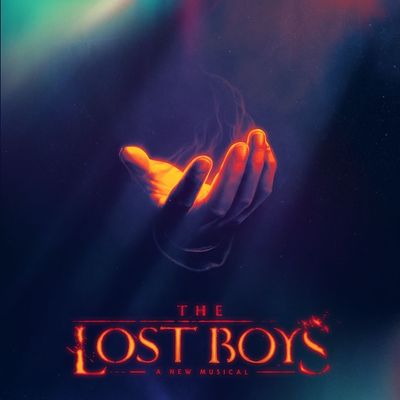
The Lost Boys Broadway director Michael Arden joins Robert Peterpaul on The Art of Kindness podcast to touchdown on creating thrilling heart-led theatrical spectacles. The Tony Award-winning theater-maker (Maybe Happy Ending) breaks down his innovative creative process through the lens of kindness... Read More
From the show: The Art of Kindness: Pop Culture & Positivity with Robert Peterpaul
Guests

Featured Shows
About
The Lost Boys Broadway director Michael Arden joins Robert Peterpaul on The Art of Kindness podcast to touchdown on creating thrilling heart-led theatrical spectacles. The Tony Award-winning theater-maker (Maybe Happy Ending) breaks down his innovative creative process through the lens of kindness.
This positive podcast episode covers:
- How directing with kindness on The Lost Boys transformed the process
- Why listening to audiences when developing new work is vital
- The formula for balancing spectacle with emotional truth
- Broadway burnout and staying inspired, plus much more
Michael Arden is a distinguished, two-time Tony Award winning director, honored for Best Direction of a Musical for Maybe Happy Ending. In 2023, he won the Tony Award for the acclaimed revival of Parade, following previous nominations for Once On This Island and Spring Awakening. He is the co-founder of At Rise Creative and has directed a wide range of works, including the 2024 Met Gala and Ben Platt’s concert residencies. Beyond his directing credits, Michael is an accomplished performer who has appeared on Broadway in Big River and King Lear, as well as in television and film projects like The Marvelous Mrs. Maisel and Source Code.
Shoutout to (spoiler) Ali Louis Bourzgui for taking part in our surprise compliment game.
Got kindness tips or stories? Please email us:
artofkindnesspodcast@gmail.com
Follow Michael:
Follow us
@artofkindnesspod / @robpeterpaul
(https://www.buymeacoffee.com/theaok)
Music:
"Awake" by Ricky Alvarez & "Sunshine" by Lemon Music Studio.
We are supported by the Broadway Podcast Network.
Transcript
This transcript was automatically generated and might contain errors.
[0:00] Michael Arden: Hey, I'm Michael Arden, and you're listening to The Art of Kindness.
[0:09] Robert Peterpaul: Hello, beautiful people. Welcome to The Art of Kindness, where we have compassionate conversations with artists from all areas of the entertainment industry who are using their voice to spread joy and make this big spinning planet in the universe a better place to be. I'm Robert Peterpaul, and I'm so glad you're here.
[0:31] Robert Peterpaul: Hello, friends. Thank you for tuning back in. This is Episode 201, and boy, I'm still soaring from our 200th celebration with the one and only Liz Gillies. I'm so grateful that you listened. I'm so grateful for everyone that shared it on social media, and I am just truly blown away by the support for the A-OK. Please go listen if you have not already. She's such a fun, amazing guest that I feel so privileged to have spoken to. And I am joined today by another one of those people, another creative whose work I admire deeply, director Michael Arden.
[1:19] Robert Peterpaul: Michael Arden was once described as Broadway's best kept secret by the L.A. Times, but I don't think his brilliance is a secret anymore. Hailing from Texas, Michael is the two-time Tony-winning director behind Broadway hits like Maybe Happy Ending, Parade, Once on this Island, and Deaf West's Spring Awakening, just to name a few that I love. The visionary joins us on the heels of more Tony Awards nominations for his blood pumping—or should I say blood sucking—new musical The Lost Boys.
[1:53] Robert Peterpaul: How far are you willing to go, Michael? I want to belong to someone, someone make me feel like a dime, give me what I never had, be the place that I belong, when the secret comes out, you'll feel the power like you've never known, when the secret comes out, you'll never have to be on your own, you need to know who you are, you need to know who you are. Set to a stunning score by The Rescues, The Lost Boys is an adaptation of the iconic 80s vampire cult classic film. After looking for a fresh start in California, a family finds themselves in the middle of a vampire den. It's one of the most Tony-nominated shows this season, already won Drama Desk and is just all around killer. Through his company, At Rise Creative, Michael and his team continue to sink their teeth into new ground with projects like The Lost Boys and to grow a bright future for how theater can truly blossom.
[3:29] Robert Peterpaul: Michael squeezed this chat into his busy schedule to discuss kindness behind the process of this monstrous show, his advice for fellow creatives, and why his stories typically revolve around finding chosen family. Speaking of chosen family, thank you for being a part of our kindness community, friend. I hope you'll join us on social media at Art of Kindness Pod and at Rob Peter Paul. We also now have video episodes on Spotify and our YouTube channel. So please head on over there as well and leave us a five-star review wherever you listen if you feel so inclined. It would mean the world. Oh, audio hug. Now, without further ado, please welcome the magical Michael Arden.
[4:25] Michael Arden: First of all, does everybody feel the need to say Michael differently now because of The Lost Boys? Because I want to be like Michael.
[4:33] Michael Arden: I know I've never heard my name so much as the past few months of my life. It's really disconcerting.
[4:41] Robert Peterpaul: Well, I'm sorry about that, but I am not sorry that you're here today. Like I said, I'm such an admirer of your storytelling. And when I look at it through the lens of kindness and your career, I just feel like you constantly remind us all that there's such light to be found in the dark. Every time I see your work, I'm truly—there's like a surge throughout my body reminding me why I want to be in this business. So just thank you for being you.
[5:04] Michael Arden: That means so much to me. Thank you.
[5:07] Michael Arden: Well, it's an honor to get to do what I do. So I love that you see it that way. And it's certainly true with The Lost Boys, the light in the darkness, which we will get to. It's my new favorite show of all time, and I'll probably just keep complimenting you for the full half hour. But before we do that, Michael Arden, I would love to know, what is your definition of kindness and how do you think it's evolved over the years?
[5:29] Michael Arden: Oh, goodness. I think kindness is reaching out, helping others who might be different than you, who might have differing opinions than you without expecting anything in return, trying to better someone's life because that in turn will ultimately make your life more full and rich than I think—I don't know if it's changed through the years, probably just taken on new shapes.
[5:57] Robert Peterpaul: Hmm. Very cool. There is science behind that, by the way, of the ripple effect and how it does affect other people. There's data in science, which I think is all the more reason to do it. But I'm sure there were a bunch—and this tends to be a bigger question—but I wonder if there's one act of kindness that comes to mind when you look at your artistic journey as changing your trajectory and getting you to here.
[6:20] Michael Arden: I mean, I think probably working on my first real show, which was Deaf West's Spring Awakening, was a big moment. So it kind of forced me to, you know, a welcomed force in considering the needs of an entire culture and humans with different abilities than mine and caused me to kind of like really consider every step of my process and how I could fully include and welcome and embrace and uplift that community, which I, you know, I'm not a part of, but get to uplift. So that was a big, you know, big moment in my life. And it has kind of shaped the way in which I approach work.
[7:15] Robert Peterpaul: Oh, that's so beautiful. Yeah, I love that. Are you an open jar, by the way? I'll cut this out, but I know it.
[7:21] Michael Arden: I heard someone singing and I was like, yeah, I know I'm fully an open jar.
[7:25] Robert Peterpaul: That's incredible. Wait, this is iconic. OK, well, we got to get to The Lost Boys, which I said totally changed my life for the better. I'm obsessed with the show. Need to see it 17 more times.
[7:34] Robert Peterpaul: I love that. By the way, Whoopi Goldberg was sitting right behind us when we saw it, which just made it all the more better. And she was obsessed. Her laugh, her reactions. I didn't say anything because, you know, I wanted to give her her privacy. But like, what has it been like to feel all the love for this show? Because it's rabid.
[7:51] Michael Arden: It's been amazing. I mean, it's the most wonderful group of people working on it. And we've worked so hard on it and, you know, didn't do an out of town. So we've done it all like in front of audiences here in New York. And we just all like believed in it. And, you know, I think with acknowledging that vampire musicals don't always work and it was a big risk. So I think it's just been so exciting to see audiences moved by it, that they're laughing, that they're screaming, that they're having a great time. You know, Broadway is expensive, you know, and I want people who spend their hard-earned money on it to feel like they've really like seen something totally thrilling. And so the fact that audiences are having a good time and that they're coming back again is just the greatest joy. I mean, it's so cool. And that I got to make this thing with my friends and, you know, people actually like it. It's always—I'm always like, pinch me, please.
[8:49] Robert Peterpaul: You know, yeah. Well, joy, I think is the perfect word for it. Although when you said Dracula musical, I flashback to Forgetting Sarah Marshall. Did you ever see that movie where he does the Dracula musical thing? I don't know why my brain went there, but this is not that. This is certainly thrilling. And you've gotten so much Tony love, you know. Congratulations on that.
[9:10] Michael Arden: Thank you.
[9:12] Robert Peterpaul: You may not recall. I was a little Muppet in the Tony's press room when you won for Maybe Happy Ending, who asked you about kind leadership and you humored me and you had such a beautiful answer. You said that to you, kind leadership is letting everybody else share their secret gift that they're just dying to share. I'm curious, as you start work on a new show like The Lost Boys, in this sense, how do you approach community making? Because you're really a community maker in a lot of ways.
[9:38] Michael Arden: I think you have to approach it with a sense of like saying, listen, I don't have the answers. I don't—I'm not—it is not—I am not like a monolith who knows how to do this. I don't know how to do this. And then every single person involved from, you know, the dressers to the stage crew, to the actors, to the musicians, to everyone working on the design team, like it requires every single person's talent and skill and mind and daring. And so I'm there to hopefully empower people to like exercise their gifts to their greatest abilities so that we can like discover something new together that is bigger than what we walked in the door with.
[10:21] Robert Peterpaul: Yeah, well, I mean, looking at walking in the door, it's very hard to walk in the door of The Lost Boys. When we saw it in previews, there was a line down two blocks wrapped around the corner, which is insane to see. People were already coming out one way up and it's an escalator. So, yeah, it's a little tricky.
[10:36] Robert Peterpaul: It's tricky to go. No, but I think it's because the show is so beloved. Everybody on that line was already wearing merch. I heard whispers of people saying, this is my fifth time, this is my sixth time. And I have not seen a fan base like this on Broadway in a very long time. It sort of feels like that cult following is already here. And I just wonder, you mentioned no out of town tryout. Audiences are sort of the magic, right? The missing ingredient. What's the collaborative process like in the sense when you and your wonderful team are weighing audience reactions and the potential changes you're going to make, possibly each night? I'm just curious how that works.
[11:15] Michael Arden: It's like a balance of trusting your own instinct of is something working or not to your artistic eye with really listening to the audience. When are they fidgeting? When are they coughing? When are they laughing? When are they not? When do you feel like they might be getting bored? And if I'm getting bored, I imagine they're getting bored. You can stare at something so many times that you start to lose perspective. But I think it's like trying to balance, okay, I need to both listen to myself and to the room around me. And there's no guarantee that any of it is the right thing. I think musicals are really hard. Every show is just, you know, how far we got in the amount of time we had. You know what I mean?
It's kind of like definition. I liken it to the Great British Bake Off, where they're like, okay, bakers, you're done. And you're like, well, it's like, you know, the frosting is kind of falling off the side sometimes. But you kind of have to trust that, like, well, that's just what it is. And that's like, art is never finished, at least, you know, a musical. Maybe, you know, when there's a revival, we'll finish it. But you know, I'm looking forward to getting to, you know, tidy up the icing when we do it, hopefully on tour or, you know, it is a living, breathing thing. I'm like, you know, unlike many things. So it's, there's an opportunity to keep making it better. Always, hopefully, if you're lucky, you get to keep working on something, putting it together. What does Sondheim say? Art isn't easy. Art is the only way you look at it.
[12:55] Robert Peterpaul: Well, this is beautiful advice. Also, as I am about to do a self tape after this, it's like artists just let it go. And sort of it is what it is. You know, it's like overcooked pasta. It's overdone in a lot of ways. Every moment is just a point in the never-ending process. And, you know, it doesn't end with that project. Even it's like, it informs the next thing and the next thing. And, you know, sometimes you certainly learn a lot more when things don't work.
[13:27] Michael Arden: True. That's true. That's a great perspective. Yeah. So you have a gift. You have to be thankful for that as well.
[13:33] Robert Peterpaul: I'm thankful for it. You know what I'm thankful for? The bonus scene you added in, which is all over my feed. And some people were saying it was out. It was in. It gave me goosebumps. Whose idea was that? First of all, what a beautiful human. Can we give credit to it?
[13:41] Michael Arden: OK, OK. I mean, I but everybody was like, so willing to try it. I mean, you know, it was kind of a bold idea. And I was like, you know, it would be crazy is if we had a bonus scene. And I thought, well, I've never seen that before. I don't know how it's going to work. I don't know like we're going to like fall down the aisle like, you know, I mean, there are a lot of questions, but it just seemed like right. And like I wanted to like people who hadn't been to the theater to be like, oh, this is cool. Like this is unlike something I've seen before. I didn't think theater could do this. Give people the idea that like, you know, vampires are never fully erased. They're always lurking around the corner and then they could be they could be reading their the coven could be rebirthed any minute. So I mean, we tried a few shows without it and the cast was like, please, please, we want to stay longer. You know, that's a good indication that that through that.
[14:38] Robert Peterpaul: It's just such a beautifully delicious surprise moment, even in the physicality of the audience half are standing somewhere like I can film this summer like I can. Some are seated. You know, it's like such a cool, raw ending that I'm almost like, then you want to you want to like applaud for her again because you remember that moment. It's just anyway. Thank you for that. You know, you want justice for Mrs. Vasquez. And then I guess she's going to be the big bad coming up. I don't know. I don't know. Hey, Broadway sequel. We don't see that often. Challenge. Nothing to any Warbucks, you know. Oh, my gosh. Right. And I know Phantoms tried a couple of times, but succeeded, I should say. I'd love to explore kindness in your process a bit more. If you'll humor me with a little flash round game I'm calling time to kill with kindness. So I'm going to throw a little phrase your way and then you please just finish it with whatever pops into your head. Is that cool?
[15:36] Michael Arden: OK.
[15:36] Robert Peterpaul: To set a good tone at the first rehearsal, I like to.
[15:42] Michael Arden: Admit that I don't know what I'm doing.
[15:42] Robert Peterpaul: That's incredible. My self-kindness to recharge during the creative process is usually.
[15:49] Michael Arden: Trying to be in nature in the few moments I can be.
[15:49] Robert Peterpaul: Self-kindness can be hard for people, so that was a good answer.
[15:53] Michael Arden: It is, especially in winter in New York City. Let's get like my gosh, I know. And with like a brain like yours, I imagine it can be hard to kind of quiet it. Maybe I'm assuming.
[16:03] Michael Arden: I really have to like, you know, OK, are you a good sleeper? I feel like that's what gets really hard.
[16:08] Robert Peterpaul: Once I go to sleep, I sleep well, but OK, I've been trying to treat myself well.
[16:15] Michael Arden: I love that. I love that for you. Kindest thing someone has done for me on The Lost Boys is.
[16:22] Michael Arden: I think. Jen Schriever allowing me to co-design the lighting with her, her willingness to collaborate, and, you know, she could have said, yes, I can do the lights all by myself. Thank you very much. But she was thrilled and excited to collaborate and welcomed me and taught me so much. And I'm so grateful to her. And I think what we made is like better than anything that anyone could have made by themselves, because we had an opportunity to like challenge each other and make each other better. And I just love I loved every second working with her.
[17:01] Robert Peterpaul: Yeah, it shows I'm going to geek out about the lighting and the sound in a moment once we're out of this little flash round. But I want to know kindness shows up in difficult moments or a long tech week by.
[17:09] Michael Arden: Laughter.
[17:09] Robert Peterpaul: That's a great answer. OK, thank you for playing. I'm notoriously bad at like keeping flash rounds flashy. I don't know why I have them. I'm very we call them tangents. Thanks for playing. Looking at the tech of it all, The Lost Boys, as we were touching on, just has such amazing practical effects that you all crafted in large part, thanks to you and Jen with this inky darkness you created. It's almost like I don't know if this is a bad metaphor, but a shoebox diorama you make in school and then you guys poke the holes through it.
[17:37] Michael Arden: Well, that's very much what it is, which is like, you know, that's how I got started, like making I made sets in shoeboxes when I was a kid. So it's appropriate that you mentioned that. But yeah, we, you know, it was a grand collaboration between Dane Laffrey, my amazing scenic designer and Jen and the company and, you know, and choreographers and everybody because we didn't have traditional lighting positions or lanes. Like we couldn't really light directly from left and right and we couldn't have traditional electrics from above. So everything was a kind of. Everything was a discovery and that. And so, you know, it allowed us to kind of like start from scratch a little bit each time we wanted to build a scene.
And, you know, we hung a lot of lights as we figured it out of like, OK, we need we need something here. And we just learned from the space and really wanted the audience to feel that like there was more that they didn't know or couldn't see than what they could see. So it's allowing the audience's imagination to run wild. It's like it's so much better than anything we can actually do.
[18:52] Robert Peterpaul: So cool. And just the way that, you know, the vampires are able to disappear into the darkness is like next level, creepy, good, deliciousness. I mean, you reverse Wizard of Oz and then you Wizard of Oz tornado a house up and down on the stage. I mean, it's crazy. Like you're so good at this that I wonder with your company at Rise Creative. I'm curious about the lens maybe you have or the funnel for how you balance the spectacle with the humanity, because I know it's always about the humanity. That's always the key, I think.
[19:21] Michael Arden: And I think that like one without the other. I mean, certainly spectacle without heart is simply that. And it has its merit. But I think when both are combined together, it provides like the most possibility for an audience to be both transported and inspired and changed, hopefully. So because, you know, if you if you can. If you can instigate awe. Yeah, I think you're more emotionally susceptible to what the story might bring. So certainly with The Lost Boys, we always wanted to make sure that the spectacle never overshadowed the heart. So it was a real tightrope walk. Yeah, you know, that was always the question of like, is this too much? Is this have we forgotten what the story is about here?
And if the answer is ever yes, we cut it. And so you sometimes have to. We learned that, you know, we learned a lot about what the story wanted so that it was never chasing behind this spectacle that hopefully they were like, yeah, an even hand. Listen, I know they've got to be linked in the parade. You can't have the other float too far behind. I think that's such a such a beautiful not to bring a parade. I think that's such a a beautiful way to think about this. And I mean, I'm even just I'm struck by the fact that this is a show about finding your family and then the fan base is growing so much that you're actually allowing audience members to find their family in real life, which is kind of a meta incredible thing that I'm sure is hard to fathom.
[21:00] Michael Arden: To me, the biggest danger in Lost Boys, it's not the vampires, it's it's the loneliness, right? It's like the loneliness is the true monster. So the not belonging. Yeah. I mean, do you have a I know it's in the show, so please go see the show. But do you have a message to people listening on? What to look for if they're feeling that way?
[21:11] Michael Arden: I think I think look for people who want to help you, who who believe in you, who want to uplift you and accept your mistakes and believe that you can learn and grow from them.
[21:30] Robert Peterpaul: Yeah, I love that. And for you, Michael, I mean, I know you're surrounded by such amazing people that you always give credit to, which I think is beautiful. We've had many of your collaborators on here and not one person has spoken the opposite of kindly about you. So I which is good, except for no, I'm just kidding. Everybody loves you and thinks you're such a generous leader. I guess this beckons the question to me of what's your advice on maybe like sussing out who's genuine and who's going to genuinely be a part of this found family?
[22:02] Michael Arden: This is what they suss out with, you know, the vampires. They're like, David, I don't I don't know if there's a good way because you sort of have to be willing to just trust everyone and and be willing to fail in that, which is a little scary. But, you know, giving the benefit of the doubt is important.
[22:28] Robert Peterpaul: That's a great act of kindness right there. And does that help you in these moments of failures?
[22:32] Michael Arden: These moments where people get it back and just get closer and discover and play. Like I said, I always encourage my company to not try to get it right. In fact, to like go too far, overact, do the wrong thing, because you're going to learn more that way. And Lynn Arons, you know, says the failures and the foolishness lead us toward the truth. And so that is the kind of what I try to chase in rehearsal, that we're actually not, we're almost like rehearsing around the play. It's like we're spiraling around it, you know, and still continue to because it's not like we've found it and it's done. Like every night, they are still trying to get to the bottom of it. What gets me a little bit closer to that.
Since, again, you are such a great collaborator for actors specifically, what's your advice in that regard in the audition scenario, even as far as like throwing it all at the wall, or sort of like just leading with who you are as a person? What do you like to see when people walk into the room?
[23:34] Michael Arden: I think I want to see who they are as a person. I want to see them kind of chase the truth and the needs that are in the play, of the characters. I don't need to like see you play a character. I just want to see you get what you want, try to, you know? And, you know, I want to see the best version of you because if you're not right for the part, you're not right for the part. You know what I mean? But I want to see how I want to see what you are right for. And so many times I'll like see an actor for something and it might not work out for this thing, but I will remember them and say, oh, and that happened to me as an actor, too. There were things I auditioned for I didn't get that I was, of course, bummed about.
But then I got a call later on from that director or from someone saying, I saw you in this. It wasn't right then. But what about this? And it was always like something better. So, you know, had I not had I been limiting myself by only by only trying to, like, shine as the character and not as my full self, that might not have happened. But it's a really hard thing. I'm so in awe of what actors do and how they put themselves out there every second of the day to try to be seen and so they can have the opportunity to do what they do.
[24:46] Robert Peterpaul: Yeah. Yeah. I appreciate that. Yeah. No, I mean, I think it's all it's all hard. It's all wonderful. It's all there's there's that duality. Certainly. I wonder where kindness comes into play with your collaborators. I'm guessing that's a thing that you respond to and look for because you're surrounded by a lot of kind people. But yeah, how does that show up for you when you're putting a cast together, when you're putting a team together?
[25:08] Michael Arden: It's like so important because you're going to have to, like, go through really stressful times together. So almost more anything you you want them to lead with kindness. And so that's something I try to, like, understand in an actor during the audition process and certainly something that I as I build a team, you know, you might be the most talented person at something, but if you're not going to enter the room and collaborate and treat others with love and respect and kindness, then it's certainly not worth it. Yeah, it's too hard. It's hard. It's like gotta be it's called it's called play for a reason.
[25:45] Robert Peterpaul: There you go. Yeah. Is there someone that modeled that for you? You feel like as a creative leader that you can so many people, so many people, you know, from from the first director who hired me for my first Broadway show, Jeff Calhoun taught me that certainly and his playfulness and kindness and generosity to a company and. Yeah, yeah. And the opposite sometimes teaches that you to, you know, I like that you learn like what what you don't want to how you don't want to. Yeah. You know, be in a room.
[26:19] Robert Peterpaul: Yeah. I understand that. Well, in this room right now, I'm going to bring up a little surprise game. It's called the compliment game.
[26:22] Michael Arden: Oh, my God.
[26:27] Robert Peterpaul: Michael, I reached out to someone in your life, one of your collaborators for a surprise compliment about you. I'm going to read it to you. And then you have to try and guess who said it. Oh, my gosh. OK. OK. And I you can ask me hints. I don't know much, but, you know, I will try. And we'll say you get three guesses because people like rules. You know, it's me. It's a muppet game. So here we go. OK. Everyone's beautiful in their own way. It's the compliment game. OK, it's the compliment game.
[26:56] Robert Peterpaul: I'm going to read it to you. It's been such a privilege and an eye opening experience to work with the Michael Arden. He's a director who isn't. It truly feels like we're able to collaborate and combine ideas. But he also has the gift of having such a clear vision that we never feel lost as an actor himself, safety and well-being and know at its core.
[27:23] Michael Arden: Oh, my gosh. That's nice. Thanks to whoever said that. I'm sure a lot of people feel that way. So I can the last four words are a hint almost. Yes. And it's a large that's it's a large production. Yeah. And the human at its core. There's something and it's Lost Boys related. I'll give you that because I mean, that would be too hard to say that. No, but I love Shoshana. She's the best. She's such a gem. Oh, gosh. Did did Ali say that?
[27:56] Michael Arden: Yes. Oh, my God. Lee Louise. Yes. So beautifully spoken. What a sweetheart. What I mean, he's he's the true joy. He was like the ideal, you know, actor I want to work with. Like he's he comes in every day trying something new, treating everybody, always trying to, like, put his focus on other actors and not necessarily himself. That's my favorite thing. You know, it's like I always say, like, when you're lost, put your attention on someone else. And like that will ensure that someone has their attention on you. And if we all have each other's back, we don't have to worry about ourselves. And he's certainly like a beautiful, beautiful leader. And what a nice thing. Thanks, Ali. I love you.
[28:34] Robert Peterpaul: Yeah. I love that you naturally complimented him back, too. I think that's great. And I mean, talk about magic. I mean, he's like a luring stage presence in the show.
[28:44] Michael Arden: He is. He is an empire. It's in the show. It's really wild. And it's like such a transformation. I mean, he's like, you know, wouldn't recognize him like, you know, standing in line for coffee. It's he's really, really cool. And I'm so, so happy people are getting to, like, see him do that.
[29:03] Robert Peterpaul: Yeah, he's one of the people you mentioned these these elements that can be very tough. The flying you've talked about so much, but there's so many people flying in this show and having flown in a show. I know with one person, how much goes into that, how many safety protocols are in that one little little fly right there. So, I mean, talk to me about, like, the kindness that showed up in that process, because, you know, I think it's like it's really scary what the actors are being asked to do. It's like, you know, not only is it scary to just get on stage and be a character, but then like to be up 60 feet in the air held by wires, to sing while doing it, to like be traveling in and amongst scenery up in the in the fly tower and to and to be passing your other actors on stage and responsible for the safety of others.
It's it's like it's a lot. I mean, a lot of it's a huge leap of faith. And I'm just so impressed that they've all like we're so game and like, goodness, we had them like up in the air for so much time during tech and just just did it with such grace and joy and like, yeah, let's go. Let's do it again. Make it better. It was really those those flyers in that show are pretty spectacular.
[30:20] Robert Peterpaul: It's oh, it's thrilling to see. We actually we had a listener question from my friend Kirsten. Thanks for submitting. She brought up an interesting point, which maybe I mean, you don't have to answer this, but is there a no fly version of the show? Is there a version of the show that can work without everybody flying? Or I mean, I suppose like wicked is I suppose there is. I hope it doesn't happen, but just yeah, I mean, we we did have to cut during previous when something was being worked on. We had to cut Michael's fall off the bridge and we came up with an alternate version of that, which people didn't know was any different. But I'm sure there is. I mean, there has to be. I mean, listen, what's so great about this music and this score is that like you could just stand on stage at a music stand and and sing it and it would be glorious. So, you know, it's so good. I think that that that's it. We're helped by great material.
[31:13] Michael Arden: Yes. I know you jokingly said you stocked them down to write the music for the show. And I you know what? I didn't even realize I've been a fan of their music since like 2010. You know, the early years you kind of it's one of those bands that like maybe recesses into the back of your own inky darkness. But it's insane to me that this is their first musical ever. It's wild. I need the cast album yesterday. I'm losing my voice. I'm like, I have to have you like I'm just you know what I mean? Amazing. Yeah, I know. I can't wait to have it so I can listen to it, too.
[31:42] Robert Peterpaul: Oh, my gosh, that's incredible. Well, I know you don't have much time. We usually end our conversations with a tangible kindness tip. So something you would like everybody else to do on their own corner of the world to try and make the world a little brighter.
[31:57] Michael Arden: I think reach out and offer something to someone you wouldn't naturally or easily do to someone who might have a different opinion than you do to somebody who might not like you very much to someone who you might disagree with on something and to offer them love, offer them support, kindness in some way. Because we're we're all have to be in this together and you know, believe that people can can change. Otherwise, I think that, you know, we're all doomed. So that would be my you know, that's what I'm I'm glad you asked me a question because I'm now inspired to try to do that today.
[32:48] Robert Peterpaul: Oh, I'm so glad. Thank you. No, thank you. I think you kind of did that in your Tony speech almost like was that prepared or off the cuff the way you sort of owned people being mean to you in the past and then flipped it like you're very good at flipping love on top of fear. I feel it was that's the it's the inverse. It's the it is it is they are shadows of each other, you know, so we have to chase the love endlessly.
[33:15] Michael Arden: Yeah, well, keep chasing it. Keep shining the light into the shadows, my friend. Thank you just for being here and inspiring us, Michael. I so appreciate you. Be kind rewind could have broken down that whole song, by the way. That's all I got. You know, r.i.p. I know. Oh, my gosh. So good. Well, I just I truly appreciate you. And congratulations. I wish you the best this season.
[33:35] Michael Arden: Thanks a lot, Robert. Yay. Until next time, remember, everything is gonna be okay.
© Broadway Podcast Network, All Rights Reserved