

Nana Mensah, a Ghanaian-American writer, director, producer, and actress, joins the podcast to discuss her Broadway debut in "Jaja's African Hair Braiding"... Read More
From the show: The Black Business of Broadway
Guests

Featured Shows
About
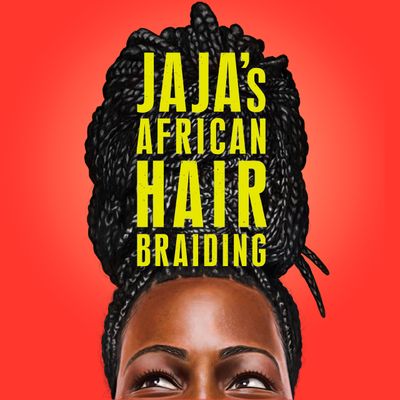
Nana Mensah, a Ghanaian-American writer, director, producer, and actress, joins the podcast to discuss her Broadway debut in "Jaja's African Hair Braiding". She discusses her Ghanaian-American heritage, shares her experience of playing the role of Aminata, the community's response, and the importance of bringing a story about the Black immigrant experience to Broadway.
Edited by Justin Payne
Transcript
This transcript was automatically generated and might contain errors.
[0:00] Nana Mensah: And I think that, you know, through art, you know, and through seeing other people's perspective and other people's lived experience and considering where they're coming from is how it is one of the ways that I think that we can continue to kind of move together.
[0:17] Nana Mensah: Because, like you said, it is a very global community because we have all these tools that are connecting us, but at the same time, there's so much division and so much friction because we are dehumanizing the other side.
[0:28] Nana Mensah: You know, there is no other side, right?
[0:30] Nana Mensah: All one, but we're and so this is part of it.
[0:30] Nana Mensah: This is part of that work of just like opening up people's perspectives to other lived experiences.
[0:39] Nana Mensah: I hope.
[0:40] Nana Mensah: I hope that's what we're doing.
[0:45] Gennean Scott: Welcome to the Black Business of Broadway, a podcast brought to you by the Broadway League and Black to Broadway. Here we highlight the stories, how-to's, and successes of the black professionals and legends of Broadway. I'm your host, Gennean Scott.
[1:09] Gennean Scott: Today's extraordinary guest, Nana Mensah, a Ghanaian American writer, director, producer, and actress, is a force in the entertainment world on the big and small screens. Nana is making her Broadway debut in "Jaja's African Hair Braiding," a production playing at the Manhattan Theater Club through November 19th. In today's episode, we discuss hair in the black community, what it means to bring this narrative to Broadway, and the magic behind the scenes bringing "Jaja's African Hair Braiding" to life on stage.
[1:41] Gennean Scott: Okay, so culturally, the hair salon has always been more than just a place to get your hair done. It's a haven for community, friendship, and belonging. The hours that we spend in a chair and the connections that we make with our stylists sometimes transcend that of our closest friends. Join us as we explore the magic behind the scenes, the power of storytelling, and the rich culture of "Jaja's African Hair Braiding." Welcome, Nana, and thank you for chatting with me today.
[2:09] Nana Mensah: Thank you. Thank you.
[2:11] Gennean Scott: So you are a Ghanaian American writer, director, producer, and actress. Can you tell us about your journey into this world of theater?
[2:23] Nana Mensah: Yeah, I mean, it's actually pretty short. The journey starts in theater, and now I'm here, you know, back because of theater. So yeah, it started with, you know, coming to New York after graduating and wanting to be a theater actor. All I wanted to do was be on stage at the Public Theater or New York Theater Workshop or all these downtown theaters that had really captured my imagination and my spirit as a young person wanting to be in the theater. And I just couldn't get arrested. It like wasn't really happening. I couldn't get the jobs that I saw like my peers getting in my cohort, and I knew I had to believe somebody's always said to me that this business requires a little bit of delusion.
And so my delusion kicked in, and it's like it's not because I'm less talented than them. There's something else afoot, and that's actually what led me to start writing and to kind of start creating my own work. But the theater journey was always really consistent. If I couldn't get jobs in the theaters that I wanted to be working at, we were hosting readings, we were around people's kitchen tables, you know, everyone bring a snack, and we would either read a new piece that one of us had written, or Shakespeare, or maybe even a play that's on right now at a theater that none of us could get auditions for. So I feel like my cohort of theater actors really kept me alive artistically during that time.
So yeah, and then eventually I started getting a couple small parts in some off-Broadway work, and then the kind of big kahuna was 2016-2017 working on Tracy Letts' "Man from Nebraska," which was directed by David Cromer and went up at Second Stage, and that was kind of like my coming out party with, you know, just kind of working with really established talent. Annette O'Toole and Reed Bernie led that cast, and that was just like a dream of a job. I had so much fun, and of course, like every actor, I think when I took my final bow, the final show, I was like, oh my god, I will never be able to have this much fun on the stage ever again. But lo and behold, you know, five, six years later, I am having as much fun, if not more, on the Freedmen stage playing Aminata in this play.
[5:11] Gennean Scott: Oh my gosh. So, I mean, you say that that journey to the world of theater was short, but when did you discover your passion for storytelling? Has it always just been or, you know, I am Ghanaian and I can't discredit that as part of the journey because I do think Ghanaians, especially Ashanti, my family is Ashanti. The Ashanti people have a very rich oral tradition. So I feel like people were always telling stories and are actually excellent storytellers in my family, you know, my parents, my aunts and uncles, my grandparents. Really, I mean, to the point where, like, at a certain point, my grandmother, she, you know, has dementia now, but before her memories started to really decline, I basically just got a dictophone and just put it in front of her.
And I was like, let's go, let's go, let's go. Like, I want to hear everything. I want to hear all of it, you know, and talking about her various marriages, talking about her children, talking about her upbringing, and her incredible life, which you know will never make its way into a history book or anything, but it's still really riveting in terms of its drama and its highs and lows and the endurance and just like that full kaleidoscope of what it is to be human. So I think I've recognized story as a very powerful tool from a very young age, just because it's just been in my family and in my culture.
[6:42] Gennean Scott: Oh, I am jealous. I would love to record my elders because, and that is probably one of the things that I would say is common in the black African American, you know, we don't necessarily do that and pass down, and I think that that's unfortunately, I think that's something that's lost. And so it's so beautiful to hear that, you know, to hear you speak of that. And you know, the stories may not be, you know, what other people may think is wonderful, but it really is because there's a story in everybody. Everybody has a story, right? And it's just a matter of finding what yours is, and there's always some sort of motivation. So I love the art of storytelling, and I really thank you for sharing that. And I hope that we as a people, as Americans, you know, get back to that when we talk about, you know, our roots.
[7:48] Nana Mensah: Thank you. But "Jaja's African Hair Braiding" takes place in a hair braiding shop in Harlem. And let's be real, in all hair braiding and black salons, it's always a story, okay? There's always a story to be told. But it's an eclectic group of West African immigrant hair braiders in the show you play Aminata. And one of the hairdressers who works in a salon has an addiction to scratch-off lottery cards, but also has this kind of roller coaster of a love life, right? Can you share a little bit more about your character and her story in the play and why it's important to the play?
[8:45] Nana Mensah: Yeah, I think what I love about Aminata in the context of this play, and in the context of things that I get to do, you know, as an actor in film and TV roles, historically in film and TV roles, I've played women who really have it together. And what I love about playing Aminata and what I'm having the most fun with playing Aminata is that she really doesn't. She really does not have it together. You're right. Her personal life is in shambles, she's like fine at her job, you know. But yeah, she is a little bit of a chaos agent, you know, provocateur. And I think that that's really fun. That's really fun because I think just in terms of portraying black women like different kinds of black women, we don't always have it together, and that's okay.
We don't have to always have it together. I think, especially when you're talking about immigrant, you know, African immigrant stereotypes, a lot of times there is that like noble immigrant stereotype. And then there's also like, you know, versus the opposite of somebody who's like, you know, maybe waiting for some sort of white savior to come and help them. And this is not that, you know. She is self-actualized, it's messy, it's chaotic, but you know, she's got her feet on the ground and she's just figuring it out, which feels incredibly human. And that's what I love about playing her. And I love, yeah, that's what I love about playing Aminata.
[10:24] Gennean Scott: I saw this opening night. I saw "Jaja's" opening night. So I wasn't here. I mean, like, we had a renaissance moment, okay? When her husband came in, it's like, oh, whoa, whoa, whoa, whoa. No, no, no, no. And we all had that moment of, well, I definitely had that moment of reflection of when I've been that girl. Yes. And when I've had my hairdressers be that girl also. Right? I mean, right so real. And it was so relatable. And the audience—listen, the audience has become, I mean, there are 10 actors in this play, but we joke that there's actually 11 because the audience is the 11th actor in the play. They are so participatory, and especially in that scene, it really comes out because people are so in their feelings, you know.
It's like you can tell that it is pushing a nerve. Whether it was whether you are Aminata, whether your best friend is Aminata, you know, like no matter what the—like it's just whether your mother is Aminata. I think everyone has an Aminata in their life, and that scene really does invoke a lot of passion, let's say. So there are definitely times where we've had to hold because we hold obviously for laughs, it's a comedy, great time, it's a raucous great time, this play, but we also sometimes in that scene have to hold for like, you know, people hurling and all that we're like, uh uh, not her, nah uh, that's my girl, no.
[12:15] Nana Mensah: Exactly. Because also that's true. Like at that point in the play, like I think, obviously I've never been an audience member for this play, but at that point in the play, I think the audience has built a real connection with Aminata. So I feel them with me. And then this thing happens and they are so pissed on my behalf. Which is really great, actually, you know, like it's I was with you. I'm telling you, I was with you. I was like, what? Oh no. And so I was there as was the whole crowd. I mean, I heard the clicking of the fans, like, ah it w it was it was a lively night, and I can only imagine, you know, as the as it as you all continue to run. I'm sure, you know, there are people who are coming back that are just waiting waiting for that moment and waiting for him.
Uh so you definitely have some supporters, and uh yeah, that was a that was a it was a funny but very real real real moment. And I think we all we all could relate. Uh so what does it mean, you know, being able to tell this story? And I'm gonna say our stuff because I started to get breaks just this weekend. And I'm like, but I don't have like 12 hours to sit down, uh, because I don't want my girls, by the way. But I just you know, with a boho, but I don't have I don't have time to sit down and and wait. But what does it mean to be telling this story on Broadway, to be telling our story on Broadway that's centered on hair, but also to be telling the story of immigration, you know. So it's a story about blackness and Africanness, and you know, and it's being portrayed on a Broadway stage with an all black cast and a majority black creative team.
It's it's uh a real privilege. It feels incredible. I think um the moment that it really hit me was because we had toured the theater once before, um, but it was before the set was up. And I think the day that we showed up for the first day of tech and we saw that unbelievable set, like that felt so incredibly specific and familiar. Um, shout out to David Zinn, who is a magician. Um, I you know, I got emotional and I stood next to Jocelyn and we just hugged each other and we're like, can you believe? I could get emotional now thinking about it, you know. It's like, can you believe this is on a Broadway stage? You know, it was just um it doesn't cease to amaze me. It's just really because it's it's a salon that is I have sat in my whole life, and I don't know how close you were to the stage, but like something as specific as like the water stains in the ceiling, like you know, like I mean the family pictures at each of our stations, the postcards from London, you know, there's just an enormous amount of specificity and care that went into the set.
And I think the set, when I hear um, you know, when the set moves and the audience explodes into applause, that has happened at every single performance. And that to me is like it's like it's beautiful. It's just like a real sense of recognition um at the detail and the artistry that went into creating this world that a lot of us have been frequenting since we were children, you know. Oh my gosh. Spe you say that there's eleven. I'm gonna say that there's maybe twelve, maybe thirteen, because I think the set itself is a character. I mean, from the moment that she's un undoing the padlock and and and lifting the gate, and then it turns around and you're like, oh my gosh. And I was in the I was like, I think I was in the third or fourth row.
So I was close. I was close, close. I could see, I mean, I could see all the pictures and you know, the magazine. Yeah, all it was just like yes, just all the little details. And so, you know, kudos, yes, to the to the set designer and just how it just when it's spun. And so it's like when you look at that stage, you see it and you're instantly in that hair salon, you know, and we all spend hours in a hair salon and we have the individual coming selling us food, selling us socks, used to be selling us CDs, but you know, we don't do that no more, and it'd be the DVDs. It's like, but that's in the movie. So I it was definitely a connection and I I definitely I felt like okay, this is it. This is real.
This isn't Broadway trying to be this is this is it. And this is it, and and I again, like I said, I cannot I mean the creative team, it's like we'll probably get into it later, but the hair design, the hair and wig design, and then like, you know, and the set design, and then the video design, you know, like what those selections of like, you know, what what's playing on the TV and the thing? I mean, everything was so thoughtfully executed under the the direction of Whitney White and Jocelyn's input, of course. Um, it it I mean, I felt so I feel I continue to feel so privileged to be able to play on this stage at this time in this way, you know. I think when I was first starting out, my my understanding was that like I was, you know, if I was going to get to Broadway, it was going to be, you know, as a you know, supporting, supporting, supporting character in in a largely white play, maybe somebody's girlfriend or somebody's whatever to be able to be this like fully three-dimensional woman on this stage, um, supported by this cast, supported by this creative team.
It's incredible. It's incredible. There's just no other way to there's no other word to describe it. It's it's it is not to be believed, truly, the the definition of incredible. I mean, you said it, the wigs. Could you discuss what it was like to work with the wigs on the show? As I mean, they're like characters themselves. And I was really, really, really wondering. I'm like, the micro braids, they don't do that. Because, ooh, baby. But but you all did. And it's just like it was it, it was it was it was surreal, honestly. It is surreal. It is really surreal. Um, Nikia Mathis is a genius. Uh, she is our hair and wig designer. We also had uh Susie Oludele, who is uh our braiding consultant. She very famously did uh Beyoncé's lemonade braids.
Um, and so uh she also helped us by coming in a f a few weekends to basically do like a braiding boot camp because all of us who played the hair braiders were actually coming into braiding with various levels of proficiency. I would say I was at the very bottom. And I would say, and I would say um probably Brittany who plays uh um Miriam. Brittany is probably at the top. She's the most proficient, she's the one who's doing executing the micro braids, so it actually works out. I'm glad I was not cast as Miriam because listen, we would still be at that theater and you trying to figure out those micro braids. Um but it was it it was amazing because Susie, who is who is at the top of her field, kind of took us under her wing and taught taught us not only how to braid if we didn't know or how to cornrow or how to do box braids or whatever, she also like gave us like an energetic kind of coaching of what it is to be a confident braider, somebody who does it all the time, who's done it, who's done thousands of heads of hair, and um, and so the way we position our hands, the things that get stiff, like the little ticks of like, okay, your hands need a little our cramping or our neck is a little, you know, like things like that.
The full body assessment of what it's like to be on your feet, you know, braiding these heads of hair, doing this repetitive motion for hours at a time. So stuff that I, even as somebody who has been getting my hair braided my whole life, haven't really given that much thought to, I'm ashamed to say. So um, it was a real boot camp. It was a real boot camp, like fully, like end to end. Um, so I and that was you know Nikia's idea to make sure that we were all like to kind of elevate our skill set. So when we're braiding hair, it looks like we're actually braiding hair. And um, and then on top of that, I think uh yeah, the wigs, man, the wigs, it's it's real sorcery. I mean, we joke internally that it's like Harry Potter for hair.
Uh and we're employing all those tricks, the slates of hand, the you know, misdirection, whatever, so that we can achieve these looks without these women exiting stage, and you know, uh huh. So it's it's really special. You know, and what I also find amazing, especially where we're at in the world where women, specifically black women, and the conversation around hair and braids and natural hair and the pressures that we're faced with, you know, in the workplace on what is and what is not, you know, professional. I really appreciated the I really appreciated the care and how it was embraced and celebrated, just the braiding and the story of braiding and um and this being mainstream also I think helps to put us another step closer to people understanding uh what is professional and and a little bit more of understanding surrounding just the hair and and black women in here.
Yeah, and and and also the craftsmanship, the artisan, you know, like the artisanal, uh, you know, like the status of what it is to create these looks, like to really engineer these looks. It it is the synthesis of so many different kinds of artistry. And the fact that it's like these women are virtually invisible in New York is like crazy to me, you know, like and there's so many people, um, you know, oftentimes white people who are like I've walked by these women hundreds of times. I live in Harlem or I live in Brooklyn, and I know I live on top of a braiding salon, and I've never thought twice about what goes on in there. And first I'm like kind of shameless, but also too, like, okay, if this if this play is gonna open your eyes and make you see, you know, help you to see these lives that are being lived right above, below, next to you.
Um, I think that's a real feat artistically, you know, to change the way people think, to change the way people see. Exactly. And it's it's so important. I mean, we are more interconnected, you know, as this as internet and things like that, this this global world that we're in is it becomes smaller and smaller. And it it's important for us to recognize our our differences, recognize and celebrate those differences, and also to have an appreciation, you know, uh, for other for other cultures.
[24:13] Nana Mensah: And I think that this, I think that Jaja's, you know, it does that in many ways and in a comedic way. And also in a really smart way, because you know, I think one of the things that there's that, you know, that saying, is it a saying? I don't know, but that like black people are not a monolith, right? Like we don't all know the lived experience. And what I love is that we have this all black cast, and yet we're able to kind of like, um, you know, Jocelyn is able to kind of pick out the threads of the different lived experiences of being black, being black American, um, being first generation. Uh, you know, like there's even a scene where a very um wealthy young woman comes into the shop, and that very easily in the hands of a lesser playwright could have been cast as a white person just to kind of like illustrate or put, you know, but it's like actually no, like there are these like, you know, extremely well educated, extremely privileged black people who also don't quite understand or don't quite see, you know, the lived experience, the full lived experience of other black people in the very same city that they live in.
And I think that that scene, that like, um, that exchange between Marie and that character is so, uh that character's name is Radia, is so telling, and I think it's really poignant. Um, yeah, of what it's like to be all kinds of black, like every kind of black sense. A lot of it shows up on that page, which is again, like I said, a testament to Jocelyn's writing. Yeah, masterfully done, masterfully done.
[25:56] Gennean Scott: Is there a specific message you would like people to walk away with after visiting Jaja's African Hair Braiding? And alternatively, is there a particular aspect of Aminata that you hope people will resonate with and carry with them as well?
[26:15] Nana Mensah: I mean, I think definitely I would love for people to see Aminata as flawed and human and still deserving of, you know, safety and for her, you know, her child to be safe and those things. Like I think just like a fully like a humanization of these women who are largely invisible in New York and other cities, it's not just New York, but who kind of are existing on the periphery. Um I think really putting them literally center stage and like talking about their lived experience is so, um important. So I really hope that people kind of gather that fullness, that humanity of Aminata as a person and the other hair braiders. Um and I think with Jaja, similarly, yeah, I think it's already happening.
Like I said, the people who've come up to me that were like, I've never stopped twice to look or consider what's going on inside that hair braiding salon. Um, and I hope that that expands to, you know, if you see someone selling purses on the sidewalk or you see someone, you know, like I hope that that just opens it all up, you know, like and that that perspective just continues to grow and open. Um because I think we are at a time, a very, you know, a very dangerous time where people aren't necessarily considering the humanity of others, and that's how we get ourselves into very tricky, you know, situations. And I think that, you know, through art, you know, and through seeing other people's perspective and other people's lived experience and considering where they're coming from is one of the ways that I think that we can continue to kind of move together because like you said, it is a very global community because we have all these tools that are connecting us, but at the same time, there's so much division and so much friction because we are dehumanizing the other side, you know, there is no other side, right? All one, but we're, and so this is part of it. This is part of that work of just like opening up people's perspectives to other lived experiences. I hope. I hope that's what we're doing.
[28:35] Gennean Scott: Yeah, yeah, I know. I think you are. I mean, because there's this underlying story that I don't want to talk too much about because I don't want to give anything away, but there's this underlying story of immigration and the realness, regardless of who you are as far as immigration. And um so yeah.
[29:02] Nana Mensah: Yeah, I don't want to talk too much because I know I wouldn't have to do it.
[29:05] Gennean Scott: I know, I know, I know. I'm just gonna leave it.
[29:08] Nana Mensah: But I think what you're saying is true. I think that the face of immigration looks a lot of different ways. Although if you watch, you know, the news, it usually looks one specific way. So I think that's also important to like, you know, hint at in this context and also to talk about um in the play. Uh yeah, yeah, because there are so many different immigration stories and different pathways to immigration, and um how that affects your life and your prospects and your future is so wild and varying, you know, just based on the decisions your parents made, you made whatever, you know. So I think that that is, yeah, yeah, that does obviously factor in the show as well.
[29:49] Nana Mensah: Yeah, it's so multi-layered and it's, I mean, it's even though it's 90 minutes, you know, it's they're 90 minutes, no intermission, okay. 90 minutes no intermission. It's like that is the secret sauce is that we're gonna give you this full blown comedy drama, like heartbreak, love, everything in 90 minutes, no intermission. That is also masterful.
[30:15] Gennean Scott: It is, I agree, I agree. So what's next for you? I mean, what's next for you? What upcoming or future projects are you looking forward to taking on?
[30:28] Nana Mensah: Yeah, I mean, you know, there's a strike, so nothing. Um so I'm, you know, obviously I'm excited about, I am hopeful about what comes next. And um, you know, I know that my union is actively meeting to try and get some resolution sooner rather than later. So the future is bright, I hope. I have to believe that these 105 days of striking have not been for naught. Um and yeah, so I also write, so I'm writing some, you know, writing continuing on some contracts and things that had been paused when the writers struck. And so we'll see. I mean, I hope I, you know, Jaja, we close November 19th as of now. And so um I think we will see the big unknown. I think I was really fortunate at some point to like listen to, I think it was a podcast or maybe it was like Inside the Actor's Studio, and I can't remember who it was, but somebody like deeply respected and just like, you know, a household name who was just like at the end of every job.
I'm like, okay, that was the last one. I guess I'm never gonna work again. And if it was like it truly was like someone like Robert De Niro. So it's like if Robert De Niro is saying that at the end of every job, I'm gonna beat myself up a little less about feeling that way too. Um, so we'll see what happens, you know. But like I said, I have to believe the future is bright.
[32:01] Gennean Scott: Yeah, I think it is. So at the end of each episode, we ask our guests one question, and it's what advice would you like to offer to the future black leaders of Broadway?
[32:17] Nana Mensah: Oh wow. Um, you know, I think the advice that I would offer to the future Black leaders of Broadway would be to, uh one, take your time, and that goes like across the board. I'm really deeply inspired by one of our producers, LaShans, who has built such a career as a tremendous actor and vocalist, um, and is only recently segued into producing theater, and is so good at it, is so unlike really, I mean, you know, knock on wood, like mightest touch. And so she came on board this project and has been such a champion for this project. And um, and I'm just sitting there watching her career and being like, oh wow, look everything in due time, because she was an actor and an actor only, and then of and and learned the ins and outs of Broadway and you know, won a Tony as an actor, and now she's collecting Tonys as a producer, you know.
She's so, um, and so I'm really inspired by that, you know. Um, that her decades as an actor watching, observing, taking notes has led her to be such an excellent producer. Um, and so everything happens in its own time, you know, you don't need to rack up a bajillion Tonys by the time you're 30, you know, like it can take the time that it takes um and really good work, like waiting for it's like double dutch, you know, you gotta wait till the to the till the beat is right before you jump in. Because if you just insert yourself, you're gonna get tangled up in the ropes, you know. So you gotta you gotta like kind of observe and watch the timing and then jump in when the project is right, when the timing is right.
So I would say don't rush. Um also second second thing, which is kind of tied to it, but also be brave, right? There's some work that like if you had told me two years ago when I first did a reading of this play, that like there would be a play about taking place in an African hair braiding salon in Harlem, and that it would be selling out to audiences on Broadway, yeah, I would have been like, you are crazy. You are crazy. You need to get examined, like that, there is no way. Um, but here we are in this. I think the Friedman is 600, 650 seats, and it's like we're at, you know, somewhere between 90 and 100% capacity every night, every night. It's just, uh, it boggles the mind. And so if you, which it just goes to show that, like if you tell the right story in the right way with such like humor and specificity and humanness, I think people will respond to it, you know, no matter what they look like or whatever their lived experience as they're coming in to sit in the theater. So that has been really educational for me.
[35:31] Gennean Scott: Absolutely. Well, Nana, thank you. Thank you so much for taking the time to chat with us. I want to thank our guests and you, our listeners. You could have been doing anything else, but you chose to spend your time with me, and I am grateful. Be sure to subscribe at bpn.fm slash bb. So you'll never miss an episode. While you're at it, tell a friend. I'm your host, Gennean Scott, and we at the Broadway League hope you enjoyed this episode of the Black Business of Broadway.
© Broadway Podcast Network, All Rights Reserved