

The White Chip is a critically acclaimed autobiographical alcohol addiction recovery comedy by playwright Sean Daniels. As the NY Times says, this play saves lives!.. Read More
From the show: The Broadway Exclusive
Guests


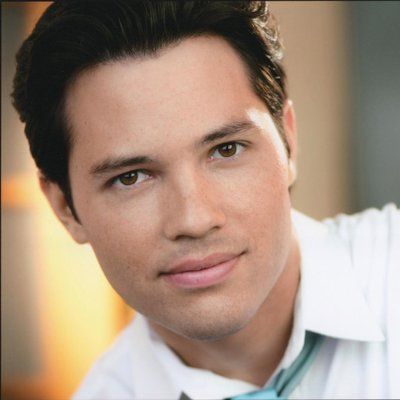


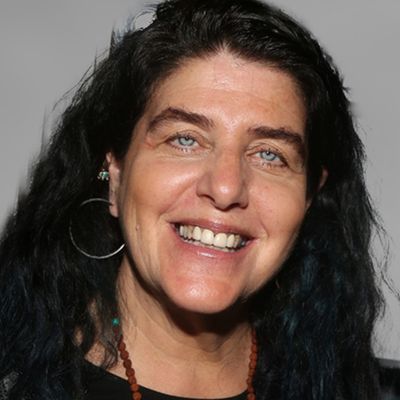
Featured Artists
Featured Shows

About
The White Chip is a critically acclaimed autobiographical alcohol addiction recovery comedy by playwright Sean Daniels. As the NY Times says, this play saves lives! Join us for a BPN Broadway Exclusive deep dive behind-the-curtain hosted by producer extraordinaire Annaleigh Ashford and featuring stars Joe Tapper, Jason Tam, Crystal Dickinson, director Sheryl Kaller and playwright Sean Daniels.
Cast: Joe Tapper, Crystal Dickinson, Jason Tam
Playwright: Sean Daniels
Director: Sheryl Kaller
Host & Producer of The White Chip: Annaleigh Ashford
12 Resources For Recovery:
1) Substance Abuse and Mental Health Service Administration:
SAMHSA’s National Helpline is a free, confidential, 24/7, 365-day-a-year treatment referral and information service for individuals and families facing mental and/or substance use disorders.
2) Recover Together:
The #RecoveryMovement celebrates the 25 million Americans recovering from addiction, and paves the way for those still struggling to seek treatment.
recovertogether.withgoogle.com
3) FindTreatment:
FindTreatment is a confidential and anonymous resource for persons seeking treatment for mental and substance use disorders in the United States and its territories.
4) The National Suicide Prevention Hotline:
If your life or someone else’s is in imminent danger, please call 911. If you are in crisis and need immediate help, please call 988.
omh.ny.gov/omhweb/bootstrap/crisis.html
5) Alcoholics Anonymous:
A.A.’s program of recovery is built on the simple foundation of
one alcoholic sharing with another. If your drinking is out of control, A.A. can help.
6) Narcotics Anonymous:
N.A. is an international, community-based association of recovering drug addicts with over 70,000 weekly meetings in 144 countries worldwide.
7) National Association for Children of Addiction:
NACoA’s mission is to eliminate the adverse impact of alcohol and drug use on children and families. They envision a world in which no child who struggles because of family addiction will be left unsupported.
8) National Alliance for Recovery Residences:
NARR seeks to support persons in recovery from addiction by improving their access to quality recovery residences through standards, support services, placement, education, research and advocacy.
9) Mental Health America:
MHN is a leading community-based U.S. nonprofit dedicated to addressing the needs of those living with mental illness and promoting overall mental health. Their work includes prevention services, early identification and intervention, and integrated care, services, and supports for those who need it.
10) National Institute on Drug Abuse:
NIDA advances science on drug use and addiction and applies that knowledge to improve individual and public health.
11) The Trevor Project:
The Trevor Project is the world’s largest suicide prevention and crisis intervention organization for lesbian, gay, bisexual, transgender, queer & questioning (LGBTQ) young people.
12) Treatment Atlas:
Find the right addiction treatment for you or someone you love.
Transcript
This transcript was automatically generated and might contain errors.
[0:16] Annaleigh Ashford: Hi, I'm Annaleigh Ashford. Welcome to our special podcast on the critically acclaimed recovery comedy, The White Chip. It's a beautiful play about recovery. What is recovery? Recovery is the journey from addiction to sobriety. And that can be the addiction to alcoholism. That can be the addiction to drugs. There are a myriad of addictions that people need help for recovery from. And this play explores specifically a man's journey from addiction to sobriety from alcoholism. We feel that this play has been incredibly impactful for not only the recovery community, but also for the families and friends of those who have lived through recovery. And we also have found that it's been a really special resource for those who are in need of recovery.
And we feel like this is a play that not only offers the audience a special view of the inside of a rock bottom, but it also gives you the redemption and the possibility of light after dark. Today we're going to introduce you to our team, the playwright, Sean Daniels, the director, Sheryl Kaller, our actors, Crystal Dickinson, Jason Tam, and Joe Tapper. Again, I'm Annaleigh Ashford, the producer of The White Chip. We're so grateful that you're joining us wherever you are in time and space. And whatever headphones you have on. If you're in the car, if you're on the train, you may even be in the bathtub. Wherever you are, we're happy you're joining us.
[2:27] Annaleigh Ashford: We're so happy to be together today talking about this beautiful play called The White Chip. I'm Annaleigh Ashford. I'm the producer. And let's go around the podcast room and share who we are and what we do on the show together. Sean, why don't you start us off?
[2:49] Sean Daniels: Sure. My name is Sean Daniels. I'm the playwright, and I'm so grateful for this fantastic room of people who are so charming and talented that have brought the story to life. Let me pass it on to Sheryl.
[3:02] Sheryl Kaller: Hi, everyone. I'm Sheryl Kaller. I'm the director, and you all just make me very happy, and I'm happy to be here. I'll pass it off to Crystal.
[3:13] Crystal Dickinson: Hi, I'm Crystal Dickinson, and I play number one, all the female identifying characters in The White Chip.
[3:21] Jason Tam: And I'm Jason Tam and I play number two, who is most of the male identifying parts in the show.
[3:29] Joe Tapper: And my name is Joe Tapper, and I play Steven, who is the rest of the male identifying characters in the show. But also a grateful, grateful human to get to be in this space with you all every night. Dreams come true.
[3:52] Sean Daniels: It's true. Hallelujah. I think everybody on a stage would agree that dreams come true. I like that Sean always says it's a miracle that any type of theater makes it to a stage, and we're all there to vouch for that. If you don't know, our beautiful play is a comedy about recovery. And Sean, would you like to explain to us what recovery is, explain to the listeners and share a little bit about your personal journey?
[4:22] Sean Daniels: Sure. So in 2011, I wanted to take my own life because I had been pretty much consistently day drinking for several months and I'd crashed my car and I had lost my job and my wife had left me, and just it'd been a long time since anybody had really smiled to see me coming. And I very luckily that evening, instead of taking my own life, called my mother, who I did not get along with at the time, but I just felt the need to call her. And for whatever you believe in, it was the one year anniversary of her walking home and getting her one year chip. She'd been sober for one year exactly to that day. And she got me through the evening and got me to a rehab center in sunny Jacksonville, Florida. And afterwards, you know, I couldn't find anything that was funny, you know, had a sense of humor about it that wasn't written in like a 1920s type of antiquated language or was about science.
And so at some point I was like, well, then I just have to shut up and write the thing that I couldn't find. If I couldn't find it and it wasn't there for me, then I need to put out into the world what is the piece that's there. And so I've been really lucky along the way to have such fantastic collaborators to figure out like how do you tell a story like this and how do you tell it with a sense of humor. I mean, I grew up in the 80s, right? Which was like after school specials and just say no and which I'm almost positive has stopped no one from doing drinking or drugs. In 12 years, I have never been in a room and someone said, Nancy Reagan said, just said no, and I stopped cold that day. Like I've just never heard that story.
So I think that there's such a sense of the stigma that comes from addiction and just the internal shame of people not wanting to talk about it or not wanting to bring it up. And so I feel like humor is the only way that we have that conversation, that it doesn't feel like a very special episode that which it was which is a way of making everyone feel like it only happens to certain people, or that it only happens in very sad moments. And you know, the truth of what we know today is that it's one in three households are affected by this. So it is a huge issue. But I've been very lucky along the way to have such fantastic collaborators figure out how do you tell a story, how do you get this across?
And it's what we call in the theater a tonally complicated piece because it wants to figure out how do you try to get, you know, move the world and move the conversation, but also do it in a way that is hopefully fun and entertaining and feels theatrical. And I think kind of what's brilliant about Crystal and Jason are our number one and our number two is that like they have to play everybody else in the whole world and that is like that only happens in theater right that is only specific to our art form and so I feel like they're the unsung heroes of the show because it feels like Joe interacts with a thousand people but it's really just it's like two people and a scarf is really kind of all that they have back there.
[7:38] Crystal Dickinson: That's what you should have named it, two people in a scarf.
[7:41] Sean Daniels: I know, but so yeah so I, you know, of course I'm gonna always talk about how awesome Joe is but I also just want to shout out our other actors because I feel like they are the secret glue that puts it all together and then and then Sheryl's the one who whose job it is I mean totally complicated is a bit of a killer in terms of putting on plays you know is it too much of this is it too much of that like how do you walk that really thin line of people laugh until they cry and then cry until they laugh and then leave feeling like they haven't been lectured to right the well that's Sheryl's specialty right there.
[8:12] Sheryl Kaller: Yeah, yeah, yeah, yeah, in 2024 right anything that feels like it's preaching people check out the second it's there right so how do you have a conversation a real conversation about the issues in our country without feeling like you've already made up your mind and that's the real gift of Sheryl.
[8:31] Sean Daniels: And Sheryl, I think I'd be remiss if we didn't include in the 80s alcohol images the Tom Hanks alcoholic uncle on Family Ties.
[8:31] Sheryl Kaller: Very sad, very special Tom Hanks.
[8:49] Sean Daniels: That's what I mean. That's what everybody's like. Well, I'm not that, so I can't be that bad.
[8:52] Sheryl Kaller: Right.
[8:53] Sean Daniels: And wow.
[8:54] Sheryl Kaller: Yeah.
[8:59] Annaleigh Ashford: Speaking of collaborators, I always like to say that when you meet a piece of theater, it's like meeting a friend. So, Sheryl, when did you meet this piece of theater? When did you meet The White Chip?
[9:11] Sheryl Kaller: I love that. I'm gonna use that when you meet a piece of theater. The pandemic makes it a little complicated for me to remember exactly when, but I would say, you know, sometime like Sean, do you remember the first year we met? You were doing The Lion at Manhattan Theater Club. So whenever, so 2014, like between 2014, 2015, and then I read this play, and I just it was complicated, which is what attracted me to it, I think. And it was just so brutally honest, and it had just an honesty and a humility to it, I think, that made me know that if we could figure out how to get this on stage and do it in a way that, as we're all saying is smart, entertaining, funny, serious, everything about it. I felt like this play is gonna make a difference.
This play is gonna get through to people. And so I met it and we went on a whole bunch of journeys with it out of town. And when we did it in 2019 in New York, I feel like I have to say that this cast, Joe, Jason, and Crystal, these are all the first people that I thought of to play these roles. And so to me, I just went to work every day being overwhelmed by the luck of that, the synergy of that. And it just has been, you know, you were all giving me a lot of credit, and I don't think any of the three of you have a dishonest bone in your body and the honesty and the authenticity that you bring to all, you know, Crystal and Jason, all 800 characters you play, and also the ability to be funny, the ability to listen to each other, and I think that's why it's speaking to so many people, because of the honesty, humility, and truth that Sean gave us in these words, and then the way the three of you are, and you know, Annaleigh, because you're on this in this conversation too, like to be led by a producer who's also a brilliant actor, who's also a brilliant writer, it just made us all feel so safe to be ourselves and to do it in the way that we want to and needed to, and it seems to be, you know, working.
[11:50] Sheryl Kaller: So that's, you know, an abridged version of my journey on this one. We're gonna take a quick break. Stay tuned for more from the cast and creators of The White Chip.
[12:02] Annaleigh Ashford: And we're back. We are talking with this beautiful cast and these beautiful creators of the critically acclaimed recovery comedy, The White Chip. You know, people always ask Jason and I, how many roles, how many characters do you play? And I don't know if we just I flat out refuse to count. I still haven't counted. We haven't. I every time I think I'm gonna do that, and it doesn't happen. Um, because actually maybe Jason would agree with me in this sense. It really does not matter. The goal, it seems to me, in our function in the play is to service the story in whatever way it needs, and that's the fun part. Um, so there's a bit of improv. I mean, there's clearly we've rehearsed it thoroughly, but there is an improvisational nature of it.
Oh, you need a pro you need a cab driver now? Okay, you get a cab driver. Oh, you need your friend to come? Okay, let me get some glasses and that scarf that our wonderful playwright was talking about. And you put that on and you just go out there. So I think part of the fun is that like being in service to the story, to Steven's story is paramount. So the characters are fun to play, but they're also just quite necessary in the storytelling. So the fun in playing them is that improvisational nature of like, okay, oh it's me, I'm on. Okay, yes, go. And then you whoever you create in that moment is who you create. And yes, all of it is in service of Steven and the story, but then the meta side of it is that the story is in service of the sober community and people that are navigating addiction, and it feels so much bigger than us in the most magical way.
[13:56] Joe Tapper: Yeah, I agree with that a hundred percent. Joe, do you want to talk about your connection to the piece as also along with Sean and openly sober person, both connection to the piece and maybe and some of your family history with recovery? The first connection that springs out of my brain is that the character's name is Steven, and Steven is based on Sean's life, and he chose the name Steven to symbolize the character. And Steven also happens to be the name of my father, who is sadly we lost to alcoholism in 2020, and he struggled with this disease his entire life. Um, so that's you know, kind of this immediate connection. And then there's another connection where Sean and his mom share the same sobriety date.
Um, I am sober. I got sober on March 20th of 2012. Um, and on that day, March 20th, 2012, I reached out to my closest friend who I knew was sober, and I said, Hey, listen, I need to stop drinking. This is like it's for real. I need to stop today. Today's this is the day. And he replied back to me via text. I stopped drinking eight years ago today. Um, and it's an incredible, you know, way of life, and I hope you um, you know will come to know it. And I thought that was just you know, true miracle, like true universe, whatever you believe in, uh, synchronicity, higher power, it, God. Um, you know, so that is just two things that just jumped out to me right away upon reading the show that made me feel like I just have to do whatever I can to try to be in this and get the honor of telling the story.
And I would say that alcoholism is a disease that has ravaged my family on both sides. My both my uncles, my dad has two brothers that are both struggling. One lost his life to alcoholism. My father lost his life to alcoholism and my other uncle is struggling and he's you know he's he's uh it's not it it's um a challenging time for him and it's not because you know the Tapper are weak it's because it's a disease and it's a real disease and um and it's it also impacted my mother's line of our uh my brother my mother's bloodline as well um and it's just been present in my life in a way when I was young it was very confusing and the gift that this play has given me this time is the blessing of acknowledging that this is truly a disease that um people suffer from and um I mean truly Sean this time and Cheryl and Crystal and Jason like I you have given me the gift to forgive my father you sorry this um but you have given me the blessing to know that he did love me but he didn't have the tools to show me that when I was younger and and now I do believe that wherever he is, whatever he is, whatever that is, that he is present with us every single night that we tell this story, and he is clear and he is cured, and he is proud of us.
So I am just, I have I say this a lot and I mean it a lot. I have unending immense gratitude. This is, you know, it is truly the theatrical honor of my lifetime. And we've had so many people come up to us after the show and say the exact same thing. You know, thank you for helping me be able to understand um my father, my sister, my mother, my for just for understanding them and knowing them more intimately in a way that they wouldn't be able to without this story, without The White Chip.
[18:24] Crystal Dickinson: I agree with Jason wholeheartedly. I was just thinking that very thing that I know some people may hear, oh, it's a play about alcoholism. Okay, well that doesn't I I don't need to see that. But it's so much more than that, and you and as a person who has not had a struggle with addiction, but has known people very close to me with addiction, is that I got to learn the same way Joe learns about patience and tolerance and how difficult this disease is because it's one of those things where people think it's about can being able to control yourself, or it's some kind of flaw, as Joe was talking about earlier. But this play is for everybody, it's not just for people who are in recovery, it's about that people who don't know anything about recovery.
And some would say maybe we don't, you know, that's not their gig, but I guarantee you you know somebody. I guarantee you you know somebody with an addiction in some way or form. It's the person that you roll your eyes at, the person that you're like, oh, they're late again, or I don't know, whatever the situation is, you know. But in this case, I feel like this play sometimes it does teach in a way to say, if you see something, say something, you know. Are you okay? But not, you know, in a genuine way. How's it going? You know, we could change lives by just paying more attention. And I think this play asks, you know, it does, it does um ask the audience to think about that, to pay attention.
You know, Joe and I text almost after every show because somebody comes up to us or contacts us on social media after every performance saying, either thank you or I need to get help. Or um, you know, I mean it just I just had to, you know, text Joe like an hour before we started this, because someone from last night finally reached out this morning, you know. So it really is people are coming to the show and then afterwards realizing like, okay, it's time for me to be able to get some help. Um or you know, in the same way, I think having a better understanding of their family and realizing like the you know that there's definitely some forgiveness when you realize that it's a disease, when you realize that it's not just a series of poor choices that someone keeps making, that it really is, you know, a brain disorder.
Once you think about it like that, then you it really changes the way that you can think about the people in your lives. And a lot we have mentioned the person that came up to me on our after our first preview and said that she's she admitted that she she was an alcoholic to me and we we hugged and she said, but I'm not sober right now. And through a series of fortunate coincidences this person I I've communicated with this person on Instagram and she has 13 days 13 14 days since you know and I mean she she said to me she said I feel like I matter for after seeing the play and I mean come on that's that's just that's just a miracle that's just amazing.
[21:44] Sean Daniels: So we all work in storytelling and theater, whatever the medium is. We work in art because art can change the world, and I always say that this play is one of the plays that walks the walk; it doesn't just talk the talk.
[22:00] Annaleigh Ashford: Sean, can you share a little bit with folks who don't know about the 12 steps of recovery? Can you talk about the 12th step and how this is an extension of the 12th step for you?
[22:00] Sean Daniels: So the um the 12 steps are a guide for anyone's recovery. You know at some point you get broken down a bit and then you're like well what do I do and so they're like there's a series of things that are there and the 12th step is about it is your job to take it out into the world and to be there for the next person. They talk a lot about attraction not promotion you're you know you're supposed to you're not supposed to go out there and like knock on doors and try to convince people but you're supposed to live your life in a way that other people look at you and say, how do I have what you have? Um, and then you have to be anytime somebody says, like, can you help me? You are responsible for saying, Yes, of course I will.
Like you have to, the last step is to always be there for the next person, regardless of what you think of them or what else is going on in your life, you know, which is it's actually kind of a wonderful way to get you out of your own self-centeredness is to be, you have to spend time with people. You have to pick up the phone at three in the morning, you have to do all these things. And what you learn is that it the reason it's the last step is because it keeps you sober. Um, I don't know if it's true or not, but there is this like legacy story in AA, which is that like Bill Wilson got sober, and then he tried for the first six months to to like convince other people to be sober. And apparently every single person he talked to fell apart.
Nobody got sober. And so at the end he was defeated, and he said, like, I guess it didn't work. And his wife said, 'Are you kidding me? During that six months, you didn't drink.' And so the lesson is like when you are not thinking about yourself, when you are focusing on other people, when you are doing things for other people, it gets you out of your own way. It gets you out of self-pity or you know, resentments, which is the number one way that leads to relapse.
[24:08] Sean Daniels: And so the last step is that we share the message out there. And you know, um, Joe and I, we don't bust anybody else's sobriety but ourselves. I mean, I bust my mother's, but she'll also tell you at any party. So we're not really anybody that wants to be anonymous about it, of course, we honor that, but we share our journey in the hope that people feel less alone. Uh, that people understand a bit more about where it is. And um, and um you know, I I'm so moved by uh Joe's Joe's statement. I have to say, my favorite compliment I've ever gotten about the show is that my sister-in-law, who lost her father to alcoholism, read the script, and then afterwards she said, I think I hate my father a little less.
And it was like such the realest thing. And I just thought, like, God, for all the talk we do about being community leaders and bringing people together. If every piece of theater made you hate other people a little less, wouldn't that be a worthwhile goal for all of us to spend our time doing? So the fact that somebody who came to first preview has 13 days, I mean, that means the world to me. And I want to also uh say that something that's been wonderful about the audiences every night is you know, uh the theater we've everybody's been talking since the after times we're in, you know, after COVID. What are we gonna do? Is theater dying? What blah, blah, blah, blah, blah. On and on and on. But it's been really gratifying to see that the audience is full of all kinds of diversity out there.
So there are people who have heard about this play because it's about alcoholism and they come for that. And there's people who've um heard about Sean, or that's they come for various reasons, but I guess the point of this is that it's been encouraging to see the diversity of people that have come to the door to see this play. And that's large part because it really does speak to something true and honest that people are connecting with, and then they're telling people, they're telling more people, and that's the way good theater goes, I believe. And uh we it's to be applauded, Sean's work um, to bring in audience members that would not otherwise come through our door. You know, it's a uh when you spend some time in health and human services trying to deal with that.
It's amazing that addiction is it may actually be the only disease that affects genders and races exactly the same across the board. Like it does not discriminate. Now, people are more likely to get good health care based on who they are, right? So it's not it's not a it's not an apples and apples, but but in terms of like just onset of issues, it is across the board the same everywhere. I mean, it is a nonpartisan issue and it affects all people in terms, you know, you can have all the money in the world, you can have no money. It doesn't matter, right? It it if it's genetically based it and somewhat environment, then it comes for so many people. So that's what we're grateful to see that there's so many different people out there because that's who we're talking to.
[27:19] Annaleigh Ashford: I think kind of a wonderful way for us to end the conversation would be to um circle back to how this play is an act of service. You know, we say that a lot. Um so does everyone kind of want to share an example of how this play has been an act of service from their perspective and their work on the show? Um just an example of something they've seen or or something they feel. Um that kind of a sweet way to end. It's almost like we all are going around the circle. Um, Cheryl, you and I would always talk about uh in the early days, sort of when we were explaining the show to people. Um, you know, this is a play that's an act of service. So what does that mean? You know, when we're explaining it to people.
I mean, I get to sit in the audience while you all work really hard and fun up there. And I would say that for me, the active service is the uh audience communing together. And it, you know, the play is a very uh it almost levels the playing field, you know, it sort of riffing off of what uh Crystal and Sean were saying is that uh, you know, uh AA meetings or uh you know, commune around theater. We we all it I think the act of service is the shared experience from experiencing the play together, you know, and and you know, as you all know, there are certain parts in the play that we bring the lights up on the audience and include them in with us. And I think um I I just believe that the active service is that everybody ha Sean uh has written this, and Jason, Joe, and Crystal are sharing the story every night, and we're all experiencing it together, and uh it feels like an act of service, it feels important, it feels funny, and it feels like we all shared something that we can go out into the world with and make a difference.
[29:15] Joe Tapper: I agree, and I have two other things to add, which is that I think the play in itself, doing the play is an act of service because of this the content of the story. Um, but then in addition to that, the talkbacks that we've been doing, we've been having these amazing QA's, these amazing groups coming from all different backgrounds and getting to hear their stories to um answer their questions, to hear what they're inspired by, what what they find challenging uh is is such a gift. And I've said this to all of you before, but I'll say it again. It's like I I care very much about the health of community, about community enrichment in general, about trying to make the world a little bit better than it was before I got here.
And um, but I'm not I wasn't put on this earth to be a community leader. That's not my skill set, or uh, and so but I can do like voices and you know, make funny faces and like you know, um bring truth, as much truth as I can to characters. And so to be able to have my skill set be able to match up with this other thing that I care very deeply about, um, which is an uh, you know, an act of service. And so it's like this this dual thing where it's like I feel like I get to be giving, and in the giving, I'm actually receiving, I'm receiving meaning and I'm receiving joy and um um fulfillment. Something that I think about a lot um with this with this production is the way um recovery and theater kind of uh collide with each other is the as you say, Sean, the you know, the opposite of addiction is not abstinence, it's community.
And we need community in recovery, and we need community in in live theater, and um, and what I really'm so moved every day by the the beautiful you know direction of you, Cheryl, is that you have put the three of us at the front of the stage with the lights, and it's this beautiful moment where you know, I see you, you see us, we see you, you see us, and here we go, and we're gonna tell this story together. And and that is um very, very, very, very um moving to me every night because that's what that's what theater needs. It needs community, and that's what recovery needs. And we have truly embraced that. And it's um it's been very, very uplifting.
[31:58] Crystal Dickinson: I would piggyback off of what Joe said. Every, every uh we're we're directed, we we start off sitting in these chairs, the three of us together. We decided uh to hold hands and to just connect with one another. And then Joe stands up very unceremoniously, goes to the audience, and it's something about looking at the back of his head. It sounds so silly, but it's something about looking at the back of his head that I say, I'm behind you. We're here behind you. We we're here to support you. We're here to support this story for the good of everybody out there. And that is a great joy to me every day. Um, I just want to read. This is a uh message that I got at the start of this podcast that I texted to Joe.
And I'll just cut anyway. It starts with he'd like the show. Uh, and then uh he says, I laughed, I cried, I cried till I laughed, I laughed till I cried. You told my story on stage, completely truthful and messy and authentic. I have never felt like that. Truly the power and energy it gave me. I uh let me say some more nice things. I mean, truly the 12th step in action that was so cool for representation, not to mention our stories are so similar with our dad's career struggles. My date is also the 12th. I got to hug and meet Mr. Tapper afterwards, and we talked for a while, and it was such an honor. I ended up calling the box office once I traveled home and will be returning with my mother for the Wednesday matinee.
I got the last two tickets. And so just that that's the response that we're getting on a daily basis from people. Um, you know, just means uh that like that's the act of service that that we put it out there and that for somebody else they they finally feel seen. And we all know, we all know the deep power of representation on stage, that if you don't see yourself there, you eventually assume it's not for you or or other people don't mean it for you. And so to be able to see yourself in whatever way that is, you know, is is part of our goal. And these these are so many people that that don't get to see them their story told in an authentic, messy and hopeful way. And so that's that's the gift that we're hopefully sharing with everybody.
[34:09] Jason Tam: We also, as a production, have made a point to have access to resources. So when you come see our show, um, if you are interested in recovery or you need any sort of resource for your journey, uh, we have QR codes available for a myriad of um health options. And um we just want to tell you that we love you and we support you, and um we hope that you can see yourself or somebody in your family or a friend in this story. Um, and and as as it's been said many times in our time together today, that uh recovery is community and recovery is family. And um we're just so grateful that we get to share this story with the world and hopefully it can be a light for somebody who's having a day that is dark. Um, I'm so grateful we had this time together today, my friends. Thank you for joining us.
[35:11] Annaleigh Ashford: Thank you. Thank you. Thank you. We are so grateful that you joined us for this chat today about this beautiful play, The White Chip. Thank you to our beautiful cast, Crystal Dickinson, Jason Tam, Joe Tapper, our director, Sheryl Kaller, our playwright Sean Daniels. Thank you to our sound engineer and editor, Sarah Goodman, and to Kim Garris, BPN's head of production, Alan Seales, BPN's co-founder, the BPN social media team, and BPN co-founder and producer, the great, great, sweet, sweet Dory Bernstein. I'm Annaleigh Ashford, host and producer, and you can find The White Chip on the Broadway Podcast Network or wherever you listen to podcasts.
© Broadway Podcast Network, All Rights Reserved