

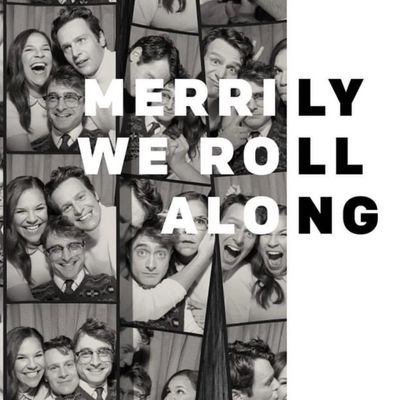
It's our time! This week Jess & Andrew are joined by composer Adam Wachter to talk about Stephen Sondheim's "Merrily We Roll Along." Topics that are covered include Stephen Sondheim's self confidence and god complex, Adam Wachter's film career, how Jess, Andrew, and Adam all discuss who they most relate to, Jess finally reveals his sexuality, and Andrew questions why the musical was told backwards in the first place... Read More
From the show: Musicals with Cheese
Guests

Featured Shows
About
It's our time! This week Jess & Andrew are joined by composer Adam Wachter to talk about Stephen Sondheim's "Merrily We Roll Along." Topics that are covered include Stephen Sondheim's self confidence and god complex, Adam Wachter's film career, how Jess, Andrew, and Adam all discuss who they most relate to, Jess finally reveals his sexuality, and Andrew questions why the musical was told backwards in the first place.
It's a rip-roaring good time!
Links:
Listen to Merrily we Roll Along
Social Media:
Musicals with Cheese on Twitter
Musicals W/ Cheese on Instagram
Email us at musicaltheatrelives@gmail.com
Transcript
This transcript was automatically generated and might contain errors.
[0:00] Jess McInally: Hey guys, today's show is brought to you by Audible.
[0:03] Jess McInally: Audible is offering our listeners a free audiobook with a 30-day free trial membership.
[0:07] Jess McInally: Just go to AudibleTrial.com slash musicals with cheese and browse the unmatched selection of audio programs.
[0:13] Jess McInally: Download a title for free. It's on us and start listening. It's that easy.
[0:17] Jess McInally: Go to AudibleTrial.com slash musicals with cheese and take your audiobook home today.
[0:22] Jess McInally: Yeah, so let's get back to the real show.
[0:28] Jess McInally: Hello, I'm Jesse McInally.
[0:30] Andrew DeWolf: And I'm Andrew DeWolf.
[0:32] Jess McInally: And welcome to Musicals with Cheese, a podcast where I try to get Andrew to like musical theater more.
[0:37] Jess McInally: And today we've got an extra special guest.
[0:39] Andrew DeWolf: A very special guest.
[0:41] Jess McInally: Oh, you bet it is composer, lyricist, musical director, pianist, professor, Adam Wachter.
[0:49] Adam Wachter: And King.
[0:53] Jess McInally: What did I say?
[0:54] Adam Wachter: Oh my god, what did I say?
[0:56] Adam Wachter: It looks like Watch.
[0:56] Jess McInally: No, everyone does it.
[0:57] Adam Wachter: You can leave all this in. It's fine.
[0:58] Adam Wachter: Everyone says Walther because it's a CH.
[1:01] Adam Wachter: It's like a weird variation of Yiddish from years back, probably.
[1:05] Adam Wachter: It's Walker. It's fine.
[1:06] Adam Wachter: Walkter.
[1:07] Adam Wachter: Can I redo that? I feel like such an asshole right now.
[1:10] Jess McInally: We're not redoing it.
[1:12] Jess McInally: Just is staying in.
[1:13] Jess McInally: We're gonna have to walk the line on this one.
[1:16] Andrew DeWolf: Walk the code.
[1:17] Adam Wachter: Because I've been reading it for months and months, and I've never heard of that line.
[1:22] Andrew DeWolf: Well, you see a CH, you would think it makes sense.
[1:25] Adam Wachter: Well, how do you think my last name said Adam?
[1:27] Andrew DeWolf: You've been staring at that horrendous looking thing.
[1:30] Adam Wachter: That's true.
[1:30] Adam Wachter: I would say like Mackinally.
[1:32] Andrew DeWolf: No, I'm right.
[1:34] Andrew DeWolf: MC Analy.
[1:38] Adam Wachter: See, Adam got it right the first time, and I can't.
[1:46] Andrew DeWolf: He's actually, he is a DJ. He does go by MC Analy.
[1:50] Adam Wachter: No, I'm not. Don't spread those lies.
[1:52] Andrew DeWolf: Oh my god, MC Analy.
[1:55] Andrew DeWolf: That sounds like a fun party.
[1:58] Adam Wachter: Uh, a little messy.
[2:02] Jess McInally: We're getting the laughs out early.
[2:04] Jess McInally: So today we are actually talking about a musical that Adam suggested.
[2:08] Jess McInally: So, Adam, I'm gonna let you introduce what musical we're talking about today.
[2:12] Adam Wachter: We're talking about Merrily We Roll Along.
[2:16] Adam Wachter: Everybody, Merrily!
[2:19] Adam Wachter: Singing your song!
[2:22] Adam Wachter: Rolling along!
[2:25] Adam Wachter: Rolling along!
[2:28] Adam Wachter: Rolling along!
[2:30] Jess McInally: Adam, why did you choose this musical? Like, what is it that's so personal to you?
[2:35] Adam Wachter: I have a long-standing attachment to this musical.
[2:39] Adam Wachter: Um, I first, it was first introduced to me.
[2:43] Adam Wachter: There was a compilation CD. There was a series of compilation CDs called Celebrate Broadway.
[2:49] Adam Wachter: I don't know if anyone listening to this remembers these, but in probably I was in middle school, so we're talking like mid-90s.
[2:56] Adam Wachter: I don't remember who the um record company was, but it was either like Sony or DECA or DMG or something.
[3:03] Adam Wachter: I don't know. And like remember like all those CD services, the clubs like Columbia House and BMG, Music Direct.
[3:10] Andrew DeWolf: Do you remember do you know have any idea what I'm talking about, or are you too young for this?
[3:13] Adam Wachter: I I've got an idea what you're talking about.
[3:15] Andrew DeWolf: I know what you're talking about.
[3:16] Adam Wachter: Oh my god.
[3:17] Adam Wachter: So in the 90s, everyone, in the 90s, there were these like CD clubs, and you could like order CDs and they would send you CDs.
[3:25] Adam Wachter: I don't know, CDs were very big in the 90s.
[3:27] Adam Wachter: So there was this series called Celebrate Broadway, and I remember CD number three in the series was called Kids.
[3:34] Andrew DeWolf: No.
[3:47] Adam Wachter: It was called Lullaby of Broadway.
[3:47] Adam Wachter: So obviously.
[3:47] Adam Wachter: Oh, that's better.
[3:47] Adam Wachter: This is so many years ago. Don't blame me.
[3:47] Adam Wachter: Anyway, cut all this out in post-editing.
[3:47] Adam Wachter: I thought it was gonna be kids Do Broadway or something like that.
[3:47] Adam Wachter: No, no, no.
[3:47] Adam Wachter: It was called Lullaby of Broadway, I think.
[3:49] Adam Wachter: There was another CD that was kids that was like songs about kids.
[3:53] Adam Wachter: Mixed from the songs about Broadway, Broadway songs about Broadway.
[3:57] Adam Wachter: So it was like a song from 42nd Street and a song from Gypsy and a song, all these like songs from Broadway.
[4:02] Adam Wachter: It was just a compilation CD.
[4:04] Adam Wachter: This was before you could stream music.
[4:06] Adam Wachter: This was before MP3s and all that kind of thing.
[4:09] Adam Wachter: Um and there was Opening Doors was one of the tracks from Merrily We Roll Along.
[4:14] Adam Wachter: And, you know, that's like a four-act play contained within one song.
[4:19] Adam Wachter: And I was obsessed with it.
[4:21] Adam Wachter: I memorized the whole song, like just would listen to it on repeat over and over and over again.
[4:25] Adam Wachter: And then like a couple years later, finally got the actual original Broadway cast recording of Merrily and like learned the whole show.
[4:32] Adam Wachter: Then I got the York Theater Company Revival cast where they made all those changes and like learned that version.
[4:38] Adam Wachter: And I was always obsessed.
[4:39] Adam Wachter: And then it came full circle because like two years ago, I think it was, I music directed the Michael Arden directed production starring Wayne Brady in LA.
[4:51] Adam Wachter: And then I actually like got to do it and play those songs every night, and it was amazing.
[4:54] Adam Wachter: And I just love the show so much.
[4:56] Adam Wachter: And I picked it because it's such a complicated show.
[5:01] Adam Wachter: And it obviously has been reworked so many times.
[5:04] Adam Wachter: And there's just like you could dissect Merrily forever, because it's so deep and it's so great and it's so flawed all at the same time.
[5:13] Jess McInally: I completely agree with you.
[5:14] Jess McInally: And I had a very similar development of my love for Merrily as well.
[5:18] Jess McInally: Because I first heard the songs on the album Sondheim by Sondheim when that first did it, and I was like, oh, I love Franklin Shepherd Inc., like that's so good.
[5:27] Jess McInally: And I immediately downloaded whatever I think it was like the blue album, not the one with Lin-Manuel Miranda, but the one before that.
[5:34] Andrew DeWolf: Right, with Malcolm Getz.
[5:36] Jess McInally: Yes, that was the first one I listened to, and I think still that's the best album to get if you want like the more modern and well-performed version of it.
[5:45] Andrew DeWolf: But since you start with the original Broadway cast, like did you like there's significant changes from that original album to every other version?
[5:53] Adam Wachter: Like, did you have to be like, Where's the Hills of Tomorrow?
[5:56] Adam Wachter: Yeah, when I first heard the revival recording, I definitely was like, Where's the Hills of Tomorrow?
[6:01] Adam Wachter: Where's Rich and Happy?
[6:03] Adam Wachter: Where are like all these hits?
[6:04] Adam Wachter: And they're gone.
[6:06] Adam Wachter: Hey, you know what? The show does work better, I think, probably in this newer version.
[6:10] Adam Wachter: But they wrote that newer version, not for that New York revival.
[6:13] Adam Wachter: They did that for a production, I think in like '89, I want to say or '90, that Marin Mazzie starred in that went to like La Jolla and DC, I think.
[6:24] Adam Wachter: I could be getting some of this wrong.
[6:26] Adam Wachter: Um, but that's what he did all those rewrites for, and then that version opened at the York in New York City sometime in the '90s, and they made that cast recording, and that's the version that they license.
[6:35] Adam Wachter: So if anyone does Merrily, that's the version you have to do.
[6:40] Adam Wachter: Although now it's playing in New York, you know, it's playing in New York right now in a much more condensed version that's like an hour and a half long and only has a cast of like 10 people or something.
[6:49] Jess McInally: How many versions of the show is there?
[6:51] Adam Wachter: Oh, tons.
[6:52] Adam Wachter: Thousands.
[6:54] Adam Wachter: And that's of course the original the original play.
[7:01] Adam Wachter: But actually, there's based on, you know, by Kaufman and Hart.
[7:02] Adam Wachter: Just too many.
[7:02] Adam Wachter: Too many versions of Merrily.
[7:04] Adam Wachter: And all the different variations of Wonderful.
[7:07] Adam Wachter: But it is based on a play by George S. Kaufman and Moss Hart.
[7:12] Adam Wachter: Um, and it was written by Stephen Sondheim's with a book by George Firth.
[7:18] Adam Wachter: Um, Firth and Sondheim retained the basic structure of the overall theme of the play, but updated to encompass the period from 1957 to 1976.
[7:27] Adam Wachter: It revolves around Franklin Shepherd, who having once been a talented composer of Broadway musicals, has now abandoned his friends and his songwriting career to become a producer of Hollywood movies.
[7:38] Adam Wachter: So that's the general premise of it, but the conceit is it tells the story backwards instead of forwards.
[7:44] Adam Wachter: The musical ran on Broadway for 52 previews and only 16 performances, and in 1981 marked the end of the Harold Prince Sondheim collaborations that were like running Broadway at the time.
[8:00] Jess McInally: Let's just talk about how this kind of replicated what happened in real life with Harold Prince and Sondheim.
[8:06] Jess McInally: So the show is about a relationship that breaks down as well around it was relationships that were breaking down.
[8:13] Jess McInally: And really it didn't come back together in any sustainable way aside from like a collaboration on Bounce in the early 2000s, which really didn't lead to much of anything between them.
[8:24] Jess McInally: And it's just part of like this weird trajectory of Merrily having these weird connections in real life, which is so well documented in Lonny Price's um documentary, The Best Worst Thing That Ever Happened to Me.
[8:38] Adam Wachter: Yeah, Lonny Price's documentary, The Best Worst Thing That Ever Could Have Happened.
[8:45] Adam Wachter: Lonny Price.
[8:46] Jess McInally: Did I say Lonny Prince?
[8:48] Adam Wachter: Yeah.
[8:49] Adam Wachter: So sorry.
[8:50] Adam Wachter: It's very confusing.
[8:51] Adam Wachter: It's a lot of Jews.
[8:52] Jess McInally: I literally a lot of things.
[8:53] Jess McInally: I was staring at it too.
[8:59] Adam Wachter: Oi V.
[9:01] Adam Wachter: So many Jews.
[9:03] Adam Wachter: So, Adam, I'm gonna ask you to describe that original production and what is different from it in the future productions.
[9:12] Adam Wachter: Because Andrew has only seen um the Maria Friedman London production.
[9:17] Andrew DeWolf: That's what production, you know.
[9:18] Andrew DeWolf: I watched one production of it.
[9:20] Andrew DeWolf: It was good.
[9:20] Andrew DeWolf: Uh I have no idea how it stacks up to the other ones.
[9:23] Adam Wachter: I I've uh that's pretty I mean that's like what that's that's sort of how the show goes now.
[9:32] Adam Wachter: Like that's the rewritten revival script and score.
[9:36] Adam Wachter: And that's like a very, I think, well done version of it.
[9:40] Adam Wachter: Um the original was very different.
[9:42] Adam Wachter: The entire cast was all between the ages of I think 16 and 21.
[9:48] Adam Wachter: They were like little kids, and they uh didn't have any costumes, they all just wore sweatshirts that sort of had the name of their character on them because it was so confusing.
[9:59] Adam Wachter: Um it was like a very experimental thing at the time, using all these kids playing older, and that's sort of a big part of I think why it didn't work.
[10:10] Adam Wachter: But there's a bunch of songs in the original that were then cut, and there's new songs in the revival version that replaced them.
[10:19] Andrew DeWolf: It sounds like a high school production almost.
[10:23] Adam Wachter: Like no no costumes, little kids.
[10:26] Adam Wachter: Well, I think that was the idea.
[10:27] Adam Wachter: I mean, they talk about it, they talk about it in the documentary a lot, which is a great film on its own.
[10:33] Adam Wachter: Um, but that was sort of the idea, was like, oh, no one's gonna buy older people as kids, so if we want to sort of nail home the message of this show, what we should do is have that youthful energy because it'll be easier to teach the kids to act like adults than to buy adults as kids in reverse, but turned out not to be the case.
[10:53] Adam Wachter: And actually, when we did it in LA a couple years ago, the Michael Arden production, he did like a very twist ending at the end where there were three really young performers sort of shadowing the adult performers throughout the show, and then in that final scene, they actually replaced them like person by person, and so that final moment was with actual young people, whereas you've been watching these adults all night, and it was gorgeous.
[11:21] Adam Wachter: It was like a gorgeous moment, and I would be playing the piano in the pit and like crying every night.
[11:25] Adam Wachter: I'm not joking.
[11:26] Adam Wachter: I'm not joking.
[11:27] Adam Wachter: It was amazing.
[11:28] Adam Wachter: It was so awful.
[11:29] Andrew DeWolf: Was it just the my uh our time moment at the very end, or was it like just for yeah, it was it was that whole scene because you know, our time is like split into three parts, and there's little scenes in between them when like Mary comes on and she has her roommate who eventually marries Charlie, and there's all like the Sputnik business and all that.
[11:50] Adam Wachter: So it was like I think before or during each part of the three parts of the song, another of those three main characters was replaced with a younger performer.
[12:01] Adam Wachter: That's the one.
[12:02] Adam Wachter: And then to see like the it was, and then to have the older performers watching the younger their younger selves sort of doing the play.
[12:12] Adam Wachter: I don't know, it just really hit home for me.
[12:15] Adam Wachter: Like also, you know, I was I'm like in my 30s now and looking back on my younger self, and I don't know, it was just very very personal at the moment.
[12:26] Andrew DeWolf: Did they uh did they all wear name tags or no?
[12:29] Adam Wachter: No, we got it.
[12:31] Adam Wachter: I would have been confused.
[12:34] Adam Wachter: Like, I'd be like, oh, the no names.
[12:36] Adam Wachter: Michael Arden is a very good director at using like doubles and stuff.
[12:40] Adam Wachter: He really is he knows how to make that work.
[12:43] Adam Wachter: Yeah, he knows how to just like have a vision and a concept and then like see it through and create a beautiful production around it.
[12:51] Adam Wachter: I feel like there are directors out there who are sort of just concept or just text, and I feel like Michael Arden um bridges both those worlds beautifully.
[13:02] Adam Wachter: He really has the skills to pay the bills, and everything that I've seen directed by him.
[13:05] Jess McInally: Like now I wish I could see this Merrily production that you were a part of, because that just sounds incredible.
[13:11] Adam Wachter: I wish everyone had seen it.
[13:13] Adam Wachter: I it was sad that it didn't really I mean it was just a like a limited run regional production.
[13:18] Adam Wachter: We thought maybe there would be a future for it, and there wasn't, but you know, one day maybe I will remount it.
[13:24] Adam Wachter: It was a great cast too.
[13:25] Adam Wachter: Um Aaron Lazar was Frank, Donna Vivino was Mary, Seikon Sangblow was um Gussie, Whitney Bashor was Beth.
[13:36] Adam Wachter: It was great.
[13:36] Adam Wachter: The whole cast was awesome, and the band was really fucking awesome because those LA musicians, there's like nobody better.
[13:43] Adam Wachter: That band was like every player who's played on every movie score for the past like 20 years, they were incredible.
[13:51] Adam Wachter: Anyway, that's neither here nor there.
[13:53] Adam Wachter: Back to Merrily, we roll along.
[13:54] Jess McInally: Uh actually this reminded me of a version of Merrily I saw recently.
[13:59] Jess McInally: That okay, so the the person playing Charlie, he had lost his voice and there was no understudy.
[14:06] Jess McInally: So it was literally the producer off stage reading his lines and him trying to sync up with him offstage.
[14:13] Andrew DeWolf: You can only imagine how terrible Franklin Shepherd Inc. was.
[14:16] Adam Wachter: Oh my god.
[14:19] Adam Wachter: That's amazing.
[14:20] Jess McInally: That sounds strange.
[14:21] Jess McInally: Did you uh did you cry anyways, Jess?
[14:24] Jess McInally: Yes, I did.
[14:25] Jess McInally: That show gets me emotional at the end.
[14:27] Andrew DeWolf: Yeah, but for what reasons.
[14:30] Andrew DeWolf: I know, right? It's like that show the show is kind of a mess, but then you get to that last scene and you're like, oh my god. This is so depressing. Like it's still hopeful though. Like I still get like the youthful hope from it still is this strange thing. It's like, yeah. Like that idealism still drives me like right to my heart chord, but I'm like, you know what? Maybe it is our time still.
[14:55] Jess McInally: Yeah, but not for them, it wasn't. I mean, Frank did get pretty rich.
[15:00] Andrew DeWolf: So is that happy?
[15:02] Jess McInally: Yeah, but then like miserable, no. Like his son is estranged from him, all the women in his life are estranged from him. So he's rich, but is he happy? Give him ten years, he'll be living on his yacht.
[15:15] Andrew DeWolf: It's whatever.
[15:16] Jess McInally: Yeah, but he'll be living on that yacht alone. And that's the moral of the story. Charlie's happy he won the Pulitzer, he's got a wife and kids he loves, he he's got a good.
[15:27] Andrew DeWolf: Yeah, yeah. But he's not as fault, even though he won a Pulitzer.
[15:31] Jess McInally: Did he really win the Pulitzer? I missed that part.
[15:33] Andrew DeWolf: Yeah, he won the Pulitzer. Cause they remember they bring it up at his party, and he's like, Oh, this up for the Pulitzer, like a new Charlie Pringus pr play and all that.
[15:43] Jess McInally: Oh right. Then Mary loses her shit.
[15:48] Andrew DeWolf: Poor Mary. Meanwhile, Frank is producing the lore axe or something like that. Who knows? Since we've gone into the story and our own personal opinions, I'm curious, what characters do we relate to the most? Because every person I've talked to, like, has uh had a different people. My girlfriend related to Gussie the most, like when we watched it recently. So everyone's got a different thought of this.
[16:10] Adam Wachter: Jess, you gotta watch out, Jess.
[16:13] Andrew DeWolf: Gussie? You gotta watch it.
[16:15] Adam Wachter: In our production, the Gussie was just piss specifically very relatable, and she played it very down to earth, which I think.
[16:23] Andrew DeWolf: Was this the same production with the Mute Charlie?
[16:26] Adam Wachter: Yes, the mute Charlie and the very relatable Gussie.
[16:30] Andrew DeWolf: Oh wow, this sounds like a very special production that it is.
[16:33] Jess McInally: What is going on here, Jess?
[16:35] Adam Wachter: Well, because you don't see the hit Frank's wife until like almost right until the end of Act One. So at this point, you're just like, This is a woman that got cheated on by um by Frank, and she's looks like she's just kind of there for most of Act One. And her his friends don't like her for some reason, like, and then you see the ex-wife, you're like, oh.
[16:58] Andrew DeWolf: Yeah.
[17:00] Adam Wachter: And if you got a really charismatic, like understandable, understated actress, and unlike a lot of productions where she's just big and broad, it you can sympathize with her.
[17:12] Andrew DeWolf: I guess, but doesn't she cheat on her she cheats on Joe with Frank, right?
[17:18] Adam Wachter: She's an objectively bad person. I'm just gonna throw that out there.
[17:21] Andrew DeWolf: I kind of think so too. I would like to know who this genius actresses that you saw that made her so likable.
[17:28] Adam Wachter: She was incredible. Like she was.
[17:30] Andrew DeWolf: Are you sure? Are are you sure she wasn't a poor job that made her uh seem likable?
[17:35] Adam Wachter: No, no. It's like when she has that conversation with Frank by in like her garden, she just like turns off like that face of like everyone around is like, you know, I j I just really want to be an actress. That's all I love, and I'm not doing very well. Like the honesty of it came out.
[17:52] Andrew DeWolf: Is this before or after she had she threw acid in someone's face?
[17:56] Adam Wachter: It was after. Well, technically.
[17:58] Andrew DeWolf: Oh my god, remember that plot point?
[18:01] Adam Wachter: Ooh. So what characters do you guys relate the most to?
[18:08] Jess McInally: Mary.
[18:10] Andrew DeWolf: Mary? Really? Alright, elaborate. Why?
[18:14] Jess McInally: Well, I like drinking.
[18:16] Andrew DeWolf: It's a good point. You have a lot of good points here, actually.
[18:20] Jess McInally: No, I'm because she do you know what? Because she is the one who tries to keep them all together for so long. Like she doesn't give up on it. Even after the two boys have given up, she is still fighting for that friendship. And I think that's really admirable. And I feel like even if I'm not always like that in life, that's sort of something to aspire to, you know. And she's just like a lost soul who just who needs those friends around her. When they abandon her, she's got nowhere else to go. It's very sad. I always felt for Mary. Also on that original cast recording, Ann Morrison's voice is so bonkers crazy. And I just like loved it, because what a crazy voice for like a young actress to have.
[19:01] Andrew DeWolf: I feel like everyone's voice on that original cast sounded a little bonkers.
[19:05] Adam Wachter: Well, you know, they recorded that the morning after closing night. So they ran for two weeks thinking this was gonna be this huge hit. Two weeks later they close, and the next day they go into the recording studio and record this like crazy score. So they were probably like out all night drinking. No wonder they sound crazy.
[19:28] Jess McInally: Technically they weren't even old enough to, so never mind.
[19:31] Andrew DeWolf: That doesn't mean they weren't.
[19:33] Adam Wachter: That's true. That's a very good point. We're talking like teenagers in New York City.
[19:38] Andrew DeWolf: Alright, so Adam says, Mary, Andrew, who do you relate the most to?
[19:43] Andrew DeWolf: I'm gonna say Frank, because I like money and I don't care about my own happiness or anyone else's.
[19:54] Adam Wachter: Oh no. Who says lonely at the top? Right?
[19:57] Andrew DeWolf: He says lonely. It's not lonely at the top. There's so much money up there. I could swim in it. Like some like picture like Scrooge McDuck. Like something like that, where you got a swimming pool of gold.
[20:09] Adam Wachter: A swimming pool of gold, but no one to swim with you.
[20:13] Andrew DeWolf: Less people I have to share my money with, you know.
[20:15] Adam Wachter: Maybe a little exaggerated there, but yeah.
[20:20] Jess McInally: So I I relate the most to Charlie. Charlie is like my spirit animal throughout most of this show.
[20:30] Andrew DeWolf: Let's go. Here's to us.
[20:36] Adam Wachter: That's my line. Um Charlie, yeah, I get it. Charlie's like the true artist. But he also has these deep seated morals that I really appreciate. Like, he's political, and sometimes that ruins like conversations and relationships, which in my more recent like collaborations has caused trouble. And I'm just like, especially in the more recent ver times I've watched this, I'm like, oh my god, I am that guy. I am the buzzkill that has to throw reality into things because this is what I believe, and nothing is gonna change that.
[21:10] Andrew DeWolf: Have you guys seen Jess's short films? Jess makes short films and he's very artistic.
[21:15] Adam Wachter: No, I would like to.
[21:16] Jess McInally: I made a short film once.
[21:17] Andrew DeWolf: I want to see your short film.
[21:19] Jess McInally: What was it about?
[21:20] Andrew DeWolf: Oh, mine was about um a relationship between a hearing guy and a deaf guy. And they have a romantic uh relationship and it's a silent film done all through music and sign language.
[21:31] Adam Wachter: Which one of them could hear and which one couldn't?
[21:33] Andrew DeWolf: Wait, is that a joke? That might have been a stupid question.
[21:36] Jess McInally: Hang on. I was baffled by that fucking question, Andrew.
[21:40] Andrew DeWolf: I couldn't tell you if you were being serious.
[21:43] Jess McInally: No, it wasn't that. I think I I was expecting some sort of answer.
[21:48] Andrew DeWolf: The deaf one couldn't hear.
[21:49] Jess McInally: Okay.
[21:52] Andrew DeWolf: Oh my god. Good point.
[21:55] Adam Wachter: Yeah. Wow. I'll send you a link you can watch it. Actually, anybody. I would love to watch it.
[22:00] Jess McInally: Oh, you can plug that. That's you can watch that for free on the website.
[22:02] Andrew DeWolf: Why don't we plug that?
[22:04] Jess McInally: Yeah, I'll put that in the short film. The actual address of the website is sign the film.com. That's it. Sign. It's called sign. S-I-G-N. Sign the film.com. Because they do sign language and it's silent. So exactly. Sign.
[22:20] Adam Wachter: Oh, yeah, it's a silent film. But I wro I wrote the screenplay and the music for that.
[22:25] Andrew DeWolf: Oh, that sounds amazing. I'm gonna watch it literally as soon as.
[22:28] Jess McInally: Send me your short films. I'll watch those.
[22:31] Adam Wachter: Alright. Um, it's it's nowhere near as provocative. Uh like, I'm the one that makes the entertainment film to go along like the with the make you cry film. So mine is about the grim reaper after the world ended ends dealing with his boredom.
[22:46] Jess McInally: Jess says he's a Charlie, but deep down we we all know he's a Frank.
[22:50] Andrew DeWolf: Uh yeah. Hey Jess, why don't you tell us about Audible?
[22:54] Jess McInally: Oh, alright. Today's show is brought to you by Audible. Audible is offering our listeners a free audiobook with a 30 free-day free trial membership. Just go to Audible Trial.com slash musicals with cheese and browse the unmatched selection of audio programs. Download a title free and start listening. It's that easy. Go to Audible Trial.com slash musicals with cheese to get started today.
[23:23] Andrew DeWolf: Why Audible Audible content includes an unmatched selection of audiobooks, original audio shows, news, comedy, and more from the leading audiobook publishers, broadcasters, and entertainers.
[23:33] Jess McInally: Wow, that sounded rehearsed.
[23:35] Andrew DeWolf: Okay, so the on audible, I do highly recommend Stephen Sondheim's and the reinvention of musical theater by Robert L. McLaughlin and narrated by David Stifle. It it's very good. It and it analyzes Sondheim's work very well, and it's related to what we're talking about today. So I highly recommend it. It's a good listen. Listen to it.
[23:54] Jess McInally: So to download your free audiobook today, go to Audible Trial.com slash musicals with cheese. Again, that's Audibletrial.com slash musicals with cheese for your free audiobook.
[24:06] Andrew DeWolf: I think I really helped sell that.
[24:08] Jess McInally: I think that was good. That was a good pitch.
[24:24] Adam Wachter: Speaking of humming along, let's talk about the music and merrily we roll along.
[24:28] Andrew DeWolf: Wait, there's music in this?
[24:32] Adam Wachter: Which one can hear?
[24:36] Jess McInally: Uh look, okay, you gotta you gotta just let me say dumb stuff and get away with it, man. You can't you can't fire back like that.
[24:44] Adam Wachter: I know. I should be polite. I'm in your house after all. I'm the guest.
[24:49] Jess McInally: No, it's wonderful. Please, I need help.
[24:52] Andrew DeWolf: Alright, guys. Everyone write on Twitter about how mean this guest was.
[24:57] Adam Wachter: No, don't I'm so sweet.
[24:59] Jess McInally: He's really, he's wonderful.
[25:02] Adam Wachter: Can we just talk about how this is literally the best like overture sound time's ever written?
[25:06] Jess McInally: Well, did he write the overture? Do we think?
[25:09] Adam Wachter: I feel like no. I think Jonathan Tunick, who orchestrated the show, probably wrote that overture. I don't know if that's true, but I wouldn't. I mean, it's all his songs, but they're s mixed so together well, but you're probably right.
[25:23] Jess McInally: But there it's it's really the best overture. And actually, that production in New York right now, I have heard through the Grapevine, does not do the overture, which I think is fucking crazy.
[25:33] Andrew DeWolf: What?
[25:36] Adam Wachter: And actually in LA we didn't, we moved the overture and did it as the on tracked. I think. But we still did do it. We just did it in a different place.
[25:45] Jess McInally: When you hear those horns, you go bump bum bad bum bum bum bad bum bum bum bum bum bum bada. There's nothing more exciting than those drums.
[25:52] Andrew DeWolf: The saxes go b-dum bum bum bum bum bad um bum.
[25:58] Adam Wachter: Oh my god, and then it kicks into it. Oh, he's going for it. I literally, I probably I mean, yeah, I did the show, but even before I did the show, I could have sung you that entire overture. Like, no for no. It's the best.
[26:10] Jess McInally: It is. But I actually prefer the original Broadway version of the overture opposed to like any sequent subsequent one.
[26:17] Andrew DeWolf: Yeah, absolutely. Alright, just sing it for us.
[26:19] Jess McInally: Bum bum bump b-bada.
[26:28] Adam Wachter: It's sounds great. You know, now that I've listened to them, they are very good.
[26:42] Andrew DeWolf: Waking up the countryside. Making you feel never leave never leave. What can go wrong?
[26:51] Adam Wachter: Roman. What do you think about the Merrilly roll along transitions? And how do you see them done like usually in productions? Because I've seen it done very like staging wise, it's used very differently in every single version I've seen.
[27:07] Jess McInally: Yeah, they're a little crazy. Like, are they necessary? I don't even know.
[27:15] Adam Wachter: Maybe for like transitioning the stage sometimes.
[27:18] Jess McInally: I guess so. Like, see, I wonder if in this day and age with projections and everything, if you necessarily even would need them if you could just flash the new year on the thing and move on with your life.
[27:30] Andrew DeWolf: I mean, there are some great lyrics within them. I think it's nice to have a little like thing to tie them together, kind of.
[27:37] Adam Wachter: Well, plus the cast have to change their wigs, I guess, so you need a moment.
[27:41] Jess McInally: But in the m s mo the production I saw recently, they just reenacted the previous scene, but backwards. And they follow us for And I was like, oh my god, that's so neat. Because we're going back in time. That's so cool.
[27:55] Adam Wachter: That is very cool. They do like a record scratch or something like that. To signify that it was going backwards.
[28:01] Jess McInally: No, no, nothing. Where was this? But what is this production? I would love to know where this was.
[28:05] Adam Wachter: Um, it was the Runyon Land production in Ann Arbor, Michigan.
[28:09] Jess McInally: Oh my god, I went to school in Ann Arbor.
[28:12] Adam Wachter: It was produced by Thomas Laub, and there's some incredible people in it. Um, just wonderful, wonderful production. Had that one thing with um Charlie, but everything else was just great.
[28:23] Andrew DeWolf: I did a production of a Vita once where the guy playing Che did not lose his voice, but he like threw his back out, I think, or he hurt his leg or something. So for the first couple previews, he performed the role of Che from a stool or like a chair on the side of the stage, and our choreographer would like walk his track.
[28:47] Adam Wachter: They went they went full rent live there.
[28:49] Andrew DeWolf: Yeah. Just you you saw Rent Live, didn't you? How was that?
[28:52] Adam Wachter: Um, you mean the NB or the Fox production?
[28:56] Andrew DeWolf: Yeah, Rent not live, I think is what we mean.
[28:59] Adam Wachter: It wasn't live.
[28:59] Jess McInally: It wasn't live.
[29:00] Andrew DeWolf: Oh what?
[29:03] Adam Wachter: Yeah, Andrew doesn't know about this. Um, the gentleman who was playing Roger broke his leg for one of the rehearsals, and so they couldn't air it live because he had a broken leg.
[29:13] Jess McInally: So they aired a dress rehearsal, and then in the last scene they did it live, and Roger just had a broken leg for no reason.
[29:21] Andrew DeWolf: Thanks, Fox.
[29:22] Adam Wachter: That's right. That's why understudies are important.
[29:26] Jess McInally: Fox has those high-quality productions.
[29:29] Adam Wachter: I thought their production of Grease was good, and actually, in point of fact, I thought their production of Rent was really good too.
[29:34] Jess McInally: I wish we had seen it live because I thought it was really well done, and it looked like it would have been really great.
[29:40] Andrew DeWolf: I'm agreeing with you. I'm not a fan of Rent, but that was the best interpretation of Rent I had ever seen.
[29:46] Adam Wachter: I have a lot of issues with that.
[29:47] Jess McInally: How old are you out of curiosity?
[29:49] Andrew DeWolf: I am twenty-three.
[29:51] Adam Wachter: Oh, there you go.
[29:52] Jess McInally: Yeah, that's why you don't get it. You're a child.
[29:57] Andrew DeWolf: If you were a little older, you couldn't not love Rent because when it would have come out.
[30:04] Adam Wachter: How old was how old were you in 1996 then when Rent came out on Broadway?
[30:09] Andrew DeWolf: One year old.
[30:10] Jess McInally: Oh my god.
[30:13] Adam Wachter: Oh, let's see. His parents played it on the radio all the time, and that's why he hates it.
[30:21] Andrew DeWolf: No, no, no, no. Don't get those lies out there.
[30:24] Jess McInally: I just saw a YouTube video where they talked about if you um start a baby really early, like literally an infant with really complex music and stuff, you can eventually teach them to have perfect pitch.
[30:36] Adam Wachter: Whereas an adult can never develop perfect pitch.
[30:39] Jess McInally: But you can actually develop it in a bit.
[30:41] Andrew DeWolf: No, I sure don't, and I wish I did.
[30:44] Adam Wachter: But I don't. Or maybe I don't wish I did, because then when you hear off-key singing, you would be so bothered by it.
[30:50] Jess McInally: I don't know if you'd be extra bothered by it, because I think you'd still, even with just relative pitch, you could still tell if it's off key.
[30:57] Adam Wachter: Yeah, but I think if you have perfect pitch, there's like a physical reaction that happens.
[31:03] Jess McInally: Well, at least you can tell them what key they're in.
[31:05] Andrew DeWolf: Maybe you could, uh, if you're playing the music for the singer, you could change the key for them.
[31:09] Adam Wachter: Yeah, maybe.
[31:11] Jess McInally: Frank does the money thing very well.
[31:13] Adam Wachter: But you know what? There are other people that do it better.
[31:16] Jess McInally: And Frank does the music thing very well.
[31:20] Adam Wachter: And you know what? No one does it better.
[31:22] Jess McInally: Still the telephone's blinking, the buzzers buzz, and I really don't know what he does, but he makes a ton of money and a lot of it for me.
[31:28] Andrew DeWolf: Right? So I think okay, and I start a plan. He somehow knows because right away it's, "Hey, buddy, want to write a show? Got a great idea. We'll own all the rights with a two-week out and a turnaround on the guarantee. There's a gross percent of the belling clause!"
[31:40] Adam Wachter: There I am in California. The talking deals and turning things. Back in business, and I mean just that! Back with Franklin Shepherd Inc. Back to Marile.
[31:52] Jess McInally: Um, let's talk about how Franklin Shepherd Inc. is probably one of the better patter songs ever written.
[32:00] Adam Wachter: Absolutely. Sondheim is great at a patter song, isn't he? Like that and "Getting Buried Today" from Company.
[32:06] Jess McInally: And um, that's all I can think of right now.
[32:11] Adam Wachter: He's really good at it, though.
[32:14] Jess McInally: When he does, though, he knocks them out of the park.
[32:17] Adam Wachter: He does, he really does.
[32:19] Jess McInally: Yeah, Franklin Shepherd Inc. He also does breakdown songs incredibly well.
[32:23] Adam Wachter: Like, and most of his breakdown songs are patter songs, I think, aside from maybe, um, "Rose's Turn."
[32:30] Jess McInally: Right, well, "Rose's Turn" is like the classic breakdown song, and you know he really created that thing from scratch.
[32:35] Adam Wachter: Like he may only be the lyricist, but that number, he put those things together.
[32:41] Jess McInally: Probably why that's the best scene in the entire show.
[32:44] Adam Wachter: Probably.
[32:45] Jess McInally: He's a genius.
[32:48] Adam Wachter: He is, but I don't like the fact that he's very aware that he's a genius.
[32:51] Jess McInally: I kind of watching him interact with people, he is acutely aware.
[32:55] Adam Wachter: I am better than you.
[32:57] Jess McInally: Oh, I mean, that's how I act sometimes.
[33:02] Adam Wachter: That's not true. But if everyone was telling you, like from the age of 25 to however old he is now, 90 something, that you were like God's gift to musical theater, don't you think it would sort of like get to you at some point?
[33:16] Jess McInally: He wrote that song for Sondheim by Sondheim. What's that opening number? Like, "I Am God" or something like that.
[33:20] Adam Wachter: I mean, the man's a god. He wrote the score to Sweeney Todd.
[33:25] Jess McInally: With a knot to decide to go.
[33:27] Adam Wachter: Well, he's on—well, he's God.
[33:31] Jess McInally: Yeah, basically.
[33:33] Adam Wachter: I was gonna bring that up, but yeah, he basically was like, "I'm the god, I wrote the score to Sweeney Todd, I'm so great."
[33:38] Jess McInally: Yeah.
[33:39] Adam Wachter: I mean, if you are better than everyone else, you're allowed to act better than everyone else.
[33:44] Jess McInally: Here's the controversial opinion I bring up every time I talk about Sondheim. He was in a market where a lot of composers in the 80s were just wiped out because of the AIDS crisis, and then he was like what rose to the top because he was what was left, and it's tragic that we lost all that great talent all at once.
[34:03] Adam Wachter: Well, no, I don't disagree that it's tragic. It's definitely tragic that we lost the talent.
[34:06] Jess McInally: But what—Sondheim was changing the game of musical theater well before the 80s. By the time we get to the 80s, we're already at Merrily. So he had already written Follies and Forum and lyrics for West Side Story and Gypsy and Sweeney Todd. All that came in the 70s, late 60s and 70s.
[34:25] Adam Wachter: Agreed, but I feel like he had a little bit more competition and a light under his ass to like do a little bit work a little bit more. Because at that point, all he really had was Andrew Lloyd Webber, who really, as great as he is at what he does, isn't like reinventing the game as much as a lot of people try to claim he was.
[34:44] Jess McInally: That's true, but I think Sondheim had already like won the game by the time Andrew Lloyd Webber even came along, quite frankly.
[34:52] Adam Wachter: Just admit he's better than you. Come on.
[34:54] Jess McInally: He's better than everybody.
[34:57] Adam Wachter: Sondheim is better than everybody.
[34:59] Jess McInally: But I feel like it was also a very unsaturated landscape at the time as well. Like throughout like the times of Sunday in the Park with George all the way up to Passion.
[35:10] Adam Wachter: Yeah, that's probably true.
[35:12] Jess McInally: But Sunday in the Park with George is fucking genius.
[35:14] Adam Wachter: And Into the Woods is during that time also.
[35:18] Jess McInally: So I mean, it's not like he was shirking in his duties, I don't think, to create brilliant musicals.
[35:26] Adam Wachter: And you look at like the psychology of Sunday in the Park with George, no one else to this day, I think, maybe like Next to Normal slightly, but like who has touched that level of exploring human psychology in perfectly rhyming verse set to your own, like perfect music.
[35:47] Jess McInally: I mean, I don't want to like further this notion that he's God, because obviously he already thinks so. But it's sort of crazy how far he took this one art form where people who are masters of it, like Jerry Herman, like Andrew Lloyd Webber to an extent, but they still didn't push it like he pushed it.
[36:11] Adam Wachter: They certainly wrote great musicals.
[36:12] Jess McInally: I think Hello Dolly is like a perfect musical. Meredith Wilson's The Music Man is a perfect musical, but they weren't pushing an art form forward in the way we think of like Schoenberg pushing the art form forward or Stravinsky, or I don't know any visual artists, but like modern visual artists who do things that like change the game.
[36:36] Adam Wachter: I don't know.
[36:41] Jess McInally: Yeah, let us know when Stravinsky has a hit, okay?
[36:43] Adam Wachter: But literally he compares himself to Stravinsky because, you know, Sondheim talks about "Opening Doors" being the one true autobiographical song he's ever written. People always think his songs are autobiographical, the ballads and things, and he's always like, "No, no, no, I write from character, I write from character."
[36:58] Jess McInally: And he says the one autobiographical thing I ever did was "Opening Doors," which is when these upstart musical theater writers are trying to like get this musical off the ground and trying to make it work for themselves in New York, and he's saying that was me.
[37:09] Adam Wachter: Although, if I can go on. If you're not bored by this, it wasn't really him, because he had a pretty nice start with his parents being best friends with Richard Rodgers.
[37:20] Jess McInally: Or neighbors or whatever they were. Anyway.
[37:23] Adam Wachter: He cheated.
[37:25] Jess McInally: There's a little nepotism there in the end.
[37:28] Adam Wachter: He was getting notes on his like high school musicals he was writing from literally, uh, no, sorry, not Richard Rodgers, from Oscar Hammerstein the second. That's who he was close to and who sort of like mentored him.
[37:42] Jess McInally: So when you have that kind of guidance in life, like, yeah, you're gonna write a better musical than the guy who just grows up, you know, learning from his high school music teacher. Same with Adam Guettel, who was in a very similar situation.
[37:54] Adam Wachter: I don't know if we're allowed to talk about him anymore because of Twitter.
[37:57] Jess McInally: Yep, yep, he kind of put his own foot in his—Whoa, what happened?
[38:03] Adam Wachter: No, nope, we're not, we're not talking.
[38:09] Jess McInally: He said some shitty things, is all we're saying.
[38:13] Adam Wachter: Did he go Kanye?
[38:15] Jess McInally: A little bit, a little bit, maybe.
[38:17] Adam Wachter: Yeah.
[38:19] Jess McInally: Men just need to learn when not to say shit.
[38:22] Adam Wachter: Friends pour through the revolving door.
[38:26] Jess McInally: Maybe there's one.
[38:27] Adam Wachter: That's more after fine. One man doesn't friends watch to discuss all friends.
[38:36] Jess McInally: Here's two. Let's talk about "Old Friends" and how that is such a great, charming number. Andrew, what do you think?
[38:44] Andrew DeWolf: Uh, I think it's funny because they're not really friends.
[38:48] Adam Wachter: Isn't that insightful?
[38:50] Andrew DeWolf: I mean, Andrew, are you also a really young person?
[38:56] Adam Wachter: I am a young person, yes.
[38:58] Andrew DeWolf: Yeah. Um, I do have friends that have left though, and I know what it's about.
[39:04] Adam Wachter: Yeah, no, I know you know what it's about. But there is like a thing, like as you get older where friends—well, you even know, probably like friends from high school that you're not friends with anymore.
[39:13] Jess McInally: Friends drift apart, and it's this weird phenomenon how like how can people who connect so well at one point in their lives like not have anything in common not that much later in life?
[39:25] Andrew DeWolf: It is a super crazy thing.
[39:27] Adam Wachter: It's tragic.
[39:29] Jess McInally: I think it's even more tragic when they're more than friends and they are collaborators, because that hurts even more because that's more than a friend at that point.
[39:37] Adam Wachter: That is its own form of romantic relationship in its own way.
[39:41] Jess McInally: When you get to the collaborator status, you have to drop the best friend status, you know? Because then it's a business relationship, and if you don't see it as such, you get this musical.
[39:51] Andrew DeWolf: What do you think is more important? Like if you have a best friendship or something, do you say let's not collaborate? Or do you think like, oh no, the art that we could make will be worth it to lose our friendship over?
[40:05] Adam Wachter: Well, the best ones are both. Depends on the person.
[40:08] Jess McInally: I mean, Adam, have you ever had like collaborators that have like ended with you that like were started off as friendships or anything like that?
[40:16] Adam Wachter: Yeah. Do you know what? I have. Totally. I mean, not like ones I've written entire musicals with or anything, but certainly like friends, like thinking back to college, friends who are like, let's make something, you know, let's put together a cabaret or something like that, and then we would just fight, and eventually it ended the friendship. Absolutely.
[40:36] Jess McInally: People get really passionate.
[40:40] Adam Wachter: I think about if you're making art and you're putting yourself out there in some way, like there's something so personal about that, and you get really passionate about it, which leads to being really defensive about it, and then you're working with someone and you're trying to make something good, and you have to give each other critiques, and you know, things just go crazy.
[41:08] Jess McInally: Franklin should have produced Charlie's stuff is what should have happened.
[41:14] Adam Wachter: Charlie wouldn't have let him.
[41:16] Jess McInally: I agree. I don't think Charlie would have let him.
[41:22] Adam Wachter: Then Charlie should have known that they couldn't be best friends anymore.
[41:27] Jess McInally: Well, I don't think Charlie ever could, because Charlie I think held out hope right until that camera hit record.
[41:34] Adam Wachter: Mm-hmm.
[41:35] Jess McInally: Yeah. Well, I mean, he, uh, he kinda ended himself, so I mean see that's the best thing about this musical is every character in the three leads are so sympathetic and you can almost see every side, even if you aren't a hundred percent on their side.
[41:49] Adam Wachter: That's really true.
[41:50] Jess McInally: Yeah. Especially Mary, because she gets really drunk.
[41:56] Adam Wachter: Or Mary. And even like Sondheim and George Firth admit that these are one-dimensional characters, like, and they intended them to be so that you wouldn't get too confused in the backward moving plot, but somehow in there came fully fleshed three dimensions, like throughout all the rewrites and all that.
[42:14] Jess McInally: Although I will say, I think it's hard to grasp all three dimensions the first time you see it.
[42:21] Adam Wachter: I felt like doing it night after night on that one production, I fell deeper and deeper in love with it and in love with the characters, but every night with a new audience, you could hear how challenging it was for the audience to grasp what was happening, because the first time you meet these people, it is at their absolute worst.
[42:46] Jess McInally: That first scene, Frank and Mary are just awful people, and then you meet Charlie and he sings "Franklin Shepherd," which is just a rant, and you don't know any of their history.
[42:57] Andrew DeWolf: I mean, I would love to know, like, watching it for the first time, not knowing the music or anything. How did you find it? Were you like sympathetic to anybody, or did it really take until that last scene where you were like, oh, I see what's happening now.
[43:11] Andrew DeWolf: They ruined their lives.
[43:13] Andrew DeWolf: Uh, I mean, I thought it was gonna be like a Wolf of Wall Street kind of thing at first, where like they're just all bad people the entire time.
[43:22] Adam Wachter: Right.
[43:22] Andrew DeWolf: Because that's how you meet them at first. They're bad people.
[43:24] Adam Wachter: Yeah, but then I think by the time you end the second act, I was like, okay, I see where it's going.
[43:32] Andrew DeWolf: So by the end of the show, yeah, it's like well, not the second act, the end of the first act, part of it.
[43:37] Jess McInally: Oh, okay, good.
[43:38] Andrew DeWolf: The start of the second act. It's like, okay, yeah, I get it. It's gonna be they're all happy at the beginning, and then they ruined it.
[43:46] Jess McInally: Right. Although I you can kind of pick that up even before that, but yeah.
[43:51] Andrew DeWolf: Yeah. But like another one. That's why the only character to relate to is Joe, the producer.
[43:57] Jess McInally: Joe the producer was a fun character. I liked him.
[43:59] Andrew DeWolf: But he's also such a dweeb. Like his wife is cheating on him that whole time. He doesn't know, and then he doesn't really care, and like.
[44:07] Jess McInally: Oh, I feel bad for Joe.
[44:10] Andrew DeWolf: Yeah. And I mean, he's right though. You just need a catchy song.
[44:14] Jess McInally: I guess so. That's what's been holding me back for years.
[44:18] Andrew DeWolf: Uh but let's talk about it. Are you gonna write something catchy?
[44:23] Jess McInally: One of these days. Nobody's reading it!
[44:25] Andrew DeWolf: Apparently, somebody cancelled a book and the songs aren't finished.
[44:28] Jess McInally: How do we learn about these numbers?
[44:30] Andrew DeWolf: I'll bring you the copies of everything later that's finished.
[44:36] Jess McInally: I gotta touch them. Don't worry about it on Sunday. We're opening doors!
[44:40] Andrew DeWolf: Singing, and here we are. We're killing a taste on a time!
[44:45] Jess McInally: That's our rituals! Looking not too far. We're following every star.
[44:51] Andrew DeWolf: Let's talk about opening doors and how ever I mean, we've touched upon it, but that is really like the climax of this show.
[44:57] Jess McInally: I know our time is technically the climax, but this is like the big like, oh, everything's come together, and look at all the fun we're having, and yeah, we're stressed, but we're friends and we love each other's song.
[45:08] Andrew DeWolf: Yeah. I think it's one of Sondheim's like personal favorites, too, because of how automatic graphical it is.
[45:15] Jess McInally: I think so. I think it's it's pretty near perfect like musical sequence. Did you ever see that six by Sondheim documentary that I think was also Lonnie Price, and they do opening doors.
[45:27] Andrew DeWolf: Who does that?
[45:27] Jess McInally: I already f I forgot who's in it. It was Darren Criss, Jeremy Jordan, and America Ferrera.
[45:33] Andrew DeWolf: That's the one. And then Sondheim plays the producer, which is adorable.
[45:37] Jess McInally: Right. Oh my god, I forgot about that. Yeah, that's a great documentary, but that scene is ruined by like the use of like uh CGI. Like they're just all on green.
[45:46] Andrew DeWolf: Right. Oh my god, I have nothing missed. I need to watch that again. That was HBO, right?
[45:52] Jess McInally: Yes. So opening doors, it's like a it's like its own musical at the end of this musical. It's like, whoa.
[45:58] Andrew DeWolf: It's crazy. It would be a great like opening number to set up the whole show. But it happens at the end.
[46:02] Jess McInally: Agreed. That's a big, you know. That's merely it's just it just it just like says, oh, I know what an audience wants, and I'm not gonna give it to you.
[46:11] Andrew DeWolf: Fuck you, audience. We're gonna do this in reverse, and you're gonna suffer through this model in act one, and we're gonna give you everything you want in act two, but by that point, you're ready to go home.
[46:24] Jess McInally: That's the most Stephen Sondheim's thing ever. What if they did this show that's in reverse in reverse?
[46:32] Andrew DeWolf: I don't think legally you're allowed to.
[46:35] Jess McInally: Let's say hypothetically, like, just for fun in your basement, you put on this show. Would it make any sense, like, more emotionally, if you started with our time and ended with um whatever song, that Frank.
[46:48] Andrew DeWolf: Well, I think it would just be depressing at that point. You would sort of forget the mo the like the point of it, and you would just be like, oh, that's a terrible story. These people are awful. Look what they did.
[46:58] Jess McInally: It would be like uh what's that one Facebook movie where social nobody gets Zuckerberg.
[47:05] Andrew DeWolf: Everyone gets Zuckerberg. I mean, you know what you could do? You could take that um production, uh oh, what's the one that you watched, Andrew?
[47:13] Andrew DeWolf: Um like the London one, I think.
[47:17] Jess McInally: Yeah, Maria Friedman.
[47:18] Andrew DeWolf: That's Murian Friedman. That's right. The Maria Friedman production. You could take because they filmed it, you could take that and recut it.
[47:24] Jess McInally: And see if it works. It's like the people that put a playlist together of the last five years in order, and it just like this this isn't effective at all.
[47:33] Andrew DeWolf: No, I don't think it would be. Although, but you know what is effective? Is that version of Julie and Julia that someone put together on YouTube where they cut out all the Julie stuff and it's just the story of Julia Child.
[47:42] Jess McInally: Yes, I agree.
[47:48] Andrew DeWolf: Great. Little plug for that. Something is stirring, shifting ground. It's just begun.
[47:56] Jess McInally: Edges are blurring all around, and yesterday is done. Feel the flow, hear what's happening. We're what's happening.
[48:09] Andrew DeWolf: Don't you know? We're the movers and we're the shapers. We're the names in tomorrow's papers.
[48:17] Jess McInally: Up to us, man to show up. So let's finish on our time and how that's just a very strange but wonderful way to end a show.
[48:26] Andrew DeWolf: It's a good ending. At least they end it with a bittersweet ending. I've already commented that I like bittersweet endings in the past, so I did like this one too.
[48:35] Jess McInally: Uh yeah, in some ways I feel like it's the most sort of cheerful optimistic thing Sondheim probably ever wrote.
[48:44] Andrew DeWolf: Because it's just like optimism. Pure youthful optimism, but the whole bitterness comes from Exactly.
[48:54] Jess McInally: He knew it was not gonna be optimistic. He was like, I'm gonna write this optimistic thing, but it's not. Gotcha. It's just gonna be heart-wrenching.
[49:05] Andrew DeWolf: Yeah, yeah, you got you guys aren't deserving of my optimism. Um it's you if you're getting it, you're getting it with pessimism all sprinkled on top of it.
[49:14] Jess McInally: Let's see a documentary called um Stage Door. Is it called Stage Tour?
[49:20] Andrew DeWolf: The Stagedoor Manor documentary about the theater camp and like the cat skills.
[49:25] Jess McInally: Oh, is that camp? Is that what it's called? Camp is the film that's like the fictional version, but I think Stage Door is the documentary.
[49:33] Andrew DeWolf: And there's the Our Time Cabaret, which is like the elite choir of Stage Door, and they sing our time at all these like weird cat skills resorts.
[49:44] Jess McInally: And it's just the opposite of what Sondheim would have intended with the song because it truly is just youthful optimism, and it's all these high school kids like singing with shitty and grin on grins on their face.
[49:56] Andrew DeWolf: That was a twick tangent for you. Real life is just this show, but in in the correct order, you know.
[50:04] Jess McInally: So I think it makes sense to have a bunch of high school saint kids saying that. So kill yourself now.
[50:09] Andrew DeWolf: Yep, just get it over with fellas. It's all the only way to go is down.
[50:16] Jess McInally: Musicals with cheese does not endorse suicide.
[50:18] Andrew DeWolf: We do not endorse suicide.
[50:20] Jess McInally: Let's make taxes. We do endorse getting a lot of money and and dropping all your friends though, so you can do that.
[50:26] Andrew DeWolf: Keep your friends, keep your artistic integrity. It's our time, breathe it in.
[50:32] Jess McInally: What's your change and what's you win? Our turn coming through.
[50:38] Andrew DeWolf: Me and you tell me and you years from now, we'll remember and we'll come back by the rooftop and hang up plaque.
[50:49] Jess McInally: This is where we become. So, here's the final question, like unrelated, since we all basically enjoyed Merrily. Let's get introspective.
[51:00] Andrew DeWolf: If we could go back in time and see our younger selves, what would they think of us today? Adam, let's start with you.
[51:08] Adam Wachter: Um I don't know. Oh god, I never think about my younger self.
[51:15] Adam Wachter: Um either, don't worry. That's so stupid.
[51:22] Jess McInally: Well then.
[51:26] Adam Wachter: I think that he would be uh pretty happy, actually. I think he'd be pretty proud. I think he might say, like, oh, you you would like I would might miss performing, I guess, because at the time I really loved doing like performing on stage, but literally I have not done that since I was probably 16 years old.
[51:49] Adam Wachter: So it's been twenty years now. Um I think, yeah, I mean I'm definitely over it as an adult, but maybe that's what he would say. He'd be like, oh, perform again. And meanwhile, I'm like, Ab so fucking Lutley not, never.
[52:05] Adam Wachter: So I guess that'd be it. But I think he'd be like happy with my life. I think it's pretty good. I haven't made any truly terrible life decisions that I know of.
[52:16] Jess McInally: And is there anything you would tell him to prepare for?
[52:21] Adam Wachter: Um I would tell him to keep practicing the piano and take a music theory course. And uh, because these are all things I ended up like learning later in life, and it would have been nice to know them before I got to New York.
[52:42] Adam Wachter: I would just tell him like it's gonna be okay. Just keep doing what you're doing, be a good person, be nice to people. Don't be such a dick.
[52:50] Adam Wachter: Because like you call it, no, because like in college, I was like a dick. So I was like, oh, I know what I'll do to get people to like me. I'll be like biting and bitchy and funny. And like, that's fun to an extent.
[53:03] Adam Wachter: Well, it was, but like, I probably hurt a lot of people's feelings if I'm being honest. So I would tell him not to do that shit, because it's not worth it. Everyone's going through their own stuff, so just be nice to everybody. You can still be funny and nice at the same time.
[53:20] Jess McInally: That that's a m left message to go by. Andrew, what do you think the if you you would think of the version of yourself from 10 years ago would think of you, and vice versa.
[53:29] Andrew DeWolf: How old were you 10 years ago, Andrew?
[53:30] Andrew DeWolf: Three.
[53:32] Andrew DeWolf: Uh I was no, I was four.
[53:35] Andrew DeWolf: I was four years old at the No, no. Uh ten years ago, I would have been thirteen.
[53:45] Andrew DeWolf: Uh I think I probably would have been like, yeah, that sounds about right.
[53:51] Jess McInally: What does what sounds about right?
[53:54] Andrew DeWolf: But what I'm doing right now.
[53:56] Jess McInally: Oh.
[53:56] Andrew DeWolf: Which one of them which one of them can't hear?
[54:00] Jess McInally: Yeah.
[54:01] Andrew DeWolf: Basically, that's that's yeah. Okay. I'd go back to my younger self and I'd tell him what I'm doing, and he'd be like, Yeah.
[54:12] Jess McInally: What are you doing out of curiosity?
[54:14] Andrew DeWolf: I don't know about you.
[54:16] Jess McInally: That that's pretty much the question to ask, isn't it?
[54:20] Andrew DeWolf: You know what? You're 23. You don't need to know what you're doing. You've got like a good 10 years before you have to figure it out for real, I think.
[54:27] Andrew DeWolf: Um, and if I were to tell my younger self something, it would be. Oh.
[54:33] Andrew DeWolf: I don't think I'd want to tell my younger self anything. That would alter history. That'd be a little weird.
[54:36] Jess McInally: That is a G. That is a get out of a question sheet.
[54:40] Andrew DeWolf: Come on.
[54:41] Jess McInally: Getting out of the question.
[54:41] Andrew DeWolf: I did it. I did it.
[54:43] Jess McInally: Yeah, Andrew, I'd be a pussy.
[54:45] Andrew DeWolf: Oh, gee.
[54:49] Adam Wachter: I I tell my younger self to just keep trying to grow that goatee, you know? You can do it.
[55:00] Jess McInally: Oh yeah. Oh, I thought of another. That makes me think of another thing I would tell my younger self, which is you're never gonna have straight hair. Stop freaking out about your curls and don't try to straighten it because it doesn't look good.
[55:15] Andrew DeWolf: No, it doesn't. I got those uh Shirley Temple curls, so.
[55:18] Adam Wachter: Yeah, me too. I do put a bow in my hair just because I think it looks better.
[55:25] Jess McInally: Okay. Well, Jesse, on to you. Same question.
[55:28] Jess McInally: Oh, uh alright. So I think the younger version of myself, which as well would have been 13, would have been like, hey, did you make a film yet? And I'd be like, I've made 10. And a couple of them won awards.
[55:41] Adam Wachter: Ooh.
[55:45] Jess McInally: And then like Jess is writing his biography already. It's called I'm God.
[55:53] Adam Wachter: And he'd probably be like, have you made like a thousand YouTube views yet? I was like, ha. Try multiplying that by a couple hundred.
[56:01] Andrew DeWolf: Oh my god, stop jerking yourself off.
[56:09] Jess McInally: What is to watch these bit these films now? I would tell him to cut black on the bright blonde hair bleach because it's not a good look.
[56:19] Adam Wachter: Um don't wear those glasses, those big round glasses.
[56:24] Jess McInally: What was that about, Jess?
[56:25] Jess McInally: That was so that I didn't have to look I could look at the script without anyone knowing. There were black sunglasses that covered my entire eye, so I could just look down at the script and keep my face to the camera.
[56:39] Adam Wachter: Great job.
[56:40] Jess McInally: That was ten years ago. Um I would also tell him that bulimia isn't a good idea, don't do it.
[56:49] Adam Wachter: Oh, now we're gonna get serious.
[56:51] Jess McInally: I had to throw a serious one in there.
[56:53] Adam Wachter: Oh dear.
[57:03] Jess McInally: That was a bad we shouldn't joke about eating disorders.
[57:06] Adam Wachter: Because Jesse had an eating disorder, Charlie couldn't sing.
[57:09] Jess McInally: Jess, Jess is allowed to joke about it, okay?
[57:13] Jess McInally: Yes, I'm allowed to joke about my past eating disorders. It's okay.
[57:16] Adam Wachter: I think.
[57:17] Jess McInally: Is that how that works, Jess?
[57:21] Jess McInally: Um, no, I just get food and I'm like, well, I'm not throwing you up today.
[57:26] Adam Wachter: Do you get like a do you get like a card in the mail, like a certificate that says you're allowed to?
[57:26] Andrew DeWolf: Oh, this just got really dark.
[57:33] Jess McInally: Um it's tied out like us. I got too personal too quick. I'm sorry, guys.
[57:44] Andrew DeWolf: Alright. How do we get how do we get out of here? Is there anything else?
[57:48] Adam Wachter: What is uh What is our overall thoughts on Merrily We Roll Along and our cheese rating? Adam, you're gonna see our cheese rating criteria. It makes no sense.
[57:56] Andrew DeWolf: What do you think of Merrily and your cheese rating?
[58:03] Andrew DeWolf: What did I think of Merrily? I thought it was pretty good. I think it was a little awkward that it was like in reverse, and there was I don't know. It was some sections like near the beginning where I was a little confused what was happening. That's probably on purpose, but I didn't like that as an audience member, I guess, because I'm a dumb, I'm a dummy. Um, the music's all fantastic though. Uh, and I would definitely recommend at least listening to the soundtrack if you haven't. Um, as far as a cheese rating, I invented the cheese rating, and I'm always bad at it. What do I think? What's a cheese rating? Basically, it's just like, what kind of cheese do you think fits the show? Oh, okay. It makes no sense. I apologize to all the vegans watching our show. Um, suggesting some vegan cheeses.
[58:58] Adam Wachter: You have?
[58:59] Andrew DeWolf: Yeah, I have. What's the opposite of cheese? I mean, I was almost thinking like the show is in reverse. Maybe it should be what the cheese is before it's cheese. I don't know. Milk.
[59:11] Andrew DeWolf: I'm gonna give it shredded. I'm gonna give it shredded cheese, like mozzarella, because it's kind of in pieces. But I like it.
[59:19] Jess McInally: Alright. And I'll go next so Adam can figure out his cheese rating. Um, once again, Merrily is one of my favorite musicals of all time, probably within my top 20. It's so good. The soundtrack is great. Franklin Shepherd, Inc. is probably one of the greatest songs ever written, and anytime it comes up in my shuffle, I listen to it without like even a second doubt of like I don't care who's singing the songs.
[59:43] Adam Wachter: That's my favorite too. Definitely listen to that song.
[59:45] Jess McInally: That's really good. And like, no matter who's singing it, it's always good. So I'm calling going with Old Drover's Road, which is made from unpasteurized cow's milk and from the United States. It's a semi-hard artisan, it's creamy and crumbly, and since it's Old Drover's Road, it's going backwards on the road of old drovers.
[1:00:06] Andrew DeWolf: What the hell? Where do you even find this stuff, Jess?
[1:00:09] Jess McInally: Um, cheese.com.
[1:00:12] Andrew DeWolf: I'm favoring cheese.com right now.
[1:00:15] Jess McInally: Cheese.com.
[1:00:16] Andrew DeWolf: Do you know how many cheese manufacturers I've contacted to try to get to like sponsor us? Serious.
[1:00:24] Jess McInally: I didn't realize that that was the musicals with cheese. I didn't get it that that was what you were talking about, actual cheese.
[1:00:31] Andrew DeWolf: Well, of course. I mean, well, because Andrew always thought, oh no, musicals are cheesy. And I'm like, right, right.
[1:00:39] Jess McInally: That's from our first episode that's not even up on iTunes, I don't think.
[1:00:42] Andrew DeWolf: So no. That was for the Tony Awards with Kevin Spacey, where we just did like a little commentary over it.
[1:00:50] Jess McInally: Boy, that was how Spacey was in it.
[1:00:52] Andrew DeWolf: That says an aged well.
[1:00:54] Jess McInally: No, it definitely hasn't aged well.
[1:00:56] Andrew DeWolf: No lump him in with Adam Gettle somewhere.
[1:00:59] Jess McInally: Yes, exactly. People not invited to the Tonies anymore.
[1:01:02] Andrew DeWolf: So Adam, what is your cheese rating and overall thoughts on Merrily?
[1:01:07] Adam Wachter: My overall thoughts on Merrily are these. It is a brilliant score. You know, good thing going, probably one of the top songs ever written. Um, now you know, a personal favorite, opening doors, that overture. Uh oh yeah, we didn't even talk about um Oh my god, and now I'm blanking on it. You know. The ballad. The gorgeous. What am I talking about? Not a day goes by. I mean stunning, stunning, stunning, stunning. Uh you know, just the score. And then it's a it's otherwise flawed, but it's an admirable and ambitious attempt at doing something different in storytelling for musical theater. And I think it should be studied and listened to and sung, and maybe not necessarily always watched.
[1:02:07] Adam Wachter: And I would rate it a stilton. Because um well, because according to Wikipedia, there's uh two varieties of Stilton, a blue and a white, and those are the two cast recordings of Merrily that I listened to.
[1:02:29] Jess McInally: Yes!
[1:02:30] Adam Wachter: White cover and the revival York Theater production in the 90s, which had a blue cover.
[1:02:36] Jess McInally: My hat's off to you, that's brilliant.
[1:02:39] Andrew DeWolf: He won the cheese ratings. That's the best cheese rating.
[1:02:44] Jess McInally: Good. Good good pick.
[1:02:46] Adam Wachter: Thank you, thank you. I don't even know what Stilton tastes like if I'm being honest, but it looks delicious.
[1:02:51] Jess McInally: We will have to order some and eat it.
[1:02:53] Adam Wachter: Yes, we have done those segments before. You should send a little sampler platter of cheese.
[1:02:58] Jess McInally: Just write this down. And then you can get a little kind of cheese, and then you would be better at the ratings, maybe.
[1:03:04] Andrew DeWolf: I think we should get like whatever the cheese rating that is given to the show that we watch, we order, and we eat it while we're talking about it.
[1:03:14] Jess McInally: You know?
[1:03:15] Andrew DeWolf: Yeah.
[1:03:15] Jess McInally: Yeah, that's a lot of preparation. I can barely get the guests in here.
[1:03:23] Andrew DeWolf: Like, Adam, I had to prepare like since December.
[1:03:26] Adam Wachter: That is true.
[1:03:27] Andrew DeWolf: I'm busy. We have a lot of guests right now.
[1:03:30] Jess McInally: Musicals with Cheese is the biggest musical podcast in all of Denmark.
[1:03:36] Adam Wachter: That's I mean, listen, you'll never run out of guests because who couldn't talk about musicals for this long?
[1:03:45] Andrew DeWolf: I mean, that's fair. Are there anyone that you think would be a good guest that you would recommend?
[1:03:50] Adam Wachter: Oh my god, so many people.
[1:03:53] Andrew DeWolf: Yeah.
[1:03:54] Adam Wachter: Give them a call out, then they'll feel pressured to come on.
[1:03:56] Adam Wachter: Yeah, I mean, totally. Specifically women and people of color, because we're trying to like branch out of it.
[1:04:03] Andrew DeWolf: This will be cut. But they just don't want uh three cis white dudes talking about musicals.
[1:04:09] Adam Wachter: I understand.
[1:04:09] Andrew DeWolf: I mean, I'm gay if that helps.
[1:04:11] Adam Wachter: Probably doesn't.
[1:04:12] Andrew DeWolf: None of it does anymore these days.
[1:04:14] Adam Wachter: No, it adds like one point, but we need at least three points.
[1:04:14] Andrew DeWolf: Yeah, go to a podcast about musicals. They're just gonna assume you're all gay anyway.
[1:04:20] Adam Wachter: I did.
[1:04:23] Andrew DeWolf: I don't blame you.
[1:04:24] Adam Wachter: I don't blame you.
[1:04:26] Andrew DeWolf: And I'm not gay, I'm demisexual.
[1:04:28] Adam Wachter: I don't know where that fits in.
[1:04:30] Andrew DeWolf: What's a demisexual?
[1:04:32] Adam Wachter: I'm onise sexual.
[1:04:34] Andrew DeWolf: What is that?
[1:04:39] Adam Wachter: No, what is it?
[1:04:40] Andrew DeWolf: Demisexual is is that's a great answer. What is that?
[1:04:48] Adam Wachter: I think we should just leave it there.
[1:04:50] Andrew DeWolf: No, no, I want to answer. Because I didn't figure out this until like I was in college, and I'm like, I because people would ask me, What are you? and I'm like, it's hard to explain. But demisexual is you only have sexual feeling for people you are romantically involved with.
[1:05:04] Andrew DeWolf: That's a thing. Isn't that a like it's a lot of people, I think though.
[1:05:08] Adam Wachter: But it's like you're incapable of having any sexual feelings for people that you don't already have that strong romantic feeling for.
[1:05:15] Andrew DeWolf: So you like Does that mean you have sexual attractions to me?
[1:05:20] Adam Wachter: Oh wow.
[1:05:21] Andrew DeWolf: I don't think so.
[1:05:24] Adam Wachter: Like, hold on, I'm an omnipotent.
[1:05:28] Andrew DeWolf: Like, let me get the actual definition so it's not just me describing it.
[1:05:31] Adam Wachter: Wait, but can I ask before we move on to Omni, which I do want to do, and with the demis?
[1:05:38] Andrew DeWolf: I just been with you, by the way.
[1:05:40] Adam Wachter: Oh, okay, okay, okay if you watch if you watch a porn, you don't know those people, so you that that's not like you don't get sexually turned on watching pornography?
[1:05:52] Andrew DeWolf: I do not.
[1:05:53] Adam Wachter: Really?
[1:05:54] Andrew DeWolf: Do you like throw up when you watch it or no?
[1:05:57] Adam Wachter: It's just like is it neutral like, oh, that's that's that's a those are two people that are into it. However, the difference is if they are characters that are built up and then like I get more aroused by like sex scenes in films when you have the pre-established plot and you get those connections to the characters, then you would just randomly.
[1:06:15] Andrew DeWolf: Yeah, no, that's always the case.
[1:06:17] Adam Wachter: Do you have to do you have to like jerk off into a mirror or something like that?
[1:06:21] Andrew DeWolf: Like what?
[1:06:24] Adam Wachter: That's a fair question.
[1:06:26] Andrew DeWolf: Like, when you want when you want to masturbate, do you just do you just talk about your short films, or wait, what do you think about when you masturbate if you're not watching porn?
[1:06:38] Adam Wachter: I don't.
[1:06:53] Andrew DeWolf: We're getting this personal.
[1:06:55] Adam Wachter: We're getting really personal, but I don't want to leave Adam like without an answer. But the official definition of demisexual episodes is a person who does not experience sexual attraction unless they form a strong emotional connection with someone. It's most commonly seen in but by no means confined to romantic relationships.
[1:07:08] Andrew DeWolf: Wow.
[1:07:16] Adam Wachter: Like, I cannot tell whether one person is more attractive than the other is one of my biggest things where I'm like, um okay, you're both humans. I don't feel anything until I talk to you.
[1:07:29] Andrew DeWolf: Huh.
[1:07:30] Adam Wachter: Okay.
[1:07:32] Andrew DeWolf: Interesting.
[1:07:33] Adam Wachter: You sure you ain't gay?
[1:07:35] Andrew DeWolf: I like musicals a lot, so I guess that gives me an official gay card, right? Like, is that what it means?
[1:07:39] Adam Wachter: No, no, everyone likes musicals. There are people who like musicals and people who don't know they like musicals, but everyone deep down likes musicals.
[1:07:48] Andrew DeWolf: If you ever talk to someone and they say they don't like musicals, likely they are a reptilian.
[1:07:54] Adam Wachter: Or they just don't know the sort of breadth of musicals that are out there.
[1:07:58] Andrew DeWolf: Because saying you don't like musicals, I think people who say you don't like musicals mean they don't like The Phantom of the Opera and you know, Hello Dolly.
[1:08:08] Adam Wachter: They don't or anything goes and all of them.
[1:08:10] Andrew DeWolf: Right. They don't understand necessarily saying you don't like musicals is like saying you don't like movies or saying you don't like books.
[1:08:17] Adam Wachter: It's like, well, no, you don't like some movies, probably, but you don't not like movies.
[1:08:24] Andrew DeWolf: It's just a it's just an art form. Within that, there's so many different kinds of stories and kinds of music and kinds of productions.
[1:08:32] Adam Wachter: It's like, you know.
[1:08:34] Andrew DeWolf: How many people that don't like musicals are gonna go watch Will Smith butcher Aladdin in like a month?
[1:08:40] Adam Wachter: You know?
[1:08:41] Andrew DeWolf: Exactly.
[1:08:41] Adam Wachter: And then their opinions will be reinforced.
[1:08:44] Andrew DeWolf: No, maybe it'll be better.
[1:08:46] Adam Wachter: Maybe it'll be good.
[1:08:47] Andrew DeWolf: Let's not judge.
[1:08:48] Adam Wachter: Hey, Pasek and Paul are working on it because that Aladdin needs more songs, right?
[1:08:55] Andrew DeWolf: Are they?
[1:08:56] Adam Wachter: Yeah, they're doing the lyrics with Alan Mencken to do more songs.
[1:08:59] Andrew DeWolf: Oh, right, because Alan Mencken doesn't write lyrics, does he?
[1:09:02] Adam Wachter: No. And um But but wait, the guy who wrote the uh songs for the film is still alive.
[1:09:10] Andrew DeWolf: It's complicated.
[1:09:11] Adam Wachter: It's complicated because Howard Ashman did some of the songs for it, and then Tim Rice took over the rest.
[1:09:16] Andrew DeWolf: So there was no like one lyricist there.
[1:09:19] Adam Wachter: Right.
[1:09:19] Andrew DeWolf: But Tim Rice is still very much alive.
[1:09:21] Adam Wachter: But maybe maybe they were friends and it didn't work out, the collaboration, just like in Merrily We Roll Along.
[1:09:28] Andrew DeWolf: Who's to say?
[1:09:29] Jess McInally: Alright.
[1:09:32] Adam Wachter: Yeah.
[1:09:33] Jess McInally: Brought it full circle.
[1:09:34] Adam Wachter: Either way, today's show was brought to you by Audible.
[1:09:37] Jess McInally: Audible is offering our listeners a free audiobook for a 30-day free trial mode.
[1:09:42] Andrew DeWolf: But you can get a free free audiobook, Jess?
[1:09:44] Jess McInally: Yes, you can. Join! Just go to Audibletrial.com slash musicals with cheese and browse the unmatched selection of audio programs. Download a free title and start listening. It's that easy.
[1:09:54] Andrew DeWolf: I love it.
[1:09:56] Jess McInally: Go to Audible. Go to Audible Trial.com slash musicals with cheese.
[1:10:01] Andrew DeWolf: And go to Adam and Captain.
[1:10:02] Jess McInally: Jess, can you make that a little? Can you make that a little catchier, Jess?
[1:10:04] Andrew DeWolf: It's gotta have a catchy melody to it.
[1:10:07] Jess McInally: Gotta humma mamma bull melody.
[1:10:12] Andrew DeWolf: Alright.
[1:10:13] Adam Wachter: Um.
[1:10:13] Jess McInally: Alright, Adam, let's get to promoting. Tell us what you want to shill out there.
[1:10:18] Adam Wachter: Go to my website at AdamWachter.com. Go to sign the film.com. Um come audition for Point Park University's musical theater program where I teach, I suppose. Uh what else? Follow me on Twitter or Instagram at zebra Adam. Uh that's probably about it.
[1:10:43] Jess McInally: Alright. So thank you guys for listening. Please download our podcast on iTunes, Spotify, Stitcher, all at Musicals with Cheese. Our Twitter is at Cheesy Musicals. Our Instagram is at Musicals with Cheese. Our YouTube page is Musical Theatre Lives. Our email is musicaltheatrelives@gmail.com. Drop us a line. Maybe maybe you can tell us what you want us to do next, or suggest people you want to join us. Our title card was created by Jolene Casco. Her Instagram is at Jolene Casco.
[1:11:11] Andrew DeWolf: And Adam, if you're ever in Michigan for whatever University of Michigan, like five years.
[1:11:17] Adam Wachter: Do you know what? I'm I grew up in Michigan, and my sister lives in Ann Arbor, so I will probably be there. Actually, I'll definitely be there in July, but I'll be in like Petoskey.
[1:11:26] Andrew DeWolf: Um, yeah, I should take you to dinner and we can meet up.
[1:11:30] Adam Wachter: I would love to meet you in person and introduce myself properly.
[1:11:34] Andrew DeWolf: That would be wonderful.
[1:11:35] Adam Wachter: And then I'm gonna test you and see if you're more sexually attracted to me at the beginning of the meal or at the end when you know me better.
[1:11:42] Andrew DeWolf: Yeah, um, you'll have to watch and see how many times he masturbates that day.
[1:11:47] Adam Wachter: And we can eat various kinds of cheese and compare it to musicals.
[1:11:51] Andrew DeWolf: I came out here for a good time, and I'm honestly just feeling so attacked right now.
[1:11:56] Adam Wachter: Oh no.
[1:11:58] Jess McInally: It's all with love, Jess.
[1:12:00] Adam Wachter: It's with love.
[1:12:04] Jess McInally: So, gentlemen, do we have anything else to say before we wrap this on up?
[1:12:09] Andrew DeWolf: We had a good thing going, going, gone.
[1:12:14] Jess McInally: And that's all from Musicals with Cheese. We'll see you next time.
[1:12:19] Adam Wachter: Let me know when Stravinsky has a hit, okay?
© Broadway Podcast Network, All Rights Reserved