

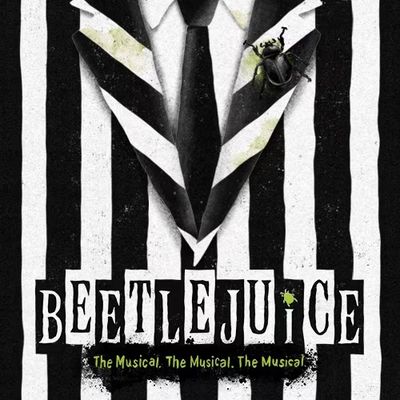
Jess is joined by Composer and Book writer Anthony King where they chat about his work, the creation of Beetlejuice the Musical, and his advice for up and coming theatre workers. This is an incredible bonus episode, and is not to be missed... Read More
From the show: Musicals with Cheese
Featured Shows
About
Jess is joined by Composer and Book writer Anthony King where they chat about his work, the creation of Beetlejuice the Musical, and his advice for up and coming theatre workers. This is an incredible bonus episode, and is not to be missed.
Transcript
This transcript was automatically generated and might contain errors.
[0:04] Jess: Hello and welcome to Musicals with Cheese.
[0:06] Jess: And today I have an incredible guest that I get to chat about. Please welcome Tony and Emmy nominee Anthony King, a writer, producer, lyricist, songwriter, and book writer, known for shows such as Silicon Valley, What's Hot American Summer, Wrecked, and musicals such as Gutenberg the Musical and Beetlejuice the Musical.
[0:24] Jess: But let's not forget if you give a pig a pancake and other story books.
[0:29] Anthony King: Wow.
[0:30] Jess: Going real deep.
[0:31] Anthony King: Yeah, we're going deep today.
[0:33] Jess: Thank you so much for joining me today, Anthony.
[0:36] Anthony King: It's nice to be here. Thanks for having me.
[0:38] Jess: No, no, it's really a joy. I love almost all of you, like pretty much all of your work.
[0:42] Anthony King: Like all that I have seen is the only thing that I haven't enjoyed.
[0:48] Jess: There's more to discover, hopefully.
[0:50] Anthony King: Oh, I can't wait.
[0:52] Jess: But you've got an illustrious career, not just in Broadway, but all over the spectrum. But we're gonna focus mostly on the musical theater side today, because that's kind of what this show is about.
[1:01] Anthony King: Cool.
[1:02] Jess: That sounds great.
[1:03] Jess: All right, first and foremost, how would you describe your relationship with musical theater and what are your personal favorite musicals?
[1:09] Anthony King: So I mean, I discovered musical theater when I was in like middle school, I think, doing plays and you know in school, which I think a lot of people find their way into. And then just kind of fell in love with the vocabulary of it, but also just I grew up in church, and I think music is a big part of church, and so I think just that collective sense of a giant crowd all on one emotional plane is a thing that only music can do. And when you mix that with story, I am on board. Even though a lot of musicals are cheesy and weird and terrible. But I love the musicals I love. I like weirder musicals. I always say I'm really into William Finn's stuff, because I think he just tells very personal stories and does it in really fascinating ways.
And then, of course, you know, Sondheim, but I like his, you know, like Assassins is a musical that I really love, even though it's because it's just do it's not something you think a musical should be able to talk about, but he finds a way to do it. But I think my favorite musical is A Chorus Line, because I just love how it doesn't stick to now there's a scene and now there's a song, and it instead mixes vocabularies in a way that I think is pretty revolutionary and isn't done a lot even now. It's still a very modern show, even though it's very dated now.
[2:39] Jess: I agree with you completely.
[2:41] Jess: My next question is about you personally. We've talked about your influence within musical theater and what you love, but how would you describe yourself as an artist, like your artwork and what you're trying to what your goals are as an artist?
[2:55] Anthony King: I mean, I got into the reason I think I started liking theater, I started in directing and then I got into writing. Was I really and why I like musical theater especially is I really love collaborative art, making art with other people, and that's almost necessary in a musical where like plays often spring from one playwright, you know, and they'll work with a director, but this just creating with a lyricist, a composer, a director, that's something that I would just really gravitate toward. I also have a background in improv comedy, which is obviously creating with other people. So that's kind of the thing that I'm most interested in.
[3:37] Jess: That's a great answer, perfect answer. I am very curious. You did not start off as like a musical theater. This is what I'm aiming to do. This is my goal. You started basically at the Upright Citizens Brigade, and you went to like Chapel Hill, University of North Carolina. So, how do you start as a guy from North Carolina, eventually being a Tony-nominated book writer for a musical?
[4:00] Anthony King: Well, when I mean, I will say growing up in North Carolina, I didn't really know that being a writer was a thing you could do, like as a life. I think it just wasn't like I was doing theater and I knew I didn't want to really be an actor, and that seemed like a hard road and also not what I love. But then I discovered in college directing, and I really liked that. So I actually originally moved to New York after college to direct theater. That was the plan. And I was doing that. I was assistant directing off-Broadway, assistant director to Andrew Lippa's The Wild Party, a show called Summer of '42 that ran off-Broadway. And I was directing, you know, here and there, more often regional stuff.
And then I found I kind of was like hitting a dead end of just do I get an MFA? Like, what do I do? And I found my way to UCB where I was doing theater, but also directing shows there. And then I became the artistic director of the UCB theater and did that for about six years, and that's where I kind of transitioned into writing more. But the first thing I wrote really was this show Gutenberg the Musical that I wrote with Scott Brown, and that was based on my time at Manhattan Theater Club when I first moved to New York, where I when I was trying to break in as a director, where I was an intern in the musical theater department and went and saw readings of musicals all the time, and it kind of started there.
[5:26] Anthony King: And let me just say, in a post-Hamilton world, you really see how ahead of its time Gutenberg is. Like I think it stands up more now than it really even did when you first did it in like 2011. Like it is brilliant. And it like the small jokes like the Helvetica is like one of the best fucking jokes I've ever heard.
[5:47] Anthony King: Yeah, it's one of those shows that it's like I, you know, when I was at Manhattan Theater Club, I would read, you know, you we get submissions of musicals, and most of them are terrible because that most things people write are not very good. But with a musical, you would get a recording of songs, and you would it would often be the composers singing songs from their show, and they were so passionate, and it was this amazing window of like, oh, these people don't have anyone in their lives to tell them that this is not good. And so that was the inspiration for Gutenberg was that can you write a show that is truly terrible? But if you believe in it and love it enough, does it somehow become good? Because there is sincerity in there. You row that fine line between harshly cynical, like this is bad, and like you gotta love it though.
[6:41] Anthony King: Oh, that's right. And there, you know, there is a structure to it, like and it the BMI musical workshop in New York, which is a wonderful program, and teaches people the kind of the basic structures of musical theater, and Gutenberg is kind of sending up that a little bit where it's you know, you need the I want song and you need all these different things, because I would go also go see readings when I was there, and you would see almost, oh, these people did the proper things to make a musical, but the spark of inspiration that also needs to be there is not there, so it would be so you're just kind of watching a by the numbers show. But again, you still, because it's musical theater, there's moments where it all comes together into this magical thing that I think is what we're all chasing.
[7:28] Jess: And you have a collaborator, and your current collaborator on that show. Forgive me for having the name off the top of my head.
[7:35] Anthony King: It's Scott Brown.
[7:36] Jess: Scott Brown, yes.
[7:38] Anthony King: Scott Brown, yes.
[7:40] Jess: So how did you start working with Scott Brown?
[7:42] Anthony King: I met Scott in eighth grade. I've known him most of my life.
[7:45] Anthony King: Yeah. He and I did those shows together in high school and then went to separate ways in college, but ended up moving to New York at the same time for different reasons. He was becoming an entertainment journalist, and I was there to do theater. But when Gutenberg started, I it started as a joke to like play, I wanted to submit a fake show to my boss to see what he would say about it. And so Scott and I were living together, and so we started writing songs trying to come up with like what is the worst idea for a musical. And we thought the invention of the printing press is so not momentous as a moment, like it didn't happen in one second, and it also is not something you would sing about. So we thought that was a good ridiculous thing to write a show about, and so then just as we started writing it, we fell in love with our own bullshit and never submitted it to my boss.
It became what it was, but that started us writing together. But even in high school, we kind of did dumb things, wrote things and tried, we made like a terrible sketch movie and things like that. So we were always kind of creating stuff together. And then over time we still he's now writes television dramas mostly, and I write mostly television comedy.
[9:12] Jess: No, my next question, and I think everyone's big question is how do you go from Gutenberg the Musical, which was this fun send-up, to something as big as Beetlejuice the Musical?
[9:22] Anthony King: The answer is Alex Timbers. We Alex Timbers, who directed Beetlejuice, he also directed Gutenberg off-Broadway. And we his career started taking off, not because of Gutenberg, but the time that we did Gutenberg. I think that was his first commercial production, and the his career started taking off, and Warner Brothers approached him and he's you know, what about doing a show together, and he said he wanted to do Beetlejuice and have us write it. And so we started, we were not qualified anyway, to get that kind of job at that level. But we pitched our take on it and what we wanted to do and got it. So and then many years of development followed.
[10:08] Jess: And now this is just a question for me like, what was that original pitch? Like, what was it like our version of Beetlejuice? And did it eventually become what was on the stage currently in 2019?
[10:20] Anthony King: There were, I mean, there were the the cool thing was that from the very beginning, Warner Brothers did not want just to put the movie on stage, which was good because we weren't interested in doing that. But there are things from the movie that got feel heightened and musical, and we knew we were, I think, from the beginning that like the deo dinner party scene would be in the show. But Alex had an idea early on to have Lydia be the main character and have Beetlejuice be kind of the MC of the show, as well as a character. And so those things were there from the beginning, and then we made a lot of choices of just kind of expanding Beetlejuice as a character. Once Lydia is the main character, what does that mean for all the other characters and how the story unfolds? And so there are a lot of changes from that. But like our original pitch, you saw Beetlejuice was a character and you saw him die at the beginning of the show.
[11:19] Jess: Wow.
[11:20] Anthony King: As a living person. So things changed over time. But that was the that was in the original pitch. That was that did not make it very long. There was also a version of the show at one point, which was completely bonkers, but luckily we were not fired after we wrote it, where Lydia was like you know the fast food restaurant Wendy's, the hamburger restaurant?
[11:43] Jess: Yeah.
[11:45] Anthony King: Lydia was like the Wendy's type logo on a chicken restaurant run by her father. She resented her chicken magnate father was rebelling against him. It was insane, but we were we but it was all exploring like why is Lydia at that time we had not landed on her having a dead mother, and so there was a question of just why is she as a main character, what's making her sing, what's making her have a story, and that was one of the more further afield ideas we had of what Lydia's thing was. She was a famous fast food icon.
[12:27] Jess: I mean, you guys got there eventually, and let me just say, like, all that work has paid off. And this will be airing a few days after our official podcast about Beetlejuice, where we just talk about all the great decisions made with it. And one of them that we brought up is how you guys took small elements from the film and expanded upon them and make you feel like why wasn't that there originally? It improves upon the original and adds to the stuff we like.
[12:55] Anthony King: Oh, I'm good. That makes me happy to hear you say that because I that's something we've been very happy about is that people who at least the feedback we've heard from people who really love the film get that the show is not just the film, but feel like it's kind of honoring what was there and not ruining it. And then of course, we also we grew up watching the cartoon as well. So there's we've tried to put elements of that in there as well, where they're kind of Lydia and Beetlejuice are almost he's almost her pet in the cartoon. So he's like her magical pet. So we tried to have a section where they kind of have that relationship.
[13:30] Anthony King: And whereas the movie I don't feel earns the title of Beetlejuice, this musical definitely does.
[13:37] Jess: Well, you know, the original title of the movie was House Ghosts. It was a pun on house guests. And so that and that's really what this movie's about is like two different kinds of rich white people fighting over real estate. Which you know, we early on were like that's hard to have people sing passionately about that, about the house and how it's being remodeled.
[14:02] Anthony King: Uh so that was part of another reason why we kind of moved away from that being the main storyline. Now, what do you think was the hardest like plot element to crack like in this or character element? What was the hardest writing segment of this entire development? There were two sections. The trickiest thing, honestly, was once Lydia is the main character, what do you do with the Maitlins? Because, and that's the Alec Baldwin, Gina Davis characters, because they are the main characters of the movie. And it obviously the show, the story is taking place in their house. Um, and so trying to tell a story where we still need to be in their house, have them die and be part of the story, but also have it be Lydia's story and not have her story starting an hour into the show.
Um, was trying to figure out how to tell the beginning of the story uh was very tricky. Uh and then the other part was when we made the decision that Lydia was going to go to the Netherworld instead of the Maitlands, uh, but in search of her mother, how who goes with her, what happens there? Uh, does she actually get to meet her mother or not? That went through a ton of different versions. Uh and we even did a reading where she met her mother, but it was very clear to us that that it just there was no way to write it that wasn't just saccharine and also doesn't mean anything because the whole point of death is that you don't get to see those people again. And that's part of grieving as heart terrible as it is.
And so when getting to write when you get to see that happen, it kind of suddenly means nothing. So uh we we knew we had to send her there and not give her what she wanted. And I think that's also brilliant because like imagine how big our world is and how random it would be to run into like someone you knew from high school just on the street. Imagine that times a billion because like people have been dying a lot longer than people have been alive.
[16:00] Jess: Yeah, that's right.
[16:00] Anthony King: We we wanted to try to make it so it was like there is a there is a possibility, but it feels fruitless. And then it's like that isolation and that search, is that the right thing to do? Because it would it became it's a show about grief and and life and what it means to kind of move on. And on a you know, we also bury that in a ton of ridiculousness, but uh but at its heart, that's what it is. And so trying to make that also make sense when you're in this crazy fantasy world and the second act all of a sudden uh took us a while to get to. And did you guys ever have a hard time reeling in the fantasy elements of this to be like it's it's really about a girl doing the death of her mother? Or was there ever a tug of war there?
[16:44] Anthony King: Yeah, just because there's so much you could do. I mean, there's so much of just world building and myth and the mythology of who is Beetlejuice and why is he like this and what does it mean and what and how much how much to lean into that and how much just becomes you just glaze over because you're kind of like uh okay. And the movie gets away with a lot of it because it just kind of moves past it. But again, when people are stopping and singing, and you know, Beetlejuice is only in the film for about 12 minutes, uh, and he's obviously on stage in our show uh quite a lot. Uh so it's it becomes like a lot uh it becomes tricky to figure that out of like how much is too much and how much do you really care and how much does it matter?
[17:23] Jess: Mm-hmm.
[17:24] Anthony King: So is there anything in the development of the show that was once like a big central part that you kind of wish was still in there?
[17:31] Anthony King: Uh I mean, there's a there's a really funny thing that in in DC uh in the show when they go to the Netherworld, there was this boy band that sang uh a song, and people really there's it's boy, it divided people, people. People either hated it or loved it. And um it was cut for when we moved to New York and replaced with with something I think is more makes more sense thematically and and it is probably better for the show. But there are people who still love the boy band uh and wish that was it was still in the show. We get a lot of like fans, I'll see posts on Twitter going, like, I can't believe they cut Boy Inferno. Uh, but I think it was it was for the best. But that's the thing that I think of the most that was the biggest change. Although there are tons of changes between DC and New York.
[18:17] Jess: Yeah.
[18:18] Anthony King: Um another question I have, and this is a process question. So you and Scott worked on the book alone. How would you describe the collaborative process between you and the songwriter, um, Eddie Perfect?
[18:28] Anthony King: Yeah, it was interesting in that we I the show was written kind of strangely. We were hired many years before Eddie came on board, which is not, I think, the ideal way to write a musical. But so we had written a script that had like places where songs should go, and we would kind of say, we think the song is this kind of song, and does this kind of work for the story or the character, but without trying to write the song for that person. Um, and then we looked for a composer. There were other composers attached before Eddie. Uh, but then we found Eddie, which was an amazing breakthrough because he's really funny. Uh, which is uh just it's it's rare, I think, to have hard comedy uh songwriter, and he's he's just a very, very funny writer.
[19:13] Anthony King: And so he that's when the real collaboration began because he wrote some of those songs we suggested, but of course, in other places was like, what if it was this kind of song? And it, you know, that has an impact on the story you tell. So then it became a real push-pull of figuring out the best ways to tell the story and what the story really should be. Uh and but it was it was a great Eddie's the Eddie's fantastic.
[19:36] Jess: Great.
[19:36] Anthony King: Um well now though I've got a couple questions about the post. Like, how's it been like ever since a show has been up on Broadway and you've been thrown into the whirlwind? What was it like going to the Tonies, for example?
[19:48] Anthony King: I mean, insane. Uh I never thought I would be at the Tony Awards. So that was that was amazing. Uh you know, it was it's a lot of pressure. Your previews are crazy. You because you're watching the show every single night, you're looking at what works and what doesn't work. You're doing rewrites until late at the at the night, and the next morning you're putting them in in rehearsal and watching it again the next night. And it's so it's intense. Uh and it's a ton of work. And then once you're open, you're kind of like left to, well, I hope people want to come see this. And so um the exciting thing I think for our show was that once like the Tony Awards were a huge turning point for the success of the show in that the performance on the Tony Awards where people actually got to see like, oh, that's what this show is.
Uh I think w our our like ticket sales went way up and then the cast recording came out and people have bit really responded to the show. So that's been it's been very cool to watch that it's like the show itself made people want to see it, which was exciting.
[20:51] Jess: And that's great.
[20:52] Anthony King: That's a real word of mouth show that you can't really get with like um films anymore, but musicals you still can.
[20:58] Jess: That's basically the biggest marketing plo.
[21:01] Anthony King: That's right. Yeah, you have because you, you know, a thousand people see it every night, and you need you're hoping those thousand people go tell at least a thousand other people to come see it. So uh if you don't have that, you die pretty quick. So we we've feel very lucky. And then of course, recently we realized we found out we were we're huge on TikTok. Uh so I didn't know what TikTok was before that that happened.
[21:25] Anthony King: Uh, but now I do, and it's uh that's been really fun to watch that people are just really grabbing on to the music, especially. And the story in the fan base, like without the story that you and Scott kind of figured out and the rules that you guys set up that weren't there beforehand, I think those are some of the biggest elements why those songs hit hard. Like I took someone to see the show and they said I did not expect to be crying during the home parts and during the dead mom parts.
[21:54] Jess: And it's it is shockingly emotional for Beetlejuice, the musical.
[21:58] Anthony King: I'm glad that's what we wanted. We wanted to like, you know, hey, we're having a good time, and then all of a sudden you're like, oh god, this is actually really sad. Uh and just because, you know, I think if it's just if it's just like Book of Mormon level, which is a uh amazing show, obviously, but that shows more of satire, and our show is more of a character, you know, thing. So you kind of have to you want to go on that journey uh because we're not, you know, satirizing religion.
[22:29] Jess: All right.
[22:30] Anthony King: My next question is how is the process different from like writing for TV than writing for a large Broadway show such as this?
[22:38] Anthony King: Uh I always say TV, they pay you to fail, um, and theater does not. Theater uh almost never pays you. But the um I think TV is the again, one thing I love about TV is like it's collaborative. You're often in a especially in comedy, you're in a writer's room a lot of the time with other people trying to break the stories and figure out the best way to do it which is my favorite thing to do so uh that part I I think is similar um obviously you're there's just more of a tight timeline with television there's more of uh um I think relatability to the art form where theater is just more cut off of who goes to it and it's so expensive it's just so it's a slightly different audience um but and then also theater just takes a long time because you have to the development process is so much okay now we need to get a bunch of people in the same room to act this out for a couple weeks and figure out what we have and then go away and do more writing and then come back again and that just ends up taking a lot of money and a lot of time.
[23:47] Jess: All right.
[23:48] Anthony King: So now the final question and what might be the most important question I ask you today. Please tell me about the writing process for if you give a pig a pancake and other story books.
[24:01] Anthony King: I I'm curious how do you know about that song?
[24:04] Jess: I tried to find it recently and couldn't even find it online.
[24:08] Anthony King: I haven't heard um I don't I have not heard I couldn't find it either so there is this oh god what are they called theater works I think is what it's called this company that does children's shows um that tour around and then many years ago now but after we done Gutenberg we were asked to write a song for based on the children's book, if you give a pig a pancake uh and so we did uh and it's uh now I think lost to the ether.
[24:43] Anthony King: Uh but it was a very fun song. And we watched, I went and saw the show that they ended up touring where they uh did they did a staged version of it with a person dressed as a pig and singing the song. It was uh surreal experience.
[25:06] Jess: That's incredible.
[25:08] Anthony King: Well, thank you so much for chatting with me today. And now I'm gonna ask you the actual final question. What is next for you?
[25:15] Anthony King: Oh boy, so I'm working on a bunch of TV stuff. I have a show that I just made for Comedy Central with the comedian Rory Scovile, who is very funny. And if you if you he has specials on uh Netflix if you are interested. Um but we just shot that. It's it's Roy Scoville, um, Sashir Zama Zamaida from Saturday Night Live, Bo Bridges from Movie Hit History Um are all in the cast.
[25:40] Anthony King: Uh they're amazing. And that that should come out sometime next year. I'm not sure when yet on Comedy Central. And I'm writing some other stuff for television and then early stages uh working with Scott on something that might be another a new musical.
[25:55] Jess: So Broadway.
[25:58] Anthony King: That gets me excited because that that hits my little heart. My musical theater love and heart, because I love the work you guys did. And I I if it is an IP, I know you guys are gonna take good care of it.
[26:11] Anthony King: Yeah, well, I it's it's it would be I wish I could give more details, but it's still early stages and could all fall apart. But it would be really exciting if it if it happens. And it is, I mean, like everything now on Broadway, it almost has to be IP, because you have it's hard to get people in the door. But the but it's another thing where it's not um it's not something where we'd be locked in. We could do something kind of new with it, which would be really fun.
[26:34] Jess: Well, that that gets me even more excited, even hearing you say that. That that is fantastic, and I'm sure we'll do it on the show, because you know, that's what we do.
[26:46] Anthony King: So, do you have anything you'd like to promote? Twitter, Instagram, any of those things?
[26:49] Anthony King: Feel free to do it.
[26:51] Anthony King: Um, I'm on Twitter. It's the Anthony King on Twitter. Uh and yeah, that's uh you can find me on there. I don't post that often really, but I I'm on there.
[27:04] Jess: Oh, fantastic. Thank you so much, Anthony, for joining us. I really do appreciate your time today.
[27:09] Anthony King: Of course, thanks for having me.
[27:11] Jess: Thanks for liking the show. I'm so glad you like it.
[27:13] Anthony King: Show's great, and I I'm I'm so excited to see what you do next because just seeing like more comedy on musical theater is great.
[27:22] Jess: Not everything needs to be lame is, you know.
[27:24] Anthony King: Yeah, exactly.
[27:25] Jess: Exactly.
[27:26] Anthony King: We should all be able to have some hard comedy in theater.
[27:29] Jess: Take away your bluesicals, you know.
[27:32] Anthony King: That's right.
[27:33] Jess: All right, we'll see you next time on musicals with cheese.
© Broadway Podcast Network, All Rights Reserved