

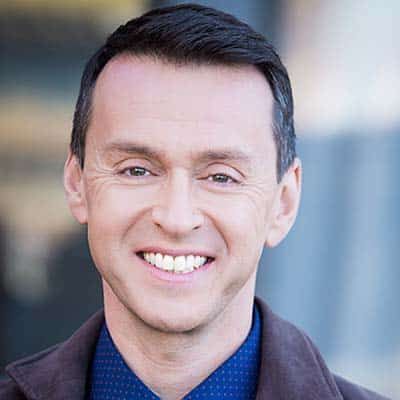
Check out this BONUS episode where Jess talks to the incredible Andrew Lippa, the Composer lyricist of The Adams Family Musical, Big Fish the Musical, You're A Good Man Charlie Brown, The Wild Party, and many many more. It's a great interview and definitely not to be missed!.. Read More
From the show: Musicals with Cheese
Guests
About
Check out this BONUS episode where Jess talks to the incredible Andrew Lippa, the Composer lyricist of The Adams Family Musical, Big Fish the Musical, You're A Good Man Charlie Brown, The Wild Party, and many many more. It's a great interview and definitely not to be missed!
Transcript
This transcript was automatically generated and might contain errors.
[0:04] Jess: Hello and welcome to Musicals with Cheese, a podcast where I usually try to get Andrew to like musical theater, but now we've got a different Andrew.
[0:10] Jess: In fact, we got the most famous Andrew we've ever had on, and the better Andrew.
[0:15] Jess: Today I am joined by composer, lyricist Andrew Lippa, who you might know as the composer of wonderful things such as John and Jen, Big Fish the Musical, The Addams Family Musical, The Wild Party, and You're a Good Man Charlie Brown.
[0:35] Jess: Andrew, we're so honored to have you on to our show.
[0:37] Andrew Lippa: It really, really is an honor.
[0:42] Jess: That's great. Um, this is gonna just be a free form discussion where I talk with Andrew about both the things that he has done in the past and how he came to that point, as well as the things he's likely gonna do in the future.
[0:54] Jess: So, Andrew, on the off chance that there's one person listening that doesn't already know who you are, give us a little background of who you are and just what you want them to know about you.
[1:03] Andrew Lippa: I imagine the people listening to this program may have heard one or two of my songs. I am a man. I write songs. And sometimes I write whole musicals, and sometimes I write just the music. Um, but most times I write the music and lyrics to musicals, and I've been doing it for quite a while. My first musical was a little two-hander called John and Jen that premiered in New York City in 1995. And as you mentioned, you mentioned quite a list there of titles, and I've been writing musicals and producing records and writing songs for theatrical events and contexts for all these twenty-three years. So it's been a wonderful, wonderful ride.
[1:52] Jess: Now let's talk about how you ended up in musical theater. Was it always something that you found driving to you, or did it seem like something you just kind of fell into naturally?
[2:03] Andrew Lippa: Well when I was in high school I was very musical from the very beginning of my life and I sang and I still do sing. I've sung on a few of my own shows. And when I was in high school, I was in tenth grade I auditioned for and was cast in a production of our high school musical which was The Pajama Game and I had a quandary which was many of my friends had stopped after their bar mitzvahs had stopped going to Hebrew school. We used to go to Hebrew school three days a week after school or on a couple days a week after school and one day on Sunday one time uh one period on Sunday uh once a week and after people had their bar mitzvah they would stop going to Hebrew school and I kept going because I liked it.
They had this thing where I grew up called Hebrew high school and it was um you could keep doing Jewish learning and get deeper into Jewish learning as you got older and so I was enrolled in Hebrew high school and I got cast in the musical which was going to conflict I was gonna have to pick one or the other and I went to my parents who were very Jewish, they still are, and I said I wanted to be in the musical and to my surprise and to my pleasure my parents said I could quit Hebrew school and they encouraged me to be in the musical and that was the beginning of my love of musicals. I had seen a couple before then, but when I got into tenth grade, that was when it took off.
[3:38] Andrew Lippa: And then when I went to college at the University of Michigan, I was a voice major, my freshman year, and at some point during that year, my lifelong friend and not quite boyfriend, he became my boyfriend, he's my first boyfriend, it's Jeffrey Seller, who later went on to co-produce such little known musicals as Rent and Avenue Q and a little one that you might have heard of called Hamilton. And Jeffrey in college suggested that he and I write a musical that I was that I liked musicals and I played the piano, so I was a natural. And it all seemed very bizarre to me. But I said, sure. And we did write a musical together that we showed our teachers and my professors were incredibly encouraging.
I don't know what they saw, because if you heard those songs, you'd be like, those are terrible. But I wrote a musical when I was 19, and that's kind of how I got started. I found that when I wrote songs that I could dig into a deeper part of myself than I was digging into as a performing artist. I love being a performing artist and have been a pianist and music director and singer and actor in various things all my life. Um, I do love doing it, but I find that my real passion and my deepest feelings run when I get to write about stuff.
[5:12] Jess: And as well, you are also one of the very illustrious composer lyricists out there. Was that always something that you strove to do, was writing the music and lyrics, or did you start with music and then just started realizing, hey, I can do lyrics too?
[5:26] Andrew Lippa: Much like I, my life, now that I'm fifty-four, I can say, you know, I can look at some patterns in my life and see more of my life gone by than there will be life left to live. And I don't mean that in a morose kind of way, but it's just reality. And I realized like everything it came slowly and it came at different phases. I started out very much not writing text at all. I was a composer and an unsophisticated one at that. I wasn't I was just trying to figure it out when I was in college. And even though I had a very strong musical background and strong musical education and played the piano very well, I had never really had any formal training in music composition. I took a class with the surprise winning wonderful great amazing man and composer William Bolcom who was a professor for many years at the University of Michigan but he acted as a mentor but I didn't take any formal lessons with him.
And I got to New York and I joined the BMI musical theater workshop. I was fortunate enough to get accepted into that group and continued to be only a composer and work with different people and I wrote John and Jen with my friend Tom Greenwald and again I wasn't the lyricist on that project. And then I discovered a long form poem in the bookstore at the end of nineteen ninety-five called The Wild Party. And I didn't have any writing partner who wanted to work on it with me. And I decided I was going to write The Wild Party as a musical and make it like Cats. I would set poetry to music and make it theatrical. And early in writing The Wild Party, I realized that there wasn't enough in the poem that was in the first person that said, you know, I feel this. I want this. And I started writing my own lyrics.
[7:31] Andrew Lippa: And showed a couple songs to my friend Jeffrey Seller. Again, all roads lead to Jeffrey Seller when it comes to making musicals for me. And I showed it to my friend Jeffrey Seller, who's also from Michigan. And Jeffrey said, who wrote the lyrics? And I said, I did. And all he said on the phone was keep going. You should keep going. And cut to about a year and a half later, Jeffrey Seller and his then business partner Kevin McCullum took out the professional option and they actually were the commercial producers attached to The Wild Party when it got produced at the Manhattan Theater Club. So Jeffrey and Kevin were very instrumental in getting the production of The Wild Party with the Manhattan Theatre Club.
[8:17] Jess: I'm not gonna lie it makes me so happy to hear like the origin story of how The Wild Party came to be and how personal it was to you. And also how you just kind of fell into writing the lyrics.
[8:29] Andrew Lippa: Yeah, I did. It was that thing I teach whenever I teach, whenever I work with young people in writing musicals or writing songs, I always encourage them to go after the thing that they care about the most and to go after the thing that makes them happy that makes them feel something. And in the case of The Wild Party, I quit working. I basically I had saved a little bit of money, not very much, but I saved a little bit of money and I thought nobody's going to ask me to write a musical. It just doesn't happen. Even it does happen fortunately now for me people ask me to write musicals, but you still have to go through a process and also you have to really want to write it. So it has to be something that you really connect to the material and that's often challenging.
If you know if you don't connect to the material then I don't think it's going to be a very good show. And I really connected with The Wild Party and realized that if I didn't sit down and do it it would never not get done and that in order to sit down and do it I had to somehow I had to basically be a hermit. And I took about six months and just committed my days to writing that musical and I walked out with about ooh I don't know 70 minutes of it maybe maybe 70 or 75 minutes of it. I had written a whole act one and a portion of act two and was able to get some support to put it on a reading in New York City and that's what started the process. And if I hadn't done that, I don't think I would have a career as a writer.
It really took that kind of focus and that kind of determined dogged determination to push the mountain, you know, the thing up the hill because it's always pushing a thing up a hill. And somebody's got to push it.
[10:27] Jess: And that's super inspiring to me because there's no one telling you that you should do this. There's a guarantee that you're gonna get this show like let me pay you. You just had that fire under you to do this and you succeeded.
[10:40] Andrew Lippa: Yeah, I guess I was very fortunate and again I do think it's the I was deeply passionate about the material. So you know there are people who've loved The Wild Party and there are people who haven't loved The Wild Party and the wonderful thing about The Wild Party I read a review recently but I read one recently. I tend not to read reviews, but I read one recently from a college production at Syracuse University that happened only just recently and it was a really good review and it was a fairly well written review and the writer was clearly understood what the piece was trying to say and but also sort of underscored the fact that it's R-rated, that it's not for your grandmother, that it's really, really not quote unquote normal musical theater fare and that it has the potential to really upset people.
And I was so thrilled. I thought wow something I wrote over twenty years ago still has the potential to piss people off and I thought I really I'm really proud of it. You know it's not the story is so simple. It goes from A to B if that and that wasn't what drew me to it. What drew me to it was what was underneath the other characters and their motivations and what kind of people they had become or who they had hoped to be but didn't become and I wanted to write a musical in a voice that I hadn't seen before and I tried really hard to do that and you know in some ways I think I succeeded. So I'm very happy.
[12:42] Andrew Lippa: I love The Wild Party very much.
[12:45] Jess: And I love it as well, and I speak for many others that love it too.
[12:48] Andrew Lippa: Thank you, thank you.
[12:50] Jess: What is it about her is one of my favorite Broadway musical numbers of all time and Make Me Happy is my alarm every morning.
[12:58] Andrew Lippa: Oh my gosh, that's quite a rude awakening.
[13:01] Jess: I mean, it gets you up in the morning, really.
[13:04] Andrew Lippa: I imagine that's true.
[13:06] Jess: All right, so what's the next professional show you did after The Wild Party? And as well, is it difficult to let those shows go, let your babies go to other creatives like directors and book writers and have their input on it?
[13:18] Andrew Lippa: Yeah, I had this wonderful period from nineteen ninety-five to two thousand where I was feeling really most of the nineties because I was learning how to do it and getting things on and I had been a school teacher, I have a degree in education and I had had a full time job until nineteen ninety-one and then I started working in the theater playing with keyboard and playing piano and whatever anything related to that that I could do to make a living.
[13:47] Andrew Lippa: And but when the wild party opened, um and it um, you know, some people some people like I said, embraced it and some people didn't. And it didn't transfer to Broadway and there was another musical uh based on the same material uh that did that was on Broadway and that was a very odd uh happening. Um I I got um emotionally kind of crumbled by all of that experience. It was very uh it was very, very challenging for me. Um and I didn't have another musical in my in my hopper. I had uh only committed to I had done Charlie Brown in the meanwhile and that was a great wonderful thing to do and to write the new songs that I did my new philosophy and Beethoven Day and the new part to You're a good man Charlie Brown and and all the arrangements etc and get to I got nominated for a Grammy for recording the the recording of that show.
And that that was all a wonderful experience that happened during the wild party time as well. But after the wild party opened I was really sad and um I got rescued by uh my friend uh designer and producer Heidi Ettinger and the director Susan Schulman who uh brought a project uh uh brought a big uh musical based on a little princess uh to me with the writer Brian Crawley who had written Violet and um I was asked to write music only on that project and I decided to say yes because they um they were developing with Australian partners and we got a trip to Australia. It was my first time going to Australia and and uh I felt like well I don't have to make as many decisions as I did on the wild party about the characters and the dramaturgy and the story and the action and all that I can just write the music and let have a writing partner and that'll be pleasant.
[15:32] Andrew Lippa: But there was a period from somewhere around 2001 to 2007 where I was writing I wrote several things. I wrote a musical called Jerry Christmas um with Daniel Goldfarb who's a wonderful wonderful playwright who's now writing on uh the marvelous Mrs. Maisel, I think, and um uh as well as writing his own plays. But uh we wrote a musical that we developed a little bit, couldn't quite get off the ground. I wrote a musical called Asphalt Beach that was um done at Northwestern University in 2006, and that couldn't quite get off the ground. I wrote the first act of a musical based on the Betty Boop cartoons uh with David Lindsay-Abaire uh was the playwright on that, and that didn't get off the ground.
And then when I was at Northwestern University working on Asphalt Beach, um uh the producer who was running that program at the time is a guy named Stuart Oaken. And Stuart was producing a musical version of the Adams Family, and he took me to lunch and he said, Would you like to write the musical lyrics for the Adams Family? And I asked him who else was working on it, and he told me it was Marshall Brickman and Rick Ellis were writing it. And I said, Yes, when do I start? And so that that um that was the beginning of uh another phase in my life.
[16:48] Andrew Lippa: And and I wrote those three other titles I mentioned, um, none of which have been recorded, none of which have been produced. Uh, you know, uh we we Jerry Christmas happened at uh New York Stage and Film, which is a wonderful developmental place. And Asphalt Beach had a small production at the at Northwestern University. Uh but after that, um they haven't gone anywhere. And in a way, they were growing experiences for me. Uh, I wrote the lyrics and the music to both of them. It was an opportunity to continue to get better, and they led me to the Adams Family, which has been uh the most um miraculous uh success uh uh despite um despite, you know, the the fact that it um it didn't get the best reviews and it uh some people again, it's basically the story of every everything.
Some people like it, some people don't. But um the fact that the Adams Family is the most produced musical in North America throughout the last four years is uh uh testament to how successful it has been and how many productions it's had, thousands of productions worldwide, and um it uh just continues to grow actually.
[18:02] Andrew Lippa: We we keep getting more and more people want to do it, and um uh that that was the beginning of a a next phase. And so I kinda uh got past the sad wild party thing. It took me five or six years to kind of shake that off and um get jumped back into, you know, really making things that I really uh really cared about and really really wanted to to get right. And Adams Family is your first musical theater job where you adapted a full musical that was also uh culturally engraved piece of the zeitgeist.
[18:40] Andrew Lippa: Well, Charlie Brown with a bit of a dry run. Uh, you know, they didn't write the whole thing. So I I did ha already have experience of dealing with famous characters. Um and again, I had told you I wrote the first act of a thing about Betty Boop, but I think she's less famous. She was sort of known by what she looks like, but not so much by what her behavior is. Um and the Adams Family, yeah, that was the first time, and I didn't even let you get to the question, so sorry.
[19:05] Jess: Well what's the question?
[19:06] Andrew Lippa: No worries. Um basically the question is do you find it difficult to musicalize things that are so ingrained into popular culture because there is that expectation coming in. And you feel like uh I my version of Gomez is like this, and maybe theirs won't be that.
[19:22] Andrew Lippa: Uh yeah, that was a that was part of the challenge. There were a lot of challenges on the Adams Family. Uh, you know, there they were all challenges I wanted to take on, not the least of which was the size, you know, it was a $15 million musical um that I was writing the music and lyrics for with very famous people at the center of it. Um, and particularly Nathan Lane, who was just absolutely magnificent in in every way. But at the same time, he's made, you know, a big theater huge theater star, and and there was a certain amount of uh uh, you know, I had never had that experience before working with somebody that famous.
[20:04] Andrew Lippa: And um, and so there was a lot to learn there, and there was a lot to learn in terms of the audience's expectations and what they think they know about the characters because of the television show and the films. And um we learned a lot when we did it in Chicago. We were the most we ran eight and a half weeks in Chicago for our out-of-town trial. And um, while the show was still um going through growing pains, it was still the second most successful out-of-town tryout up to that point, um, second only to the producers, another Nathan Lane uh led vehicle.
[20:37] Andrew Lippa: And um it sold so well that uh the producer was able to give us um the amount of words a weeks and time we needed to make the significant changes that we wanted to make in order to get it to Broadway. So um it was a it was just a uh a really, really complex process. Uh the director was their directors were fired, and thank God Jerry Zaks came on board because he really was instrumental in helping write the ship, and the audiences really embraced the show.
[21:10] Andrew Lippa: We were on the uh ten days after we opened, there was an article about the Adams Family on the cover of the New York Times. Um, and it said that you know it didn't matter what the critics had to say, that audiences loved it and that um people were flocking to see the Adams Family. And that was true. Uh it was uh it was remarkable how it was successful out of the gate, and people embraced it, and we had a a pleasant run on Broadway and uh a really successful national tour, and then I've seen it uh there are three recordings, one in Spanish, one in German, and one in of course in English.
[21:49] Andrew Lippa: And um I've seen it in Portuguese, Spanish, Swedish, German, Japanese, um, and um it's been translated into probably six or seven other languages. Productions I have not seen. Um, but uh it has really, really been a remarkable, uh a remarkable thing in my life. So I'm very grateful that it happened.
[22:18] Andrew Lippa: And I and I don't imagine, I don't imagine that I'm going to do it again. I don't imagine, I don't know, but I don't think anybody, even if somebody came to me and said, Oh, we've got the rights to and you know, name another set of famous characters. I I I I I I may yet, I don't know, we'll see how life goes. But it was it was a challenge that I I learned a lot on, and I did it, and now I'm ready to do other things.
[22:44] Andrew Lippa: And in fact, I followed that up with Big Fish only um only three years later, Big Fish opened on Broadway.
[22:51] Jess: Yes, and that is another very popular film that you're adapting into a brand new medium as well. You are working with the original collaborator on the film, John August, who wrote the screenplay for the film and has that connection to both the story and the characters. Did you find it hard to collaborate with someone that is really close to that and adapted to a new medium or was it much easier?
[23:13] Andrew Lippa: No, it's actually wonderful because John uh John had uh before the book uh on which the film is based, before the book Big Fish had even been published, John was given a copy to read and um decided he was going to uh make it into a movie. And so John knew John knew the characters inside and out.
[23:37] Andrew Lippa: And that was a very, very great thing to have in a collaborator who really knew who the characters were. And um and and was also very, very eager to re uh interpret uh Big Fish from the uh screen to the stage, and um didn't you know never ever walked in with a a sense of oh, this is how it should be done because I did it in the movie. John was always open and he's also uh incredibly musical.
[24:06] Andrew Lippa: He plays piano and has a wonderful bass baritone voice. And so we often had a great deal of fun learning the songs together and um and and he would be very uh more really than any collaborator I've had. He was he had he had opinions about the music that were that he could um he could back up with with answers, and if he said he didn't think that was the right piece of music, he would say why, and I would say, okay, well, I'll write something else.
[24:37] Andrew Lippa: And um it was um, you know, I think I think that collaboration uh was a a very successful one. And again, Big Fish uh, despite its brief uh uh sojourn on Broadway, um has had a uh British uh London based production starring Kelsey Grammar and then um it again is being translated into multiple languages. In fact, uh I'm going to Korea to see it at the end of this year, a production directed by Scott Schwartz that's going to run in Korea for several months and uh followed by a Japanese production that's also going to run for several months, um, which uh several months doesn't sound very long by Broadway standards, but um it's it's by South Korean and Japanese standards.
[25:23] Andrew Lippa: That's a significant amount of time to run a show that people do a particular title people aren't completely familiar with. So um Big Fish and also in uh what they call stock and amateur licensing high schools and uh and theater camps and all that sort of thing, it's uh it's just growing and growing and more and more people are aware of it and want to do it.
[25:43] Andrew Lippa: So um I I love yeah, I love that show and I and the process was was uh incredible, particularly uh not only with John, but with our two producers, Dan Jinks and Bruce Cohen, who had also produced the movie. So they they had that experience twice and um like John and then Susan Strowman who um really helped us um you know figure out exactly what it was we we wanted to do with the show and and uh had just such a vivid imagination for us.
[26:13] Jess: All right, before we wrap up, because we are getting to that time, I do want to talk about um I am Harvey Milk for a little bit. I'm just curious of the order of the story to that project, how it came about and how different it is from everything else that you've done previously and since.
[26:41] Andrew Lippa: And in 2011, he had only been uh in San Francisco for about a year running the chorus. And he had reached out to a group of or the plan was at least to reach out to a group of composers and ask each of them to write a five-minute piece based on their observations of Harvey Milk. And when he contacted me, I called him and I said, I am really humbled and grateful you asked me to write a five minute piece, but I don't want to write a five minute piece. I want to write a 60 minute piece. And he said uh he wanted to know why, and we talked for a while.
[27:14] Andrew Lippa: Uh 2011 had been a uh my father died in 2007, and um my uh my personal life had just gotten um very uh jumbled uh following that for a few years. And in twenty eleven I had a uh a a really rough personal year. And as I was coming out of it, I got that email and I I did feel very um I felt that email was very uh spiritually connected and it felt very much like um I was being uh led in a direction a new direction and uh or dare I say pulled in a new direction. Um and uh and that's for you, Adams family fans out there. And um I um Tim said that the commission uh was for with uh nine other choruses across the country, and that they'd have to uh approve the idea of me writing the whole piece. So she spoke to them, got back to me, said thumbs up.
And I um I then had that, you know, oh my god, now I've got to write it uh uh feeling. And I realized uh I had a few fixed things. One was I had a chorus of 300 men, and uh they stood still for the most part. They did some choreography, but they can't move on and off. Um they're you know, too many people, and they're there and they're on the stage. So that that had to happen. And I wanted there to be some kind of soloists, and um built uh uh uh my version which had uh somebody playing Harvey Milk, somebody playing a young version, a child version of Harvey Milk, and uh a woman character who played for this amalgam of women in Harvey Milk's life. And then I realized I didn't want to write in a bio musical.
I didn't want to write something that was uh chronologically uh in order because um the movie Milk uh had been uh so wildly uh uh successful and also just so good, and I didn't want to compete with that. And so I decided I was gonna pick um that year or almost a year in his life when he was the on the board of supervisors in San Francisco. He had been elected to start at the beginning of 1978 and assassinated in November of 1978. And I structured a 12 movement work, which represented the 11 months he was in office plus a prologue movement. And then developed it in New York. I wrote it, I wrote it and wanted to hear it, so I pulled together a group of people and we um we did it in a rehearsal studio and I invited uh 50 or 75 people, um, including my friend and colleague Bruce Cohen again, who had produced with Dan Jinx again, had produced um the movie Milk and uh Bruce uh wanted to get involved and has been involved ever since in in in I am Harvey Milk and it's follow up Unbreakable which we did just a year ago and not even a year ago.
And uh I played Harvey Milk in the reading and it was kind of a test. It was I I was curious like to see should I do it. Tim Felig said uh we think you should do it and I said I don't know let me test it out in New York in January the the premiere was in June of 2013. And I did it in the studio and the first thing that Bruce Cohen came up to me and said I want to be involved and then he looked at me and goes and you're gonna play Harvey right you're gonna you're you're playing Harvey right and it was very sweet and I and I said yes I'll I'll do it I'll do it in um in San Francisco and then I ended up doing it we did it with 550 singers at Disney Hall in Los Angeles we did it with 700 singers in Denver as part of the Gay and Lesbian Association of choruses um and 5,000 people in the audience and uh I did it with Christian Chenwith and the Orchestra of St. Luke's um at Lincoln Center in 2014.
And so uh I am Harvey Milk has been a big departure and a wonderful uh a wonderful change to to write something that's deeply uh theatrical and and and interesting to me, but not a traditional quote unquote traditional musical. And also Unbreakable as well as I am Harvey Milk are both available on iTunes and all the other forms of music. And it is absolutely incredible. I highly recommend it. Fantastic job, Ms. Jinwipa. Really, it is truly fantastic work. Thank you. I'll be doing uh I'll be doing Unbreakable in Austin, Texas, uh the um 19, 40, 15, 7th, 18th, somewhere on there, um in May. And uh it's being done by 10 choruses across the country uh since the San Francisco GameScourse uh premiered it, and then um Bruce Cohen, my frequent colleague uh and friend and I are pulling together a uh production team uh and we're gonna be doing it uh in New York City hopefully in June of 2020.
And um that will be um more more on that soon, I'll when I can when I can say. Now here's the little craft question. Um as a lyricist, do you have a set of rules for your lyrics? Like they have to all be perfect rhymes, or is it more like free-flowing? Like, if it feels right, it feels right, and it doesn't really matter if it's like always perfect rhymes.
[32:51] Andrew Lippa: Uh both. Um and um I I think perfect rhymes, uh, you know, it's um my my rule is this. My rule is this. It is I I learned it from Frank Lester, uh, actually, not from him personally, but some what is something I read about it, which is that lyrics are a um a train on a car uh uh uh a car on a train and uh you know, a boxcar on a on a on a long train. And when you're sitting at the train stop and you watch the train go by, if you miss one of the cars, if the car m it's moving, it's moving, uh you know, let's say it's going to the right, it's moving to the right, and and if you focus too long on one car, when you go back to the center and your head goes back to the center, you you've missed some because they're moving at a certain pace.
And lyrics move at a certain pace, depending on the song, and different paces for different songs. And if you get tripped up by anything, then whether it be rhyme or logic or or definition, uh, if you use a word that people don't know, and that's not to argue that you shouldn't use words that people don't know, but it's not like a book or poem where you can stop and look at it and look it up. You can't. It's going by in front of you. And so for me, that is the key for lyrics is that um they they go by at a certain pace, and you you only get one chance to make that impression on the audience. And if they miss it, then you have failed. So that's up to each individual lyricist to decide what they think their audience can uh can comprehend.
[34:43] Jess: All right, for my next one.
[34:45] Andrew Lippa: How would you describe the difference between writing a comedic song and a dramatic song and how you go about them? Which one is more easy, which one is more of a challenge? I'm just curious.
[34:56] Andrew Lippa: Comedy is much more scientific. Um, and I'm not the first person to say that. Uh uh it it you yet you there's an architecture and uh yeah, and y and you know, my new philosophy I'll say, or or or the old fashioned love story from the wild party, there's you have to figure out what the punchline is like it's like the way you tell a joke. You have to what what do you what is the end, what are you getting to? And where the where how are you telling the whole story of the song and where what's the where are the laughs? Um, you know, laughs can't come. Um it's really not a funny song if the uh well, it's not a funny lyric if the laughs are coming from behavior, unless the lyric is about the behavior.
And um behavior can be funny, but it's dependent on the actor and the director. Um and the the goal is to make the words themselves funny, for me at least, um, when I'm writing an out and out funny song. Um and uh that's the answer to that question. I think um writing dramatic quote unquote songs where that don't have it's tricky. Funny songs you get feedback right away. The audience tells you if it's funny because they'll they laugh. Um or or or worse, they don't. And um, and then you're like, well, that's not funny. And you after you hear it go by twice and nobody laughs, you're like, well, that's clearly not funny, no matter who sings it. And I learned that from Nathan in particular, Nathan Lane.
Like if he sang a lyric and it wasn't funny and Nathan Lane couldn't get a laugh, I'm like, then it's not it's not funny. And um, and so that was a good lesson working with Nathan. Uh got a lot of good lessons. Uh but a song you mentioned what is it about her? You know, what is about her is um I wrote it never changed. I wrote it like that in one sitting. Um I wrote that lyric uh all first and then I wrote a piece of music that went with it, and it never like that was that. And uh so it in some I don't need a roof from Big Fish, same. It just in three hours I wrote I don't need a roof. And uh whereas my new philosophy took three days. Um and the bigger, the bigger, like crazy thing, lots of things happening in the song like one normal night, that whole sequence in the Adams family.
That literally I think that took me three weeks to to make that sequence because I I had to I had to figure out how it went from the beginning to the end and how it all made sense and involved everybody and still felt like a song.
[37:34] Jess: All right. Now here's the last question, and it is the most generic question, the one that everyone would expect me to ask, but I gotta ask it.
[37:41] Andrew Lippa: What advice would you give to anyone coming up in the musical theater world trying to be a composer or lyricist much like you?
[37:47] Andrew Lippa: Uh write, write, write, write. Don't don't don't wait for somebody to, you know, uh uh oh, they told us that we they were gonna commission us or they they were gonna give us production and then they they never answered us, and we sent it to the theater, and they they didn't they didn't put it on and or they told us maybe next season. I'm like, oh I don't care. Write another one. Stop sitting around. Don't like expect anybody to do anything for you and put your own show on. Um I did that with uh write us write a show that you can put on yourself the first time. Um so do it with two or three or four actors because you can put on your own show with two or three or four actors. And um that's what I did with John and Jen.
And um that's what Jason Robert Brown did with uh Songs for New World. Um, he started just showing those songs off in cabarets and clubs and put start putting a show together. Um, my friend Benjamin Scheuer, who wrote and started The Lion, that's a one-man show. He was able to just show it to people because he was in the room. Um, and that was his first musical. Um, so um though that's my advice. Write, right, right, right, and put your own show on.
[39:01] Jess: All right. That was a fantastic interview, Mr. Lippa. Thank you so much for coming on and chatting with me.
[39:05] Andrew Lippa: Thank you. Um is there anything else you want to say, spread to the audience, let send them to, make them download, anything like that.
[39:14] Andrew Lippa: Oh, just be just be kind. Just be kind. Be people are out there making all kinds of things. I'm the president of the dramatist guild foundation, and it's my great, my great honor to serve uh writers across across the country who make plays and musicals, and and it's taught me that uh my job is not to judge things, my job is to support, my job is to help others uh to grow their thing. And if I don't like it, well, who cares? I don't you know, I don't like you know, z lobster. That doesn't, you know, some people would think that that that's ridiculous. But I don't like lobster. So I'm not gonna go talk about how much I don't like lobster that other people shouldn't eat it. Um uh just be supportive. If you're making musicals, if you know people making musicals, if you want to make a musical, just be kind. It doesn't hurt.
[40:03] Jess: Well, Mr. Lippa, thank you for coming on to our show. Thank you for schlepping down to our level and chatting with me on this podcast. It really means a lot.
[40:10] Andrew Lippa: Well, thanks for taking the time, and I really appreciate it.
[40:13] Jess: And that concludes our interview with Andrew Lippa. Thank you for listening. Feel free to subscribe to us on iTunes if you haven't already. We're on Spotify, Stitcher, all of that. We also have a Patreon where we'll have more interviews coming out as well as the usual musicals with cheese show. We'll have a normal episode coming up this Friday that I'm really excited about, and it's gonna be really great. So thank you guys for listening. We'll see you next time on Musicals with Cheese.
© Broadway Podcast Network, All Rights Reserved